Tag Archives: Douglas Hodge

Pillion-2026

Pillion-2026

Director Harry Lighton

Starring Harry Melling, Alexander Skarsgård

Scott’s Review #1,549

Reviewed September 6, 2026

Grade: A

Pillion (2026) is a British, cutting-edge LGBTQ+ film that excites and titillates viewers but is really geared toward a specific target audience.

Gay males either experienced with or possessing knowledge of the BDSM (bondage, discipline, sadism, masochism) hardcore lifestyle will mostly appreciate the film.

Representation in this subculture is shamefully long overdue, so it’s a breath of fresh air to see a film like this released in mainstream markets and on streaming services.

Straight audiences with particular intellect and sexual curiosity may find themselves enveloped by the film and maybe even aroused.

In 2025, the film was a massive critical success, earning an impressive ten nominations at the British Independent Film Awards.

Unfortunately, it has not yet achieved those accolades in the United States, but sometimes an international film has a year-long lag before recognition. Fingers crossed.

The film was released in the U.S. in early 2026.

Colin (Harry Melling) is a shy, introverted gay man who lives with his parents in Bromley, London. He works a menial job assigning parking tickets while pursuing his hobby of singing in a barbershop quartet.

One Christmas Eve at the pub, he is handed a note by Ray (Alexander Skarsgård), a handsome American member of a local biker club, and Colin is swept off his feet when Ray takes him on as his submissive.

As they begin an unorthodox relationship, Colin’s cancer-riddled mother (Lesley Sharp) becomes concerned for her son’s well-being, while Colin’s growing romantic feelings for Ray test the boundaries of their lifestyle.

While some scenes are shocking, like a BDSM themed road trip where Colin finds himself in a line-up of four men wearing chaps, leaning side-by-side over a picnic table, positioned to be penetrated by their doms, there’s also an underlying romanticism and connection between the men.

Other scenes where Ray suggests Colin buy a butt plug because he’s ‘too tight’ or makes him sleep on the floor might run the gamut of making the viewer chuckle nervously or smile naughtily; they indeed have their impact.

But usually, they spend quiet nights at home like a ‘normal’ couple: Ray reads a book or plays with his dog while Colin dutifully makes dinner or runs errands for him.

The relationship is not abusive, and both men are content.

The conflict arises when Colin yearns for a deeper and possibly more conventional relationship. But can Ray give Colin what he needs?

The film wisely parallels the two men. While Colin’s life is an open book and his meddling parents, who only want the best for him, know the ins and outs of his everyday life, even his dates with men, Ray is a complete mystery.

Strikingly handsome and way out of Colin’s league in the gay pecking order of physical attractiveness, Ray is a complete mystery; we wonder why he pursues Colin to begin with.

Tall, blonde, and charismatic, where has he come from? Where is his family? Does he have an ex? Where does he work?

The ambiguity works quite well for delving into the characters.

A tender sequence in which Ray gives Colin the day off from service, and the men share a fun-filled romantic afternoon as a traditional couple, is wonderful, but can it be sustained?

The men share a kiss after some light hilltop wrestling, with Colin sitting on top of Ray in the more dominant position, but something in Ray’s eyes is filled with pain and unease.

A remarkable directorial debut by Harry Lighton, he empathetically examines self-discovery, desire, and conflicting emotions with a nonjudgmental perspective.

Pillion (2016) is not patronizing, played for laughs, or defined by stereotypes.

With exceptional acting performances by Harry Melling and Alexander Skarsgård, the characters are freshly brought to life and make a daring subject matter, taboo for most, into ravishing entertainment and a character study. 
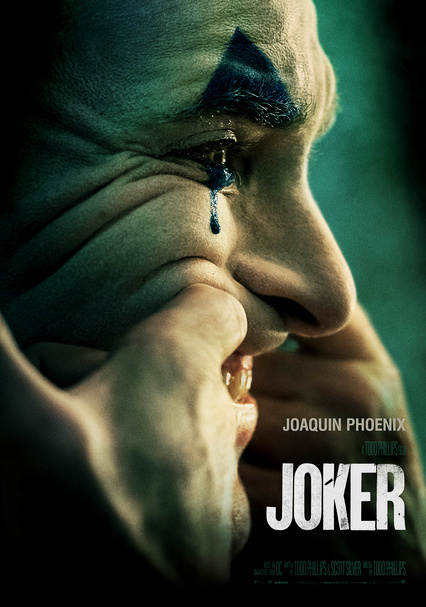
Joker-2019

Joker-2019

Director Todd Phillips

Starring Joaquin Phoenix

Top 250 Films #166

Scott’s Review #953

Reviewed November 1, 2019

Grade: A

Joker (2019) is a film that has divided audiences. Some love it, others loathe it. The experience is not your standard fun, superhero fare, with a hero’s rescue and the good triumphing over evil.

Despite the parlay into Batman territory, the film smacks the viewer across the face with its brutality, violence, and social and psychological injustices.

Joaquin Phoenix pummels the audience with an angry and bitter portrayal of the title character, easily one of the best performances of the year.

In one of the first scenes, before we even know the character, we experience a long, close-up of Phoenix laughing hysterically. We wonder what is so funny, before the revelation that he, Arthur Fleck, suffers from a nervous condition that causes inappropriate outbursts.

The year is 1981, and the fictional Gotham City, clearly a mirror image of New York City, serves as the setting. Times are tough, and crime is rampant.

Arthur lives in a dumpy apartment with his sickly mother, Penny (Frances Conroy), and visits a social worker regularly to receive his prescription medicine.

Arthur finds meager work as a party clown and aspires to be a stand-up comedian. After a gang attacks him in an alley, Arthur’s co-worker, Randall, encourages him to take a gun. Arthur invites his neighbor, single mother Sophie, to his stand-up comedy show, and they happily begin dating.

Finally, another person understands him. Segments of the population are disenfranchised and impoverished as Thomas Wayne, a billionaire philanthropist, runs for mayor of Gotham. A strange connection develops between Arthur, Penny, and Thomas, becoming central to the plot.

Can we discuss Phoenix’s bravura performance for a moment?

Suppose anyone thinks that Heath Ledger was phenomenal when he portrayed the same character in 2008’s The Dark Knight. In that case, they will be elated by Phoenix, who elevates the character to an entirely new level.

What Phoenix adds is strong sympathy for Arthur/the Joker and a care for the character. We feel sorry for him, but should we? He is a villain after all. One could easily debate whether his character can be considered the bad guy or the hero.

Regardless of the assessment, the performance is unforgettable.

A turn-off to some, which I found tremendously powerful, is the role reversal in the portrayal of the Wayne family, Bruce, and Batman characters.

Always deemed the “good guys”, in Joker, Thomas Wayne is self-centered, pompous, and embodies a sense of entitlement and snobbery.

Bruce is a young boy, but the implication is that the family is unkind, and what might the child grow up to believe?  Why is Batman/Bruce Wayne heralded as good and the Joker evil? It turns the tradition upside down into a twisted mind warp, and this is wonderfully creative and thought-provoking.

The best scene in the film, which triggers much of the subsequent violence and chaos, occurs when Arthur is invited to appear on a late-night talk show hosted by Murray Franklin (Robert De Niro). A week earlier, Franklin had played a humiliating clip of Arthur poorly performing stand-up.

Arthur decides to appear in full “Joker” attire, and the eventual discussion and words lead to tragic events. The scene is tense, intelligently written, and combative as the men spar over politics and class distinction.

Lastly, the musical score is dark, haunting, and mesmerizing without overtaking the film. Many key scenes of Arthur dancing and posturing are masterful, with the inclusion of the bombastic music.

He is a celebratory character, in his mind at least, and the music fuses into the scene with gusto and power. The combination of clowns and an incredible score adds significantly to the production.

Joker (2019) showcases a marvelous acting performance on the part of Phoenix, which combines a haunting musical score in its depth.

Providing a social commentary for people experiencing poverty and disenfranchisement, this film will divide viewers, probably based on preconceived expectations of a traditional Marvel-type superhero event.

The film offers much more than safer films like Wonder Woman (2017) or Black Panther (2018) ever could- a dark and violent character study.

Oscar Nominations: 2 wins-Best Picture, Best Director-Todd Phillips, Best Actor-Joaquin Phoenix (won), Best Adapted Screenplay, Best Original Score (won), Best Sound Editing, Best Sound Mixing, Best Cinematography, Best Makeup and Hairstyling, Best Costume Design, Best Film Editing

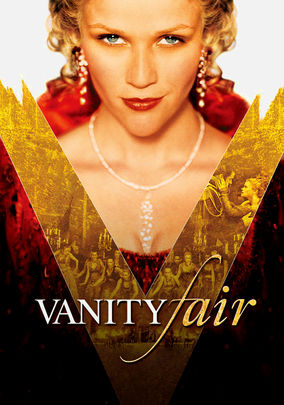
Vanity Fair-2004

Vanity Fair-2004

Director Mira Nair

Starring Reese Witherspoon

Scott’s Review #772

Reviewed June 12, 2018

Grade: B

An adaptation of the classic 1848 novel by William Makepeace Thackeray, Vanity Fair (2004) softens the traditionally unlikable, roguish character of Becky Sharp quite a bit.

This proves not to be the smartest move as the character, now more of a heroine, is watered down and forever changed, as is this film adaptation.

Reese Witherspoon (Becky) drew harsh criticism for her starring turn, but I do not think she is so bad, and the costumes and set designs are wonderful and quite the highlight of the resulting period piece.

In 1802 England, we meet Becky Sharp, a young woman who has just graduated from a School for Girls and been sent to work as a governess.

Because her father, a talented painter, is impoverished, Becky is cast aside as lower-class and deemed undesirable by anyone in the upper class, the men she is most interested in.

Despite her reputation as a tart, Becky aspires to marry rich and frequently gets into trouble with her shenanigans and smart tongue while romance blooms with the handsome Rawdon Crawley (Purefoy).

The story is supposed to encompass Becky’s life from approximately age eighteen through her mid-thirties (though Witherspoon never appears to age) and displays her trials and tribulations, her loves and losses through the years.

We follow her from rural England to London and Belgium, eventually residing in Germany, reduced to working in a casino, where the film concludes.

The film is a treat, as it features various countries as they appeared in the nineteenth century and the wars and battles of the period, making for an interesting history lesson.

The main appeal should be Becky Thatcher, since the film revolves around her, and numerous criticisms were leveled, accusing the film of casting Reese Witherspoon in the important and demanding role based on her star power at the time.

In 2004, Witherspoon was experiencing enormous film success after 2001’s Legally Blonde and 2002’s Sweet Home Alabama- admittedly fluff films- but securing her box office power nonetheless.

These films undoubtedly led to her being cast in the pivotal role, but I thought the star was perfectly adequate and gave Becky appropriate humor and zest.

Based on Witherspoon’s “girl next door” persona and the fact that she looks like a good character, it’s perplexing to cast her if filmmakers want to be true to the character.

Witherspoon was delicious in 1999’s Election as villainous Tracy Flick, a role of a lifetime. But that is the exception and not the standard.

But I digress- the bottom line is that while she is a capable actress, she does not give the gritty performance that many were expecting to be true to the character in the novel.

The rest of Vanity Fair is just mediocre as far as the story goes.

While Becky’s antics are both humorous and dramatic, her rooting value in the romance department does not come across in the 2004 film; there is not enough chemistry between the leads to warrant much support.

Opinions abound that other incarnations of Vanity Fair are far superior and more compelling than this film is, but I have yet to see any.

Compliments must be reaped on the costume department and the art direction- both are superior. Such threats are the lavish and colorful costumes and gowns that mark the time.

From the classic-style hats and highfalutin dresses featured in ball after ball, this aspect is nearly enough to recommend a watch over the dull story and, immeasurably, the highlight of the entire film.

Vanity Fair (2004) is considered a messy travesty to those well-read enough to have turned the pages of the classic novel.

Since I have not yet read the book, perhaps I enjoyed the film slightly more than I should have, but alas, I did not find the casting of Witherspoon as Becky, nor the overall product, to be drivel, as many did.

I recommend the film for the gorgeous visual treats if nothing else.

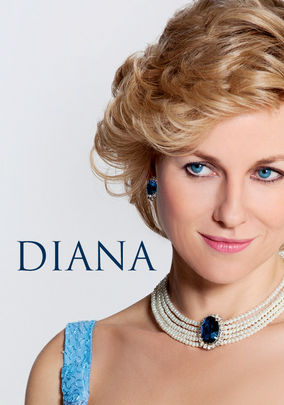
Diana-2013

Diana-2013

Director Oliver Hirschbiegel

Starring Naomi Watts

Scott’s Review #63

70291112

Reviewed June 24, 2014

Grade: C+

Assuming all the details of Diana (2013) are accurate, this film offers an interesting account of Princess Diana’s last two years of life and her transition from married royalty to a single woman, all while remaining the most famous woman on earth.

While the film is interesting, I felt something was missing, and it was not as gripping as I had hoped.

I also did not quite buy Naomi Watts as Diana. Her mannerisms were off to me, and the real Diana was taller.

Also, I didn’t quite believe that Diana could throw on a brown wig and walk freely around London unrecognized.

There was no chemistry between Watts and Naveen Andrews (TV’s Lost), who played a successful heart surgeon with whom Diana begins a romance.

These criticisms do not mean the film was a total failure (there was a sincere likability and charisma that Watts brought to the role), but it was not as good as one would have hoped.