Category Archives: Independent Drama

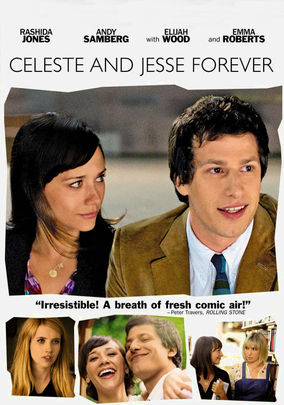
Celeste and Jesse Forever-2012

Celeste and Jesse Forever-2012

Director Lee Toland Krieger

Starring Rashida Jones, Andy Samberg

Scott’s Review #421

70227647

Reviewed June 19, 2016

Grade: D

Celeste and Jesse Forever (2012) was a major dud for me.

I am not a fan of romantic comedies, but since the film received a nomination for an Independent Spirit Award for Best First Screenplay, I decided to watch it.

I can’t understand why this film was nominated for that award. Perhaps someone knows someone who knows someone?

There is nothing impressive about the writing whatsoever.

It’s a tried-and-true romantic comedy formula: a couple comes together, the couple splits, the couple reunites, throw in some misunderstandings for good measure, and that is pretty much the film.

The central characters and supporting characters are either dull, annoying, or both.

There is nothing loathsome about the movie, but rather, it’s your standard-by-the-numbers romantic comedy that warrants no award nominations.

Bland.

Independent Spirit Award Nominations: Best First Screenplay

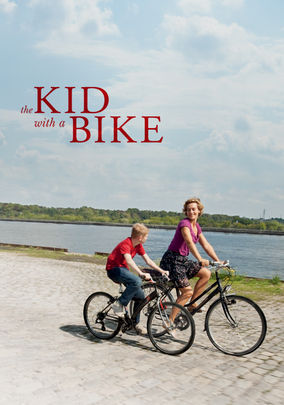
The Kid with a Bike-2011

The Kid With A Bike-2011

Directors Jean-Pierre Dardenne, Luc Dardenne

Starring Thomas Doret

Scott’s Review #416

70189306

Reviewed June 18, 2016

Grade: B

The Kid with a Bike is a small French film from 2011 that has received acclaim and recognition worldwide.

The film tells the story of a troublesome young boy abandoned by his struggling father and the various dramas that unfold.

I found the film somewhat disappointing, as I expected a bit more than I got.

Throughout the very short one hour and twenty-seven-minute run-time, the young boy broods and defies either authority or his caregivers, or fights with various people he encounters as he attempts to find his father.

The boy bonds with a local hairdresser who takes him in and is interesting, but her motivations are never made clear beyond being kind.

Why would she take in a strange kid? We don’t learn much about this character, and that is a shame.

One element toward the end of the film was shocking and well done, but overall I expected something a bit deeper from this movie, given all the praise surrounding it.

Independent Spirit Award Nominations: Best International Film

The Perks of Being a Wallflower-2012

The Perks Of Being A Wallflower-2012

Director Stephen Chbosky

Starring Logan Lerman, Emma Watson   

Scott’s Review #415

70243461

Reviewed June 18, 2016

Grade: A-

The Perks of Being a Wallflower (2012) is a coming-of-age gem of a film.

It reminds me of a strange combination of The Ice Storm (1997), Donnie Darko (1999), and American Beauty (1999), but a bit more straightforward and less weird than those films.

Perhaps with a bit of The Breakfast Club (1985) thrown in for a lighter touch.

This movie felt real to me, not like the typical high school schmaltz usually crowding cinemas these days. It’s dark at times but also humorous and well-written.

Each teen in the group of friends has demons to face, and the characters are complex and intricately written. All are insecure in some form, and many teen issues are addressed in a mature, sensitive way.

It’s nice to see Emma Watson breaking away from her Harry Potter image.

The Perks of Being a Wallflower (2012) is a character-driven treat worth seeing.

Independent Spirit Award Nominations: 1 win-Best First Feature (won)

Robot & Frank-2012

Robot & Frank-2012

Director Jake Schreier

Starring Frank Langella

Scott’s Review #414

70227654

Reviewed June 18, 2016

Grade: C

Robot & Frank (2012) is one of those films that leaves me with a “meh” reaction after I’ve seen it.

It’s not that it’s a bad movie, but there’s nothing particularly special either- it is quite ordinary and rather forgettable after the credits have rolled.

The premise, on paper,  seems novel: a future with robots that grow attached to humans. Unfortunately, the movie did not live up to the idea.

I was hoping for an interesting 2001: A Space Odyssey (1968)- type robot idea (HAL), but I got nothing like it.

I’m a big fan of Frank Langella, and I felt he was the main attraction in this movie.

On a side note, why is Susan Sarandon suddenly playing every meaningless supporting role these days? Another wasted role. She deserves better.

Several plot points had no follow-through, and the ending, while not exactly predictable, was nothing spectacular.

Meh.

Independent Spirit Award Nominations: Best First Screenplay

The Sessions-2012

The Sessions-2012

Director Ben Lewin

Starring John Hawkes, Helen Hunt

Scott’s Review #413

70209251

Reviewed June 18, 2016

Grade: B-

The Sessions (2012) is a cute, sentimental type film that is pleasant but not much more.

I found the film to be a bit safe, although Helen Hunt’s full-frontal nude scenes are surprising to me and quite brave of the actress. I’ve never been much of a Helen Hunt fan and I have always found her to be overrated, but her performance is very good.

I felt, for the subject matter, the film is too sentimental and too Hollywood, though I do admit to enjoying it.

It might have been grittier and the characters explored a bit more though.

I did not enjoy William Macy’s silly priest character. His character seems rather unnecessary to the rest of the film and has no real point except being the unnecessary moral compass.

The dynamic between John Hawkes and Helen Hunt’s characters is the best part, otherwise, The Sessions (2012) is a mediocre offering.

Oscar Nominations: Best Supporting Actress-Helen Hunt

Independent Spirit Award Nominations: 2 wins-Best Male Lead-John Hawkes (won), Best Supporting Female- Helen Hunt (won)

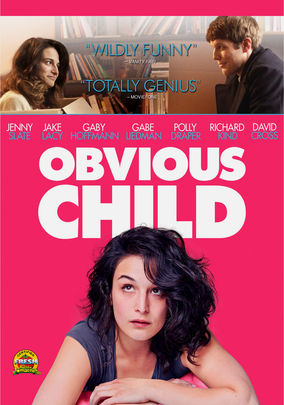
Obvious Child-2014

Obvious Child-2014

Director Gillian Robespierre

Starring Jenny Slate

Scott’s Review #387

70301275

Reviewed March 22, 2016

Grade: C+

Obvious Child is a 2014 independent comedy/drama nominated for a couple of Independent Spirit Awards, with mixed results.

It works on some levels but has an irritating underbelly and some unneeded components that ultimately give it a thumbs down.

The major success is star Jenny Slate, a real-life Brooklyn stand-up comic with immeasurable comic timing, who will hopefully become a rising star.

Slate starred in a 2009 short film of the same name before it became a full-length feature.

Slate stars as a twenty-eight-year-old Brooklynite, who moonlights as a stand-up comic in a dingy bar while working in a desolate bookstore that is soon closing.

Conversely, her parents are successful- her mother is a famed professor. When her steady boyfriend unceremoniously dumps her, she takes up with a handsome young man for a one-night stand filled with fun.

Predictably, she winds up pregnant and forges ahead with a plan to abort their child.

The abortion story is quite interesting since there is never a doubt about what will happen.

Unlike films that make abortion the main focus of conflict, Obvious Child wisely does not- every character supports, and even encourages her to have the procedure, including her mother and best friend.

Having been written and directed by women, this is intentional and a way of empowering women, which is one of the high points. If one is on the fence about the topic of abortion or is a pro-life stance, this film may be very tough to watch as its slant is made crystal clear.

Slate is the other high point of the film.

She exudes confidence and comic range. Jewish and slightly awkward-looking, she is not the leading-lady type, and this arguably makes her wit and sarcastic language even funnier.

She is a natural in comedy, and I hope she goes far.

Two slight props for me worth mentioning are the wonderful mention of the classic film Gone with the Wind (1939) and the setting of Brooklyn. This was a great nod to film history, and the setting gave Obvious Child an authentic New York City feel.

On the other hand, an utter annoyance about Obvious Child is the shameless and constant use of blatant and off-putting bathroom humor- not just once or twice, but numerous times.

How is this necessary to the plot? I can’t say, but I surmise the filmmakers deemed it necessary to show that females can give as good as males can.

Almost saying, “men can make poop jokes, why can’t women”? Why this is necessary for any film is beyond me, and it gives Obvious Child a crass, ugly feel.

The film also feels unrealistic.

Max is portrayed as Prince Charming. He can do no wrong, supports Donna in any decision she makes, is enamored by her sole being, and loves her unconditionally after only a one-night stand.

This would not happen in real life.

The fact that Donna is Jewish and quirky and Max is Christian and straight-laced is not explored. What conflicts would they undoubtedly face? Why were his parents not featured?

Highly uneven, with a great premise and an interesting slant on a still-controversial social issue, Obvious Child (2014) succeeds in the story department but fails in its uncalled-for use of potty humor to elicit cheap laughs.

Independent Spirit Award Nominations: Best Female Lead-Jenny Slate, Best First Feature

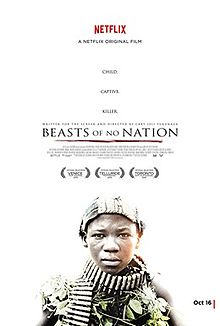
Beasts of No Nation-2015

Beasts of No Nation-2015

Director Cary Fukunaga

Starring Idris Elba, Ama Abebrese

Scott’s Review #380

Beasts_of_No_Nation_poster

Reviewed February 21, 2016

Grade: B+

Having been made aware of this film following the healthy number of independent film award nominations heaped upon it in 2015, Beasts of No Nation is a war drama, set in an unnamed West African country.

It tells of dire events from the perspective of a young boy, who has lost his family.

He is forced into a life of brutality and death, taken under the wing of a charismatic commander.

Beasts of No Nation is sometimes raw, sometimes gorgeous, but at all times thoughtful and a powerful telling of the devastation of human life, in a world very few can comprehend.

We first meet Agu (approximately aged eight or nine), wonderfully played by unknown child actor Abraham Attah, during happy times.

He plays with his childhood chums and adores his older brother who is attempting to woo a pretty girl. His father is a leader and the family lives in a small village protected by troops.

They allow refugees in for care.

Their country is in a civil war, but the family happily survives and makes a life for themselves, sharing meals. Suddenly, the government has fallen and rebels seize the area.

Soon, Agu’s family is gone, leaving him alone and scared.

His world turns upside down, he becomes involved with a militia commandant, played by Idris Elba, and a fellow child soldier named Strika, who takes him in.

The film belongs to two actors, Attah and Elba, though all actors perform their roles with precision. The relationship between the characters is interesting and complex, like a father/son mixed with mentor/protégé, and is the most compelling part of the film.

The commander is a father figure to Agu. He sees a warrior in him, taking him under his wing, feeding, and caring for him. He is never violent or abusive towards Agu and in one powerful scene, Agu is sodomized ( mostly off-screen yet very much implied) and Agu seeks comfort in his best friend Strika, who has also met the same actions prior.

One cannot help but think sexual assaults like this are perceived and handled differently in Africa.

Rape is a subject that comes up numerous times in the film, mostly against women.

I noticed throughout the film the beauty of the cinematography as most scenes are set outside. Lush, green forests and the villages are tranquil and beautiful, contrasting starkly with the violence.

Agu does some terrible things- in one brutal scene an innocent student is hacked to bits by Agu and Strika at the commander’s coaching as a sort of initiation.

Agu sees the student as responsible for his family’s fates and goes berserk.

Agu then tearfully mistakes a village woman for his mother and angrily shoots her dead as she is being raped by his cohorts. The film is not soft and contains lots of violence. But again, this is a world unknown to most viewers.

At times we despise Agu and the violent rage he emits, but then we remember he is a young boy being turned into a warrior by savages.

He talks to God and his mother and knows what he does (and what is happening to his country) is wrong.

I would have liked to have learned more background about Elba’s character. What makes him tick? Has he lost loved ones long ago as Agu has?

I surmised that the answer is yes. He is brutal, but a calm, calculating, thoughtful man, but one that is in control at all times.

As war rages on Agu and his fellow tribe question what they are doing. Such smarts for a young boy and the audience admires his views. He is intellectual and worldly way beyond his years.

That is what makes Beasts of No Nation a compelling character study. I more than once thought that I had seen this type of film before (Last King of Scotland, 2006, comes to mind in recent times), but never to the extent of what a character-driven story it was, especially in the eyes of a child.

Beasts of No Nation (2015) takes the viewer to an unpleasant world of brutality and a world where there is no rule book. We are exposed to a once innocent child’s experiences and conflicted feelings in the face of danger and heartbreak, and learn its complications.

Independent Spirit Award Nominations: 2 wins-Best Feature, Best Director-Cary Joji Fukunaga, Best Male Lead-Abraham Attah (won), Best Supporting Male-Idris Elba (won), Best Cinematography

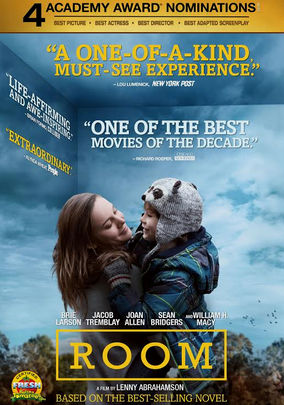
Room-2015

Room-2015

Director Lenny Abrahamson

Starring Brie Larson, Jacob Tremblay

Scott’s Review #373

80073823

Reviewed January 31, 2016

Grade: A

Room (2015) is a compelling story of a woman’s battle in captivity with her five-year-old son in tow.

The film also tells of the after-effects of reclusive living as they both strive to adapt to their changing world.

Receiving a slew of Academy Award nominations, the film is more than a one-dimensional story of peril or rescue, but rather, a smartly woven tale that delves into the psychological issues involved with being confined in a room for years, giving the film a deeper meaning.

Room is adapted from the novel of the same name, written by Emily Donoghue.

We meet twenty-four-year-old Joy (Larson) and her five-year-old son Jack, who live in squalor in a shed made into one room. They exist from food and supplies delivered by their captor “Old Nick”, who abducted Joy seven years prior.

He periodically rapes her and is Jack’s father, though there is no affection on either side. Joy has attempted escape before but has failed.

She is determined to break free once and for all and allow her and Jack a normal life.

In the first half, we learn about Joy and Jack and how they exist and forge a life together. Joy tells Jack they are real and the outside world and people on television are not.

They live in a fantasy world and Jack periodically treats objects (chair, toilet, bed) as real-life things, giving morning greetings to these objects- this is both cute and sad. His only channel to the outside world is a small skylight, which he endlessly gazes at.

I love how the film suddenly changes course at the halfway point and shifts focus to the aftereffects taking a dark, complex, psychological turn.

The first half takes place entirely in the “room”, and suddenly, a new world has blossomed. A monumental event changes the course of the film.

From this point, the film deals with the traumatic effects of being shut away for years. Joy suffers from depression. Jack sees a new world. We see how other characters deal with the turn of events.

Joy’s parents, wonderfully played by Joan Allen and William H. Macy react in completely different ways.

How have their lives changed because of Joy’s abduction? Will they see Old Nick every time they lay eyes on Jack? How will Joy’s mother’s new boyfriend react?

There is a strong theme of coping throughout the film and how all the characters cope with life events and attempt to resume a life of normalcy. There is such a unique humanistic feel to the film that makes it deeper than I would have expected.

Sure, Brie Larson gives a dynamic performance, but the film offers reflection and thought.

The direction and camera work are a marvel. We see a blurred view of what Jack sees in “the real world”.  It is almost like the audience is reawakening to life and we see it through a child’s eyes- the sights, the sounds.

Jack has created an imaginary dog in his mind and the film introduces more than one real dog that plays a pivotal role. We see Jack’s joy and terror at the new experiences.

Room (2015) encompasses thought-provoking ideas making what might only have been a basic story and turning it into an intricate journey into human psychology through many different nuances and facets.

What a wonderful, dark experience this is.

Oscar Nominations: 1 win-Best Picture, Best Director-Lenny Abrahamson, Best Actress-Brie Larson (won), Best Adapted Screenplay

Independent Spirit Award Nominations: 2 wins-Best Female Lead-Brie Larson (won), Best First Screenplay (won), Best Editing

Dancer in the Dark-2000

Dancer in the Dark-2000

Director Lars von Trier

Starring Björk

Scott’s Review #365

Reviewed January 9, 2016

Grade: A

Dancer in the Dark is, in my opinion, one of the most important, inventive films of the 2000s and is proudly one of my favorites of all time.

However, the film is not pleasant to watch and is quite painful and depressing, if the truth be told.

But the relevance and sheer emotion the film elicits are more than enough reason to be exposed to it, if only once, perhaps.

Director Lars von Trier is a master of creative and disturbing, dreamlike films that are odd, non-linear, or otherwise open to interpretation.

He has directed such gems as 2011’s Melancholia and 1996’s Breaking the Waves, to name but two.

In Dancer in the Dark, he uses handheld cameras, which add a lot of grit to the film, giving it an almost documentary-style, grainy, shaky look.

The addition of musical numbers mostly written and performed by the star, Björk, is a wonderful touch.

Speaking of Björk, words cannot express what a brilliant performance she gives in the film, and the raw emotion she expresses in her starring role is awe-inspiring.

So great was the stress of filming Dancer in the Dark that, to my knowledge, she has never made another film.

She was shamefully overlooked in the Best Actress Oscar category- an omission that is one of the biggest fails in Oscar history.

Tensions were reportedly high on the set of Dancer in the Dark, as Björk reportedly despised her director, never missing a chance to tell him so, disappeared from the set for days on end, and spat in his face.

Co-star Deneuve, a former French megastar, reportedly did not get along with Björk.

Despite all the drama, the stars managed to pull together a masterpiece.

Björk plays Selma, a Czech immigrant living in Seattle with her young son. The year is 1964. Selma is poor, struggling to survive by working in a clothing factory alongside her best friend, Cvalda (Deneuve).

Selma and Cvalda escape their dull lives by watching classic musical films at their local cinema. To make matters worse, Selma is suffering from a degenerative eye disease, causing her to lose her sight gradually.

She struggles to save enough for surgery for her son, who is sure to suffer the same fate without it.

Selma frequently imagines musical numbers in her day-to-day life involving friends and co-workers. When a tragic event occurs, and Selma is accused of a crime, the film takes a very dark turn.

The conclusion of the film will always require handkerchiefs as it is as powerful as it is gloomy.

The aspect I love most about Dancer in the Dark is that it smashes barriers about what film art is and throws all of the rules out the window.

Lars von Trier, famous for this, created a dreamy, independent hybrid musical-drama, a dynamic, tragic, emotional experience all rolled into one great film.

Oscar Nominations: Best Original Song-“I’ve Seen It All”

Independent Spirit Award Nominations: 1 win-Best Foreign Film (won)

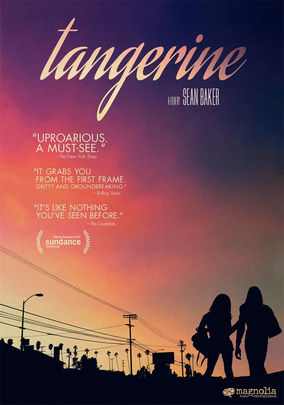
Tangerine-2015

Tangerine-2015

Director Sean Baker

Starring Mya Taylor, Kitana Kiki Rodriguez, James Ransone

Scott’s Review #301

80037676

Reviewed December 17, 2015

Grade: A

On the rare occasion that I am lucky and privileged enough to stumble upon a gem like Tangerine (2015), it reaffirms my faith in film and creative filmmakers in general.

Here is a universal lesson- it does not require oodles of money to make a great film. This film was shot with three smartphones!!

It takes talent and creativity.

Tangerine is a groundbreaking film- the first (that I am aware of anyway) to feature transgender actresses at the forefront of the feature.

The film has been honored with multiple Independent Spirit Award nominations.

Shot documentary style, with grittiness and a frenetic pace, while mixing in unique styles of music (hip hop to classic) as the musical score (a child-like tune begins the film), Tangerine is unique from both a story perspective and a visual style.

The film’s first scene begins with two transgender sex workers- Sin-Dee Rella and Alexandra, having a conversation in a coffee shop. Sin-Dee has just been released from jail and learns that her boyfriend, and pimp, Chester (James Ransone), has been cheating on her.

It is Christmas Eve.

The film explores Sin-Dee’s rage and subsequent search all over Los Angeles for Chester, and the girl he has been with. She vows revenge on them both.

However, beyond this story point, the heart of the film is of loneliness and isolation that most of the characters (trans and otherwise), share, in one form or another.

Interspersed with the Sin-Dee story, are stories involving Alexandra’s feud with a “john”, and her pursuit of a singing career.

Another interesting story is that of a straight male, Razmik, an Armenian cab driver who is enamored with transgender sex workers.

This may sound bizarre or too out there for some, but Razmik’s story is quite tender and compelling. He has a wife, child, and other relatives and is the breadwinner. He is also very conflicted. He does not “use” the sex workers, but rather cares for them and admires them.

I found all three principal characters interesting in different ways- Sin-Dee and Alex are over-the-top, yet sensitive. While Sin-Dee is aggressive and vengeful, Alex is the kinder of the two and the more sensible and rational.

She is a sex worker but aspires for more out of life. Razmik is even more interesting- does he have a fetish? Is he shameful for spending money on prostitutes while supporting a wife and child?

All of the characters are victimized in one form or another and all are dysfunctional- at the same time, they are all weirdly likable.

I witnessed moments of Quentin Tarantino’s film style coming across the screen- most notably in the coffee-shop scenes (the beginning and final scenes) as all hell breaks loose, and the characters delve into all sorts of crazy behavior.

Tangerine is a sweet tale about friendship too.

It is a memorable and powerful film experience.

In the end, all the characters are hurting, living such sad lives, especially since the time is present-day Christmas Eve, which might make this film sound depressing, but it is not.

I found it almost uplifting in a way.

Tangerine (2015) is a completely original, groundbreaking film that I hope will be remembered and appreciated fifty years from now.

Independent Spirit Award Nominations: 1 win-Best Feature, Best Director-Sean Baker, Best Female Lead-Kitana Kiki Rodriguez, Best Supporting Female-Mya Taylor (won), Piaget Producers Award

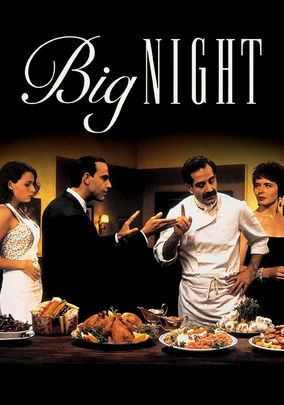
Big Night-1996

Big Night-1996

Director Stanley Tucci, Campbell Scott

Starring Stanley Tucci, Tony Shalhoub

Scott’s Review #300

305300

Reviewed December 16, 2015

Grade: B+

Big Night (1996) is a sweet, whimsical little film that is a food lover’s dream come true, since the story’s focal point is food, with multiple dishes prepared on-screen, lending it realism.

It centers on the restaurant business and, specifically, how two brothers struggle to keep their failing restaurant afloat through their love and passion for food.

The story tells of two Italian immigrant brothers, Primo and Secondo, played by Tony Shalhoub and Stanley Tucci, respectively.

The time is the 1950s, and they reside in blue-collar New Jersey. Times are tough for them as they try to succeed in the difficult restaurant business- they specialize in Italian food, of course.

Secondo is a playboy of sorts- suave and handsome, he dates Phyllis (Minnie Driver) while galavanting with a sophisticated older woman named Gabriela, the wife of a competitor.

Primo, on the other hand, is quiet and serious, yet an all-star chef. The food he prepares is wonderful, and his talent is evident.

But how can they market themselves to be successful?

At this point, their restaurant is dying, and they risk returning to Italy or eking out a meager existence working for someone else.

An idea is announced: a celebrity singer (Louis Prima) will perform for a one-night extravaganza at their restaurant, where they will make the meal of their lives and impress the town, thus achieving success.

The film is charming, and my favorite parts are on the “big night”. As the duo prepared the liquor order and shopped for flowers and other decorations, the mood and spirit left me with a warm feeling.

What a sense of togetherness Primo and Secondo, along with their friends, felt in achieving this challenging goal.

Inevitably, there is tension between the brothers and between Secondo and Phyllis, but truthfully, these are merely subplots, and the heart of the film is in the food.

The scenes set in the kitchen left my mouth watering. As Secondo prepares a baked pasta dish (Timpano), the meal oozes with love and tastiness. The entire story arc is grand and magnificent.

The group of diners revels in the restaurant’s dining room, enjoying spirits and dancing the night away. By morning, everyone is full and drunk, both with love and alcohol, but most are happy. They get merry as they eat the night away.

I could almost taste the main course!

A subplot that works for me is the burgeoning romance between reserved Primo and equally reserved flower shop owner, Ann. Both very timid, they finally muster the courage to admit their feelings for each other while enjoying (what else?) wine and food- what better way to begin a romance?

The tenderness and chemistry between these two are very innocent and captivated me while watching the film.

The final scene of the brothers making an omelet is also wonderful and a fitting way to stress togetherness and perseverance, which is what the small film is really about.

For lovers of food, Big Night (1996) is a shining moment.

Independent Spirit Award Nominations: 1 win-Best Male Lead-Tony Shalhoub, Stanley Tucci, Best First Screenplay (won), Best First Feature

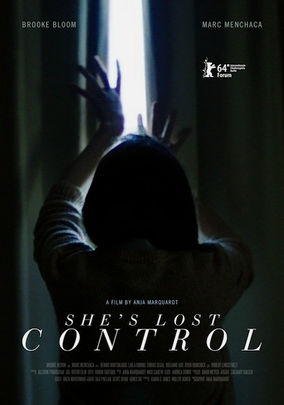
She’s Lost Control-2014

She’s Lost Control-2014

Director Anja Marquardt

Starring Brooke Bloom

Scott’s Review #299

70305205

Reviewed December 14, 2015

Grade: B+

She’s Lost Control (2015) is a dark, independent drama and Anja Marquardt’s directorial debut.

This film is one reason I proudly support independent film, as it is otherwise a film that most would not know about, and will never know about, if not for good word of mouth and award recognition- think Indie Spirit Awards.

Hopefully, Marquardt will one day be a household name.

The film is heavy yet intriguing and a character study.

It is a dark and dreary experience- some might argue depressing, centering on Ronah (Brooke Bloom)- a young, female, college student, aspiring towards her master’s degree in psychology, who works as a sexual surrogate in Manhattan.

The film explores her experiences with various clients, specifically a disturbed, volatile man she takes on as a client.

As she gets to know Johnny, they forge a special bond, but will romantic feelings and jealousy get in the way of the therapy assigned to both parties?

The tale focuses on how each of them explores their feelings, and clearly, those feelings are not peaches and cream.

Ronah is not a prostitute, and there is very little sex that goes on, albeit the implication is there. She is nurturing, emotionally invested, and intends to become a psychiatrist one day.

It is unclear whether her “boss,” a shady-seeming character, is her pimp or simply an employer. His role and motivations are unclear.

The most interesting aspect of the film is the title, and throughout my viewing of the film I wondered about the title more and more- are any of Ronah’s experiences in her mind? Is she stable, or does she have some emotional or mental issues?

She befriends a kind neighbor around her age who invites her for dinner- they bond. The neighbor invites her out to dance, but Ronah declines.

She also has an older female confidant- a former surrogate who gives Ronah tips and suggestions. Still, Ronah is lonely.

Again, we wonder if perhaps all is not what it seems. This is a fascinating aspect of the story. One must watch to find answers to questions like these.

New York City can be a tough, unkind world, and She’s Lost Control doesn’t sugarcoat an individual’s difficult existence when they aren’t blessed with family money, strings, or some other advantage.

Ronah lives in a dump with holes in her shower and cramped quarters. On top of that, she is constantly kept up to date on problems involving her brother and mother back home in upstate New York.

Quite simply, Ronah is overwhelmed by her life. Might she be spinning out of control?

The film’s dreary aspect isn’t so much the sexual content. Ronah is a therapist, and everything is consensual.  Unfortunately, she is challenged by some of the people she encounters in her profession.

I admire She’s Lost Control (2014) quite a bit for its insight, thoughtfulness, and compelling story of a woman with a difficult life, trying to make ends meet, and aspiring to something worthwhile.

She is brave, troubled, and interesting all rolled up in one fascinating lead character.

Independent Spirit Award Nominations: Best First Screenplay, Best First Feature

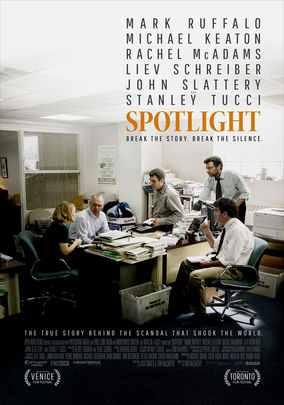
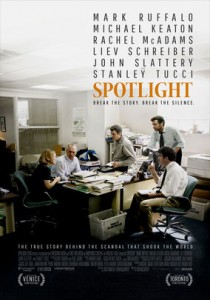
Spotlight-2015

Spotlight-2015

Director Thomas McCarthy

Starring Michael Keaton, Mark Ruffalo, Rachel McAdams

Scott’s Review #294
80061341

Reviewed December 9, 2015

Grade: B+

Spotlight (2015) is a film with an important story to tell.

A telling of true events that occurred within the Catholic Archdiocese for ages, Spotlight’s focus is specifically on the Boston scandals, as a team of reporters working for the Boston Globe uncovered and exposed a multitude of child molestation cases committed by priests.

They were subsequently covered up, leaving victims paid off to keep quiet. The number of proven cases in Boston alone is staggering.

Starring are a plethora of talents including Michael Keaton, Mark Ruffalo, and Rachel McAdams, who lead the pack.

They make up the “Spotlight” team at the newspaper,  an investigative unit that works on special stories as they arise.

Their new boss, Marty Baron (ironically a Jewish man), played compellingly by Liev Schrieber, takes over as head of the department. He quizzically asks why the story is not already a priority. Suddenly it is a hot-burner issue and the film delves into an investigation to uncover the facts.

Spotlight is a minimalist film. There is nothing cinematically unique or razzle-dazzle about it, but somehow that is okay.

In some aspects, the film reminds me of the 1975 thriller All The Presidents Men, starring Dustin Hoffman.

For instance, the bleak, bare news rooms-sterile in their look, are similar- cubicle after cubicle,  harsh lighting, and generic conference rooms.

This is the filmmaker’s intent.

Also, the fast, energetic pacing, successfully emitting the tight deadlines newspaper folks face, transfers perfectly on film.

The sexual abuse scandal is a cold, harsh reality and the film introduces several victims, who, now as adults, are forever scarred. Some attend support groups, some take drugs, one is sadly not “all there”. Another, now a gay man, was singled out by a priest during a vulnerable period in the then-young boy’s, life.

It is a heartbreaking reality that many victims in the film are based on real cases.

Let’s focus on Schrieber’s character for a minute.  He gives such an understated yet compelling performance there is a risk it will wind up being overlooked. He calmly, yet passionately initiates the case. It is not a showy performance and subdued but a compelling one if enough attention is paid to it. He is a standout.

Unfortunately, the film does not delve much into the defense (if any) of the Catholic church. Did they do anything but deny the allegations? Why were the victims paid off? Not much is noted from the church’s point of view.

In real life, the Catholic church did hide the abuse that transpired for decades.

A slight negative is that the film does not delve into the characters’ personal lives.

Michael Keaton’s character, Robby Robinson, is arguably the lead character, spearheading the case,  though very little is known about him.

Is he married? happily? Yes, he is a workaholic, but what else?

Ruffalo’s Michael Rezendes is separated from his wife, but little is known to the reasons.

Finally, McAdam’s Sacha is probably the most fleshed-out. She is happily married, close with her religious grandmother, and hurt by the scandal. But we do not know her in-depth either.

I found myself wanting to know more about these people.

All in all, Spotlight (2015) is a superior film deserving of the recognition it is receiving. Intense, gritty, and filled with honesty, it is a story that needed to be told and has been told well.

Oscar Nominations: 2 wins-Best Picture (won), Best Director-Tom McCarthy, Best Supporting Actor-Mark Ruffalo, Best Supporting Actress-Rachel McAdams, Best Original Screenplay (won), Best Film Editing

Independent Spirit Award Nominations: 5 wins-Best Feature (won), Best Director-Tom McCarthy (won), Best Screenplay (won), Best Editing (won), Robert Altman Award (won)
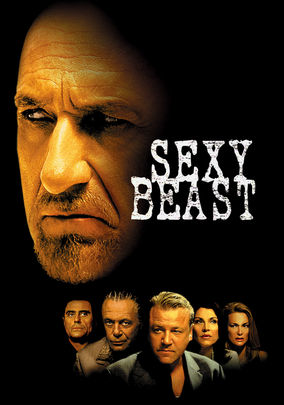
Sexy Beast-2001

Sexy Beast-2001

Director Jonathan Glazer

Starring Ray Winstone, Ben Kingsley

Scott’s Review #286

60020863

Reviewed November 13, 2015

Grade: B+

Sexy Beast is an interesting little indie gem that has garnered quite a cult following, deservedly so, since the year of its release, 2001, and I have recently viewed it for the first time.

In large part, the film belongs to Ben Kingsley, who gives a bravura and frightening performance as a crime lord attempting to convince a retired hitman, now sworn to the straight and narrow, to resurrect his career for one last heist.

The other principal characters are wonderful in their own right, as the film successfully mixes elements of Quentin Tarantino with Ocean’s Eleven- bank heist meets quirkiness, with smart and witty dialogue sprinkled in.

Gary Dove is happily retired and living a life of contentment with his ex-porn-star wife, Deedee, and his best friends, Aitch and Jackie.

Having all been involved in “the biz”, they are long since removed from their respective careers. They now enjoy evening parties of wine and martinis, and days relaxing by the pool in their Spanish villas.

One day, a former criminal associate, Don Logan (Kingsley), who is also a sociopath, arrives to disrupt their peaceful lives and to coordinate a bank heist in London, hoping to lure Gary back into the game.

As Gary and company nervously decline Don Logan’s offer to participate in his sinister plan, a wonderful and important scene unfolds early in the film.

The quartet sits around the dinner table at a swanky Spanish restaurant, anticipating a scrumptious meal.

Jackie reveals that Don has contacted her, and the scene’s tone immediately shifts to dread. All of them both fear and despise Logan.

They agonize over this sudden disruption to their lives, and we, the audience, fear Don Logan before he ever appears on-screen.

What fantastic storytelling.

Kingsley portrays a menacing character and brilliantly so. The character harbors frightening brutality beneath his normally calm demeanor, making the viewer shudder when he appears on-screen.

Lest we forget, Ian McShane also gives a nuanced performance as Teddy Bass, Logan’s right-hand man and wise businessman.

The cat-and-mouse scene towards the end, as Teddy and Gary have an important discussion in a car, is both chilling and integral to the film’s plot.

As Teddy slowly figured out certain events, I was left intensely anticipating his reactions.

The film introduces an intriguing sub-plot involving Don’s long-ago fling with Jackie and subsequent love for her, which adds layers to the plot and the dynamic and tension between Don and Gary.

Upon finishing the film, I loved the foreshadowing it contains. I found myself rewinding the events in my mind, pleasurably so.

From the pool to the young Hispanic kid to the thunderous boulder- all of these elements were crucial to the conclusion and fit like a puzzle.

A dark comedy of sorts, I chuckled after the film at the final reveal involving a double-heart insignia and a pool that gives the villain comeuppance and pleases the viewer.

Having alluded to viewing Sexy Beast (2001) over the years, I am glad that I finally found the time to witness a darkly comical gem that, admittedly, may take repeated viewings to absorb and therefore fully “get”, and I look forward to doing just that.

Oscar Nominations: Best Supporting Actor-Ben Kingsley

Independent Spirit Award Nominations: Best Foreign Film

It Felt Like Love-2013

It Felt Like Love-2013

Director Eliza Hittman

Starring Gina Piersanti

Scott’s Review #283

70268905

Reviewed October 17, 2015

Grade: B

It Felt Like Love is a small, independent film from 2013 that garnered an Independent Spirit Award nomination.

A coming-of-age story encompassing a vulnerable and naïve fourteen-year-old girl, aware of her budding sexuality and developing a crush on an older, rebellious boy.

Quiet and subdued, the film tells an honest story of a young girl’s emotional struggles surrounding jealousy, loneliness, and fitting in.

Lila is a typical teenager living in New York City in what appears to be a blue-collar area of Brooklyn. Lila emulates her seemingly more mature best friend (she is turning sixteen) and much more sexually experienced, Chiara.

Never without a boyfriend and very popular, Chiara gains the attention of almost every boy she is around.

One day on the beach, a handsome friend of Chiara’s, named Sammy, passes by, when Chiara describes him as “sleeping with anyone”, Lila becomes fixated on him.

As she pursues him relentlessly, she puts herself in precarious situations and gets in way over her head.

Throughout this drama, Lila’s best male friend and neighbor, a child-like and innocent-looking kid, contrasts perfectly with the rugged, older Sammy.

Lila has two “men” in her life who could not be more opposite. The neighbor kid represents her youth, and Sammy, her adulthood, and she is stuck somewhere in the middle, wrestling between the two stages of her life.

The film is the debut of acclaimed director Eliza Hittman, who weaves an interesting and true-to-life premise. A fourteen-year-old girl’s feelings and emotions are powerful and often lead to risk-taking without thought of repercussions.

Liza is extremely vulnerable as anyone her age is, especially since the film reveals that she has recently lost her mother to breast cancer.

Her father is a caring yet no-nonsense type and is written well, as a typical blue-collar father would act.

The standout to me is the actress who plays Lila, Gina Piersanti. What a marvel! The youngster brilliantly portrays a range of emotions- gloominess, insecurity, and annoyance.

She is insecure but intelligent and savvy for her age. Her obsession with Sammy, clearly from the wrong side of the tracks, is dangerous, as he smokes pot regularly, parties, and works in a pool hall.

He ultimately isn’t for her, and I think Lila knows it deep down. But at her age, she is craving attention and sexually blooming.

All of the actors in the film are newcomers and do a fantastic job of relaying honesty. Lila’s motivations are not always clear, but then again, she is a teenager- moods and motivations change with the weather.

In one powerful scene, Lila hangs out at Sammy’s apartment (where she usually is and is seen as a pest). Sammy and his two friends are smoking pot and watching basketball on television.

Somehow, the subject matter turns to oral sex. As Sammy’s friends eagerly accept Lila’s awkward offer to pleasure them, Sammy rebuffs her advances and says that his “privates” do not like her.

This seems to lead Lila to leave him alone.

The audience hopes she musters her self-esteem and goes on with her life. The showing of full-frontal male nudity was surprising to me- very seldom is this shown in American cinema.

Interestingly, we never actually see Lila engage in any sexual activity. The point of the film is that she wants to desperately, but we cringe as we fear for the worst in each dangerous sexual encounter she experiences.

Perhaps it could have been further developed or fleshed out, but It Felt Like Love (2013) is a truthful, quiet film with powerful acting and writing from new talent sure to be around for years to come, with the wonderful skills they possess.

Independent Spirit Award Nominations: Best Cinematography

Grandma-2015

Grandma-2015

Director Paul Weitz

Starring Lily Tomlin, Marcia Gay Harden

Scott’s Review #275

Grandma_Movie_Poster

Reviewed September 21, 2015

Grade: B+

Grandma (2015) is clearly and deservedly, a showcase for the talented and interesting legendary Hollywood actress Lily Tomlin.

Years (twenty-seven to be precise) since she has had a starring turn in a film, the role of Grandma is custom-made for Tomlin, with the character’s sarcasm, wit, and downright bluntness emerging to the forefront.

The film is labeled a comedy/drama, which it is. It’s themed around a heavy topic of abortion and runs the risk of offending pro-life individuals, as the film undoubtedly contains a pro-choice slant.

Ellie (Tomlin) is a poet and former college professor in her seventies living in California. She is a lesbian and is mourning the recent death of her long-time partner. She has recently been dating a lovely young woman named Olivia (played by Judy Greer), whom she unceremoniously, and cruelly dumps, referring to Olivia as little more than a footnote in her life.

Afterward, Ellie breaks down in tears of guilt while showering.

One day her granddaughter, Sage, (her daughter Judy being the product of a one-night stand), appears on her doorstep asking for money for an abortion. Having just paid off her debts and destroyed her credit cards, Ellie is therefore broke.

The duo embarks on a quest for cash, and race against time to make the appointment in time for the scheduled procedure.

The film belongs to Tomlin but is enhanced by excellent supporting turns, specifically by Marcia Gay Harden as daughter Judy, and veteran actor Sam Elliot, as Ellie’s former flame Karl, to cite examples.

Judy and Ellie have experienced a tumultuous relationship their entire lives while Karl harbors resentment for Ellie for long-ago aborting their child. Harden is thrilling as a borderline, one-dimensional bitch character.

She is driven, angry, and self-centered, and it is mentioned that she has gone through numerous administrative assistants in her high-level corporate role.

I have not seen Harden in a role quite like this before. As unsympathetic as the character is, one cannot help wondering if Ellie’s mothering skills may have made Judy turn out this way.

Karl on the other hand is sympathetic. He is still wounded from his ages-ago relationship with Ellie and may still hold a flame for her, as unlikely a romance between them would be.

The film is darker than expected and is not the syrupy, mainstream, family story one might expect from the fuzzy one-word title.

Still, Tomlin’s cantankerous, sarcasm kept me in stitches and perfectly balanced the tough subject matter displayed in Grandma.

The relationships between the main characters are complex and tough to watch as they argue, swear, and insult each other.

Love is mixed in but complexities arise due to the controversial subject matter. The history of and, in many cases, painful memories are dredged up between characters.

Impressively, Grandma is not a film that debates the hot-button issue of abortion as one might assume. Sage never really considers keeping her baby and will have the procedure done as quickly as possible.  Ellie and Judy never try to persuade Sage to keep the child nor does Sage seriously contemplate keeping the baby.

The only instance of a pro-life perspective is when two ridiculous characters- a young mother and her ten-year-old daughter- suggest Sage not kill her baby. When Ellie steps in the young girl punches her in the face. Is this intended as comic relief or to make these characters appear as buffoons?

These characters are laughable.

The father of Sage’s baby is unsympathetic and a very minor blip on the radar. My theory is that the film chooses to go this route intentionally to avoid a debate over the abortion issue.

A debate is not the point, but the relationships between the characters are.

The scenes involving Ellie becoming irritated and sarcastic are priceless, successfully utilizing Tomlin. As she hilariously goes from situation to situation in an attempt to earn the $600 for Sage she resorts to various means as diverse as selling books, giving a kiss, or collecting an old debt.

This is the main draw of the witty little film, Grandma (2015).

Dear White People-2014

Dear White People-2014

Director Justin Simien

Starring Tessa Thompson

Scott’s Review #274

70298948

Reviewed September 18, 2015

Grade: B+

Dear White People (2014) is a highly creative, independent satire that begs to be watched for its message about racism today, homophobia, and class distinctions.

Set at an Ivy League college and written tongue-in-cheek, but also with a direct message from newly discovered director Justin Simien, it is a meaningful gem that challenges audiences to think, be entertained, and occasionally chuckle at the wit and comical lines.

Set in the present day- assuming 2013 or 2014- and well beyond the Civil Rights era, the film features a hip, sharp look and a myriad of characters, all with differing perspectives, all Caucasian or black in racial identity.

All the characters attend the affluent, sophisticated Winchester University, a mostly white, conservative school with a small community of black students who curiously all seem to live in the same dorm house.

The Dean is a Black man (played by Dennis Haysbert).

Sam White (Tessa Thompson) is a rebellious female student of mixed race who runs a radio show entitled “Dear White People”, which challenges the current state of racism in America, specifically at Winchester University.

Supporting characters include Lionel Higgins, a gay, bookish student with an enormous afro, excluded from almost all the sub-groups. Lionel is intrigued by Sam’s radio show.

Other characters include Coco- an attractive black girl with typically “white” mannerisms and friends, who try to fit in with the white culture. Troy, a very handsome black student (who tries to act “white”), dates a white girl (who tries to act “black”).

Finally, the film features Kirk, a white student whose father is the school president, who values an old-style way of thinking.

Shockingly, Kirk hosts a blackface party, which sparks major controversy at the school and drives much of the film’s drama.

The main theme is race, but different characters have different viewpoints on it, and the film explores all of them, which makes it unique and interesting.

Sam, for example, is a true advocate for racial equality and constantly challenges white people’s motivations and actions, blatantly so.

Coco, on the other hand, is resistant to being stereotyped as a woman of color and, in one scene, is incorrectly assumed to be from the hood by a reality television producer she is auditioning for.

She is envious of white people and the advantages they have, even going so far as to have straight hair and blue contact lenses.

Then we have Lionel, who is both gay and black, and considered an outcast. He fits in with no group and, curiously, seems okay being his own person.

What is unique and compelling about Dear White People is that it brings up a controversial issue, mixes it with satire, humorously, but presents compelling arguments against stereotypes, also bringing those stereotypes center stage, which most films avoid like the plague.

One black character is frustrated that, in their mind, most black people are content watching dumb black comedies, thereby supporting a negative racial stereotype.

One interesting aspect regarding the score is the use of lily-white classic film music- such as Barry Lyndon (1975)- the most lily-white of lily-white films (British and Irish).

Famous film director Quentin Tarantino is called out as being a racist director.

What wonderful irony!

Dear White People (2014) is a witty, intelligent slice of inventive filmmaking worth seeing, if only for its controversial subject of inequality and racism, which is too often forgotten.

An indie treat for those inclined to think a little.

Independent Spirit Award Nominations: 1 win-Best First Screenplay (won), Best First Feature

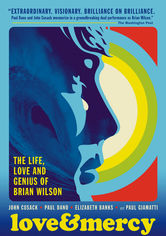
Love and Mercy-2015

Love and Mercy-2015

Director Bill Pohlad

Starring John Cusack, Paul Dano

Scott’s Review #258

80017274

Reviewed July 17, 2015

Grade: B+

The life and times of the Beach Boys’ famous and troubled lead singer, Brian Wilson, is finally played out on the big screen (apparently many attempts were made to make a film) as Love and Mercy (2015) chronicles his difficult upbringing, unrivaled success, and his interesting life in later years.

He suffered from schizophrenia, traveled down a paranoid, nervous path, and was manipulated by a family friend who served as his doctor and main caregiver.

Thankfully, he weathered the storm due to his future wife, and remarkably still performs and entertains in 2015.

His musical career began in the 1960s.

The biopic features many well-known Beach Boys tunes to hum along to and be entertained by. It’s not a happy film nor a downer either.

It’s somewhere in the middle of the two and the life story of a rock star.

There is a risk in this. If the film is too sentimental it will fail. Love and Mercy do it correctly.

The film is not a sing-along, trip-down-memory lane film for lighthearted film fans. Rather, it is dark, murky, and troubling at times (the psychedelic scene when a young Brian is imagining different voices and noises in his head is rather frightening).

Wilson is played by two actors, first in the 1960s and later in the 1980s.

Paul Dano stars as a young Wilson in the early stages of his career, filled with passion for life, art, music, and talent beyond belief, but clearly in the onset stages of paranoia, thanks to his critical father. He is a demanding, angry man, possibly envious of Brian’s talents as a songwriter, who always wanted more from Brian.

Wilson’s father managed Brian and his brothers success but at a huge cost, and was ready to bail when the “next big thing” came along.

Miraculously, through conflict with his father and other members, Wilson completed the Beach Boys masterpiece, Pet Sounds, a groundbreaking album from the late 1960s. The film shows the struggles faced to achieve this success.

In later years John Cusack takes over the role of Brian. By this point in his life, he is damaged and he is a full-blown neurotic, insecure, and dependent on his psychotherapist, Dr. Landy, brilliantly played by Paul Giamatti.

Landy has control of Wilson’s assets and will destroy anyone who interferes in this.

The scenes in which he screams at and berates a drugged-out Brian Wilson to create music are tough to stomach. When Wilson romances their future wife Melinda Ledbetter, played by Elizabeth Banks, she ultimately saves his life as she is determined to rescue Brian from the wicked abuse and adjust the toxic levels of medications he was kept on.

I left the movie theater unsure of the factual accuracy and pondered the following questions.

Did Brian’s wife swoop into his life and “save” him as neatly as the film explains? How instrumental was the maid in this process? Was the Wilson brothers’ father as much a monster as the movie portrayed him? Was Giamatti’s vicious psychotherapist role true to life or were the aspects of Love and Mercy embellished ever so slightly for moviemaking magic?

One wonders, but from a film perspective, Love and Mercy (2015) works well as a work that takes risks, does not go for softness or niceness, and gives a character study that is quite admirable.

Independent Spirit Award Nominations: Best Supporting Male-Paul Dano

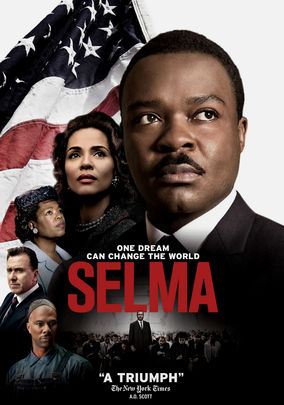
Selma-2014

Selma-2014

Director Ava DuVernay

Starring David Oyelowo

Scott’s Review #248

80013278

Reviewed June 19, 2015

Grade: A-

An Oscar-nominated factual feast, set in the mid-1960s during the Civil Rights movement, Selma (2014) is a retelling of the life and times of Martin Luther King Jr. and the struggles that black Americans endured during a tumultuous period in history.

The film includes dealings with then-President Lyndon B. Johnson and the famous and important 1965 Selma to Montgomery voting rights march, which led to the signing of the pivotal Voting Rights Act of 1965.

This film reminded me quite a bit of 2013’s The Butler in subject matter and style-ironic since Lee Daniels was slated to direct and instead signed on for The Butler.

Both feature a charismatic, intelligent Black man struggling with racial issues.

Despite being an independent undertaking, it is glossy, polished, and reflective of the time. Both The Butler and Selma boast a huge casts and feature historical political figures in a tumultuous era.

Selma features a bevy of real-life figures from George Wallis to President Johnson to the obvious leader of the Civil Rights movement, Martin Luther King Jr., and his wife, Coretta Scott King, and the casting is very well thought out.

Tim Roth, David Oyelowo, Tom Wilkinson, and Carmen Ejogo portray their roles professionally and passionately. None of the above received Oscar nominations, and I am okay with that.

I didn’t feel any were definite standouts from a crowded field of talent, though Ejogo could have been in the running with her understated but compelling performance.

I don’t share the drama surrounding the lack of expected Oscar nominations. The truth is, the film was included in the Best Picture category and won Best Song.

While an emotional and compelling film, it is neither a masterpiece nor will it change the art of cinema, though I must stress it is good.

I find Selma to be an important film- a look back on history and the shame and humiliation placed on blacks who attempted to obtain voting rights.

A heartbreaking scene depicts a determined woman (played by Oprah Winfrey) being denied this right by a cold and racist authority figure as she is asked impossible and tricky questions to prove her patriotism, which, of course, she cannot possibly answer correctly.

Yes, the film is directed by a Black woman (Ava DuVernay), and yes, one might argue that it has a Black point of view. However, the film successfully sympathetically portrays several white characters and avoids the assumption that all white people were racist in this period.

Let’s face it- racism still exists, especially in the South, and in the 1960s even more so. I did not find the message in black people vs. white people’s terms, but rather as a humanistic struggle for rights.

And the struggles continue, as the film makes abundantly clear.

While King was a life changer to the black people of the United States, his life was abruptly cut short in his prime. One wonders how much more good this man could have achieved.

The song “Glory” is an emotional, powerful number, especially during the marching and subsequent slaughter scenes, which are highly emotional and effective.

And who will not become teary-eyed as the innocent marchers are beaten and treated like cattle, simply for taking a stand? One will gasp at the senseless bombing scene that rocks a building and takes four innocent little girls’ lives away with it.

Selma transported me to a time before my time and helped me appreciate and understand the positive and negative experiences of a race of people not long ago.

This film inspires and moves me, and it teaches me about a movement that occurred in 1965.

Oscar Nominations: 1 win-Best Picture, Best Original Song-“Glory” (won)

Independent Spirit Award Nominations: Best Feature, Best Director-Ava DuVernay, Best Male Lead-David Oyelowo, Best Supporting Female-Carmen Ejogo, Best Cinematography

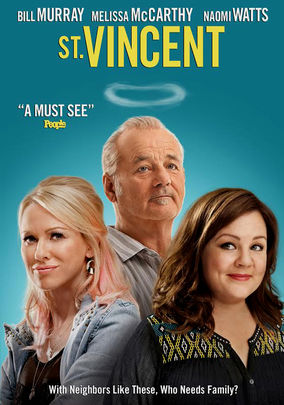
St. Vincent-2014

St. Vincent-2014

Director Theodore Melfi

Starring Bill Murray

Scott’s Review #246

70295665

Reviewed June 5, 2015

Grade: B-

St. Vincent (2014) succeeds only because of the charming, funny appeal of its star, Bill Murray, who fronts this cute, mainstream comedy.

Set in blue-collar Brooklyn, New York, it follows a curmudgeonly old man (the title character, Vincent) who befriends a lonely young boy named Oliver, new to the neighborhood.

The cast also includes Oliver’s struggling mother, Maggie (Melissa McCarthy), and Vincent’s pregnant stripper girlfriend, Daka (Naomi Watts).

I found it intriguing that we meet Vincent first, then watch him evolve from a grumpy, cutting older man into a begrudging babysitter for the neighbor boy, while clashing with Maggie and fighting with Daka.

Murray returns to comic wit, using his now-legendary flawless dry, sarcastic humor and perfect timing, and he shows much of that in St. Vincent.

Throughout all of this, Vincent remains brutally honest with his snarky remarks (mainly aimed at Maggie), yet heartwarming, and I love this aspect of the film.

Thanks to Murray, Vincent is lovable, making the film, which with lesser talent, would be overly sentimental

As th.e film progresses, we see Vincent’s struggles- his wife suffers frhas Alzheimer’ss indebted to bookies (primarily Terence Howard- in a bit of a throwaway role).

The film staggers with some predictability issues and is formulaic, with an easy-to-predict warm finale.

Of course, in true form, Vincent is a Vietnam vet who drinks, gambles, and is angry at the world, but he has a heart of gold; so despite being temperamental, the audience falls in love with him (patriotism helps).

The character contains every cliché in the book. A mean older man who rises to new heights and becomes a nice grandfather figure to a bullied boy is what this film is going for.

The bullying of Oliver is also contrived- during one scene, Oliver, after being picked on once again by the prominent bully, flies into a seething rage and breaks the bully’s nose.

The audience is supposed to buy that the waif-ish, shy kid triumphs over the bully. If only life were that simple.

Inevitably, after both serve after-school detention, they bond over bathroom cleaning and become best friends.

Who did not see that coming?

In addition, most of the characters are one-note.

Naomi Watts is a sexy, aging Russian (not sure I bought that accent) stripper with a soft spot- she comes across as uptight but is caring- another cliché.

Melissa McCarthy is a hard-working, soon-to-be divorcee, trying to raise her kid right- one-dimensional. Even Vincent is seemingly tough as nails, but of course, has a soft spot for the neighbor kid.

The casting of Watts, McCarthy, and Howard is okay, and I surmise the film was going for casting “name” actors, but these parts might have been played by unknowns and had the same effect.

The gem is Murray.

Murray effortlessly breathes life into a character who otherwise would have been as dull as dishwater. I found the writing the film’s weakest point.

A major incident brings the cast together united as one (yawn). The film closes with the family all happily eating dinner together. I don’t see this as a spoiler, since this ending can be seen a mile away.

Despite the film’s flaws and sentimentality, it is admittedly sweet and humorous at times, and it sends a nice message to the audience: be kind to one another and help each other get through life.

Without Bill Murray, this film would have been completely bland and unlikeable.

St. Vincent (2014) is a feel-good film that is perhaps too feel-good.

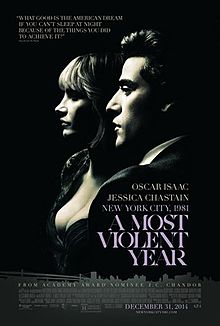
A Most Violent Year-2014

A Most Violent Year-2014

Director J.C. Chandor

Starring Oscar Isaac

Scott’s Review #239

_A_Most_Violent_Year__Theatrical_Poster

Reviewed May 1, 2015

Grade: B

Set in New York City during a brutally violent 1981, and influenced, at least in part, by The Godfather (1972), A Most Violent Year (2014) shares a similar tone and feel with The Sopranos (1999-2007).

A Most Violent Year attempts to weave a tale of a “good guy” mixed up with the mafia, trying to stay upstanding amid the adversity and corruption he encounters.

Oscar Isaac and Jessica Chastain portray Abel and Anna Morales, who own Standard Oil, an upstart business they are trying to launch.

Due to the violent nature of the times, several trucks are hijacked, resulting in robberies and severe beatings.

In desperate need of funds to expand their business and stay ahead of competitors, Abel and Anna are forced to take out loans, leading them into a world where crime and violence run rampant.

The Assistant District Attorney investigates them for apparent price-fixing and tax evasion.

The main theme is the conflict and guilt that Abel feels towards violence and the constant temptation to join the ranks of the crime world to protect his business ventures.

Abel faces pressure from Anna, who has mob ties (her father is an influential mafia boss known around town) and wants to fight fire with fire. Abel refuses and is determined to lead a straight and narrow life.

When circumstances spin out of control, his morals come into question.

A Most Violent Year is an interesting film, but I think I expected a bit more than I got.

For starters, it is not in the same league as the mafia works of art. It is hard to put my finger on what’s missing, but something is missing from the film, leaving it without a compelling edge.

The plot moves slowly, but the film succeeds as the character study it is; still, I left wanting more depth in the characters and a broader vision for the film.

I didn’t find myself truly invested in either Abel or Anna.

Chastain received praise for her performance, which I found adequate, but hardly a marvel. Nominated for several awards, but deemed “snubbed” for not receiving an Oscar nomination, I find this untrue.

Her performance is not brilliant, and Oscar Isaac’s is superior.

This isn’t to say I didn’t enjoy the film overall. It takes some risks, has a rich character complexity, is shot very well, and looks great. It has a smooth look, and I completely bought the 1981 time period, rather than feeling like it was dressed up for the era.

There is an authenticity to it.

A mob film not on the level of The Godfather or Goodfellas (1990), A Most Violent Year is a decent contribution to the crime-thriller era. It just doesn’t live up to the critical acclaim it received.

Independent Spirit Award Nominations: Best Supporting Female-Jessica Chastain, Best Screenplay, Best Editing

Only Lovers Left Alive-2014

Only Lovers Left Alive-2014

Director Jim Jarmusch

Starring Tilda Swinton, Tom Hiddleston

Scott’s Review #237

Only_Lovers_Left_Alive_English_film_poster

Reviewed April 24, 2015

Grade: B

Only Lovers Left Alive (2014) is a bizarre trip into the strange and unusual world of vampires.

The film moves slowly but becomes hypnotic, drawing me into the plot, though the plot itself seems almost secondary to the film’s gothic mood and dark ambiance.

Thanks to the wonderful Tilda Swinton, who I find mesmerizing in every film role she appears in, the methodical film never completely bored me and, at times, even fascinated me.

Set in the present, Swinton and Tom Hiddleston play vampires named Adam and Eve, lovers separated by distance. Adam is a musician living in a vast Victorian house in Detroit, and Eve resides in Tangier.

Realizing that Adam is lonely and suicidal, Eve makes the international trek to the United States to be with her love.

As they settle into a quiet existence immersed in music and thought, Eve’s rebellious sister, Ava (Mia Wasikowska), from Los Angeles wreaks havoc on their lives.

Also in the film is John Hurt, who plays Marlowe, an ancient vampire who assists Adam and Eve, who succumbs to sickness from tainted blood.

The film is a creative, atmospheric offering from edgy independent film director Jim Jarmusch, known for left-of-center fare like Broken Flowers (2005) and Coffee and Cigarettes (2003), both visual and visceral achievements.

While I didn’t completely love this film, I felt the story is its weakest point; the magical, beautiful arrangements almost make up for it.

Set entirely at night (when vampires are awake) and featuring several shots of Adam and Eve posed naked or almost naked in lovely, artistic angles, I think the film aims as much for a “look” as for storytelling and doesn’t fully center on the plot.

It is also a lovely romantic film, though not in the typical sense of silly misunderstandings and comical moments, but rather in romantic artistry, as Adam and Eve connect spiritually.

Married hundreds of years ago, Adam and Eve have been inexplicably separated by thousands of miles and coasts, though the reason is not explained.

Why are they the few remaining vampires alive? Does the human race know they are vampires or think they are odd-looking people?

They both have money to burn and pay a high cost for being vampires, as they either pay a contact to steal blood from hospitals to survive or obtain the blood elsewhere.

They are tempted to bite humans but resist those urges.

The film doesn’t explain why they are two of the few vampires left in the world, or answer other questions. Adam, supposedly a famous musician, is wealthy beyond words and lives in a haunted-looking mansion surrounded by music and musical instruments.

The plot holes, of course, are secondary to me. None of them matter.

The film has beautiful moments; it is musically centered, and Adam and Eve share tender dances on more than one occasion. The film is a pure love story, but a very left-of-center one.

I admire the film’s creativity and its willingness to go where most filmmakers dare not. Jarmusch dares to be different and deserves much praise.

My main critique is the pacing; the story barely matters, as the film feels more like an art experience than a “mainstream” film with a strong plot and focus.

Only Lovers Left Alive (2014) is a different type of film and one worth admiring.

Independent Spirit Award Nominations: Best Female Lead-Tilda Swinton, Best Screenplay

Boyhood-2014

Boyhood-2014

Director Richard Linklater

Starring Ellar Coltrane

Scott’s Review #217

70301281

Reviewed January 19, 2015

Grade: A

Boyhood (2014) is a family drama directed by Richard Linklater that follows a family’s trials and tribulations over twelve years, from about 2002 to 2013.

The film uses the same actors throughout, allowing viewers to see the characters change.

What a novel idea! In this day and age of special effects, superheroes, and animated animals, how refreshing to see a simple tale of a family told over a while.

The film’s main character is Mason Evans, Jr., played by Ellar Coltrane.

We meet Mason at age six, in first grade. He lives with his older sister Samantha, played by the director’s daughter Lorelei Linklater, and his mother Olivia, played by Patricia Arquette, in Texas.

Ethan Hawke, divorced from Olivia, plays Mason’s father (Mason Sr.).

As the years go by, we see situations arise, and the characters grow and develop like in real life.

After the film, Mason Jr. heads off to college after years of life experience, including his first relationship. The other characters develop, and we see Olivia and Mason Sr. enter relationships with partners, some successful, others less so.

Boyhood succeeds because it is a film about real life that feels like a slice of Americana.

It’s a wonderful film.

The audience invests in the characters because we grow to love and care about their lives. It’s like seeing cousins or friends once a year and watching what becomes of their lives over time.

This film fascinates me because it is so basic and real that it does not need contrived dramatic situations to warrant attention. It is simply authentic, and that is what makes a great film.

The film is left-leaning politically, and I love that family members bring up current events throughout the years.

As the film progresses, we see Mason Sr. comment on his distaste for the Iraq War, the children’s anticipation of the new Harry Potter film, Mason Sr. take the kids to a Houston Astros game, and mentions of The Beatles and Star Wars.

Another scene sadly focuses on a returning soldier from Iraq who has Post-traumatic stress disorder.

These nuances make the film seem so authentic and rich.

As wonderful a job as Patricia Arquette and Ethan Hawke did, neither of them had a huge, bombastic, emotional scene that would have been splendid given their talents, but this is a small criticism.

Both are superb as struggling parents trying to do the right thing for their children and carve out a life for themselves.

Boyhood redefines realism in film as we watch a family unit hope, struggle, and dream play out before our eyes.

The film doesn’t need overwrought drama; it is simply a slice of life for a group of people we come to know and love.

Everyone can relate to Boyhood (2014).

Oscar Nominations: 1 win-Best Picture, Best Director-Richard Linklater, Best Supporting Actor-Ethan Hawke, Best Supporting Actress-Patricia Arquette (won), Best Original Screenplay, Best Film Editing

Independent Spirit Award Nominations: 2 wins-Best Feature, Best Director-Richard Linklater (won), Best Supporting Male-Ethan Hawke, Best Supporting Female-Patricia Arquette (won), Best Editing

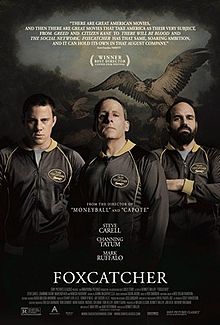
Foxcatcher-2014

Foxcatcher-2014

Director Bennett Miller

Starring Steve Carell

Scott’s Review #210

220px-Foxcatcher_First_Teaser_Poster

Reviewed January 2, 2015

Grade: A

Foxcatcher (2014) is a dark, disturbing psychological thriller that succeeds through its bleak look and strong performances.

It is a superb, character-driven story based on true events, led by Steve Carell, Channing Tatum, and Mark Ruffalo, all of whom are excellent.

It is a sports film, but hardly as predictable as many in the genre.

The film is set in 1987. Brothers Mark and Dave Schultz (Tatum and Ruffalo, respectively) are former Olympic gold-medal-winning wrestlers preparing to compete in the 1988 Olympics.

Despite winning a gold medal, Mark (Tatum) lives in squalor and is reduced to giving pep rallies at elementary schools, jobs meant for Dave (Ruffalo), for very little money.

Dave is the more successful brother, a family man living a happy existence. He is more talented and more driven than Mark.

One day, wealthy philanthropist John du Pont (Carell) contacts Mark and invites him to live with him at his expansive estate in Pennsylvania and train with other aspiring Olympic wrestlers.

John’s initial attempts to woo Dave also fail.

From this point in the story, the film delves into psychologically dark territory, mainly the controlling, disturbing behavior of John, as he attempts to control Mark and woo Dave.

John has a damaged relationship with his mother, Jean, wonderfully played by Vanessa Redgrave. Jean feels that John’s obsession with the wrestling world is far beneath him, and their relationship is tense and unloving.

The three principal actors in the film are worth discussing, as the film wouldn’t be as complex or compelling without them.

Let’s begin with Channing Tatum- known primarily as a hunky movie star with questionable acting ability- he proves the naysayers wrong.

I cannot help but compare him to a younger Brad Pitt. It took years and many films for him to be recognized as more than a pretty face and abs to die for.

His performance is understated and calm, but his laid-back demeanor is nuanced. Sometimes anger bubbles under the surface.

Carell is downright creepy as the affluent yet insecure Du Pont.

Throughout the film, the character seems off. Known mostly for silly comedies, he delivers a breakout performance that, I hope, leads to similar meaty roles. Carell shows he has what it takes to appear in quality films.

Lastly, Mark Ruffalo, who always plays interesting, everyman-type characters, again brings strong emotion to Dave Schultz, a successful, driven athlete who is also a dedicated husband and father.

With a different cast, Foxcatcher wouldn’t have been as interesting.

Questions will arise at the end of the film. What were John du Pont’s motivations? What effect did his mother have on his actions? How could a man with all his power and wealth end up this sad? Did John make inappropriate sexual overtures toward the wrestlers?

Foxcatcher (2014) excels at portraying a dark, layered, moody true story and shows that wealth does not equal happiness; in many cases, the opposite occurs.

The film is an immense success.

Oscar Nominations: Best Director-Bennett Miller, Best Actor-Steve Carell, Best Supporting Actor-Mark Ruffalo, Best Original Screenplay, Best Makeup and Hairstyling

Independent Spirit Award Nominations: 1 win-Special Distinction Award (won)

Birdman-2014

Birdman-2014

Director Alejandro G. Iñárritu

Starring Michael Keaton

Scott’s Review #190

80000643

Reviewed November 6, 2014

Grade: A

Birdman (2014) is a unique art film that, happily, has garnered major exposure and publicity because a movie like this risks receiving praise and notice only from the art-house crowd.

The film’s star, Michael Keaton, portrays Riggan Thomson, a former action-hero superstar from the 1990s, made famous for the “Birdman” character he created.

Having made sequels to the film, his career has since dried up, and he hopes to establish credibility and prove himself a real actor by writing, directing, and starring in his play.

The film is set in and around the Broadway theater in New York City.

As opening night approaches, he struggles to pull everything together and mount a successful production while dealing with an injured, terrible actor; a difficult actor; his insecurities; and a miserable theatre critic destined to ruin his big chance.

To make matters worse, his daughter Sam, played by Emma Stone, is a recovering drug addict who hangs around the theatre distracting actors with her charm and good looks.

Naomi Watts and Edward Norton play Leslie and Mike, other cast members in the production. Watts is sympathetic as the emotional actress with a heart of gold who finally realizes her dream of performing on Broadway.

Norton, outstanding as Mike, is blunt yet socially awkward and can only perform truthfully on stage.

Keaton is a marvel as he plays a dark, vulnerable man. He hates and wants to shed his ridiculous movie persona of yesteryear and secretly cringes when fans recognize him.

He uses a voice in his head when he played “Birdman” years earlier.

The film’s uniqueness lies in what seems like one long take, as the action rarely stops.

The film belongs to Keaton, who wonderfully relays vulnerability, pain, and fear within an outward persona of bravery and masculinity.

Throughout the film I wondered, is Riggan suicidal? What is real and what is imagined? Are certain scenes foreshadowing later events?

The film has much depth.

One marvels at how art imitates life: is Keaton portraying himself? He was the original Batman in the successful superhero franchise beginning in 1989, and his career tanked shortly after.

Birdman is a comeback film for him, and he is devastatingly good.

Norton’s character Mike impressed me. He is blunt, flawed, scared, and addicted to the stage.

Stone has one particularly brilliant scene where she lambasts her father and later, with regret, tells him the world has moved on without him and that he is irrelevant, like everyone else. It is a powerful scene.

In another, Riggan is locked outside the theater during the performance, clad only in his underwear. How on earth will he get back on stage and finish the show?

The quick jabs at current Hollywood superhero stars, especially Robert Downey Jr., are deliciously naughty.

It is impossible to predict what comes next, and the film feels very New York theater-style.

Keaton’s run-in with a theater critic in a cocktail bar is the best scene in the film, as the critic’s vicious critique of “You’re a celebrity, not an actor” resonates with both pain and tremendous anger for Riggan.

Riggan is a sensitive, struggling man, and Keaton shows his vulnerability beautifully in every scene.

Oscar Nominations: 4 wins-Best Picture (won), Best Director-Alejandro G. Iñárritu (won), Best Actor-Michael Keaton, Best Supporting Actor-Edward Norton, Best Supporting Actress-Emma Stone, Best Original Screenplay (won), Best Sound Editing, Best Sound Mixing, Best Cinematography (won)

Independent Spirit Award Nominations: 3 wins-Best Feature (won), Best Director-Alejandro G. Inarritu, Best Male Lead-Michael Keaton (won), Best Supporting Male-Edward Norton, Best Supporting Female-Emma Stone, Best Cinematography (won)