Tag Archives: Željko Ivanek

Unfaithful-2002

Unfaithful-2002

Director Adrian Lyne

Starring Diane Lane, Richard Gere

Scott’s Review #1,278

Reviewed July 21, 2022

Grade: A-

Unfaithful (2002) is an American version of the brilliant 1969 French film The Unfaithful Wife, directed by Claude Chabrol.

Directed by Adrian Lyne, best known for the smoldering, creepy Fatal Attraction (1987), which earned him an Academy Award nomination for directing, Unfaithful is unsurprisingly brimming with the same eroticism and sexual ferocity.

What’s exceptional about it is the character development and the empathy felt for the characters and their convictions.

This makes Unfaithful work.

To say it’s watered down from the Chabrol version is a bit unfair, because it has an identity all its own. However, his version is superior in terms of suspense and, naturally, more French from a cinematic perspective.

Lyne’s film is slicker and wrapped up tighter, and much more mainstream-it does the job well and provides compelling entertainment.

In both films, the subject matter of guilt runs rampant.

Edward (Richard Gere) and Connie (Diane Lane) live seemingly happily in their upper-middle-class Westchester County, New York neighborhood.

When Edward learns that Connie has lied to him about an affair, suspicion leads him to uncover the devastating truth about her infidelity with Paul (Olivier Martinez), the hunky man who has captured her heart.

He confronts Connie’s ‘boy toy,’ which results in a deadly accident caused by Edward’s surprising rage. Edward must cover up the truth as detectives question both him and Connie about their involvement with Paul.

Can their marriage survive the damage?

The Hallmark television movie’s premise gains tremendous credibility thanks to the fantastic performances by Lane, Gere, and Martinez.

The standout is Lane, whom the audience may relate to a bit more than the other two. She gives Connie a tired, weary tone. She appreciates her good life but is nonetheless bored with it.

Some may relate to her, but others will shame her for her infidelity.

Each character provides their motivation for their character’s actions. The stoic chemistry between Lane and Gere’s characters perfectly balances the lusty dynamic between Lane and Martinez.

Wisely, the story is one that most married couples can deem true. When the romance wanes, sometimes the doldrums result.

Connie doesn’t set out to cheat on Edward, but the repetition of raising their eight-year-old son and of casserole Wednesdays leads her to seize an unexpected opportunity.

The rainy, windy setup with a sexy young French artist at her fingertips is smoldering with intrigue. The lusty scenes between Connie and Paul are rich with sex, like when they bathe together and make love in Paul’s hallway.

The titillating chemistry works well.

A clever scene in a coffee shop is daringly good. Connie’s girlfriends drool with delight as Paul walks by them, completely unaware that he is Connie’s new beau. How jealous they’d be if they knew the truth.

The face-off scene between Edward and Paul is shrouded with machismo as both struggle for the upper hand, toying with each other for power.

The tone shifts to one of Hitchcockian intrigue as Edward and Connie must forge an alliance and cover up their actions.

Not trusting each other, they have an interesting dynamic among themselves about what they tell and what they keep hidden from the flocking detectives.

After all, an upstanding white couple couldn’t possibly be involved in murder, could they, the detectives ponder?

Easily serving as the opening act to the more famous Lyne offering, Fatal Attraction, Unfaithful (2002) draws parallels with it.

They successfully manipulate the audience in a good way, using intrigue, thrills, and flesh to elicit a ‘glued to their seats’ result.

Sometimes, a good, old-fashioned thrill ride is just what the doctor ordered.

Oscar Nominations: Best Actress-Diane Lane
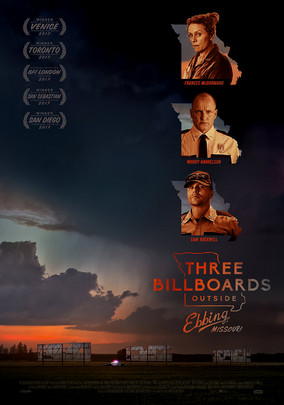
Three Billboards Outside Ebbing, Missouri-2017

Three Billboards Outside Ebbing, Missouri-2017

Director Martin McDonagh

Starring Frances McDormand

Scott’s Review #703

Reviewed December 4, 2017

Grade: A

Frances McDormand takes control of Three Billboards Outside Ebbing, Missouri, and never lets go. In the Martin McDonagh-directed 2017 vehicle, she rivetingly portrays an angry Midwestern woman seeking justice.

The up-and-coming director has also created such films as  2008’s In Bruges and 2012’s Seven Psychopaths.

Similar to these films, Three Billboards Outside Ebbing, Missouri, is peppered with dark comedic moments and vile, bitter characters. The film is a measured success because it is not your standard Hollywood production and is quite left-of-center.

The action begins as we meet McDormand’s Mildred Hayes, sitting alone in her beat-up station wagon, brooding by the side of the road, gazing at three tattered billboards.

She is both pissed off and thoughtful as she formulates a plan to purchase a year’s worth of billboards, questioning the local police’s ineptitude in finding her daughter’s rapist and killer.

Woody Harrelson portrays the Ebbing police chief, Sheriff Bill Willoughby, and Sam Rockwell plays the racist and dim-whited officer Jason Dixon, both displeased with Mildred’s activities.

Other casting decisions in small yet essential roles are Lucas Hedges as Mildred’s adolescent and depressed son, Robbie, and John Hawke as her ex-husband, Charlie, who is dating an eighteen-year-old ditz.

Peter Dinklage is well-cast as James, a local car salesman who is an earnest dwarf with a crush on Mildred.

Supporting roles are prevalent throughout the film, and small-town locales like Jason’s mother and Red, the owner of the advertising agency who rents the billboards to Mildred, shape the experience.

The casting in Three Billboards Outside of Ebbing, Missouri, is a strong point of the film.

The town of Ebbing is portrayed as dreary, blue-collar, and racist, which is just perfect for setting the tone of the film.

I suspect residents of the Midwest or the southern United States of America may have some issues with character representations. Jason is written as both racist and not too smart, and he encompasses numerous characters in the film.

Enough cannot be said for Rockwell’s performance, transforming from a hated character during the film’s first two-thirds to suddenly almost becoming the hero towards the end.

Props are also deserved by Harrelson’s Chief Willoughby- bordering on hick and racist, he also has a heart and cares about Mildred’s predicament- when a shocking event occurs, he becomes an even richer character.

It is worth pointing out and impressive to me as a viewer that the three prominent black characters—Willoughby’s replacement, Abercrombie, Mildred’s best friend and co-worker, Denise, and a kindly billboard painter—are each written as intelligent and sensitive, a fact I found to perfectly balance the other less sympathetic characters.

In this way, a nasty film becomes more satisfying.

Three Billboards Outside of Ebbing, Missouri, though, belongs to McDormand. She is successful at portraying a myriad of different emotions. From her sly eye-winking as she crafts a good verbal assault on whoever crosses her path, to an emotional breakdown scene towards the end of the film, McDormand embodies the character with depth.

In a gorgeous scene, she has a sweet conversation with a peaceful deer grazing nearby, and for a second, she imagines it could be her dead daughter reincarnated. The scene richly counterbalances other violent and brutal scenes.

McDormand manages to look downright homely in some scenes and beautiful in others.

A film will indeed divide viewers. Some will champion the film’s crisp writing and witty dialogue. Still, others will undoubtedly be turned off by some of the character’s foul language and nasty nature.

I found Three Billboards Outside Ebbing, Missouri (2017), sarcastic, gritty, and well-told. It is a versatile affair rich with layers and brimming with enjoyment.

Oscar Nominations: 2 wins-Best Picture, Best Actress-Frances McDormand (won), Best Supporting Actor-Sam Rockwell (won), Woody Harrelson, Best Original Screenplay, Best Original Score, Best Film Editing

Independent Spirit Award Nominations: 2 wins-Best Female Lead-Frances McDormand (won), Best Supporting Make-Sam Rockwell (won), Best Screenplay

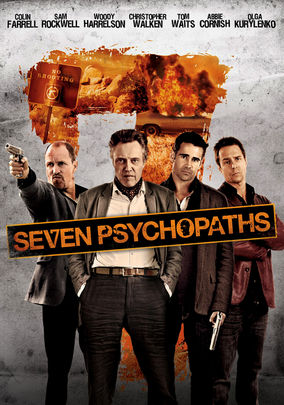
Seven Psychopaths-2012

Seven Psychopaths-2012

Director Martin McDonagh

Starring Colin Farrell, Sam Rockwell

Scott’s Review #422

70241756

Reviewed June 19, 2016

Grade: B-

Seven Psychopaths (2012) is a film that I truly wanted to like more than I did.

It started well with a Quentin Tarantino-style that was appealing, and the film does contain an interesting premise.

Colin Farrell plays the straight man in a cast of offbeat, quirky characters and tries to complete a screenplay entitled “Seven Psychopaths” based on them.

Sounds great, but halfway through the movie, it stopped delivering. I found myself slightly bored.

The film has a unique concept, to be sure, but fizzles during the second act, so much so that it stopped making much sense and lost my interest.

I did admire the creativity, though, and the chemistry among the cast is great, but the overall story in Seven Psychopaths (2012) disappointed me.

Independent Spirit Award Nominations: Best Supporting Male-Sam Rockwell, Best Screenplay

Dancer in the Dark-2000

Dancer in the Dark-2000

Director Lars von Trier

Starring Björk

Scott’s Review #365

Reviewed January 9, 2016

Grade: A

Dancer in the Dark is, in my opinion, one of the most important, inventive films of the 2000s and is proudly one of my favorites of all time.

However, the film is not pleasant to watch and is quite painful and depressing, if the truth be told.

But the relevance and sheer emotion the film elicits are more than enough reason to be exposed to it, if only once, perhaps.

Director Lars von Trier is a master of creative and disturbing, dreamlike films that are odd, non-linear, or otherwise open to interpretation.

He has directed such gems as 2011’s Melancholia and 1996’s Breaking the Waves, to name but two.

In Dancer in the Dark, he uses handheld cameras, which add a lot of grit to the film, giving it an almost documentary-style, grainy, shaky look.

The addition of musical numbers mostly written and performed by the star, Björk, is a wonderful touch.

Speaking of Björk, words cannot express what a brilliant performance she gives in the film, and the raw emotion she expresses in her starring role is awe-inspiring.

So great was the stress of filming Dancer in the Dark that, to my knowledge, she has never made another film.

She was shamefully overlooked in the Best Actress Oscar category- an omission that is one of the biggest fails in Oscar history.

Tensions were reportedly high on the set of Dancer in the Dark, as Björk reportedly despised her director, never missing a chance to tell him so, disappeared from the set for days on end, and spat in his face.

Co-star Deneuve, a former French megastar, reportedly did not get along with Björk.

Despite all the drama, the stars managed to pull together a masterpiece.

Björk plays Selma, a Czech immigrant living in Seattle with her young son. The year is 1964. Selma is poor, struggling to survive by working in a clothing factory alongside her best friend, Cvalda (Deneuve).

Selma and Cvalda escape their dull lives by watching classic musical films at their local cinema. To make matters worse, Selma is suffering from a degenerative eye disease, causing her to lose her sight gradually.

She struggles to save enough for surgery for her son, who is sure to suffer the same fate without it.

Selma frequently imagines musical numbers in her day-to-day life involving friends and co-workers. When a tragic event occurs, and Selma is accused of a crime, the film takes a very dark turn.

The conclusion of the film will always require handkerchiefs as it is as powerful as it is gloomy.

The aspect I love most about Dancer in the Dark is that it smashes barriers about what film art is and throws all of the rules out the window.

Lars von Trier, famous for this, created a dreamy, independent hybrid musical-drama, a dynamic, tragic, emotional experience all rolled into one great film.

Oscar Nominations: Best Original Song-“I’ve Seen It All”

Independent Spirit Award Nominations: 1 win-Best Foreign Film (won)

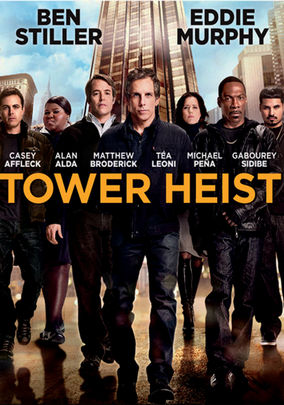
Tower Heist-2011

Tower Heist-2011

Director Brett Ratner

Starring Ben Stiller, Eddie Murphy

Scott’s Review #160

70202145

Reviewed August 29, 2014

Grade: D

Tower Heist (2011) is a completely formulaic, by-the-numbers comedy with absolutely no surprises or, frankly, creativity.

It follows Josh Kovacs, a luxury high-rise apartment manager weakly played by Ben Stiller in New York City, whose favorite tenant, a businessman Arthur Shaw (Alan Alda), is arrested for involvement in a Ponzi scheme.

The entire staff’s pensions have been squandered after Josh entrusts Shaw with the funds, and he tries to return the money to the rightful owners with a team of staff and an ex-con, played by Eddie Murphy.

They team up and attempt to locate millions of dollars hidden in Shaw’s apartment.

If this film was a starring vehicle for Ben Stiller, it was done horribly. He has been much funnier in There’s Something About Mary (1998) or Meet the Parents (2000).

Tower Heist has some similarities to Ocean’s Eleven (2001) because the score is recognizable and mirrors that film. The group of players is similar to that film, and its look reminds me of it too.

Murphy plays a silly, stereotypical role, and the group has zero chemistry as they try to keep the money.

There is also no chemistry between Stiller and Tea Leoni, who plays an FBI agent with a phony Queens accent that I found laugh-out-loud bad.

Nothing worked in this film since it was one tired gag after another and completely predictable.

I will admit two minor positives in Tower Heist: Alan Alda, who’s always great to see in films, and the interesting choice of a luxurious high-rise setting with cool, ritzy interiors taken from real buildings in New York City.

Otherwise, Tower Heist (2011) is a complete dud.