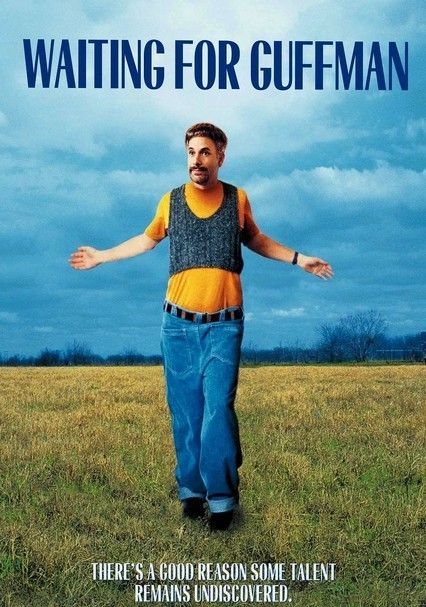
Waiting for Guffman-1996
Director Christopher Guest
Starring Christopher Guest, Eugene Levy, Catherine O’Hara
Scott’s Review #1,145
Reviewed May 24, 2021
Grade: B+
Somehow, mocking local community theater troupes with questionable talent couldn’t be funnier with the right premise and an outstanding cast.
The added fun of midwestern traditions like barbecues, good manners, and spot-on imitations, put on display for humor, works well.
They should be celebrated and appreciated in Waiting for Guffman (1996).
The hysterical Best in Show (2000) is probably my favorite Christopher Guest film, but Waiting for Guffman is a hoot-and-hollering good time.
The ‘B+’ rating is largely due to Guffman serving as the opening act for the fab Best in Show. They can easily be watched back-to-back and perhaps should be for further cherishing.
When the town of Blaine, Missouri, approaches its sesquicentennial, the residents decide to celebrate with a musical revue titled “Red, White, and Blaine.”
Flamboyant director Corky St. Clair (Christopher Guest) is determined to return to Broadway success by casting untalented yet passionate performers.
Eugene Levy, Fred Willard, and Catherine O’Hara play the main cast members.
When Corky reveals that influential theater agent Mort Guffman will attend the opening, the cast is convinced they will receive accolades and Broadway appearances if they perform successfully.
They become titillated, flustered, and manic as the pressure of opening night approaches.
I daresay some folks from the Midwestern United States, or those faithful to the local theater, may not enjoy Waiting for Guffman, but I sure did.
Most of the characters are written as buffoons and lack any talent. The hysterics come because they think that they possess what they lack.
The aforementioned Guest, Levy, Willard, and O’Hara work so well together that they are the reason Waiting for Guffman is so damned funny! The comic timing between the actors is flawless.
Levy and O’Hara appeared together in the Canadian television sketch comedy series SCTV in the 1970s and 1980s before hitting the jackpot with the television series Schitt’s Creek in later years. Hence, a fun thing to do is to watch them together in whatever they appear in.
They are that good!
There are many stereotypes in Waiting for Guffman since Corky is written as a walking gay stereotype with mascara and flamboyancy. The irony is that he reportedly has a wife who is never seen, allowing the audience to draw their own conclusions.
Given the casting and the director, Christopher Guest takes on acting and directing duties; the experience is largely improvisational and results in a witty outcome.
Guest treats his actors, and himself, to the famous Director Robert Altman’s mantra of letting his actors release and act on their terms, presumably knowing the characters better than anyone else.
The tactic works. Too often, comedies are stagey, and situations are forced in an attempt to make the viewer laugh because they think they are supposed to.
My favorite characters, unsurprisingly, are Ron and Sheila Albertson (Willard and O’Hara) as travel agents/amateur performers. They are zany and unpredictable, and their antics cannot be superseded by anyone else.
Recommended mostly for the artistic and the improv comedy crowd. The spoofs are all over the place, and fans of documentaries and talent shows can appreciate the gags.
Waiting for Guffman (1996) targets an intelligent audience craving fresh and original comedy. Being a cinema fan largely immersed in drama and horror, I was nonetheless won over.
The only drawback is that the film pales in comparison to the brilliant Best in Show (2000), which largely shares the same cast and tone, but it is still worth watching.