Tag Archives: Antonia Franceschi

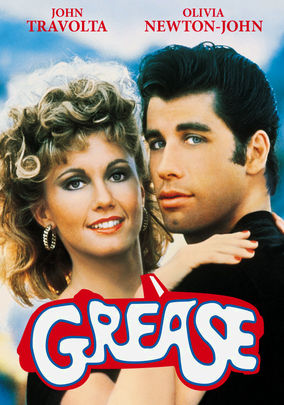
Grease-1978

Grease-1978

Director Randal Kleiser

Starring John Travolta, Olivia Newton-John, Stockard Channing

Top 250 Films #69

Scott’s Review #354

60000577

Reviewed January 9, 2016

Grade: A

Grease (1978) is the ultimate musical fantasy that comes to life and can be appreciated by anyone looking to re-live their high school days through song, or merely escape life’s stresses with a fun, bright musical that is very well made.

Is it realistic? Not, but sometimes escapism is just what the doctor ordered, and Grease is one of my favorite films that meets that criteria.

It is light-hearted and sweet, and above all, it contains wonderful legendary musical numbers.

The time is the 1950s, and we meet Danny and Sandy on a windswept beach with cascading waves and bright sunshine. It is summer break for the two high school students, who meet in California, she vacationing from Australia, and he is a local boy.

They say their goodbyes and return to normal lives, but cannot forget about each other.

Suddenly, Sandy arrives at Rydell High in Los Angeles, coincidentally, where Danny goes to school. Her parents (whom we never see) decided to stay in California.

Danny is a “tough guy” in high school, much different from who he was on the beach with Sandy. He is the leader of the infamous T-birds, a group of boys who love their black leather jackets and cars.

Torn, he maintains his tough image, and he and Sandy find their way back to each other through classmates, songs, and dancing, intermingling with fun supporting characters who encourage them to find true love.

Travolta and Newton-John have magical chemistry, which allows this film to work.

Grease has appeared on stage numerous times, but these actors are fine together. I bought them as teenagers in love, although both were well beyond their teen years.

The supporting cast is excellent- specifically Stockard Channing as the lead Pink Lady, Rizzo, and Sandy’s kind-hearted friend, Frenchy.

Interestingly, no parents ever appear in the film, as it is not about the adults.

However, Rydell’s female principal, Mrs. McGee (played by Eve Arden), and her dotty Vice Principal, Blanche (Dody Goodman), are marvelous as comic relief.

Rizzo is an interesting character and can be argued to be the only one who threatens to steal the thunder from Danny and Sandy. Containing a tough exterior, she is also vulnerable as she fears she has become pregnant mid-way through the film.

Being unmarried and pregnant in the 1950s was quite the scandal, and Channing conveys layers of emotion during her solo number, “There Are Worse Things I Could Do”.

The wonderful high school dance scene is choreographed amazingly well. The excitement of the student body at being filmed for a special television show is apparent as dance numbers and dance contests, some raunchy, follow.

The musical numbers “Grease”, “Greased Lightning”, “Hopelessly Devoted To You”, and “Beauty School Dropout” are intrinsically memorable, all of which are personal favorites of mine.

Grease is a film meant not to be analyzed but rather enjoyed for its fantastic chemistry and energy.

Sometimes, in a film, all the elements come together perfectly, and Grease (1978) is an excellent example.

Oscar Nominations: Best Song-“Hopelessly Devoted to You”

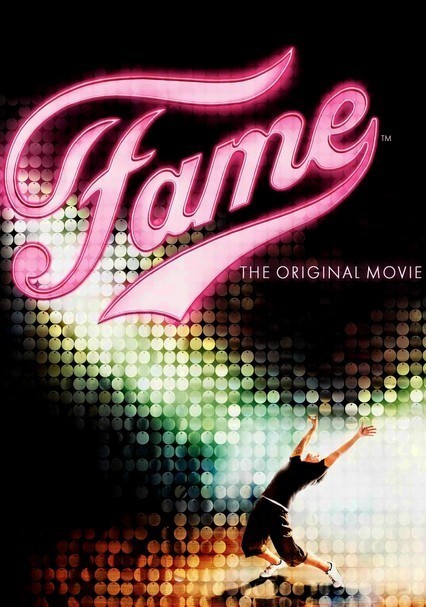
Fame-1980

Fame-1980

Director Alan Parker

Starring Lee Curreri, Irene Cara

Scott’s Review #1,143

Reviewed May 18, 2021

Grade: A-

Fame (1980) is a high school musical drama centered on the trials and tribulations of gifted New York City kids. Anyone with musical, theatrical, or dance talent can relate to the film.

The rest of us can merely live vicariously through these kids and the potential careers that lie ahead of them, wishing we had half of their talent and drive.

This is not your standard musical from the 1950s or 1960s, and the pace is quite frenetic. Fasten your seatbelts because there is a lot packed in.

The film oozes with an upbeat musical score and the flavor of New York City, quite gritty and dangerous, circa 1980.

The now-legendary musical numbers, in which the cast dances together with faculty and strangers alike atop Manhattan taxi cabs, are silly beyond belief.

Still, the title song by star Irene Cara is a danceable and hummable classic.

These scenes offset the muscular, dramatic scenes with lightness and comedy, but they also diminish the credibility of the serious moments.

Events get off to a chaotic start as we witness a mass of teenagers frenetically scrambling to memorize audition lyrics and dance numbers as they vie for entry into the High School of Performing Arts, with free admission reserved only for the cream of the crop.

The film chronicles the lives of the lucky from their auditions through their first, second, junior, and senior years.

The main group features Montgomery MacNeil (Paul McCrane), a closeted gay male; Doris Finsecker (Maureen Teefy), a shy Jewish girl; Ralph Garci (Barry Miller), and Bruno Martelli (Lee Curreri), an aspiring keyboardist whose electronic equipment horrifies the conservative music teachers.

They align with Lisa Monroe (Laura Dean), Coco Hernandez (Irene Cara), and Leroy Johnson (Gene Anthony Ray), a gifted dancer who cannot read.

All have interesting backstories or problems to work through over the course of their four years in school, and this is the film’s main appeal. The dance numbers, of course, are fabulous too.

I immediately became enamored with sensitive Doris, whose mother’s (Tresa Hughes) emotions elicit viewer emotion simply with her own emotions. Her passion for her daughter and her talent are infectious.

Alan Parker, who directs Fame, offers extremely heavy topics that the students must face. It’s not all fun and dance. The youngsters grapple with issues such as homosexuality, abortion, interracial dating, class systems, attempted suicide, and illiteracy.

Their pain is readily offered to audiences who become entangled in their worlds.

A downside is that, as many issues are brought to the forefront, the sheer number of them leads to few resolutions.

On top of their unique struggles, the students must deal with the mundane pressures of adolescence, such as homework, heartbreak, and rejection. Their talent doesn’t make them any more special than anyone else in the growing-up department.

My favorite moments in Fame are the quiet ones. When Doris and Montgomery share a chat on the stairs that skirts around the talk of his absent mother, I thought what a delightful couple they would make.

Montgomery’s repressed sexuality slowly surfaces while Doris develops a crush on an older, popular boy.

As if the heavy topics eventually subside, they don’t. As the students’ age and start to plan careers, Coco is lured by a man claiming to be a director, only to realize he is a porn film “director”. He coaxes her into taking off her shirt and photographs her sobbing.

The scene is heartbreaking in its power.

The atmosphere of Fame also works well. There is a strong, suffocating heat and humidity. Anyone who has spent time in New York City during the summer months knows the stench and thickness of the stuffy weather.

I got the impression the school had no air conditioning, as evidenced by the music teacher’s running perspiration.

A coming-of-age film that delivers hard-hitting messages only offset by the climactic dance-celebration numbers, Fame (1980) is a winner and gives teen angst its due.

This film ages well and stands the test of time.

Oscar Nominations: 2 wins-Best Original Screenplay, Best Original Score (won), Best Original Song-“Fame” (won), Out Here on My Own”, Best Film Editing, Best Sound