Tag Archives: Ned Beatty

All the President’s Men-1976

All the President’s Men-1976

Director Alan J. Pakula

Starring Robert Redford, Dustin Hoffman

Scott’s Review #1,544

Reviewed August 19, 2026

Grade: A

With the United States political landscape rife with corruption consistently since 2016, All the President’s Men (1976) takes viewers back to a simpler time when dishonesty was considered abhorrent.

It actually meant something in the political spectrum.

This is a sad reality when the truth doesn’t mean what it used to mean, and a sitting president can be a convicted felon, among other heinous actions.

But All the President’s Men does what it does best: remind audiences of journalism’s intended integrity and dedication to the truth.

Sadly, today, the media has become meek and complacent, in stark contrast to the characters in the film.

All the President’s Men is based on a 1974 non-fiction book written by the reporters featured in the film.

Two inexperienced reporters and rivals working for the Washington Post, Bob Woodward (Robert Redford) and Carl Bernstein (Dustin Hoffman), research the botched 1972 burglary of the Democratic Party Headquarters at the Watergate apartment complex.

With the help of a mysterious source, code-named Deep Throat (Hal Holbrook), the two reporters make a connection between the burglars and a White House staffer.

Despite dire warnings about their safety, the duo follows the money all the way to the top and then to President Richard Nixon.

The film is directed exceptionally well on all levels, from the acting and writing to the mood. Special credit goes to the editing team led by Robert J. Wolfe.

He also edited The Getaway (1972), which probably best exemplifies his exceptional style for viewers familiar with that film. The quick shots of the newsroom, typewriters, Washington, D.C., etc., all mesh together with the sound.

Screenwriter William Goldman crafts a crisp, intelligently nuanced script which takes the stereotypically mundane subject of investigative journalism and turns it into a crackling, enthralling experience.

Director Alan J. Pakula creates a somewhat frenetic pace, driven mainly by the quick clicking of a typewriter keyboard against the characters’ rapid movements.

The chemistry between lead actors Robert Redford and Dustin Hoffman is terrific. Actors who appear to be opposites: Redford, suave and charismatic; Hoffman, awkward and mousy; the pair work well together to create a bond based on finding the truth.

Supporting characters flourish as well. Jason Robards as the reporter’s boss, Ben Bradlee, is gruff yet understanding of his journalists’ efforts.

Hal Holbrook, Jack Warden, and Jane Alexander are also key characters in unraveling the political scandal.

Holbrook, in particular, presents a mysterious vibe central to the entire story. As he lurks in the shadows for much of the film, this heightens the dark, secretive domino effect as the scandal comes to light.

In fact, the cinematography’s overwhelming dark atmosphere enhances the film as a whole.

The film is so well structured that numerous films released after 1976 patterned themselves around All the President’s Men.

Arguably, pairing well with Network, made the same year, the film influenced efforts like The Paper (1994), Zodiac (2007), and Spotlight (2015).

Fifty years after its initial release, which brought heaps of praise and accolades, All the President’s Men (1976) holds up exceptionally well as Americans still yearn for justice and the subject matter remains incredibly relevant.

Oscar Nominations: 4 wins-Best Picture, Best Director-Alan J. Pakula, Best Supporting Actor-Jason Robards (won), Best Supporting Actress-Jane Alexander, Best Screenplay-Based on Material from Another Medium (won), Best Art Direction (won), Best Film Editing, Best Sound (won)

Golden Globe Nominations: Best Picture- Drama, Best Director-Alan J. Pakula, Best Supporting Actor-Jason Robards, Best Screenplay
Nashville-1975

Nashville-1975

Director Robert Altman

Starring Lily Tomlin, Keith Carradine, Ronee Blakley

Top 250 Films #3

Scott’s Review #47

60001541

Reviewed June 19, 2014

Grade: A

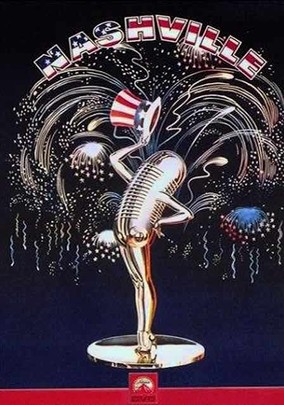
Nashville (1975)  is a brilliant film.

With each subsequent viewing, it creeps higher and higher on my list of favorite movies of all time.

The style is unique (largely improvised) and epitomizes the film’s creative freedom in the 1970s.

Director Robert Altman lets his actors express themselves, even allowing them to write their own songs; the overlapping dialogue creates a natural feel as the viewer watches the cast of twenty-four principals intersect over five days at a political rally/country music festival.

It is pure Robert Altman at his finest.

Nashville is a satire of the political arena of the early 1970s, particularly the Vietnam conflict and its politicians.

The film certainly questions and challenges the government with an ironic patriotic setting (Nashville).

The country music industry was in uproar upon the film’s initial release. It is a layered film that invites discussion and appreciation, with every character cared for.

I cannot adequately describe the multitude of nuances in each scene that are noticed over time.

Each character, even those with limited screen time, is vital to the story, as are the political elements —the questions of war, policies, and so on.

The chaotic bits and individual storylines come together at the end, and many background events are exciting to watch and note throughout each viewing.

With each viewing, the audience notices more and more. I certainly do.

Lily Tomlin, for example, plays Linnea, a haggard mother of deaf children with a supportive husband, a woman who, on the surface, is heroic, yet a complex character.

Bored with her life, she falls in love with a young musician despite the guilt and repercussions.

The musician in question is Tom Frank, played by Keith Carradine. Handsome and self-absorbed, he arrives in Nashville to dump his bandmates in hopes of a solo career and beds many willing females.

He also lashes out at a soldier at the airport, saying, “Kill anyone lately?”

Despite his unlikable character, Carradine delivers one of the film’s most beautiful performances when he sings “I’m Easy”.

Several of the female characters assume he is singing the song for them, but who is he truly singing it for — if anyone?

Another character to analyze is Barbara Jean, played by Ronee Blakley. A frail yet very successful country singer, she is in and out of hospitals, fretting that her replacement will steal her thunder.

Her insecurities rise to the surface.

Insecurity is a common theme among the characters. Many of them are unsure, afraid, or lack confidence in their musical talent, relationships, or themselves.

These are only three examples of the twenty-four richly layered characters- some ambitious, some falling apart, others meandering through life.

Many songs throughout were written and performed by the actors themselves.

Nashville (1975) is storytelling and filmmaking at its best. A creation by Altman that is deservedly admired, revered, and heralded as a significant influence.

Film schools study it as they should.

Oscar Nominations: 1 win-Best Picture, Best Director-Robert Altman, Best Supporting Actress-Ronee Blakley, Lily Tomlin, Best Original Song-“I’m Easy” (won)

Golden Globe Nominations: 1 win-Best Picture-Drama, Best Director-Robert Altman, Best Supporting Actor-Henry Gibson, Best Supporting Actress-Ronee Blakley, Geraldine Chaplin, Barbara Harris, Lily Tomlin, Best Screenplay, Best Original Song-“I’m Easy” (won), New Star of the Year-Actress-Ronee Blakley, Lily Tomlin

Deliverance-1972

Deliverance-1972

Director John Boorman

Starring Jon Voight, Burt Reynolds

Top 250 Films #104   

Scott’s Review #324

433193

Reviewed January 5, 2016

Grade: A

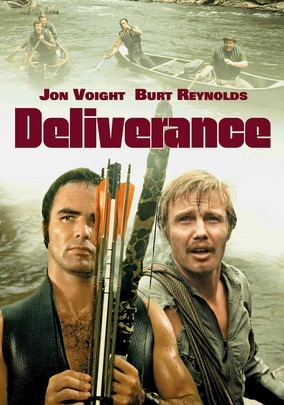
Deliverance is a disturbing, gritty, yet terrific 1972 thriller directed by John Boorman and starring a all-male cast.

The film is an adventure, albeit a dark one, with a subject matter that is difficult to watch; the film takes dark twists along the way, which is also its beauty.

The viewer gets a harsh look at the backwoods of Georgia, along with gorgeous outdoor scenery.

A group of middle-aged, metropolitan businessmen, (played by Burt Reynolds, Jon Voight, Ned Beatty, and Ronny Cox), from Atlanta, decide to go rafting for a weekend getaway along a remote river in a desolate area of Georgia.

It is a guys’ weekend.

Lewis and Ed (Reynolds and Voight) are experienced canoeists and therefore lead the group.

The guys are jovial, but soon come upon a strange group of very poor townspeople. The men ask for a ride to the river, and one of the men, Drew (Cox), engages a peculiar young boy in a friendly duel of banjo versus guitar, but the boy then snubs Drew.

Later, events take a dark turn when a hunter-versus-hunted game emerges between the city-dwelling men and the country rednecks.

The film is interesting as it begins as a light-hearted adventure, nearly a buddy movie. The men laugh and joke as they relish the excitement of the weekend ahead.

The film then becomes slightly eerie during the banjo scene. We know that something strange or sinister has occurred, but we cannot put our finger on it.

Does the redneck boy hate the city men, or is he mentally challenged? Why the strange looks of the poor people of the tiny town?

From this point, Deliverance takes a dark turn as a brutal event occurs involving two deaths- one under mysterious circumstances- and a male rape scene that is disturbing in its intensity and humiliation.

The rawness of these aspects is unprecedented, especially when contrasted with the beautiful nature that is also at the forefront.

The acting is spot-on. In my opinion, Jon Voight makes this film and gives a layered, character-driven performance, so much so that the audience becomes invested in his life.

Ed is a good guy- arguably the kindest of the bunch- and is forced to become a different person as the film progresses, far from his true self.

He struggles in one scene- one beautifully peaceful scene- to shoot and kill a deer calmly grazing in the woods. He cannot do it. I love this scene as it shows Ed’s true nature. He doesn’t dare tell the other men about his perceived shortcomings.

Ironically, he is then forced to make another painful decision involving human life.

On the surface, it is a straightforward mainstream film, but as the film progresses, it becomes a layered masterpiece—happy, tragic, strange, depressing, peaceful, and brutal—like Deliverance (1972).

The film is a disturbing, memorable gem and deserves a watch to appreciate the golden age of 1970s cinema.

Oscar Nominations: Best Picture, Best Director-John Boorman, Best Film Editing

Golden Globe Nominations: Best Picture-Drama, Best Director-John Boorman, Best Actor-Jon Voight, Best Screenplay, Best Original Song-“Dueling Banjos”

Network-1976

Network-1976

Director Sidney Lumet

Starring Faye Dunaway, Peter Finch, William Holden 

Top 250 Films #228

Scott’s Review #1,481

Reviewed May 13, 2025

Grade: A

A conceptual film laden with intelligence and satire, Network (1976) is innovative, not easily digestible, but satisfying nonetheless.

It pairs well with films like All the President’s Men (1976) or Spotlight (2015), with a focus on media frenzy, ratings, and the frustrating search for the truth amid chaos.

Or does the truth even matter? It’s a sobering question the film explores.

The film received nine Oscar nominations and won three of the four acting awards. Decades later, it holds up tremendously well and is a stark reminder of the power of television and public perception, for better or worse.

Brilliant acting, rich writing, and impressive editing make Network a timeless treasure for many generations, not to mention Lumet’s creative and sometimes shocking direction.

Over narration, we meet veteran news anchor Howard Beale (Peter Finch). He learns from his friend and news division president, Max Schumacher (William Holden), that he has only two more weeks on the air with the UBS network due to declining ratings.

After threatening to shoot himself on live television, he instead launches into an angry televised rant, which turns out to be a huge ratings boost for the network, and he is kept on for entertainment purposes.

But what happens when the public grows tired of his antics and craves even more outrageous programming?

Ambitious producer Diana Christensen (Faye Dunaway), obsessed with her career and ratings, takes actions to dangerous new levels.

What immediately caught my attention was how little the bottom line has changed in almost fifty years of television since Network was released.

One could argue that things have gotten worse, with ratings making or breaking a television broadcast.

Depressing still is the knowledge in 2025 politics where liars, cheats, and felons callously hold the highest offices and wield the most power; newscasts are currently created based on the truths their target audiences believe, regardless of the truth.

Lumet, known for the groundbreaking Dog Day Afternoon (1975) just a year earlier, uses split screens to show four perspectives and adds frightening, gun-toting rebels angry and intent on making political statements.

But Diana needs them for a significant ratings share.

Lumet’s sequences teeter between long soliloquies in which characters reveal their deepest motivations and emotions and rapid-fire editing involving shootings and bank robberies.

I loved seeing the 1970s-style corporate offices with retro telephones, notepads, pens, pencils, stylish carpets, and colorful elevators. The glamorous and polished interiors perfectly reflect the gorgeous Manhattan skyline seen in numerous sequences.

The lavish restaurants and strong cocktails provide a luminous texture to the time.

Paddy Chayefsky wrote the screenplay around the idea of a live death as the film’s central focus, as he later said in an interview, “Television will do anything for a rating… anything!”

The statement hit home in frigid reality.

Dunaway and Finch are clear favorites and offer the deepest characterization. Dunaway’s Diana is frigid and opportunistic, offering the audience no vulnerability or sympathy.

In a way, she is not a human being, lacking emotional depth.

I half expected her to tear her face off and reveal herself as a fembot.

Finch steals the show as a tired, depressed veteran who feels dismissed and forgotten. Even when he reveals his intent to commit suicide on live TV, the news crew tunes out his monotone voice as they do nightly.

Finally, Beatrice Straight brilliantly delivers an acting 101 tutorial as the aging housewife being cheated on by her philandering husband.

One miss is Robert Duvall in a one-note performance we’ve already seen him deliver.

Network (1976) is a top-notch film from my favorite decade in cinema. The 1970s produced many meaningful and introspective gems, and Network is one of them.

Oscar Nominations: 4 wins-Best Picture, Best Director- Sidney Lumet, Best Actor- Peter Finch (won), William Holden, Best Actress- Faye Dunaway (won), Best Supporting Actor- Ned Beatty, Best Supporting Actress- Beatrice Straight (won), Best Original Screenplay (won), Best Cinematography, Best Film Editing

Golden Globe Nominations: 4 wins-Best Picture-Drama, Best Director-Sidney Lumet (won), Best Actor-Drama-Peter Finch (won), Best Actress-Drama-Faye Dunaway (won), Best Screenplay (won)

Back to School-1986

Back to School-1986

Director Alan Metter

Starring Rodney Dangerfield, Sally Kellerman

Scott’s Review #1,089

Reviewed December 7, 2020

Grade: B

Back to School (1986) is a formulaic, mid-1980s comedy featuring obnoxiously loud funnyman, Rodney Dangerfield, the comedian you may love to hate.

On paper, this film might have been a train wreck, but some proper pacing and good casting save it from being classified as a drivel. Let’s be clear- it’s not great filmmaking, but it serves a purpose- to amuse and delight.

A vehicle for Dangerfield with a character mirroring his real personality, the film works. With a brisk one hour and thirty-six minutes, the film sticks to the script, not wasting time getting its point across, nor pretending to be some serious film with a clever message.

No, there is little special or inventive about the film, but it’s light, entertaining fun.

The premise, a middle-aged man who returns to college and tries to persevere, is a setup rife with standard situations and comedic moments.

Director Alan Metter, known for gag films, one of his most notable, and the big studio Orion, takes full advantage of the task at hand. They provide a mainstream summer popcorn-flick approach.

Presumably, the story was conjured up by a group tasked with crafting an appropriate story for Dangerfield, and they succeeded.

The film delivers what it sets out to.

This might be a nice, nostalgic watch for parents and soon-to-be college-bound kids to watch together.

Thornton Melon (Dangerfield) is a wealthy corporate tycoon who wants his son, Jason (Keith Gordon), to get the college education that Thornton was unable to receive.

While enrolled in college, Jason is unhappy and ready to quit. Thornton decides to enroll in the same college, determined to achieve his respect.

Jason tries to fit in with his peers, while Thornton falls in love with his literature professor, the sophisticated Dr. Diane Turner (Sally Kellerman), and feuds with the college dean, David Martin (Ned Beatty).

Predictably, Thornton is hardly the college type, so he pays others to write his papers for him, which is all the fuel that the dean needs to ruin him.

He also attends parties and raucous events, preferring these to study groups. Thornton is eventually found out and forced to pass an exam to prove himself.

A more straight-ahead approach would have been to make Thornton an unsuccessful man, thereby making his need to return to school more important and his son’s desire to obtain a college education more powerful, but this might have made Back to School too serious a film.

We can ponder why Thornton joining Jason in college will do anything but alienate the kid, and we can ask ourselves why Jason is bullied by the swim team. He is a nice, likable kid, and students aren’t typically bullied in college- this is more a junior high or high school torture.

There’s also little reason Diane would have a romantic interest in Thornton, and clichéd characters like the dean and Thornton’s bitchy ex-wife, Vanessa (Adrienne Barbeau), surface along the way.

But, Back to School isn’t a film to be overanalyzed either.

On the positive side, the chemistry between Dangerfield and Kellerman is a nice addition, not as forced as it might have been. They flow through their scenes with a light-hearted innocence.

The father-son relationship is a success. Gordon’s brooding nature counterbalances Dangerfield’s over-the-top nature, so they have different personalities.

I’m not sure Back to School (1986) has the legs to be remembered very well. Too similar to other successful comedies of the late 1970s and early 1980s, like Porky’s (1981) or Animal House (1978), it struggles to stand out and is for fans of Dangerfield only.

Perhaps served up as an opening act to the better and much funnier Caddyshack (1980), one of the best genre films of the decade.

Toy Story 3-2010

Toy Story 3-2010

Director Lee Unkrich

Starring Tom Hanks, Tim Allen

Scott’s Review #562

Reviewed December 26, 2016

Grade: B+

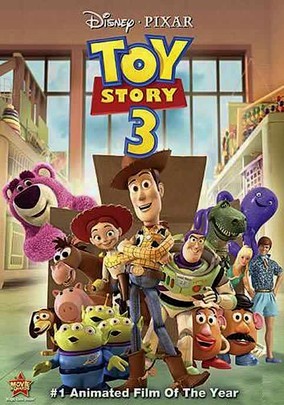
It’s not easy for sequels to succeed in the creativity or originality categories, but surprisingly, Toy Story 3 (2010) is a fresh, imaginative, fun film.

The characters are charming, interesting, and heartwarming, and the film avoids a sappy result.

Pixar has another hit.

Andy, now grown up and headed off to college, sees no reason to keep any of his childhood toys, now irrelevant and headed for the scrap box.

At least that is what Woody, Buzz Lightyear, and friends fear will happen as the dreaded day approaches.

They must scheme to avoid their fate.

Many interesting new toys are introduced to this franchise with unique personalities, giving a fresh approach while not forgetting the past.

I adore how Toy Story 3 has many dynamic themes (loneliness, abandonment, togetherness) that play very well together with a nice message.

On a deeper level, the film reflects the modern era.

People are so easily thrown out, forgotten, and abandoned, whether through a job, relationship, etc., so that makes this film a sad reality if one chooses to look at it that way, which most won’t.

Great movie for kids and adults alike with a meaningful, relevant message. The film is not a sugar-coated affair and offers a cold reality while remaining accessible.

Oscar Nominations: 2 wins-Best Picture, Best Adapted Screenplay, Best Animated Feature Film (won), Best Original Song-“We Belong Together” (won), Best Sound Editing