Tag Archives: Holt McCallany

The Iron Claw-2023

The Iron Claw-2023

Director Sean Durkin

Starring Zac Efron, Jeremy Allen White, Harris Dickinson

Scott’s Review #1,416

Reviewed January 15, 2024

Grade: A

I was pleasantly surprised by how compelling and character-driven The Iron Claw (2023) is. Being a sports drama there is always a risk of cliches and little in the way of surprises but director Sean Durkin who also wrote the screenplay, delivers the goods.

Powerfully acted by all of the actors involved The Iron Claw is also profoundly sad and very hard-hitting emotionally which caught me off guard.

The trials and tribulations of the Von Erich family are explored in a fact-based story that honors the family ties with compassion and heart making the audience fall in love with and understand the feelings of the family.

There are triumphs but also much heartbreak with some outstanding acting in support of a very sad real-life story.

Efron who plays Kevin Von Erich gives the best performance of his career as a reasonable, stable young man living in a world of chaos.

It is perplexing, especially given the December release why the film received no awards mention especially for Efron.

One miss, most notable with Kevin, is the inclusion of a ridiculous wig and jacked-up body making him look more like a cartoonish Incredible Hulk than the clean-cut all-American young man that the real Kevin looked like.

Being a huge fan of professional wrestling as a youngster in junior high school the Von Erich family was somewhat familiar to me. However, I had to search my memory for long-forgotten specifics.

The family, led by former wrestler Fritz (Holt McCallany) was well-known throughout the 1970s-1990s in local Texas circles and then nationally as professional wrestling gained popularity. His sons Kevin (Efron), Kerry (Jeremy Allen White), David (Harris Dickinson), and Mike (Stanley Simons) are the focal points.

The true story of the inseparable brothers, who made history in the intensely competitive world of professional wrestling is recounted. Through tragedy and triumph, under the shadow of their domineering father and coach, the brothers seek larger-than-life immortality on the biggest stage in sports.

The family, similar perhaps to the Kennedys, were known for a widespread myth about a family curse, called the ‘Von Erich curse’.

The film has some narration from Kevin who immediately informs the audience of this curse which sets the tone for the chain of events the film explores.

Durkin is careful to present the film so masterfully as a cautionary tale about parental influence, sibling rivalry, and the various dangers of the professional wrestling business.

The Iron Claw begins with a black-and-white sequence from probably the 1950s when Fritz was a struggling local wrestler. His famous ‘finishing maneuver’ was called the ‘iron claw’ meant to make his opponent submit to the wrestling match.

From there the story is largely told from the point of view of Kevin wonderfully played by Efron. Kevin, now the oldest sibling following the tragic death of his older brother at age five, serves as the brother’s leader.

While he yearns for a title belt largely to satisfy the demands of his father, he is usurped by brothers Kerry and David in different ways. He meets a local girl, Pam (Lily James), who is an intellectual and supports him emotionally.

They make a fabulous couple because they are equals. Conversely, the Von Erich mother is a traditional housewife and the entire family is taught to show no emotion.

In a wonderful scene late in the film, Kevin’s son teaches him that it’s okay to cry and show love through emotion. Kevin sobs with relief and it’s a beautiful and pivotal lesson the film teaches.

The other actors are outstanding, especially kudos to Jeremy Allen White (Kerry), and the parents (Maura Tierney and McCallany) but there is not a weak performance to be found.

It is unnecessary to be a professional wrestling fan though it is a treat to see long-ago stars like Ric Flair, Harley Race, and Bruiser Brody represented.

The Iron Claw (2023) like Boogie Nights (1997) did for the porn industry shows the flaws, the hopes and dreams, and the pain of a category of people (professional wrestlers) too often dismissed and discarded.

As Durkin examines wonderfully, these people also have a story to tell.

Vantage Point-2008

Vantage Point-2008

Director Pete Travis

Starring Dennis Quaid, William Hurt

Scott’s Review #1,271

Reviewed June 25, 2022

Grade: B-

The premise of Vantage Point (2008) is clever and hook-laden, stirring intrigue. After all, the idea of several ‘vantage points’ to one perilous event, in this case, an assassination in a European country, exudes promise and excitement.

An imagined fun game of whodunit or what happened to whom and when, and from whose perspective, prompted me to want to see this film.

The trailer looked good.

The film doesn’t satisfy and feels like a muddled mess, with little character development and, surprisingly, mediocre acting given its A-list cast.

The dialogue is forever repetitious with characters yelling out the same expletives in frustration that soon results in the incredible, teetering on laughably bad.

It plays too much like a carbon copy of the popular and exceptional television series ’24,’ which ran on FOX during the 2000s when Vantage Point was made.

The inspiration, Vantage Point, borrows heavily from the political thriller setup and the day-in-the-life concept popular during this decade.

The editing is rapid-fire quick.

I struggled to find a couple of redeeming qualities in the otherwise forgettable film.

Usually, seeing a film on the big screen in a slick, air-conditioned movie theater is a treat and increases my enjoyment of it, and that matters here.

In the case of Vantage Point, this raised its final grade from a mediocre C+ to a not-much-improved, generous B-.

A stellar company of actors, including Dennis Quaid, Sigourney Weaver, Forest Whitaker, William Hurt, and others, joins Matthew Fox, who was then hot for his lead role in the massively successful ABC television series Lost.

Did these actors read the script before signing on?

Witnesses with different points of view try to unravel an assassination attempt on U.S. President Henry Ashton (Hurt) while he is giving an important speech in Salamanca, Spain.

Special Agents Thomas Barnes (Quaid) and Kent Taylor (Fox) are assigned to protect Ashton during the summit on the war on terror. Television producer, Rex Brooks (Weaver), directs news coverage while American tourist Howard Lewis (Whitaker) films the audience.

After the leader’s arrival, shots ring out, and Ashton is down. In the resulting chaos, Howard comes forward with his camcorder, which he believes contains an image of the shooter.

Everyone attempts to solve the mystery by giving different accounts of what transpired.

Vantage Point is fantastic for about the first thirty minutes until it quickly runs out of gas. The setups are rapid, with Rex, Howard, Barnes, and Taylor each offering different perspectives, and the film moves well through the timeline from pre- to post-shooting.

The novelty wears thin once the perspectives are revised repeatedly and the plot becomes unnecessarily complicated and downright convoluted.

This makes a normally fast-running time of one hour and twenty-nine minutes feel like a lifetime commitment.

Comparisons I’ve heard to a 1950 Japanese film called Rashomon, which I have unfortunately never seen, are laughable.

My hunch is that the art film is worlds away from the slickly Americanized Vantage Point, and a slow build in the former is superior to the quickly edited mainstream latter.

Vantage Point (2008) is not a well-remembered film, nor should it be. There is no reason to watch it a second time.

A better choice is to watch the series 24 again instead.

It’s nearly the same, with one being superior.

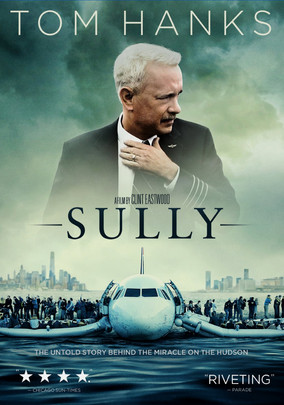
Sully-2016

Sully-2016

Director Clint Eastwood

Starring Tom Hanks

Scott’s Review #623

Reviewed March 10, 2017

Grade: B

I think most film critics would agree that each modern film directed by Clint Eastwood would accurately be described as a compelling film yet safe film, and the 2016 Eastwood offering, Sully, fits into both of these categories snugly- just as Sully feels like a snug film.

Everything fits into a nice package when the credits roll.

While the film is sympathetic and has leanings of a character study, it is also shrouded in a wholesomeness that is incredibly safe and “Hollywood.”

This is not a knock or a detriment to the film, as it is very good, well-made, and has a high budget. However, edginess is not its forte, and it might have been better off with a bit more grit.

The film recounts the lively, perilous United Airways flight 1549, in which the now-famous Captain Sully successfully landed in New York’s frigid Hudson River one January morning.

Tom Hanks is the subdued and unassuming hero to perfection, as his calm demeanor and grounded persona make him a likable chap, to say nothing of saving 155 lives aboard the would-be doomed flight that day.

Instead of going in a purely linear direction, building up the events (gravitating passengers, takeoff) in sequential order until the inevitable crash, Eastwood wisely decides to begin directly after the crash.

Captain Sully, clearly jarred by the events, is startled awake by nightmares. He dreams of crashing into midtown Manhattan instead of landing the jet safely.

The hero is beginning to suffer from symptoms of PTSD.

He is kept in New York City for days on both a press tour, interview after interview, as well as being questioned by the National Transportation Safety Board.

They wonder why Captain Sully didn’t return to a nearby airport for an emergency landing, as simulated computer recreations show he could have.

This puts both Sully and First Officer Jeff Skiles (Aaron Eckhart) under a microscope and subjects them to questioning.

I was a bit caught off guard and got slightly bored, as the film takes about thirty minutes to focus on the actual crash or show an airplane scene rather than building up the events by concentrating on Sully and Skiles’s mental health.

However, in retrospect, Eastwood made a wise decision.

The entire film is barely over ninety minutes total, so the action comes fast and furious mid-stream.

Still, the film isn’t quite as good as it could be.

Despite the potentially horrific consequences of an airplane blowing both engines due to flocks of birds, I never got many truly perilous moments during the film.

While technically well done, the danger scenes as Sully navigates the plane into the river lack much in the way of the punch.

Sure, there are a few quick shots of passengers praying or looking frightened, but we never get to know any of them very well.

A “don’t blink or you might miss it” scene of an elderly mother and her daughter shopping for a snow globe at the airport, or three men rushing to catch the plane to make a golf game in Charlotte, isn’t enough for the audience to become too enveloped in their characters.

They almost seem thrown in at the last minute a personalize the passengers.

As I mentioned above, the film’s point surrounds Sully (and arguably it should; there is nothing wrong with that) and, to a lesser degree, Skiles.

The supporting characters have no character development, and even Skiles’s personal life isn’t explored well.

Scully’s wife is only seen through phone conversations (played by Laura Linney), and he is happily married with two daughters. There is a brief talk about money trouble, but the wife is underdeveloped.

Additionally, the NTSB agents are portrayed as quite antagonistic towards Sully and Skiles (rumors abound that this was embellished for movie-making), which makes sense.

I enjoyed the ending of the film- in tandem with the credits rolling- of seeing not only the real-life Sully but his wife and the passengers and crew of the actual United Airlines Flight 1549 through interviews and photographs.

This offering in true-life biography films is now a standard feature to look forward to, as it brings a humanistic conclusion to the story just watched.

The film’s focus centers on Captain Sully, which is fine by me- the man is a hero- but as a film, and more than a biography, it might have added depth to have richer supporting characters and a more substantial background of the man that is Sully.

A few rushed childhood aviator and battle-plane scenes felt somewhat out of place.

Still, the film is pleasant and immensely watchable. It will not set the world on fire or be remembered as much more than a decent film based on a true story.

Oscar Nominations: Best Sound Editing

Crush-2013

Crush-2013

Director Malik Bader

Starring Lucas Till

Scott’s Review #87

70263209

Reviewed July 2, 2014

Grade: C-

Crush (2013) tells a story told since almost the beginning of cinematic history: that of the stalker.

It’s a teen stalker film similar to Swimfan (2002) and The Roommate (2011), which I admit I’ve seen and enjoyed as guilty pleasures.

A teen soccer jock injures his knee and decides to break up with his girlfriend to focus on rehab. From there, someone begins stalking him and leaving secret admirer notes.

Several red herrings ensue, and the final thirty minutes contain a twist that, unfortunately, if you bother to look at the cover art on the DVD, reveals the stalker.

This particular genre is a guilty pleasure of mine, so it’s tough to be completely objective.

On the surface, Crush is a terrible movie- it is by the numbers with no character development, but just plain old fun.

I suppose it is loosely a remake of the Alicia Silverstone film from the 1990s.

In any event, the appeal (good or bad) is that the filmmakers played this film seriously instead of fessing up to a poor script and playing it for laughs.

The acting is awful, the teen outcasts look like they could easily be the popular kids and were made up to appear nerdy, and the film has a Hallmark television movie-of-the-week badness.

But in a goofy, trashy way, I enjoyed Crush (2013).