Tag Archives: John Woodvine

The Devils-1971

The Devils-1971

Director Ken Russell

Starring Oliver Reed, Vanessa Redgrave

Scott’s Review #1,403
Reviewed October 4, 2023

Grade: A

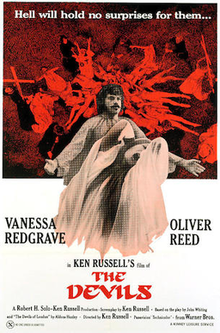
Ken Russell, best known for directing the outstanding Women in Love (1970) and The Who’s Tommy (1975), creates a disturbing opus about perversion and scandal within the Roman Catholic Church in medieval times.

The film’s graphic portrayal of violence, sexuality, and religious blasphemy ignited shocked reactions from censors, and it initially received an X rating in both the United Kingdom and the United States. It was banned in several countries and heavily edited for exhibition in others.

This alone will pique the interest of open-minded, curious viewers. It sure did mine.

The film is ironically entitled The Devils (1971) and stars Russell Stalwart Oliver Reed, who also appeared in the aforementioned films.  Reed leads the charge as a sexy, rugged man who beds many women and is the center of a convent full of nuns’ nasty and naughty thoughts.

Vanessa Redgrave also appears as a lustful and evil nun with a hunchback.

During the period of seventeenth-century France, Father Grandier (Reed) was a priest whose unorthodox views on sex and religion influenced a passionate following of nuns, including the sexually obsessed Sister Jeanne (Redgrave).

When the power-hungry Cardinal Richelieu (Christopher Logue) realizes he must eliminate Grandier to gain control of France, Richelieu vows to destroy the man. He portrays Grandier as a Satanist and spearheads a public outcry to destroy the once-loved priest’s reputation.

The Devils is outrageous and bizarre in only the best of possible ways. Who doesn’t love a healthy dose of nun orgies and simulating fellatio on a large candlestick? One nun violently masturbates as another looks on, giggling sadistically.

The camera loves Reed and Redgrave, who, interestingly, are not a couple in the film. These British actors were at the height of their careers in 1971, and both portrayed roles that must have been tremendously challenging.

Despite being set in France, the film opens in a naughty way with a nearly nude dance performed by skinny Louis XIII (played with wacky delight by Graham Armitage). Rumored to be gay, the king traipses around in colorful costumes and later shoots protestants dressed as gorillas for sport.

There are themes of exorcising and burning at the stake, and mentions of the warring Catholics and Protestants, so there is a seriousness amid the antics and shenanigans.

It took me a little while to become fully immersed in the chaotic land of Loudon, a town in western France where the film is set. In truth, a second viewing really helped me settle in and have a sense of what was going on.

The best films really are like fine wines.

Russell’s attempts to irritate and incite the overly religious are quite satisfying in a wicked way. As much as he mocks religion by making the traditionally sexually conservative filled with lust and animalistic sexual prowess, there is much more going on.

Beneath the surface, he challenges the ridiculousness of religion, which cinema lovers will embrace and delight in. There are history lessons to be had, though, and the film provides exceptional details of the political upheavals and tyranny that occurred.

The thunderous musical score by Peter Maxwell Davies is fabulous, especially during The Devil’s final act, when a central character endures a broiling on a wooden stake.

Those who own the wonderful Blu-Ray version of the film can enjoy various outtakes, cast interviews, and behind-the-scenes information.

An added delight for knowledgeable film fans is the inclusion of character actor Murray Melvin, famous for playing Reverend Runt in the classic Barry Lyndon (1975). He plays Father Pierre Barre.

The Devils (1971) is a perverse and operatic extravaganza of lunacy. It’s caked with sex and nudity and blasphemy that I loved every bit of. The dangerous tone can be studied and thought about long after the film ends.
Vanity Fair-2004

Vanity Fair-2004

Director Mira Nair

Starring Reese Witherspoon, James Purefoy

Scott’s Review #772

Reviewed June 12, 2018

Grade: B

An adaptation of the classic 1848 novel written by William Makepeace Thackeray, Vanity Fair (2004) softens the traditionally unlikable and roguish character of Becky Thatcher quite a bit.

This proves not to be the smartest move as the character, now more of a heroine is watered down and forever changed, as is this film adaptation.

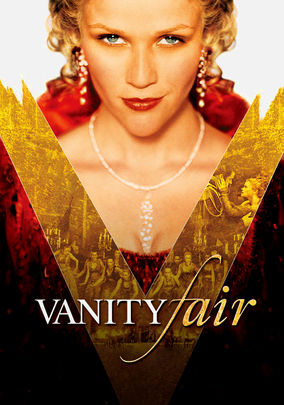
Reese Witherspoon (Becky) drew harsh criticism for her starring turn, but I do not think she is so bad, and the costumes and set designs are wonderful and quite the highlight of the resulting period piece.

In 1802 England, we meet Becky Sharp, a young woman who has just graduated from a School for Girls and been sent to work as a governess. Because her father, a talented painter, is impoverished, Becky is cast aside as lower class and deemed undesirable to anybody upper class- the men she is most interested in.

Despite her reputation as a tart, Becky aspires to marry rich and frequently gets into trouble with her shenanigans and smart tongue while romance blooms with the handsome Rawdon Crawley (Purefoy).

The story is supposed to encompass Becky’s life from approximately age eighteen through her mid-thirties (though Witherspoon never appears to age) and displays her trials and tribulations, her loves and losses through the years.

We follow her from rural England to London and Belgium, eventually residing in Germany, reduced to working in a casino, where the film concludes.

The film is a treat as the various countries as they appeared in the nineteenth century, and the wars and battles occurring during this period are featured making for an interesting history lesson.

The main appeal should be Becky Thatcher since the film revolves around her, and numerous criticisms were thrown around accusing the film of casting Reese Witherspoon in the important and demanding role based on her star power at the time.

In 2004 Witherspoon was experiencing enormous film success after 2001’s Legally Blonde and 2002’s Sweet Home Alabama- admittedly fluff films- but securing her box office power nonetheless. These films undoubtedly led to her being cast in the pivotal role, but I thought the star was perfectly adequate and gave Becky appropriate humor and zest.

Based on Witherspoon’s “girl next door” persona and the fact that she just looks like a good character- perplexing the decision to cast her if filmmakers wanted to be true to the character.

Witherspoon was delicious in 1999’s Election as villainous Tracy Flick, a role of a lifetime. But that is the exception and not the standard.

But I digress- the bottom line is that while she is a capable actress, she does not give the gritty performance that many were expecting to be true to the character in the novel.

The rest of Vanity Fair is just mediocre as far as the story goes.

While the antics of Becky are both humorous and dramatic, her rooting value in the romance department does not come across in the 2004 film offers- not enough chemistry exists between the leads to warrant much support.

Opinions abound that other incarnations of Vanity Fair are far more superior and compelling than this film is, but I have yet to see any.

Compliments must be reaped on the costume department and the art direction- both are superior. Such threats are the lavish and colorful costumes and gowns that mark the time. From the classic style hats and highfalutin dresses featured in ball after ball, this aspect is nearly enough to recommend a watch over the dull story and immeasurably the highlight of the entire film.

Vanity Fair (2004) is considered a messy travesty to those well-read enough to have turned the pages of the classic novel. Since I have not yet read the book, perhaps I enjoyed the film slightly more than I should have, but alas, I did not find the casting of Witherspoon as Becky nor the overall product to be drivel as many did.

I recommend the film for the gorgeous visual treats if nothing else.

An American Werewolf in London-1981

An American Werewolf in London-1981

Director John Landis

Starring David Naughton, Griffin Dunne

Scott’s Review #253

Reviewed July 2, 2015

Grade: B

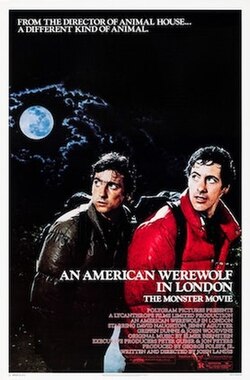
A melding of British-American horror and comedy, An American Werewolf in London (1981) provides entertainment while also being a campy and silly.

While two American buddies, Jack and David, traverse the English countryside with backpacks in tow on a spring break jaunt of sorts, one is viciously attacked and killed by a strange werewolf, setting off a series of strange occurrences that play out over the remainder of the film.

From this point, the film is told from the perspective of one of the males, as the other appears to him in visions, warning him of his inevitable transformation into a werewolf.

An American Werewolf in London does not intend to mock the horror genre, but it is certainly campy and over-the-top.

Despite the cult-classic accolades thrust upon the film, which I respect, it is not among my favorites.

I would have preferred it to tilt more towards the horror classification rather than the comedy, because it comes across as some spoof, with the main characters overacting.

The film has a silly quality. It is light fare instead of dark or morbid, and even the kills are meant to be fun, not horrific. In a way, it is almost cheesy, and that is not a compliment.

This is not to say that the film is completely subpar. It is decent, but not very believable, and I think that is a distraction and a missed opportunity.

However, my favorite characteristics of this film are the makeup/special effects and the musical score, which features such fitting treats as “Moondance”, “Bad Moon Rising”, and “Blue Moon”.

Sense an intelligent theme? The makeup, especially during the reanimation sequences, is creative and still impressive today, considering the film was made in 1981.

Besides, the best scene of the film is undoubtedly the “Slaughtered Lamb” scene when Jack and David stumble upon the aptly named pub filled with interesting, blue-collar-looking locals.

When one of the tourists inquires about a mysterious five-pointed star on the wall, the pub dwellers grow angry and cold, leaving the young men confused and intrigued.

This scene is full of interest, and I only wish the pub characters had more of a chance to shine, as they seem benevolent and have potential backstory.

I would have enjoyed learning more about the history of these folks.

Sadly, the focus is by and large on Jack and David and a poorly constructed love interest- Nurse Alex Price, who is not to be taken at all seriously and played for one-dimensional laughs.

A lighthearted, sort-of fun late-night flick, An American Werewolf in London is a cult film, though I would not agree with the “cult classic” distinction.

Oscar Nominations: 1 win-Best Makeup (won)