Tag Archives: Herbert Ross

Funny Lady-1975

Funny Lady-1975

Director Herbert Ross

Starring Barbra Streisand, James Caan

Scott’s Review #1,550

Reviewed September 14, 2026

Grade: B-

The 1968 film version of Funny Girl starring Barbra Streisand is such a joy to watch time and time again that I should have known a sequel would inevitably disappoint.

Especially since I had never even heard of the sequel.

But that’s exactly what the 1975 film Funny Lady, with a cutesy title to drum up interest, ultimately does.

It’s a letdown in the highest regard, except for a few choice musical numbers and maybe the costume design.

‘How Lucky Can You Get’ is the prime standout. This powerful anthem is the centerpiece of the movie’s score and allows Streisand to belt it out.

It also shows the most emotion.

Second in line, ‘More Than You Know’ is a lush, beautiful, and deeply emotional ballad delivered with Streisand’s trademark vocal control.

Barbra being Barbra, she does what she can vocally, of course, but the thin script and jarring miscast make for a dull, uneven film experience.

Set in the 1930s, Fanny Brice (Streisand) is now a huge Broadway star whose fortunes, like everyone else’s, have taken a hit from the Great Depression that ravaged the United States.

After a whirlwind romance that finds the couple frequently sparring, Fanny unconvincingly marries songwriter Billy Rose (James Caan), and the two agree to collaborate on a show.

Despite the show’s early flops and errors, Fanny eventually makes it a success, but the sudden pressures of fame put a strain on her marriage.

Events spiral when Fanny’s ex-husband, Nick (Omar Sharif), resurfaces and she realizes she still has strong feelings for him.

The biggest problem is casting the leading man, Billy Rose. The character is supposed to be short, disheveled, unattractive, and awkward.

Supposedly, still in love with Nick, Fanny more or less ‘settles’ for Billy.

James Caan, especially in 1975, coming off a roaring success and career-defining role as the sexy, charismatically aggressive Sonny in The Godfather (1972), has none of Billy Rose’s traits.

Quite the contrary.

Tall, good-looking, with chiseled features, he’s the furthest thing from awkward.

To make matters worse, Caan and Streisand have no chemistry.

Dustin Hoffman, Al Pacino, or Robert Blake would have been dynamic casting, and Pacino and Blake were even seriously considered.

When later questioned about the casting decision, Streisand revealed that it came down to who the audience would want to see her kiss.

Maybe it’s Caan, but the decision all but ruins the movie.

The banter and romantic sequences come across as boring, tedious, and therefore unfulfilling.

Other irritants like a throwaway role given to Roddy McDowall don’t help the finished product. As Fanny’s gay friend, Bobby Moore is reduced to serving her hot tea and occasionally walking into a scene to see what troubles Miss Fanny.

Granted, it’s the 1930s; his sexuality is only suggested and never clearly stated, but we know almost nothing beyond that of his character’s thoughts and feelings.

A slyly suggested dalliance with another male character would have been nice.

Soon-to-be star Ben Vereen is given essentially nothing to do but dance a bit, yet was laughably given a Golden Globe nomination for Best New Star.

Obviously, they cut scenes, leaving gaping continuity holes.

Despite the limited chemistry, Streisand and Caan do their best to create tense-filled scenes, but the bickering is overdone. It feels more like they really can’t stand each other than a lovers’ disagreement.

I couldn’t shake my perception of Caan as Sonny from The Godfather, which was more than a little distracting. When Nick returns to the scene, I half-expected Billy to have the poor guy whacked or make him an ‘offer he couldn’t refuse’.

I knew I was supposed to be rooting for Fanny and Billy, but instead I championed a Nick and Fanny reunion during one of their limited scenes.

Which begs the question: why did Omar Sharif have barely more than a cameo’s worth of scenes? Surely, a quality romantic triangle would have held more interest.

Despite all the missteps, the musical numbers are the film’s highlight, and if there’s any reason to tune in, that’s it.

For theater fans, enough gorgeous costumes and dance numbers amid the melodrama keep things interesting, too.

With terrible casting and a marginally digestible script, the recommendation is to skip Funny Lady (1975) altogether and instead dust off Funny Girl (1968) every year or so and pretend this movie was never made.

Oscar Nominations: Best Cinematography, Best Costume Design, Best Original Score, Best Original Song, “How Lucky Can You Get”, Best Sound

Golden Globe Nominations: Best Picture- Motion Picture- Comedy or Musical, Best Actor- Motion Picture- Comedy or Musical-James Caan, Best Actress- Motion Picture- Comedy or Musical-Barbra Streisand, Best Original Score, Best Original Song- “How Lucky Can You Get”, New Star of the Year-Actor-Ben Vereen

Steel Magnolias-1989

Steel Magnolias-1989

Director Herbert Ross

Starring Sally Field, Shirley MacLaine

Scott’s Review #1,546

Reviewed August 29, 2026

Grade: B+

One of the better chick flicks to emerge from the late 1980s, Steel Magnolias is a 1989 tearjerker with drama and heart, done up in southern style. It has comfort, charm, and a bit of tackiness.

Specifically, Louisiana- the film was shot in that U.S. state, so the authenticity is evident in the vast number of exterior small-town sequences.

The film is reminiscent of Beaches (1988) and Terms of Endearment (1983), stories about female friendships and the trials and tribulations that come with them.

Although it’s geared toward a female audience, there is plenty for men to enjoy, though the male characters take a back seat to the women.

A dose of tissues may be needed since the film is a tearjerker.

Steel Magnolias uses various Louisiana backyards, houses, and the famous Truvy’s Beauty Salon, which the play the film is based on uses as the primary, or only, set.

M’Lynn (Sally Field) is the mother of bride-to-be Shelby Eatenton (Julia Roberts). As friend Truvy Jones (Dolly Parton) fixes the women’s hair for the ceremony, they welcome a helping hand from aspiring beautician Annelle Dupuy DeSoto (Daryl Hannah).

Annelle is new in town and has a secret past which the other townswomen are dying to unravel. The group includes the bitchy Ouiser (Shirley MacLaine) and the wealthy Clairee Belcher (Olympia Dukakis), who is recently widowed.

Diabetic Shelby has a health scare on the morning of her wedding to Jackson (Dylan McDermott), which is averted but doesn’t bode well for her hopes of having children.

Shelby and Jackson desperately want kids, so this is a major hurdle and caveat of the film.

As time passes, the women and their friends face tragedy and good fortune, growing stronger and closer in the process.

For most of the film, the beauty salon serves as the backdrop for gossip and dishing.

Steel Magnolias has a folksy, down-home appeal that viewers can enjoy. Part of the small-town appeal is its warmth and sense a home, and the film succeeds in making the viewer feel a part of this community.

Since the events span a couple of years, we see traditional holidays like Halloween and Christmas celebrated, and we see townspeople who have known each other their entire lives come together.

This is a wonderful feeling for the viewer.

The film is not a perfect 10 score, however. Because of the dramatic situations, it must incorporate some comic elements.

While generally successful, the bickering between Clairee and Ouiser works well; other portions fall flat.

MacLaine gets quick one-liners, which she delivers with gusto and is the hammiest of all the characters. As she marches across her backyard intent on telling someone off, or criticizes a former beau for looking older, her character crackles with life and energy.

However, the feud between Ouiser and M’Lynn’s husband, Drum (Tom Skerritt), is weak and more like screwball comedy. Each time Drum teases Ouiser’s excitable dog to irritate her, I cringed with annoyance.

On the wedding day, he fires a gun loaded with blanks to drive birds out of the trees so they do not interfere with the reception, and Shelby’s brothers cover her honeymoon car with inflated condoms as a prank.

These lighthearted situations seem juvenile and a pale attempt to offset the heavy dramatics, which are the strongest part of the film.

As an aside, I could have used a dose of equality and inclusion. I realize the film is set in the South, but every servant or hired help is black. Given it’s the 1980s, couldn’t this be modified even slightly?

Nonetheless, Steel Magnolias (1989) is a winner because of the connection between the women and the melodrama that takes center stage in the final act.

Roberts, as Shelby, gives a winning dramatic performance and was just on the cusp of superstardom. Parton is the core of the group and the most sensible, while Field, the lead character, also delivers rich drama.

I’d be remiss not to give props to Parton, who instills a trust and sensibility into her role. Oozing kindness, she gently incorporates a new community member as if she’d known her her entire life.

Truvy is just like Dolly herself, which is a big part of the heart that the viewer feels. It almost made me want to reside in Chinquapin Parish!

The film is a fluffy piece of nostalgia that brings the entire family together with warmth and provides a much-needed emotional outlet.

Oscar Nominations: Best Supporting Actress-Julia Roberts

Pennies from Heaven-1981

Pennies from Heaven-1981

Director Herbert Ross

Starring Steve Martin, Bernadette Peters

Scott’s Review #1,480

Reviewed May 10, 2025

Grade: A

Pennies from Heaven (1981) may be Steve Martin’s best film role and Bernadette Peters’s most excellent cinematic performance. Audiences did not receive the film well upon release, but many of the best movies are not.

Critics, however, applauded the film, which earned writer Dennis Potter an Academy Award nomination for Best Adapted Screenplay.

Watching (for the first time) in 2025, the film doesn’t feel dated, as many 1980s films do. Furthermore, Pennies from Heaven doesn’t feel like a 1930s set film in the 1980s either.

The opening sequence features credits amid clouds, later dances on the tops of bars, and kids in a schoolhouse playing white pianos, which is fresh and authentic.

These aspects enhance the dazzling musical production numbers. The songs are lip-synced, which strangely works after a brief period of adjustment, given that they are popular songs of the 1920s–30s, such as ‘Let’s Misbehave,’ ‘Life Is Just a Bowl of Cherries,’ ‘Let’s Face the Music and Dance,’ and the terrific ‘Pennies from Heaven’.

Unconventional in film, sometimes the action in a scene suddenly stops, and a musical number begins. The songs reflect the times with an overpowering sadness.

The story follows Arthur Parker (Steve Martin), a Depression-era sheet-music salesman with dreams of becoming a big success. When Arthur faces relationship problems with his wife, Joan (Jessica Harper), he begins an affair with a shy and beautiful teacher, Eileen (Bernadette Peters).

Though Arthur and Eileen connect, societal and financial obstacles threaten their happiness.

The film is highly stylized and looks stunning. The darker lighting, especially during musical numbers, looks muted to reflect the bleak nature of the Depression period.

I was continually surprised by this film. Situations arose that threw me for a loop, especially Eileen’s pregnancy and subsequent journey into the world of prostitution. At first meek and virginal, she becomes a savvy and more demanding character as the film progresses.

Eileen is my favorite character.

Peters was robbed of an Oscar nomination, which is surprising because she is emotionally invested in the character. Although she expects to hate sleeping with men for money, she doesn’t find it so bad, and it’s an easy way to make money during a time when most had no resources.

I adore Peter’s facial expressions as she embarrassingly looks away or her eyes well with tears.

A shocking death devastated me towards the film’s end, even though the character was minor.

I wasn’t as enamored with Arthur’s character as with Martin’s performance. Arthur, horny and a bit of a cad, disappoints me when he is mean to troubled and struggling accordion player (played wonderfully by Vernal Bagneris). He also doesn’t treat his wife very well.

Nonetheless, his dramatic turn is refreshing compared with his typical slapstick roles, and he and Peters have great chemistry.

Christopher Walken, in a small role as Tom a stylish pimp, brings down the house with a wacky dance.

The rich and complex writing showcases an anti-hero with layers of complexities and supporting characters looking to survive. The 1930s setting is crucial as characters scramble like mice to find a bit of cheese and navigate a complex maze.

Pennies from Heaven (1981) is not a film for mainstream moviegoers. Instead, the film will be a surprising treat for those eager to peel back an onion and immerse themselves in good cinema.

Oscar Nominations: Best Adapted Screenplay

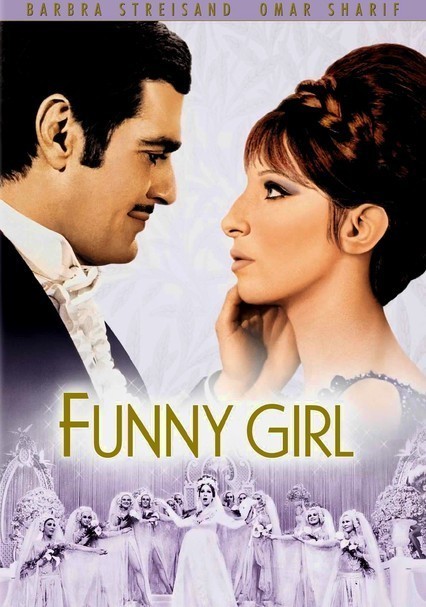
Funny Girl-1968

Funny Girl-1968

Director William Wyler

Starring Barbra Streisand, Omar Sharif

Scott’s Review #1,022

Reviewed May 11, 2020

Grade: B+

Barbra Streisand won the Academy Award for Best Actress for her outstanding portrayal of Fanny Brice in Funny Girl (1968).

She brought to the big screen a role she made famous on Broadway.

The role is vitally important and sends a powerful message: an unconventional woman with extraordinary talent can succeed in showbiz, leaving prim and proper starlets salivating with jealousy.

Features the classic tunes “People” and “Don’t Rain on My Parade” as well as the title track.

Fanny (Streisand) is an unhappy Jewish New Yorker, living in semi-poverty and dreaming of the big time.

Her mother (Kay Medford) and others in the community try to persuade Fanny to live an everyday life far from the hot, judgmental glare of the stage, but she will have none of it.

Finding success on her terms in Ziegfeld Follies throughout World War I, she also finds love and passion with the suave Nick Arnstein (Sharif) following her debut performance.

The story is loosely based on the life and career of the honest Fanny and her stormy relationship with the entrepreneur and gambler, Nick.

Taking nothing away from Sharif, who is more than adequate, the film belongs to Streisand. Despite being a novice, producers wanted no one but Streisand in the role, since she had hit a home run in the stage version.

A brief consideration of having Shirley MacLaine star in hindsight seems laughable and unimaginable.

Sharif’s suave, dangerous, swarthy characterization balances perfectly with Streisand’s naivety and innocence. The Jewish woman and the Muslim man must also have raised an eyebrow or two at the time.

Streisand is a breath of fresh air in a role that could mimic real life and reflect film in 1968 and beyond. Glamour girls were the height of fashion throughout the 1950s and 1960s, when looks sometimes usurped talent.

With the lifting of the Hollywood Code, women found grittier, dirtier roles. Streisand, as Fanny, proves that a self-proclaimed ugly duckling can rise to the top of the cream.

Refusing to get a nose job or otherwise alter her appearance or name, she mirrors Fanny in many ways, inspiring both women and men to be themselves to achieve truth.

Director William Wyler, no stranger to Hollywood success with pictures such as Mrs. Miniver (1942) and The Best Years of Our Lives (1946), knows how to pace and balance a film and to present a cheery, splendid offering, careful not to make the movie too lightweight.

Comic scenes, such as when Fanny upstages everyone and prances around the stage as a pregnant newlywed, becoming the talk of the town, are the best ones.

The film succeeds when it is fun.

Sharif does his best in a small role, which is surprising given the character’s importance, but the dramatic moments aren’t the best scenes.

They are okay and certainly not overacted by the stars, but do not work as well as when Streisand belts out “People” on a lonely sidewalk.

The issue is that Streisand is Funny Girl, and even prominent actors like Sharif never had a chance. The one exception is Medford, who goes toe to toe with Streisand in every scene with gusto and humor.

Funny Girl (1968) may suffer from a few overly melodramatic moments that slow it down, especially in the central romance, but its central message is to stay true to one’s colors.

Refusing to be influenced by elders or even her beau, Fanny inspires viewers. With delightful musical numbers and zesty wardrobe pieces, the film has a cheery and fun veneer, but more lies beneath the surface.

Whether the intention is a sing-along experience or a deeper meaning, the film has something for everyone.

Oscar Nominations: 1 win-Best Picture, Best Actress-Barbra Streisand (won), Best Supporting Actress-Kay Medford, Best Score of a Musical Picture-Original or Adaptation, Best Song Original for the Picture-“Funny Girl”, Best Sound, Best Cinematography, Best Film Editing

Golden Globe Nominations: 1 win-Best Motion Picture-Comedy or Musical, Best Director-William Wyler, Best Actress-Comedy or Musical-Barbra Streisand (won), Best Original Song-‘Funny Girl’

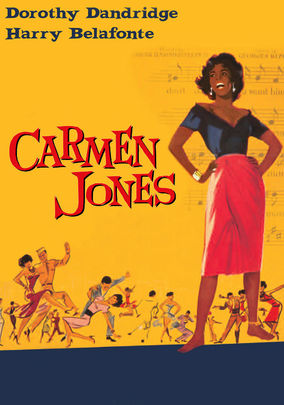
Carmen Jones-1954

Carmen Jones-1954

Director Otto Preminger

Starring Dorothy Dandridge, Harry Belafonte

Scott’s Review #736

Reviewed April 3, 2018

Grade: B+

It was pretty taboo at the time of release (1954) because it featured an all-black cast with no white members. Carmen Jones is to be celebrated for her contribution to film history for this groundbreaking feat alone.

Directed by Otto Preminger (who, ironically, is Caucasian), the film features legendary actress Dorothy Dandridge in a Marilyn Monroe-style performance worthy of the stars’ talents.

The film is a musical with an inevitable tragedy at the conclusion.

The 1954 feature is based on a 1943 stage production of the same name, based on the music of the famous 1875 Georges Bizet production of Carmen.

These facets add to the film’s richness, as it is layered with solid historical detail, and the well-known tragic elements make the conclusion unsurprising.

Brazen and beautiful, Carmen is a seductress who works in a parachute factory in North Carolina during World War II.

After trading fists with a co-worker, Carmen is jailed and assigned to handsome Corporal Joe (Harry Belafonte), who is to escort her to the authorities.

While Carmen is not shy about pursuing the young man, his fiancée, virginal Cindy Lou, fumes and schemes to keep her man.

The result is a triangle. Carmen and Joe eventually fall madly in love, leaving poor Cindy Lou behind, but their love faces hurdles.

The somewhat lighthearted first portion of the film, with coquettish humor, is offset by a much darker path it takes.

As Carmen and Joe finally profess their love and share a night of passion, she leaves him in the middle of the night, unable to endure prison time.

This results in Joe being imprisoned, as the couple ultimately cannot stay apart despite repeated obstacles to their happiness.

An additional character, a boxer named Husky, with designs on Carmen, is introduced, complicating matters.

In a sad form, much like the opera Carmen, the final scene is devastating and startling as Joe treads a dark, gloomy path of destruction. The character of Joe is nuanced- at first, a “nice guy”; the character is an example of complexity and what a man will do for love.

The viewer wonders what will become of Joe and how he could risk his life performing an act in the heat of passion.

In 1954, what a profound and fantastic role for a female, let alone a black female. Typically cast in roles such as maids, servers, or even less glamorous parts, Dandridge was wonderful to see capture a challenging role of this caliber.

She is a vixen as she sinks her teeth into the meaty and flirtatious Carmen.

Dandridge’s pizzazz, flair, and singing and dancing performances made her a star, and she is forever known as a groundbreaking talent.

There cannot be enough said about the importance of casting all-black actors in Carmen Jones. Monumental, of course, given the time.

The result is a film of significance to black culture, showing that they no longer needed to appear in “white films” as supporting players but could carry a movie on their own.

How profound and remarkable this was!

My only criticism of the film is undoubtedly related to the progress made for black actors and characters, though there is still plenty more work to be done.

At times, the filming feels a shade dated (there are more great roles for black actors now) and has a slightly grainy look.

Some of the supporting characters’ acting is also not the strongest, but as Carmen Jones is a historical film, liberties must be taken.

Thanks to the genius and the funding of Preminger, who needed to produce the film independently due to a lack of interest, the result is a film that has gone down in history as worthy, edgy, and open-minded.

Wisely casting talented stars with great pipes, the film is a solid success.

Oscar Nominations: Best Actress-Dorothy Dandridge, Best Scoring of a Musical Picture

Golden Globe Nominations: 2 wins-Best Motion Picture-Musical or Comedy (won), New Star of the Year-Actor-Joe Adams (won)