Tag Archives: Celia Imrie

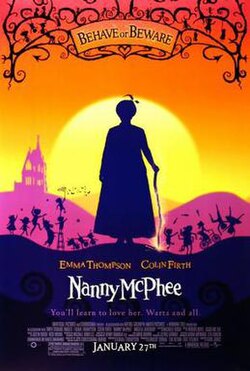
Nanny McPhee-2005

Nanny McPhee-2005

Director Kirk Jones

Starring Emma Thompson, Colin Firth

Scott’s Review #1,161

Reviewed July 15, 2021

Grade: B

Patterned after the classic family film Mary Poppins (1964), but with a slightly harder edge, Nanny McPhee (2005) attempts to recreate the iconic character with a similar storyline setup.

But a couple of other family films make their presence known.

The Sound of Music (1965) is quickly added to the mix with a well-meaning but absent daddy and a slew of siblings who terrorize former and present nannies.

A scullery maid with big dreams ala Cinderella (1950) solidifies the harkening back to 1960s cinematic family fun.

Great British actors like Emma Thompson and Colin Firth add much to the film which would be mediocre without their benefits. And the iconic Angela Lansbury hops aboard in a small yet important role. They make what would be a disposable kid’s movie into something respectable, romantic, and fairly cute.

The film tries a bit too hard with the comical moments, losing the magical moments that would have made it feel more alive. Instead, most scenarios come across as campy or family-oriented.

Of course, the conclusion can be seen from the very beginning.

The effort is admirable but the story experience never feels very compelling. Thinking demographically, Nanny McPhee has much to offer the younger set. The kids will love the candy-box sets and costumes like confectionery-shop windows, the whimsy and farcical grotesqueness of it all.

The adults might be won over by the creativity and the cast.

Thompson (who also wrote the screenplay) has fun playing ugly and getting her feet dirty, her snaggletooth almost a character itself, so prominent is it featured. She is even the anti-Mary Poppins, lacking an umbrella or the high-class pose that she had.

Each time the children learn a lesson, one of Nanny McPhee’s facial defects magically disappears.

But why not just dust off the original Mary Poppins? Nanny McPhee will inevitably be forgotten since an actual remake of the Mary Poppins film was released in 2015 all but confirming the Nanny McPhee franchise as the second tier.

And Nanny McPhee made me want to revisit Mary Poppins instead of watching Nanny McPhee again.

Set in Victorian-era England, lonely widower Cedric Brown (Firth) hires Nanny McPhee (Thompson) to care for his seven rambunctious children, who have terrified and chased away all previous nannies. But McPhee is different and will have no such nonsense. She slowly wins over the children with magic and a bit of discipline.

And when the children’s great-aunt and benefactor, Lady Adelaide Stitch (Lansbury), threatens to separate the kids, the family pulls together under the guidance of their new leader.

Lansbury nearly steals the show. Short-sighted and domineering, the family is financially supported by her and Cedric cowers to her every request until she demands custody over one of the children. She also viciously threatens to reduce the family to poverty unless Cedric remarries within the month, meaning the family would lose the house, and be forced to separate.

She is deliciously wicked in the role and plays it to the hilt.

The sweet romance between Cedric and scullery maid Evangeline, played by Kelly Macdonald, works well. They resist at first, but then realize their feelings for each other and agree to marry, satisfying Aunt Adelaide’s conditions for maintaining her financial support.

Nanny McPhee (who is now fully beautiful), magically makes it snow in August, transforming the wedding scene and changing Evangeline’s clothes into a beautiful wedding dress.

This is the fairy tale ending that ultimately makes the film work and wins me over.

Nanny McPhee (2005) is solid if not remarkable.

Calendar Girls-2003

Calendar Girls-2003

Director Nigel Cole

Starring Helen Mirren, Julie Walters

Scott’s Review #1,090

Reviewed December 11, 2020

Grade: B+

A clever female version of The Full Monty (1997), the middle-aged, bordering on senior-citizen characters, nudity comparisons notwithstanding, Calendar Girls (2003) has standard similarities.

The film is a light-hearted affair, charming and fun, with positive and inspiring messages about friendship and helping with cancer research.

How can a film like this not bring a smile to the viewer’s face? It did to mine.

That said, it’s hardly high drama or material that requires much thought or dissection. I’d wager to say you only need to see it once.

There lies a situational or clichéd theme as the women face the predictable, awkward moments, but the film entertains in style.

Calendar Girls is based on a true story, adding merit, appreciation, and an endearing quality. It’s a feel-good film if there ever was one, which is just fine in this case.

The film was a box-office smash, and why not? It’s a comically robust experience.

A likable group of “women of a certain age” conspires to launch a calendar that showcases their best assets for all to see.

Before this sounds too scandalous or corny, the ladies do it for a good cause and not for any titillating pleasure.

The women are British and, while attractive, are average-looking gals with womanly figures. These tidbits lead to humorous and embarrassing situations, as some of the women are more modest than others, especially in the conservative, crusty town they live in.

This causes shock among the prudish townspeople.

Chris (Helen Mirren) and Annie (Julie Walters) are best friends. When Annie’s husband dies of leukemia, they conjure up the idea of creating a nude calendar, where women pose while doing traditional duties like baking and knitting. The proceeds will go to research for the deadly disease.

Unexpectedly, Chris and Annie, along with others from the Women’s Institute, of which they are members, achieved worldwide success and were even invited to Los Angeles to appear on The Tonight Show Starring Jay Leno.

The women clash over their success and differing life paths before reconciling and deciding that their ordinary lives aren’t so bad. They happily resume their nice lives away from the spotlight.

The comparisons to The Full Monty (1997) must be mentioned because they are obvious. Whereas the men in The Full Monty strip on stage, the women prefer more modesty, nestled behind calendars for safety, but both groups hail from the English countryside and are regular folk.

Since nudity is the word of the day, both groups possess average bodies and champion worthy causes. Like it or not, this setup produces giggles.

The “calendar girls” are a relatable group that is a marketing genius, and allows the film to achieve much merit. Who would care if a bunch of supermodels posed nude while baking cookies?

No, the everywoman factor is sky-high, allowing the film to be appreciated and savored.

Because Mirren and Walters, two respected British actresses, appear in Calendar Girls, the film has added respectability.

After all, would either choose a project less than credible? The obvious answer is they make the film better than it might have been. Penelope Wilton does too.

There is a classiness the ladies bring that lets us sink into our theater seats and revel in the good-natured comedy, assuring ourselves we are seeing something of quality, too.

Calendar Girls (2003) is so like The Full Monty that they ought to be watched back to back. Perhaps a naughty night in, with a bottle of wine and some cheese, ready to embark on delights and jolly laughs.

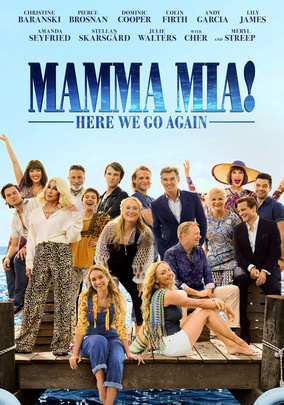
Mamma Mia! Here We Go Again-2018

Mamma Mia! Here We Go Again- 2018

Director Ol Parker

Starring Lily James, Amanda Seyfried

Scott’s Review #797

Reviewed July 31, 2018

Grade: B+

My expectations for Mamma Mia! Here We Go Again (2018) was not lofty, nor was I anticipating drivel. I expected (and was in the mood for) a summer popcorn musical flick with fun and dancing, and little in the way of analysis or requiring too much thought.

I can proudly say that this film fulfilled my expectations —it delivers its intent, and sometimes, that is exactly what the doctor ordered.

The film is enthusiastic and lively, with the musical numbers serving as the standouts.

In an immediate plot twist, it is revealed that the main character, Donna (Meryl Streep), died a year earlier, and her daughter Sophie (Amanda Seyfried) is planning a lavish reopening of her hotel on the beaches of Greece.

The film serves as both a sequel and a prequel, as events also go back to 1979 when a young Donna (Lily James) graduates from college and embarks on a journey to “find herself”.

She travels extensively and meets her three beaus (anyone who saw the 2008 original will be familiar with this plot), and the film is excellent at pleasingly connecting the events of both films.

Mamma Mia! Here We Go Again is hardly high art and not intended to be. Truthfully, it is a bit sub-par to the original, as some of the musical numbers are “secondary” ABBA songs. The biggest hits were used in the 2008 film.

The overall plot feels a bit forced and not exactly compelling, especially since we know the eventual result of Donna’s relationships. The story seems geared towards a bombastic finish.

But the sheer fact that the song and dances are interspersed throughout the film makes it enjoyable enough.

The film plays more like someone’s fantasy than a real-life sequence, and liberties must certainly be taken.  Everything always seems to go Donna’s way, and events merely fall into place- if only real life were that way!

The introduction of Donna’s mother (Sophie’s grandmother)—explained to be a rich and famous singer residing in Las Vegas—is a way to add the legendary Cher to the story. Disappointingly, the star does not appear until the end of the film, more like a cameo appearance.

This leads me to the film’s best parts, which occur during the final thirty minutes. As Sophie’s grand hotel reopening party comes to fruition (a devastating storm thrown into the story is purely for dramatic effect), all details fall into place in magical form.

Hundreds of party guests show up, Donna’s beaus reunite, and the aforementioned absentee grandmother (Ruby) makes a grand entrance via helicopter (in stiletto heels naturally).

In this way, the grand finale is superior to the rest of the film.

Cher, still looking gorgeous at age seventy-two, is the pure highlight of the film, and it kicks into high gear when she appears. Considering all of the hype and press surrounding a film reunion between Cher and Meryl Streep- they starred together in 1983’s Silkwood- it should be no real surprise that Streep’s deceased Donna appears.

The two best scenes come at the end of Mamma Mia! Here We Go Again! As much as the lavish Cher demands the grand finale in terms of glamour and song, Streep’s touching duet with Sophie will bring tears to the viewer’s eyes and capture the emotional element of the film.

As Streep and Seyfried churn out a gorgeous rendition of “My Love, My Life,” the actresses’ mother-daughter relationship is lovely and will fondly remind audiences of the chemistry in the 2008 film.

Regarding Cher, the revelation that Ruby is a long-lost lover of the hotel manager, Fernando (Andy Garcia), is sweet and romantic. Despite limited screen time, the duo shares fantastic on-screen chemistry, so much so that I yearned to know the back story of their relationship.

Do we only know that they were madly in love in 1959? Why did it not work out?  Regardless, Cher’s version of the song “Fernando” is both appropriate and enchanting.

Mamma Mia! Here We Go Again (2018) is a summer film sure to please audiences eager for a fluffy musical.

With bright and cheerful Greek island locales, lavish oceans, and bombastic feel-good pop sensibilities, this film was marketed well and shares enough connection with 2008’s Mamma Mia! to enrapture and please audiences who enjoyed the first version.

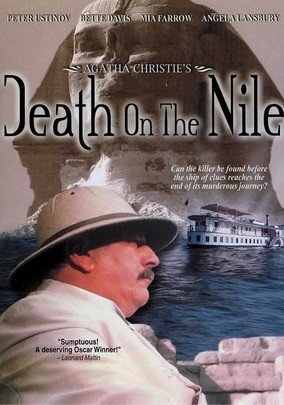
Death On The Nile-1978

Death On The Nile-1978

Director John Guillermen

Starring Peter Ustinov, Mia Farrow, Lois Chiles

Scott’s Review #714

Reviewed January 14, 2018

Grade: B+

Death On The Nile is a 1978 British thriller that follows up the successful 1974 offering, Murder On The Orient Express- both films based on the fabulous Agatha Christie novels of the 1930s.

This time around, Belgian detective Hercules Poirot (Peter Ustinov) investigates a string of deaths aboard a luxurious steamer carrying the lavishly wealthy and their servants.

The film is a good, old-fashioned whodunit, perhaps not on the level of storytelling as its predecessor, the murder mystery, does not contain the oomph expected, but features exquisite Egyptian historical locales, worth its weight in gold.

Featuring a who’s who of famous stars and tremendous actors of the day, Death On The Nile carves a neat story right off the bat in such a way that the murder victim is fairly obvious right away- most of the characters have reason to celebrate her demise.

Rich and reviled heiress, Linnet Ridgeway (Lois Chiles), has stolen best friend Jacqueline’s (Mia Farrow) beau, Simon, sparking a bitter feud between the women. While honeymooning in Egypt, the newlyweds are continually taunted by angry Jacqueline.

Once the cruise ship departs with all on board, Jackie is the prime suspect when Linnet is murdered.

Poirot must find the killer as numerous other suspects, all with grudges against Linnet, begin to emerge.

Death On The Nile features a stellar cast, including legendary Bette Davis as Marie Van Schuyler, an eccentric American socialite with an eye for Linnet’s necklace.

Davis’s casting is reason enough to watch the film, though the character is not center stage but rather a supporting role.

The lead female honor goes to Farrow, who has the meatiest and most complex role in the film.

Jackie’s unstable actions make her the most likely to commit the deed, but the fun is to figure out the “whys” and the “hows” of the murder. Is there more than one killer? Are they working in cahoots or independently? As the body count increases, these questions begin to resonate more and more.

The costumes and sets are gorgeous, and it is no wonder the film won the Oscar for Best Costume Design. At a ball, the women are dripping with jewels and gorgeous gowns.

Along with Davis, boozy author Salome Otterbourne, hilariously played by Angela Lansbury, is granted the prize of wearing the most luxurious and interesting of all the costumes. She drips with jewels and, with a cocktail always in hand, is the film’s comic relief.

Director John Guillermin makes the film an overall light and fun experience and, despite the murderous drama, does not take matters too seriously.

Offering humorous moments, this balances nicely with the inevitable murders.

The fun for the audience is deducing whodunit- most of the characters have the motive, and the cast of characters is hefty.

I had memories of the famous board game Clue- Was it Jackie in the ballroom with the revolver? You get the idea. The film makes for a good, solid mystery game.

Comparisons to 1974’s Murder On The Orient Express cannot help but be drawn, especially in the lead casting of Hercule Poirot.

Truth be told, Albert Finney’s portrayal in “Murder” is superior to Peter Ustinov’s Poirot in “Death,” and I am not sure what purpose Colonel Race (David Niven) as Poirot’s friend offers other than to be a loyal sidekick and present a character that Poirot can explain events to, think what Watson was to Sherlock Holmes.

Regardless, Finney is the superior Poirot, as he musters more strength and charisma than Ustinov.

How lovely and historic to witness the wonderful Egyptian locales- the Sphinx and the Great Pyramids are featured amid an attempt on the life of the romantic pair by way of falling rocks- this sets the tone for the perilous cruise about to be embarked upon.

Perhaps a perfect film for a Saturday stay-at-home evening with friends, complete with a serving of quality wine and cheese, Death On The Nile is a sophisticated, yet fun, British mystery film, fantastic to watch in a party setting where the audience can be kept guessing until the nice conclusion and the big reveal of who killed whom and why.

Oscar Nominations: 1 win-Best Costume Design (won)