Tag Archives: Daryl Hannah

Steel Magnolias-1989

Steel Magnolias-1989

Director Herbert Ross

Starring Sally Field, Shirley MacLaine

Scott’s Review #1,546

Reviewed August 29, 2026

Grade: B+

One of the better chick flicks to emerge from the late 1980s, Steel Magnolias is a 1989 tearjerker with drama and heart, done up in southern style. It has comfort, charm, and a bit of tackiness.

Specifically, Louisiana- the film was shot in that U.S. state, so the authenticity is evident in the vast number of exterior small-town sequences.

The film is reminiscent of Beaches (1988) and Terms of Endearment (1983), stories about female friendships and the trials and tribulations that come with them.

Although it’s geared toward a female audience, there is plenty for men to enjoy, though the male characters take a back seat to the women.

A dose of tissues may be needed since the film is a tearjerker.

Steel Magnolias uses various Louisiana backyards, houses, and the famous Truvy’s Beauty Salon, which the play the film is based on uses as the primary, or only, set.

M’Lynn (Sally Field) is the mother of bride-to-be Shelby Eatenton (Julia Roberts). As friend Truvy Jones (Dolly Parton) fixes the women’s hair for the ceremony, they welcome a helping hand from aspiring beautician Annelle Dupuy DeSoto (Daryl Hannah).

Annelle is new in town and has a secret past which the other townswomen are dying to unravel. The group includes the bitchy Ouiser (Shirley MacLaine) and the wealthy Clairee Belcher (Olympia Dukakis), who is recently widowed.

Diabetic Shelby has a health scare on the morning of her wedding to Jackson (Dylan McDermott), which is averted but doesn’t bode well for her hopes of having children.

Shelby and Jackson desperately want kids, so this is a major hurdle and caveat of the film.

As time passes, the women and their friends face tragedy and good fortune, growing stronger and closer in the process.

For most of the film, the beauty salon serves as the backdrop for gossip and dishing.

Steel Magnolias has a folksy, down-home appeal that viewers can enjoy. Part of the small-town appeal is its warmth and sense a home, and the film succeeds in making the viewer feel a part of this community.

Since the events span a couple of years, we see traditional holidays like Halloween and Christmas celebrated, and we see townspeople who have known each other their entire lives come together.

This is a wonderful feeling for the viewer.

The film is not a perfect 10 score, however. Because of the dramatic situations, it must incorporate some comic elements.

While generally successful, the bickering between Clairee and Ouiser works well; other portions fall flat.

MacLaine gets quick one-liners, which she delivers with gusto and is the hammiest of all the characters. As she marches across her backyard intent on telling someone off, or criticizes a former beau for looking older, her character crackles with life and energy.

However, the feud between Ouiser and M’Lynn’s husband, Drum (Tom Skerritt), is weak and more like screwball comedy. Each time Drum teases Ouiser’s excitable dog to irritate her, I cringed with annoyance.

On the wedding day, he fires a gun loaded with blanks to drive birds out of the trees so they do not interfere with the reception, and Shelby’s brothers cover her honeymoon car with inflated condoms as a prank.

These lighthearted situations seem juvenile and a pale attempt to offset the heavy dramatics, which are the strongest part of the film.

As an aside, I could have used a dose of equality and inclusion. I realize the film is set in the South, but every servant or hired help is black. Given it’s the 1980s, couldn’t this be modified even slightly?

Nonetheless, Steel Magnolias (1989) is a winner because of the connection between the women and the melodrama that takes center stage in the final act.

Roberts, as Shelby, gives a winning dramatic performance and was just on the cusp of superstardom. Parton is the core of the group and the most sensible, while Field, the lead character, also delivers rich drama.

I’d be remiss not to give props to Parton, who instills a trust and sensibility into her role. Oozing kindness, she gently incorporates a new community member as if she’d known her her entire life.

Truvy is just like Dolly herself, which is a big part of the heart that the viewer feels. It almost made me want to reside in Chinquapin Parish!

The film is a fluffy piece of nostalgia that brings the entire family together with warmth and provides a much-needed emotional outlet.

Oscar Nominations: Best Supporting Actress-Julia Roberts
Kill Bill: Volume 1 and Volume 2-2003/2004

Kill Bill: Volume 1 and Volume 2- 2003/2004

Director Quentin Tarantino

Starring Uma Thurman, David Carradine

Top 250 Films #98

Scott’s Review #322

6003123660032563

Reviewed January 3, 2016

Grade: A

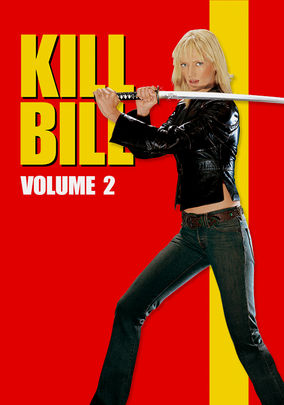
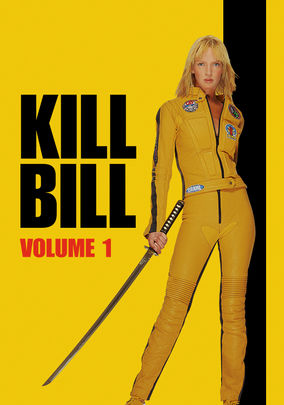
Despite being released as separate films (Fall of 2003 and Spring of 2004), Kill Bill: Volume 1 and Kill Bill: Volume 2 are one grand, sprawling feature.

The films were shot as one, but at a running time of over four hours, it was impossible to release them as one, so director Quentin Tarantino decided to release his masterpiece martial arts film as two sequential films.

I have decided to review them as one since Volume 2 is a clear continuation of Volume 1.

From a story perspective, Kill Bill is a basic revenge thriller. The plot is not complex nor ingenious and is rather ordinary containing B-movie components- think the really bad Kung-Fu films of long ago.

What makes Kill Bill an extraordinary masterpiece, however, is the style that exudes from the film, thanks to the direction and creation of Tarantino.

The film is brimming with good flavor and crackling dialogue of an intelligent sort.

Characters have long conversations with each other-not for redundancy’s sake- in between the endless martial arts and bloody sequences.

We meet our heroine, The Bride (Uma Thurman), in a chapel in El Paso, Texas. About to be married to her groom, the entire wedding party is suddenly assassinated in a bloody fashion by the Deadly Viper Assassination Squad.

Their leader, Bill (David Carradine), shoots The Bride after she reveals to him that she is carrying his baby.

The film flashes forward four years later- The Bride has survived the massacre but has been comatose ever since. When a hospital worker rapes her, she escapes and vows revenge on each one of her attackers- the revenge culminating with Bill.

Her path of destruction leads her to Japan.

Like most of Tarantino’s films, Kill Bill is divided into chapters and often goes back and forth from past to present.

The brilliance of Kill Bill is its pizazz. We know The Bride will get her revenge on the assassins, we just do not know in what way or how bloody the slaughters will be.

The film contains copious amounts of blood and swords and machetes are everywhere to be found.

The slow drawl dialogue as The Bride has conversations with her prey before she kills them, oftentimes ends in a big fight scene. Her first revenge, against Vernita (Vivica A. Fox), is unique in that it takes place in Vernita’s kitchen as her young daughter is happily eating her breakfast cereal.

The entire battle ensues in the kitchen and we are left watching blood and cereal.

It is Tarantino’s unique style of filmmaking and storytelling, adding violence, and long character conversations, that give Kill Bill, and all of his other classic films, his unique brand, and stamp of approval.

I dearly hope he continues to make films that challenge the norm, for years to come.

The Fury-1978

The Fury-1978

Director Brian De Palma

Starring Kirk Douglas, Amy Irving, John Cassavetes

Scott’s Review #1,446

Reviewed October 15, 2024

Grade: A-

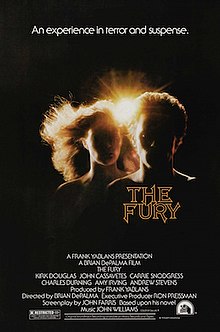
The Fury (1978) is one of Brian De Palma’s films that flies under the radar and is underappreciated. It features many of his trademark effects, such as slow-motion camerawork, and includes actors who appear in more than one of his psychological thriller films.

The story might be more complicated than it needs to be, and while legendary actor Kirk Douglas gets top billing, he disappears for a good part of the film before returning towards the end. He hands the reins to Amy Irving, who capably carries the rest of the film.

This is a small gripe for a film that ranks pretty close to classics like Dressed to Kill (1980), Carrie (1976), and Blow Out (1981).

I’m as guilty as anyone else for underappreciating The Fury since it’s only my second time viewing it.

The all-star cast features John Cassavetes as the villain, Carrie Snodgress, Charles Durning, Douglas, and Irving. That’s enough to make cinema fans want to see it. There are also unique actors in small roles who flesh out the quirky cast in a major win.

The screenplay by John Farris was based on his 1976 novel of the same name, which feels a lot like a popular Stephen King novel.

The Fury utilizes the talents of esteemed John Williams, who scored such greats as Fiddler on the Roof (1971), The Poseidon Adventure (1972), and Jaws (1975), to name a few. The highly lauded composer aptly uses the music to enhance the overall product.

Events start in Israel when a plot separates CIA agent Peter Sandza (Douglas) from his son, Robin (Andrew Stevens), but the distraught father manages to see through the ruse.

He realizes that Robin is being held at an institute by Ben Childress (Cassavetes) because the teenager possesses supernatural powers that Ben intends to weaponize.

Meanwhile, Gillian (Amy Irving), a teen with telekinesis, forms a psychic connection to Robin and teams up with Peter to find and rescue him. They are forced to endure villains intent on destroying them for their own gain.

I am amazed how well the film, made in 1978, holds up tremendously decades later, considering the characters play dated video games and the automobiles are very 1970s. The overindulgence of 1970s ‘stuff’ is what holds the most appeal.

Appealing is the glimpse at hundreds of extras appearing in the many exterior Chicago scenes. While Gillian and her friend La Rue (Melody Thomas Scott) stroll down the boardwalk, they pass teams of regular people harkening back to a time long ago.

The unwieldy American sedans popular in the mid-1970s pepper the streets of Chicago. At the same time, the sofa and carpet styles of the time are prominently featured at the Paragon Institute, evoking a nostalgic hug of authenticity.

When the character Gillian is introduced during a high school sequence that parallels Carrie, the similarities are immediately apparent.

Carrie and Gillian are both high school students with psychic powers, including telekinesis, that harm people who physically touch or provoke them.

The kicker is that Irving also appeared in Carrie, but not as the title character.

The best scenes are when Hester (Snodgress) is struck and killed by a car propelling her bloody body through the windshield or when Institute employee, Dr. Susan Charles (Fiona Lewis) is tortured and spun to death over a lavish dinner table setting.

The food references are plentiful, mouthwatering, and fun to track. Hester and Gillian chat and giggle over heaping hot fudge sundaes, while scrambled eggs and dinner are mentioned during other scenes.

Some plot holes or inexplicable story points, like Robin’s turn into a psycho and turning on his father because another psychic will replace him, aren’t as compelling as other points of the film.

During one scene, Gillian has Robin’s powers transfer to her, causing her body to writhe and contort in an unconvincing way, and Irving looks plain silly.

Being a huge De Palma fan, I’m glad I dusted The Fury (1978) off the shelf because it’s a terrific watch with an exceptional cast. It contains many of De Palma’s trademarks, making it fantastic, especially for his fans.

Wall Street-1987

Wall Street-1987

Director Oliver Stone

Starring Michael Douglas, Charlie Sheen, Daryl Hannah

Scott’s Review #511

60003330

Reviewed November 5, 2016

Grade: B+

Rather late in the game, but 2011 was my first time seeing the film Wall Street (1987), and it was a very good film.

Michael Douglas and Charlie Sheen have great on-screen chemistry, and the numerous scenes of New York City are pleasing- pre- 9/11, they capture a haunting feeling.

Despite being made in 1987 (not a great year for cinema), it does not feel dated except for the soundtrack.

Unfortunately, the circumstances in this movie still ring true today. There is a lot of dishonesty and greed in the financial world (check out the documentary Inside Job (2010) for proof).

The 2008 financial collapse is a strong indicator.

Michael Douglas is excellent as Gordon Gekko, a power-hungry, greedy financial mogul.

He encompasses the role in every way and deservedly won the Best Actor statuette for this year.

Oscar Nominations: 1 win-Best Actor-Michael Douglas (won)