Category Archives: New York City

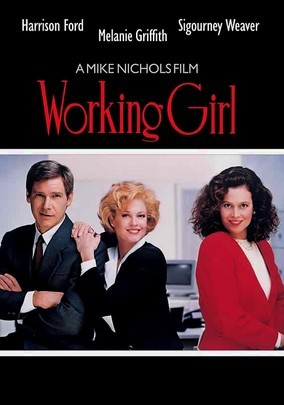
Working Girl-1988

Working Girl-1988

Director Mike Nichols

Starring Melanie Griffith, Harrison Ford

Scott’s Review #748
Reviewed April 26, 2018

Grade: B+

Released during a decade known for excess, fun, and light comedy films, especially in its latter half, 1988’s Working Girl was a blockbuster hit at the time and, today, stands as a defining film of the decade.

This can be both good and bad, with both a dated feel and a whimsical, basic good girl versus a bad approach that is appealing.

The film is romantic comedy fluff, but it is entertaining and features lovely views of New York City- one of my very favorite locales.

Mike Nichols directed the film, better known for heavier subject matter (1966’s Who’s Afraid of Virginia Woolf and 1967’s The Graduate).

His leading the picture, along with all-star casting, surely made this film better than it should have been.

Tess McGill (Melanie Griffith) commutes via the Staten Island Ferry each morning into vast Manhattan, where she holds a secretarial job at a Wall Street investment bank.

After a bad experience with one of the brokers, she is reassigned to a female boss, the assertive Katharine Parker (Sigourney Weaver).

After Katharine steals Tess’s business idea and passes it off as her own to get in good with handsome Jack Trainer (Harrison Ford), Tess is determined to reveal the truth as a triangle develops among the three.

In tow are Tess’s best friend, Cynthia (Joan Cusack), and her cheating boyfriend, Mick (Alec Baldwin), in supporting roles.

Working Girl feels overwhelmingly like a “1980s film,” and while it was relevant at the time and kindly nostalgic, it doesn’t hold up well today, seeming better suited to a time capsule, unlocked from time to time for kicks.

The most garish example is the hideous hairdos Nichols gives Tess and Cynthia, frizzed out and caked with Aqua Net hairspray, over-the-top even for the 1980s.

Then come the inevitable tacky outfits, bright colors and shoulder pads, as the girls hustle to their dull jobs. With these costume tidbits and the filming style, the tone screams the 1980’s.

The casting of the three leads is very good; Griffith, Ford, and Weaver all share nice chemistry, and the clear rooting value is that Tess and Jack live happily ever after, with Katharine as the obvious foil.

The film’s conclusion is unsurprising, but as a romantic comedy, it is standard fare. The point is that the relationships are dynamic and the ride is fun.

Griffith is breathy and seductive, a clear homage to Marilyn Monroe in her 1950s films.

Never known for great acting, Tess gets the role of a lifetime. Weaver sinks her teeth into an against-type villainous role, and Ford is dashing and charismatic as the leading man.

My favorite parts of Working Girl, and the film’s strongest aspects, leave an indelible impression even after all these years: the sweeping New York City camera sequences throughout the film.

Many scenes were shot in neighboring Staten Island, but the best shots are the luminous skylines of Manhattan that appear in the opening sequence and later from corporate offices.

There we see Tess on the Ferry heading across the Hudson River, all with the wonderful soundtrack song by Carly Simon, Let the River Run, playing in the background. The soothing tune and the approaching mammoth city set a nice tone.

The story itself is a sort of rags-to-riches, Cinderella-style experience from the point of view of Tess.

Taking night classes to better herself and, clearly, a blue-collar type battling the giants of the corporate world, and the more sophisticated Katherine (she speaks fluent French!), is an enormous draw for mainstream audiences.

Corporate greed versus the little guy is an apt comparison here. Almost borderline fairy-tale, Tess getting the dashing Jack (in real life, he would undoubtedly be with Katharine) makes the film good escapist fare.

The working-class Staten Island versus the sophisticated Manhattan is another theme worth mentioning.

Thirty years beyond its original release. 1988’s Working Girl now feels dated, dusty, and of its time, like many similar films, but it still retains some of the enjoyment that undoubtedly made it a hit at release.

A film that is fine to take out of the vault, dust off, and enjoy for some good escapist cinema and a predictable story of good overcoming bad.

Oscar Nominations: 1 win-Best Picture, Best Director-Mike Nichols, Best Actress-Melanie Griffith, Best Supporting Actress-Joan Cusack, Sigourney Weaver, Best Original Song-“Let the River Run” (won)

Golden Globe Nominations: 4 wins-Best Picture-Comedy or Musical (won), Best Director-Mike Nichols, Best Actress-Comedy or Musical-Melanie Griffith (won), Best Supporting Actress-Sigourney Weaver (won), Best Screenplay, Best Original Song-“Let the River Run” (won)

Do the Right Thing-1989

Do the Right Thing-1989

Director Spike Lee

Starring Spike Lee

Scott’s Review #746

Reviewed April 21, 2018

Grade: A

Do the Right Thing is one of the few great films to come out of 1989, a year often remembered as a fantastic one in cinema, when most mainstream films were as glossy as tin foil and barren of quality substance.

Here’s a small, independent gem that sparked discussions about race relations in the United States and became a monumental, influential film.

Filmmaker (and star) Spike Lee carves a controversial story of racial tensions in a Brooklyn neighborhood on a hot summer day.

Starting light and comedic, then turning violent and dark, the action is set in a largely Black neighborhood, Bedford-Stuyvesant, Brooklyn, where twenty-five-year-old Mookie (Spike Lee) delivers pizzas at an Italian pizzeria owned by Sal (Danny Aiello).

With a toddler at home and a nagging girlfriend, Tina (Rosie Perez), always in his face, Mookie is unmotivated yet still a decent guy and a loyal friend.

Sal has two sons who work at the pizza place: Pino (John Turturro), who is angry and racist, and Vito, a nice guy and Mookie’s friend.

When conflicts erupt over whether Sal’s restaurant should celebrate black celebrities and white celebrities on a wall in the dining room, tensions reach their breaking point as the intense heatwave makes matters much worse.

What makes Do the Right Thing a marvel is both the film’s overall tone and the atmosphere Spike Lee conveys, who also writes, produces, and stars in it.

The elements that have little to do with the actual story immediately impress with big, bright, comic-book-style colors that scream at the big screen, eliciting both a warm, inviting feeling and an angry, contemptuous vibe.

The loud rap and hip-hop beats are instrumental in conveying the film’s specific feeling and emotion.

Made independently and on a small budget, the film feels raw and intense from the get-go.

Brooklyn and New York City, in particular, are the perfect settings, as Sal and his family are white folks living in a predominantly Black neighborhood, so the minorities in the story are the ones in the minority.

Additionally, the viewer sees the friendly neighborhood and feels a sense of belonging regardless of race; the humorous drunk, the kindly, grandmotherly people-watcher on her stoop, and the boombox-music kid all create a sense of community and togetherness.

This point is tremendously important to the film’s overall plot.

The relationship between Mookie and Sal, and Sal and his sons, is central to the film, and I found it a compelling character study.

Open-minded, Sal is a decent man and fine with the diversity in his neighborhood- yet still true to his Italian roots. Aiello does a fantastic job of portraying this complex, conflicted character.

His two sons could not be more different: Vito, a close friend of Mookie’s, is sympathetic and sweet, with nary a racist bone in his body.

Pino, on the other hand, is angry and resentful of the black community taking over what he feels is his territory.

Finally, while lazy, Mookie is also a sympathetic character, as he is conflicted when the tension reaches its boiling point.

These diverse characters make the film so dynamic.

Revered director Spike Lee crafts a story and brings it to the big screen, tackling an important topic as vital today as it was when Do the Right Thing was released in 1989.

The film is intelligent and timely without being condescending to either Black or white audiences, or preachy; instead, it tells a poignant story that is angry and sometimes painful to watch, but, more importantly, empathetic and real.

Oscar Nominations: Best Supporting Actor-Danny Aiello, Best Screenplay Written Directly for the Screen

Golden Globe Nominations: Best Picture- Drama, Best Director-Spike Lee, Best Supporting Actor-Danny Aiello, Best Screenplay

BearCity-2010

BearCity-2010

Director Doug Langway

Starring Joe Conti

Scott’s Review #626

Reviewed March 19, 2017

Grade: B

BearCity is a small, independent, LGBT, coming-of-age film that tells of a young man living in New York City and his exploration of a sub-culture within the LGBT community and the subsequent romance that follows.

The film is a comedy and has a “Sex in the City” or “Queer as Folk” approach to its storytelling- a group of close-knit friends and raunchy and gratuitous, to be sure.

The budget is very small, and some aspects are rather amateurish, but the film is enjoyable, especially for those exposed to the LGBT lifestyle.

The film is not heavy nor are any of the characters dealing with “coming out” issues, but rather it is a fun sex comedy romp.

Our central character, Tyler (Joe Conti), is a young man in his twenties, an aspiring actor, who moves to New York City to pursue his career, with a mind for casual dating.

His roommates encourage him to date Abercrombie and Fitch types, but Tyler comes to realize he prefers “bear” types- mature, hairy men.

On the sly, he begins to pursue this subculture and makes many friends. The apple of his eye, handsome Roger (Gerald McCullough), is a popular mature man, distinguished in the bear circle, and risks his reputation with “the bears” by falling in love with Tyler.

The two men spend the greater part of the film conquering their respective fears and finding their way into each other’s arms in a predictable ending.

BearCity is a fun farce and nothing very heavy, and the feature of a strong circle of friends is a nice, positive portrayal. All of the friends connect well and stick by each other through thick and thin.

Comical sub-plots abound, such as one couple (Brent and Fred) awkwardly parlay into the world of threesomes with unsuccessful results.

Another bear who is unemployed and grossly obese decides to undergo weight loss surgery, much to the chagrin of his hunky boyfriend.

The main story, though, belongs to Tyler and Roger, and their inevitable reunion can be seen miles away.

The film throws various hurdles in their ways, such as a third-person briefly dating Roger, or Roger’s commitment issues, but the climax of the film will be no surprise to anyone.

Tyler and Roger make a nice couple as a whole, but perplexing is how the film makes Roger the undisputed leader of the bear group when he is a lean, muscular man- not a “bear” at all!

This is odd to me, but BearCity is so light-hearted that I suppose I can let this detail slide in favor of a good romance.

Critically, the film is nice but quite amateurish, and super low-budget. The acting, especially by some of the supporting characters (the pre-surgery guy’s boyfriend is the most glaring example), is not great.

I half-expected him to look at the camera accidentally.

Additionally, the film has a low-budget look and feel, which on one level is fine, but combined with the not-so-stellar acting, enhances the inexperience of the cast and crew.

The film is tough to take seriously, if that is even the filmmakers’ intention.

The film is a logistical treat for anyone privy to popular gay hangouts in New York City- specifically The Eagle and The Ramrod; both locales are featured prominently, and the use of many real-life people who hang out at those establishments is used throughout the production.

BearCity (2010) is not a bad experience, and a film that is light and comical within the LGBT community seems rather fresh compared to the myriad of dramatic and heavy films that exist.

At the same time, the film teeters too much towards goofy, with more than one silly, sex-crazed, stereotypical gay man, so it almost gives a bad impression, and the film has mixed results for me.

Precious: Based on the Novel Push by Sapphire-2009

Precious: Based on the Novel Push by Sapphire-2009

Director Lee Daniels

Starring Gabourey Sidibe

Scott’s Review #581

Reviewed January 2, 2017

Grade: A

Precious is an amazing film and one of the best to come out in 2009. Due to the hype, I had high expectations entering the theater, and I was not disappointed.

The film is an in-your-face slug-fest with some of the rawest acting performed in recent years.

The marvelous aspect is that the film takes the viewer into a world that is probably not one’s own experience and makes them empathize with the characters.

The film is very disturbing at times, raw, gritty, and violent, but also has some light, humorous moments and is an important film to see.

There is a heartwarming charm that offsets the violence perfectly.

The story itself and the direction are basic, but the wonderful acting is what sets this film on a high pedestal.

Gabourey Sidibe, a relatively unknown and novice actress, gives an astounding turn as an unloved, overweight, pregnant teen mom.

Both of her parents abuse her in separate ways and seem to have a life of pain ahead of her.

Paula Patton, who has been in several fluff films, impresses as a teacher who takes a shine to Precious, and Mariah Carey is unrecognizable as a plain-looking social worker who is also a sympathetic character.

However, actress and comedienne Mo’Nique plays an unfeeling, brutal, violent mother to the hilt and holds nothing back. Her Best Supporting Actress Oscar win was deserving.

Everyone should see this fantastic slice-of-life film.

Oscar Nominations: 2 wins-Best Picture, Best Director-Lee Daniels, Best Actress-Gabourey Sidibe, Best Supporting Actress-Mo’Nique (won), Best Adapted Screenplay (won), Best Film Editing

Independent Spirit Award Nominations: 5 wins-Best Feature (won), Best Director-Lee Daniels (won), Best Female Lead-Gabourey Sidibe (won), Best Supporting Female-Mo’Nique (won), Best First Screenplay (won)

Date Night-2010

Date Night-2010

Director Shawn Levy

Starring Steve Carell, Tina Fey

Scott’s Review #481

70121501

Reviewed September 17, 2016

Grade: D+

Date Night is a perfect example of mediocrity in modern filmmaking.

We have two current comedic actors here- Steve Carell and Tina Fey- circa 2010- at the top of their game.

The filmmaker’s idea is to pair these two and make an appealing romantic comedy for the masses.

The main issue with this film is that the result is generic and quite an average offering.

The entire film is incredibly plot-driven, with no character development to speak of.

If I am being too harsh, admittedly there is nice chemistry between the two leads, but it is wasted by sloppy writing.

A couple from the New Jersey burbs, Carrell and Fey portray husband and wife, Phil and Claire Foster. Saddled with two kids and their romance reaching dullsville, Phil decides to take Claire to a ritzy Manhattan restaurant.

When they arrive, they cannot get a table, so they pretend to be another couple a get one after the other couple no-shows. This leads to a tale of mistaken identity as the other couple possesses a flash drive that a mobster (Ray Liotta) wants.

This leads to a chase through Manhattan as they try to outrun and outwit their pursuers.

Wahlberg plays a hunky client of Claire’s, always shirtless, who threatens Phil and Claire’s marriage.

Several others of the current Hollywood elite- Kristen Wiig, James Franco, Mila Kunis, and Mark Ruffalo- make small and somewhat pointless appearances. Specifically, Franco and Kunis as a stoner-type bickering couple are silly and unnecessary to the story.

Carrell and Fey are quite funny as individuals and as a duo. Date Night, though, does not capitalize on or showcase their respective talents.

The film tries too hard to come up with scenario after scenario of the two on the run and encountering one problematic situation after another.

As the plot of Date Night wears on, I notice that each situation is a matter of convenience.

Conveniently, Claire has a client in town (Wahlberg), who is a security expert. They go to him for help and, predictably, his hunkiness bothers Phil and piques Claire’s interest- though, of course, we know full well Phil and Claire will end up together- that is how these mainstream films go.

In another scene. Phil and Claire can break into an office building unnoticed, trigger the alarms, conveniently find a needed file, and escape, miraculously all before the police arrive minutes later.

Very plot-driven.

The lead actors in Date Night are appealing and even charming together, but it falls flat. Still, the inane plot makes it unappealing to watch, and the slew of stars that somebody decided would be a great addition to a lukewarm film is odd.

The roles written have little bearing on the central plot, so it was apparent why they were added.

Date Night (2010) is a film we have seen time and time again with other actors in similar roles.

Hello, My Name Is Doris-2016

Hello, My Name Is Doris-2016

Director Michael Showalter

Starring Sally Field

Scott’s Review #390

80050896

Reviewed April 1, 2016

Grade: B

Sally Field shines in Hello, My Name Is Doris (2016), a sweet-natured indie romantic comedy about a lonely Staten Island woman and her mostly fantasy-laden relationship with her colleague, a much younger, hunky man (Max Greenfield).

The film is somewhat predictable but sweet, honest, and works well. It hardly reinvents the wheel, but it is a lovely character-oriented story about a woman’s reawakening from a dull life.

This is refreshing in a world of retreads and superhero flicks.

Doris Miller meanders through life at her crappy data entry job at an Advertising Agency in midtown Manhattan. Having worked in the same role for decades, she is overlooked and almost invisible to her colleagues.

She is the “weird old lady” or the “wallflower” who goes unnoticed. Her personal life is a dud. She lives with her recently deceased mother, who is a hoarder and severely marginalized. She has no dating possibilities.

One day, on the elevator heading to the office, a kind young man named John Fremont innocently pays attention to her, and she becomes enamored with him.

Later, she is stunned to realize that John is the new Art Director at her job.

Her crush grows as she and John become friends, and a series of misunderstandings ensue, with the added conflict of her friends thinking she is living in a fantasy world and worrying she’ll end up hurt.

Sally Field carries this film in every way. It is nice to see her in a lead role again, which, sadly, is a rarity these days for a seventy-year-old actress.

She convincingly plays quirky, shy, and awkward, and has one meltdown scene that is a powerful testament to her continued acting ability.

Doris slowly blossoms and becomes rich with zest. We discover she is much more than meets the eye, and these moments in the film are wonderful to experience, thanks to Field’s charisma.

My favorite scenes involve the lovely bond between Doris and the thirteen-year-old granddaughter of her best pal, Roz, played by Tyne Daly.

Despite the age difference, the granddaughter sees her as a peer and gives daring dating advice to the inept Doris. This leads to a nice portion of the plot and some funny moments.

One unique aspect of Hello, My Name Is Doris is that it is not a film about a May-December romance between a man and a woman—at least, I did not see it that way. Instead, it is about a woman who finally decides to live regardless of age.

I felt her stifled and smothered by her brother and sister-in-law, who clearly did not understand that she hoarded “stuff” in her home to cope with her loneliness, and that being surrounded by things that gave her comfort helped her deal.

Granted, Doris clinging to one broken wooden ski from the Dark Ages was amusing in its cuteness.

Tyne Daly, who can recite the phone book, is worth a considerable note from an acting standpoint. I’d be happy to do that. She is one of those natural, confident, engaging, real actresses, and her scenes with Field glistened with raw talent and emotion.

Perhaps a female buddy movie with Field and Daly?

The remaining supporting characters are capable but not spectacular. They are somewhat clichéd and one-note.

For example, Doris’s colleagues treat her as invisible with classic office jokes, especially the female boss thrown into the film, with a hard-as-nails personality and coldness.

I have seen these characters time after time in comedy films.

Supporting actors from Orange Is the New Black (2013-2019) and Mad Men (2007-2015) are featured as a couple of the colleagues.

Indie, fun, and with a freshness made in large part by Sally Field, Hello, My Name Is Doris (2016) is an innocent comedy with a romantic edge and some nice laughs.

It is far from a masterpiece, but a good-natured escape that feels refreshing, especially for middle-aged or senior viewers craving a non-stereotypical female character.

Independent Spirit Award Nominations: 1 win-Piaget Producers Award (won)

Obvious Child-2014

Obvious Child-2014

Director Gillian Robespierre

Starring Jenny Slate

Scott’s Review #387

70301275

Reviewed March 22, 2016

Grade: C+

Obvious Child is a 2014 independent comedy/drama nominated for a couple of Independent Spirit Awards, with mixed results.

It works on some levels but has an irritating underbelly and some unneeded components that ultimately give it a thumbs down.

The major success is star Jenny Slate, a real-life Brooklyn stand-up comic with immeasurable comic timing, who will hopefully become a rising star.

Slate starred in a 2009 short film of the same name before it became a full-length feature.

Slate stars as a twenty-eight-year-old Brooklynite, who moonlights as a stand-up comic in a dingy bar while working in a desolate bookstore that is soon closing.

Conversely, her parents are successful- her mother is a famed professor. When her steady boyfriend unceremoniously dumps her, she takes up with a handsome young man for a one-night stand filled with fun.

Predictably, she winds up pregnant and forges ahead with a plan to abort their child.

The abortion story is quite interesting since there is never a doubt about what will happen.

Unlike films that make abortion the main focus of conflict, Obvious Child wisely does not- every character supports, and even encourages her to have the procedure, including her mother and best friend.

Having been written and directed by women, this is intentional and a way of empowering women, which is one of the high points. If one is on the fence about the topic of abortion or is a pro-life stance, this film may be very tough to watch as its slant is made crystal clear.

Slate is the other high point of the film.

She exudes confidence and comic range. Jewish and slightly awkward-looking, she is not the leading-lady type, and this arguably makes her wit and sarcastic language even funnier.

She is a natural in comedy, and I hope she goes far.

Two slight props for me worth mentioning are the wonderful mention of the classic film Gone with the Wind (1939) and the setting of Brooklyn. This was a great nod to film history, and the setting gave Obvious Child an authentic New York City feel.

On the other hand, an utter annoyance about Obvious Child is the shameless and constant use of blatant and off-putting bathroom humor- not just once or twice, but numerous times.

How is this necessary to the plot? I can’t say, but I surmise the filmmakers deemed it necessary to show that females can give as good as males can.

Almost saying, “men can make poop jokes, why can’t women”? Why this is necessary for any film is beyond me, and it gives Obvious Child a crass, ugly feel.

The film also feels unrealistic.

Max is portrayed as Prince Charming. He can do no wrong, supports Donna in any decision she makes, is enamored by her sole being, and loves her unconditionally after only a one-night stand.

This would not happen in real life.

The fact that Donna is Jewish and quirky and Max is Christian and straight-laced is not explored. What conflicts would they undoubtedly face? Why were his parents not featured?

Highly uneven, with a great premise and an interesting slant on a still-controversial social issue, Obvious Child (2014) succeeds in the story department but fails in its uncalled-for use of potty humor to elicit cheap laughs.

Independent Spirit Award Nominations: Best Female Lead-Jenny Slate, Best First Feature

The Seven Year Itch-1955

The Seven Year Itch-1955

Director Billy Wilder

Starring Marilyn Monroe, Tom Ewell

Scott’s Review #302

Reviewed December 18, 2015

Grade: B

Following a string of successful hits by director Billy Wilder (best known for films in the 1940s and 1950s), The Seven Year Itch features Marilyn Monroe at her prime and finest.

It is a cute film made charming by the likable legend. While not high art, it is a fun experience in classic romantic comedy cinema, and its innocence is undoubtedly lost in today’s genre.

Playing a familiar character to what she was known for (sexy, flirty, sweet blondes), it is arguably Monroe’s best role (though Some Like it Hot still wins out for me as her best film role).

Richard Sherman, a successful New York publisher, finds himself alone for the summer when his wife and son leave for a vacation in the country.

Middle-aged and bored, he immediately is enamored with his gorgeous new upstairs neighbor, known as The Girl, played by Marilyn Monroe.

The Girl is a commercial actress and former model, and is quite friendly and bubbly. She is conveniently staying in New York City while filming a new television ad for toothpaste.

Richard finds himself awkwardly tempted by the curvaceous Girl in one situation after another.

The Seven Year Itch is pure innocence and fantasy. The Girl has no designs on Richard, and his flirtation with her is harmless and juvenile.

Richard is nerdy and socially awkward, not to mention fearful of his wife’s stern nature if she discovers that he is even spending a moment with The Girl.

Much of the film features scenes in which Richard imagines conversations with his wife or sees her with another man, justifying his attraction to The Girl.

These scenes are done hilariously as he imagines conversations with his wife, and his thoughts are exaggerated.

Humorous scenes transpire, such as the “champagne scene,” in which The Girl and Richard attempt to open a champagne bottle while cooling off with Richard’s new state-of-the-art air conditioner.

The Girl keeps her underpants in a freezer to cool off. The Girl appearing in her toothpaste commercial is, comically, also a treat.

And who can forget Marilyn Monroe’s famous scene in which she stands over a subway grate, clad in a sexy white dress and high heels, the wind from the subway blowing her dress in the air, which is one of the most memorable scenes in film history and priceless.

Some would argue that The Seven Year Itch (1955) is nothing but fluff, and they essentially are correct.

Still, in an age of crude and obnoxious films disguised as romantic comedies, with cheesy jokes and canned humor, it is refreshing to look back to the 1950s culture, primarily an innocent era, and enjoy a fun film romp with one of cinema’s forever stars.

Golden Globe Nominations: 1 win-Best Performance by an Actor in a Motion Picture-Musical or Comedy-Tom Ewell (won)

She’s Lost Control-2014

She’s Lost Control-2014

Director Anja Marquardt

Starring Brooke Bloom

Scott’s Review #299

70305205

Reviewed December 14, 2015

Grade: B+

She’s Lost Control (2015) is a dark, independent drama and Anja Marquardt’s directorial debut.

This film is one reason I proudly support independent film, as it is otherwise a film that most would not know about, and will never know about, if not for good word of mouth and award recognition- think Indie Spirit Awards.

Hopefully, Marquardt will one day be a household name.

The film is heavy yet intriguing and a character study.

It is a dark and dreary experience- some might argue depressing, centering on Ronah (Brooke Bloom)- a young, female, college student, aspiring towards her master’s degree in psychology, who works as a sexual surrogate in Manhattan.

The film explores her experiences with various clients, specifically a disturbed, volatile man she takes on as a client.

As she gets to know Johnny, they forge a special bond, but will romantic feelings and jealousy get in the way of the therapy assigned to both parties?

The tale focuses on how each of them explores their feelings, and clearly, those feelings are not peaches and cream.

Ronah is not a prostitute, and there is very little sex that goes on, albeit the implication is there. She is nurturing, emotionally invested, and intends to become a psychiatrist one day.

It is unclear whether her “boss,” a shady-seeming character, is her pimp or simply an employer. His role and motivations are unclear.

The most interesting aspect of the film is the title, and throughout my viewing of the film I wondered about the title more and more- are any of Ronah’s experiences in her mind? Is she stable, or does she have some emotional or mental issues?

She befriends a kind neighbor around her age who invites her for dinner- they bond. The neighbor invites her out to dance, but Ronah declines.

She also has an older female confidant- a former surrogate who gives Ronah tips and suggestions. Still, Ronah is lonely.

Again, we wonder if perhaps all is not what it seems. This is a fascinating aspect of the story. One must watch to find answers to questions like these.

New York City can be a tough, unkind world, and She’s Lost Control doesn’t sugarcoat an individual’s difficult existence when they aren’t blessed with family money, strings, or some other advantage.

Ronah lives in a dump with holes in her shower and cramped quarters. On top of that, she is constantly kept up to date on problems involving her brother and mother back home in upstate New York.

Quite simply, Ronah is overwhelmed by her life. Might she be spinning out of control?

The film’s dreary aspect isn’t so much the sexual content. Ronah is a therapist, and everything is consensual.  Unfortunately, she is challenged by some of the people she encounters in her profession.

I admire She’s Lost Control (2014) quite a bit for its insight, thoughtfulness, and compelling story of a woman with a difficult life, trying to make ends meet, and aspiring to something worthwhile.

She is brave, troubled, and interesting all rolled up in one fascinating lead character.

Independent Spirit Award Nominations: Best First Screenplay, Best First Feature

Brooklyn-2015

Brooklyn-2015

Director John Crowley

Starring Saoirse Ronan

Scott’s Review #298

80037688

Reviewed December 12, 2015

Grade: A

Brooklyn (2015) is a classic-style Hollywood film that I adored watching. It has a genuine innocence, with wonderful, powerful acting and perfect cinematography/art direction.

The film is conventional and mainstream, but never sappy.

Based on Colm Tóibín’s popular novel, Brooklyn is set in the early 1950s in Ireland and New York City.

Eilis Lacey, played by Saoirse Ronan, is a young Irish girl with good morals and traditional values. She is faithful and Catholic, with a good upbringing.

Not rich by any means, she is intelligent and uses good sense, working hard on weekends in a grocery run by an unkind woman to save money.

Thankfully, her older sister Rose, whom Eilis adores, has scrimped and saved enough for Eilis to study in the United States through a church program.

Rose doesn’t want Eilis trapped in the small Irish town.

While in New York City, an event forces Eilis to return to Ireland. At home, she faces a romantic dilemma that makes her wonder whether to return to her new life in New York City or stay in Ireland.

Eilis is conflicted, which is the story’s main focus.

On paper, one might assume Brooklyn is sappy, a “chick flick,” or a trite romance with predictability for miles, but it isn’t. Everything about the film is perfect and highly detailed.

The pieces somehow fit together- good direction, good camerawork, good acting, and good storytelling.

Throughout the film, I found myself emotionally invested.

When Eilis meets the young, charming Tony, a working-class Italian American who becomes infatuated with her, I worried about how the film would handle their different backgrounds.

Their courtship is sweet and tender, and I cheered for them as their slow romance builds.

She is taught to eat pasta correctly to impress his traditional parents. He walks her home every night. Tony and Eilis have a sweetness and purity that is hard not to fall in love with as an onlooker.

On the other hand, when dramatic events unfold, the excellent acting makes Brooklyn a delight and quite emotionally powerful. One might find themselves in a flood of tears by the end.

Thanks to Ronan, an impressive talent since my discovery of her work in 2007’s Atonement, she elicits in Eilis a strength and stoicism that is tested when she breaks down at one point in the film.

Also worth mentioning are the awe-inspiring performances by Fiona Glascott as Eilis’s sister Rose and Jane Brennan as Eilis’s mother.

Unknown actresses (to me), both deliver dramatic, dynamic performances in their roles.

Veteran character actors Jim Broadbent and Julie Walters are wonderful as Father Flood and Madge, respectively.

What a visual treat Brooklyn is!

As the title suggests, most of the action takes place in this New York City borough, and the influx of Irish and Italian immigrants during this period is evident in the clothing and cinematography.

Ireland’s lush green, vast landscape makes it a pleasure to view.

A story of bravery, romance, and kindness, Brooklyn (2015) is a wholesome, feel-good film, and I was immersed in the story and its look from the very first shot.

Oscar Nominations: Best Picture, Best Actress-Saoirse Ronan, Best Adapted Screenplay

The Immigrant-2013

The Immigrant-2013

Director James Gray

Starring Marion Cotillard, Joaquin Phoenix, Jeremy Renner

Scott’s Review #293

70275521

Reviewed December 5, 2015

Grade: A-

The Immigrant (2013) is a lovely, classic, old-style Hollywood film set in early 1920’s New York City.

The film is a classic tale of a poor Polish immigrant who travels to America in hopes of a better life, only to be met with hardship, manipulation, and conflict.

However, The Immigrant is not a downer. Rather, a powerful and intriguing story of life and the clichéd pursuit of happiness, with a compelling love story mixed in.

Nominated for Best Actress for Two Days, One Night, eligible the same year as The Immigrant, this is a good example of how the Academy got it wrong, as Marion Cotillard should have been nominated for this performance instead.

The actress was, however, recognized with an Independent Spirit Award nomination for Best Actress for this role. A true talent, she gives a wonderful performance.

Little is known about Ewa’s (Cotillard) life before she arrives on Ellis Island with her sister Magda in tow.

We meet them as they disembark a ship and wait in line at the immigration station, weary from their escape from war-torn Poland.

They have escaped their native country in hopes of a better life in the United States.

Unfortunately, Magda is ill, cannot hide a cough, and is sent to the infirmary, most likely before being sent back to Poland.

Ewa desperately needs money and is told that her Aunt and Uncle have not shown up to collect her as she had originally thought.

She is now on her own and desperate in a land where she knows not a soul.

As the plot unfolds, Ewa encounters two men who enter her life- Bruno (Joaquin Phoenix) and Emil (Jeremy Renner)- brothers with a rivalry, both professionally and over Ewa.

They both fall in love with her- she is gorgeous and innocent, after all.

But can the men be trusted? Are their feelings true? We begin to get to know the men better, and not everything is as it seems or as it originally appeared.

The Immigrant perfectly captures the 1920s era cinematically with gorgeous cinematography and camera work.

Directed by James Gray, a director with a tendency to direct films set in New York City and feature a romantic element (Two Lovers comes to mind- also starring Joaquin Phoenix as a Jew pursuing a blonde girl).

In The Immigrant, I felt transported to the 1920s with Bruno’s dark coat and bowler and the characters’ costumes in general.

The Lower East Side, from the automobiles to the theaters, seems like that’s how it was back then- charming, artistic, and yet combustible too.

Marion Cotillard gives a soft yet tough performance as the long-suffering, heart-of-gold Ewa.

Her yearning to keep her traditional Catholic values while being transported into a new, dangerous world filled with corruption and the need to survive is heartbreaking, and Cotillard wears her heart on her sleeve.

She is also tougher and more stubborn than we first think she is- she will not be taken advantage of, and these aspects give the character complexity.

I did not see her as a victim.

Let’s not forget the men in the film; while it borders on turning into a “woman’s movie” towards the climax, and Cotillard is front and center, Phoenix and Renner are flawless.

Phoenix, with the larger role, is extremely complex, and it takes the audience until the final scene to entirely figure Bruno out.

I wish The Immigrant (2013) would have found a wider audience, but for fans of a traditional, classic, romantic Hollywood experience, this film is a treat.

It will take you back to an earlier time in the world- in a completely authentic way.

Independent Spirit Award Nominations: Best Female Lead-Marion Cotillard

It Felt Like Love-2013

It Felt Like Love-2013

Director Eliza Hittman

Starring Gina Piersanti

Scott’s Review #283

70268905

Reviewed October 17, 2015

Grade: B

It Felt Like Love is a small, independent film from 2013 that garnered an Independent Spirit Award nomination.

A coming-of-age story encompassing a vulnerable and naïve fourteen-year-old girl, aware of her budding sexuality and developing a crush on an older, rebellious boy.

Quiet and subdued, the film tells an honest story of a young girl’s emotional struggles surrounding jealousy, loneliness, and fitting in.

Lila is a typical teenager living in New York City in what appears to be a blue-collar area of Brooklyn. Lila emulates her seemingly more mature best friend (she is turning sixteen) and much more sexually experienced, Chiara.

Never without a boyfriend and very popular, Chiara gains the attention of almost every boy she is around.

One day on the beach, a handsome friend of Chiara’s, named Sammy, passes by, when Chiara describes him as “sleeping with anyone”, Lila becomes fixated on him.

As she pursues him relentlessly, she puts herself in precarious situations and gets in way over her head.

Throughout this drama, Lila’s best male friend and neighbor, a child-like and innocent-looking kid, contrasts perfectly with the rugged, older Sammy.

Lila has two “men” in her life who could not be more opposite. The neighbor kid represents her youth, and Sammy, her adulthood, and she is stuck somewhere in the middle, wrestling between the two stages of her life.

The film is the debut of acclaimed director Eliza Hittman, who weaves an interesting and true-to-life premise. A fourteen-year-old girl’s feelings and emotions are powerful and often lead to risk-taking without thought of repercussions.

Liza is extremely vulnerable as anyone her age is, especially since the film reveals that she has recently lost her mother to breast cancer.

Her father is a caring yet no-nonsense type and is written well, as a typical blue-collar father would act.

The standout to me is the actress who plays Lila, Gina Piersanti. What a marvel! The youngster brilliantly portrays a range of emotions- gloominess, insecurity, and annoyance.

She is insecure but intelligent and savvy for her age. Her obsession with Sammy, clearly from the wrong side of the tracks, is dangerous, as he smokes pot regularly, parties, and works in a pool hall.

He ultimately isn’t for her, and I think Lila knows it deep down. But at her age, she is craving attention and sexually blooming.

All of the actors in the film are newcomers and do a fantastic job of relaying honesty. Lila’s motivations are not always clear, but then again, she is a teenager- moods and motivations change with the weather.

In one powerful scene, Lila hangs out at Sammy’s apartment (where she usually is and is seen as a pest). Sammy and his two friends are smoking pot and watching basketball on television.

Somehow, the subject matter turns to oral sex. As Sammy’s friends eagerly accept Lila’s awkward offer to pleasure them, Sammy rebuffs her advances and says that his “privates” do not like her.

This seems to lead Lila to leave him alone.

The audience hopes she musters her self-esteem and goes on with her life. The showing of full-frontal male nudity was surprising to me- very seldom is this shown in American cinema.

Interestingly, we never actually see Lila engage in any sexual activity. The point of the film is that she wants to desperately, but we cringe as we fear for the worst in each dangerous sexual encounter she experiences.

Perhaps it could have been further developed or fleshed out, but It Felt Like Love (2013) is a truthful, quiet film with powerful acting and writing from new talent sure to be around for years to come, with the wonderful skills they possess.

Independent Spirit Award Nominations: Best Cinematography

Getting Go-The Go Doc Project-2013

Getting Go- The Go Doc Project-2013

Director Cory Krueckeberg

Starring Tanner Cohen, Matthew Camp

Scott’s Review #250

70288648

Reviewed June 23, 2015

Grade: C

Getting Go-The Go Doc Project (2013) is a low-budget documentary that follows a shy, awkwardly gay college student named Doc.

He is completing his thesis project by filming a documentary surrounding an online crush he has developed, via porn, on a New York City exotic dancer named Go.

When Doc finally contacts Go and inevitably meets him, the filming of Go’s life begins. From there, a relationship forms, but at what cost, and what will the turnabout be?

The film is okay but surprisingly dull as it develops, and it quickly drags toward a predictable conclusion.

The underlying themes of this documentary are loneliness and obsession, shown from two different perspectives.

Doc, the boring, lonely college student, is enamored by the gorgeous, buff, seemingly independent Go.

As the two get to know each other, more is revealed about Go, his life past and present, his hopes, dreams, and fears. The film also explores Doc psychologically, and the two form an unlikely bond.

The film succeeds in teaching the audience that there is more to a dancer than his body and more to a nerd than his brain. Both are complex individuals.

The first half of the feature is fairly interesting.

Doc’s initial courage to contact and ultimately meet Go is admirable, and I enjoyed seeing what happened next.

Will Go be receptive to Doc or callously treat him as another enamored gay man?

When Go agrees to be filmed, and his life story is slowly revealed, I feel sympathy for him and am intrigued to learn more.

What was his family life like? Was he abused or victimized as a child?

I wondered.

Getting Go- The Go Doc Project loosely explores matters like this, though it introduces no supporting characters. Go and Doc and their budding relationship are the only focus.

The film then plods for the final forty-five minutes with an uninteresting love story that lacks suspense. Are we to believe the pair will live happily ever after? Not a chance.

Unfortunately, the acting isn’t great either, especially from Go, played by Matthew Camp.

Tanner Cohen is a bit better and the more interesting character of the two, with more depth. He is not comfortable with himself, his body, or even with being gay.

However, at this age (early twenties), one wonders if the character would even be comfortable with girls had he been made to be straight.

The main problem with the film is that the two are mismatched. Even though they develop a fondness for each other, the audience knows it won’t last.

Props to the filmmakers for trying something a bit different.

In the end, Getting Go – The Go Doc Project (2013) starts well, meanders, and ultimately stalls, but it tries hard to present a different type of story, and that is not so bad.

St. Vincent-2014

St. Vincent-2014

Director Theodore Melfi

Starring Bill Murray

Scott’s Review #246

70295665

Reviewed June 5, 2015

Grade: B-

St. Vincent (2014) succeeds only because of the charming, funny appeal of its star, Bill Murray, who fronts this cute, mainstream comedy.

Set in blue-collar Brooklyn, New York, it follows a curmudgeonly old man (the title character, Vincent) who befriends a lonely young boy named Oliver, new to the neighborhood.

The cast also includes Oliver’s struggling mother, Maggie (Melissa McCarthy), and Vincent’s pregnant stripper girlfriend, Daka (Naomi Watts).

I found it intriguing that we meet Vincent first, then watch him evolve from a grumpy, cutting older man into a begrudging babysitter for the neighbor boy, while clashing with Maggie and fighting with Daka.

Murray returns to comic wit, using his now-legendary flawless dry, sarcastic humor and perfect timing, and he shows much of that in St. Vincent.

Throughout all of this, Vincent remains brutally honest with his snarky remarks (mainly aimed at Maggie), yet heartwarming, and I love this aspect of the film.

Thanks to Murray, Vincent is lovable, making the film, which with lesser talent, would be overly sentimental

As th.e film progresses, we see Vincent’s struggles- his wife suffers frhas Alzheimer’ss indebted to bookies (primarily Terence Howard- in a bit of a throwaway role).

The film staggers with some predictability issues and is formulaic, with an easy-to-predict warm finale.

Of course, in true form, Vincent is a Vietnam vet who drinks, gambles, and is angry at the world, but he has a heart of gold; so despite being temperamental, the audience falls in love with him (patriotism helps).

The character contains every cliché in the book. A mean older man who rises to new heights and becomes a nice grandfather figure to a bullied boy is what this film is going for.

The bullying of Oliver is also contrived- during one scene, Oliver, after being picked on once again by the prominent bully, flies into a seething rage and breaks the bully’s nose.

The audience is supposed to buy that the waif-ish, shy kid triumphs over the bully. If only life were that simple.

Inevitably, after both serve after-school detention, they bond over bathroom cleaning and become best friends.

Who did not see that coming?

In addition, most of the characters are one-note.

Naomi Watts is a sexy, aging Russian (not sure I bought that accent) stripper with a soft spot- she comes across as uptight but is caring- another cliché.

Melissa McCarthy is a hard-working, soon-to-be divorcee, trying to raise her kid right- one-dimensional. Even Vincent is seemingly tough as nails, but of course, has a soft spot for the neighbor kid.

The casting of Watts, McCarthy, and Howard is okay, and I surmise the film was going for casting “name” actors, but these parts might have been played by unknowns and had the same effect.

The gem is Murray.

Murray effortlessly breathes life into a character who otherwise would have been as dull as dishwater. I found the writing the film’s weakest point.

A major incident brings the cast together united as one (yawn). The film closes with the family all happily eating dinner together. I don’t see this as a spoiler, since this ending can be seen a mile away.

Despite the film’s flaws and sentimentality, it is admittedly sweet and humorous at times, and it sends a nice message to the audience: be kind to one another and help each other get through life.

Without Bill Murray, this film would have been completely bland and unlikeable.

St. Vincent (2014) is a feel-good film that is perhaps too feel-good.

A Most Violent Year-2014

A Most Violent Year-2014

Director J.C. Chandor

Starring Oscar Isaac

Scott’s Review #239

_A_Most_Violent_Year__Theatrical_Poster

Reviewed May 1, 2015

Grade: B

Set in New York City during a brutally violent 1981, and influenced, at least in part, by The Godfather (1972), A Most Violent Year (2014) shares a similar tone and feel with The Sopranos (1999-2007).

A Most Violent Year attempts to weave a tale of a “good guy” mixed up with the mafia, trying to stay upstanding amid the adversity and corruption he encounters.

Oscar Isaac and Jessica Chastain portray Abel and Anna Morales, who own Standard Oil, an upstart business they are trying to launch.

Due to the violent nature of the times, several trucks are hijacked, resulting in robberies and severe beatings.

In desperate need of funds to expand their business and stay ahead of competitors, Abel and Anna are forced to take out loans, leading them into a world where crime and violence run rampant.

The Assistant District Attorney investigates them for apparent price-fixing and tax evasion.

The main theme is the conflict and guilt that Abel feels towards violence and the constant temptation to join the ranks of the crime world to protect his business ventures.

Abel faces pressure from Anna, who has mob ties (her father is an influential mafia boss known around town) and wants to fight fire with fire. Abel refuses and is determined to lead a straight and narrow life.

When circumstances spin out of control, his morals come into question.

A Most Violent Year is an interesting film, but I think I expected a bit more than I got.

For starters, it is not in the same league as the mafia works of art. It is hard to put my finger on what’s missing, but something is missing from the film, leaving it without a compelling edge.

The plot moves slowly, but the film succeeds as the character study it is; still, I left wanting more depth in the characters and a broader vision for the film.

I didn’t find myself truly invested in either Abel or Anna.

Chastain received praise for her performance, which I found adequate, but hardly a marvel. Nominated for several awards, but deemed “snubbed” for not receiving an Oscar nomination, I find this untrue.

Her performance is not brilliant, and Oscar Isaac’s is superior.

This isn’t to say I didn’t enjoy the film overall. It takes some risks, has a rich character complexity, is shot very well, and looks great. It has a smooth look, and I completely bought the 1981 time period, rather than feeling like it was dressed up for the era.

There is an authenticity to it.

A mob film not on the level of The Godfather or Goodfellas (1990), A Most Violent Year is a decent contribution to the crime-thriller era. It just doesn’t live up to the critical acclaim it received.

Independent Spirit Award Nominations: Best Supporting Female-Jessica Chastain, Best Screenplay, Best Editing

Annie-2014

Annie-2014

Director Will Gluck

Starring Quvenzhane Wallis

Scott’s Review #231

220px-Annie2014Poster

Reviewed March 25, 2015

Grade: D-

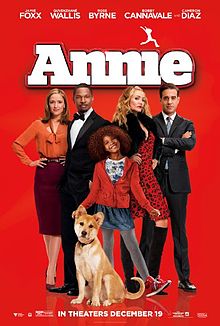
The latest remake of the film version of Annie, the last film production in 1982, though at least one television variation exists, and all based on the Broadway hit of the same name, is a saccharine-laden mess of a film.

Annie stars Quvenzhane Wallis, Jamie Foxx, and Cameron Diaz as Annie, William Sparks (changed from Daddy Warbucks), and Miss Hannigan, respectively, and features Rose Byrne and Bobby Cannavale in supporting roles.

Let me start with the film’s one redeeming quality, though admittedly a bit of a stretch. I found the musical numbers okay, not great, but far from the worst parts of the film.

The numbers are remixed into hip-hop-type songs with a trendy approach, presumably to add a modern element. While not great, some songs are catchy and not dreadful, especially “It’s A Hard Knock Life” over the closing credits.

Whether the actors sing their songs is another question I might not want to answer.

The rest of Annie is terrible.

The casting is poor. Wallis, very believable in Beasts of the Southern Wild (2012), portrays Annie as an intelligent, social-climbing child, and I sensed awkwardness in the part. Regardless, it did not work.

I did not buy her in the role, and how she was awarded a Golden Globe nomination for Best Actress in a Musical Comedy speaks volumes about the limited choices in 2014.

Jamie Foxx completely phoned in his performance as Cell-phone technical mogul and mayoral candidate William Sparks.

Why the film changed the character from Daddy Warbucks is a mystery. He is unbelievable as a germaphobe, an aggressive yet sensitive, powerful man who amazingly develops a soft spot for Annie.

Cameron Diaz completely overacts and turns Miss Hannigan into an obnoxious, hysterical shrew who, towards the end of the movie, somehow “turns good,” with no real motivation for doing so.

Rose Byrne and Bobby Cannavale give uninteresting, one-note performances as Sparks’s assistant, love interest, and right-hand man.

The film changes so many aspects of the original stage version of Annie that it is barely recognizable.

It takes place in present times rather than the Depression-era 1930s; Annie is no longer an orphan but is in foster care.

Miss Hannigan’s first name is changed to Colleen instead of Agatha, and she is now a former pop performer whose career subsequently died.

Hannigan’s brother Rooster and his girlfriend Lily don’t appear at all.

The story has zero interest and zero believability.

But the worst part of the film is its corniness. It is so overwrought with contrived scenes that it is hard to take seriously.

At a Mayoral function, Annie (an untrained singer) suddenly leaps onstage and belts out a perfectly sung, choreographed number melting the hearts of the wealthy powerhouses in attendance.

The film is pure fantasy with no realism to speak of.

Miss Hannigan fosters an apartment full of children that she hates, to collect $150 a week, but her apartment is pretty spacious and beautiful by Manhattan standards.

The film is full of inconsistencies and is a horrendous modern take on a long-loved treasure; the 2014 version of Annie should be seen once, snarled at, and put back on the shelf, then forgotten for good.

Birdman-2014

Birdman-2014

Director Alejandro G. Iñárritu

Starring Michael Keaton

Scott’s Review #190

80000643

Reviewed November 6, 2014

Grade: A

Birdman (2014) is a unique art film that, happily, has garnered major exposure and publicity because a movie like this risks receiving praise and notice only from the art-house crowd.

The film’s star, Michael Keaton, portrays Riggan Thomson, a former action-hero superstar from the 1990s, made famous for the “Birdman” character he created.

Having made sequels to the film, his career has since dried up, and he hopes to establish credibility and prove himself a real actor by writing, directing, and starring in his play.

The film is set in and around the Broadway theater in New York City.

As opening night approaches, he struggles to pull everything together and mount a successful production while dealing with an injured, terrible actor; a difficult actor; his insecurities; and a miserable theatre critic destined to ruin his big chance.

To make matters worse, his daughter Sam, played by Emma Stone, is a recovering drug addict who hangs around the theatre distracting actors with her charm and good looks.

Naomi Watts and Edward Norton play Leslie and Mike, other cast members in the production. Watts is sympathetic as the emotional actress with a heart of gold who finally realizes her dream of performing on Broadway.

Norton, outstanding as Mike, is blunt yet socially awkward and can only perform truthfully on stage.

Keaton is a marvel as he plays a dark, vulnerable man. He hates and wants to shed his ridiculous movie persona of yesteryear and secretly cringes when fans recognize him.

He uses a voice in his head when he played “Birdman” years earlier.

The film’s uniqueness lies in what seems like one long take, as the action rarely stops.

The film belongs to Keaton, who wonderfully relays vulnerability, pain, and fear within an outward persona of bravery and masculinity.

Throughout the film I wondered, is Riggan suicidal? What is real and what is imagined? Are certain scenes foreshadowing later events?

The film has much depth.

One marvels at how art imitates life: is Keaton portraying himself? He was the original Batman in the successful superhero franchise beginning in 1989, and his career tanked shortly after.

Birdman is a comeback film for him, and he is devastatingly good.

Norton’s character Mike impressed me. He is blunt, flawed, scared, and addicted to the stage.

Stone has one particularly brilliant scene where she lambasts her father and later, with regret, tells him the world has moved on without him and that he is irrelevant, like everyone else. It is a powerful scene.

In another, Riggan is locked outside the theater during the performance, clad only in his underwear. How on earth will he get back on stage and finish the show?

The quick jabs at current Hollywood superhero stars, especially Robert Downey Jr., are deliciously naughty.

It is impossible to predict what comes next, and the film feels very New York theater-style.

Keaton’s run-in with a theater critic in a cocktail bar is the best scene in the film, as the critic’s vicious critique of “You’re a celebrity, not an actor” resonates with both pain and tremendous anger for Riggan.

Riggan is a sensitive, struggling man, and Keaton shows his vulnerability beautifully in every scene.

Oscar Nominations: 4 wins-Best Picture (won), Best Director-Alejandro G. Iñárritu (won), Best Actor-Michael Keaton, Best Supporting Actor-Edward Norton, Best Supporting Actress-Emma Stone, Best Original Screenplay (won), Best Sound Editing, Best Sound Mixing, Best Cinematography (won)

Independent Spirit Award Nominations: 3 wins-Best Feature (won), Best Director-Alejandro G. Inarritu, Best Male Lead-Michael Keaton (won), Best Supporting Male-Edward Norton, Best Supporting Female-Emma Stone, Best Cinematography (won)

Love Is Strange-2014

Love Is Strange-2014

Director Ira Sachs

Starring John Lithgow, Alfred Molina

Scott’s Review #174

70299861

Reviewed September 24, 2014

Grade: B

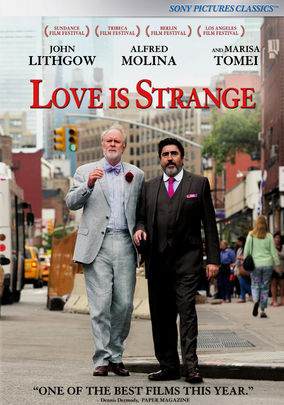
Love Is Strange (2014) is sweet, though not nauseatingly sentimental, and explores many different types of relationships; at the forefront is the same-sex couple Ben and George, played by John Lithgow and Alfred Molina, respectively.

They are a successful New York City couple of a certain age, together for nearly thirty years, and finally legally wed in a low-key ceremony surrounded by friends and family.

George teaches music at a strict Catholic high school where the students and staff know and love him and his new husband.

The bishop doesn’t support his marriage, and he’s fired unceremoniously.

This causes Ben and George to become homeless and rely on family and friends for a roof over their heads.

The film features several secondary character relationships.

Ben’s nephew and wife balance busy careers with a temperamental, rebellious, confused son; Ben’s niece from Poughkeepsie seems neurotic.

Neighbors who are gay police couples have loud parties seemingly every night.

Marisa Tomei, who plays Ben’s niece by marriage, Kate, and Charlie Tahan, who plays Joey, Ben’s great-nephew, are probably the most prominent in the supporting cast.

While well-meaning and accommodating, Kate bottles up her anger and comforts herself with nightly red wine.

Joey lashes out at his great-uncle in frustration, criticizing his artwork and scolding him for using his teen friend in a portrait, a friend whose sexuality is unclear.

Most other characters are not fleshed out well and are there to move the plot along. This is slightly disappointing. I would have preferred a bit more backstory regarding the rest of the cast.

Throughout the film, a few clues about Joey and his friend’s sexuality surface, but they don’t go beyond the surface.

I was curious about the cop’s backstory. How long have they been together? Do they face conflict at work?

Numerous scenes show both cops in uniform running errands or visiting the hospital, which seems to emphasize that cops can be masculine and gay, a fact I love, yet the characters are one-dimensional.

Why is Ben’s niece neurotic? The film doesn’t pursue this at all.

The film belongs to Lithgow and Molina.

The two have such effortless, natural chemistry that the audience instantly believes they have been together for decades. The fact that Lithgow and Molina are lifelong friends in real life surely adds to the realism and naturalness.

Ben is the yin to George’s yang. Lithgow and Molina’s performances are so understated and calming that you might overlook how excellent they are, since they are both low-key characters.

Love Is Strange (2014) is a film about strength, courage, loyalty, and perseverance through life’s challenges.

It is a sensitive and lovely film.

Independent Spirit Award Nominations: Best Feature, Best Male Lead-John Lithgow, Best Supporting Male-Alfred Molina, Best Screenplay

Tower Heist-2011

Tower Heist-2011

Director Brett Ratner

Starring Ben Stiller, Eddie Murphy

Scott’s Review #160

70202145

Reviewed August 29, 2014

Grade: D

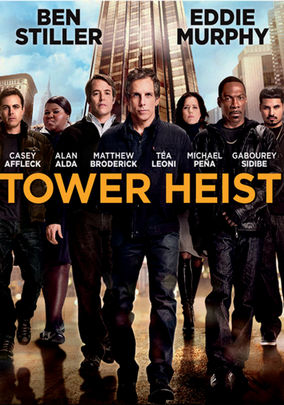
Tower Heist (2011) is a completely formulaic, by-the-numbers comedy with absolutely no surprises or, frankly, creativity.

It follows Josh Kovacs, a luxury high-rise apartment manager weakly played by Ben Stiller in New York City, whose favorite tenant, a businessman Arthur Shaw (Alan Alda), is arrested for involvement in a Ponzi scheme.

The entire staff’s pensions have been squandered after Josh entrusts Shaw with the funds, and he tries to return the money to the rightful owners with a team of staff and an ex-con, played by Eddie Murphy.

They team up and attempt to locate millions of dollars hidden in Shaw’s apartment.

If this film was a starring vehicle for Ben Stiller, it was done horribly. He has been much funnier in There’s Something About Mary (1998) or Meet the Parents (2000).

Tower Heist has some similarities to Ocean’s Eleven (2001) because the score is recognizable and mirrors that film. The group of players is similar to that film, and its look reminds me of it too.

Murphy plays a silly, stereotypical role, and the group has zero chemistry as they try to keep the money.

There is also no chemistry between Stiller and Tea Leoni, who plays an FBI agent with a phony Queens accent that I found laugh-out-loud bad.

Nothing worked in this film since it was one tired gag after another and completely predictable.

I will admit two minor positives in Tower Heist: Alan Alda, who’s always great to see in films, and the interesting choice of a luxurious high-rise setting with cool, ritzy interiors taken from real buildings in New York City.

Otherwise, Tower Heist (2011) is a complete dud.

Gun Hill Road-2011

Gun Hill Road-2011

Director Rashaad Ernesto Green

Starring Esai Morales

Scott’s Review #138

70167100

Reviewed July 27, 2014

Grade: A-

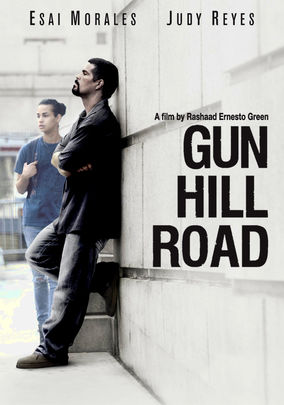
Gun Hill Road (2011) is a very small, independent film set in the Bronx, New York, hence the title, which is a famous street there.

It tells the story of a Hispanic family: the father, Enrique (wonderfully played by Esai Morales), has recently been released from prison and is adjusting to clean living.

His wife Angela (Judy Reyes) has moved on emotionally and physically, and his teenage son Michael (Harmony Santana) is going through a sexual identity crisis and defines himself as a female.

Each of the three characters is sympathetic and well understood in terms of motivation.

The most interesting facet of the film is the father/son relationship, as Enrique must eventually come to terms with Michael’s sexuality and gender definition, which is not portrayed as easy in the Latino community.

The film has a rawness and realness.

Gun Hill Road is a dysfunctional family drama, character-driven, sometimes difficult to watch, and quite captivating, though the ending is slightly disappointing, as events were left open-ended.

Santana was nominated for the 2012 Independent Spirit Award for Best Supporting Female.

I only wish this film had received wider recognition and acclaim, as it’s a marvel.

Independent Spirit Award Nominations: Best Supporting Female-Harmony Santana

The Central Park Five- 2012

The Central Park Five-2012

Directors Ken Burns, Sarah Burns, David McMahon

Starring Antron McCray

Scott’s Review #124

70242981

Reviewed July 21, 2014

Grade: B+

The Central Park Five (2012) is a fascinating documentary surrounding the infamous 1989 events of the Central Park jogger, who was raped, beaten, and left for dead one night.

I remember the case well but was too young to know the details and circumstances involved.

Suppose one believes the documentary presented.

In that case, one is to be outraged and disgusted by police, detectives, and attorneys who railroaded and influenced the youths found guilty because they assumed they were guilty.

Youths who were later found to be innocent after years of wasting away in prison.

It saddens me how the media turned the case into a witch hunt and sensationalized the story. What is sadder is that this still happens today.

I like documentaries that present both sides, but according to the film, no attorneys, detectives, or police would comment so that I will accept this as truth.

After the youths were exonerated, no apology was ever issued.

It is a sad day when detectives can pressure and threaten someone into a confession. In modern times, DNA evidence has come to the rescue of the falsely accused.

As with anything, there are two sides to every story, but one can’t help but wonder: if the police did no wrongdoing, then why not comment on the events?

The Central Park Five (2012) is a shockingly truthful, informative documentary.

Independent Spirit Award Nominations: Best Documentary Feature

Annie Hall-1977

Annie Hall-1977

Director Woody Allen

Starring Woody Allen, Diane Keaton

Scott’s Review #48

261909

Reviewed June 19, 2014

Grade: A

Annie Hall (1978) is one of Woody Allen’s finest works, and that says something as his list of wonderful films goes on and on; Manhattan, Blue Jasmine, and Interiors are gems.

Annie Hall is a witty, intelligent, great comedy. It is sharply written, quirky, and neurotic all rolled into one.

Comedy is a tough genre. Romantic comedies are even tougher to get right.

My favorite part of the film is Woody Allen himself. Some might say he plays himself, but he is engagingly hysterical as the neurotic, skeptical, Jewish, cynical New York man named Alvy.

He meets and falls in love with equally neurotic Annie Hall, played by Diane Keaton.

They quarrel, love, and travel from New York to California and back.

The film has some very funny scenes (lobster, movie theater line, and the drive-through Manhattan), and the intelligent, crisp dialogue makes it a top-notch comedy.

Oscar Nominations: 4 wins-Best Picture (won), Best Director-Woody Allen (won), Best Actor-Woody Allen, Best Actress-Diane Keaton (won), Best Screenplay Written Directly for the Screen Based on Factual Material or Story Material Not Previously Published or Produced (won)

Golden Globe Nominations: 1 win-Best Picture-Comedy or Musical, Best Director-Woody Allen, Best Actor-Comedy or Musical-Woody Allen, Best Actress-Comedy or Musical-Diane Keaton (won), Best Screenplay

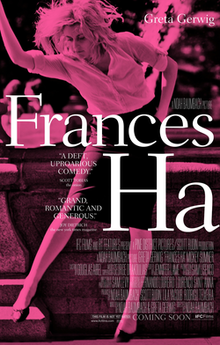
Frances Ha-2012

Frances Ha-2012

Director Noah Baumbach

Starring Greta Gerwig

Scott’s Review #44

Reviewed June 18, 2014

Grade: B+

Frances Ha (2012) is an intelligent, quirky comedy-drama made ever so appealing by its star, Greta Gerwig, an up-and-coming indie star (Greenberg-2010, The House of the Devil-2009).

She later achieved massive success directing Barbie (2023).

Gerwig is the heart of this film and has an intense rooting value. You want to be her friend.

Made in black and white, which is unique and highly effective in an indie way, it tells the tale of a moderately talented dancer struggling to make it in New York City.

“Frances”, along with her best friend, hops from situation to situation in an attempt to establish normalcy.

Gerwig shines with the perfect blend of awkwardness, sarcasm, and wit she gives the character, and the viewer falls in love with her as she endures trials and tribulations.

It’s a year-in-the-life type of film.

Frances Ha (2012) is reminiscent of a Woody Allen film, with many neurotic yet lovable characters.

Independent Spirit Award Nominations: Best Feature, Best Editing

Inside Llewyn Davis-2013

Inside Llewyn Davis-2013

Directors Ethan Coen, Joel Coen

Starring Oscar Isaac

Scott’s Review #35

70275369

Reviewed June 17, 2014

Grade: B+

Being a tremendous fan of the Coen brothers (Fargo-1996, No Country for Old Men-2007), I was eager to see their latest offering, Inside Llewyn Davis (2013).

The Coens have such a sense of quirkiness in their characters, and while this film isn’t on the level of their other gems, it’s still a good piece.

I love the cold, winter Greenwich Village setting as struggling folk singer Llewyn Davis (expertly played by Oscar Isaac) struggles over two weeks to land gigs or breaks, encountering many people who either thwart or help his chances of success.

Sadly, the film was ignored by the Oscar brethren, but it tells a slice-of-life story of a 1960s artist.

As with most Coen Brothers films, it is cast with unique, interesting character actors in a bit but nuanced parts.

Oscar Nominations: Best Sound Mixing, Best Cinematography

Independent Spirit Award Nominations: Best Feature, Best Male Lead-Oscar Isaac, Best Cinematography

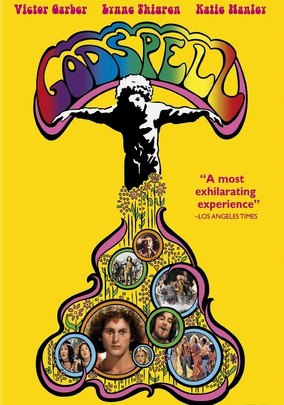
Godspell-1973

Godspell-1973

Director David Greene

Starring Victor Garber, David Haskell

Scott’s Review #23

549055

Reviewed June 17, 2014

Grade: B

Although Godspell (1973) is a popular and legendary Broadway musical production, the film left me with very mixed reactions.

The positives for me are the songs- they are memorable, and they stay in your head for days to come.

My absolute favorite is “Day by Day”.

I also enjoy the cast traveling throughout NYC, as I love it when films are set here.

For the first thirty minutes of the film, I did not get it at all.

There is no plot, but simply a group of college-aged people leaving their crummy jobs and celebrating Jesus as they aimlessly flit about the city, with nobody else in sight, singing songs of salvation and celebration.

Then I realized this is not a “message” movie or an attempt to convert people to religion. Many devout Christians despise the film.

The film left me with questions.

Is it tongue-in-cheek or meant to be taken seriously?

By the end of the film, I took it for a fun musical with great songs. It offers nothing more, nothing less.