Tag Archives: Scatman Crothers

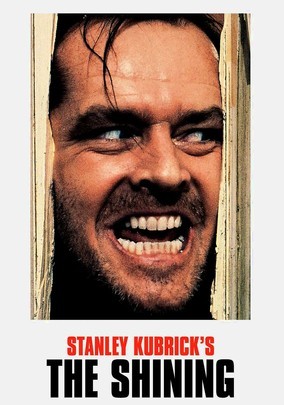
The Shining-1980

The Shining-1980

Director Stanley Kubrick

Starring Jack Nicholson, Shelley Duvall

Top 250 Films #21

Top 40 Horror Films #6

Scott’s Review #313
959008

Reviewed December 31, 2015

Grade: A

The Shining is one of the great horror masterpieces of all time.

Released in 1980, and atypical of the slasher craze that was rampant at that time, the film is a psychological ghost story with frightening elements, including a musical score, long camera shots, and a haunting, grandiose hotel set in a deserted locale.

Without the brilliant direction of Stanley Kubrick, The Shining would not be the masterpiece that it is, to say nothing of the talents of Nicholson and Duvall in the lead roles.

Based on the popular horror novel by Stephen King.

Nicholson plays Jack Torrance, an author and alcoholic, who takes his wife Wendy (Duvall) and son Danny to serve as caretakers at the vast Overlook hotel- for the winter in snowy Colorado.

The lavish hotel will be deserted for the season and Jack looks forward to months of peace that will enable him to complete his novel.

Unfortunately, the hotel is haunted by spirits of the past, and the added burden of the previous caretaker going mad and chopping his family to bits with an ax.

The real success of The Shining is that the hotel itself is a character and has nuances of its own. The hotel is deathly quiet as the Torrances take over for the season-long hallways are featured and the forbidden Room 237 takes on a life of its own.

Creepy images of two young girls and red blood gushing from the elevators take over. Young Danny can communicate with the chef without speaking to each other. Jack imagines a gorgeous nude woman in the bathtub only to discover she is a shriveled old hag.

The film’s cinematography coupled with the looming, morose, musical score perfectly go hand in hand and, in my opinion, are the reasons for the success of the film.

Throughout the film, there is a sense of dread and a forbidden presence that works beautifully.

The very first scene is an aerial shot of the Torrances driving along a mountainous road to be interviewed for the caretaker position. The vast land and mountains as we eventually see the Overlook immediately reveal to us the feeling of isolation, which is really what the film is about.

These exterior scenes are also gorgeous to marvel at.

The crisp, gloomy, winter scenes and the endless maze of animal shrubbery come into play during the film’s final act as Jack, now completely mad, chases Danny through the snowy paths that seemingly lead to nowhere.

The catchphrase, “Here’s Johnny!”, that is uttered from an ax-wielding Nicholson, is permanently ensconced in the relics of pop culture.

Nicholson and Duvall have such dynamic and palpable on-screen chemistry that makes the film work from a character perspective. There is something slightly off with each of the characters, readily apparent from the outset, but that has more to do with each actor being rather non-traditional in appearance.

I can imagine no other actors in these roles.

Author, Stephen King, who reportedly despised the film version of his novel, has since grown to respect the film and Kubrick’s direction, a great deal. The Shining is one of my favorite horror films in addition to being one of my favorite films of all time.

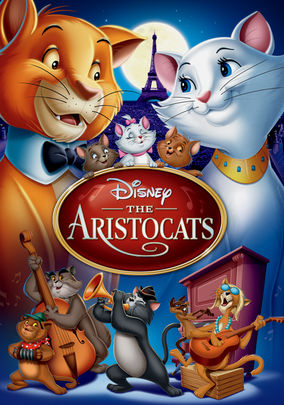
The Aristocats-1970

The Aristocats-1970

Director Wolfgang Reitherman

Starring Various voices

Top 250 Films #241

Scott’s Review #570

Reviewed December 29, 2016

Grade: B+

The golden age of Disney films mainly occurred before the release of this film, The Aristocats is a latter-day Disney film, released in 1970- the first release since Walt Disney’s death in 1966.

It is a darling story with a very cute subject matter- cats living in sophisticated Paris face peril from their butler.

Like many Disney works, the film’s message pertains to the treatment of animals. The Aristocats is much safer fare than the dark Bambi or even Dumbo, but it is a fantastic film worth watching.

Glamorous and elegant retired opera star, Madame Adelaide Bonfamille, lives peacefully with her gorgeous mother cat, Duchess, and her three kittens, Marie, Berlioz, and Toulouse in the heart of Paris, circa 1910.

They are sophisticated beyond measure and enjoy every luxury known to cats, and are accompanied in their estate by English butler, Edgar.

One day while Madame is discussing her will with her attorney, Edgar learns that she plans to leave her entire estate to her cats, until their death, then all goes to Edgar.

Filled with greed, Edgar plots to kill the cats. This leads to an adventure in the country as the accosted cats attempt to find their way back home to Madame, with the help of feral yet kindly cat friends.

Ever so sweet to the film is the burgeoning romance that erupts between Duchess and Thomas O’Malley, as he aids the cats in returning to Paris. It is the classic girl from high class, who meets the bad boy from the wrong side of the tracks- only cat style.

The chemistry is readily apparent between the pair and, on a personal note, my female cat Thora certainly seemed smitten with Thomas O’Malley as she sat smiling at Thomas while she watched the film.

During their adventure, Thomas and Duchess manage to dance and sing along with Thomas’s best friend Scat Cat, who leads a Jazz band of alley cats- this makes the film light and lively in tone. The group also shares adventures with English geese, Abigail and Amelia Gabble, who share a fondness for style and a prim and proper manner.

Throughout it all, the group continues to be pursued by Edgar, who is portrayed more as a bumbling villain than a sinister one, making The Aristocats a fun film rather than anything too heavy or sinister.

The sophistication of the film is really what makes me enjoy it so much. The high style of the Parisian city blocks, Madame’s gorgeous mansion, and the beautifully drawn French countryside are my favorite elements.

I love the contrasts in this film- the city and the country. The high-brow characters meet the more blue-collar ones, but in the end, everyone comes together to conquer the mischievous foe.

Whereas in Bambi man is the serious enemy, in The Aristocats, Edgar is more of a buffoon than a truly dangerous element. He is cartoon-like (no pun intended), and the film is more of a caper with hi-jinks than of true danger.

For the cat lovers in all of us, The Aristocats is a delightful film with a nice message and a wonderful cultural experience.

Who can forget the fantastic theme song, “Ev’rybody Wants to Be a Cat”?

Hello, Dolly!-1969

Hello, Dolly! -1969

Director Gene Kelly

Starring Barbra Streisand, Walter Matthau

Scott’s Review #1,273

Reviewed July 5, 2022

Grade: B+

I was surprised by my reaction to Hello, Dolly! (1969), a musical comedy starring the brilliant Barbra Streisand in only her second film role.

The songs are tailor-made for the diva’s vocals and are the follow-up to her Oscar-winning turn in Funny Girl (1968), made just a year earlier.

The film is enjoyable, with enough songs to hum along to, but it suffers mightily from miscasting Streisand in a role much too old for her and a ghastly lack of decent chemistry between the leads.

Nevertheless, the memorable and outstanding dinner scene toward the conclusion of the film makes the overall effort worth the wait and bumps it up to a generous B+, up from a tepid B.

The excellent supporting players helped save Hello, Dolly! from mediocrity, since I felt much more invested in their story than in the lead’s.

Still, based on the synopsis and talent potential, I was anticipating a solid A rating, but this was not to be, as Hello, Dolly! brought the once-reliable musical comedies of the 1950s and 1960s to a crashing halt as 1970 approached.

The time is the 1890s in New York City and Yonkers, New York, as the bold and enchanting widow Dolly Levi (Streisand) is a socialite-turned-matchmaker, though she yearns for her own love life.

Her latest client is the grumpy but wealthy Horace Vandergelder (Walter Matthau) and a young artist named Ambrose (Tommy Tune), who is in love with Horace’s niece, Ermengarde (Joyce Ames).

Dolly has secret romantic designs on Horace and is determined to land him, while Ambrose and Ermengarde have little to do.

Dolly’s meddling soon involves Horace’s employees, Cornelius (Michael Crawford) and Barnaby (Danny Lockin), who become smitten with a New York hatmaker, Irene (Marianne McAndrew), and her ditzy assistant, Minnie (E.J. Peaker).

For starters, anyone who has seen or knows the history of the 1960s stage version of Hello, Dolly! knows that Carol Channing portrayed the role and should have been in the film.

She is so well known for the role that she won a Tony and reprised it many times during her storied career, becoming far more famous than Streisand ever was for the role.

Streisand was only twenty-six when she made Hello, Dolly!, and is too youthful for the matronly role, despite the help of makeup and costumes. This isn’t very pleasant because the main reason Streisand was cast was that her career was taking off.

The other glaring problem is that there is no chemistry between Streisand and Matthau, and it’s unclear why Dolly is even romantically interested in Horace, aside from perhaps his money.

Needless to say, he is too old for her.

There is no rooting value for the couple at all, and a fun fact is that the two stars hated each other during filming. This provided a chuckle or two.

All is not lost, though, because the supporting foursome of Cornelius, Barnaby, Irene, and Minnie steals the show. The hijinks between the characters as the boys struggle to figure out how to pay for a lavish champagne dinner for the girls is physical comedy at its finest.

The lavish dinner scene set at the Harmonia Gardens Restaurant saves the film.

Dripping with a beautiful set design, bright red velvet decor, and perfect choreography, the highlight is an adorable rendition of the title song between Streisand and Louis Armstrong.

The sequence is so great that it almost makes me forget about the missteps surrounding the rest of the film.

Director and actor Gene Kelly is most known for starring in An American in Paris (1950) and knows his way around a musical or two. He does wonders with all facets of the production, but can’t be blamed for the casting choices.

Surprisingly, Hello, Dolly! (1969) received seven Academy Award nominations and won three. This assuredly is a result of a conservative tendency by the Academy members who worshipped the once-mighty musical genre.

Unfortunately, the genre limped into the edgier 1970s and would remain, for many years, more or less obscure.

Oscar Nominations: 3 wins-Best Picture, Best Art Direction (won), Best Cinematography, Best Costume Design, Best Film Editing, Best Score of a Musical Picture-Original or Adaptation (won), Best Sound (won)