Tag Archives: Nona Gaye

The Polar Express-2004

The Polar Express-2004

Director Robert Zemeckis

Starring Tom Hanks

Scott’s Review #800
Reviewed August 8, 2018

Grade: B+

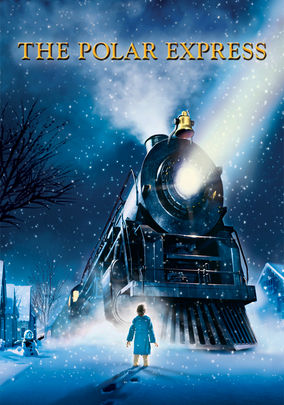
The Polar Express (2004) is a modern entry into the annals of holiday film history. Along with treasures like Rudolph, Frosty, the Grinch, and all the other standards, this film has become a popular one to watch throughout the season.

The film is not exactly like the others, since it is the first of its kind to incorporate live human characters animated using live-action motion capture animation.

The mood of the film is mysterious, edgy, and with a dark tint, so jolly it isn’t, but compelling it is, and visually it is a marvel.

The story is as follows: on a snowy Christmas Eve, a young boy living in Grand Rapids, Michigan, doubts the existence of Santa Claus.

When a steam locomotive suddenly appears outside his house, he curiously boards the train and finds a mysterious conductor (Tom Hanks) manning it.

As the train rolls away, the boy meets two other children on board and stops for another one who is also reluctant to get on.

They begin a dazzling, frozen adventure to the North Pole with the promise of receiving the first gift of Christmas from Santa Claus himself.

The main reason to recommend The Polar Express is simply the gorgeous visual treats it offers. In 2004, the film was a unique experience, and I fondly recall sitting in a dark movie theater, watching it for the first time.

There was a magical element to the surroundings, combining intrigue and fantasy that still holds up well.

For adults, I do not think the film is at all scary, but I have heard some reviewers complain that the moody ingredients are a bit frightening for children, so there is that concern. 

A major component is the mixture of human beings and animated tools. The familiar actor that everybody knows is Tom Hanks as the conductor.

Therefore, to sit back and observe the character is a wonderful thing- is it really Tom Hanks or is it an animation?

It is ultimately both, but the fun is in the observation and wondering how the filmmakers created this experience.

And listen for Hanks in other voice performances throughout the film. 

The story (or fable) itself is warm and fairly predictable. But, of course, being largely made with kids in mind, this is to be expected.

There is never a doubt that the boy (interestingly, never given a name) will ultimately believe in Santa after all and live happily ever after.

The magic is in the details, though- the boy’s journey to this realization is peppered with fun and creative richness- the little girl’s floating ticket and an ornament falling off a Christmas tree are good particulars. 

Director Robert Zemeckis and Hanks worked closely together in Forrest Gump (1994), so the pair are familiar with each other, creatively speaking. Hanks undoubtedly had much input into the decision-making, and it shows. 

I do not personally rank The Polar Express (2004) among the best of the best holiday film offerings, but I support an occasional dusting off of this work for viewing pleasure.

Perhaps over time, the animations may become dated or seem less dazzling, but the film is still worth appreciating for its creative elements.

The story is nothing spectacular (in a way, Scrooge for kids), but it makes for a pleasant family viewing experience. 

Oscar Nominations: Best Song-“Believe”, Best Sound Editing, Best Sound Mixing
Crash-2005

Crash-2005

Director Paul Haggis

Starring Sandra Bullock, Matt Dillon, Thandie Newton

Scott’s Review #799

Reviewed August 3, 2018

Grade: A-

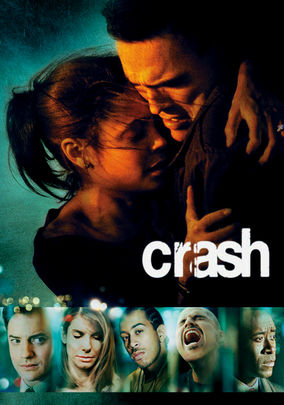
A superior film that has unfortunately suffered greatly after controversy, Crash (2005) is a story of intersecting vignettes, all interrelated.

The controversy stems from the film’s very surprising Oscar win over the heavily favored Brokeback Mountain. Many thought the latter was a shoo-in, poised to set the LGBT genre ahead of the game.

Sadly, now, when film lovers discuss Crash, it’s usually in tandem with Brokeback, and usually on the heels of its having stolen the Oscar crown.

On its own merits, the film excels as a social story exploring the many facets of race, racism, and bigotry.

The events in Crash take place within one thirty-six-hour day in metropolitan Los Angeles.

Featuring a slew of characters that would even impress Robert Altman, the audience witnesses situations involving many races and backgrounds.

We meet Rick and Jean Cabot (Brendan Fraser and Sandra Bullock), a white, affluent couple who are carjacked when driving home from dinner.

The black men who carjack the couple then strike a Korean man and bring him to the hospital.

A racist police officer, John Ryan (Matt Dillon), cares for his troubled father, who cannot afford insurance. A Persian father and daughter wish to buy a gun for protection, and a Hispanic father (Michael Pena) worries about a rash of drive-by shootings.

The stories go on and on as a myriad of characters come into situations involving other characters.

The interconnecting stories all cascade into overlapping situations of interest. The point of Haggis’s film is racism, but with a creative twist.

The director points out and shows that those who are racist have good qualities too, and those who are discriminated against in turn discriminate against others themselves.

The most interesting character is Dillon’s, John Ryan.

On the surface, a racist, wise-ass, who in one scene embarrasses an affluent light-skinned black woman (Thandie Newton), simply because he carries a gun, then ends up saving her life in a horrific car accident.

But is he redeemed? Does he see the world as black people getting ahead, and he is left behind?

What about the Persian man, discriminated against, but then vowing revenge on a Hispanic man after a misunderstanding?

The black men who carjack the white couple then release a group of immigrants who will surely be sold, perhaps even for sex trafficking. Does this act make the men good?

The point Haggis makes is that each character is neither all good nor all bad, but rather complicated and nuanced, with emotions shaped by past experiences and by discrimination itself.

Crash is highly similar to Traffic (2000) and Babel (2006) in terms of pace, style, and the way the stories align. The film is different, however, in that the location is strictly confined to Los Angeles, making the setting of monumental importance.

How would events be different in a setting like Middle America? Or in a different country? These possibilities are worth considering, given that Los Angeles is one of the most diverse cities in the United States.

If racism occurs there, it can occur anywhere.

Now, more about that pesky Oscar controversy! In later years, critics would largely agree that the inferior film had won that year, and Brokeback Mountain lost due to a level of homophobia on the part of the voting academy.

Since the academy is filled with Hollywood liberals, albeit of an older generation, an alternative way of thinking is that perhaps Crash won because it was the “safer” film.

Everyone seems to have forgotten the other three nominated films that year. Alas, Crash is permanently marred for winning Best Picture. It would undoubtedly have more supporters had it lost.

Ranked as one of the lowest-scoring Best Picture winners, I still believe Crash has some worth- though I agree that it should not have won over Brokeback Mountain.

Taken on its own merits, the film is quite good. A message film with great atmosphere, it succeeds in making the viewer think and ponder, perhaps their discrimination, whether conscious or subconscious.

The ensemble acting and character representations are all very good and worthy of a second watch.

Oscar Nominations: 3 wins-Best Picture (won), Best Director-Paul Haggis, Best Supporting Actor-Matt Dillon, Best Original Screenplay (won), Best Original Song-“In the Deep”, Best Film Editing (won)

Independent Spirit Award Nominations: 2 wins-Best Supporting Male-Matt Dillon (won), Best First Feature (won)