Tag Archives: Richard Griffiths

Gorky Park-1983

Gorky Park-1983

Director Michael Apted

Starring William Hurt, Lee Marvin, Joanna Pacula

Scott’s Review #1,522

Reviewed March 8, 2026

Grade: B+

Gorky Park (1983) is an aptly named thriller set in Moscow, Russia, involving a mysterious triple murder of three young adults while ice skating at the titled central park. In addition to being murdered, their faces have been skinned and their fingerprints removed.

Russian detective Arkady Renko (William Hurt) uncovers a network of deceit and intrigue when he investigates the murders.

As he tries to make progress on the case, it becomes apparent that the KGB doesn’t want the homicide to be solved, and Renko needs to know why. He eventually meets an American businessman, Jack Osborne (Lee Marvin), who offers some clues, but Renko soon realizes that Osborne may be involved in the plot.

He also meets and falls in love with a mysterious young woman, Irina Asanova (Joanna Pacula), who owned the ice skates found on one of the victims.

The film succeeds in outlining a compelling story that doesn’t lag and in providing a cold, wintry atmosphere, just what one would expect from the drab Russian environment. The audience knows deadly shananigans have occurred, and the film is fun to watch as it tries to connect the dots.

Even though the action is palpable, the ensuing mystery can feel overly complicated at times and hard to follow, leading to an overwhelming feeling.

Accepting Hurt, an American actor, as a Russian police investigator takes some time. For the first thirty minutes, I thought he was an American character.  He sometimes shows hints of an English accent and no Russian at all.

Once I accepted this, Hurt does a very good job at leading the film, which is a tough ask given the complexities of the story. He is handsome and a good guy wanting to do the right thing, so he’s easy to root for.

The film is adapted from the 1981 novel written by Martin Cruz Smith.

While most of the film is set in Moscow, the action later shifts to Stockholm, Sweden, a city I adore. Due to the Cold War conflicts between the Soviet Union and the United States, the film was obviously not shot in Moscow.

Finland and Sweden were the chosen filming locations.

As hard as I tried to follow the main plot, my mind occasionally wandered because there are KGB elements, Jack Osborne, Irina, and an American detective, William Kurwill, in the mix, as well as various colleagues and connections to Renko.

Any or all of these characters or organizations could be involved in the murders, and minor red herrings like the creepy Professor who recreates the victim’s heads and Irina, who comes off as a cold and unfeeling, emerge as the story goes along.

Despite the story’s complexities, Gorky Park is filmed very well and rises above the ranks of mediocrity it could have fallen into, since countless other political and crime thrillers have used the tired Russia/United States rivalry.

The elements are the best part because numerous snowy and bleak sequences enhance the overall story and atmosphere. A scene in woodsy Sweden is wonderfully cold and white, with the woods and a shack coming into play.

The romantic storyline between Renko and Irina is more plot-driven than anything fresh. It’s predictable from the moment the characters meet as they delve into a strong dislike that becomes a love formula.

While there are some cliches to endure, like menacing ‘type’ characters and the overuse of the word ‘comrade’, the film surprisingly feels crisp, and the big reveal and the hows and whys of a sable fur smuggling organization, though years later, feel dated, are interesting.

I’m not sure I need to see Gorky Park (1983) again, but considering it’s a political/crime thriller amid hundreds of similar films, it stands a bit above the rest.
Gandhi-1982

Gandhi-1982

Director Richard Attenborough

Starring Ben Kingsley

Scott’s Review #1,189

Reviewed October 30, 2021

Grade: A

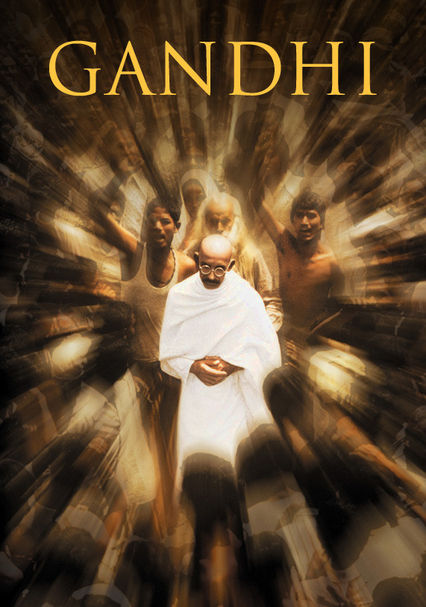
Ben Kingsley delivers an astonishing performance as Mahatma Gandhi,  the steady-handed lawyer who stood up against British rule in India and became an international symbol of nonviolence and peaceful understanding until his tragic assassination in 1948.

Entitled simply Gandhi (1982) the film is directed by Richard Attenborough who has created masculine offerings such as The Great Escape (1963) and The Sand Pebbles (1966) before.

Calmly, the director creates a grandiose epic but one that is thought-provoking and introspective in its humility.

I was incredibly affected by this picture.

As beautiful as the cinematography and other such trimmings are the message is what stands out to me most. One man’s spirit and thirst for fairness and human equality are beyond inspiring decades after the film was made.

Thanks to Kingsley, the biography infuses an infectious channeling of what being a human being is all about and how human decency is the desired goal.

The film belongs to Kingsley. Despite hosting a cast of literally thousands he is the only name worth mentioning. He is that superior.

Attenborough, who teams with screenwriter John Briley presents major events in the life of Mohandas Gandhi (Kingsley). The film starts suddenly in January 1948, when an elderly Gandhi is on his way to an evening prayer service and is shot point-blank in the chest in front of a large number of dumbfounded greeters and admirers.

His state funeral is shown, the procession attended by millions of people from all walks of life, with a radio reporter speaking beautifully about Gandhi’s world-changing life and projects.

The film then returns to decades earlier when Gandhi, a young man, has a violent and racist experience. He vows to dedicate himself to the concept of nonviolent resistance. Initially dismissed, Gandhi was eventually internationally renowned, and his gatherings of passive protest moved India towards independence.

Gandhi has been criticized for its extraordinary length with a running time of three hours and ten minutes. A suggestion is to watch the film in multiple sittings though the best recommended approach would be to see it on the big screen.

Unfortunately, I didn’t but fantasize about the massive sequences and how gorgeous they would appear at the cinema.

The story, acting, production, and pretty much everything else about Gandhi is a ravishing spectacle.

It’s worth its weight to sit back and watch Kingsley completely immerse himself in the role. The actor deservedly won the Best Actor Academy Award and despite his oodles of other film roles is best remembered for this one.

I’m half surprised that it didn’t typecast him since he is so identifiable in the role.

I’d like to mention two aspects that some might not notice as much as others but that is simply astounding. The cinematography of the deserts, towns, and cities of India is plush with detail and accuracy. If one cannot go on a trip to India the next best thing is to watch this film instead. You’ll get a good dose of realism.

South Africa is also featured.

The costumes brilliantly showcase Indian flair and culture so well that I felt that I had been to an interesting country at the time that the film portrayed the events and felt nestled amid the luxurious colors and good taste.

Post-1982, the film genre of the epic exists rarely if ever anymore.

Long gone are the days of brilliance like Gone With the Wind (1939) or Lawrence of Arabia (1962) which are truly a delight to simply lay one’s eyes on.

Gandhi deserves to be appreciated as much as those other films despite being released in less than an artistic decade in cinema.

Gandhi (1982) is a wonderfully tragic film and leaves the viewer feeling sad but also inspired to carry the torch picked up by one brave man.

A history lesson it’s also as much a lesson in humanity and the courageous fight that one man fought. Military power is not the way to achieve change in the world.

Oscar Nominations: 7 wins-Best Picture (won), Best Director-Richard Attenborough (won), Best Actor-Ben Kingsley (won), Best Screenplay-Written Directly for the Screen (won), Best Art Direction, Best Cinematography (won), Best Costume Design (won), Best Film Editing (won), Best Makeup, Best Original Score, Best Sound

Ragtime-1981

Ragtime-1981

Director Miloš Forman

Starring Howard Rollins, Brad Dourif, Mary Steenburgen

Scott’s Review #1,183

Reviewed October 1, 2021

Grade: A-

Miloš Forman, best known for directing 1975’s One Flew Over the Cuckoo’s Nest and 1984’s Amadeus, crafts a relevant period drama with a moving racial storyline.

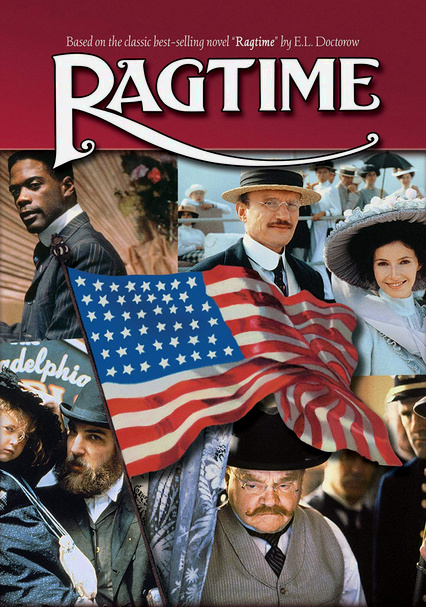
Set in turn-of-the-twentieth-century New York, Ragtime (1981) mixes an important message with gorgeous costumes and a sprinkling of romantic intrigue.

The film was honored with an astounding eight Academy Award nominations but came away empty-handed.

The cast is enormous, and I love that aspect of the film. At two hours and thirty-five minutes, the experience nearly felt too short, since there were plenty of stories left to tell, especially in the subplots.

Some resolutions are not clearly explained, but of course, the central story ends tragically.

A fun fact is that Robert Altman was initially signed on to direct the film, but was replaced by Forman. My mind conjures up endless juicy moments that Altman likely would have added. As good as Forman is, Altman would have been even better.

There are also a few real-life people sprinkled in among the fictitious characters, which may cause some confusion, especially with the large cast. Newsreels of Theodore Roosevelt, Houdini, and architect Stanford White are featured.

A flurry of juicy tales based on E.L. Doctorow’s eponymous novel dissects life in pre-World War I New York City. The haves and have-nots see their lives intersect in many different ways.

A lavish party in Atlantic City is a fabulous highlight of Ragtime.

One day, a rich white family living in New Rochelle, New York, finds a black baby in their yard and takes in the mother (Debbie Allen) as a maid. A black pianist, Coalhouse Walker Jr. (Howard Rollins), returns for his woman and child after finding success in a Harlem jazz band.

A group of small-minded firefighters, irritated to see a successful black man own a Model-T Ford, deface it, and Walker demands retribution. This sets the main chain of events in the film as a war rages between Walker and his friends and the white firefighters.

There are more stories presented in a lesser form than I would have loved, like the interesting friendship between the black Walker and the white younger brother, played by Brad Dourif.

In a strange scene, millionaire industrialist Harry Kendall Thaw (Robert Joy) makes a scene when White unveils a nude statue atop Madison Square Garden, modeled after former chorus girl Evelyn Nesbit (Elizabeth McGovern), Thaw’s wife.

Convinced that White has corrupted Evelyn, Thaw publicly shoots him dead.

From an acting perspective, the film belongs to Howard E. Rollins. I immediately treasured the character he plays and rooted for him to win. Intelligent yet put upon, he goes through several incarnations of the character and twice as many emotions. He was by far the richest character of all as far as substance.

Other characters intrigued, but dissecting them would be impossible since there were so many. McGovern, Mandy Patinkin, and Mary Steenburgen are my favorite characters.

The only slight drawback is that the film has a glossy look, and the gritty scenes are not powerful enough. As intense a moment as the finale is, for example, I wanted something dirtier. When Walker’s fate was sealed, I wanted to be more frightened, not feel like I was being fed high drama.

Ragtime (1981) successfully and nearly flawlessly combines artistic style with an enormous social message. It looks polished and representative of the early 1900s, and it challenges audiences to take a look at how different cultures co-existed in another time.

Oscar Nominations: Best Actor in a Supporting Role-Howard Rollins, Best Actress in a Supporting Role-Elizabeth McGovern, Best Writing, Screenplay Based on Material From Another Medium, Best Art Direction-Set Direction, Best Cinematography, Best Costume Design, Best Music-Original Score, Best Music-Original Song-“One More Hour”