Tag Archives: Michael Jeter

Hair-1979

Hair-1979

Director Miloš Forman

Starring John Savage, Treat Williams, Beverly D’Angelo

Top 250 Films #200

Scott’s Review #664
Reviewed July 14, 2017

Grade: B+

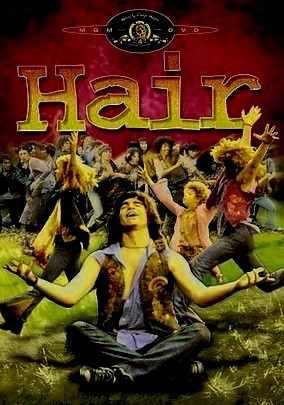
Hair is a 1979 musical film that, in addition to catchy singing and dance numbers, explores a serious theme: the Vietnam War.

This film is not your typical Metro-Goldwyn-Mayer-style musical from the 1950s. Rather, the entire experience is a unique, with an underlying dark tone, and is presumably a message film with a liberal slant.

Made in 1979, set in the late 1960s, Hair centers primarily on two young men and a bevy of hippie friends, with most of the action in New York City.

Despite the time, the film does not always succeed in the authenticity category- many of the costumes and hairstyles scream the late 1970’s.

The film also has the late 1970s “look”, on the cusp of the 1980s, with poofy hair associated with the times.

This forces the viewer to escape into a world largely of make-believe.

Claude (John Savage) is a naïve young man from folksy Oklahoma, having lived a sheltered, religious life, proper and away from big-city living.

He is drafted and sent to the Big Apple, where he will await his assignment.

Charismatic Berger (Treat Williams) and company befriend Claude after he gives them spare change, soon becoming the best of friends. Claude falls in love with socialite Sheila Franklin (Beverly D’Angelo), who is in town from neighboring Westchester County, NY, and a love story ensues.

When Claude, Berger, and company interrupt a lavish dinner party hosted by Sheila’s parents, a hilarious yet informative scene develops.

While Sheila is secretly gleeful at the arrival of her new friends, her parents are none too pleased, resulting in a standoff between Berger and Sheila’s family.

Partly comical, this scene also reveals the stark class distinctions among many of the characters.

The rest of the film centers on the friend’s antics involving drug use, relationship trials and tribulations, and culminates in a cross-country drive to see Claude before he is shipped to Vietnam desperately.

Multiple scenes involve songs concerning the turbulent race issues of the times- my personal favorites are the opening number, “Aquarius”, and the scandalous, “Black Boys” and “White Boys”, performed by Nell Carter.

Never one to be disappointed with a film set in Manhattan, Hair is a film basking in fantasy, and the entire production seems to be one big dream as the carefully crafted musical numbers are interspersed with the more dramatic elements.

Still, much of the film consists of the group prancing around Manhattan, with wonderful areas such as Washington Square Park featured, as well as several changes of season, giving the film a slice-of-life feel.

My favorite performance is that of Treat Williams as Berger. Part showman, part jokester, and part earnest, he fills the role with dynamic energy that comes full circle in the last act when he drastically changes his appearance for the sake of a friend.

The film’s ending is melancholy and an inevitable reminder of the coldness and finality of war in human life.

The encompassing song is “Let the Sunshine In”, a powerful and worthy conclusion to the film as the gang visits Arlington National Cemetery, to join an anti-war peace rally and say goodbye to a friend.

The film version of Hair (1979) may be drastically changed from the stage musical version,  a version I shamefully have yet to see. Still, on its own merits, the film is a poignant, powerful, and wholly entertaining musical adventure.
Ragtime-1981

Ragtime-1981

Director Miloš Forman

Starring Howard Rollins, Brad Dourif, Mary Steenburgen

Scott’s Review #1,183

Reviewed October 1, 2021

Grade: A-

Miloš Forman, best known for directing 1975’s One Flew Over the Cuckoo’s Nest and 1984’s Amadeus, crafts a relevant period drama with a moving racial storyline.

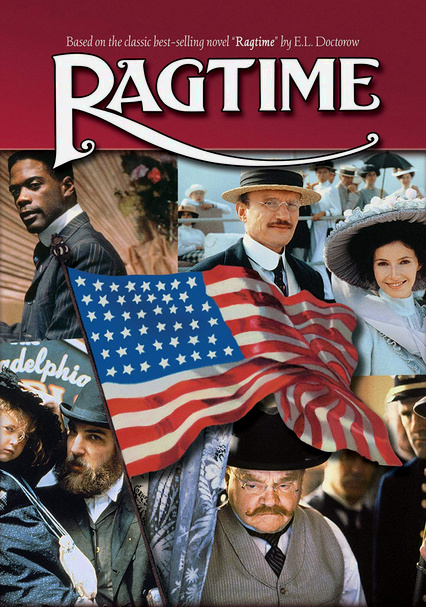
Set in turn-of-the-twentieth-century New York, Ragtime (1981) mixes an important message with gorgeous costumes and a sprinkling of romantic intrigue.

The film was honored with an astounding eight Academy Award nominations but came away empty-handed.

The cast is enormous, and I love that aspect of the film. At two hours and thirty-five minutes, the experience nearly felt too short, since there were plenty of stories left to tell, especially in the subplots.

Some resolutions are not clearly explained, but of course, the central story ends tragically.

A fun fact is that Robert Altman was initially signed on to direct the film, but was replaced by Forman. My mind conjures up endless juicy moments that Altman likely would have added. As good as Forman is, Altman would have been even better.

There are also a few real-life people sprinkled in among the fictitious characters, which may cause some confusion, especially with the large cast. Newsreels of Theodore Roosevelt, Houdini, and architect Stanford White are featured.

A flurry of juicy tales based on E.L. Doctorow’s eponymous novel dissects life in pre-World War I New York City. The haves and have-nots see their lives intersect in many different ways.

A lavish party in Atlantic City is a fabulous highlight of Ragtime.

One day, a rich white family living in New Rochelle, New York, finds a black baby in their yard and takes in the mother (Debbie Allen) as a maid. A black pianist, Coalhouse Walker Jr. (Howard Rollins), returns for his woman and child after finding success in a Harlem jazz band.

A group of small-minded firefighters, irritated to see a successful black man own a Model-T Ford, deface it, and Walker demands retribution. This sets the main chain of events in the film as a war rages between Walker and his friends and the white firefighters.

There are more stories presented in a lesser form than I would have loved, like the interesting friendship between the black Walker and the white younger brother, played by Brad Dourif.

In a strange scene, millionaire industrialist Harry Kendall Thaw (Robert Joy) makes a scene when White unveils a nude statue atop Madison Square Garden, modeled after former chorus girl Evelyn Nesbit (Elizabeth McGovern), Thaw’s wife.

Convinced that White has corrupted Evelyn, Thaw publicly shoots him dead.

From an acting perspective, the film belongs to Howard E. Rollins. I immediately treasured the character he plays and rooted for him to win. Intelligent yet put upon, he goes through several incarnations of the character and twice as many emotions. He was by far the richest character of all as far as substance.

Other characters intrigued, but dissecting them would be impossible since there were so many. McGovern, Mandy Patinkin, and Mary Steenburgen are my favorite characters.

The only slight drawback is that the film has a glossy look, and the gritty scenes are not powerful enough. As intense a moment as the finale is, for example, I wanted something dirtier. When Walker’s fate was sealed, I wanted to be more frightened, not feel like I was being fed high drama.

Ragtime (1981) successfully and nearly flawlessly combines artistic style with an enormous social message. It looks polished and representative of the early 1900s, and it challenges audiences to take a look at how different cultures co-existed in another time.

Oscar Nominations: Best Actor in a Supporting Role-Howard Rollins, Best Actress in a Supporting Role-Elizabeth McGovern, Best Writing, Screenplay Based on Material From Another Medium, Best Art Direction-Set Direction, Best Cinematography, Best Costume Design, Best Music-Original Score, Best Music-Original Song-“One More Hour”

Miller’s Crossing-1990

Miller’s Crossing-1990

Director Joel Coen

Starring Ethan Coen, Gabriel Byrne

Scott’s Review #394

60028099

Reviewed April 13, 2016

Grade: B+

Containing a mixture of The Godfather Part III, Goodfellas, and The Grifters- ironically all released in 1990- Miller’s Crossing is an old-fashioned gangster film made fresh thanks to the direction of Joel Coen.

He brings a quirky edge to the film, throwing in a blend of film noir, black humor, and edgy characters that make the film storyline feel fresh and alive in the present.

It has a definite late-1980s-era cinematic look (not a compliment).

I could immediately tell which decade it was made. Miller’s Crossing begins slowly, but during the second act, it gains steam and is the best part of the film.

The film is set somewhere in New York during the 1920s Prohibition period- it is assumed New York City, but this is never stated.

The general story involves Tom Reagan, a handsome Irish gangster and right-hand man of Leo O’Bannon (Albert Finney), who becomes involved in conflict with Leo, his lover Verna (Marcia Gay Harden), and her brother Bernie (John Turturro), who is wanted dead by rival Italian mobster, Johnny Caspar.

Johnny’s right-hand man, “Dane,” comes into play, as does another gangster, Mink, played by Steve Buscemi. Tom changes allegiances and plays one mob boss against the other as a web of deceit, tested loyalty, and murder ensues.

As the first half concluded, I was not completely sold on the film.

How many times have I seen a gangster film with all the stereotypical elements, the tough-guy shtick, and the contrivances?

I was afraid I was watching a retread of similar films.

I wondered what the point of the film was- the relationship between Tom and Leo’s struggle for power and control. A triangle between Tom, Verna, and Leo?

I noticed little chemistry among them and could not help but wonder whether a female presence was required in the film, though not all that necessary.

Regardless, I was quickly bored with Verna’s character.

But then the elements of the film began to come together, and some rather left-of-center nuances emerged, leaving me even more engrossed.

A homosexual triangle (seldom seen in traditional, crime/mob films) took shape between Mink, Dane, and Bernie. All vicious killers had no stereotypes often seen in the film, which is refreshing.

Dane was arguably the most brutal of all the characters, and the bloodletting was plenty. I found this reveal completely refreshing, not to mention unexpected.

However, the intricacies of the triangle were left unexplored. They bedded each other.

A pivotal scene set in the woods (Miller’s Crossing) is as gorgeous as it is character-driven. Tom must choose between killing Bernie and proving his loyalty to the mobsters awaiting, or secretly letting him live, faking his death, all in the name of his love for Verna.

But will his decision come back to haunt him?  Is Tom, at his core, a good man or a bad man?

The calm of the forest mixed with the brutality of the film is perfect. I was reminded of the 1970 Italian masterpiece The Conformist while viewing this beautiful scene—Tom’s conflict between good and evil and his earlier premonition of a tumbling hat come into play.

His character conflict reminded me of Michael Corleone in The Godfather films.

Look quickly, and you will see Frances McDormand, soon to be a fixture in Coen films, as a slinky, well-dressed secretary. We are reminded of great things to come by this then-unknown talent.

A nice thing that I always look forward to in Coen films is the quirky, weird, fun, minor characters, and Miller’s Crossing is no different- Johnny Caspar’s overweight wife and son, an Augustus Gloop from Willy Wonka and the Chocolate Factory lookalike, give comedy to the potentially too dark film.

From Bryan to Tic-Tac to the fat lady with the purse, all offer amusing and meaningful turns that lend the film a richness and an unusual cast of characters.

Miller’s Crossing (1990) proves to be a nice little film once it picks up steam, and the intertwining of stories and characters, with a touch of classic film noir, makes for a refreshing take on an age-old genre.