A Man Called Ove-2016

A Man Called Ove-2016

Director Hannes Holm

Starring Rolf Lassgård, Ida Engvoll

Scott’s Review #653

Reviewed June 12, 2017

Grade: A

A Man Called Ove is a fantastic 2016 Swedish film honored with a Best Foreign Language Film Oscar nomination and is a darling watch.

The film is terrific.

Equal parts whimsical, humorous, and heartbreaking, the film churns up emotions brought to the surface, which is quite telling about the experience.

The film is magical in a sense.

The lovely scenery of Sweden also abounds, making A Man Called Ove an unexpected marvel worth checking out for good film lovers.

Ove (Rolf Lassgard) is a fifty-nine-year-old curmudgeon living in suburban Sweden. He is the keeper of law and order in his quaint, little community of bungalows, regularly ridiculing rule breakers and the oblivious with torrents of shouts and insults.

He despises several neighbors, including a beautiful cat who walks around the complex as if she owns it.

When an interracial family moves in next door to Ove, his life forever changes as he becomes acquainted with the husband, the wife, and their two young girls. In his newfound entertainment, Ove regularly visits his deceased wife’s gravestone, bringing her flowers and plotting his suicide.

Through flashbacks, we are taken on a journey through the past as we learn all there is to know about Ove.

The film is a beautiful experience. I worried that A Man Called Ove would be too lighthearted and sentimental.  The type of foreign language film the Academy far too often recognizes in place of darker, more complex (and, in my mind, deserving) films.

A Man Called Ove is not exactly dark, but it is certainly not trivial or fluff. The film is rich with excellent writing and character development.

Romance is also a significant theme, but not in a corny way. For much of the running time, Ove’s deceased wife, Sonja, is a complete mystery. We only know that Ove misses her terribly and cannot wait to be with her in the afterlife. We only get brief glimpses of her photo on the table.

When finally introduced to the story, we see them both in their younger years, filled with hope and promise. I beamed with delight during these wonderful moments. The scenes of their innocent first dates and the connection they develop are heartwarming.

Later, when Sonja’s story is fully explored, we show a new appreciation for Ove and why he is the way he is today. We understand him better, and the character develops.

Some paths that life takes Ove and Sonja down are tear-inducing and emotional, primarily due to Sonja’s character and personality. Along with the backstory of Ove and Sonja, we are treated to scenes of Ove and his father in the past.

With his mother dying way too young, the pair develop an unrelenting bond that is severed only by tragic circumstances.

Ove’s constant bungled attempts at suicide (he buys poor-quality rope to hang himself, a visitor interrupts his attempt to breathe in toxic garage fumes, and he ends up saving a life when he intends to be hit by a train) are the comic turns that the film mixes perfectly with the heavy drama.

A Man Called Ove (2016) is a pure treat in modern cinema. It perfectly balances drama, comedy, churning emotions, and heartbreaking honesty. It is highly recommended for those seeking a treasure with many characteristics.

Oscar Nominations: Best Foreign Language Film
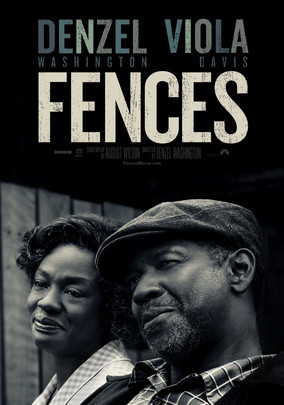
Fences-2016

Fences-2016

Director Denzel Washington

Starring Denzel Washington, Viola Davis

Scott’s Review #652

Reviewed June 11, 2017

Grade: B+

Denzel Washington and Viola Davis both give dynamic performances in Fences (2016), a film directed by Washington himself and based on a stage play written by August Wilson.

The film reunites several actors from the stage version, and while compelling, Fences does not translate as well onto the screen as hoped. Throughout the movie, I surmised how much better Fences would be on the live stage.

Still, a tremendous acting tour de force transpires, which is well worth the price of admission.

Set in 1950s Pittsburgh, Troy Maxson (Washington) is a struggling fifty-three-year-old black man who works as a trash collector alongside his best friend, Jim Bono.

Troy is married to Rose (Davis). They have a teenage son, Cory (Jovan Adepo), an aspiring high school football player. Troy’s younger brother, a mentally impaired World War II veteran, and Troy’s older son, Lyons, a fledgling musician, are also in the mix.

Everyone lives in a close-knit community, and there is a sense of comradery, though the principal characters are frequently at odds with each other as dramatic situations slowly arise.

Troy is an irate man, frequently going on rants about his time playing in the Negro baseball league and complaining about the unfairness of the world, specifically the racial injustice of the time.

The friction between Troy and Cory is thick. Cory wants to dedicate his life to football, while Troy feels his son will ultimately be disappointed. When Troy drops a startling bomb on Rose, their lives are forever changed, and they work to mend the damage inflicted between them.

At its core, Fences is a family drama, and the story offers conflict. Almost all the action is set in the Maxson family home, a two-story brick house. Scenes frequently play out in the backyard.

The film stays very true to its roots as a stage production, which is good and evil.

The film feels like a play, so I fantasized about how good the production would be on the stage rather than on the screen, especially since some actors (Washington and Davis) starred in that version.

What a blessing and a curse.

The film feels limiting and has a glossy “Hollywood look.” This is good, but the stage version would undoubtedly be more bare-bones, giving the production a raw feel, substantial in several key dramatic scenes between Troy and Rose.

Despite other opinions, I did not find Troy to be a likable character. Washington infuses power and good acting grit into the character, but I found few redeeming qualities. To say nothing of the situation with Rose, he does not treat his son Cory with much respect.

After a while, I found Troy’s repeated verbal rampages and stories irritating and wondered, “Why should we root for this man?”

Viola Davis deserved the Best Supporting Actress award she received for her turn as Rose. Dutiful, loving, and woefully underappreciated, her character rises well above a traditional homemaker, as during one pivotal scene, she explodes with rage.

Davis, a fantastic “crier”, saves her best tears, in a weepy portrayal. But more than that, she exudes a strong woman during a time when black women had it particularly tough.

I would have preferred an edgier film than Fences (2016) brings to the big screen, but the excellent performances more than compensate for what the film otherwise lacks in darkness.

Sometimes, it is too safe and slightly watered down; the stage version may be the best option.

Oscar Nominations: 1 win- Best Picture, Best Actor-Denzel Washington, Best Supporting Actress-Viola Davis (won), Best Adapted Screenplay

Hacksaw Ridge-2016

Hacksaw Ridge-2016

Director Mel Gibson

Starring Andrew Garfield, Luke Bracey, Vince Vaughn

Scott’s Review #651

Reviewed June 9, 2017

Grade: B+

Hacksaw Ridge (2016) is considered a comeback film for troubled director Mel Gibson, having not directed a film in over ten years.

The film received several Academy Award nominations, including Best Picture, Best Director, and Best Actor (Andrew Garfield).

While the film has a few minor flaws, despite being another exhausting war film, Hacksaw Ridge is quite mighty, primarily because of Garfield’s warmth and convictions into the central character and real-life hero, Desmond Doss.

The film also leans anti-war and pacifistic.

During World War II, Desmond is a young man living in Virginia. With a brother around the same age, they deal with an abusive, alcoholic father and a passive mother.

Desmond realizes he has a talent for medical care. He falls in love with a small-town nurse and enlists in the Army as a non-combat medic.

After refusing to use weapons and train on Saturdays, he is met with contempt by his commanding officers and fellow recruits. Doss and his troops are deployed to the Pacific theater during the Battle of Okinawa, and he becomes a hero when he saves numerous lives on the frightening “Hacksaw Ridge” in courageous form.

For the first half (save for a peculiar opening battle sequence that comes into play during the second half), the action primarily exists in Desmond’s hometown of Virginia or at a basic training facility.

We learn about Desmond’s childhood experiences, love life, and love of country and duty. His father, a retired military man himself, is damaged. He drinks, beats his wife, and hits the boys, though Gibson tones down the abuse by not showing much of it.

He saves the real gore for later in the film.

The film during the earlier portions has a mainstream, safe feel, and I found more than a couple of aspects to nitpick. Desmond’s fellow training recruits are laced with too often used stereotypical, stock characters.

The brooding one, the cocky one nicknamed “Hollywood” for his good looks and tendency to walk around naked, the funny one, the strange one, the list goes on and on.

Drill Sergeant Howell (played by Vince Vaughn, now parlaying from comedy roles to drama) is tough as nails. This is a character we have seen in dozens of war films before, and it feels stale, as do all of the characters.

Some jokes are cheap one-liners like, “We are not in Kansas anymore, Dorothy,” to describe new surroundings.

The masculinity is glaring and serves as a negative, making the film feel like nothing more than standard fare.

However, the second half of Hacksaw Ridge drew me in much more than the first half. Now, in Okinawa, the film grips a much darker tone with the inclusion of battle scenes, some very gruesome with the loss of limbs and life.

Technically speaking, the cinematography and camera work are shaky and move very quickly, effectively shifting from the sun and peace of the United States to the dark and fog of unfamiliar territory.

A sweet scene between Desmond and brooding former rival, Smitty Ryker, inside a foxhole is terrific as we get to know each character much better within that one scene.

Both men discuss their pasts and grow a new affection for one another. This is humanistic and character-driven, making the film much more powerful.

Andrew Garfield is a marvel and deserves the attention received for the role. Coming into his own as an actor after suffering hiccups with Spider-Man (2014), he has returned to character-driven and empathetic roles.

The role of Desmond is a genuinely heroic role for him, and he is wonderfully cast.

A war film with a distinct Anti-war message, Hacksaw Ridge is overall a “guy’s film,” with the female characters taking a backseat to the men. It suffers from some tried-and-true aspects, and some of the hairstyles seem 2016. However, in the end, the film depicts a wonderful human being and tells his heroic story, so that makes the film a good watch.

Oscar Nominations: 2 wins-Best Picture, Best Director-Mel Gibson, Best Actor-Andrew Garfield, Best Sound Editing, Best Sound Mixing (won), Best Film Editing (won)

Strait-Jacket-1964

Strait-Jacket-1964

Director William Castle

Starring Joan Crawford, Diane Baker

Scott’s Review #650

Reviewed June 7, 2017

Grade: B

Strait-Jacket (1964) stars legendary Hollywood film star Joan Crawford on the heels of her successful “comeback” role in What Ever Happened To Baby Jane? Circa 1962.

Following this film, older actresses achieved some semblance of success in camp-leaning B-horror films, and Crawford led the pack.

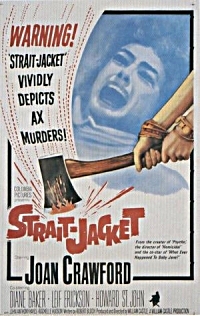
Strait-Jacket is a perfect example of this subgenre. The glamorous Crawford sinks her teeth into this film with gusto, playing an ax-wielding former mental patient who has been released to the outside world after a lengthy stay in an insane asylum.

William Castle, a popular director of the time, could churn out films quickly and for very little money, a talent marveled at by studios. In the cult vein, Castle created Strait-Jacket on a dime and with one of the biggest stars in the world- now slowly in decline.

In “real life,” Crawford felt the role was beneath her, yet one would never know it by the brilliant performance she gives, a performance that makes Strait-Jacket better than it ordinarily would be.

We first meet Crawford’s Lucy Harbin (twenty years before present times) as she returns home late one night to a remote area, having spent the weekend out of town. Her husband is a philanderer and has picked up a cheap girl at a bar, making love to her while his young daughter, Carol, pretends to sleep.

In a fit of rage, Lucy decapitates them both while a horrified Carol watches. Years later, Carol (Diane Baker), now a grown woman,  prepares to introduce a recently released Lucy to her intended, Michael, and his affluent parents.

Living on a remote farm with Lucy’s brother and his wife, Lucy, and Carol experience strange occurrences: a dastardly child’s song, cut-out faces from a photo album, and “imagined” decapitated heads.

Castle wisely gives Lucy a makeover, changing her graying, matronly appearance to a sexy, youthful one reminiscent of her days before the murders.

Soon, the film, short at one hour and thirty-two minutes, reaches a climax when Lucy appears to begin chopping new victims to bits. But is everything as it seems?

As a viewer, Strait-Jacket’s appeal is watching Joan Crawford tackle the role. Talented beyond belief, and with expressive eyes and facial features, she owns the role and subsequently the entire film, though Diane Baker is no slouch either.

Crawford, never one to phone in a performance, was happy with any role she received at this time in her career. She gives Lucy grit and vulnerability so that the audience roots for her.

As the film progresses, we slowly wonder if Lucy is hallucinating, still unstable, or perhaps being set up by someone else.

Strait-Jacket is laced with several good scares, as a grizzled farmhand and a vacationing doctor meet their fates. The build-up to the kills is quite well done. A slamming door or a figure in the shadows are all used to tremendous effect and elicit suspense.

To Castle’s credit, he uses elements of fright to make the film better than the writing is.

The plot itself is fine, but indeed not high art, nor anything rather inventive. The “big reveal” at the end is rather hokey and seemingly a play on the Alfred Hitchcock classic Psycho (1960), but lacking the high intensity- the ending is also a tad abrupt.

Strait-Jacket (1964) is a terrific little horror film featuring one of the legendary actresses of Hollywood film history- and that is more than enough for me to recommend this film to both Crawford fans and horror film fans, or ideally both.

The Faculty-1998

The Faculty-1998

Director Robert Rodriguez

Starring Josh Hartnett, Piper Laurie, Salma Hayek

Scott’s Review #648

Reviewed June 4, 2017

Grade: B

Having watched The Faculty, a  teenage horror/science fiction flick,  at the time of release in 1998 (now almost twenty years ago!), I fondly remember sitting in the movie theater watching this soon-to-be cult classic take hold of its audience.

Despite some now-dated (in 2017) special effects, the story holds up well, and what a treat to see some “stars of tomorrow” mixed in with some venerable veterans, take center stage.

The Faculty stirs up a strange hybrid of classic films (Invasion of the Body Snatchers, Alien, and The Breakfast Club) to create a fun and gory horror film.

The action takes place in a small town said to be somewhere in Ohio, though the film is shot in Texas. A football town and home to the Hornets, sports are central to Herrington High School- both to students and faculty.

It becomes immediately evident that some of the staff are not “right” after two of the teachers stab Principal Valerie Drake (Bebe Neuwirth) with a pencil and scissors and flee with no emotions late one night after a faculty meeting.

Later, student Casey Connors (Elijah Wood) confesses to his group of friends that he believes aliens are controlling the teachers.

Naturally, they are skeptical until strange events among the staff begin to take shape once the students watch the staff’s activities closely.

The film then turns into a clever whodunit as one student after another is revealed to be infected and therefore an alien.

A highlight of The Faculty is its stellar casting- there is the younger set of actors, who share great chemistry- Josh Hartnett (Zeke), Wood (Casey), Jordana Brewster (Delilah), Clea Duvall (Stokes), Laura Harris (Marybeth), and Shawn Hatosy (Stan) all make up the troupe of characters thrown together due to unlikely circumstances to figure out the big mystery- who amongst the staff is an alien and where they come from?

All of the students are from different social classes, which makes their antics unique: Zeke, the rebel; Stan, the jock; Stokes, the “weirdo”; and Casey, the nerd. In this way, the film reminds me of The Breakfast Club, a mid-1980s “coming of age” high school film.

Additionally, the staff comprises some of the best in the business- stalwart Piper Laurie appears as the drama teacher, luscious Salma Hayek as the sexy school nurse, comic Jon Stewart as the science teacher, and rugged Robert Patrick as Coach Willis.

What a treat for film fans to watch a film such as The Faculty to see a bevy of popular film and television stars amongst the cast.

Director Robert Rodriguez, best known for creative left-of-center work such as Machete (2010) and Sin City (2005), and for being a frequent collaborator with Quentin Tarantino on his edgy collection of films, helms a rather mainstream piece in The Faculty.

The film is targeted at your typical mainstream audience, with the right blend of clever quirks.

Delicious is an ode to the classic science fiction film Invasion of the Body Snatchers (1956 and 1978), only set in a suburban high school. Clever still is the revelation of the teachers as the robotic “pod people” or aliens from outer space.

This cute reference, in 1998, and still today, is an innocent knock on authority figures as the high school kids slowly get their comeuppance against some of the staff.

There comes a point in the film when nearly everyone is an alien, and it runs out of gas. However, the final scene is wonderfully constructed as the film ends as just another day in the life of a small-town high school- life goes on, and all is well.

The Faculty (1998) is a treat to watch in present times as a “trip down memory lane experience.

White Chicks-2004

White Chicks-2004

Director Keenen Ivory Wayans

Starring Shawn Wayans, Marlon Wayans

Scott’s Review #647

Reviewed May 29, 2017

Grade: D

Anything but high art, though at the time of release (2004), it seemed like a clever yet silly slapstick farce, White Chicks was a film I found rather enjoyable.

Watching the film in 2017, however, some thirteen years later, it feels dated beyond belief and as dumb as can be.

The film also contains Paris Hilton’s gimmick characters and racial overtones that were lost on me when I first saw the film.

Influenced by the drag comedy (and classic) from 1959, Some Like It Hot, the premise sounds interesting and comical.

Kevin and Marcus Copeland (played by the comical Wayans brothers) are a pair of black,  masculine, F.B.I. agents who bungle an undercover investigation and are given one last chance to redeem themselves before being booted from the bureau for good.

They are assigned the task of protecting the mega-rich cruise-line heiresses, Brittany and Tiffany Wilson, who are in town (at the Hamptons) from a planned kidnapping plot over Labor Day weekend.

Kevin and Marcus don blonde wigs, and freakish makeup, and awkwardly pose as the Wilson sisters to save their jobs.

As the story goes on, Kevin and Marcus (as Brittany and Tiffany) develop relationships with various characters, including millionaire Latrell Spencer (Terry Crews), who takes an interest in Marcus (thinking he is Tiffany, and white).

Other antics unfold as the “girls” try their best to form friendships with the heiress’s snotty friends while attempting to foil the kidnapping plot.

Similarities to the classic Wilder hit, Some Like It Hot, are tough not to notice, and director Keenen Ivory Wayans is smart to borrow from a film considered one of the greatest comedies of all time.

Just as Joe and Jerry (Tony Curtis and Jack Lemmon) go on the lam to escape mafia figures out of desperation, Kevin and Marcus are desperate to keep their jobs, causing both sets of “impersonators” to suffer from dire circumstances.

Also worth mentioning are similar conclusions in both films: love interest Osgood Fielding III, also a millionaire, as is Spencer in White Chicks; each is not fazed by the “big reveal” as the men are de-masked as actually being men.

Clever in 2004, the incorporation of celebrity Paris Hilton in 2017 now seems dated and of the past.

In real life, being a hotel heiress, characters Brittany and Tiffany (cruise line heiresses) mirror Hilton as spoiled, self-centered, and oblivious to everyone around them.

The aspect was a good idea at the time of the release of the film, but now it is irrelevant, not even as a nostalgia gag- perhaps in the year 2037, White Chicks might be appreciated more, but I would not hold my breath.

The overall tone of White Chicks is also fraught with silliness and with one gag after another. Rather than being believable as females, the Wayans brothers look downright frightening and robotic as Brittany and Tiffany.

In comedies, suspension of disbelief is required, but the producers should have done a bit more to feminize the characters instead of playing them as goofs.

The ending of the film is no-frills and formulaic, with no real twist or surprise ending to speak of.

The ridiculous misunderstandings involving Kevin and Marcus’s real significant others, who foolishly believe the men are having affairs with other women, seem forced and amateurish.

Predictably, when the men profess their love for the girls earnestly, they fall for it hook, line, and sinker, and the film wraps in disappointing, standard fashion.

Cute and fresh at the time, White Chicks (2004) now feels stale and tired, with racial overtones that were deemed amusing back in the day but now seem mean-spirited and unnecessary.

The film is an attempt at recreating a classic comedy for a younger audience. Still, I would recommend seeing the original Some Like It Hot (1959) instead- it is much more enjoyable.

Live and Let Die-1973

Live and Let Die-1973

Director Guy Hamilton

Starring Roger Moore

Scott’s Review #646

Reviewed May 25, 2017

Grade: A-

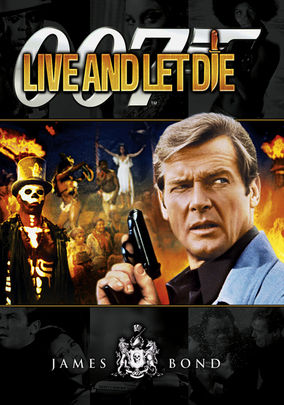
When Live and Let Die was released in 1973, it began a new chapter in the James Bond film franchise with the introduction of a new Bond.

Sean Connery refused to do any more Bond pictures, and Roger Moore was crowned the new film hero and successfully made the role his own during his tenure.

My personal favorite Bond from top to bottom- I enjoyed the wry humor Moore added- he makes Live and Let Die more than it otherwise might have been with a less charismatic actor.

The story and the subsequent elements of the film have issues, but this installment holds a soft spot for me because it was one of my first exposures to the mountainous franchise that is Bond, and I adore the mid-1970s period.

Bond (Moore) is summoned to duty by his leader, M, after three MI6 agents are simultaneously killed in the Caribbean, New Orleans, and at the United Nations in New York City. Bond is then tasked with figuring out who killed these agents and how the deaths are connected.

The adventure takes Bond from Harlem to an unnamed island in the Caribbean, and back to the bayous of southern Louisiana as he tangles with a heroin drug lord, Dr. Kananda.

Bond’s main love interest in the film is the virginal tarot card reader, Solitaire, played by Jane Seymour.

Live and Let Die is a breakthrough in some ways, though the film admittedly contains both positives and negatives worth discussing.

Since the film was made in 1973, following a successful run of “Blaxploitation” films like 1971’s Shaft and 1972’s Super Fly, it has been influenced by those films’ style (for better or worse).

This means that all of the villains are black, from the main villain, Kananga, to various henchmen and even background criminals, growing the massive amounts of heroin shipped to the United States for distribution.

Having such representation among a minority group is fantastic and feels cutting edge, but stereotypes such as derogatory racial epithets, a pimpmobile, and the addition of weird voodoo exist.

Another major flaw in the film, and despite my overall warmth for Live and Let Die, is the goofiness it takes on towards the end.

At a certain point, the film feels like a different film from what it starts as, which becomes quite jarring. The introduction of Sheriff J.W. Pepper during a Louisiana chase scene turns the film into more of a cheesy Dukes of Hazzard episode, with bumbling law enforcement officials, rather than a quality film, and the southern stereotypes run rampant.

Why does a throwaway scene of a speedboat racing through an outdoor wedding feature all high society white folks with nary a black character existing other than as servants?

Some diversity in this scene would have been welcome, given that the film goes out of its way to feature black characters.

Still, many positives do exist. Live and Let Die has the honor of featuring the first-ever black Bond girl, the CIA double agent Rosie Carver, who, sadly, meets a grisly end far too soon.

Gloria Hendry’s chemistry with Roger Moore is readily apparent, though the film chooses to make the character inept rather than a true equal. The smoldering sex scenes between the duo are wonderful and groundbreaking to watch, so the film gets major props for pushing the envelope in this way.

Memorable is the terrific title theme song, “Live and Let Die”, by Paul McCartney and Wings. The success of this hit song, especially decades later, does wonders to elevate the film and keep it relevant in pop culture.

Also great to see are the location sequences and good action car chase scenes along the West Side Highway in New York City and into Harlem.

A treat for this retro fan is the inclusion of early 1970s Chevrolet Impalas and Chevy Novas throughout the entire feature film- was Chevy a financial backer?

Classic cars are a major inclusion in Live and Let Die, which, as a current-day viewer, is a cool treat and quite retro.

In terms of the primary villain and primary Bond girl, the film misses. Jane Seymour is a dud as Solitaire, a character that really should have been played by a black actress. Seymour and Moore have zero chemistry, and her character is weak and simpering, lacking any backbone.

Similarly, Yaphet Kotto as Dr. Kananga seems miscast, with no real qualities that make him devious or dangerous, and his inevitable swan song underwhelms.

Live and Let Die (1973) is not the greatest in the Bond collection and suffers from some problematic, now-dated aspects, racial issues, and a silly overtone, but, perhaps more so as a terrific childhood memory, I hold a particular fondness toward this film despite many negatives.

Oscar Nominations: Best Song-“Live and Let Die”

Spa Night-2016

Spa Night-2016

Director Andrew Ahn

Starring Joe Seo

Scott’s Review #645

Reviewed May 19, 2017

Grade: B+

On the surface, Spa Night (2016) may seem like a straight-ahead independent LGBTQ-themed film (of which, in recent years, there has been no shortage), but the film’s plot is twofold.

Sure, it tells the coming-of-age story of a young man’s sexuality. Still, Spa Night is also a story of the boy’s Korean parent’s financial struggles and their desire to raise a son into a successful young man, sacrificing their happiness.

The film’s tone is very subtle, and the action moves slowly, but it is a sweet and relevant story.

David Cho is a shy Korean-American high school student on the cusp of going to college. His parents (who only speak Korean) have sadly recently lost their take-out restaurant in Los Angeles. The parents struggle to make ends meet (she by waitressing, he by doing odd moving jobs), while David takes SAT classes to ensure he gets into a great college.

David is also struggling with his sexuality and one-night visits a local male spa with drunken friends. He gets a job there and begins to experience male-on-male shenanigans taking place on the sly in the spa, all the while developing his blossoming sexual feelings.

David’s development in the story is key- he is resistant to coming out as gay because his parents are traditionally Korean, constantly mentioning David finding a girlfriend and succeeding in school, becoming what they have failed to achieve.

When, at one point, he fools around with another male in the spa, David insists on a no-kissing policy. This reveals to the audience that he has issues with intimacy with another male, and in one compelling scene, some self-loathing occurs.

When he stares too long at a buddy in the bathroom, while both are inebriated, this clues in the friend, who is then distant towards David.

The film is enjoyable because it tells two stories rather than one, which helps it succeed. We also care greatly about David’s parents, who are compassionately portrayed rather than the stereotypical “tiger mom” and rigid father.

Wanting only the best for him and having no clue about his sexuality struggles, they trudge along with their issues. The father drinks too much, and the parents frequently squabble.

This is a clue to the film because it explains why David hesitates to mention anything to them, even though he is close to his parents.

I also enjoyed the slice-of-life and coming-of-age appeal that the film possesses.

Several shots of day-to-day life in Los Angeles are shown, mainly as characters go about their daily routines.

The budget allotted for Spa Night must have certainly been minimal. Still, the lesson learned is that some fantastic films are made for minuscule money, but as long as the characters are rich and the story humanistic, the film succeeds- this is the case in Spa Night.

Almost every character is of Asian descent- I am guessing all Korean actors. This is another positive I give to Spa Night.

In the cinematic world, where other cultures and races are woefully underutilized or still stereotypically portrayed, how refreshing is it that Spa Night breaks some new ground with an LGBTQ-centered film with Korean characters?

Spa Night has deservedly crowned the coveted John Cassavetes Award at the 2016 Independent Spirit Awards (for films made for under $500,000), and director Andrew Ahn is undoubtedly a talented novice director to be on the watch for.

He seems destined to tell good, interesting stories about people.

Independent Spirit Award Nominations: 1 win-John Cassavetes Award (won), Acura Someone to Watch Award

Elle-2016

Elle-2016

Director Paul Verhoeven

Starring Isabelle Huppert

Scott’s Review #644

Reviewed May 17, 2017

Grade: A-

Sure to evoke both disgust and intrigue from viewers brave enough to watch it all the way through and hopefully ponder the character dynamics, Elle is a titillating French film that was showered with heaps of praise upon its release in 2016.

Controversial without question, in large part by the film’s main character, Elle, will undoubtedly divide film fans- some heralding the picture as greatness, others detesting it as too exploitive.

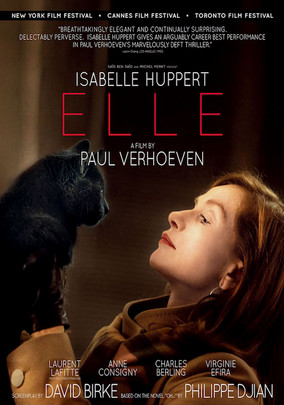
It is not an easy watch by any measure, but one aspect is cemented in truth-Isabelle Huppert gives a fantastic performance in a complex and perverse role.

Unique even in its first scene, Michele Leblanc (Huppert) is a ruthless, alpha businesswoman who is raped and beaten by an intruder in her lavish Paris home.

The violent act occurs in the first scene, immediately giving the film an “in your face” presence. When the rapist, who wears a ski mask, flees, Michele shakes off the incident with nary an emotional scar.

Through backstory, we learn that years ago, Michele’s father brutally murdered many people and was imprisoned for life. Michele’s mother is an aging glamour girl who hires sexy male escorts. Michele’s son is engaged to a domineering pregnant woman, and her ex-husband is dating a younger woman.

Michele lives a complicated life.

At first, Michele seems sympathetic, and we feel her pain as she is taunted by a woman in a coffee shop for her father’s past deeds.

To say nothing of her rape, we cringe when Michele hears noises and imagines the masked intruder returning to rape again, empathizing with the character.

When the mystery man harasses Michele, he sends notes and leaves “gifts” in her home, and we are scared for her. However, as the film goes along, Michele’s obsession and other questionable actions make the character challenging to like.

I also began to wonder if Michele was perhaps dreaming the entire film!

As a fan of acclaimed film director Claude Chabrol, Elle appears to be heavily influenced by him.

Director Paul Verhoeven certainly must have studied his works. He is no slouch himself—female-empowering sex films such as Basic Instinct (1992) and Showgirls (1995) that he directed come to mind. He gives Elle a sleek and sexy feel.

The fact that it is set in romantic Paris helps make the film glamorous and cultured. Verhoeven even weaves a whodunit into the story for much of the movie until the rapist is revealed shockingly.

If the film had ended with the big reveal, this would have made for a compelling, if not mainstream, Lifetime television-type film, but Elle takes off from this point. Michele, already fancying her handsome rapist, actually begins a macabre relationship with the man, going so far as to act out the rape again- her fantasies coming true!

This story turn may repel the average viewer, but to me, this turns the film into a completely left-of-center, layered, psychologically themed story.

Elle is not a revenge tale or a film about a victimized woman; it is much more.

What a dynamic performance Ruppert gives, and here is why- she successfully makes Michele both sympathetic and reviled.

Besides the aforementioned rape complexities, she despises her mother and sleeps with her best friend’s husband. In a scene that arguably makes Michele cross the line in reprehensible behavior, she confesses her affair to a best friend, Anna, when Anna is at her happiest moment- this is downright cruel!

So, no, the audience does not entirely sympathize with this character, but how layered this makes the character, and what a treat it is for actress Ruppert to sink her teeth into a character like this one.

With a wounded yet cold central character, partly thanks to exceptional direction by Verhoeven and a brilliant portrayal by Huppert, he takes Elle into largely unchartered territory and brave waters to create a film that will make the viewer both think and loathe.

Part nymphomaniac wounded bird and vicious shark, Elle contains a complex and memorable leading character.

Oscar Nominations: Best Actress-Isabelle Huppert

Independent Spirit Award Nominations: 1 win-Best Female Lead-Isabelle Huppert (won)

10 Cloverfield Lane-2016

10 Cloverfield Lane-2016

Director Dan Trachtenberg

Starring Mary Elizabeth Winstead,  John Goodman

Scott’s Review #643

Reviewed May 11, 2017

Grade: B+

10 Cloverfield Lane is a 2016 psychological thriller billed as somewhat of a successor to the 2008 hit Cloverfield, though I fail to see the apparent correlation between the films.

Furthermore, the two stories seemingly have little or nothing to do with one another.

Despite these pesky details, 10 Cloverfield Lane is a perfect, edge-of-your-seat type film that is unpredictable and thought-provoking.

By the time the credits roll, it is a film worthy of discussion—an excellent quality for a movie.

Without any dialogue during the opening sequence (a clever move), we meet Michelle (Mary Elizabeth Winstead), a twenty-something woman presumably on the outs with her boyfriend, who we never see.

Alone, she flees their residence and drives into the night to parts unknown. The couple is metropolitan, living in central New Orleans.

Now in the middle of Louisiana, and hearing radio reports of strange blackouts, Michelle is soon involved in a terrible car accident. When she awakens, she finds herself chained to a bed inside a small bunker inhabited by two men, Howard (John Goodman) and Emmitt (John Gallagher, Jr.).

They insist that the outside world is no longer and all human beings are dead as a result of a catastrophic attack. Initially skeptical, Michelle slowly uncovers various clues that baffle her about the truth.

10 Cloverfield Lane may very well be John Goodman’s best film performance.

He plays Howard with gusto and mystery, and the audience is primarily baffled about whether to trust this man. Is he a vicious abductor, creating a make-believe world to keep Michelle hostage-or is he telling the truth?

He plays the character as creepy and surly but with a tinge of vulnerability and sadness.

I certainly was both fascinated and confused by Howard and could not determine his true motivations.

Winstead also deserves credit for portraying a strong yet sympathetic female character who is never reduced to playing a victim, a testament to the actress’s ability.

Over the years, Winstead has appeared in several duds (Black Christmas, 2006, and The Thing, 2011), so seeing her in a film worthy of her talents is nice.

Michelle is intelligent and determined to deduce her surroundings and formulate a clever escape plan. However, in a nice twist, the filmmakers ask whether she wants to leave the safety of her bunker after all.

Producer J.J. Abrams weaves a story with twists and turns, keeping the tension and interest high throughout the film. The primary question that reoccurs is, “What on earth lies outside of the bunker?”

I enjoy that this film is not the typical, cookie-cutter fare in which we root for the female victim to escape the clutches of a male maniac—it is much deeper and more complex than that.

Most enjoyable is how events slowly unfold, and we, the audience, begin to question thoughts we have harbored throughout the run of the film.

A perfect example of this comes in the final chapter, when events take off in an entirely different direction than the rest of the film. I felt a bit suffocated inside the bunker. What a relief to finally have some action occur outside of this location and into the fresh air.

But what lurks in this new setting?

One slight oddity is that the film includes Bradley Cooper’s voice as Michelle’s boyfriend, Ben, who is heard only by telephone. I did not notice this until the credits rolled, and it seemed like a silly and unnecessary inclusion.

Also, we never know the turmoil between Michelle and Ben. Is their domestic trouble simply plot-driven antics, or does it have a deeper meaning?

In a nutshell, 10 Cloverfield Lane (2016) is a film best watched when one does not know the first thing about the plot or circumstances surrounding events.

The film was enjoyable because I did not know the twist, the conclusion, or even who starred in it. This kept all of the elements of surprise from me, making it more enjoyable.

Arrival-2016

Arrival-2016

Director Denis Villeneuve

Starring Amy Adams, Jeremy Renner, Forest Whitaker

Scott’s Review #642

Reviewed May 9, 2017

Grade: B-

Arrival (2016) is the latest in a recent trend of science fiction-themed films garnering Academy Award praise, either for technical achievements or, in the case of Arrival, a surprising Best Picture nomination in addition to the more traditional awards notice for categories like sound effects and editing.

Traditionally, science fiction gets little or no recognition in significant categories; this makes the inclusion of films in the under-the-radar style with the big guns all the more surprising.

Similar in style to recent films such as Interstellar (2014) and Gravity (2013), Arrival ultimately proves a disappointment as a complete film, succeeding only in specific avenues like its musical score and a sort of surprise twist ending that the film presents, but at times is downright to say nothing of its tedious moments.

Needless to say, I wholeheartedly disagree with its Best Picture nomination.

I am not claiming to be the world’s greatest science fiction fan. At times, Arrival does have glimmers of success (mainly in the first act) and some high points in the vein of 2001: A Space Odyssey (1968), the greatest of the greats in the genre. However, the good moments ultimately fade as the story lumbers on, only to show a brief resurgence in the final act.

Sadly, the rest of the film is rather middling.

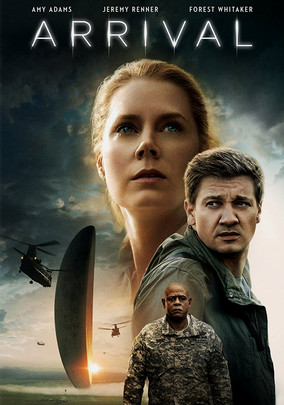
In a role seemingly written just for her, Amy Adams stars as Louise Banks, a linguist professor living and teaching in Massachusetts.

One day, a series of twelve extraterrestrial aircraft appeared across the world. Louise is summoned by an Army Colonel (Forest Whitaker) to travel to a remote area of Montana where one aircraft has taken up residence and assist a physicist, Ian Donnelly (Jeremy Renner), in communicating with the aliens.

Their goal is to determine why they have come to planet Earth.

Interspersed with the main story are strange flashbacks of a life Louise briefly spent with her daughter, who appears to have died of cancer as a teenager.

The film’s premise is reminiscent of another film named Contact, made in 1997, starring Jodie Foster.

The film seems to borrow aspects from several other famous science fiction films, such as the creepy, ominous score that harkens back to 2001: A Space Odyssey in its mysteriousness to the oddity of The Day the Earth Stood Still (1951).

So much so that the film reminds me too much of other films, it, therefore, has little identity, especially throughout the film’s mid-section.

Other than Louise’s character, there is no character development, and this is glaring among the male cast of top talents like Whitaker and Renner. The roles are glorified throwaway roles.

Except for Renner’s limited involvement in the film’s climactic “twist,” which admittedly barely raises the movie above mediocrity, neither character serves many purposes and could be played by any actor.

Whitaker’s G.T. Weber has little motivation other than convincing Louise to participate in the mission. The film also seems unsure whether to fully explore a romantic entanglement between Louise and Renner’s Ian.

Indeed, a flirtation exists on the surface, but the film never hits a home run with it. Couldn’t a meatier story be created for these two storied actors?

The unique extraterrestrial, a hybrid of tentacles, fingers, and funny eyes appearing as a pair humorously nicknamed Abbott and Costello, is impressive from an artistic perspective, and this does help the film.

The characters’ unsureness about whether Abbott and Costello are friends or foes is also slightly intriguing. However, the film’s main negative is that nothing much happens other than Louise’s repeated attempts to communicate, whimsically staring into the camera in wonderment and ultimately figuring out the alien’s messages and purpose.

Worthy of mention is a fantastic and ominous musical score that gives the film some climactic and dark elements that feel like its highlights. It adds chilling, practical elements, bringing the movie up a notch from complete blandness.

The film’s best part is its ending, which sent a chill down my spine. The unique and inspired big reveal made me a bit shiver.

This way, Arrival saves itself from being completely lackluster, but too little, too late. I would have preferred the film to balance the emotions, surprises, and thrills more rather than exist mainly as a tedious, uninteresting film.

Overall, the outcome of Arrival (2016) is more of a retread than anything new or original.

Oscar Nominations: 1 win-Best Picture, Best Director-Denis Villeneuve, Best Adapted Screenplay, Best Sound Editing (won), Best Sound Mixing, Best Production Design, Best Cinematography, Best Film Editing

Free Fall-2013

Free Fall-2013

Director Stephan Lacant

Starring Hanno Koffler, Max Riemelt

Scott’s Review #641

Reviewed May 3, 2017

Grade: A-

Free Fall is a 2013 German-language film that is very reminiscent of the highly influential LGBT film, Brokeback Mountain (2005), only set in Germany in the present day.

The loneliness, struggles, and deceit the characters face are similar in both films, and both are arguably bleak overall.

I, however, truly enjoyed this film and appreciated its touching moments and truthful writing.

In the case of Free Fall, as compared with Brokeback Mountain, only one of the male characters is a family man- coming to terms with his sexuality at a very bad time. In contrast, the other male character is more comfortable in his skin.

A case could be made that a similar characterization is apparent in Brokeback. In both films, a love story develops between two men, and outside forces thwart their happiness.

The film is a very good watch, and the love scenes are particularly steamy and emotional.

Marc Borgmann is a young police officer, fresh out of the academy, living with his very pregnant girlfriend, Bettina. They are temporarily staying with Marc’s parents until the baby is born.

Seemingly happy, Marc befriends a recruit, Kay, and they begin a ritual of jogging together in the forest.

Both men are young and handsome and very masculine- an aspect in an LGBT film that I find positive.

Kay is much more brazen about his sexuality than Marc, and they eventually fall in love with the added pressure of their very macho surroundings, and Marc’s pregnant girlfriend to contend with.

Free Fall, as the title implies, is not a cheerful, romantic film as a whole- nor is it completely bleak either.

Yes, Marc and Kay’s love affair has some happy moments, but more often than not they face peril and don’t get much time to relax and enjoy each other.

As circumstances begin to unravel, Marc’s girlfriend slowly suspects something is going on with Marc. Still, when Kay is outed (the film suggests he purposely outs himself) during a gay nightclub raid, their lives spiral out of control.

The film feels very realistic and doesn’t come across as forced or plot-driven. The acting by both principal actors (Koffler and Riemelt) is quite strong, and I buy their attraction instantly.

The scenes where Marc questions whether the pair are buddies while internally fighting his attraction for Kay are excellent and very passionate.

The range of emotions on Koffler’s face is excellent.

Passion comes through in every scene the pair share.

The way many of the supporting characters are portrayed, however, is disappointing,  yet also a brutal strength of the film.

Marc’s parents are unsympathetic to both Marc and Kay and are written as stereotypical, anti-progressive, and rigid.

When Marc’s mother catches Marc and Kay kissing, she coldly chastises Marc for being “raised better than that”. In her mind, being gay is bad- the father wholeheartedly shares her beliefs.

Another of the cops in the police academy is written as homophobic. Still, the film wisely writes Marc and Kay exceptionally well, proudly, with none of the unfair effeminate qualities films and television still seem to cling to.

The characters are not written for laughs, nor should they be. They are strong men.

The film wisely throws in a handful of supportive characters, like the police force as a whole- teaching and recognizing diversity and inclusion- and a fellow cop who is supportive of the situation with Marc and Kay, but most of the characters come across as harsh and unfeeling toward same-sex attraction.

The conclusion of the film is slightly disappointing, as the story ends abruptly and in a rather unsatisfying way- rumors of a proposed sequel have circulated about the film.

Shot on a very small budget, the film still needs funding for a follow-up, which hopefully will happen. A nicer (and happier) ultimate resolution would be great.

American LGBT films, sometimes going too much the comical, or worse yet, the sappier route, can take a lesson from this treasure of a German-language film.

Free Fall (2012) is a humanistic, realistic, and brave film that I hope more people experience. The film will resonate with those involved in or sympathetic to the LGBT community.

Nocturnal Animals-2016

Nocturnal Animals-2016

Director Tom Ford

Starring Amy Adams, Jake Gyllenhaal, Michael Shannon

Scott’s Review #640

Reviewed April 30, 2017

Grade: A-

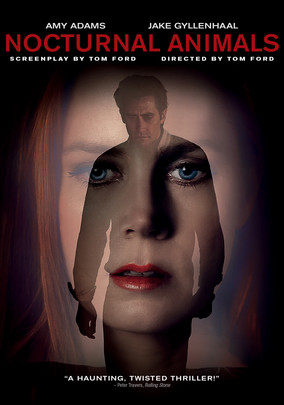
Nocturnal Animals (2016) blurs the lines between fantasy and reality in a revenge-themed thriller directed by Tom Ford, in only his second directorial effort- 2009’s A Single Man was his first.

While not constantly hitting the mark and, at times, very difficult to follow, the film is unusual, mesmerizing, and lovely to look at from a visual perspective. Some scenes blur together splendidly, so they seem interposed—a brilliant touch.

David Lynch influences the film in tone and style.

Events are divided between “The Real World” and “The Novel”.

The film begins strangely as a bevy of nude, obese women prance and dance on video screens during an art exhibit opening.

The gallery is owned by Susan Morrow (Amy Adams), a successful woman living a glossy life in Los Angeles. We quickly learn that Susan is involved in a loveless marriage with hunky Hutton (Armie Hammer), a business person who is inattentive towards Susan.

Before Hutton, Susan was briefly married to Edward (Jake Gyllenhaal), a novelist who dedicates his latest manuscript to Susan, received via mail. As Susan reads the manuscript, she is transported down a dark path of memories and fantasies concerning Edward and their past.

The film’s locales are mainly between Los Angeles (the real world) and western Texas (where the novel occurs). This compelling aspect of the film separates the two worlds.

Los Angeles is featured mainly at nighttime as Susan, presumed to be suffering from insomnia, is compelled by her reading. She also rubs shoulders with sophisticated artist types and colleagues at her studio.

Conversely, western Texas is worlds apart from the Los Angeles setting—like night and day. In Texas, we are introduced to the protagonist of the story Susan reads.

Tony, traveling through Texas with his wife, Laura, and their daughter, India, are accosted and terrorized, bypassing local motorists.

Clearly from out of town, the family is stranded in the middle of nowhere and kept at bay by the rednecks- the story has a tragic ending. The stories intersect interestingly as we see the differing worlds.

The scenes in western Texas were frightening and tense—so much so that my heart beat quickly. I pictured myself as Tony in a situation of peril and danger.

As the family attempts to reason with the thugs, they get deeper and deeper into trouble. The feeling of being vulnerable and unsafe with no help around is tremendous in the film.

The acting in Nocturnal Animals is excellent overall, which is no surprise given the tremendous cast. Adams and Gyllenhaal are especially worthy of mention. Through flashbacks, we see their scenes and find them both sympathetic and vulnerable (at first— he is a sensitive writer, and she is a college girl with aspirations of love and family life.

As the plot thickens, both characters become more nuanced and complex- the subject of betrayal and revenge certainly comes into play, and both characters, now older and more pessimistic, intersect again as mature adults.

Michael Shannon, though believable as Detective Bobby Andes, assigned to Tony’s case and suffering from stage four lung cancer, is not the standout for me. I disagree with his Oscar nomination for Best Supporting Actor.

Indeed, it is an acceptable performance. I would have much rather Gyllenhaal or Aaron Taylor-Johnson (as one of the rednecks) be awarded the nomination.

I was reminded of David Lynch’s masterpiece, Mulholland Drive (2001), mainly during the Los Angeles scenes. The slick night air and the trials and tribulations of the wealthy mirrored each other quite readily.

The sequences contain a gothic, haunting, moody vibe.

The central theme of revenge is present in both worlds. Tony and Bobby seek revenge on the criminals in western Texas, while revenge also focuses on Los Angeles, though much more subtly.

A hint is given several times in Susan’s art gallery, where a large ” Revenge ” exhibit is a focal point. However, what the Los Angeles revenge is is not revealed until the very last scene.

One thing is sure about Nocturnal Animals- the film is dreamy, complex, and worthy of conversation.

Tom Ford is an up-and-coming director with visual sensibilities and a dream-like vision. I hope we see more from this fascinating director.

Oscar Nominations: Best Supporting Actor-Michael Shannon

You Only Live Twice-1967

You Only Live Twice-1967

Director Lewis Gilbert

Starring Sean Connery

Scott’s Review #636

Reviewed April 23, 2017

Grade: B+

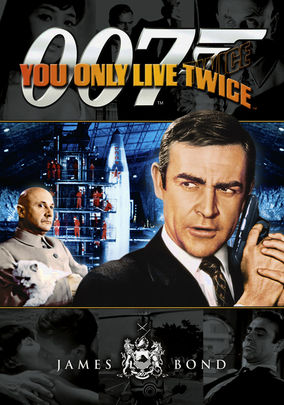
You Only Live Twice (1967) is the fifth in the James Bond film franchise and the fifth to star iconic Bond, Sean Connery, in the lead role.

Reportedly growing bored with the role and eager to move on to meatier acting challenges, Sean Connery is not quite as mesmerizing in the role this time around, but is still indisputably charismatic and sexy with his delivery of one-liners and various affairs with women.

You Only Live Twice is the last to feature Connery until he is coaxed back into the role four years later with 1971’s Diamonds Are Forever.

The film is not among my favorite Bond films of all time, nor is it even in the top ten, for that matter, but it is still quite an enjoyable watch, and the Japanese locales are undoubtedly the highlight.

The film as a whole suffers from a silly story, dated special effects, and a completely lackluster villain, but it does have Connery to rescue it and a nice little romance between Bond and the main girl, Aki, played by Japanese actress Akiko Wakabayashi- that is, until she is unceremoniously poisoned.

The plot involves the hijacking of an American NASA spacecraft by another mysterious spacecraft. The Americans suspect the Russians of the action, and the British suspect the Japanese since the aircraft landed in the Sea of Japan.

MI6 (Bond) fakes his death in Hong Kong and subsequently begins to investigate who is responsible. His search brings him to Tokyo, where he investigates Osato Chemicals and stumbles upon evidence.

He is aided by both Aki and Tiger Tanaka, leaders of the Japanese Secret Service. Soon, it is revealed that the mastermind is SPECTRE villain Ernst Stavro Blofeld, in this installment played by Donald Pleasence.

Mr. Bond must destroy his enemy and inevitably save the world from a global nuclear war.

Though a timely storyline since 1967 was in the midst of the Cold War, the plot seems somewhat forced and a bit uninteresting. The countries blame each other for the hijacked ship, but this comes across as extremely plot-driven and secondary.

The “swallowing” of the aircraft seems cheesy and preposterous, even given the year the film was made, and the writing is not as rich as in some of the preceding Bond films, like From Russia With Love or Thunderball.

The film also has an overall “cheap” look. However, the film does have plenty of positives worth mentioning.

The gadgets that James Bond fixture, Q (the MI6 technical wizard) creates are state-of-the-art and fun. The mini-flying helicopter Bond uses is creative and offers even more views.

Bond faking his death in the opening sequence is a treat (albeit having been done before), and ceremoniously being cast off into the sea in a coffin, only to be wearing a suit and an oxygen mask inside the casket, is clever and light.

Donald Pleasence, a storied, fantastic actor, is not well cast as the main villain, Stavros, and I am not entirely sure why. The fact that his face is not shown until the last act is not helpful, and the character (though seen in other Bond films) is not compelling and is underutilized.

I would have liked the character to be a bit more visible, though surprisingly, the character was highly influential in the 1990s spoof Austin Powers films. Adorable yet creepy is Stavros, only being seen clutching and stroking a gorgeous white cat.

As for the Bond women, the Aki mentioned above is the best of the bunch. Gone too soon in the story, she is replaced by Kissy Suzuki, who is rather unappealing. Mostly clad in a skimpy white bikini and heels, and wearing a black wig, the character is forgettable and serves no purpose.

Conversely, villainous Helga Brandt, SPECTRE assassin, is very well cast and shares good chemistry with Connery. After an unsuccessful attempt to kill Bond, she is fated with a date with killer Piranhas as payment for her failure.

You Only Live Twice (1967) has a myriad of ups and downs, but it is worth watching for fans of the franchise, and specifically, fans of the classic Bond films featuring Sean Connery.

Some will argue that the film feels dated and chauvinistic, and to some degree, they are correct, but it is also a large part of a treasured franchise and a fun experience.

The Lobster-2016

The Lobster-2016

Director Yorgos Lanthimos

Starring Colin Farrell, Rachel Weisz

Scott’s Review #635

Reviewed April 20, 2017

Grade: A-

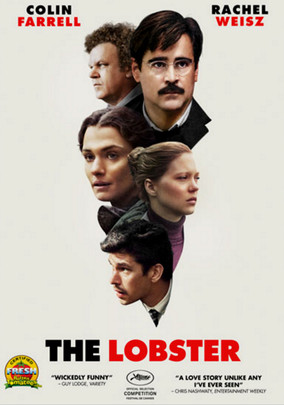
One thing is sure about the puzzling 2016 film The Lobster: It is a film worthy of discussion long after the end credits roll and will leave the viewer pondering its many facets—a great movie to dissect.

This in itself is worth recognition and praise for the power of the film- so many questions abound.

I was immediately struck by how heavily The Lobster contains primary subject matter influences from “message novels” (and films) such as Brave New World, 1984, and A Clockwork Orange, as well as creative, stylistic recent film influences from The Grand Budapest Hotel (2014) and the Moonrise Kingdom (2012).

The story begins outside of Dublin, where David (Colin Farrell) has recently been dumped by his wife in favor of another man.

Now single, he is whisked away by authorities to a luxurious hotel in the woods, where he (and the other guests) are given forty-five days to find a suitable romantic partner, or else they will be turned into an animal of their choice.

David is accompanied by his brother, now a dog, and has decided that he should be turned and that he will become a lobster because he loves the sea, and they tend to live to be over one hundred years old.

The hotel management adheres to strict rules- no masturbation, mandatory temptations by hotel employees, and a strange outdoor hunting game where the guests hunt other guests to win extra days extended to their stays.

As David befriends fellow hotel guests, he is conflicted and desperate to find a mate. Events take a surprising turn when circumstances allow the rules to change for him, and he becomes involved with a short-sighted woman (Weisz).

The film’s plot is strange beyond belief yet incredibly creative and thought-provoking. The subject matter is pure dystopian- a facility, presumably controlled by the government, with a rebel group intent on ruining the “status quo.”

Suddenly, an odd little secret romance between David and Shortsighted Woman appears, beginning only during the film’s final act.

One aspect of the film that I found interesting was the odd monotone dialogue the characters used. They were almost matter-of-fact in whatever they said, even while expressing anger.

This peculiarity perplexed me, but the more I think about it, the more this decision makes the film dark-humored and dry with wry wit.

Another interesting nuance to the film is the multitude of quirky characters, many of whom are mainly referred to by their nicknames. Lisping Man, Limping Man, and Nosebleed Woman, to name a few.

And what viewer would not spend the film’s duration imagining which animal he or she would desire to be turned into and why?

My favorite aspect of the film is the offbeat performance by Colin Farrell- typically a rugged sex symbol, he goes against the grain and plays a pudgy, socially awkward, insecure man, but all the while instilling the character with enough warmth and likability to make the character work- and his chemistry with Rachel Weisz is fantastic.

This turns the strange dark comedy into a peculiar romantic drama.

A beautiful forest becomes the backdrop for a large part of the film, as does the city of Dublin itself, contrasting the film in nuanced ways. Combined with the lavish hotel, the film achieves several different settings for the action, each meaningful in its own right.

Without giving anything away, the conclusion of the film- the final scene in particular- is gruesome in what goes through the viewer’s mind, and the resolution is unclear.

Does David do it, or doesn’t he? Much of the film is open to one’s interpretation and imagination.

Black humor and cynicism are significant components of The Lobster, a thinking man’s movie. I continue to think of this film as I write this review.

The film is filled with originality and thought, which is a tremendous positive. Confusing and mind-blowing? For sure. A run-of-the-mill film? Not.

The Lobster (2016) is a film that gives no answers and is not an easy watch but an achievement in film creativity- something sorely needed.

Oscar Nominations: Best Original Screenplay

Beauty and the Beast-2017

Beauty and the Beast-2017

Director Bill Condon

Starring Emma Watson, Dan Stevens

Scott’s Review #634

Reviewed April 18, 2017

Grade: A-

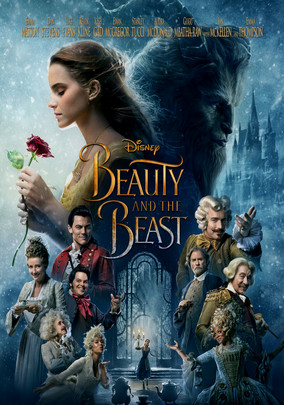
When I went to see the live-action version of the Disney animated classic Beauty and the Beast, which was released in the spring of 2017, I was unsure what to expect.

Would it be a cheesy or amateurish retread of the 1991 animated smash only with human beings? Why the lackluster March release date? Indeed, this is telling; otherwise, why not release the film in the coveted fourth quarter with potential Oscar buzz?

I do not have the answers to all these questions, but this version of Beauty and the Beast is enchanting, romantic, and lovely- a spring treat for the entire family to enjoy.

Our protagonist, Belle (producers wisely casting Harry Potter legend Emma Watson), is a kindly farm girl living with her father, Maurice (Kevin Kline),  in a quaint village outside of Paris.

Considered a bit odd by her village mates because she loves to read, she rebuffs the advances of the dashing soldier, Gaston (Luke Evans), because he is arrogant- the other village ladies (as well as Gaston’s gay companion, LeFou) flaunt over Gaston’s good looks.

When Maurice ventures into unknown parts and stumbles upon a dilapidated castle, he is locked up by a vicious beast. Having once been a handsome prince, he has since been cursed by a beggar woman.

The only way the beast can return to his former self is to find true love before a wilted rose loses all of its petals—enter Belle to the rescue. Belle convinces the Beast to let her stay in prison and release her father.

Will Beast and Belle fall madly in love?

Of course they will. The fated romance is part of what makes the film heartwarming and lovely.

The now-legendary classic fairy tale feels fresh and energized with the Disney-produced project. Director Bill Condon carefully and successfully crafts an honest effort, making sure that while providing a fairy tale happy ending, not to make the film seem contrived, overblown, or overdramatized.

I fell for the film hook, line, and sinker. It is an uplifting experience. The song and dance numbers abound with gusto and good costumes—my personal favorites are the rousing “Be Our Guest” and the sentimental “Beauty and the Beast.”

The crucial romance between Watson’s Belle and the Beast, earnestly played by Dan Stevens (of Downton Abbey fame), works in spades. Their chemistry feels authentic and passionate. As Belle is at first held captive by the misunderstood bad boy instead of Maurice, the pair at first loathe each other, but this is done with innocence and no malice.

Condon wonderfully exudes the right amount of slow build to make the pair beloved by audiences with the correct pacing.

The CGI in Beauty and the Beast is heavy, as expected. However, the Beast’s distraction is a bit confusing. Was the Beast a complete CGI creation save for the close-ups, or was Watson dancing with Stevens when filming commenced in certain scenes?

I am unsure.

The controversial “gay storyline”, which helped the film be banned in the southern United States and Russia, as well as other countries, is pure and utter rubbish.

The subject is explored extremely superficially and not worthy of all the fuss.

Worthier of mention is the tremendous diversity that is featured in the film, most notably in the opening sequence. Interracial couples appear in the form of Madame de Garderobe (Audra McDonald), the opera singer turned wardrobe, and Maestro Cadenza (Stanley Tucci), turned harpsichord.

On the gay issue, it is sweet that the implied gay character of LeFlou finds love with another man at the end of the film.

A minor complaint is the scattered authentic French accents of many of the household staff and village people, but Belle and Maurice speak in the British tongue. Being a fairy tale, liberties must be taken, and suspending disbelief is necessary, but this was noticed.

Beauty and the Beast (2017) is a lovely experience that combines fantastic musical numbers with romance, with a side of diversity thrown in for good measure.

Since the film will undoubtedly be seen by many youngsters and teens, this is a wonderful aspect of the film and, hopefully, a shining, positive example in filmmaking.

Oscar Nominations: Best Production Design, Best Costume Design

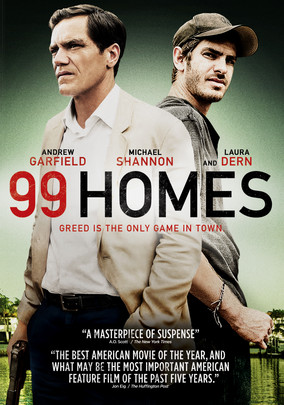
99 Homes-2015

99 Homes-2015

Director Ramin Bahrani

Starring Andrew Garfield, Michael Shannon

Scott’s Review #633

Reviewed April 13, 2017

Grade: B+

99 Homes is a 2015 independent film containing an underlying theme of morality as its central message, bubbling to the surface throughout the run.

Our main hero is faced with a major dilemma.

Set in 2010 amid the dark economic housing crisis where thousands of families lost their homes to foreclosure, the film is depressing but turns uplifting towards the end.

Reminiscent of The Big Short (2015) and Inside Job (2010) in subject matter, we witness a wonderful performance by Andrew Garfield in the lead role, with a worthy supporting turn by Michael Shannon as an opportunist.

Director Ramin Bahrani immediately creates tension with a taut musical score that bombards the screen. We see a poor victim of foreclosure, having shot himself to avoid the humiliation of being evicted from his home, followed by the introduction of a powerful real-estate mogul, Rick Carver.

Carver has wisely capitalized on the slew of Florida working-class families, living well beyond their means and novice homeowners, booted from their homes thanks to adjustable mortgages that they cannot afford to pay.

Andrew Garfield plays Dennis Nash, a struggling construction worker, raising his young son and presumably supporting his mother (Laura Dern).

They are fated to be evicted even though they have tried to win an extension with the court- months behind in their mortgage payments. They feel victimized and are forced to move to a seedy motel that houses many others in the same circumstances.

Desperate for work, Dennis ironically ends up working for Rick and becomes encased in the dishonest world of real estate scheming- manipulating banking and government rules at the expense of homeowners down on their luck.

The main point is the exploitation of the “working man” at the expense of “the man” and Rick is an example of this beast. Dennis represents the goodness of humanity as he wrestles with the moral repercussions of evicting families since he has met with similar circumstances.

Is the money worth the pain and the hardship he causes people? How is it Rick has no morals, but Dennis does? Will Dennis choose money and lose himself in the process? What would the viewer do?

Despite the morality questions, the film does play like a slick thriller, with a few slight contrivances and the “wrapped up in a neat bow” style ending.

This slightly makes the film lose its luster at times. It is implied that it ends happily for Dennis and that Rick gets his “just desserts”, but what about the characters kicked out of their homes?

Sadly, as in real life, they are largely forgotten by the end and play as footnotes in a larger story. Some follow-up as to what happens to them might have been nice.

99 Homes is a thinking man’s film and will undoubtedly leave the viewer asking what he or she would do in many situations that Dennis faces.

The emotions ooze from the face of Andrew Garfield as Bahrani uses many close-ups and enough cannot be said for Garfield’s bravura performance.

In one heart-wrenching scene, he is forced to evict a man and his wife and children from their home, the man is reduced to tears, comforted by his wife-Dennis is pained.

In another, an elderly man with nowhere to go is evicted, and defeated by the side of the road.

These scenes may have played as overwrought, but Garfield convincingly brings honesty and raw emotion to the work.

Laura Dern is good in her role as a young mother, Lynn,  to Garfield’s Dennis and I am perplexed why she was cast- she barely seems old enough to play convincingly as his Mom, but she does pull it off.

However, I could not help but desire more meat from this Oscar-nominated Actress- sure there is one great scene when Lynn realizes the extent of Dennis’s involvement with Rick, but I wanted more.

Still, the acting all around in this film is superb.

What left me so bothered by 99 Homes (2015) is that situations just like the ones that played out in the film are examples of countless real-life occurrences people experienced due to greed, dishonesty, and uncaring fellow human beings and that is a sad realization.

Director, Bharani, surrounded by a stellar cast, brings this realism to the big screen in raw, honest, storytelling.

Independent Spirit Award Nominations: Best Supporting Male-Michael Shannon

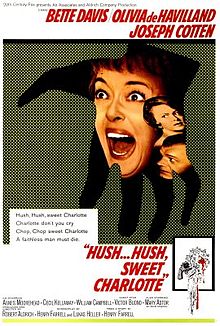
Hush…Hush, Sweet Charlotte-1964

Hush…Hush, Sweet Charlotte-1964

Director Robert Aldrich

Starring Bette Davis, Olivia de Havilland

Scott’s Review #632

Reviewed April 8, 2017

Grade: B+

The follow-up film, but not a direct sequel, to the surprise 1962 hit, What Ever Happened to Baby Jane? Hush…Hush, Sweet Charlotte (1964) is a psychological thriller directed by Robert Aldrich.

The film was intended to reunite Aldrich with stars Bette Davis and Joan Crawford. Crawford filmed several scenes, but the tension between the stars proved too much, and Crawford dropped out.

Olivia de Havilland took her place, and reportedly, the filmmakers scrambled to re-shoot the film nearly from scratch.

Shot in black and white, just like What Ever Happened to Baby Jane?, the film is very similar in style and tone, and, rather than Los Angeles as the setting, the setting is now the sprawling southern landscape of the Deep South- Louisiana, to be exact; a vast estate with a lavish mansion is the featured ominous setting.

The action begins in 1927 at a grand party at the well-to-do Hollis family mansion.

The night is fraught with tension, and secrets are harbored- most notably, southern belle Charlotte (Davis) and her married beau, John (Bruce Dern), plan to elope and steal away into the night together.

When John is threatened by Charlotte’s father, Sam (Victor Buono), he regrettably breaks up with Charlotte, destroying her.

Later, John is decapitated and his hand severed, leaving all of the guests to assume that Charlotte was murdered after she appears wearing a blood-soaked dress.

Due to a lack of evidence, Charlotte is set free.

The remainder of the film takes place in the present day (1964) and in the same mansion, now slated to be demolished by the town in favor of a highway.

Charlotte is old and haggard, having lived a life of seclusion. Her father is long dead, and her only company is her dedicated and faithful housekeeper, Velma (Agnes Moorehead).

Frantic at the thought of leaving the safety of her estate, Charlotte asks her cousin Miriam (de Havilland) to visit. Events then become stranger and stranger as past secrets and jealousies are revealed.

Taking nothing away from the talents of Olivia de Havilland, I cannot help but imagine how much better Hush…Hush, Sweet Charlotte would have been if Joan Crawford had settled into the role of cousin Miriam.

The real-life rivalry between Crawford and Davis made What Ever Happened to Baby Jane? It is a compelling work, and the angry emotions are fresh and authentic.

Interestingly, the characters are reversed in this film—Davis plays the victimized Charlotte, while Crawford would have played the villainous Miriam, and the results would have been delicious.

The plot is decent, but nothing spectacular, and not nearly as splendid as What Ever Happened to Baby Jane?

Although certain similarities abound between the two films: a giant mansion, black-and-white cinematography, a mentally unstable (or assumed to be) character, a character being either drugged or victimized, and two female characters who are related.

To compare the two films, which is impossible not to, What Ever Happened to Baby Jane? Wins in spades. It is the more compelling of the two films.

What sets Hush…Hush, Sweet Charlotte, well above mediocrity (with fewer actors, it may have been), is the casting of one of the greatest actresses to grace the big screen.

Bette Davis’s portrayal of the victimized Charlotte is fantastic. She encompasses vulnerability, anger, fear, and energy. Her facial expressions and those passionate eyes give so much to Charlotte.

The clever resolution to the film and the plot twist after the film are pretty well-written and surprising, given that the characters assumed to be involved in the murder are not as guilty as one might think, or at least not in the way one might think, and by the time the credits roll, the story has a satisfying, hopeful ending.

Another success of the film is its use of two gruesome scenes, which is surprising since the film predates the lifting of the film censorship rules.

When a severed head comes tumbling down the grand staircase of the mansion, it frightens and is not in the least campy or over-the-top. As John is hacked to death in the opening sequence, his hand is severed from his arm, and it dramatically tumbles to the floor.

The scenes resonate because they were rarely done in mainstream film as early as 1964.

Hush…Hush, Sweet Charlotte is a fantastic companion piece to the superior What Ever Happened to Baby Jane?

Watching back-to-back is a fantastic late-night viewing.

The film is top-notch, with talents such as de Havilland, Victor Buono, Bruce Dern, Agnes Moorehead, and the superior film queen, Bette Davis, which makes it worth watching.

Oscar Nominations: Best Supporting Actress-Agnes Moorehead, Best Song-“Hush, Hush, Sweet Charlotte,” Best Music Score-Substantially Original Score, Best Art Direction, Black-and-White, Best Cinematography, Black-and-White, Best Costume Design, Black-and-White, Best Film Editing

Golden Globe Nominations: 1 win-Best Performance by an Actress in a Supporting Role in any Motion Picture-Agnes Moorehead (won)

Sleeper-1973

Sleeper-1973

Director Woody Allen

Starring Woody Allen, Diane Keaton

Scott’s Review #631

Reviewed April 5, 2017

Grade: B

One of the earliest of Woody Allen’s enormous list of films that he both directed and starred in, 1973’s Sleeper is a comedic, science-fiction film, and a blueprint for future Allen masterpieces, such as Manhattan (1979) and Annie Hall (1977).

While this film has moments of intelligence and clever dialogue, it too often teeters into straight-up slapstick and silliness, making it hard to hold in the same esteem as the aforementioned richer films.

Rather, it is a juvenile effort compared to the masterpieces that follow, but admittedly, it has some laughs and creative moments. Sleeper is the first of several to pair Allen with longtime co-star Diane Keaton.

Allen portrays Miles Monroe, a nerdy jazz musician and owner of the “Happy Carrot” health-food store in Greenwich Village, New York City, sometime in the then-present 1970s.

In the hospital for routine surgery, he is cryogenically frozen for two hundred years, waking up in an otherworldly police state and frazzled beyond belief.

The scientists who revive him are part of a rebellion and beg Miles to assist them as they are taken into police custody, pleading with him to search for a secret plan known only as the “Aries Project”.

Miles then poses as a robotic butler and goes to work for Luna (Keaton), a spoiled, bitchy, socialite. The duo ultimately bonded together and spent the rest of the film outrunning and outsmarting their pursuers.

Sleeper succeeds as a novel story, one filled with unique and interesting gadgets from a futuristic world, with clever, witty, crisp dialogue and odes to the past world, now deemed irrelevant.

Amusing are the scenes when scientists explain that natural foods and products, once thought to be healthy and natural, are not so much.

This makes the world Miles is used to seem silly and superfluous to them.

I also enjoyed the physical humor in the film, such as when Miles (as his robotic persona) serves dinner to a sophisticated group of Luna’s friends, accidentally destroying their expensive outerwear in a garbage incinerator and botching dinner.

As all of the attendees are high on hallucinogenic drugs (including Miles), they fail to realize that he is a human being- they dance with glee and stumble around in a haze, largely unaware of their surroundings.

This is one of the best scenes in the film.

The plot itself is fairly predictable, though, and almost forced. Miles and Luna are the couples we root for in the film, the introduction of a handsome rebel leader, Erno Windt (John Beck) doesn’t stand a chance and is somewhat of a foil for them.

Much of the time, the pair is on the run and sparring. The actors involved have wonderful chemistry with each other, but the central story is not the film’s strongest suit; rather, the weird and unique gadgets and intricacies are.

Albeit an introduction for anyone intrigued by the comic genius that is Woody Allen, other polished Allen gems are a better start than this early offering, but that is not to say Sleeper (1973) is not a good, entertaining film, with imagination, merely that it lacks all of the elements to rank it among other Woody Allen greats.

The Visitor-2011

The Visitor-2011

Director Tor Iben

Starring Sinan Hancili, Engin Cert

Scott’s Review #630

Reviewed April 4, 2017

Grade: B-

The Visitor is a 2011 LGBT-centered film set in Berlin, Germany, but featuring mainly Turkish characters.

While the film tells a nice story and features some cool shots of the metropolitan city, it is rather amateurish in style.

The pieces of the film don’t always come together or fit well, and there is little character development, but the film still has good intentions, with a nice message and theme that deserves at least a few props.

The story involves a young male and female couple, Cibrial and Christine, who are dating. Cibrail works as a policeman, and the pair seem to be in a happy relationship, enjoying walks and dinners together.

One day, when Christine’s gay cousin, Stefan, comes to town, the relationship between Cibrail and Christine sours.

The cousin is openly gay and comfortable with his sexuality. At the same time, Cibrail secretly harbors feelings for the same sex, which he dares not tell Christine about, though she eventually catches on dramatically.

Stefan is looking for action, cruising the city and parks for sex and companionship, while Cibrail is both lustful and jealous of Stefan.

Many scenes involve Cibrail looking longingly at Stefan and fantasizing about him. In that regard, the film teeters on being quite steamy and features more than one nude shower scene.

This smoldering element helps the film avoid complete doldrums.

Specifically, Cibrail showers alone during one scene, washing and presumably daydreaming about Stefan. But too many other scenes show a character jogging or walking around the park- too much like filler material.

The climax of the film is highly predictable, as the two men find their way into each other’s arms, though the passion isn’t exactly evident to the audience.

The lack of buildup is a negative aspect of the film because there is very little rooting value and too many questions.

Is the film a love story? Is it supposed to be about Cibrail coming to terms with his sexuality? Why do we not see more of a blow-up scene between Cibrail and Christine?

He moves out once she catches him in bed with Stefan, and before we know it, Stefan and Cibrail passionately embrace, and the film closes in celebration.

A side story involving a dead body found in the park- a park known for gay shenanigans- is included as Cibrail investigates the crime with his police partner, but this seems to have nothing to do with the main plot unless we are to suspect one of the two men as the killer, but this is hardly focused on.

Another shot of a gay pride parade in Berlin is included, but is this to make it known that The Visitor is a gay film?

Additionally, a statue of two men is shown in several scenes for seemingly no other reason than to reinforce that the film is gay-themed.

The Visitor is a simple story of two men finding each other, which is a nice message, but the film’s run time is a brief seventy minutes, hardly enough time for character development.

A muted, videotaped look doesn’t help the film feel professional and comes across as downright amateurish, so much so that I wouldn’t be surprised if a film student made The Visitor (2011).

Chained-2012

Chained-2012

Director Jennifer Lynch

Starring Vincent D’Onofrio, Eamon Farren

Scott’s Review #627

Reviewed March 24, 2017

Grade: B-

Chained is a 2012 independent horror film directed by Jennifer Lynch, who is the daughter of the brilliant film and television director, David Lynch.

His influence is readily felt throughout.

The film is an exercise in cerebral, psychological horror, and is quite mesmerizing for most of the experience.

The ending, however, is the pits and, with its asinine, quickly wrapped-up conclusion, takes away from the enjoyment of the rest of the film.

The film is set in an unknown area- all the audience knows is a decrepit, isolated cabin in the middle of nowhere and that the shack exists in some proximity to a college town.

Since the film is shot in Canada, that is a good enough locale for me to accept.

One day a seemingly happy husband drops off his wife and nine-year-old son at the movies but implores them to take a taxi home as the bus is too dangerous.

When they heed his advice, they are accosted by a deranged serial killer, Bob (D’Onofrio), who drives a cab and whisks them away to his remote home.

After he kills the mother, he makes the son, whom he renames Rabbit, his slave, reducing him to household chores and a somewhat accomplice to the subsequent victims he brings home.

As the years pass and Bob continues to kill, he is determined to have a now mature Rabbit follow in his footsteps.

A large chunk of Chained (and the film is aptly named because Bob commonly keeps Rabbit chained) takes place in Bob’s lonely home, and Bob and Rabbit are all each other have for support.

Bob presumably earns a living by stealing the cash his victims carry.

Many scenes of a binding nature, albeit perverse, play out as the two kill time between Bob’s kills, almost like a father and son.

Jennifer Lynch wisely moves the film at a slow pace for appropriate build-up.

Bob’s psychologically troubled childhood is told through flashbacks as he is victimized by his abusive father and forced to have sex with his mother, who blames him rather than her husband.

As a result, Bob hates women and lures victim after victim into his cab and then slices and dices them back at his home.

Bob is sympathetic, like a wounded bird, and whether he rapes the victims before killing them is unclear, as much happens off-screen.

The cabin is deliberately suffocating, and when Bob teaches Rabbit facts and encourages him to read and study to become smart, it becomes a bonding experience.

Slowly, Bob trusts Rabbit more and more.

When Bob makes Rabbit pick out a young girl in a school yearbook to kill, the film kicks into high gear. Suddenly, it becomes vague whether Rabbit is loyal to Bob or still determined to escape. Will he help his intended victim instead of killing her?

David Lynch’s imprint is blatant in the film’s pacing and, more specifically, in the low-hum musical score common in his films.

Daughter Jennifer knows her father’s techniques as they continually come into play.

A nice homage to Mulholland Drive (1992) appears when a sweet older couple rides in the back of Bob’s cab, reminiscent of the older couple featured in Mulholland Drive.

The gloomy ambiance is highly effective in Chained, and the relationship between Bob and Rabbit, not sexual or overly violent, becomes rather sweet in some moments.

The rushed conclusion of the film is disastrous, and Lynch’s attempt at a twist goes haywire in the “makes sense” department.

After a compelling fight scene with Bob, Rabbit finally kills him, escapes his clutches, and returns to his father’s open arms (now newly re-married with another son) only to reveal to his father that he knows he orchestrated Rabbit and his mom’s abduction years ago and that Bob is Rabbit’s uncle!

To matters even more confusing, after a dramatic event, Rabbit is sent away yet again and returns to the cabin as his only safe place.

This final act is a real dog, makes little sense, and is tough to digest.

I will give some liberties to 2012’s Chained since the director is spawned from the great David Lynch and the mood and several characteristics mirror his work, but still with her unique vision an obvious characteristic.

Most of the film is a solid effort, but due to the ending of the film being such a letdown, the body of work seems incomplete.

BearCity-2010

BearCity-2010

Director Doug Langway

Starring Joe Conti

Scott’s Review #626

Reviewed March 19, 2017

Grade: B

BearCity is a small, independent, LGBT, coming-of-age film that tells of a young man living in New York City and his exploration of a sub-culture within the LGBT community and the subsequent romance that follows.

The film is a comedy and has a “Sex in the City” or “Queer as Folk” approach to its storytelling- a group of close-knit friends and raunchy and gratuitous, to be sure.

The budget is very small, and some aspects are rather amateurish, but the film is enjoyable, especially for those exposed to the LGBT lifestyle.

The film is not heavy nor are any of the characters dealing with “coming out” issues, but rather it is a fun sex comedy romp.

Our central character, Tyler (Joe Conti), is a young man in his twenties, an aspiring actor, who moves to New York City to pursue his career, with a mind for casual dating.

His roommates encourage him to date Abercrombie and Fitch types, but Tyler comes to realize he prefers “bear” types- mature, hairy men.

On the sly, he begins to pursue this subculture and makes many friends. The apple of his eye, handsome Roger (Gerald McCullough), is a popular mature man, distinguished in the bear circle, and risks his reputation with “the bears” by falling in love with Tyler.

The two men spend the greater part of the film conquering their respective fears and finding their way into each other’s arms in a predictable ending.

BearCity is a fun farce and nothing very heavy, and the feature of a strong circle of friends is a nice, positive portrayal. All of the friends connect well and stick by each other through thick and thin.

Comical sub-plots abound, such as one couple (Brent and Fred) awkwardly parlay into the world of threesomes with unsuccessful results.

Another bear who is unemployed and grossly obese decides to undergo weight loss surgery, much to the chagrin of his hunky boyfriend.

The main story, though, belongs to Tyler and Roger, and their inevitable reunion can be seen miles away.

The film throws various hurdles in their ways, such as a third-person briefly dating Roger, or Roger’s commitment issues, but the climax of the film will be no surprise to anyone.

Tyler and Roger make a nice couple as a whole, but perplexing is how the film makes Roger the undisputed leader of the bear group when he is a lean, muscular man- not a “bear” at all!

This is odd to me, but BearCity is so light-hearted that I suppose I can let this detail slide in favor of a good romance.

Critically, the film is nice but quite amateurish, and super low-budget. The acting, especially by some of the supporting characters (the pre-surgery guy’s boyfriend is the most glaring example), is not great.

I half-expected him to look at the camera accidentally.

Additionally, the film has a low-budget look and feel, which on one level is fine, but combined with the not-so-stellar acting, enhances the inexperience of the cast and crew.

The film is tough to take seriously, if that is even the filmmakers’ intention.

The film is a logistical treat for anyone privy to popular gay hangouts in New York City- specifically The Eagle and The Ramrod; both locales are featured prominently, and the use of many real-life people who hang out at those establishments is used throughout the production.

BearCity (2010) is not a bad experience, and a film that is light and comical within the LGBT community seems rather fresh compared to the myriad of dramatic and heavy films that exist.

At the same time, the film teeters too much towards goofy, with more than one silly, sex-crazed, stereotypical gay man, so it almost gives a bad impression, and the film has mixed results for me.

Sully-2016

Sully-2016

Director Clint Eastwood

Starring Tom Hanks, Aaron Eckhart

Scott’s Review #623

Reviewed March 10, 2017

Grade: B

I think most film critics would agree that each modern film directed by Clint Eastwood would accurately be described as a compelling film yet safe film, and the 2016 Eastwood offering, Sully, fits into both of these categories snugly- just as Sully feels like a snug film.

Everything seems to fit into a nice package when the credits roll.

While the film is sympathetic and has leanings of a character study, it is also shrouded in a wholesomeness that is incredibly safe and “Hollywood.”

This is not a knock or a detriment to the film, as it is very good, well-made, and has a high budget. However, edginess is not its forte, and it might have been better off with a bit more grit.

The actual film recounts the lively, perilous recent United Airways flight 1549, on which the now-famous Captain Sully successfully landed in New York’s frigid Hudson River one January morning.

Tom Hanks is the subdued and unassuming hero to perfection as his calm demeanor and grounded persona make him a likable chap, to say nothing of saving 155 lives aboard the would-be doomed flight that day.

Instead of going in a purely linear direction, building up the events (gravitating passengers, takeoff) in sequential order until the inevitable crash, Eastwood wisely decides to begin directly after the crash.

Captain Sully, clearly jarred by the events, is startled awake by nightmares. He dreams of crashing into midtown Manhattan instead of safely landing the jet.

The hero is beginning to suffer from symptoms of PTSD.

He is kept in New York City for days on both a press tour, interview after interview, as well as being questioned by The National Transportation Safety Board, who wonder why Captain Sully did not return to a nearby airport for an emergency landing as simulated computer recreations show that he could have.

This leads to both Sully and First Officer Jeff Skiles (Aaron Eckhart) being put under a microscope and questioned.

I was a bit caught off guard and got slightly bored, as the film takes about thirty minutes to focus on the actual crash or show an airplane scene rather than building up the events by concentrating on Sully and Skiles’s mental health. However, in retrospect, Eastwood made a wise decision.

The entire film is barely over ninety minutes total, so the action comes fast and furious mid-stream.

Still, the film is not quite all that it could have been. Despite the potentially horrific consequences faced by an airplane blowing both engines due to the flocks of birds, I never got many extremely perilous moments during the film.

While technically well done, the danger scenes as Sully navigates the plane into the river lack much in the way of the punch.

Sure, there are a few quick shots of passengers praying or appearing frightened, but we never get to know any of the passengers very well.

A “don’t blink or you might miss it” scene of an elderly mother and her daughter shopping for a snow globe at the airport or three men rushing to catch the plane to catch a golf game in Charlotte is not enough for the audience to become too enveloped in their characters.

They almost seem thrown at the last minute as a way of personalizing the passengers.

As I mentioned above, the film’s point surrounds Sully (and arguably it should; there is nothing wrong with that) and, to a lesser degree, Skiles. The supporting characters contain no character development, and even Skiles’s personal life is not explored well.

Scully’s wife is only seen through phone conversations (played by Laura Linney), and he is happily married with two daughters. There is a brief talk about money trouble, but the wife is underdeveloped.

Additionally, the NTSB agents are portrayed as quite antagonistic towards Sully and Skiles (rumors abound that this was embellished for movie making), which makes sense.

I enjoyed the ending of the film- in tandem with the credits rolling- of seeing not only the real-life Sully but his wife and the passengers and crew of the actual United Airlines Flight 1549 through interviews and photographs.

This offering in true-life biography films is now a standard feature to look forward to as it brings a humanistic conclusion to the story just watched.

The film’s focus centers on Captain Sully, which is fine by me- the man is a hero- but as a film, and more than a biography, it might have added depth to have richer supporting characters and a more substantial background of the man that is Sully.

A few rushed childhood aviator and battle plane scenes seemed somewhat out of place.

Still, the film is pleasant and immensely watchable. It will not set the world on fire or be remembered as much more than a decent film based on a true story.

Oscar Nominations: Best Sound Editing

American Honey-2016

American Honey-2016

Director Andrea Arnold

Starring Sasha Lane, Shia LaBeouf

Scott’s Review #622

Reviewed March 6, 2017

Grade: A-

American Honey (2016) is an unconventional coming-of-age drama that deserves kudos for being shot on a shoestring budget and having something of substance to tell.

The film is mainly shot outdoors in heat-drenched Oklahoma, Nebraska, and Kansas during the summer. It follows a group of rebellious, lonely teenagers who attempt to sell magazines as part of a shady con organization.

Their female leader uses cult-like rallying techniques to achieve loyalty.

The film is shot mainly with hand-held cameras and uses only natural light, which is an admirable feat in filmmaking.

The film’s central character is an eighteen-year-old girl named Star, played by novice actress Sasha Lane.

Saddled with a deadbeat boyfriend with two young kids that she is forced to care for, she takes food from dumpsters to survive.

One day, she is approached by a charismatic, handsome bad boy, Jake (Shia LaBeouf). Jake and a group of teenagers offer her a job in Kansas.

Hesitant but realizing her dead-end existence, she accepts the mysterious job and travels with other unsavory characters across the states, where they prey on wealthy, religious types willing to lend a hand under the guise of selling them magazines.

The central story envelopes Star, her romantic feelings for Jake, and the quandaries she faces on the road. She drinks, smokes, curses, and is sexually active, yet also savvy and wise beyond her years.

The audience wonders if she will continue this lifestyle and worries when she meets older men—all rather well-mannered and affluent.

Will they pay her for her magazines or some other form of entertainment? How will Star handle propositions and scrapes in and out of precarious situations? Throughout the film, Star grows up and becomes kind and confident.

American Honey is extremely lengthy at two hours and forty-three minutes long, especially given that the film is an independent feature and does not seem to contain many concrete plot points or much of a conclusion.

It seems to go on and on and on.

Despite this, the film never bored me. I was pretty enraptured by the antics of the story’s characters, and I found myself quite fond of the surprising love story shrouded in the hip-hop and rap soundtrack.

Star and Jake (thanks mainly to the talents of Lane and LaBeouf) have genuine chemistry and likability as a couple.

The mystery surrounding Star is we know nothing about her parents or family or how she came to this existence at such a young age. At one point, she does mention her mother dying of a meth overdose, but it is unclear whether she makes this story up for the benefit of a magazine sale or if it is the truth.

Star is rebellious but brilliant and capable, all the while exhibiting kindness to strange children and her “colleagues.”

Two key aspects of American Honey are interesting to note: the film uses almost all non-actors. Director Andrea Arnold scouted and offered roles to most of the kids at local malls or various hangouts, so the film has a powerful rawness and energy, given that it is largely improvised.

Also, the film is almost entirely shot using a hand-held camera or cellphone, which creates a shaky, documentary-style feel. However, these characteristics do not give American Honey an amateurish feel; instead, they give the film an authentic quality.

The left-of-the-center approach of featuring male frontal nudity and same-sex relations gives the film much credo as an alternative film- the teens also swear and use drugs quite a bit, which could turn some off.

Receiving a heap of 2016 Independent Film award nominations (but winning none), my reason for watching American Honey (2016) breathes some fresh air into the world of independent cinema, where sometimes too many big-name stars appear in the indies to garner some credibility.

Watching a film of novices or individuals with no acting aspirations creates a good story that is worth something. And kudos to Arnold for spinning such a fresh tale.

Independent Spirit Award Nominations: Best Feature, Best Director-Andrea Arnold, Best Female Lead-Sasha Lane, Best Supporting Male-Shia LaBeouf, Best Supporting Female-Riley Keough, Best Cinematography

The Children’s Hour-1961

The Children’s Hour-1961

Director William Wyler

Starring Audrey Hepburn, Shirley MacLaine

Scott’s Review #620

Reviewed March 3, 2017

Grade: B+

The Children’s Hour (1961) is one of the earliest films to center around an LGBTQ+ theme and the subsequent scandals the subject would provoke in the innocent year of 1961, pre-Civil Rights and pre-Sexual Revolution.

However, since the film was made in the year that it was, homosexuality was presented as something dark and evil rather than something to be accepted or even embraced.

Still, the film and its director, William Wyler, are brave enough to recognize the topic. They create a compelling film rich with well-written characters and some soap opera-style drama.

The Children’s Hour is based on a 1934 play by Lillian Hellman.

The setting appears to be New England, perhaps Connecticut or Massachusetts, though the film never identifies the exact area.

College friends Karen (Audrey Hepburn) and Martha (Shirley MacLaine) open a private all-girls boarding school catering to their affluent community. They run the school with Martha’s Aunt Lilly, a faded Broadway actress who often hen-pecks the women.

Karen has been dating handsome obstetrician Joe (James Garner) for two years. When he proposes marriage, she hesitantly accepts, which saddens Martha.

All the while, spoiled brat child Mary, furious over being punished by her teachers, plots revenge against Martha and Karen and embellishes a heated discussion between the ladies into a scandalous lie she whispers to her grandmother (Fay Bainter).

The grandmother promptly tells the parents of the other students, who remove their children from the school en masse. The lie is that Karen and Martha are lovers, and Mary witnessed the two women kissing.

Meanwhile, Mary is blackmailing a fellow student, Rosalie (Veronica Cartwright), over a stolen bracelet.

The town ostracizes Martha and Karen.

The Children’s Hour becomes even more compelling when one of the women begins to realize that she does indeed have homosexual feelings towards the other woman and has always harbored anger and resentment as well as feeling “different” from other women.

As well-written as the film is, the fact that the audience does not get to hear what Mary whispers to her grandmother is telling and prevents the film from being even more powerful than it is.

Also, the downbeat conclusion to the film sends a clear message that in 1961, audiences were not ready to accept lesbianism as anything to be normalized or to be proud of.

The decision was made to make it abundantly clear that one of the central characters is not a lesbian. Any uncertainty may have risked freaking out mainstream audiences at the time.

Since the traditional opposite-sex romance between Karen and Joe is at the forefront of the film, I did not witness much chemistry between actors Hepburn and Garner.

Still, I might have been at the point of achieving a subliminal sexual complexity.

The Children’s Hour and William Wyler deserve heaps of praise for going so far as to suggest that censorship in film in 1961 would allow them to offer nuggets of progressivism mixed into a brave film.

Incidentally, Wyler made another version of this film in 1936 named These Three. Because of the Hays Code, any hint of lesbianism was forbidden, causing Wyler to create a standard story of a love triangle between the three, with both Martha and Karen pining after Joe.

What a difference a couple of decades make!

MacLaine and Hepburn must be credited with carrying the film and eliciting nice chemistry between the women. However, it is too subtle to be realized if the chemistry is of a friendship level or a sexual nature.

And I adore how Wyler makes both characters rather glamorous and avoids stereotypical characteristics.

Oscar Nominations: Best Supporting Actress-Fay Bainter, Best Sound, Best Art Direction, Black-and-White, Best Cinematography, Black-and-White, Best Costume Design, Black-and-White

Golden Globe Nominations: Best Director-Motion Picture-William Wyler, Best Performance by an Actress in a Motion Picture-Drama-Shirley MacLaine, Best Performance by an Actress in a Supporting Role in any Motion Picture-Fay Bainter

Welcome to my blog!1,552 reviews posted so far! I'm Scott Segrell and I reside in Stamford, CT. My site features hundreds of film reviews I have written since I launched the site in 2014. I hope you enjoy reading my latest reviews or searching for your own favorites to see if we agree. Please see my Recent Posts section, and don't forget to utilize the tags and category links.