Tag Archives: Aaron Eckhart

Rabbit Hole-2010

Rabbit Hole-2010

Director John Cameron Mitchell

Starring Nicole Kidman, Aaron Eckhart

Scott’s Review #1,115

Reviewed February 23, 2021

Grade: A

Rabbit Hole (2010) is a raw and brutal film. I say that with major praise because it’s also a great film with much humanity and pathos. The dreariness of the film makes one relate to and empathize with the characters and perhaps recall a loved one who has died.

It’s truly brilliant if the viewer can withstand the sadness. I was able to tolerate the tone and immerse myself in it.

Thankfully, there are snippets of humor to offset the heavy drama.

Every film is not meant to be feel-good and enjoyable but they all should conjure emotions and Rabbit Hole succeeds in spades.

Yes, it’s a downer given the topic of the day is the loss of a four-year-old child but it’s a tragedy worth enduring to experience the powerful acting from its stars.

It’s a gem because it shows how people deal with and recover from loss if there is a way to cope with, live, and feel again without destroying oneself.

Eight months after the accidental death of their son, Howie (Aaron Eckhart) and Becca (Nicole Kidman) struggle to overcome their grief. He wants to hold on to everything that reminds him of Danny, while she would rather sell their home, relocate, and make a fresh start.

Trauma and conflict begin to appear in the relationship as Howie bonds with a member of his therapy group and Becca reaches out to a teenage boy with telling facial scars.

The drama is based on David Lindsay-Abaire’s Pulitzer Prize-winning play of the same name and the film version has the look and feel of a stage production.

Not much is shown before Danny’s death. I love this because it asks that I use imagination. The cleverness is that Danny was not killed by a drunk driver or a speeding car.

It was an accident and this point feels genuine.

The pain is watching a once-loving couple crumble from the weight of the devastation they have been dealt. Neither parent is to blame but do they blame each other? Do they resent each other because each reminds the other of Danny’s death?

A pivotal and necessary story point is watching Becca and Howie become drawn to other people, some of them surprising. Becca bonds with the teenage driver of the car that killed Danny. Howie nearly is drawn into a lurid affair with Gabby (Sandra Oh) whom he connects with at group therapy.

Is it healthier for Becca and Howie to go their separate ways? Do they stand a chance?

Most can ask themselves the same question as their partners if faced with devastating qualities. How does one pick up the pieces alone as part of a couple?

Kidman is breathtaking in her ability to generate the emotions she does. She was recognized with an Academy Award nomination. It’s terrific, but Aaron Eckhard, forever an underappreciated actor missed out on a nomination.

This is a shame because he is just as good as Kidman. Together, they are flawless, building and playing off the emotions and feelings of the other.

A film about grief, Rabbit Hole (2010) bravely tells the story of how an incident can ravage not only a relationship but our inner being turning us into someone we don’t know. This is a terrifying thought and the stellar acting and pacing only make us feel the pain others can suffer.

Oscar Nominations: Best Actress-Nicole Kidman
Sully-2016

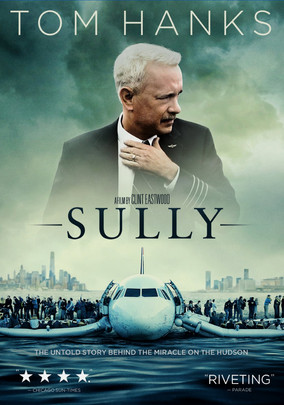
Sully-2016

Director Clint Eastwood

Starring Tom Hanks, Aaron Eckhart

Scott’s Review #623

Reviewed March 10, 2017

Grade: B

I think most film critics would agree that each modern film directed by Clint Eastwood would accurately be described as a compelling film yet safe film, and the 2016 Eastwood offering, Sully, fits into both of these categories snugly- just as Sully feels like a snug film.

Everything seems to fit into a nice package when the credits roll.

While the film is sympathetic and has leanings of a character study, it is also shrouded in a wholesomeness that is incredibly safe and “Hollywood.”

This is not a knock or a detriment to the film, as it is very good, well-made, and has a high budget. However, edginess is not its forte, and it might have been better off with a bit more grit.

The actual film recounts the lively, perilous recent United Airways flight 1549, on which the now-famous Captain Sully successfully landed in New York’s frigid Hudson River one January morning.

Tom Hanks is the subdued and unassuming hero to perfection as his calm demeanor and grounded persona make him a likable chap, to say nothing of saving 155 lives aboard the would-be doomed flight that day.

Instead of going in a purely linear direction, building up the events (gravitating passengers, takeoff) in sequential order until the inevitable crash, Eastwood wisely decides to begin directly after the crash.

Captain Sully, clearly jarred by the events, is startled awake by nightmares. He dreams of crashing into midtown Manhattan instead of safely landing the jet.

The hero is beginning to suffer from symptoms of PTSD.

He is kept in New York City for days on both a press tour, interview after interview, as well as being questioned by The National Transportation Safety Board, who wonder why Captain Sully did not return to a nearby airport for an emergency landing as simulated computer recreations show that he could have.

This leads to both Sully and First Officer Jeff Skiles (Aaron Eckhart) being put under a microscope and questioned.

I was a bit caught off guard and got slightly bored, as the film takes about thirty minutes to focus on the actual crash or show an airplane scene rather than building up the events by concentrating on Sully and Skiles’s mental health. However, in retrospect, Eastwood made a wise decision.

The entire film is barely over ninety minutes total, so the action comes fast and furious mid-stream.

Still, the film is not quite all that it could have been. Despite the potentially horrific consequences faced by an airplane blowing both engines due to the flocks of birds, I never got many extremely perilous moments during the film.

While technically well done, the danger scenes as Sully navigates the plane into the river lack much in the way of the punch.

Sure, there are a few quick shots of passengers praying or appearing frightened, but we never get to know any of the passengers very well.

A “don’t blink or you might miss it” scene of an elderly mother and her daughter shopping for a snow globe at the airport or three men rushing to catch the plane to catch a golf game in Charlotte is not enough for the audience to become too enveloped in their characters.

They almost seem thrown at the last minute as a way of personalizing the passengers.

As I mentioned above, the film’s point surrounds Sully (and arguably it should; there is nothing wrong with that) and, to a lesser degree, Skiles. The supporting characters contain no character development, and even Skiles’s personal life is not explored well.

Scully’s wife is only seen through phone conversations (played by Laura Linney), and he is happily married with two daughters. There is a brief talk about money trouble, but the wife is underdeveloped.

Additionally, the NTSB agents are portrayed as quite antagonistic towards Sully and Skiles (rumors abound that this was embellished for movie making), which makes sense.

I enjoyed the ending of the film- in tandem with the credits rolling- of seeing not only the real-life Sully but his wife and the passengers and crew of the actual United Airlines Flight 1549 through interviews and photographs.

This offering in true-life biography films is now a standard feature to look forward to as it brings a humanistic conclusion to the story just watched.

The film’s focus centers on Captain Sully, which is fine by me- the man is a hero- but as a film, and more than a biography, it might have added depth to have richer supporting characters and a more substantial background of the man that is Sully.

A few rushed childhood aviator and battle plane scenes seemed somewhat out of place.

Still, the film is pleasant and immensely watchable. It will not set the world on fire or be remembered as much more than a decent film based on a true story.

Oscar Nominations: Best Sound Editing

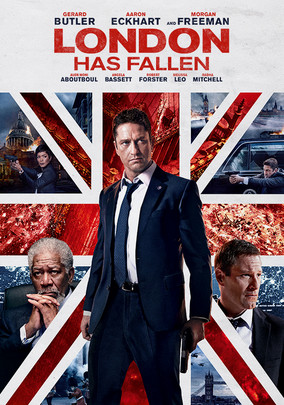
London Has Fallen-2016

London Has Fallen-2016

Director Babak Najafi

Starring Gerard Butler, Aaron Eckhart

Scott’s Review #608

Reviewed January 13, 2017

Grade: D

Save for many enjoyable, incredible London shots of mostly aerial views, London Has Fallen (2016) is a complete drivel of an experience.

The film’s attempt at being a red-blooded, patriotic film comes across as insulting and racist, with a machismo that is cringe-worthy.

The dialogue is terrible, and the “us against them” mantra has been done to death in film, mainly in the 1980s and 1990s. To quote one reviewer, “London Has Fallen is Donald Trump in film form.”

I don’t understand how the film convinced such a talented cast to appear (it must have been money), and several parts are so small (Robert Forster, Melissa Leo, Jackie Earle Haley) that they are nearly glorified extras.

The plot is painfully contrived, to say nothing of the ludicrous nature of the entire story.

To retaliate against a drone strike killing a Pakistani leader, terrorists take advantage of the death of the UK Prime Minister to assassinate several world leaders who have gravitated to London to attend funeral services.

The President of the United States (played by Aaron Eckhart) is naturally in attendance, and his murder is thwarted by top Secret Service official Mike Banning (Gerard Butler), our film’s hero.

The rest of the film involves the President and Mike running throughout London, attempting to catch the terrorists and bring them to justice while avoiding death.

The London locales are superb, but sadly, they mainly appear at the film’s beginning and end. The London Eye, the Thames River, the Underground, and various metro stations are featured.

The numerous London bridges also get some exposure.

The best part is how the film showcases London’s vastness, not just the up-close shots of historic places like Westminster Abbey or Buckingham Palace.

Undoubtedly, London is known for those gems, but the aerial views give the viewer an appreciation of all London offers.

I loved only this aspect of the film.

The supporting roles are abysmal, and given the more artistic parts they’ve received in the past; one imagines the actors cringing as they read the scripts for some of them.

I hesitate to think what possessed Leo, Forster, and Haley to accept meaningless roles save for a hefty paycheck. Each played a member of the President’s staff and was reduced mainly to reactionary shots.

As an ill-fated Secret Service Director, Angela Bassett and Radha Mitchell, as Banning’s weary-looking, pregnant wife, get more screen time but are treated to equally uninteresting roles.

Overall, the performances are forgettable. Respectable actors Butler and Eckhart merely phone in their vapid, dull lines, failing to make any of them believable.

The film never bothers with character development or anything beyond fundamental good and evil roles. Every character is either 100% good or 100% bad.

It is made crystal clear that the Americans are the good guys, and the foreigners (all Middle Eastern or Asian actors, of course) are simply the bad guys.

The motivations of the “bad guys” are never explained, and one cheesy line after another is written for the “good guys.”

During the finale, Banning professes that “we have been here for thousands of years and always will be” as he beats a lousy guy senselessly. Good grief. I’ve seen better dialogue on a network television drama.

And there is never any doubt about how the film will end. There is an American mole who has used his power to enable all of the assassinations, but when the mole is revealed, it is a character we have never seen before, so who cares?

Indeed, the film will soon be forgotten for its poor story, cliche-ridden script, and numerous stereotypes, but the fantastic London shots were inspiring and lovely.

I would have been happy with one hour and forty minutes of those.