Category Archives: Los Angeles

A Better Life-2011

A Better Life-2011

Director Chris Weitz

Starring Demian Bichir

Scott’s Review #1,004

Reviewed March 26, 2020

Grade: B+

A Better Life (2011) is a heartwarming and timely project that focuses on and showcases Hispanic culture, both positively and negatively.

The film explores illegal immigration amid a powerful family drama.

Lead actor Demian Bichir deservedly earned a Best Actor Oscar nomination for his sensitive portrayal of a man who wants only the best for his son, even as life stacks the odds against him.

The film is an atypical Hollywood production, told simply and with heart.

Carlos Galindo (Bichir) is a struggling Los Angeles gardener who manicures the lawns of the rich and famous in sunny California with his partner and close friend Blasco.

Carlos lives a content life but is always on guard because he is an illegal immigrant and worries about his son Luis (Jose Julian) falling in with the wrong crowd.

When one day Carlos’s sister loans him $12,000 to purchase a truck he needs for his job, he hits his stride, only to have the truck stolen.

Desperate, Carlos and Luis are determined to get back the truck while avoiding trouble with the law.

The film’s title, while basic and not sexy, is powerful in its simplicity. Bold and thought-provoking, this is merely what Carlos wants for Luis and what every father wants for his son.

His trials and tribulations are a constant; he strives to teach Luis to stay on a positive path and avoid the mistakes Carlos made.

Regardless of the political discussion the film could have, what lies beneath is a heartwarming story of cherished love between a man and his son.

Cleverly, the film provides a hopeful final message for both major characters.

I adore the rich Mexican culture the film represents. A battle of traditional appreciation of one’s roots versus immersing oneself in American culture is examined.

Nearly the entire cast is of Hispanic descent, and with numerous scenes of ethnic flavor, from restaurants and cafes to nightclubs and street life, the film is authentic and fresh.

Thankfully, the filmmakers do not try to pull off the insulting ploy of casting white actors clad in Mexican garb or a big-name actor in the role of Carlos.

Many of the characters even seem like non-actors.

The Los Angeles setting is highly successful, especially since the low-budget independent film uses tons of exterior shots.

The camerawork isn’t exceptional but feels fresh, letting the warm climate marinate with viewers so they feel immersed in the Southern California neighborhoods.

The contrast between the East Los Angeles area where Carlos lives versus where he works is a harsh reality for most landscapers.

Bichir more than deserves the accolades heaped upon him for this mesmerizing and intelligent role. He quietly portrays an empathetic man who is an unsung hero and a representative of many fathers who never get their due respect, especially if they are undocumented immigrants.

When Luis denounces Mexican music, Carlos’s pain is evident as he endures what surely breaks his heart.

Bichir’s realism and commitment to the characters’ truth drive the film.

A Better Life (2011) is a story rich with poignancy and relevance, showcasing the plight of a good man. Now, almost ten years later, the film is arguably more important than ever since immigration has become a hot-ticket item in the turbulent political climate.

Do hardworking, undocumented people deserve a break from being in the United States? The answer seems obvious, and the film skews steadily to the left, but is there any other strong viewpoint?

Oscar Nominations: Best Actor-Demian Bichir

Independent Spirit Award Nominations: Best Male Lead-Demian Bichir
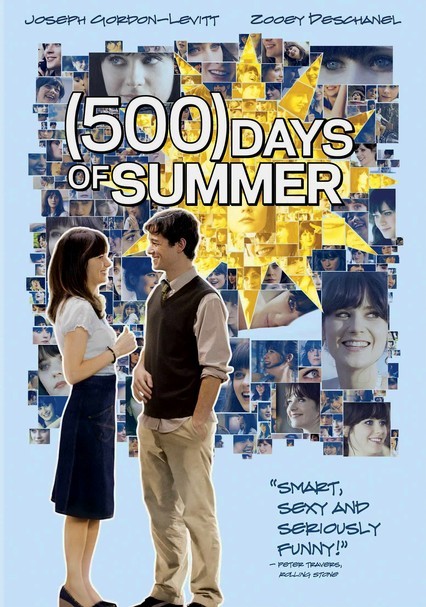
(500) Days of Summer-2009

(500) Days of Summer-2009

Director Marc Webb

Starring Joseph Gordon-Levitt, Zooey Deschanel 

Scott’s Review #1,002

Reviewed March 20, 2020

Grade: B

(500) Days of Summer (2009) is an unconventional love story that deserves props for being different, but never completely catches fire as a film effort.

What it tries to do left-of-center from most conventional romantic comedies is to be admired, but I did not feel much connection to the characters, and the result seemed pointless.

The independent film garnered some praise for being unique and clever. Still, it’s overshadowed by a gnawing, forced feeling, like the filmmakers are trying to be edgy for the sake of being edgy and adding contrived story elements.

The lead characters conveniently both like an obscure band and an obscure artist, throwing them immediately together.

The film is a modest effort but will only be remembered as an indie project with a bit of unfulfilled potential.

When his girlfriend, Summer (Zooey Deschanel), unceremoniously dumps him, greeting card copywriter and hopeless romantic Tom (Joseph Gordon-Levitt) spins into depression and begins reflecting on the year-long relationship the pair spent together, looking for clues as to what went wrong.

As he rummages through the good times and the bad times, his heart reawakens to find what is most important.

The Los Angeles backdrop sets the tone for the five hundred days of Tom and Summer.

Director Marc Webb, a first-time director at this point, now known more for The Amazing Spider-Man reboot franchise (2012-2014), steers in an experimental direction.

Shown somewhat like a “year in the life” of the young lovebirds’ blossoming relationship, the film is presented in a nonlinear narrative, jumping between various days within the five hundred days of Tom and Summer’s relationship.

There is an on-screen timer showing the day, which is a nice addition.

Props are given for the creativity Webb infuses. The romantic comedy genre, not my favorite, is constantly saturated with formulaic films, predictable from the start.

Frequently told from the female perspective, (500) Days of Summer tells the story from the male perspective, even reversing the traditional gender stereotypes. Tom is the lovesick romantic, and Summer is the rough-and-tumble, one-night-stand type.

This is nuanced and throws the entire genre upside down.

The characters are questionable, and the one easiest to relate to is Tom. There is some confusion and mystery with some motivations. The audience can understand how Tom falls head over heels for Summer, immediately smitten.

His depression is deep and to be taken seriously, but he is depressed because of Summer, and any history or previous causes of depression are not mentioned.

It feels like his depression is a convenient way of adding a story element.

Summer is even more perplexing and not deeply explored. Is she merely playing the field? After a song-and-dance scene where she explains she is not looking for anything serious and wants a casual romance, she suddenly marries another man.

She hurriedly tells Tom that she discovered her husband was her true love and that she now believes in love, whereas Tom doesn’t anymore.

Again, this feels more like storyline-dictated writing versus anything character-rich.

Despite receiving a Best Screenplay Independent Spirit Award nomination, two Golden Globe Award nominations, and oodles of praise, (500) Days of Summer (2009) is a non-conformist piece with some nice moments but feels irrelevant.

The lead actors are talented and do a decent job with the material given, but meander through the experience since it is more about the film than the acting.

The result is not a pure dud, but neither is it a pedigree winner.

Independent Spirit Award Nominations: 1 win-Best Feature, Best Male Lead-Joseph Gordon-Levitt, Best Screenplay (won)

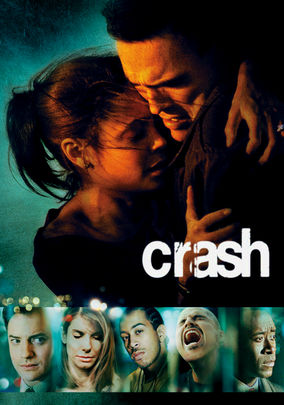
Crash-2005

Crash-2005

Director Paul Haggis

Starring Sandra Bullock, Matt Dillon, Thandie Newton

Scott’s Review #799

Reviewed August 3, 2018

Grade: A-

A superior film that has unfortunately suffered greatly after controversy, Crash (2005) is a story of intersecting vignettes, all interrelated.

The controversy stems from the film’s very surprising Oscar win over the heavily favored Brokeback Mountain. Many thought the latter was a shoo-in, poised to set the LGBT genre ahead of the game.

Sadly, now, when film lovers discuss Crash, it’s usually in tandem with Brokeback, and usually on the heels of its having stolen the Oscar crown.

On its own merits, the film excels as a social story exploring the many facets of race, racism, and bigotry.

The events in Crash take place within one thirty-six-hour day in metropolitan Los Angeles.

Featuring a slew of characters that would even impress Robert Altman, the audience witnesses situations involving many races and backgrounds.

We meet Rick and Jean Cabot (Brendan Fraser and Sandra Bullock), a white, affluent couple who are carjacked when driving home from dinner.

The black men who carjack the couple then strike a Korean man and bring him to the hospital.

A racist police officer, John Ryan (Matt Dillon), cares for his troubled father, who cannot afford insurance. A Persian father and daughter wish to buy a gun for protection, and a Hispanic father (Michael Pena) worries about a rash of drive-by shootings.

The stories go on and on as a myriad of characters come into situations involving other characters.

The interconnecting stories all cascade into overlapping situations of interest. The point of Haggis’s film is racism, but with a creative twist.

The director points out and shows that those who are racist have good qualities too, and those who are discriminated against in turn discriminate against others themselves.

The most interesting character is Dillon’s, John Ryan.

On the surface, a racist, wise-ass, who in one scene embarrasses an affluent light-skinned black woman (Thandie Newton), simply because he carries a gun, then ends up saving her life in a horrific car accident.

But is he redeemed? Does he see the world as black people getting ahead, and he is left behind?

What about the Persian man, discriminated against, but then vowing revenge on a Hispanic man after a misunderstanding?

The black men who carjack the white couple then release a group of immigrants who will surely be sold, perhaps even for sex trafficking. Does this act make the men good?

The point Haggis makes is that each character is neither all good nor all bad, but rather complicated and nuanced, with emotions shaped by past experiences and by discrimination itself.

Crash is highly similar to Traffic (2000) and Babel (2006) in terms of pace, style, and the way the stories align. The film is different, however, in that the location is strictly confined to Los Angeles, making the setting of monumental importance.

How would events be different in a setting like Middle America? Or in a different country? These possibilities are worth considering, given that Los Angeles is one of the most diverse cities in the United States.

If racism occurs there, it can occur anywhere.

Now, more about that pesky Oscar controversy! In later years, critics would largely agree that the inferior film had won that year, and Brokeback Mountain lost due to a level of homophobia on the part of the voting academy.

Since the academy is filled with Hollywood liberals, albeit of an older generation, an alternative way of thinking is that perhaps Crash won because it was the “safer” film.

Everyone seems to have forgotten the other three nominated films that year. Alas, Crash is permanently marred for winning Best Picture. It would undoubtedly have more supporters had it lost.

Ranked as one of the lowest-scoring Best Picture winners, I still believe Crash has some worth- though I agree that it should not have won over Brokeback Mountain.

Taken on its own merits, the film is quite good. A message film with great atmosphere, it succeeds in making the viewer think and ponder, perhaps their discrimination, whether conscious or subconscious.

The ensemble acting and character representations are all very good and worthy of a second watch.

Oscar Nominations: 3 wins-Best Picture (won), Best Director-Paul Haggis, Best Supporting Actor-Matt Dillon, Best Original Screenplay (won), Best Original Song-“In the Deep”, Best Film Editing (won)

Independent Spirit Award Nominations: 2 wins-Best Supporting Male-Matt Dillon (won), Best First Feature (won)

Spa Night-2016

Spa Night-2016

Director Andrew Ahn

Starring Joe Seo

Scott’s Review #645

Reviewed May 19, 2017

Grade: B+

On the surface, Spa Night (2016) may seem like a straight-ahead independent LGBTQ-themed film (of which, in recent years, there has been no shortage), but the film’s plot is twofold.

Sure, it tells the coming-of-age story of a young man’s sexuality.

Still, Spa Night is also a story about the boy’s Korean parents’ financial struggles and their desire to raise a successful son, even at the expense a their own happiness.

The film’s tone is very subtle, and the action moves slowly, but it is a sweet and relevant story.

David Cho is a shy Korean-American high school student on the cusp of going to college. His parents (who only speak Korean) have sadly recently lost their take-out restaurant in Los Angeles.

The parents struggle to make ends meet (she by waitressing, he by doing odd moving jobs), while David takes SAT classes to ensure he gets into a great college.

David is also struggling with his sexuality and one-night visits to a local male spa with drunken friends.

He gets a job there and begins to experience male-on-male shenanigans taking place on the sly in the spa, all the while developing his blossoming sexual feelings.

David’s development in the story is key- he is resistant to coming out as gay because his parents are traditionally Korean, constantly mentioning David finding a girlfriend and succeeding in school, becoming what they have failed to achieve.

When, at one point, he fools around with another male in the spa, David insists on a no-kissing policy.

This reveals to the audience that he has issues with intimacy with another male, and in one compelling scene, some self-loathing occurs.

When he stares too long at a buddy in the bathroom while both are inebriated, the friend notices and becomes distant toward David.

The film is enjoyable because it tells two stories rather than one, which helps it succeed. We also care greatly about David’s parents, who are compassionately portrayed rather than the stereotypical “tiger mom” and rigid father.

Wanting only the best for him and having no clue about his sexuality struggles, they trudge along with their issues. The father drinks too much, and the parents frequently squabble.

This is a clue to the film because it explains why David hesitates to mention anything to them, even though he is close to his parents.

I also enjoyed the slice-of-life and coming-of-age appeal that the film possesses.

Several shots of day-to-day life in Los Angeles are shown, mainly as characters go about their daily routines.

The budget allotted for Spa Night must have certainly been minimal. Still, the lesson learned is that some fantastic films are made for minuscule money, but as long as the characters are rich and the story humanistic, the film succeeds- this is the case in Spa Night.

Almost every character is of Asian descent- I am guessing all Korean actors. This is another positive I give to Spa Night.

In the cinematic world, where other cultures and races are woefully underutilized or still stereotypically portrayed, how refreshing is it that Spa Night breaks some new ground with an LGBTQ-centered film with Korean characters?

Spa Night has deservedly crowned the coveted John Cassavetes Award at the 2016 Independent Spirit Awards (for films made for under $500,000), and director Andrew Ahn is undoubtedly a talented novice director to be on the watch for.

He seems destined to tell good, interesting stories about people.

Independent Spirit Award Nominations: 1 win-John Cassavetes Award (won), Acura Someone to Watch Award

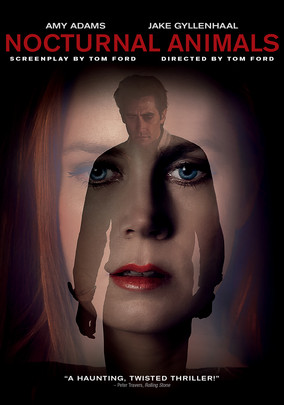
Nocturnal Animals-2016

Nocturnal Animals-2016

Director Tom Ford

Starring Amy Adams, Jake Gyllenhaal

Scott’s Review #640

Reviewed April 30, 2017

Grade: A-

Nocturnal Animals (2016) blurs the lines between fantasy and reality in a revenge-themed thriller directed by Tom Ford, in only his second directorial effort- 2009’s A Single Man was his first.

While not constantly hitting the mark and, at times, very difficult to follow, the film is unusual, mesmerizing, and lovely to look at from a visual perspective. Some scenes blur together splendidly, so they seem interposed—a brilliant touch.

David Lynch influences the film in tone and style.

Events are divided between “The Real World” and “The Novel”.

The film begins strangely as a bevy of nude, obese women prance and dance on video screens during an art exhibit opening.

Susan Morrow (Amy Adams) owns the gallery a lives a glossy life in Los Angeles. We quickly learn that Susan is involved in a loveless marriage with hunky Hutton (Armie Hammer), a businessperson who is inattentive towards Susan.

Before Hutton, Susan was briefly married to Edward (Jake Gyllenhaal), a novelist who dedicates his latest manuscript to Susan, received via mail.

As Susan reads the manuscript, she is transported down a dark path of memories and fantasies concerning Edward and their past.

The film’s locales are mainly between Los Angeles (the real world) and western Texas (where the novel occurs).

This compelling contrast separates the two worlds.

Los Angeles appears mainly at night, as Susan, presumed to be suffering from insomnia, is compelled by her reading. She also rubs shoulders with sophisticated artist types and colleagues at her studio.

Conversely, western Texas is worlds apart from the Los Angeles setting—like night and day. In Texas, we are introduced to the protagonist Susan reads.

Tony, traveling through Texas with his wife, Laura, and their daughter, India, is accosted and terrorized, bypassing local motorists.

Clearly from out of town, the family is stranded in the middle of nowhere and kept at bay by the rednecks- the story has a tragic ending. The stories intersect interestingly as we see the differing worlds.

The scenes in western Texas were frightening and tense—so much so that my heart beat quickly. I pictured myself as Tony in a situation of peril.

As the family attempts to reason with the thugs, they get deeper and deeper into trouble. The feeling of being vulnerable and unsafe with no help around is tremendous in the film.

The acting in Nocturnal Animals is excellent overall, which is no surprise given the tremendous cast. Adams and Gyllenhaal are especially worthy of mention.

Through flashbacks, we see their scenes and find them both sympathetic and vulnerable (at first—he is a sensitive writer, and she is a college girl with aspirations of love and family life).

As the plot thickens, both characters become more nuanced and complex- the subject of betrayal and revenge certainly comes into play, and both characters, now older and more pessimistic, intersect again as mature adults.

Michael Shannon, though believable as Detective Bobby Andes, assigned to Tony’s case and suffering from stage four lung cancer, is not the standout for me. I disagree with his Oscar nomination for Best Supporting Actor.

Indeed, it is an acceptable performance. I would much rather Gyllenhaal or Aaron Taylor-Johnson (as one of the rednecks) receive the nomination.

I was reminded of David Lynch’s masterpiece, Mulholland Drive (2001), mainly during the Los Angeles scenes. The slick night air and the trials and tribulations of the wealthy mirrored each other quite readily.

The sequences contain a gothic, haunting, moody vibe.

The central theme of revenge is present in both worlds. Tony and Bobby seek revenge on the criminals in western Texas, while revenge also focuses on Los Angeles, though much more subtly.

A hint appears several times in Susan’s art gallery, where a large “Revenge ” exhibit is a focal point. However, what the Los Angeles revenge is is not revealed until the very last scene.

One thing is sure about Nocturnal Animals- the film is dreamy, complex, and worthy of conversation.

Tom Ford is an up-and-coming director with visual sensibilities and a dream-like vision. I hope we see more from this fascinating director.

Oscar Nominations: Best Supporting Actor-Michael Shannon

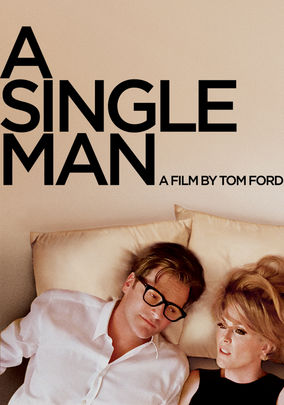
A Single Man-2009

A Single Man-2009

Director Tom Ford

Starring Colin Firth

Scott’s Review #577

Reviewed January 1, 2017

Grade: B+

A Single Man (2009) is a dark film fraught with meaning and honesty-it is a very good movie.

It is a melancholy film and a bit surreal, but worth seeing.

The acting, especially from star Colin Firth, is first-rate.

The subject matter involves being gay in the 1950s and 1960s and the ramifications of living a forbidden and secretive life.

The intelligent film is based on the novel of the same name, written by Christopher Isherwood.

The film is written as a sad tale of a day in the life of a gay man living in the 1960s.

Firth portrays George Falconer, a British college professor living in liberal-minded Los Angeles. When his much younger lover (presumably a student) dies, George plans to commit suicide.

Moore plays his best friend and confidante, Charley, who is dealing with her own demons.

Through flashbacks, we learn about George and his lover Jim’s secret life together and the challenges that ensued. George also had a strange relationship with a male prostitute.

We learn the path of life George leads following Jim’s tragic death; we also see them happy at one time.

A Single Man (2009) is a bit of a downer, containing a definite dream-like feel and is heavy on the flashbacks, but this is intriguing to the picture and not a complaint.

A very good, but not an uplifting film.

Oscar Nominations: Best Actor-Colin Firth

Independent Spirit Award Nominations: Best Male Lead-Colin Firth, Best First Screenplay, Best First Feature

End of Watch-2012

End of Watch-2012

Director David Ayer

Starring Jake Gyllenhaal

Scott’s Review #447

70235384

Reviewed July 8, 2016

Grade: B+

End of Watch (2012) impressed me much more than I was expecting. I expected a safe, by-the-numbers buddy/action movie, since the previews promoted it as such.

It was worlds better than that and threw me for a loop, in a good way.

The film stars Jake Gyllenhaal and Michael Peña as two detectives patrolling the streets of grizzled central Los Angeles, which are riddled with drug and gang violence.

The viewer is brought along for the ride as we see a day in the life, if you will, of their cop beat.

The one knock I’ll give the film is the implausibility factor of a cop videotaping everything. This seems silly and unrealistic.

Wouldn’t he be incredibly distracted? That said, some of the filmings were amazing, including the opening sequence.

The film has a realistic grittiness, and the Los Angeles locale is very effective.

End of Watch (2012) feels painstakingly real, isn’t always happy, and the dynamic between Jake Gyllenhaal and Michael Peña is evident; their friendship feels real.

The movie feels like a day in the life of an LA cop, sparing no edgy detail, and it doesn’t gloss over the lifestyle as many cop films do.

Independent Spirit Award Nominations: Best Supporting Male-Michael Peña, Best Cinematography

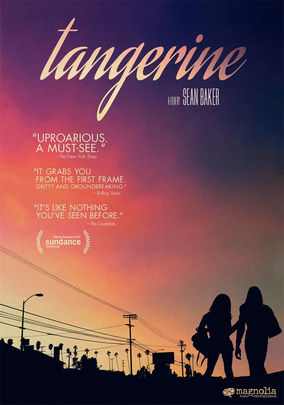
Tangerine-2015

Tangerine-2015

Director Sean Baker

Starring Kitana Kiki Rodriguez

Scott’s Review #301

80037676

Reviewed December 17, 2015

Grade: A

On the rare occasion that I am lucky and privileged enough to stumble upon a gem like Tangerine (2015), it reaffirms my faith in film and creative filmmakers in general.

Here is a universal lesson: it doesn’t take oodles of money to make a great film. This film was shot with three smartphones!!

It takes talent and creativity.

Tangerine is a groundbreaking film, the first (that I am aware of, anyway) to feature transgender actresses at the forefront of a feature.

The film has earned multiple Independent Spirit Award nominations.

Shot in a documentary style with grittiness and a frenetic pace, and mixing unique styles of music (hip hop to classic) as the score (a childlike tune begins the film), Tangerine stands out in both story and visual style.

The film’s first scene begins with two transgender sex workers- Sin-Dee Rella and Alexandra- having a conversation in a coffee shop.

Sin-Dee has just been released from jail and learns that her boyfriend and pimp, Chester (James Ransone), has been cheating on her.

It is Christmas Eve.

The film explores Sin-Dee’s rage and her subsequent search across Los Angeles for Chester and the girl he’s been with. She vows revenge on them both.

However, beyond this plot point, the heart of the film is the loneliness and isolation that most of the characters (trans and otherwise) share, in one form or another.

Interspersed with the Sin-Dee story are stories about Alexandra’s feud with a “john” and her pursuit of a singing career.

Another interesting story is that of a straight male, Razmik, an Armenian cab driver who is enamored with transgender sex workers.

This may sound bizarre or too out there for some, but Razmik’s story is quite tender and compelling.

He has a wife, child, and other relatives and is the breadwinner. He is also very conflicted. He does not “use” the sex workers, but rather cares for them and admires them.

I found all three principal characters interesting in different ways- Sin-Dee and Alex are over-the-top, yet sensitive. While Sin-Dee is aggressive and vengeful, Alex is the kinder of the two and the more sensible and rational.

She is a sex worker but aspires to more out of life. Razmik is even more interesting- does he have a fetish? Is he shameful for spending money on prostitutes while supporting a wife and child?

All the characters are victimized in one form or another, and all are dysfunctional, yet weirdly likable.

I saw moments of Quentin Tarantino’s film style on screen, most notably in the coffee-shop scenes (the beginning and final scenes), as all hell breaks loose and the characters delve into all sorts of crazy behavior.

Tangerine is a sweet tale about friendship too.

It is a memorable and powerful film experience.

In the end, all the characters are hurting and living sad lives, especially since it’s set on Christmas Eve, which might make the film sound depressing, but it isn’t.

I found it almost uplifting in a way.

Tangerine (2015) is a completely original, groundbreaking film that I hope people will remember and appreciate fifty years from now.

Independent Spirit Award Nominations: 1 win-Best Feature, Best Director-Sean Baker, Best Female Lead-Kitana Kiki Rodriguez, Best Supporting Female-Mya Taylor (won), Piaget Producers Award

Grandma-2015

Grandma-2015

Director Paul Weitz

Starring Lily Tomlin

Scott’s Review #275

Grandma_Movie_Poster

Reviewed September 21, 2015

Grade: B+

Grandma (2015) is clearly and deservedly a showcase for the talented, interesting, legendary Hollywood actress Lily Tomlin.

Years (twenty-seven, to be precise) since she has had a starring turn in a film, the role of Grandma is custom-made for Tomlin, with the character’s sarcasm, wit, and downright bluntness emerging to the forefront.

The film is labeled a comedy/drama, which it is. It’s themed around a heavy topic of abortion and runs the risk of offending pro-life individuals, as the film undoubtedly contains a pro-choice slant.

Ellie (Tomlin) is a poet and former college professor in her seventies living in California.

She is a lesbian and is mourning the recent death of her long-time partner.

She has recently been dating a lovely young woman named Olivia (played by Judy Greer), whom she unceremoniously and cruelly dumps, treating her as little more than a footnote in her life.

Afterward, Ellie breaks down in guilt-filled tears while showering.

One day her granddaughter, Sage (her daughter Judy being the product of a one-night stand), appears on her doorstep asking for money for an abortion.

Having just paid off her debts and destroyed her credit cards, Ellie is therefore broke.

The duo embarks on a quest for cash and a race against time to make the appointment in time for the scheduled procedure.

The film belongs to Tomlin but is enhanced by excellent supporting turns, particularly Marcia Gay Harden as daughter Judy and veteran actor Sam Elliott as Ellie’s former flame, Karl.

Judy and Ellie have experienced a tumultuous relationship their entire lives, while Karl harbors resentment toward Ellie for long-ago aborting their child.

Harden is thrilling as a borderline one-dimensional bitch.

She is driven, angry, and self-centered, and the story mentions that she has gone through numerous administrative assistants in her high-level corporate role.

I have not seen Harden in a role quite like this before. As unsympathetic as the character is, one cannot help but wonder whether Ellie’s mothering skills may have shaped Judy this way.

Karl, on the other hand, is sympathetic.

He is still wounded from his ages-ago relationship with Ellie and may still hold a flame for her, though a romance between them would be unlikely.

The film is darker than expected and is not the syrupy, mainstream, family story one might expect from the fuzzy one-word title.

Still, Tomlin’s cantankerous sarcasm kept me in stitches and perfectly balanced the tough subject matter displayed in Grandma.

The relationships between the main characters are complex and tough to watch as they argue, swear, and insult each other.

Love is mixed in, but the controversial subject matter adds complexity. The characters dredge up history and, in many cases, painful memories.

Impressively, Grandma is not a film that debates the hot-button issue of abortion as one might assume. Sage never really considers keeping her baby and will have the procedure done as quickly as possible.

Ellie and Judy never try to persuade Sage to keep the child, and Sage never seriously considers keeping the baby.

The only instance of a pro-life perspective is when two ridiculous characters- a young mother and her ten-year-old daughter- suggest Sage not kill her baby.

When Ellie steps in, the young girl punches her in the face. Is this intended as comic relief or to make these characters appear as buffoons?

These characters are laughable.

Sage’s baby’s father is unsympathetic and a minor blip on the radar. My theory is that the film chooses to go this route intentionally to avoid a debate over the abortion issue.

A debate is not the point, but the relationships between the characters are.

The scenes where Ellie gets irritated and sarcastic are priceless, and Tomlin uses them well.

As she hilariously goes from situation to situation in an attempt to earn the $600 for Sage, she resorts to various means as diverse as selling books, giving a kiss, or collecting an old debt.

This is the main draw of the witty little film, Grandma (2015).

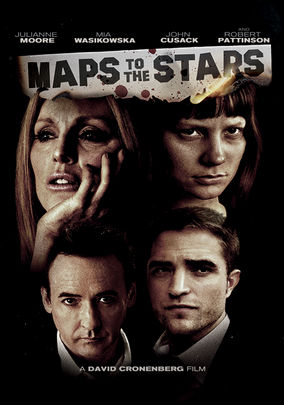
Maps to the Stars-2014

Maps to the Stars- 2014

Director David Cronenberg

Starring Julianne Moore, Mia Wasikowska

Scott’s Review #266

80013474

Reviewed August 14, 2015

Grade: A-

Maps to the Stars (2014) is a bizarre, unpleasant film that is as dark and perverse as it is provocative and fascinating to observe and ponder.

It feels more like an independent art film than a blockbuster Hollywood project, and it was made by an arguably mainstream director, David Cronenberg (Crash-1996, The Fly-1986).

I am surprised it could be made on a large-scale budget given its negative portrayal of actors and celebrity types, specifically troublesome starlets and child stars.

One must be wary of biting the hand that feeds.

Maps to the Stars is a film where almost all the central characters are unlikable- difficult, unstable, self-absorbed, or all of the above.

The subject matter is ugly but fascinating to me.

The wealthy and glamorous are interesting and, at times, the film is like a Greek tragedy containing Shakespearean elements- think Romeo and Juliet in an incestuous way times two.

You have to watch this film to see what I mean. Hint: it contains the ick factor.

The plot centers on a Hollywood family in which the son is a famous child star and the primary breadwinner. They are the Weiss family- all struggling to either find success or hang on to it, all the while each of them is neurotic.

The father, Dr. Samuel Weiss, played by John Cusack, is a TV psychologist, hired by Havannah Legrand (Julianne Moore), a highly self-centered, aging actress, struggling to land a coveted role-playing her mother.

Her mother was a young actress in her day, who tragically died in a fire. Havannah despises her due to claimed childhood abuse.

Cristina Weiss (Olivia Williams) is Samuel’s wife. This controlling, ambitious woman strives to get the most money out of her son Benjie, a Justin Bieber-type character with a troubled streak.

Rounding out the family is Agatha Weiss, a troubled teenager, sent away for years after giving her brother pills and setting her parents’ house on fire.

Though not directly related to the Weiss family, Havannah and the limo driver, Jerome Fontana (Robert Pattinson), become heavily involved as events unfold.

It reminded me of a myriad of other influential film directors in peculiar ways.

I noticed elements of David Lynch’s Mulholland Drive (1992), for instance, in a dark, clever mood and the obvious setting of Los Angeles- even the score is similar during parts of the film, as the moody, monotone sounds play in the background.

The Ice Storm (1997), American Beauty (1999), and Magnolia (1997) also sprang to mind for their dark, strange worlds (Magnolia) and their inclusion of the dysfunctional-family element (The Ice Storm and American Beauty).

Furthermore, to a lesser extent, I saw some Robert Altman ingrained in Maps to the Stars.

These aspects are a major reason I loved the film so much.

A prevalent theme throughout Maps to the Stars is one of burning- a victim of burning, a fire set, a character setting oneself on fire. Some characters see dead people. Havannah regularly sees her dead mother.

Benjie sees a young girl whom he visited in the hospital before she died; her last wish was to meet the big star.

She suffered from non-Hodgkin’s lymphoma, which he foolishly thought was AIDS. He sees her in visions and tries to strangle her, instead of strangling an innocent living person.

The film is a weird trip, and the viewer dreads an oncoming dark moment.

When Benjie carelessly plays with a gun that he assumes is unloaded, we know trouble will occur. He is showing off at an actor friend’s party along with equally obnoxious starlets while talking about poop, all selfish and wanting to party.

When Havannah belittles Agatha, her assistant, we see Agatha’s past anger come back into play as she slowly unravels with rage- Havannah is unaware of Agatha’s knowledge of her betrayal.

One small gripe is the continued use of gross toilet talk in multiple scenes, including a raunchy discussion of a fan buying a well-known actor’s waste for thousands of dollars.

What was Cronenberg’s motivation for this? This was a silly, tasteless, unnecessary element of an otherwise great film.

Maps of the Stars (2014) is dirty and ugly but is also a quirky treasure about bad people in Hollywood. Unpleasant characters whom I could not take my eyes off of.

A brilliant film that delves into Hollywood shallowness and madness and does it in a daring, twisted, wonderful sort of way.

Cake-2014

Cake-2014

Director Daniel Barnz

Starring Jennifer Aniston

Scott’s Review #257

80017263

Reviewed July 14, 2015

Grade: B+

Cake (2014) is a film about a woman suffering from chronic physical pain and depression that she constantly battles after a terrible accident that she was involved in.

Jennifer Aniston gives a wonderful performance as Claire Simmons, a grumpy, sarcastic, bitter victim of unimaginable loss. Aniston’s performance is the best part by far.

It is interesting to note that Aniston Executive produced this film.

Similarly, and somewhat sadly, Reese Witherspoon had to produce her own 2014 film (Wild) centered on a female role for both women to showcase their powerful acting chops.

Too few films about women are made these days unless they use female star power, which is too bad.

Claire has been through hell and back.

As the story opens, Claire sits angrily in a support group filled with other women with problems. One of the women, Nina, (played by Anna Kendrick) has just jumped off of a freeway overpass to her death—a giant photo of her glares jarringly at the other women.

When Claire probes the details of the death and uses a sarcastic tone, the lead counselor, Annette (played by Felicity Huffman), politely asks her not to return to the group.

Claire returns to her well-maintained Los Angeles home, where the audience meets her well-meaning housekeeper and confidant, Silvana, played by Adriana Barraza. Barraza herself gives a powerful performance.

Nina appears throughout the remainder of the film in visions as Claire debates suicide.

Let me discuss Jennifer Aniston’s performance in particular. I thought it was amazing and she was shamefully overlooked for an Oscar nomination.

She was superior to at least a couple of the other Best Actress nominees from 2014 (Felicity Jones immediately comes to mind).

Her character, Claire, starts as a bit of a shrew but gradually becomes sympathetic as the story layers out and the audience learns what makes her tick.

We don’t know how she ended up in her predicament at first. We know she was in a terrible accident, but it slowly takes time for all of the details to emerge. We only know she is in pain and angry.

Claire’s relationship with Silvana is interesting.

They spar; Claire takes Silvana for granted at times, but throughout the film, a close friendship emerges between the women. In a touching scene, they hold hands as they sleep.

Two scenes in particular are heartbreaking and honest. A man played by William H. Macy emerges on the doorstep of Claire’s house, and she is engulfed in rage at his appearance.

The power that Aniston emits in this scene is unrivaled. In another scene, she sees a portrait hanging on her living room fireplace mantel, given to her by a friend; she bursts into tears and sobs.

At this point, the plot makes more sense, and we feel Claire’s raw pain.

The subject matter of depression and suicide is not a cheery one, and Cake delves deeply into this territory.

The film is a bit of a downer, slow, and, at moments, drags a bit, and teeters on the verge of a lifetime television movie (yikes!), but MUCH better than that thanks to Aniston’s compelling portrayal.

With a lesser actress, the film might have felt watered down and safe.

Some light moments fail. For instance, when Claire “blackmails” Annette and bribes her with vodka for Nina’s address, it feels trivial and silly.

Thanks in large part to a gripping performance by one of Hollywood’s underrated talents, Cake (2014) takes a film on the border of being one-dimensional to a more dynamic level through its leading lady.

A supporting cast of similar talents helps the film rise above the mediocrity it might have been with lesser casting choices.

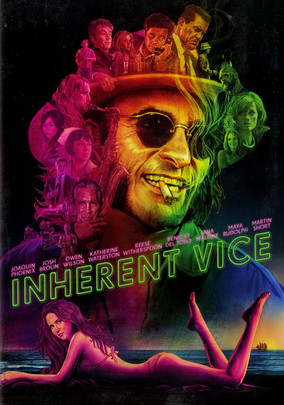
Inherent Vice-2014

Inherent Vice-2014

Director Paul Thomas Anderson

Starring Joaquin Phoenix

Scott’s Review #255

80013545

Reviewed July 7, 2015

Grade: A-

Inherent Vice (2014) is a bizarre, detective-film-noir-type experience set in Los Angeles in 1970.

Directed by the superb Paul Thomas Anderson (Boogie Nights, 1997; Magnolia, 1999), the film is a marvel of weirdness and incoherence.

Fans of a straightforward plot will not be thrilled, but Anderson fans won’t be disappointed. It has a complex plot, but the payoff is grand, and it’s a thinking-man’s film.

The protagonist is Larry “Doc” Sportello (Joaquin Phoenix), a stoner private detective whom his mysterious ex-girlfriend, Shasta, contacts. She is worried about attempts by her boyfriend’s ex-wife and new lover to kidnap him and have him committed.

Mickey, Shasta’s boyfriend, is a wealthy real-estate developer.

Doc is also hired by two other people- one a former heroin addict looking for her missing husband, and the other a former convict looking for a prison mate who owes him money and is a former henchman of Mickey’s.

All of the stories intersect, and such oddities as a peculiar massage parlor and a ship named the Golden Fang come into play throughout.

The intersecting stories lead to the revelation of a drug ring. I had little idea what was happening, but I was still enthralled.

Inherent Vice has an unpredictability that is so pleasing and captivating. Joaquin Phoenix is compelling as Doc, a damaged character with an unclear past.

When Doc is, by all accounts, framed for the murder of a convict and interrogated by the police, we wonder what history he has with them and what led him to branch out on his own as a private investigator.

Detective “Bigfoot” Bjornsen, wonderfully played by Josh Brolin, is a rival of Doc’s, though it is unclear why. “Bigfoot” is frequently seen with chocolate-covered phallic objects in his mouth and is married to a severe, overbearing woman.

Most characters are peculiar and have strange nuances, yet are never fully fleshed out, instead remaining curious and thought-provoking.

Reese Witherspoon, Benicio Del Toro, and Owen Wilson appear in small yet pivotal roles.

Quite reminiscent of Roman Polanski’s Chinatown (1974) and Robert Altman’s The Long Goodbye (1973), in both the California setting and the plodding, slow-paced, magnificent storytelling, Inherent Vice is a confusing gem, but by all means a gem worth seeing and reveling in the intrigue.

Just don’t try to make too much sense of it all.

Oscar Nominations: Best Adapted Screenplay, Best Costume Design

Independent Spirit Award Nominations: 1 win-Robert Altman Award (won)

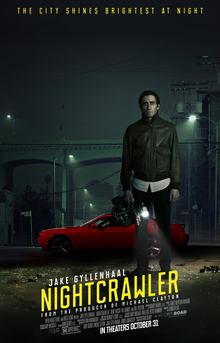
Nightcrawler-2014

Nightcrawler-2014

Director Dan Gilroy

Starring Jake Gyllenhaal

Scott’s Review #225

Reviewed March 1, 2015

Grade: B+

Nightcrawler (2014) is an intense crime thriller set in Los Angeles, featuring a wonderful performance by Jake Gyllenhaal as an unstable thief named Lou.

He cons and manipulates his way to success, videotaping accident scenes and selling them to news stations.

The film is the directorial debut of Dan Gilroy, who could become a household name.

Nightcrawler was deservedly awarded the Best Screenplay and the Best First Feature Independent Spirit awards.

The film is set mainly at night as Lou courses the city in search of accidents, crimes, and violence- the bloodier the better.

Later, Nina Romina, played by Rene Russo, tells him that violent crimes in affluent neighborhoods are best because they get the highest ratings.

Lou sells the footage to the highest bidder, and Nina becomes his main customer. Lou is eventually helped by Rick Carey, a desperate accomplice who needs money, played by Riz Ahmed.

Nightcrawler’s interesting elements are its moody setting and dim lighting. It reminds me of the 2004 film Collateral, starring Jamie Foxx and Tom Cruise, also set in Los Angeles.

Mostly set at night and heavily set on the streets of L.A., I found this mood excellent and a compelling aspect of the film.

It makes Nightcrawler look great.

Gyllenhaal deserves praise for his role as Lou and is largely responsible for the success. He was a co-producer.

As an actor, he is excellent and reminiscent of the frightening performance Robert De Niro gave in Taxi Driver (1976). With an angular face and eyes that never seem to blink, he is intense and driven on every level.

He is a sociopath.

When he quietly threatens Nina and Rick on separate occasions, one can tell he means business. Why Lou has become a thief desperate for money is never explained- does he have a family? Is he a convict?

He seems highly educated, but is he? How did he land in this predicament and resort to the life that he does?

As Lou becomes more manipulative and adjusts crime scenes to make them shocking, he seems to teeter over the edge of sanity.

In one scene, he sneaks into a victim’s home and videotapes photos of the victims from their refrigerator to promote an empathetic angle and therefore make more money from them.

This is a brilliant performance by Gyllenhaal.

Another fascinating performance I admired is Rene Russo’s, absent from films for what seems like years; Nightcrawler is a nice return for her.

Her character also has a little backstory.

We know she is a driven newswoman who struggles to maintain success at individual news stations and moves around a lot. Nina is a cutthroat news director who craves violent stories and is determined to keep her job.

She also becomes begrudgingly fascinated by Lou.

Does she like bad boys or does she admire his talent?

The third major character is Riz Ahmed’s Rick. Rick comes across as a sweet, yet gullible guy strapped for cash. Like Lou, we do not know why he is broke, but it is hinted that he may do or have done some male prostitution- he is desperate.

As the film goes along the character develops tough skin and realizes he is attracted to this new lifestyle and excitement, but will not be bullied by Lou.

On a social level, the film presents an interesting, albeit disturbing take on the relationship between the media and the viewers. What will news channels do for a good story? How bloodthirsty are news audiences? How often is a positive news story presented? It makes the audience reflect and ponder.

Nightcrawler is a dark thriller, which deservedly garnered an Oscar nomination for Best Screenplay and a slew of Independent Spirit Awards.

Intense, rich, and visually appealing, it is one of the success stories of 2014 cinema.

Oscar Nominations: Best Original Screenplay

Independent Spirit Award Nominations: 2 wins-Best Male Lead-Jake Gyllenhaal, Best Supporting Male-Riz Ahmed, Best Screenplay (won), Best First Feature (won), Best Editing

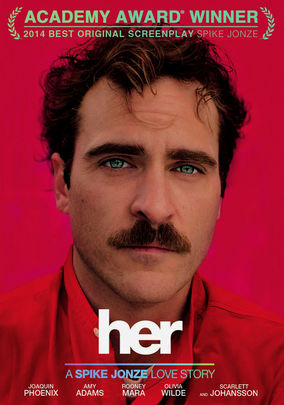
Her-2013

Her-2013

Director Spike Jonze

Starring Joaquin Phoenix, Scarlett Johansson

Scott’s Review #147

70278933

Reviewed August 5, 2014

Grade: A-

Her (2013) is a very unique film directed by Spike Jonze.

The film tells the tale of a lonely, depressed man named Theodore, played by Joaquin Phoenix, who lives in a beautiful high-rise in futuristic Los Angeles.

He works as a writer for a company that creates intimate cards for people in relationships.

After a recent divorce, he falls in love with his computerized operating system, Samantha, played by Scarlett Johansson (voice only).

Conflicts emerge as the relationship deepens and intensifies.

This is a uniquely crafted love story, but also a story of loneliness and the world of technology we now live in.

It portrays human relationships as troubled and unsuccessful, yet several characters have wonderful relationships with computers.

Is this what the future may bring for human beings? How many people have fallen in love with a fantasy or a voice on the phone?

The film ponders how technological advances have changed relationships and wonders what will happen further into the future. Technology, while wonderful, has changed our interpersonal relationships, and this film delves deeply into that.

Conversation is a lost art, and Her captures both the joys and tragedies of technology.

Visually, the film is successful because it portrays Los Angeles in a sophisticated, ultra-sleek, modern way that is fascinating.

Several technological games are featured (the Alien child is brilliantly comical), and the “Mom points” are fascinatingly ironic.

Her is a deep film that raises questions, and I applaud this in modern cinema.

Her is a slow-moving film, but a questioning one.

It won the 2013 Best Original Screenplay Oscar, and I am so glad the Academy recognized the film’s originality.

Oscar Nominations: 1 win-Best Picture, Best Original Screenplay (won), Best Original Score, Best Original Song-“The Moon Song”, Best Production Design

The Purge-2013

The Purge-2013

Director James DeMonaco

Starring Ethan Hawke, Lena Headey

Scott’s Review #128

70265234

Reviewed July 23, 2014

Grade: A-

On paper, the premise of The Purge (2013) is intriguing. It immediately caught my attention, and I was compelled to see it.

The government, fed up with the overwhelming crime and prison overcrowding, decides to initiate a once-a-year purge, where anything goes.

It’s like Christmas for the criminals and the insane.

All emergency and police services shut down on this night, and citizens are left to their own devices as a way to purge the violent and aggressive instincts from human systems.

An affluent family, led by a security systems genius (Ethan Hawke), nestles in their lavish home.

Of course, events go awry, and chaos ensues.

The film has suspense, thrills, frights, and a bit of humor, while raising questions of class distinction and societal inequality: Why are the wealthy better off than the poor? Do they deserve to be?

I enjoyed the setting of the wealthy, gated Los Angeles community and the eerily Stepford-wife-like atmosphere of the neighborhood, where housewives delivered casseroles and other dishes to each other for the big night.

Throughout this sunny environment, the viewer could sense a too-good-to-be-true cheerfulness and the darkness to follow, anticipated as sunset emerged.

I found this film unpredictable and edge-of-your-seat, and it delved into a home-invasion thriller that worked well.

I couldn’t predict what would happen next, and that was incredibly entertaining.

I am unsure whether some of the humor in the film was intentional; some of the kills were over the top and included one-liners, but The Purge (2013) is a crisp, fun, summer popcorn horror film.

Annie Hall-1977

Annie Hall-1977

Director Woody Allen

Starring Woody Allen, Diane Keaton

Scott’s Review #48

261909

Reviewed June 19, 2014

Grade: A

Annie Hall (1978) is one of Woody Allen’s finest works, and that says something as his list of wonderful films goes on and on; Manhattan, Blue Jasmine, and Interiors are gems.

Annie Hall is a witty, intelligent, great comedy. It is sharply written, quirky, and neurotic all rolled into one.

Comedy is a tough genre. Romantic comedies are even tougher to get right.

My favorite part of the film is Woody Allen himself. Some might say he plays himself, but he is engagingly hysterical as the neurotic, skeptical, Jewish, cynical New York man named Alvy.

He meets and falls in love with equally neurotic Annie Hall, played by Diane Keaton.

They quarrel, love, and travel from New York to California and back.

The film has some very funny scenes (lobster, movie theater line, and the drive-through Manhattan), and the intelligent, crisp dialogue makes it a top-notch comedy.

Oscar Nominations: 4 wins-Best Picture (won), Best Director-Woody Allen (won), Best Actor-Woody Allen, Best Actress-Diane Keaton (won), Best Screenplay Written Directly for the Screen Based on Factual Material or Story Material Not Previously Published or Produced (won)

Golden Globe Nominations: 1 win-Best Picture-Comedy or Musical, Best Director-Woody Allen, Best Actor-Comedy or Musical-Woody Allen, Best Actress-Comedy or Musical-Diane Keaton (won), Best Screenplay