Tag Archives: Jack McGee

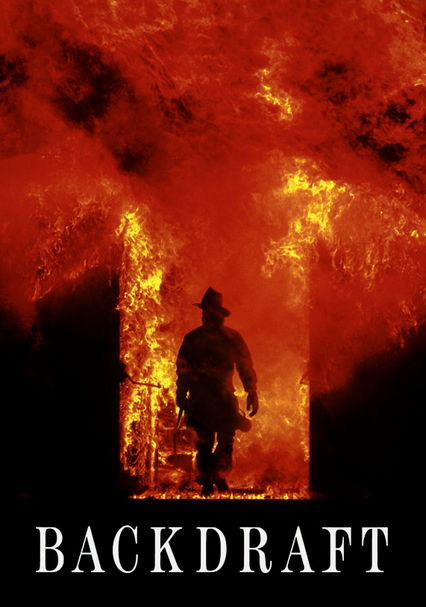
Backdraft-1991

Backdraft-1991

Director Ron Howard

Starring Kurt Russell, William Baldwin

Scott’s Review #1,216

Reviewed January 2, 2022

Grade: B

Backdraft (1991) is a highly entertaining yet completely implausible action thriller film directed by Ron Howard.

If made today, it would be on par with Chicago Fire or any other of the slew of similar procedural NBC television shows that currently exist.

The film is even set in Chicago, just like the television series.

The story involves an arsonist on the loose and the subsequent investigation to catch them.

Howard is an influential and respectable director, but his films frequently harbor a safe territory, rarely veering too far left of center.

With Backdraft, I assumed I would get a by-the-numbers masculine film, and that is exactly what I received.

The beefy cast includes Kurt Russell, Billy Baldwin (brother of Alec), and Robert De Niro, with Jennifer Jason Leigh and Rebecca De Mornay serving as secondary female characters.

Chicago firefighting brothers Stephen (Russell) and Brian (Baldwin) have been rivals since childhood. Brian, struggling to prove himself as a worthy firefighter, transfers to the arson unit where he aids Inspector Don Rimgale (De Niro) in his current investigation.

There is a rash of fires involving oxygen-induced infernos called backdrafts.

But when a conspiracy implicating a crooked politician and an arsonist leads Brian back to Stephen, he is forced to overcome his brotherly competitiveness to crack the case.

Anyone involved in their local fire department or who has a strong sense of loyalty or brotherhood in a blue-collar vein will love Backdraft for its message.

The strong family unit that pervades most firehouses and police stations is evident throughout the film, fostering a sense of community.

It’s a nice feeling and sets the tone for the viewer to feel a part of things and root for the heroes to defeat whoever is responsible for the arson.

Could it be an unstable member of the fire community or an outsider harboring a grudge?

The story, despite being somewhat of a whodunit, is not the strongest aspect of Backdraft, nor is it much of a reason to tune in and follow. Too often, the writing is lazy or languishes in television-drama territory, with obvious, melodramatic situational setups.

The realism is not there. The fire sequences are completely stagy and meant to perfectly parlay the story elements rather than have an identity of their own.

With all that said, the star of the film is its visuals, which give Backdraft its adventure and edge-of-your-seat thrills. Even though I knew the fires and explosions were manipulated, I felt like I was inside a burning room with the hissing and crackling sounds of the fire and wind enveloping me.

It’s all for dramatic purposes, of course, but the state-of-the-art special effects are cool to experience.

This is the key to the success of a film like Backdraft and is enough for me to keep watching and become invested in the entire work.

Yes, many characters are types, and despite the big A-list stars, Russell and Baldwin are the only ones who have much of anything to do.

Their brotherly relationship, though fraught with friction, is at the heart of the characters, though the corny dialogue sometimes slips into soap-opera territory.

Backdraft (1991) is a cinematic Hollywood mainstream film that works on many levels. Forget the lazy storylines and the predictability factors for a minute. It provides a blazing-hot inferno of sharp visuals that are worthy of commendation and appreciation.

Oscar Nominations: Best Sound Effects Editing, Best Visual Effects, Best Sound

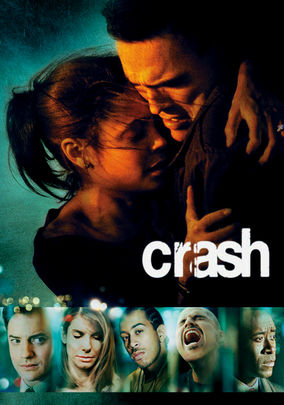
Crash-2005

Crash-2005

Director Paul Haggis

Starring Sandra Bullock, Matt Dillon, Thandie Newton

Scott’s Review #799

Reviewed August 3, 2018

Grade: A-

A superior film that has unfortunately suffered greatly after controversy, Crash (2005) is a story of intersecting vignettes, all interrelated.

The controversy stems from the film’s very surprising Oscar win over the heavily favored Brokeback Mountain. Many thought the latter was a shoo-in, poised to set the LGBT genre ahead of the game.

Sadly, now, when film lovers discuss Crash, it’s usually in tandem with Brokeback, and usually on the heels of its having stolen the Oscar crown.

On its own merits, the film excels as a social story exploring the many facets of race, racism, and bigotry.

The events in Crash take place within one thirty-six-hour day in metropolitan Los Angeles.

Featuring a slew of characters that would even impress Robert Altman, the audience witnesses situations involving many races and backgrounds.

We meet Rick and Jean Cabot (Brendan Fraser and Sandra Bullock), a white, affluent couple who are carjacked when driving home from dinner.

The black men who carjack the couple then strike a Korean man and bring him to the hospital.

A racist police officer, John Ryan (Matt Dillon), cares for his troubled father, who cannot afford insurance. A Persian father and daughter wish to buy a gun for protection, and a Hispanic father (Michael Pena) worries about a rash of drive-by shootings.

The stories go on and on as a myriad of characters come into situations involving other characters.

The interconnecting stories all cascade into overlapping situations of interest. The point of Haggis’s film is racism, but with a creative twist.

The director points out and shows that those who are racist have good qualities too, and those who are discriminated against in turn discriminate against others themselves.

The most interesting character is Dillon’s, John Ryan.

On the surface, a racist, wise-ass, who in one scene embarrasses an affluent light-skinned black woman (Thandie Newton), simply because he carries a gun, then ends up saving her life in a horrific car accident.

But is he redeemed? Does he see the world as black people getting ahead, and he is left behind?

What about the Persian man, discriminated against, but then vowing revenge on a Hispanic man after a misunderstanding?

The black men who carjack the white couple then release a group of immigrants who will surely be sold, perhaps even for sex trafficking. Does this act make the men good?

The point Haggis makes is that each character is neither all good nor all bad, but rather complicated and nuanced, with emotions shaped by past experiences and by discrimination itself.

Crash is highly similar to Traffic (2000) and Babel (2006) in terms of pace, style, and the way the stories align. The film is different, however, in that the location is strictly confined to Los Angeles, making the setting of monumental importance.

How would events be different in a setting like Middle America? Or in a different country? These possibilities are worth considering, given that Los Angeles is one of the most diverse cities in the United States.

If racism occurs there, it can occur anywhere.

Now, more about that pesky Oscar controversy! In later years, critics would largely agree that the inferior film had won that year, and Brokeback Mountain lost due to a level of homophobia on the part of the voting academy.

Since the academy is filled with Hollywood liberals, albeit of an older generation, an alternative way of thinking is that perhaps Crash won because it was the “safer” film.

Everyone seems to have forgotten the other three nominated films that year. Alas, Crash is permanently marred for winning Best Picture. It would undoubtedly have more supporters had it lost.

Ranked as one of the lowest-scoring Best Picture winners, I still believe Crash has some worth- though I agree that it should not have won over Brokeback Mountain.

Taken on its own merits, the film is quite good. A message film with great atmosphere, it succeeds in making the viewer think and ponder, perhaps their discrimination, whether conscious or subconscious.

The ensemble acting and character representations are all very good and worthy of a second watch.

Oscar Nominations: 3 wins-Best Picture (won), Best Director-Paul Haggis, Best Supporting Actor-Matt Dillon, Best Original Screenplay (won), Best Original Song-“In the Deep”, Best Film Editing (won)

Independent Spirit Award Nominations: 2 wins-Best Supporting Male-Matt Dillon (won), Best First Feature (won)

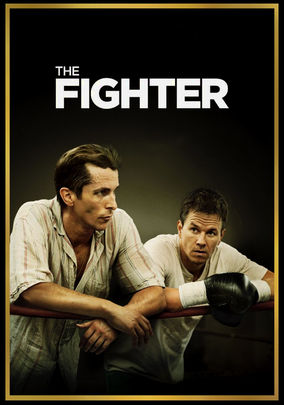
The Fighter-2010

The Fighter-2010

Director David O. Russell

Starring Mark Wahlberg, Christian Bale

Scott’s Review #546

Reviewed December 11, 2016

Grade: A-

The Fighter (2010) is an excellent film. As a sports film, it has the inevitable clichés that make the entire sports film genre rather predictable.

But this film is a very well-done story and is based on real-life figures (the Ward brothers).

Tremendous acting by Wahlberg, Bale, and Melissa Leo, in the role of Mama Ward, a role of a lifetime.

The telling is a true story of Mickey Ward (Wahlberg), a boxer from Massachusetts, and his battle to stardom, dealings with family members, and his love life.

The characters may be ever so slightly overdone in the rugged, rough, Bostonian way, almost appearing New Jersey Soprano-ish instead of New England, but the message is clear: they are in the boxing world and are tough guys (and gals).

This film is much more character-driven than many similar sports movies, thank goodness, and the casting is spot-on.

There are the inevitable final boxing match and the standard reaction shots, but again sports films are riddled with clichés.

The real win is with the characters’ layered complexities as they love and hate each other.

Bale and Leo deserved their Oscars for their respective roles in The Fighter (2010), specifically Bale for the shocking weight loss and spot-on character imitation.

Oscar Nominations: 2 wins-Best Picture, Best Director-David O. Russell, Best Supporting Actor-Christian Bale (won), Best Supporting Actress-Melissa Leo (won), Amy Adams, Best Original Screenplay, Best Film Editing

Showgirls-1995

Showgirls-1995

Director Paul Verhoeven

Starring Elizabeth Berkley

Scott’s Review #372

962109

Reviewed January 31, 2016

Grade: D

Having heard much about the infamously poorly reviewed Showgirls (1995) and its reputation as one of the worst films ever made, I finally got around to watching it (twenty years after its release).

Now considered something of a camp classic, I am glad I did.

While I recognize the dubious distinction it holds and do not disagree with it, I also found something slightly entertaining about the film, and my thought process throughout was “this film is so bad that it might be good”, but in the end, it is pretty much just a bad film.

Nomi Malone (Elizabeth Berkley) hitchhikes to Las Vegas, intending to find success as a showgirl.

After her belongings are stolen, she is befriended by a kind-hearted woman named Molly, who works as a seamstress at the topless dance revue Goddess.

Molly takes her in and introduces her to the star of the show, Cristal (Gina Gershon).

A rivalry immediately develops between the women as Cristal mocks Nomi’s job at another topless club.

The main story centers on this rivalry as Nomi attempts to climb the ranks and succeed in the shady world of adult entertainment.

Along the way, she becomes involved with various men, specifically the entertainment director (and Cristal’s boyfriend), Zack, played by Kyle MacLachlan, leading to further tensions.

Let me be honest here- Showgirls is a bad film in every way. I observed three major flaws in the film: poor acting, poor writing, and an over-the-top tone on every level.

Let’s break it down.

Within minutes, I knew the acting was subpar, and I wondered whether that was the fault of the director (Paul Verhoeven), the actors, or a combination.

Known for directing Basic Instinct (a sexy, smoldering film), he may have had the same success in mind for Showgirls.

Berkeley gets the brunt of the mention since she is the lead character, but, wow, what a bad performance.

From the overdramatic delivery to the phony earnestness, I did not buy the performance for a minute and, on more than one occasion, fantasized about how a different actress might have tackled the role (Nicole Kidman and Julia Roberts came to mind).

Gershon was almost worse, as an irritating, brooding pout marred her sexiness and vixen-like character.

The writing is one-dimensional- a poor girl tries to achieve success in a bad, bad world and meets challenge after challenge. Nothing new here.

The predictability was apparent almost immediately, and most of the characters were unlikable. When Nomi takes an interest in a man, he becomes a player, keeping another aspiring female star on the side and feeding her the same lines he gave Nomi.

Even the one sympathetic character (Molly) exists only to make Nomi more likable, as when Molly is attacked and Nomi races to her bedside.

Forced and formulaic, this scene is a prime example of poor and contrived writing.

Most scenes play over the top.

Brimming with nudity and sexual excitement, the film is bawdy and party-friendly. In one scene, dancers take a line of coke before hitting the stage, and a feud between two of them results in one sabotaging the production, causing the other to break her hip.

The larger-than-life (in more than one way) x-rated, well-endowed, mama dancer, while entertaining, is also silly and foolish.

Chaotic and pointless, each scene was hard to believe and take seriously.

You may be wondering what positives can be found in Showgirls- the answer is not many, but there is a charm I found in the film, but perhaps I am gluttonous for punishment.

I think the film “feels” like it wants to have fun, and a certain level of entertainment can be found in viewing it, but this is like trying to find a needle in a haystack to see any good in Showgirls.

I do not disagree that Showgirls (1995) is one of the worst films ever made, but I found a sliver of charm, interest, and fun mixed in with the more prevalent drivel, poor quality, and painfully bad acting.

But perhaps that is because it is so bad.