Tag Archives: Sidney Blackmer

Rosemary’s Baby-1968

Rosemary’s Baby-1968

Director Roman Polanski

Starring Mia Farrow, John Cassavetes, Ruth Gordon

Top 250 Films #14

Top 40 Horror Films #4

Scott’s Review #9

60002403

Reviewed June 17, 2014

Grade: A

Rosemary’s Baby (1968) is not only a great film, it’s a masterpiece. Easily one of my favorites in the horror genre, it’s also towards the top of the list of my all-time favorite films.

The beauty of this film lies in its power of suggestion and subtleties. It lacks the blood, gore, or standard horror frights one might expect.

It doesn’t need them.

The audience senses something is amiss through clues provided throughout the film. The closed-off room in the young couple’s apartment, the sweet, but a bit odd, elderly neighbors, a strange suicide, a mysterious, horrid-smelling, good luck charm. Rosemary’s due date (June 6, 1966- “666”).

The strange, dreamlike conception scene is intense and surreal. Her husband- claiming Rosemary passed out from too much alcohol- begins to become a suspicious man following the incident, but we are confused by his involvement- what are the neighbors up to, we wonder? Are they sinister or simply innocent meddlers?

In a sinister scene, Rosemary gnaws on bloody raw meat, catches her reflection in the glass, and is horrified by her behavior.

Mia Farrow is excellent as the waifish, pregnant Rosemary, who loses weight, rather than gains it.

The film also has a couple of real-life eerie occurrences: the building setting (The Dakota) is where John Lennon was shot and killed, and Director Roman Polanski’s wife, Sharon Tate, in a cameo, was murdered shortly after filming by Charles Manson.

Rosemary’s Baby shares a similar theme with other devilish/demon films, such as The Exorcist (1973) and The Omen (1976).

This is a film that must be seen by everyone and only shines brighter with each subsequent viewing.

Oscar Nominations: 1 win-Best Supporting Actress-Ruth Gordon (won), Best Screenplay Based on Material from Another Medium

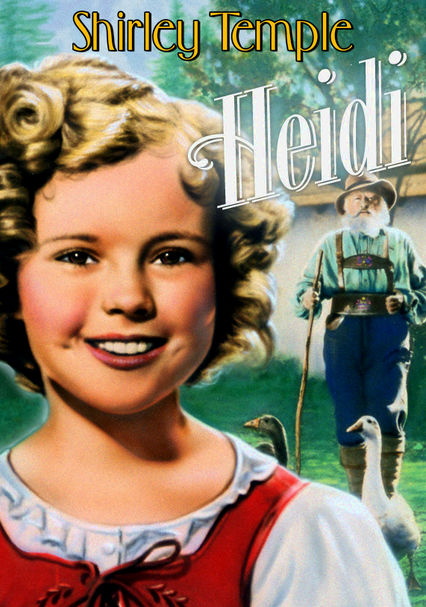
Heidi-1937

Heidi-1937

Director Allan Dwan

Starring Shirley Temple, Jean Hersholt

Scott’s Review #826

Reviewed November 2, 2018

Grade: A-

During the 1930s and 1940s, Shirley Temple was the most prominent and profitable child star around, starring in dozens of films deemed “wholesome” and “cute.”

Heidi (1937) is one of her most popular and best-regarded treasures of earnest and sentimental riches.

The film is forever known in pop culture as the ruination of the 1968 Super Bowl when the Oakland Raiders and New York Jets game was interrupted at a crucial moment due to the film’s scheduled airing.

An interesting side note is that, amazingly, Temple relinquished her Hollywood title with dignity and without scars. She left the scene entirely and became a successful world diplomat.

In an era in American cinema when child stars were treated as property and sometimes like cattle, her relatively healthy exit was a remarkable feat.

The story of Heidi is based on the 1880 Swiss story of the same name. In the title role, Temple plays an orphan living in the cold mountains with her grizzled grandfather, Adolf (Jean Hersholt). At first bitter for being saddled with raising a child, Adolf finally accepts the girl, and he and Heidi become fast friends, exhibiting a warm and tender bond.

Heidi’s self-absorbed aunt ruins the dynamic and whisks the child away to live with a wealthy family. The little girl will be a companion for their disabled daughter, Klara, as Heidi and Adolf are determined to find each other.

Adding drama to the story is Klara’s evil housekeeper and her jealousy of Heidi, leading to attempts to sell Heidi off to gypsies for profit.

By 1937, Temple was beginning to be deemed “too old” for cute roles, but Heidi is one of her best-remembered films, and the actress is in top form.

As one might expect from any Shirley Temple film, musical numbers are included- a dream sequence in Holland culminates with Temple belting out the charming “In My Little Wooden Shoes.”

There are millions of Shirley Temple fans worldwide, but there are also her detractors. Some feel her films are completely dated and that the young star was not as talented as they thought she was.

Admittedly, watching her films approaching the one-hundred-year mark can be peculiar. On the surface, they seem a bit hammy and overly sentimental, but my personal experience elicits a return to childhood days.

Despite being decades before my existence, Shirley Temple films were commonplace in my childhood household.

Heidi is not a groundbreaking cinematic experience or all that deep. What the film does provide, though, is comfort. The audience assuredly must know a film like Heidi has a happy ending, as the child provides warmth and spirit to every person she meets, making their lives better.

Even during peril, the girl has an “awe-shucks” manner of being and makes the best of her lousy situation.

The strongest appeal of Heidi comes from her friendship with Klara, a disabled woman. Klara is kind and naive, unaware of her servant’s jealousy and rage. Helpless, she comes to depend on Heidi, and we root for Heidi to rescue Klara and bring her to a better life.

The film has sappily written all over it but somehow works simultaneously.

Films such as Heidi, the best of all the Temple films, can be watched and enjoyed as an ode to days gone by or a tribute to someone’s grandmother’s favorite film.

Despite being irrelevant and too sappy in today’s modern world, they undoubtedly provide comfort and support to some, which cannot be such a bad thing.

Heidi (1937) can easily be enjoyed because of the film’s popularity and its warm message.