Tag Archives: Darryl Hickman

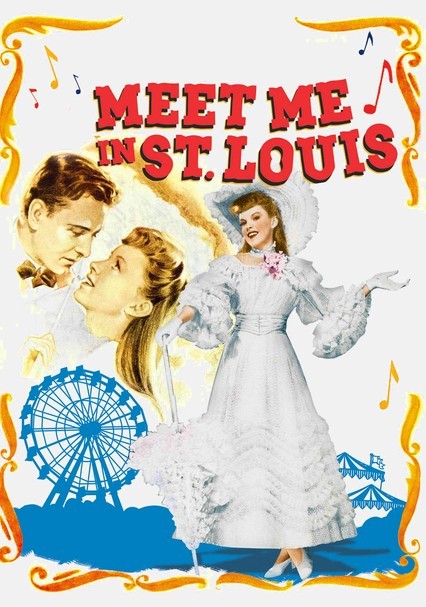
Meet Me in St. Louis-1944

Meet Me in St. Louis-1944

Director Vincente Minnelli 

Starring Judy Garland, Margaret O’Brien

Top 250 Films #83

Scott’s Review #845

Reviewed December 19, 2018

Grade: A

With talents such as Vincente Minnelli and Judy Garland involved in a project, it is tough for the results not to be resounding, and this is the case with Meet Me in St. Louis (1944), a treasured musical with enough songs and melodrama to last a lifetime.

The film is a lively and earnest achievement from both stars when each was at their prime. It is rich in flavor and contains a myriad of good touches.

Meet Me in St. Louis is an ensemble piece featuring many actors, but the film belongs to Garland for the musical numbers alone. The film is groundbreaking and sets the tone for the slew of MGM musicals to follow during the 1950s and 1960s.

The film is considered one of the greatest and most memorable musicals of all time, and I share this sentiment.

The story revolves around the upper-middle-class Smith family, set in 1903, St. Louis. In its lovely form, the film has been composed of seasonal vignettes for over a year.

Trials and tribulations erupt, especially involving the romantic entanglements of eldest sisters Rose (Lucille Bremer) and Esther (Garland), as well as the possibility of the family relocating to New York City.

Rose and Esther are two of the siblings, along with the Smith parents, Grandpa, and Katie, the maid.

The household is filled with glee, music, and heartbreak.

The film’s setup is a considerable success, eliciting a warm sensation. As the title card reads, “Summer 1903,” we are welcomed into a sunny and picturesque street, set against the backdrop of St. Louis, which is perfectly midwestern.

The Smith home is showcased, and the viewer is welcomed into the idyllic world of a bonded family.

Meet Me in St. Louis feels homespun and like a good best friend. It can be watched and re-watched often, regardless of the season, as it features a summer fair, a spooky Halloween sequence, and a dazzling Christmastime segment.

Other than Esther, the most memorable and fascinating character is Tootie (Margaret O’Brien). O’Brien gives a startlingly good performance and packs an emotional wallop, enriching a character arguably interpreted as obsessed with death with some needed humor.

She buries her dolls on a dare and throws flour in a man’s face on Halloween, thereby “killing” him.

Her most significant scene, though, occurs during a meltdown when Tootie destroys her beloved snowmen on the family lawn. The actress portrays such rage and despair during this scene that it is easy to forget, at the time, how young she was.

She was honored with an honorary Oscar for her efforts.

The musical numbers by Garland are absolute treasures. Highlights include “The Trolley Song,” performed as Esther rides the afternoon trolley across town, hoping that the boy next door with whom she is madly in love, John (Tom Drake), will be on the same trolley.

The gorgeously performed number “Have Yourself A Merry Little Christmas” is my favorite. Following a lavish Christmas Eve ball, Esther sings the song to Tootie, and nestled within its lyrics are emotions such as hope and sadness.

Meet Me in St. Louis (1944) is a film that has it all and can be enjoyed by audiences of all ages. With memorable musical numbers, romance, drama, and a wholesome, timeless sensibility, it is a favorite that deserves to be revisited.

Like the finest wines, this film improves with age.

Oscar Nominations: Best Screenplay, Best Scoring of a Musical Picture, Best Song-“The Trolley Song”, Best Cinematography, Color

Network-1976

Network-1976

Director Sidney Lumet

Starring Faye Dunaway, Peter Finch, William Holden

Top 250 Films #228

Scott’s Review #1,481

Reviewed May 13, 2025

Grade: A

A conceptual film laden with intelligence and satire, Network (1976) is innovative, not easily digestible, but satisfying nonetheless. It pairs well with films like All the President’s Men (1976) or Spotlight (2015), with a focus on media frenzy, ratings, and the frustrating search for the truth amid chaos.

Or, does the truth even matter? It’s a sobering question the film explores.

The film received nine Oscar nominations and won three of the four acting awards. Decades later, it holds up tremendously well and is a stark reminder of the power of television and public perception, for better or worse.

Brilliant acting, rich writing, and impressive editing make Network a timeless treasure for many generations, not to mention Lumet’s creative and sometimes shocking direction.

Over narration, we meet veteran news anchorman Howard Beale (Peter Finch). He learns from his friend and news division president, Max Schumacher (William Holden), that he has only two more weeks on the air with the UBS network due to declining ratings.

After threatening to shoot himself on live television, instead, he launches into an angry televised rant, which turns out to be a huge ratings boost for the network, and he is kept on for entertainment purposes.

But what happens when the public grows tired of his antics and craves even more outrageous programming?

Ambitious producer Diana Christensen (Faye Dunaway), obsessed with her career and ratings, takes actions to dangerous new levels.

The poignancy that immediately caught my attention was how little the bottom line has changed in almost fifty years of television since Network was released. One could argue that things have gotten worse, with ratings making or breaking a television broadcast.

Depressing still is the knowledge in 2025 politics where liars, cheats, and felons callously hold the highest offices and wield the most power; newscasts are currently created based on the truths their target audiences believe, regardless of the truth.

Lumet, well-known for creating the groundbreaking Dog Day Afternoon (1975) just a year earlier, uses split screens to show four perspectives and adds frightening, gun-toting rebels who are angry and intent on making political statements.

But Diana needs them for a significant ratings share.

Lumet’s sequences teeter between long soliloquies in which characters reveal their deepest motivations and emotions and rapid-fire editing involving shootings and bank robberies.

I loved seeing the 1970s-style corporate offices with retro telephones, notepads, pens, pencils, stylish carpets, and colorful elevators. The glamorous and polished interiors perfectly reflect the gorgeous Manhattan skyline seen in numerous sequences.

The lavish restaurants and strong cocktails provide a luminous texture to the time.

The screenplay, written by Paddy Chayefsky, was based on the idea of a live death as the film’s central focus, as he said later in an interview, “Television will do anything for a rating… anything!”

The statement hit home in frigid reality.

Dunaway and Finch are clear favorites and provide the deepest character structures. Dunaway’s Diana is frigid and opportunistic, offering the audience no vulnerability or sympathy. In a way, she is not a human being, lacking emotional depth.

I half expected her to tear her face off and reveal herself as a fembot.

Finch steals the show as the tired and depressed veteran who feels dismissed and forgotten. Even when he reveals his intent to commit suicide on live TV, the news crew tunes out his monotone voice as they do nightly.

Finally, Beatrice Straight brilliantly delivers an acting 101 tutorial as the aging housewife being cheated on by her philandering husband.

One miss is Robert DuVall in a one-note performance we’ve already seen him deliver.

Network (1976) is a top-notch film from my favorite decade in cinema. The 1970s produced many meaningful and introspective gems, and Network is one of them.

Oscar Nominations: 4 wins-Best Picture, Best Director- Sidney Lumet, Best Actor- Peter Finch (won), William Holden, Best Actress- Faye Dunaway (won), Best Supporting Actor- Ned Beatty, Best Supporting Actress- Beatrice Straight (won), Best Original Screenplay (won), Best Cinematography, Best Film Editing

The Grapes of Wrath-1940

The Grapes of Wrath-1940

Director John Ford

Starring Henry Fonda, Jane Darwell

Scott’s Review #828

Reviewed November 8, 2018

Grade: A

Based on the famous novel written by John Steinbeck and released only one year before the film, The Grapes of Wrath (1940) is a superlative offering by director John Ford, known chiefly for Westerns.

The work accurately depicts life for the struggling American family during the Great Depression of the 1930s.

With gorgeous cinematography and a sad yet poignant story, the film is a must-see and a timeless depiction of the perils of life for working-class people in the United States.

Set on the vast plains of Oklahoma, the Joad family has run a successful farm and lived as a thriving family unit for decades- an extended group enjoying their lives.

When the United States suffers from Depression, the Joads’ lives are turned upside down, and they are forced to sell their farm. They decide to traverse the countryside in hopes of the promise of profitable jobs and wealth in faraway California. The Grapes of Wrath depicts the family’s journey as hardship and deaths occur.

When the film was released in 1940, many studios were not interested in bringing the story to the big screen, as some aspects were deemed too left-leaning for conservatives.

The social issues the film delves into are still incredibly relevant today, and Ford wisely dissects not only the poverty that the Joad family suffers but also the psychological trauma and ruination they must endure. What a devastating effect this must have had on families.

The casting is spot-on. A young Henry Fonda was merely an upstart actor in 1940 and successfully exuded a rich, passionate performance as Tom.

Plenty of close-up shots reveal the young man’s quiet pain and desperation and the humiliation of having lost his livelihood. Fonda shares poignant chemistry with the preacher character, Jim Casy (John Carradine), who once was filled with glory but has now lost his spirit and belief in goodness.

Jane Darwell, a famous character-actress, gives a treasured performance as the family matriarch, Ma Joad. The actress won the Academy Award for Best Supporting Actress, deservedly so, as she relays a haggard woman wanting only the best for her family and attempting to hold them together.

Her determined final speech at the film’s conclusion is teary and meaningful. She says, “We’re the people… We’ll go on forever.” Speaking of Oscars, Ford also won Best Director.

The film sees no age but endures as a timeless journey alongside the Joad family. Although it stays very close to Steinbeck’s novel, the story is modified significantly. Perhaps to please studio financiers or provide a more hopeful message, the Joads are left with a positive future thanks to a government-run camp where they finally live.

In the novel, they reside at the camp first but are later reduced to starvation wages.

A monumental scene is when the family drives their battered vehicle to a squatter’s camp for needed shelter. The scene is shot documentary style, with the camera focusing both on the Joads and on the faces of the occupants of the run-down and filthy shacks that they are forced to live in.

We wonder with sadness what the lives of these unfortunate people were like before the Depression.

The Grapes of Wrath (1940) was a humanistic cinematic masterpiece. As a terrible war and otherworldly problems plagued the new decade, the film reminisced about a previous decade fraught with different issues.

The film is one for the ages and should be appreciated by all.

Oscar Nominations: 2 wins-Outstanding Production, Best Director-John Ford (won), Best Actor-Henry Ford, Best Supporting Actress-Jane Darwell (won), Best Screenplay, Best Sound Recording, Best Film Editing