Category Archives: Psychological Thriller

No Country for Old Men-2007

No Country for Old Men-2007

Directors Ethan Coen, Joel Coen

Starring Tommy Lee Jones, Josh Brolin

Scott’s Review #745

Reviewed April 19, 2018

Grade: A

No Country for Old Men, made in 2007,  is arguably Joel and Ethan Coen’s greatest work save for the amazing Fargo (1996).

Achieving the Best Picture Academy Award and appearing on numerous Top Ten lists for its year of release, the film is one of their most celebrated.

Containing dark humor, offbeat characters, and fantastic storytelling, adding in some of the most gorgeous cinematography in film history, No Country for Old Men is one of the decade’s great films.

The time is 1980, and it’s set in western Texas as we follow the dangerous hitman Anton Chigurh, played wonderfully by Javier Bardem.

He escapes jail by strangling a deputy and is subsequently hired to find Llewelyn Moss (Josh Brolin), a hunter who has accidentally stumbled onto two million dollars in a suitcase that Mexican smugglers are desperate to find.

In the mix is Sheriff Tom Bell (Tommy Lee Jones), who is pursuing both men. Moss’s wife, Carla Jean (Kelly Macdonald), in turn becomes an important character as she is instrumental in the web of deceit the chain of events creates.

The film subsequently turns into an exciting cat-and-mouse chase with a dramatic climax.

The crux of the story and its plethora of possibilities are what make the events so exciting to watch. As characters are in constant pursuit of each other, the viewer wonders who will catch up to whom and when.

One quality that makes the film unique with an identity all its own is that the three principal characters (Moss, Bell, and Chigurh) seldom appear in the same scene, adding a layer of mystery and intrigue.

The hero and most well-liked of all the characters is, of course, Sheriff Bell- a proponent of honesty and truth. In contrast, the other two characters are less than savory types, especially the despicable Chigurh.

My favorite character in the story is Chigurh, as he is the most interesting, and Bardem plays him to the hilt with a calm malevolence- anger just bubbling under the surface.

One wonders when he will strike next or if he will spare a life, as he intimidates his prey by offering to play a game of chance, the toss of a coin to determine life or death.

He is one of cinema’s most vicious villains. With his bob-cut hairstyle and his sunken brown eyes, he is a force to be reckoned with by looks alone.

True to many other Ethan and Joel Coen films, the supporting or even the glorified extras are perfectly cast and filled with interesting quirkiness.

Examples of this include the kindly gas station owner who correctly guesses a coin toss and is spared his life. My favorite is the matter-of-fact woman at the hotel front desk, with her permed hair, who gives as good as she gets, and her monotone voice is great.

It is these smaller intricacies that truly make No Country for Old Men shine and are a staple of Coen Brothers films in general.

Many similarities abound between Fargo and No Country for Old Men, not the least of which is the main protagonist being an older and wiser police chief (Marge Gunderson and Tom Bell, respectively).

Add to this a series of brutal murders and the protagonist being from elsewhere and stumbling upon a small, bleak town. Of course, the extreme violence depicted in both must be mentioned as comparable.

Having shamefully only seen this epic thriller twice, I find No Country for Old Men (2007) a dynamic film, reminiscent of the best of Sam Peckinpah’s classics, such as The Getaway (1972) or The Wild Bunch (1967).

The Coen brothers cross film genres, blending thriller, western, and suspense that rival the greatest of Hitchcock’s films.

I cannot wait to see it again.

Oscar Nominations: 4 wins-Best Picture (won), Best Director-Joel and Ethan Coen (won), Best Supporting Actor-Javier Bardem (won), Best Adapted Screenplay (won), Best Sound Editing, Best Sound Mixing, Best Cinematography, Best Film Editing
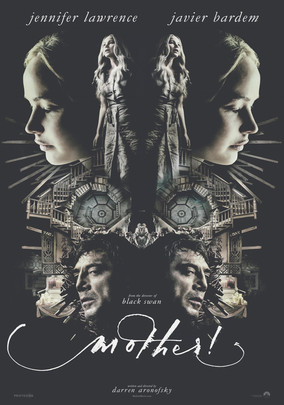
Mother!-2017

Mother! -2017

Director Darren Aronofsky

Starring Jennifer Lawrence, Javier Bardem

Scott’s Review #687

Reviewed October 4, 2017

Grade: A

Mother! is an intense, disturbing, and brilliant 2017 work by acclaimed director Darren Aronofsky.

Having crafted left-of-center works such as 2000’s Requiem for a Dream, 2008’s The Wrestler, and 2010’s Black Swan, I shudder to think this film rivals the other in the insanity department.

With four principal characters portrayed by Hollywood mainstays, this film generated much buzz upon its release.

The film is thought-provoking and analytical, and we will discuss it after the conclusion. I appreciate the complex watches and Mother! succeeds in spades.

The film is set entirely within the confines of one enormous house in the middle of a vast field of land. Aronofsky never reveals the location, adding mystery to the already intriguing premise.

A young couple known only as Him (Javier Bardem) and Mother (Jennifer Lawrence) cheerfully enjoy married life together and seem very much in love. He is a renowned author suffering from writer’s block, and his mother fixed the house after it had burned long ago.

One day, a Man (Ed Harris) arrives looking for a place to stay. While Him is delighted by the visitor and encourages Man to stay, the mother is not as pleased.

When Man’s wife, Woman (Michelle Pfeiffer) arrives, the houseguests turn Him and mother’s lives upside down. This is merely the beginning of a complex puzzle.

As the plot unfolds, Mother! is oozing with one bizarre event after the other. Mother witnesses unsettling images such as a beating heart within the walls and a bloodstain on the floor that will not go away.

When relatives of a Man and a Woman overtake the house, and a violent event occurs, things go from dark to downright chaotic.

Giving too many plot points away would ruin the element of surprise, making Mother! a difficult film to review. The film is polarizing and mesmerizing, and each of the principal characters’ motivations can be analyzed and questioned.

Why do he and his mother react differently to the visitors? What manifests their resentment towards the mother?

Each actor gives a compelling turn, and Aronofsky admits that the mother’s character is the one he most relates to. Logically, one might assume that Bardem’s Him might receive that honor since the character is a famous writer. How strange, and this revelation by the director will only result in more character analysis.

How wonderful to see Michelle Pfeifer back in the forefront of a Hollywood film—it seems eons have passed since we last saw her grace the silver screen, and she is back with a vengeance.

Her bitchy portrayal is purely delicious, and she encompasses Woman with the perfect amount of venom, toughness, and mystery. As she icily quizzes mother about her intentions of starting a family, she slowly immerses herself in mother’s life without missing a beat.

The film is unconventional and layered with symbolism and differing interpretations. Is Aronofsky’s message biblical? Is it political? Or could it reference the obsessions everyday folk have with celebrities?

After much pondering, all three possibilities came to mind. The biblical message seems the most solid and plausible explanation, but with Aronofsky films, the pleasure is in the analysis.

The film’s final act is particularly macabre, as the action has exclusively focused on the four principal characters until this point, and the setting is mainly bright.

A slow burn, if you will, suddenly, all hell breaks loose as mobs, blood, fire, death, and darkness take over. The brutality and cannibalism involved will churn anyone’s stomach.

Quickly note the lurid closeups of Jennifer Lawrence’s face during most scenes. Indeed, the camera loves her, but more is happening here. Is the intention to make the viewer focus more on her character or to sympathize more with her character?

Mother! has stirred controversy among film-goers. Some have ravished its elements and themes, while others have reviled and revolted against it.

Time will tell if Mother! (2017) holds up well, but my hope and guess would be that it will become a film studied in film schools everywhere.

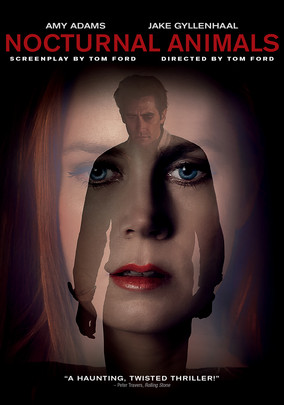
Nocturnal Animals-2016

Nocturnal Animals-2016

Director Tom Ford

Starring Amy Adams, Jake Gyllenhaal

Scott’s Review #640

Reviewed April 30, 2017

Grade: A-

Nocturnal Animals (2016) blurs the lines between fantasy and reality in a revenge-themed thriller directed by Tom Ford, in only his second directorial effort- 2009’s A Single Man was his first.

While not constantly hitting the mark and, at times, very difficult to follow, the film is unusual, mesmerizing, and lovely to look at from a visual perspective. Some scenes blur together splendidly, so they seem interposed—a brilliant touch.

David Lynch influences the film in tone and style.

Events are divided between “The Real World” and “The Novel”.

The film begins strangely as a bevy of nude, obese women prance and dance on video screens during an art exhibit opening.

Susan Morrow (Amy Adams) owns the gallery a lives a glossy life in Los Angeles. We quickly learn that Susan is involved in a loveless marriage with hunky Hutton (Armie Hammer), a businessperson who is inattentive towards Susan.

Before Hutton, Susan was briefly married to Edward (Jake Gyllenhaal), a novelist who dedicates his latest manuscript to Susan, received via mail.

As Susan reads the manuscript, she is transported down a dark path of memories and fantasies concerning Edward and their past.

The film’s locales are mainly between Los Angeles (the real world) and western Texas (where the novel occurs).

This compelling contrast separates the two worlds.

Los Angeles appears mainly at night, as Susan, presumed to be suffering from insomnia, is compelled by her reading. She also rubs shoulders with sophisticated artist types and colleagues at her studio.

Conversely, western Texas is worlds apart from the Los Angeles setting—like night and day. In Texas, we are introduced to the protagonist Susan reads.

Tony, traveling through Texas with his wife, Laura, and their daughter, India, is accosted and terrorized, bypassing local motorists.

Clearly from out of town, the family is stranded in the middle of nowhere and kept at bay by the rednecks- the story has a tragic ending. The stories intersect interestingly as we see the differing worlds.

The scenes in western Texas were frightening and tense—so much so that my heart beat quickly. I pictured myself as Tony in a situation of peril.

As the family attempts to reason with the thugs, they get deeper and deeper into trouble. The feeling of being vulnerable and unsafe with no help around is tremendous in the film.

The acting in Nocturnal Animals is excellent overall, which is no surprise given the tremendous cast. Adams and Gyllenhaal are especially worthy of mention.

Through flashbacks, we see their scenes and find them both sympathetic and vulnerable (at first—he is a sensitive writer, and she is a college girl with aspirations of love and family life).

As the plot thickens, both characters become more nuanced and complex- the subject of betrayal and revenge certainly comes into play, and both characters, now older and more pessimistic, intersect again as mature adults.

Michael Shannon, though believable as Detective Bobby Andes, assigned to Tony’s case and suffering from stage four lung cancer, is not the standout for me. I disagree with his Oscar nomination for Best Supporting Actor.

Indeed, it is an acceptable performance. I would much rather Gyllenhaal or Aaron Taylor-Johnson (as one of the rednecks) receive the nomination.

I was reminded of David Lynch’s masterpiece, Mulholland Drive (2001), mainly during the Los Angeles scenes. The slick night air and the trials and tribulations of the wealthy mirrored each other quite readily.

The sequences contain a gothic, haunting, moody vibe.

The central theme of revenge is present in both worlds. Tony and Bobby seek revenge on the criminals in western Texas, while revenge also focuses on Los Angeles, though much more subtly.

A hint appears several times in Susan’s art gallery, where a large “Revenge ” exhibit is a focal point. However, what the Los Angeles revenge is is not revealed until the very last scene.

One thing is sure about Nocturnal Animals- the film is dreamy, complex, and worthy of conversation.

Tom Ford is an up-and-coming director with visual sensibilities and a dream-like vision. I hope we see more from this fascinating director.

Oscar Nominations: Best Supporting Actor-Michael Shannon

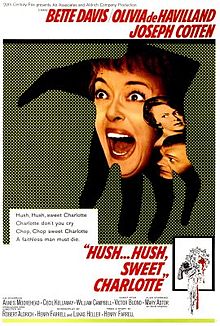
Hush…Hush, Sweet Charlotte-1964

Hush…Hush, Sweet Charlotte-1964

Director Robert Aldrich

Starring Bette Davis, Olivia de Havilland

Scott’s Review #632

Reviewed April 8, 2017

Grade: B+

The follow-up film, but not a direct sequel, to the surprise 1962 hit, What Ever Happened to Baby Jane? Hush…Hush, Sweet Charlotte (1964) is a psychological thriller directed by Robert Aldrich.

The film was intended to reunite Aldrich with stars Bette Davis and Joan Crawford. Crawford filmed several scenes, but the tension between the stars proved too much, and Crawford dropped out.

Olivia de Havilland took her place, and reportedly, the filmmakers scrambled to re-shoot the film nearly from scratch.

Shot in black and white, just like What Ever Happened to Baby Jane?, the film is very similar in style and tone, and, rather than Los Angeles as the setting, the setting is now the sprawling southern landscape of the Deep South- Louisiana, to be exact; a vast estate with a lavish mansion is the featured ominous setting.

The action begins in 1927 at a grand party at the well-to-do Hollis family mansion.

The night is fraught with tension, and secrets are harbored- most notably, southern belle Charlotte (Davis) and her married beau, John (Bruce Dern), plan to elope and steal away into the night together.

When John is threatened by Charlotte’s father, Sam (Victor Buono), he regrettably breaks up with Charlotte, destroying her.

Later, John is decapitated and his hand severed, leaving all of the guests to assume that Charlotte was murdered after she appears wearing a blood-soaked dress.

Due to a lack of evidence, Charlotte is set free.

The remainder of the film takes place in the present day (1964) and in the same mansion, now slated to be demolished by the town in favor of a highway.

Charlotte is old and haggard, having lived a life of seclusion. Her father is long dead, and her only company is her dedicated and faithful housekeeper, Velma (Agnes Moorehead).

Frantic at the thought of leaving the safety of her estate, Charlotte asks her cousin Miriam (de Havilland) to visit. Events then become stranger and stranger as past secrets and jealousies are revealed.

Taking nothing away from the talents of Olivia de Havilland, I cannot help but imagine how much better Hush…Hush, Sweet Charlotte would have been if Joan Crawford had settled into the role of cousin Miriam.

The real-life rivalry between Crawford and Davis made What Ever Happened to Baby Jane? It is a compelling work, and the angry emotions are fresh and authentic.

Interestingly, the characters are reversed in this film—Davis plays the victimized Charlotte, while Crawford would have played the villainous Miriam, and the results would have been delicious.

The plot is decent, but nothing spectacular, and not nearly as splendid as What Ever Happened to Baby Jane?

Although certain similarities abound between the two films: a giant mansion, black-and-white cinematography, a mentally unstable (or assumed to be) character, a character being either drugged or victimized, and two female characters who are related.

To compare the two films, which is impossible not to, What Ever Happened to Baby Jane? Wins in spades. It is the more compelling of the two films.

What sets Hush…Hush, Sweet Charlotte, well above mediocrity (with fewer actors, it may have been), is the casting of one of the greatest actresses to grace the big screen.

Bette Davis’s portrayal of the victimized Charlotte is fantastic. She encompasses vulnerability, anger, fear, and energy. Her facial expressions and those passionate eyes give so much to Charlotte.

The clever resolution to the film and the plot twist after the film are pretty well-written and surprising, given that the characters assumed to be involved in the murder are not as guilty as one might think, or at least not in the way one might think, and by the time the credits roll, the story has a satisfying, hopeful ending.

Another success of the film is its use of two gruesome scenes, which is surprising since the film predates the lifting of the film censorship rules.

When a severed head comes tumbling down the grand staircase of the mansion, it frightens and is not in the least campy or over-the-top. As John is hacked to death in the opening sequence, his hand is severed from his arm, and it dramatically tumbles to the floor.

The scenes resonate because they were rarely done in mainstream film as early as 1964.

Hush…Hush, Sweet Charlotte is a fantastic companion piece to the superior What Ever Happened to Baby Jane?

Watching back-to-back is a fantastic late-night viewing.

The film is top-notch, with talents such as de Havilland, Victor Buono, Bruce Dern, Agnes Moorehead, and the superior film queen, Bette Davis, which makes it worth watching.

Oscar Nominations: Best Supporting Actress-Agnes Moorehead, Best Song-“Hush, Hush, Sweet Charlotte,” Best Music Score-Substantially Original Score, Best Art Direction, Black-and-White, Best Cinematography, Black-and-White, Best Costume Design, Black-and-White, Best Film Editing

Golden Globe Nominations: 1 win-Best Performance by an Actress in a Supporting Role in any Motion Picture-Agnes Moorehead (won)

Shutter Island-2010

Shutter Island-2010

Director Martin Scorsese

Starring Leonardo DiCaprio

Scott’s Review #567

Reviewed December 27, 2016

Grade: A-

Shutter Island (2010) is a great psychological thriller; being a Scorsese film, I had high expectations for it. Lo and behold, I was not disappointed in the slightest.

Scorsese has a knack for making taut, violent films with an edge. This film does not have the gore or the blood that some of his other films have- especially since the subject matter is not mafia-related.

After Teddy Daniels (DiCaprio), a World War II veteran, turned U.S. Marshall investigates the disappearance of a female patient at a local psychiatric hospital, the case develops unforeseen layers.

The time is the 1950s.

Shutter Island is not your typical, run-of-the-mill thriller- it is much more than that, and the complexities build and build.

Not to be secondary to the interesting web of plot, but the art and set designs and visual effects are quite impressive- particularly during the storm scenes.

Leonardo DiCaprio is quite the gem, carrying the film in a demanding role, and working so well with Scorsese, as proven by his being a repeat player in his films.

All the performances (even tiny roles) were played with perfection- with flawless nuances. I mainly mean the hospital staff and patients.

The unpleasant, violent images may upset some, as well as the ending, but I found it to be an edge-of-your-seat, extremely well-made film.

I hope that it is remembered for some time.

The Bridesmaid-2004

The Bridesmaid-2004

Director Claude Chabrol

Starring Benoit Magimel, Laura Smet

Scott’s Review #548

Reviewed December 14, 2016

Grade: B+

A more modern offering by Claude Chabrol (many of his films were made in the 1960s and 1970s), his 2004 film entitled The Bridesmaid, continues the tradition of compelling, macabre storytelling.

It immerses the viewer in the strange behavior of the central characters as they obsess over each other in one way or another.

The film is in French.

The Bridesmaid contains two plots, one explored fully, the other not explored as much as might have been hoped- the latter being the more interesting of the two.

Philippe is his mother Christine’s only son and the only male in the household. His two other sisters live there as well.

Christine is divorced and works as a hairdresser.

The family is a rather typical one, save for a creepy, incestuous bond between Philippe and Christine, their very romantic conversations, and Philippe’s penchant for carrying around a head statue carved to resemble his mother.

He regularly sleeps with the statue and kisses it on the lips.

As the youngest daughter is to be married, Philippe meets and bonds with one of the bridesmaids, Senta.

The two embark on a torrid love affair and become inseparable. As their love flourishes, Senta becomes obsessed with her undying love for Philippe and asks him to kill a stranger as a way of proving his love for her.

This leads to confusion as Senta kills another character, thinking this is what Philippe wants. Philippe becomes both afraid and titillated by the young girl.

The main plot is very reminiscent of the Hitchcock classic Strangers on a Train (1951), in which one party is bloodthirsty and the other a more innocent victim, yet in Chabrol’s film, the other party suffers from emotional issues of their own.

Senta is unbalanced, and a mysterious figure from her past, Rita, described as her stepmother, appears a few times as she dances with her much younger partner.

A local girl mysteriously disappears early in the film, which may be a red herring or may be related to the events of the film.

I was more intrigued by the mommy/son angle, but perhaps that is Chabrol’s way of confusing the audience. Oddly, the duo has simmering chemistry, yet each character never fesses up to being obsessed with the other.

It is merely implied.

Philippe dislikes Christine’s beau, who figures prominently in the main story of Senta’s machinations, but I wanted more of Christine and Philippe.

Stylistically, The Bridesmaid is dreamy and builds at a slow momentum, similar to Chabrol’s earlier films. We are aware that the story will play out in a strange, interesting fashion, but we do not always know which road Chabrol might take, nor which plot points may or may not be revealed.

Perhaps less developed than some of his fantastic earlier efforts, but a recommended watch for someone in the mood for a morbid, left-of-center story to sink one’s teeth into.

Claude Chabrol is a director I admire greatly for his use of fascinating elements that keep the audience guessing about what is coming next, and that is a joy in itself.

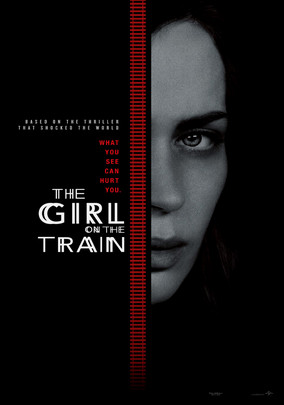
The Girl on the Train-2016

The Girl on the Train-2016

Director Tate Taylor

Starring Emily Blunt

Scott’s Review #493

80105068

Reviewed October 12, 2016

Grade: B+

The blockbuster was the apparent must-see film of the fall of 2016. Almost everyone flocked to see it, and I happily saw it shortly after its release.

Despite some flaws, The Girl on a Train (2016) is an excellent thriller and a companion to Gone Girl (2014).

It shares a similar style, tone, and, in a way, story.

A whodunit with psychological, almost Hitchcockian elements, it navigates twists and turns to an unfortunate, disappointing finale.

Still, it is a more than adequate offering that does not bore.

Based on the hit novel of the same name, which I understand is superior to the film.

First and foremost, how gorgeous was the scenic eye candy of suburban New York City, where the train chugs along the Hudson River in breathtaking beauty?

The film’s point is that affluent houses are nestled along the riverbanks, hiding secrets. Beautiful neighborhoods are often riddled with affairs, drama, and backstabbing.

The train’s setting and element—peering through windows to witness smoldering events—were perfect.

The film’s standout is Emily Blunt, who gives a compelling, sometimes heartbreaking turn as a boozy, jobless young woman, heartbreak after heartbreak.

She finds solace on the Metro-North train as she peers into a particular well-to-do house, making up stories about a young woman she renames daily, usually inebriated.

Though The Girl on the Train is not the typical “Oscar-type film,” I’d argue that a potential nomination is warranted for Blunt, who is brilliant on her emotional roller coaster.

Rachel fantasizes about being the stranger’s friend, revealing her desperation. We quickly learn about her life circumstances and feel empathy.

I anticipated an experience like Hitchcock’s classic Rear Window (1954), in which Rachel notices a crime and somehow becomes involved. This is partly true, but it is also different.

I was, however, treated to a film that never lags or waivers, and the action is plenty, not in bombs or car-chase way, but instead a circulating array of plot twists and emotions.

It’s wonderful to see Allison Janney, Lisa Kudrow, and Justin Theroux in a big-budget, mainstream film rather than small independent films for a change.

All three knock the material they are given out of the park, and kudos to the writers for making Kudrow, in little more than a cameo, a significant part of the grand reveal.

Arguably, Janney’s Detective Riley is the weakest-written character and seems to change motivations with each story shift. This is perplexing and too plot-driven.

In a way, the same might be said for Theroux’s character of Tom Watson, but, alas, it is a thriller, which sometimes happens in this genre.

Without giving much away, the film’s conclusion is unsatisfactory. We are given an ending wrapped in a neat, tidy bow, which contradicts the rest of the film.

The film is confusing, dream-like, and muddled—in a good way. Rachel’s thoughts disturb us, and we wonder what’s real.

The climax is too clear, and instead of leaving much to the imagination, we get a linear, straightforward ending, almost geared toward a Hallmark television movie (gag).

It would have been wise to keep Rachel vague about her surroundings, but that doesn’t happen.

The Girl on the Train (2016) will not redefine cinema or go down in history as fine art, but it is not intended to be the type of film designed to keep you on the edge of your seat, and it does so.

The story is above average and slick, but Blunt deserves heaps of praise and is head and shoulders above the rest of the film and the cast, which is no small feat given the talent involved.

Great acting job, but the writing could have been slightly better.

Mother-2009

Mother-2009

Director Bong Joon-ho

Starring Kim Hye-Ja 

Scott’s Review #480

70118372

Reviewed September 11, 2016

Grade: A

Mother (2009) is brilliant! I loved it and implored people to give the film a chance.

Years later, just desserts would be served. Director Bong Joon-ho would win the Oscar for Parasite (2019).

It is a South Korean film, made in 2009, that almost nobody has heard of, let alone seen, but it is fantastic.

It’s a shame that it did not get more notice, but sadly, some of the best films do not.

The plot revolves around a mysterious murder that occurs in a small South Korean village and a poor village woman’s mission to exonerate her mentally challenged son, who is convicted of the crime in a botched case.

The plot twists and turns and is compelling beyond belief. The real crux of the film is what lengths a mother will take to protect her son, a question many viewers can ask themselves.

Why Hye-Ja Kim, who plays the title character, was not nominated for an Oscar for this role is beyond me and quite a shame. She is a goldmine and gives a terrific, memorable performance.

The movie is stylistic and has moments that resemble Hitchcock and David Lynch combined. One does not know what will transpire from scene to scene, and that is the beauty of the film- besides the wonderful acting.

Once the film ends, viewers will feel compelled to discuss it, which is an accomplished feat.

I highly recommend it.

Independent Spirit Award Nominations: Best Foreign Film

House at the End of the Street-2012

House at the End of the Street-2012

Director Mark Tonderai

Starring Jennifer Lawrence

Scott’s Review #438

70215438

Reviewed July 2, 2016

Grade: B

House at the End of the Street (2012) is a perfect example of a horror/thriller film that has excellent effects and great potential, but the storytelling brings it down.

It is also a film starring Jennifer Lawrence before she became an Oscar-winning star. Her performance is adequate, and she does what she can in the lead role.

Lawrence is likable in this role and is clearly the film’s hero.

The film itself looks great. It has all of the necessary horror elements: a creepy house in the woods, darkness, and sudden scares.

The buildup in the first half is very interesting, and the audience isn’t quite sure what’s to come or what mysteries and secrets lurk in the title house.

During the final thirty minutes, however, when the twist is revealed, the film becomes predictable, by the numbers, and disappoints.

The story becomes so convoluted it hardly matters anymore.

The first half is great, but the second half fails.

I was happy to see Elisabeth Shue in this movie, as she has been out of the limelight for years; her character, though,  is quite one-dimensional.

Film summary: great-looking horror film, with mediocre writing.

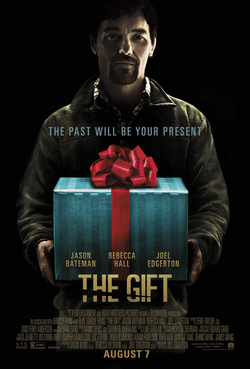
The Gift-2015

The Gift-2015

Director Joel Edgerton

Starring Jason Bateman, Joel Edgerton

Scott’s Review #264

Reviewed August 9, 2015

Grade: A-

The Gift (2015) is a throwback to the psychological thriller genre made famous by Fatal Attraction in 1987 and similar films throughout the 1990s.

An unstable psycho threatens a happy couple.

Interestingly, The Gift is similar in genre to a film also released in 2015, The Boy Next Door.

The Gift is worlds superior to that film and delivers surprises, frights, twists, and turns I didn’t see coming.

The film isn’t predictable, which is refreshing in this genre.

Jason Bateman and Rebecca Hall star as Simon and Robyn, a successful young couple who relocate from Chicago to sunny California, near Simon’s childhood hometown, to start a new life and start a family.

They soon run into a man named Gordo, played by actor/director Joel Edgerton, a high school chum of Simon’s from twenty years ago whom Simon barely remembers.

Simon and Gordo plan to reconnect over dinner, but the audience senses something is off about Gordo.

As Simon, Gordo, and Robyn reconnect, Gordo starts leaving pleasant little gifts on Simon and Robyn’s doorstep and showing up at their house unannounced, which is particularly unnerving to Robyn, who is home alone all day.

Simon is consumed with his new career and possible promotion.

Interestingly, their home is located in a secluded area.

The film soon reveals that Gordo was nicknamed “Gordo the Weirdo” in high school and that an incident involving Gordo occurred, though nobody seems to remember the exact circumstances.

Perhaps they choose not to remember?

The vagueness of this situation is appealing because the audience is sure these circumstances will be revealed later in the story and play a large part in the climax, and they do.

We also learn that another incident took place with Robyn in Chicago and that she suffered a miscarriage. She does not drink and avoids pills. Could she be unstable, imagining things, or overly cautious?

It is revealed that she handles stress poorly.

A wonderful aspect of The Gift is its surprise factor. As the plot twists and turns, I switch alliances and wonder who the villain is. Gordo? Simon? Robyn?

Edgerton (along with a great performance) directed the film compellingly and was undoubtedly influenced by Alfred Hitchcock.

The camera angles and score excel at establishing the right level of tension at just the right moment.

In more than a few scenes, the audience knows something will jump out at the screen, so there is anticipation, but when and how it will happen is a surprise.

Many scenes show Robyn alone during the day, thank goodness, when she hears a noise or notices the water running. These scenes are traditional fare in horror or thriller, but they’re well done in The Gift.

Simon is an interesting character. Sophisticated, educated, and with a high-level executive job, he has a strange fear of monkeys.

The past is a common theme of the film- past events encase the three lead characters, leading to conflict, and ultimately these events come back to haunt them.

Most of Simon’s friends are unlikable and seem more interested in style than substance. They seem drawn to Simon more for his success than because they care about him.

This contradicts his wife’s character.

Robyn is down-to-earth and kind, and does not place as much stock in wealth and achievements as she does in personality and being a kind individual.

She and Simon bicker and disagree about Gordo, and their conflict increases.

It is not often in films anymore that one is truly frightened and “jumps out of your seat”, but two intense scenes, one involving a dog and the other a shower, made me jump, and the hairs on my arm stand on end.

Everyone in the audience gasped together.

Now that is fun!

The only negatives in The Gift are continuity issues and the suspension of disbelief in some scenes. Without giving anything away, how does Gordo manage to do some things he can’t?

The Gift (2015) is an old-fashioned thriller with excellent acting, compelling characters, and a wonderful debut for Edgerton in the director’s chair.

The film will leave the viewer pondering moral questions and relating to each of the three main characters.

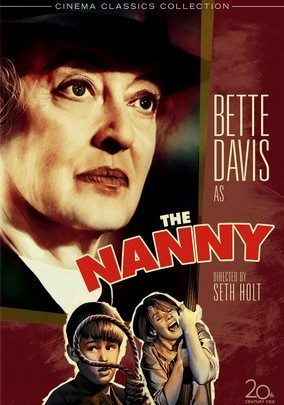
The Nanny-1965

The Nanny-1965

Director Seth Holt

Starring Bette Davis

Scott’s Review #256

70089620

Reviewed July 11, 2015

Grade: B

The Nanny is a 1965 Hammer productions thriller starring legendary film icon Bette Davis as a mysterious nanny caring for a ten-year-old boy named Joey.

Joey has recently been released from a mental institution and returned home to resume everyday life, but has he been “cured”?

There is obvious tension between Joey and Nanny, but the audience doesn’t know what that tension is precisely. Why do they dislike each other? Why is Joey afraid of her?

As the plot unfolds, the suspense and tensions thicken as various events occur and Joey’s parents and Aunt Pen are further fleshed out. Past events are revisited, and the story becomes thrilling.

At one point, long before Joey’s return home, his younger sister has drowned, and the circumstances are vague. It has devastated the family, including Nanny. Joey has been blamed for her death, though he insists that Nanny is the culprit.

Nobody except the neighbor girl believes Joey, and the audience wonders who to believe and who to root for: Joey or Nanny. Davis, like Nanny, brings a warmness to her character, but is she sincere? Is it an act? Is Joey a sweet boy or maniacal?

These questions race through the audience’s minds as the film progresses. When Virginia, the mother, eats tainted food, the obvious conclusion is that the Nanny poisoned it since she prepared it. But why? Did she do this?

As the plot is slowly explained, there are a few chills, though the ending is not too surprising.

Any film starring Bette Davis is a treasure, though admittedly, it is not her finest work. Still, her finest work is challenging to match.

The Nanny is a good film, though not great. It is shot in black and white, which is a nice touch for a thriller.

The main reason to watch Davis’s performance is that it is always mesmerizing. Traditionally playing gruff, mean, or bitchy parts (especially in her later years), The Nanny allows Davis to play a sympathetic role.

She is seemingly sweet, proper, well-organized, and a perfect nanny on paper.

The role of Virginia, played by Wendy Craig, is a bit too neurotic and slightly over-acted. She is rather one-note as the fretting mother worried about her son. The character of the father is also a bit one-dimensional.

The Nanny is more of a classic thriller from the 1960s that is often lumped together with some of Bette Davis’s other films around the same period (Dead Ringer-1964, Hush, Hush, Sweet Charlotte-1964, and Whatever Happened to Baby Jane? -1966), and are in large part superior to The Nanny. As a stand-alone, it is a decent film.

The Boy Next Door-2015

The Boy Next Door-2015

Director Rob Cohen

Starring Jennifer Lopez

Scott’s Review #254

80013272

Reviewed July 5, 2015

Grade: C-

A steamy direct rip-off of the 1987 classic film Fatal Attraction, The Boy Next Door (2015) is a mainstream thriller starring Jennifer Lopez as a separated suburban Mom raising her son alone.

One day a handsome young man, Noah (Ryan Guzman), moves in next door. He befriends her son and develops an unhealthy obsession with her.

The film is your basic thrill ride, with some jumps mixed in, but predictable as they come, and safe mainstream fare.

Claire Peterson (Lopez) lives a cozy suburban life with her socially awkward teenage son, Kevin (Ian Nelson), and works as a literature teacher at the local high school.

She lives a modest yet successful life.

Her estranged husband Garrett (John Corbett) has cheated on her with his secretary.

One day a hunky twenty-year-old neighbor, Noah, moves in, takes a shine to Kevin, and an attraction develops between Noah and Claire, despite the age gap.

The audience knows something is off.

The inevitable happens: a lonely Claire winds up in bed with Noah after a disastrous blind double date with her friend and confidant Vicky (Kristin Chenoweth), also the vice-principal of Claire’s school.

The sex scenes are titillating and sensual with lots of skin.

I went in not expecting an invigorating or thought-provoking film, and I wasn’t disappointed.

The film is lightweight and predictable, with a lifetime television movie feel. The acting isn’t great, and the setups are obvious a mile away.

When Claire and Noah meet, they have instant chemistry, but the audience also senses a sinister quality in Noah.

There is no doubt he will make trouble for Claire.

As we progress, we learn Noah has a temper, another setup for what’s to come. If he feels wronged, he strikes back.

Once Claire realizes their passionate night was a mistake, Noah becomes obsessed with and vengeful toward Claire and everyone around her.

The plot is filled with one implausibility after another. I could list silly nuances for hours, but a few immediately come to mind.

I don’t buy Jennifer Lopez as an intelligent, sophisticated literature genius (despite the film hysterically having her wear nerdy glasses), nor do I buy the good-looking Ryan Guzman (Noah) as a scholarly expert in literature.

This makes the plot completely unbelievable.

Throughout the film, Noah can do whatever he wants: hack into Claire’s computer, arrange for printouts of his liaison with her to fly endlessly from the ceilings, tamper with brakes, and seamlessly splice Claire’s voice into conversations.

The entire film is ridiculous and unbelievable, but, again, it’s what I expected.

The ending surprised me abruptly with no cliffhanger or hint at a sequel, as is common with thrillers. Perhaps the filmmakers had low expectations for audience turnout.

One jarring point is that Jennifer Lopez, clearly Latina, plays a character named Claire Peterson in a suburban neighborhood. Nowhere is her Latina heritage mentioned. The character is about as white as you can get.

A dumb, entertaining ninety minutes of escapism, The Boy Next Door is not a good film (2015) but fun. It has some thrilling moments, and it’s fun to kick back, relax, and take it for what it is.

It is comparable to a McDonald’s hamburger: you know what you will get and expect nothing more.

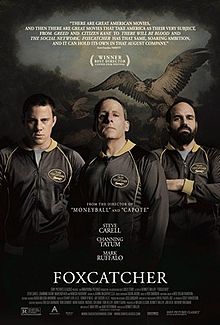
Foxcatcher-2014

Foxcatcher-2014

Director Bennett Miller

Starring Steve Carell

Scott’s Review #210

220px-Foxcatcher_First_Teaser_Poster

Reviewed January 2, 2015

Grade: A

Foxcatcher (2014) is a dark, disturbing psychological thriller that succeeds through its bleak look and strong performances.

It is a superb, character-driven story based on true events, led by Steve Carell, Channing Tatum, and Mark Ruffalo, all of whom are excellent.

It is a sports film, but hardly as predictable as many in the genre.

The film is set in 1987. Brothers Mark and Dave Schultz (Tatum and Ruffalo, respectively) are former Olympic gold-medal-winning wrestlers preparing to compete in the 1988 Olympics.

Despite winning a gold medal, Mark (Tatum) lives in squalor and is reduced to giving pep rallies at elementary schools, jobs meant for Dave (Ruffalo), for very little money.

Dave is the more successful brother, a family man living a happy existence. He is more talented and more driven than Mark.

One day, wealthy philanthropist John du Pont (Carell) contacts Mark and invites him to live with him at his expansive estate in Pennsylvania and train with other aspiring Olympic wrestlers.

John’s initial attempts to woo Dave also fail.

From this point in the story, the film delves into psychologically dark territory, mainly the controlling, disturbing behavior of John, as he attempts to control Mark and woo Dave.

John has a damaged relationship with his mother, Jean, wonderfully played by Vanessa Redgrave. Jean feels that John’s obsession with the wrestling world is far beneath him, and their relationship is tense and unloving.

The three principal actors in the film are worth discussing, as the film wouldn’t be as complex or compelling without them.

Let’s begin with Channing Tatum- known primarily as a hunky movie star with questionable acting ability- he proves the naysayers wrong.

I cannot help but compare him to a younger Brad Pitt. It took years and many films for him to be recognized as more than a pretty face and abs to die for.

His performance is understated and calm, but his laid-back demeanor is nuanced. Sometimes anger bubbles under the surface.

Carell is downright creepy as the affluent yet insecure Du Pont.

Throughout the film, the character seems off. Known mostly for silly comedies, he delivers a breakout performance that, I hope, leads to similar meaty roles. Carell shows he has what it takes to appear in quality films.

Lastly, Mark Ruffalo, who always plays interesting, everyman-type characters, again brings strong emotion to Dave Schultz, a successful, driven athlete who is also a dedicated husband and father.

With a different cast, Foxcatcher wouldn’t have been as interesting.

Questions will arise at the end of the film. What were John du Pont’s motivations? What effect did his mother have on his actions? How could a man with all his power and wealth end up this sad? Did John make inappropriate sexual overtures toward the wrestlers?

Foxcatcher (2014) excels at portraying a dark, layered, moody true story and shows that wealth does not equal happiness; in many cases, the opposite occurs.

The film is an immense success.

Oscar Nominations: Best Director-Bennett Miller, Best Actor-Steve Carell, Best Supporting Actor-Mark Ruffalo, Best Original Screenplay, Best Makeup and Hairstyling

Independent Spirit Award Nominations: 1 win-Special Distinction Award (won)

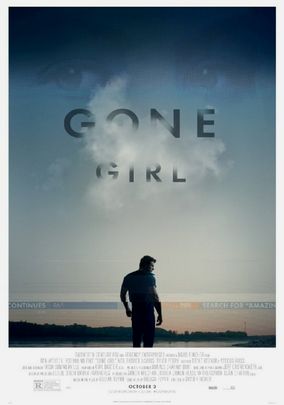
Gone Girl-2014

Gone Girl-2014

Director David Fincher

Starring Ben Affleck, Rosamund Pike

Scott’s Review #181

70305893

Reviewed October 6, 2014

Grade: A-

Gone Girl (2014), directed by dark-yet-mainstream filmmaker David Fincher, offers a simple premise.

An affluent woman disappears without warning and a loved one is suspected of the crime.

This type of story has been done many times before in film; think Prisoners (2013) as a recent example, but Gone Girl stands out for its storytelling, pacing, and plenty of twists and turns.

The film is based on the best-selling novel, written by popular novelist Gillian Flynn, who also wrote the screenplay.

Ben Affleck plays Nick Dunne, a man in his 30s whose wife, Amy, magnificently played by Rosamund Pike, mysteriously disappears, sparking a media frenzy.

After clues are revealed, Nick is thought to be a sociopath and responsible for Amy’s disappearance.

Nick and Amy have the perfect marriage… or so it appears. Until fairly recently, Nick and Amy have lived an idyllic, well-to-do lifestyle in New York City.

Amy’s family is wealthy and writes as successful children’s authors.

After the 2010 recession, which causes Nick and Amy to lose their jobs and all their money, and with Nick’s parents’ health problems, they find themselves in a state of peril, and their marriage is severely tested.

They are forced to move to a small town in Missouri where Nick grew up, and their lifestyle completely changes.

The film reveals these facts as it progresses through flashbacks, mostly from Amy’s perspective, as she chronicles events in her diary.

The story is so smart and layered that the audience continually asks questions throughout the film.

Is Amy dead? Did she fake her death? Is Nick involved or innocent? Could Amy’s parents be involved in her disappearance? Can we trust Nick’s sister Margo? What involvement does Amy’s wealthy college sweetheart Desi Collings (Neil Patrick Harris) have?

As more of the plot unfolds, new questions arise.

Intelligently written, with twists and turns galore, after a slow start, the film is a thrill ride. The slow start is necessary to lay the film’s groundwork, and it wisely keeps the audience guessing throughout.

The film feels like a puzzle (literally and figuratively), as each layer unravels and raises new questions and theories.

Trent Reznor (Nine Inch Nails) composes the film’s score, adding a dark, techno-gloomy feel that heightens the mood.

The acting in Gone Girl is exceptional.

Affleck is capable in the lead male role, though I didn’t find the part as meaty as one might expect. Affleck is handsome and charismatic, though unlikeable too, and I think that is all the part requires.

The standout and breakout performance belongs to Rosamund Pike. After years of struggling in support roles as someone’s wife or friend, Pike finally has a complex role that lets her sink her teeth in.

Pike displays almost every emotion- kindness, anger, rage, deception, humor.

Amy is nuanced and resourceful, and more than one moviegoer’s mouth dropped open at her actions in a couple of scenes, think wine bottle and hammer.

Neil Patrick Harris is dynamic as Desi and brings a healthy dose of creepiness mixed with childlike sweetness.

Gone Girl features one of the most shocking scenes involving a bedroom, a box cutter, and lots of blood.

Fincher’s setting of North Carthage, Missouri, is interesting. Hardly the Manhattan intelligentsia Nick and Amy are accustomed to, the film effectively portrays the perfect mix of homespun kindness that turns into a lynch mob of townspeople.

The sweet neighbors, who happily offer Nick casseroles and hugs one minute, suddenly turn into sharks when the details are revealed.

The media is, almost ironically, portrayed as menacing and ready to pounce. Sela Ward and Missy Pyle play female reporters who are, deliciously and comically, menacing and ready to pounce.

More than a handful of female characters are written as borderline man-hating and eager to either castrate, figuratively speaking, or bed (or both!), Nick Dunne.

Gone Girl contains a few plot holes. How could there be no recorded tapes of the goings-on at Desi’s lake house? The entire plot is so far-fetched when one decides to ponder it.

Gone Girl (2014) is a mainstream yet dark Hollywood thrill ride with a theme of dishonesty, and a film exceptionally well-written and layered.

Oscar Nominations: Best Actress-Rosamund Pike

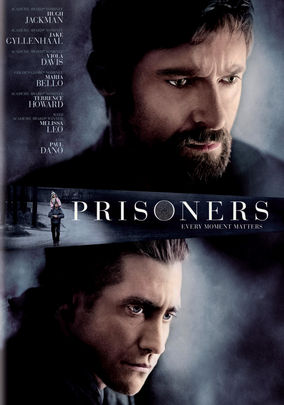
Prisoners-2013

Prisoners-2013

Director Denis Villeneuve

Starring Hugh Jackman, Jake Gyllenhaal

Scott’s Review #75

70273235

Reviewed June 27, 2014

Grade: B+

The film Prisoners (2013) weaves a gripping, taut psychological tale amid a stellar cast, including Hugh Jackman, Jake Gyllenhaal, Maria Bello, Viola Davis, and Paul Dano.

That is what separates it from other similar, yet mediocre, thrillers.

The gray, somber Pennsylvania town is a perfect backdrop for a story involving child abduction and a father who seeks a confession from the presumed kidnapper.

The mood and cinematography are impressive, and the bleakness fits the tone: a cold Thanksgiving holiday weekend in a working-class steel town.

At two hours and twenty-six minutes, the film is long, but it keeps you on the edge of your seat.

What intrigued me most was the audience conflict of whom to root for. Is the father purely innocent? Is the kidnapper guilty? Is someone else involved?

These questions go through the viewer’s mind during the film.

Prisoners has a major drawback: too many plot holes and questions left unanswered after the film.

The kidnapper’s motivations are weak and never fully explained. Parts of the story don’t add up and make little sense.

The film’s style is similar to Zodiac (2006) and Mystic River (2003).

Prisoners (2013) is an intense, thrilling ride to enjoy, but not over-analyze.

Oscar Nominations: Best Cinematography

Dead Ringer-1964

Dead Ringer-1964

Director Paul Henreid

Starring Bette Davis, Karl Malden

Scott’s Review #67

70001706

Reviewed June 24, 2014

Grade: B+

Dead Ringer (1964) is a black-and-white thriller starring Bette Davis in her final leading role before she took on the character and supporting roles.

Davis plays an interesting dual role, and as a massive fan of hers, I believe two are better than one.

The story centers on a wealthy widow and her twin sister, a struggling bar owner. The two have not spoken in decades and renewed their feud at a funeral.

One sister schemes to cause the other’s death, which results in an entertaining game of mistaken identity.

Davis carries this film and is dynamic in every scene. With her eyes, facial expressions, and throaty voice, her characteristic sexy pose with the cigarette is often utilized.

She is simply dynamic.

The story and plot are carefully crafted, and the angles that show both characters are impressive for the time (1964).

The differing lifestyles of the characters also make for a more challenging performance by Davis.

Karl Malden is a treat as a love interest of one of the sisters.