Tag Archives: Beth Grant

No Country for Old Men-2007

No Country for Old Men-2007

Directors Ethan Coen, Joel Coen

Starring Tommy Lee Jones, Josh Brolin

Scott’s Review #745

Reviewed April 19, 2018

Grade: A

No Country for Old Men, made in 2007,  is arguably Joel and Ethan Coen’s greatest work save for the amazing Fargo (1996).

Achieving the Best Picture Academy Award and appearing on numerous Top Ten lists for its year of release, the film is one of their most celebrated.

Containing dark humor, offbeat characters, and fantastic storytelling, adding in some of the most gorgeous cinematography in film history, No Country for Old Men is one of the decade’s great films.

The time is 1980, and it’s set in western Texas as we follow the dangerous hitman Anton Chigurh, played wonderfully by Javier Bardem.

He escapes jail by strangling a deputy and is subsequently hired to find Llewelyn Moss (Josh Brolin), a hunter who has accidentally stumbled onto two million dollars in a suitcase that Mexican smugglers are desperate to find.

In the mix is Sheriff Tom Bell (Tommy Lee Jones), who is pursuing both men. Moss’s wife, Carla Jean (Kelly Macdonald), in turn becomes an important character as she is instrumental in the web of deceit the chain of events creates.

The film subsequently turns into an exciting cat-and-mouse chase with a dramatic climax.

The crux of the story and its plethora of possibilities are what make the events so exciting to watch. As characters are in constant pursuit of each other, the viewer wonders who will catch up to whom and when.

One quality that makes the film unique with an identity all its own is that the three principal characters (Moss, Bell, and Chigurh) seldom appear in the same scene, adding a layer of mystery and intrigue.

The hero and most well-liked of all the characters is, of course, Sheriff Bell- a proponent of honesty and truth. In contrast, the other two characters are less than savory types, especially the despicable Chigurh.

My favorite character in the story is Chigurh, as he is the most interesting, and Bardem plays him to the hilt with a calm malevolence- anger just bubbling under the surface.

One wonders when he will strike next or if he will spare a life, as he intimidates his prey by offering to play a game of chance, the toss of a coin to determine life or death.

He is one of cinema’s most vicious villains. With his bob-cut hairstyle and his sunken brown eyes, he is a force to be reckoned with by looks alone.

True to many other Ethan and Joel Coen films, the supporting or even the glorified extras are perfectly cast and filled with interesting quirkiness.

Examples of this include the kindly gas station owner who correctly guesses a coin toss and is spared his life. My favorite is the matter-of-fact woman at the hotel front desk, with her permed hair, who gives as good as she gets, and her monotone voice is great.

It is these smaller intricacies that truly make No Country for Old Men shine and are a staple of Coen Brothers films in general.

Many similarities abound between Fargo and No Country for Old Men, not the least of which is the main protagonist being an older and wiser police chief (Marge Gunderson and Tom Bell, respectively).

Add to this a series of brutal murders and the protagonist being from elsewhere and stumbling upon a small, bleak town. Of course, the extreme violence depicted in both must be mentioned as comparable.

Having shamefully only seen this epic thriller twice, I find No Country for Old Men (2007) a dynamic film, reminiscent of the best of Sam Peckinpah’s classics, such as The Getaway (1972) or The Wild Bunch (1967).

The Coen brothers cross film genres, blending thriller, western, and suspense that rival the greatest of Hitchcock’s films.

I cannot wait to see it again.

Oscar Nominations: 4 wins-Best Picture (won), Best Director-Joel and Ethan Coen (won), Best Supporting Actor-Javier Bardem (won), Best Adapted Screenplay (won), Best Sound Editing, Best Sound Mixing, Best Cinematography, Best Film Editing
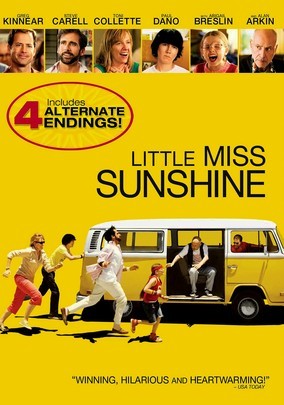
Little Miss Sunshine-2006

Little Miss Sunshine-2006

Director Jonathan Dayton, Valerie Faris

Starring Greg Kinnear, Steve Carell

Scott’s Review #697

Reviewed November 23, 2017

Grade: A

A film that became a sleeper hit at the time of its 2006 release and went on to earn year-end award honors galore, Little Miss Sunshine holds up quite well over 10 years after its debut.

Combining family humor with heart, audiences will fall in love with the antics of the dysfunctional Hoover family, warts and all, as they strive to overcome endless obstacles to give their precocious seven-year-old daughter, Olive, a chance to compete in a beauty pageant hundreds of miles away.

The film is a comedic treat, full of charm and uproarious fun.

Directors  (and husband and wife team) Jonathan Dayton and Valerie Faris start right to work, kicking off the humor in style as the one hour and forty-one-minute film introduces depressed Uncle Frank (Steve Carell) to the rest of the Hoovers as he comes to live with the family after a failed suicide attempt.

Frank, who is gay and has recently been dumped, is Sheryl Hoover’s (Toni Collette) brother and has a dry sense of humor.

He fits in well with the other peculiar members of the clan- Dad Richard (Greg Kinnear), a struggling motivational speaker, Grandpa Edwin, a vulgar, irritable man, brother Dwayne, angry and refusing to speak, and finally, pudgy-faced Olive.

The brightest spots in Little Miss Sunshine are the exceptional writing and the nuanced, non-one-dimensional characters.

Each character is both good and troubled in their own way, and the overall message of the film is an important one.

The plot of the film encompasses a beauty queen pageant and the lifestyle this involves- hypocrisy and plastic nature are the main themes.

When the family stops at a roadside cafe for breakfast, Olive hungrily orders ice cream and is shamed by a member of the family- she must watch her figure, she is told.

Other members instead encouraged Olive to be herself.

Little Miss Sunshine offers an interesting dissection of the pressures very young people face to be perfect, especially in the beauty pageant business, and of the messages society sends.

Shocking is a scene in which many of the contestants, all under the age of ten, appear wearing sexy, glamorous makeup and bikinis.

Little Miss Sunshine is a very funny film, and this is undoubtedly due to the chemistry among the talented cast.

Quite the ensemble: all five principal characters have interesting relationships with each other.

Too many film comedies suffer immensely from forced jokes or typical “set-up” style humor, plot devices created to elicit a response from the audience, which I call “dumbing down”.

Little Miss Sunshine, however, feels authentic and fresh- a situation becomes funny because there is an honest reaction by the characters.

The film is a slice of the life experience of an average blue-collar family.

A standout scene is the hysterical one in which a highway patrol officer pulls over the Hoovers.

To say nothing of the fact that the Hoovers are “escorting” a corpse to their destination, along with pornographic magazines, their classic, beat-up, yellow Volkswagen bus barely runs and contains a malfunctioning horn that beeps at inopportune times.

These hilarious scenes work on all levels, as the comic timing is palpable and elicits a laugh-out-loud response.

Furthermore, the climactic “beauty pageant” scene is fraught with physical humor.

Olive, the oddball in a group of hypersexualized, young starlets, takes inspiration from her grandfather to simply “be herself”.

She does so in a hilarious version of “Super Freak” that is R-rated, both shocking the audience and celebrated by others- specifically her entire family.

Olive successfully proves that she can be herself and happily does so.

How wonderful and refreshing to find a comedy with honest, ample humor and real integrity that can shine many years after its first release and retain the richness and zest that originally captured legions of viewers.

As proven over time by many independent films, wonderful writing and directors who share a vision go a long way toward achieving a quality piece of filmmaking.

Oscar Nominations: 2 wins-Best Picture, Best Supporting Actor-Alan Arkin (won), Best Supporting Actress-Abigail Breslin, Best Original Screenplay (won)

Independent Spirit Award Nominations: 4 wins-Best Feature (won), Best Director-Jonathan Dayton and Valerie Faris (won), Best Supporting Male-Alan Arkin (won), Paul Dano, Best First Screenplay (won)

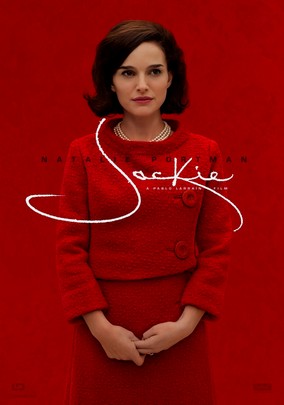
Jackie-2016

Jackie-2016

Director Pablo Larraín

Starring Natalie Portman

Scott’s Review #576

Reviewed January 1, 2017

Grade: A-

Natalie Portman carries the 2016 biographical-drama film based on the life of Jackie Kennedy and the events directly following the assassination of John F. Kennedy in 1963.

The film doesn’t retread conspiracy theories or offer more than a few brief glimpses of JFK himself. Instead, it tells Jackie’s story and what she faced throughout the ordeal.

The film wisely uses flashbacks to show the famous White House tour Jackie gave shortly before the President’s death.

Portman delivers a bravura performance as Jackie.

Director Pablo Larrain, best known for foreign-language films (the Chilean film No (2012) comes to mind), succeeds in this American history project.

The film is gloomy in tone, with a terrific, brooding musical score by Mica Levi and loud, abrupt sound effects.

The film feels foreboding and dark overall.

The main activity is told through a famous Life interview that Jackie Kennedy gave a week after the assassination. The reporter is Theodore H. White, who is slightly less than sympathetic toward the First Lady.

Set in Massachusetts, Jackie remains pained, seeking peaceful tranquility away from the limelight.

Portman successfully reveals two sides of Jackie Kennedy to the audience. Not simply the smiling debutante she always portrayed publicly, Jackie was also a complex, feisty woman.

She vehemently wanted the world to see how brutal the assassination was, how proud she was of her husband, and how she would not back down from holding a lavish and public funeral procession for her deceased husband.

Jackie faced harsh criticism and defiance for her choice. A proud woman, she did not wish to run away and hide from the terrible events.

Jackie is mostly a quiet, introspective film. Much of the film follows Jackie as she is interviewed, with flashbacks to her giving the White House tour.

Typically, Portman portrays Jackie as prim, proper, and demure. She is always filled with class and grace.

In one riveting sequence, though, we see Jackie walking through the White House, smoking cigarettes and drinking vodka. She appears alone and vulnerable, having just lost her husband.

Portman embraces her pain, and the audience grieves with her. She is alone in more ways than one. We see her not only as a First Lady but also as a sad woman in her agony.

Portman is fantastic in her mannerisms and tone of voice.

I loved the continuous use of flashbacks to tell the story. Still, the film avoids an unnecessary history lesson. We all know what happened. The point of the film is to answer curiosity about Jackie.

What is most effective is the focus on Jackie’s reactions and how Jackie handled the events.

In a grotesque scene rivaling any horror film, we are right there with Jackie in the car that fateful day as a shot rings out, blowing JFK’s head wide open. Sinking into Jackie’s lap, she later candidly describes to the Life magazine reporter how she attempted to hold the remains of his head together.

We then see her wandering around, her beautiful pink suit smeared with blood.

A quiet yet compelling and mesmerizing film, Portman is the main draw. She channels emotions of heartbreak, sadness, and composure.

Jackie was a fantastic First Lady who was always graceful and proper, but Portman shows another side of her that very few people knew about.

Beyond this fine acting, Jackie (2016) is a dark, brooding film that tells this woman’s story.

Oscar Nominations: Best Actress-Natalie Portman, Best Original Score, Best Costume Design

Independent Spirit Award Nominations: Best Feature, Best Director-Pablo Larrain, Best Female Lead-Natalie Portman, Best Editing

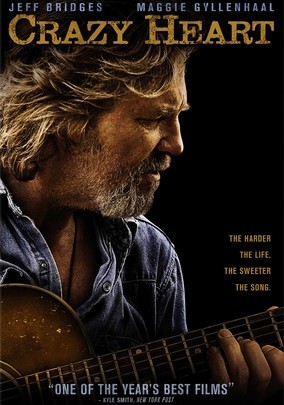
Crazy Heart-2009

Crazy Heart-2009

Director Scott Cooper

Starring Jeff Bridges

Scott’s Review #571

Reviewed December 29, 2016

Grade: A-

Crazy Heart (2009) is a film that is perfectly crafted for Jeff Bridges’ talents as an actor, and the role seems written specifically for him.

To that end, it is a showcase for the actor, and as proof, he was awarded the Best Actor Oscar.

He plays surly, grizzled, and rode hard to the hilt. His chemistry with co-star Maggie Gyllenhaal is fantastic, despite her character being much younger than his.

The first directorial effort by Scott Cooper, who does an outstanding job.

Gyllenhaal plays a reporter, Jean Craddock, who becomes attached and fascinated by Bad Blake (Bridges), a former country-western star turned alcoholic and now a washed-up older man.

He has mentored an upstart played by Colin Farrell, who has since usurped Bad Blake in popularity, leading Blake to depression and alcohol to relieve his pain.

He still performs, but in dirty hotels or bowling alleys, for peanuts.

Bridge’s character reminds me so much of Mickey Rourke’s character “Randy the Ram” in The Wrestler, from 2008, so anyone who enjoyed the latter will enjoy the former.

One might watch the two exceptional films in tandem, and in both, a younger female character meshes well with the stories.

The story portrayed in Crazy Heart is gritty and depressing, yet also heartwarming and sentimental. We root for Blake and Jean to succeed as they battle Blake’s many demons.

Crazy Heart (2009) is very well-acted and genuine.

The film is nice as it is a character-driven film instead of a story-dictated one.

Oscar Nominations: 2 wins-Best Actor-Jeff Bridges (won), Best Supporting Actress-Maggie Gyllenhaal, Best Original Song-“The Weary Kind” (won)

Independent Spirit Award Nominations: 2 wins-Best Male Lead-Jeff Bridges (won), Best First Screenplay, Best First Feature (won)