Tag Archives: Missi Pyle

Ma-2019

Ma-2019

Director Tate Taylor

Starring Octavia Spencer

Scott’s Review #949

Reviewed October 22, 2019

Grade: B+

Marketed as a slasher film based on the trailers, Ma (2019) impressed me immensely as my expectations of a standard horror film were superseded by a more complex, perfectly paced psychological thriller.

A fantastic performance by Octavia Spencer, and dare I mention an Oscar-worthy one if this were a different type of film, the actress effortlessly brings a vulnerability to a not-so-easy role to play.

The finale is disappointing, and the film includes a few too many stereotypes, but it is a terrific effort nonetheless.

Set somewhere in remote Ohio, but looking more like the southern United States, teenager Maggie Thomson (Diana Silvers) and her mom Erica (Juliette Lewis) return to Erica’s hometown after her marriage fails.

Reduced to a job as a cocktail waitress at a local casino, she encourages Maggie to make friends. Maggie falls into the popular crowd as Erica reconnects with high-school friends who are mostly the parents of Maggie’s new friends.

Sue Ann (Spencer) bonds with the cool kids by purchasing them alcohol and hosting parties in her basement, much to the displeasure of her parents.

The audience soon realizes that something is amiss with Sue Ann. She forbids the kids from ever venturing upstairs and slowly develops a needy attachment to the teens.

Flashbacks begin to emerge as clues to her connection to the other parents and her plot for revenge.

The incorporation of a place in the house to avoid is a typical horror gimmick that always works well. Inevitably, someone will venture into that area of the house, and a secret will be revealed. Ma is no different in this regard.

It’s terrific to see more diversity, particularly among the African-American population, represented in the horror genre. Typically, the horror genre has been an all-white affair, with actors of color often cast as best friends or in minor supporting roles at best.

Thanks to Get Out (2017) and Us (2019), horror films have recently included all-black casts and have been tremendous hits.

Let’s hold out hope that the Asian, Latino, and LGBTQ communities will receive more inclusion and bring freshness to a key cinematic genre.

The film belongs to Spencer.

The Oscar-winning actress must have had a fun time with this role and gets to let loose during many scenes. She goes from coquettish to maniacal, sometimes within the same scene, with flawless precision and gutsy acting decisions.

My favorite, Sue Ann, is the unhinged one as she slyly threatens to cut one male character’s genitalia off. She smirks and uses her large, expression-filled eyes to her advantage. Psycho has never looked so good!

The climax, so crucial in horror or thrillers, to follow through and capitalize on the build-up, ultimately fails in Ma. Once the big reveal surfaces and a childhood prank is exposed, the trick hardly seems worthy of a killing bonanza.

A mousy Sue Ann performed fellatio on a nerd instead of her crush. Even those involved on the outskirts are blamed, and waiting twenty years to exact revenge on her tormentors (most of whom have repented) doesn’t seem plausible.

Ma (2019) contains a hefty cast of stalwarts, but it’s Spencer who brings the sometimes-generic material and trivial conclusion to crackling life with her brilliant portrayal of a damaged woman.

Allison Janney, Lewis, and others add respectability when the film teeters too close to mediocrity with its teen character cliches. Still, the film excels when it focuses on a character-rich story and unexpected plot points.
Captain Fantastic-2016

Captain Fantastic-2016

Director Matt Ross

Starring Viggo Mortensen

Scott’s Review #616

Reviewed February 10, 2017

Grade: B+

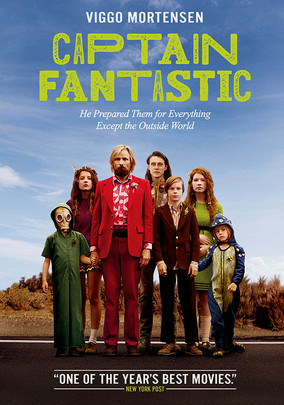
A thought-provoking story that raises a question of home-schooled, non-traditional book intelligence versus the lack of social norms and interactions and debates about which upbringings are more relevant, Captain Fantastic (2016) is a terrific film with a moral center.

The film, which stars Viggo Mortensen, is a family drama with a unique spin and edgy subject matter. Mortensen is not afraid to tackle complex and thoughtful roles.

Although it is perhaps not as gritty as it could have been and feels a bit safe, it still entertains and elicits thought, a critical aspect of film often lacking in modern cinema.

Director Matt Ross immediately treats us to aerial views of the green and mountainous Pacific Northwest, where a family of seven- one father and six children aged five to seventeen, silently prey on and kill a deer grazing in the forest. This is their dinner.

The family is unorthodox, to say the least.

Led by Ben Cash (Mortensen), he teaches the children how to fight, how to survive, and how to be ready for any situation. They are brilliant kids who can recite the Bill of Rights and the most complex literature.

Soon, it is revealed that their mother, Leslie, has committed suicide, and a battle ensues between her parents (Frank Langella and Ann Dowd), who is determined to bury her “properly” with a Christian funeral, and Ben and his children, who are determined to honor her last wishes for cremation.

Ben and the gang travel via their run-down school bus to New Mexico, meeting local townspeople as a battle of cultures occurs.

I commend Ross for creating a story that challenges the viewer to think, depending on the viewer’s religious or political views. There is a risk of people either loving or hating the film.

The film is skewed toward the left, as in the dinner and sleepover scenes with Ben’s sister. Her “Americanized” family is awkward, and the families have entirely different styles.

Ross makes it clear that Ben and his family are the intelligent ones, and his sister’s kids are pretty dumb, not even knowing what the Bill of Rights is and mindlessly playing violent video games.

The fact that they are a “typical American family” is sad and quite telling of wRoss’s perspective

Captain Fantastic wisely shows that either side is not perfect. His oldest son, Bodevan, blooming sexually, has an awkward encounter with a pretty girl, proposing marriage to her with her mother present because he knows no social norms.

A younger son is attracted to a “normal” life with his grandparents, who are a wealthy couple. The grandparents are not presented as bad people; instead, they want the best for their grandchildren and fear how their lives will turn out without better structure or what they perceive as a better upbringing.

Some of the kids blame Ben for their lack of social skills and being what they perceive as “freaks.”

The film does end safely as a happy medium is ultimately reached, but I never felt cheapened by this result. I found Captain Fantastic rich in intelligent writing and a challenging tale.

Many moments of “what would you do?” were brought to the forefront. Mortensen portrays Ben Cash flawlessly, mixing just the right vulnerability with the stubbornness of the character, and it is an excellent film for anyone fearing being intelligent is not cool because it is.

Oscar Nominations: Best Actor-Viggo Mortensen

Independent Spirit Award Nominations: Best Male Lead-Viggo Mortensen

Gone Girl-2014

Gone Girl-2014

Director David Fincher

Starring Ben Affleck, Rosamund Pike

Scott’s Review #181

70305893

Reviewed October 6, 2014

Grade: A-

Gone Girl (2014), directed by dark-yet-mainstream filmmaker David Fincher, offers a simple premise.

An affluent woman disappears without warning and a loved one is suspected of the crime.

This type of story has been done many times before in film; think Prisoners (2013) as a recent example, but Gone Girl stands out for its storytelling, pacing, and plenty of twists and turns.

The film is based on the best-selling novel, written by popular novelist Gillian Flynn, who also wrote the screenplay.

Ben Affleck plays Nick Dunne, a man in his 30s whose wife, Amy, magnificently played by Rosamund Pike, mysteriously disappears, sparking a media frenzy.

After clues are revealed, Nick is thought to be a sociopath and responsible for Amy’s disappearance.

Nick and Amy have the perfect marriage… or so it appears. Until fairly recently, Nick and Amy have lived an idyllic, well-to-do lifestyle in New York City.

Amy’s family is wealthy and writes as successful children’s authors.

After the 2010 recession, which causes Nick and Amy to lose their jobs and all their money, and with Nick’s parents’ health problems, they find themselves in a state of peril, and their marriage is severely tested.

They are forced to move to a small town in Missouri where Nick grew up, and their lifestyle completely changes.

The film reveals these facts as it progresses through flashbacks, mostly from Amy’s perspective, as she chronicles events in her diary.

The story is so smart and layered that the audience continually asks questions throughout the film.

Is Amy dead? Did she fake her death? Is Nick involved or innocent? Could Amy’s parents be involved in her disappearance? Can we trust Nick’s sister Margo? What involvement does Amy’s wealthy college sweetheart Desi Collings (Neil Patrick Harris) have?

As more of the plot unfolds, new questions arise.

Intelligently written, with twists and turns galore, after a slow start, the film is a thrill ride. The slow start is necessary to lay the film’s groundwork, and it wisely keeps the audience guessing throughout.

The film feels like a puzzle (literally and figuratively), as each layer unravels and raises new questions and theories.

Trent Reznor (Nine Inch Nails) composes the film’s score, adding a dark, techno-gloomy feel that heightens the mood.

The acting in Gone Girl is exceptional.

Affleck is capable in the lead male role, though I didn’t find the part as meaty as one might expect. Affleck is handsome and charismatic, though unlikeable too, and I think that is all the part requires.

The standout and breakout performance belongs to Rosamund Pike. After years of struggling in support roles as someone’s wife or friend, Pike finally has a complex role that lets her sink her teeth in.

Pike displays almost every emotion- kindness, anger, rage, deception, humor.

Amy is nuanced and resourceful, and more than one moviegoer’s mouth dropped open at her actions in a couple of scenes, think wine bottle and hammer.

Neil Patrick Harris is dynamic as Desi and brings a healthy dose of creepiness mixed with childlike sweetness.

Gone Girl features one of the most shocking scenes involving a bedroom, a box cutter, and lots of blood.

Fincher’s setting of North Carthage, Missouri, is interesting. Hardly the Manhattan intelligentsia Nick and Amy are accustomed to, the film effectively portrays the perfect mix of homespun kindness that turns into a lynch mob of townspeople.

The sweet neighbors, who happily offer Nick casseroles and hugs one minute, suddenly turn into sharks when the details are revealed.

The media is, almost ironically, portrayed as menacing and ready to pounce. Sela Ward and Missy Pyle play female reporters who are, deliciously and comically, menacing and ready to pounce.

More than a handful of female characters are written as borderline man-hating and eager to either castrate, figuratively speaking, or bed (or both!), Nick Dunne.

Gone Girl contains a few plot holes. How could there be no recorded tapes of the goings-on at Desi’s lake house? The entire plot is so far-fetched when one decides to ponder it.

Gone Girl (2014) is a mainstream yet dark Hollywood thrill ride with a theme of dishonesty, and a film exceptionally well-written and layered.

Oscar Nominations: Best Actress-Rosamund Pike