Tag Archives: Maurice Denham

Sunday Bloody Sunday-1971

Sunday Bloody Sunday-1971

Director John Schlesinger

Starring Glenda Jackson, Peter Finch, Murray Head

Top 250 Films #182

Scott’s Review #1,062

Reviewed September 15, 2020

Grade: A

Whether it’s the late 1960s style with British sophistication or the ahead-of-its-time subject matter, John Schlesinger’s Sunday Bloody Sunday (1971) is a brazen and mature piece of filmmaking.

With fantastic acting mostly from Glenda Jackson and Peter Finch, the film is subdued enough to contain the drama while letting the underlying plot marinate and flourish rather than being forced or overdone.

That’s not to say Sunday Bloody Sunday is an easy watch. The main characters stew and simmer rather than explode as the audience comes to grips with their feelings, emotions, and motivations, as painful as they can be.

Schlesinger offers the complexities of the characters as we get inside their heads across multiple scenes, with cameras carefully panning in on their facial expressions. The intention is to read their minds or think we know what they are thinking.

The three characters featured are Alex (Glenda Jackson), a divorced, restless recruitment worker; a young, free-spirited artist, Bob (Murray Head); and a gay, Jewish doctor, Daniel (Peter Finch).

Bob openly dates both Alex and Daniel, who are aware of each other and even have common friends. Instead of scheming against the other in hopes of poisoning their character with Bob, they deal with acceptance and a host of different emotions.

A triangle ensues, though not one with a clear couple to root for, nor is it clear who we want to root for. Sunday Bloody Sunday is not that trite or simplistic, and this is the beauty of the film.

Each character can be analyzed for individual motivations, peculiarities, and desires that sometimes overlap. The added perk of one character being straight, one character being bisexual, and one character being gay only adds flavor and lustful desire.

Sunday Bloody Sunday is a character study if ever there was one.

Screenwriter Penelope Gilliatt writes a piece so bristling with unpredictability that the characters and situations are deep and troubling. My favorite character is Daniel, the most adjusted of the three, but a character who would typically be written as the most maladjusted.

Schlesinger had directed the brilliant Midnight Cowboy (1969) two mere years earlier, a film that depicted gay characters as troubled and self-hating. Gilliatt crafts Daniel as confident, booming, and masculine, avoiding all stereotypes.

I immediately had thoughts of Ken Russell’s masterpiece, Women in Love, made only one year earlier in 1970, and starring Jackson. Both films, featuring four characters rather than only three, are British and explore the complexities of sexual orientation, jealousy, and loneliness.

Women in Love is a slightly better film, but only by a small margin, probably because it adds one additional character. Both explore and barely touch territory when it was still taboo to explore homosexuality in film.

Adorable is a scene at a Bar Mitzvah given to Daniel’s nephew. As the merriment commences, several women are bound to be interested in Daniel, what with him being a successful doctor. He doesn’t have any interest in it naturally, but he politely makes small talk with one woman.

The scene is so natural and at ease that it is terrific and reaffirming to see a gay character treated with such dignity and richness, his problems not being a result of being gay but of being a human being.

Daniel and Alex compete for Bob’s affection, but in a polite way. Instead of hating each other, they hate the situation. Bob is not the nicest guy in the world, so the question arises as to why they both feel the way they do about him.

But this hardly matters when the heart wants what it wants.

The most interesting and realistic scenes occur when each couple lies in bed together or when they make small talk over a meal. This offers a glimpse of the day-to-day treasures they could each enjoy.

Those in the mood for a film rife with emotion and psychologically complex feelings, wrapped in a good drama, will find Sunday Bloody Sunday (1971) a pure treat. Trimmings like glimpses of the gorgeous city of London lend added nuance.

Each time this film is viewed, it could easily be watched from the perspective of either Alex, Bob, or Daniel.

Oscar Nominations: Best Director-John Schlesinger, Best Actor-Peter Finch, Best Actress-Glenda Jackson, Best Original Screenplay

Julia-1977

Julia-1977

Director Fred Zinnemann

Starring Jane Fonda, Vanessa Redgrave, Jason Robards

Scott’s Review #1,283

Reviewed July 31, 2022

Grade: A

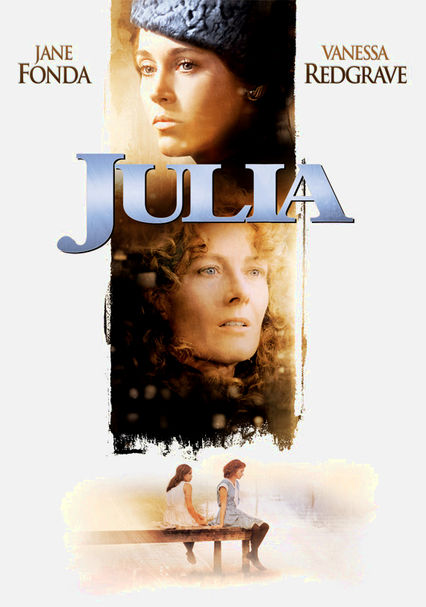
Jane Fonda leads the charge in a powerful, and gorgeously shot, drama named Julia (1977) centering around pre-World War II and the impending Holocaust.

The drama is based on the writing of Lillian Hellman, a famous playwright, which depicts the relationship between two close friends and its unexpected consequences when one desperately needs help from the other.

When Lillian (Fonda), a renowned playwright, reunites in Russia with her childhood friend Julia (Vanessa Redgrave), the writer is asked to smuggle funds into Germany to aid the anti-Nazi movement. In the mix is Lillian’s mentor, Dashiell Hammett (Jason Robards), who is unaware of her dangerous assignment.

I immediately relish the film mainly because the message is extremely female-empowering and a dynamic friendship between two women is examined. This does not happen enough, successfully, in films even to this day.

Given the World War II theme, one would naturally assume the film would center around men, not women, and plenty of female spies and the like, are featured.

Added to the mix is the astounding cinematography of Germany, Poland, and Russia. In truth, the film was shot in England and France for security and restrictive reasons but it could have fooled me since the countries look authentic and believable.

Julie looks polished and that’s hardly a gripe. The production design and costumes are perfectly shot and colored to perfection. It’s not a dowdy or drab film and it depicts little amount of violence or torture choosing to focus on relationships and intrigue.

The suspenseful train sequence is brilliant in every way, sprinkling in Hitchcokian bits along with enough nail-biting to make the long scene a key takeaway. Lillian must keep secret her intentions as she traverses toward Russia and each train scene whether it’s the peril of being checked while crossing the border, or eating in the dining car, is captured with perfection.

A slight suspension of disbelief is the casting of the beautiful Fonda as the plain-looking playwright Lillian Hellman. In some scenes, she is made up to look haggard, tired, and homely but the trick never works for a minute.

It’s even giggle-worthy and recommended to sit back and watch Fonda give a splendid performance forgetting altogether that she is portraying the writer.

In other movies, it might have only been about Fonda from an acting perspective but in Julia, the spoils go round and round. At the very least Redgrave, Robards, and Maximilian Schell, who plays a pivotal character named Johann, must be mentioned. Each brings professionalism and believability to their characters.

But quieter parts by a woman passenger and a girl passenger are my favorites. They go from cheery to serious, speaking in a sort of code, not stating they are helping Lillian, but obviously, they are using facial expressions to reveal true alliances.

A delightful point to make is that Julia is Meryl Streep’s first film role, albeit in a tiny part.

Speaking of Redgrave, when she won the Best Supporting Actress Academy Award she made an infamous speech that marks a great controversy.

In her acceptance speech, she thanked Hollywood for having “refused to be intimidated by the threats of a small bunch of Zionist hoodlums whose behavior is an insult to the stature of Jews all over the world and to their great and heroic record of struggle against fascism and oppression”.

This was preceded by members of the Jewish Defense League picketing the ceremony and followed by some boos and retorts to her comments.

But back to the film, Julia does not end in a happily ever after way. A major character is killed and a baby is lost forever. But, that’s part of the truth about creating a film that harkens back to a day when non-conformity led to death.

Julia (1977) is a vital film that still holds up tremendously well and in a world still filled with chaos and oppression, it’s a great reminder of the power of cinema.

Oscar Nominations: 3 wins-Best Picture, Best Director-Fred Zinnemann, Best Actress-Jane Fonda, Best Supporting Actor-Jason Robards (won), Maximilian Schell, Best Supporting Actress-Vanessa Redgrave (won), Best Screenplay-Based on Material from Another Medium (won), Best Cinematography, Best Costume Design, Best Film Editing, Best Original Score

The Day of the Jackal-1973

The Day of the Jackal-1973

Director Fred Zinnemann

Starring Edward Fox, Michael Lonsdale

Scott’s Review #1,155

Reviewed June 22, 2021

Grade: A

Political thrillers can run the gamut from taut plots involving espionage, assassinations, and car chases to the political landscape. They often risk being overly complicated and losing their audience through too much wordiness and not enough meat and potatoes.

The Day of the Jackal (1973), telling the story of an assassination attempt on a world leader, is perfectly paced and intriguing, offering some titillating elements and nothing run-of-the-mill. It’s not lazy and can be classified as a thinking man’s film.

I loved it.

Certain complexities and trysts experienced by the deadly title character add extra pizazz and spiciness to the already compelling plot.

And the sequences of Paris and its lovely metropolis can aid any film.

A cagey and intelligent underground French paramilitary group is determined to execute President Charles de Gaulle (Adrien Cayla-Legrand). Still, when numerous attempts on his life fail, they resort to hiring the infamous hitman known as “The Jackal” (Edward Fox).

As he plots to assassinate de Gaulle, he takes out others who stand in his way. Meanwhile, Lebel (Michel Lonsdale), a Parisian police detective, begins to solve the mystery of the killer’s identity.

The film is not in French but in English.

Fox is the major draw. Charismatic, handsome, and athletic, he hardly looks like a fiend.  But that’s just the point. A lesser film would have cast an actor who looks like a killer. With Fox, we get many more intricacies. He beds women…..and men.

Think- a bisexual James Bond.

This is enchanting to see in 1973, though the film is British, and sometimes the Brits were well ahead of American filmmakers in this regard.

The director, Fred Zinneman, is Austrian, and boy, can he direct.

I wasn’t sure how engaged I would be. After all, the history books can tell us how the assassination attempt ended. It failed. What was the motivation for watching a film, especially one destined to be complicated? I quickly realized that The Day of the Jackal had that special sauce. It’s more than engaging, it’s enthralling.

The audience is meant to root for Lebel to beat Fox, but there is so much more bubbling under the circumstances. The villain is mysterious, and we know almost nothing about him. The ambiguity continues after the film ends.

This is a positive for the character and, by extension, for the film.

Meanwhile, the hero of the film, the guy after the “Jackal”, is your average, everyday Joe. He is unexciting but very smart and determined to capture Fox.

Lebel is quite likable for his savviness alone, but I still argue many will root for Fox to escape the clutches of Lebel. I know I did.

Great scenes occur in a swanky hotel when Fox becomes intrigued by Madame de Montpellier, played by Delphine Seyrig. He picks up the rich and mysterious woman as they chat in the dining room. He later sneaks into her room and gets the girl.

Whoever cast this woman must have seen the Hitchcock classic Frenzy (1972) because she’s a dead ringer for Brenda Blaney (Barbara Leigh-Hunt).

Is it an accident that both meet grisly ends?

Not to be satisfied with merely bedding rich women, he goes to a Turkish bath to avoid the police and picks up a French gentleman. It is implied they have a romantic date before the gentleman catches onto Fox’s identity (he is now on the run from the police) and meets his maker in his kitchen.

The Day of the Jackal (1973) is a meticulously crafted film that should be the blueprint for anyone intent on creating a political thriller. It avoids hokey stereotypes or predictability, instead offering an edge-of-your-seat experience with nuances for miles.

It’s exceptional on all levels.

Oscar Nominations: Best Film Editing

Night of the Demon-1957

Night of the Demon-1957

Director Jacques Tourneur 

Starring Dana Andrews, Peggy Cummins

Scott’s Review #1,037

Reviewed June 25, 2020

Grade: B+

There is something very soothing about 1950’s British horror films. Whether it’s the intelligence, the accents, or the elements, they differ from American horror films of the decade.

Arguably, they are just better. The horror genre, which has existed in cinema for decades, creates a clever story about a curse.

Night of the Demon (1957) has excellent visual effects and effective black-and-white cinematography, which makes the look work well. That said, the hype surrounding this film as one of the greatest horror films is unwarranted.

When I think of the greatest of all horror films, selections such as Halloween (1978), The Shining (1980), and Rosemary’s Baby (1968) come to the forefront on the American front, while Peeping Tom (1960) and Frenzy (1972) must be mentioned as for British films.

Night of the Demon, while above-average and has risen to prominence and rediscovery as a cult classic, doesn’t ultimately deliver the goods.

To provide a bit of contextual background, the film was plagued with issues and differences of opinion that are plausible proof of messiness upon dissection.

The original ninety-five-minute British feature was trimmed to eighty-three minutes and retitled Curse of the Demon for the United States market. It played there in 1958 as the second half of a double feature.

Additionally, the director and producer disputed whether to show the creature on-screen. The producer edited footage before release, which resulted in continuity issues.

Night of the Demon is the pure British version.

Dana Andrews, best known for The Best Years of Our Lives in 1946, stars as Doctor John Holden, an American psychology professor who visits Britain to attend a conference led by the deceased Professor Harrington.

Harrington is killed by electrocution after seeing a creature emerge from the trees. His niece Joanna (Peggy Cummins) also arrives to attend her uncle’s funeral and teams with Holden to determine a connection between Harrington and satanic cultist Dr. Julian Karswell (Niall MacGinnis). The cultist lives with his mother in a lavish, stately manner. 

Let’s outline what works best in Night of the Demon.

The visual aspects are superb and deserving of accolades. During a party at the Karswell home, the cultist wills a swirling windstorm to develop that is as frightening as it is realistic.

I wonder whether Alfred Hitchcock studied this scene as a similar one in The Birds (1963), in which the female star shuffles a group of children at a party in danger. The scene is professional and authentic.

The climax, amid a dark train track, is one of the best. The ambiance is frightful and well-paced, just what a finale to a film is supposed to be. Karswell, eventually followed by a piece of parchment with runic writing on it, supposedly part of an ancient curse, is terrifying.

It’s like he is being chased and pursued. Holden can pass the curse (meant for him) back to Karswell, who is inevitably ripped to ribbons by a speeding train. Why is a scene of peril amid a train always so compelling? The sense of adventure, dread, horror, and the macabre all reconvene in this crucial scene.

Naturally, the creature reappears.

The romance between Holden and Joanna is mediocre at best and unnecessary to the main plot. It’s as if someone decided a romance between the male and female principles was needed, and Holden and Joanna were it.

There is little chemistry, nor does the duo need to be romantically intertwined- it serves little purpose other than providing a reason to sleuth together. The decision seems more like a measure of the cinematic tradition of that time than any actual story purpose. It’s not an irritant, nor is it a positive.

The creature is not scary, and the film would have been better leaving it out. Sometimes, especially in horror, what is not seen is more terrifying than what is seen. The creature is preliminary and amateurish at best and provides no fright value. It appears to be made of clay or plastic.

Night of the Demon (1957) is a horror film I would like to see again and perhaps study more deeply. Its rich special effects and outstanding black-and-white cinematography enhance the visual treats.

The story of an ancient curse and a riveting speeding train climax that would make Hitchcock take notice are praiseworthy. But I still do not understand the categorization of the greatest of the horror greats.

Oliver Twist-1948

Oliver Twist-1948

Director David Lean

Starring Alec Guinness, Kay Walsh

Scott’s Review #279

822333

Reviewed October 3, 2015

Grade: A-

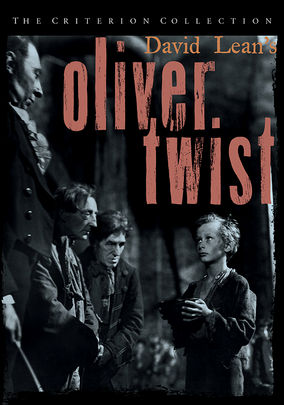
Oliver Twist, the 1948 film version, is vastly different from the 1968 version, which turned the classic Charles Dickens novel into a musical, albeit a dark one, with colorful sets and brilliant art direction.

This version, made in black and white, is a better telling of the novel and contains masterful direction and cinematography.

Given the enormous length of the novel, some characters and details are inevitably trimmed or modified to fit a one-hour and forty-eight-minute film.

The film is a gorgeous cinematic treat, with glowing lighting and creative camera angles, thanks to the outstanding direction of legend David Lean (Lawrence of Arabia, 1963).

The film begins on a stormy night with the birth of poor little Oliver. His mother was frightened and died in childbirth, leaving him to live a life of hardship in a workhouse. His mother possesses a beautiful locket stolen by an old crone, who assists in the birth.

Now a young boy, Oliver draws the shortest straw, forcing him to utter the famous line “Please Sir, I want some more”, about desiring more bland gruel that the orphans are forced to eat.

From this point, Oliver is deemed troublesome and sold to an undertaker named Mr. Sowerberry. When this doesn’t work out, Oliver takes to the harsh streets of London to make his fortune among thieves such as Fagin, Bill Sykes, and The Artful Dodger, who become his friends but also his enemies.

Since I have seen Oliver’s musical version so many times and have also read the novel, it is difficult to watch this film without comparing it to the others.

Oliver Twist is a darker, gritty experience than Oliver! It precisely and closely resembles the novel, with details surfacing, such as the backstory of the locket, which takes on a more central role when the old crone repents on her deathbed, revealing all to the equally crooked Mrs. Corney.

Another example is the casting of less polished or average-looking actors than Oliver! Had. For example, Alec Guinness’s portrayal of Fagin is heavily disguised, with stringy hair and a prosthetic nose, a close comparison to the illustration of Fagin in the novel.

Bill and Nancy have more minor, though crucial, roles but are not as fleshed out as the other versions. The timing of particular events also plays a role —Nancy does not meet Oliver until later in the story.

The film does have light-hearted moments, which perfectly balance the heavy drama. The comic shenanigans of beadle Mr. Bumble and matron Mrs. Corney, both sinister characters but together a bickering, boorish couple who eventually marry each other, add humorous moments to the story as she becomes a domineering wife throughout their many fights and schemes.

The fact that the group of young thieves (boys) all live with Fagin in close quarters, the suggestion of child molestation is certainly implied but not pursued quite as much as in the novel.

I do not think that filmmakers in 1948 would have dared to go there in a film that was arguably meant to have a wholesome feel.

The certainty that Nancy is a prostitute and primarily sleeps in the streets is also addressed, though she is still rather glamorous and clean-looking. The class distinction is evident.

The bleakness of the workhouse and Fagin’s quarters counterbalances the rich and lush home of Oliver’s savior, Mr. Brownlow. I love his estate and housekeeper, the kindly and sweet Mrs.Bedwin.

A close retelling of the novel Oliver Twist (1948) is a fantastic film that can be enjoyed by parents and children alike and appreciated through generations of families.

The Nanny-1965

The Nanny-1965

Director Seth Holt

Starring Bette Davis

Scott’s Review #256

70089620

Reviewed July 11, 2015

Grade: B

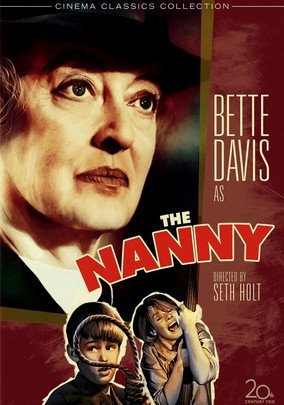
The Nanny is a 1965 Hammer productions thriller starring legendary film icon Bette Davis as a mysterious nanny caring for a ten-year-old boy named Joey.

Joey has recently been released from a mental institution and returned home to resume everyday life, but has he been “cured”?

There is obvious tension between Joey and Nanny, but the audience doesn’t know what that tension is precisely. Why do they dislike each other? Why is Joey afraid of her?

As the plot unfolds, the suspense and tensions thicken as various events occur and Joey’s parents and Aunt Pen are further fleshed out. Past events are revisited, and the story becomes thrilling.

At one point, long before Joey’s return home, his younger sister has drowned, and the circumstances are vague. It has devastated the family, including Nanny. Joey has been blamed for her death, though he insists that Nanny is the culprit.

Nobody except the neighbor girl believes Joey, and the audience wonders who to believe and who to root for: Joey or Nanny. Davis, like Nanny, brings a warmness to her character, but is she sincere? Is it an act? Is Joey a sweet boy or maniacal?

These questions race through the audience’s minds as the film progresses. When Virginia, the mother, eats tainted food, the obvious conclusion is that the Nanny poisoned it since she prepared it. But why? Did she do this?

As the plot is slowly explained, there are a few chills, though the ending is not too surprising.

Any film starring Bette Davis is a treasure, though admittedly, it is not her finest work. Still, her finest work is challenging to match.

The Nanny is a good film, though not great. It is shot in black and white, which is a nice touch for a thriller.

The main reason to watch Davis’s performance is that it is always mesmerizing. Traditionally playing gruff, mean, or bitchy parts (especially in her later years), The Nanny allows Davis to play a sympathetic role.

She is seemingly sweet, proper, well-organized, and a perfect nanny on paper.

The role of Virginia, played by Wendy Craig, is a bit too neurotic and slightly over-acted. She is rather one-note as the fretting mother worried about her son. The character of the father is also a bit one-dimensional.

The Nanny is more of a classic thriller from the 1960s that is often lumped together with some of Bette Davis’s other films around the same period (Dead Ringer-1964, Hush, Hush, Sweet Charlotte-1964, and Whatever Happened to Baby Jane? -1966), and are in large part superior to The Nanny. As a stand-alone, it is a decent film.

Animal Farm-1954

Animal Farm-1954

Director Joy Batchelor, John Halas

Voices Gordon Heath, Maurice Denhall

Scott’s Review #45

70015758

Reviewed June 18, 2014

Grade: B+

The animated film is based on the classic fable written by George Orwell.

This film is quite different from the typically wholesome Disney animated film of the time, and reportedly, many parents were shocked by the subject matter (didn’t they read the book??).

Animation-wise, this film does resemble a Disney film as the colors and animals are meticulously drawn and composed.

As anyone who has read the book knows, the tale is dark and satirical/political. Unfortunately, it is relatable today, as class systems, power, and greed are still quite prevalent in today’s society.

The ending is changed and is more hopeful than the book ending, presumably to appeal to a larger audience.

The written fable is far superior to the film, though the film is well done and effective and gets the message across.

Made in the 1950s, Animal Farm (1954) still holds up well and a look at the dark side of humanity.