Do the Right Thing-1989

Do the Right Thing-1989

Director Spike Lee

Starring Spike Lee

Scott’s Review #746

Reviewed April 21, 2018

Grade: A

Do the Right Thing is one of the few great films to come out of 1989, not remembered as a fantastic year in cinema when most mainstream films were as glossy as tin foil- and barren of quality substance.

Here we have a small, independent gem that sparked discussions about current race relations in the United States and became a monumental, influential film.

Filmmaker (and star) Spike Lee carves a controversial story of racial tensions in a Brooklyn neighborhood on a hot summer day.

Beginning rather light and comedic, then turning violent and dark, the action is set in a largely black neighborhood, Bedford-Stuyvesant, Brooklyn, where twenty-five-year-old Mookie (Spike Lee) works delivering pizzas at an Italian pizzeria owned by Sal (Danny Aiello).

With a toddler at home and a nagging girlfriend, Tina (Rosie Perez) always in his face, Mookie is unmotivated yet still a decent guy and loyal friend.

Sal has two sons who work at the pizza place- Pino (John Turturro), who is angry and racist, and nice guy Vito, who is a friend of Mookie’s.

When conflicts erupt over whether Sal’s restaurant should celebrate black celebrities and white celebrities on a wall in the dining room, tensions reach their breaking point as the intense heatwave makes matters much worse.

What makes Do the Right Thing a marvel is both the film’s overall tone and the atmosphere Spike Lee conveys, who does an incredible job of writing, producing, and starring in it.

The elements having little to do with the actual story immediately impress with big, bright colors in comic-book style, screaming at the big screen, eliciting both a warm, inviting feeling and an angry, contemptuous vibe.

The loud rap and hip-hop beats are instrumental in conveying a specific feeling and emotion in the film.

Made independently and on a small budget, the film feels raw and intense from the get-go.

Brooklyn and New York City, in particular, are the perfect settings, as Sal and his family are white folks living in a predominantly black neighborhood, so, in turn, the minorities in the story are the ones in the minority.

Additionally, the viewer sees the friendly neighborhood and feels a sense of belonging regardless of race- the humorous drunk, the kindly, grandmotherly type people-watching from her stoop, and the boombox music kid all form a sense of community and togetherness.

This point is tremendously important to the film’s overall plot.

The relationship between Mookie and Sal and his sons is very important and the centerpiece of the entire film, which I found quite interesting as a character study.

Open-minded, Sal is a decent man and fine with the diversity in his neighborhood- yet still true to his Italian roots. Aiello does a fantastic job of portraying this complex, conflicted character.

His two sons could not be more different from each other- Vito, who is a close friend of Mookie’s, is sympathetic and sweet, with nary a racist bone in his body.

Pino, on the other hand, is angry and resentful of the black community taking over what he feels is his territory.

Finally, while lazy, Mookie is also a sympathetic character, as he is conflicted when the tension reaches its boiling point.

These diverse characters make the film so dynamic.

Revered director Spike Lee carves out a story and brings it to the big screen, telling an important topic that is as vital in modern times as it was when Do the Right Thing was released in 1989.

The film is intelligent and timely without being condescending to either black or white races, nor preachy- instead of telling a poignant story that is angry and sometimes painful to watch, but more importantly, is empathetic and real.

Oscar Nominations: Best Supporting Actor-Danny Aiello, Best Screenplay Written Directly for the Screen

No Country for Old Men-2007

No Country for Old Men-2007

Director Ethan Coen, Joel Coen

Starring Tommy Lee Jones, Javier Bardem, Josh Brolin

Scott’s Review #745

Reviewed April 19, 2018

Grade: A

No Country for Old Men, made in 2007,  is arguably Joel and Ethan Coen’s greatest work save for the amazing Fargo (1996).

Achieving the Best Picture Academy Award and appearing on numerous Top Ten lists for its year of release, the film is one of their most celebrated.

Containing dark humor, offbeat characters, and fantastic storytelling, adding in some of the most gorgeous cinematography in film history, No Country for Old Men is one of the decade’s great films.

The time is 1980, and it’s set in western Texas as we follow the dangerous hitman Anton Chigurh, played wonderfully by Javier Bardem.

He escapes jail by strangling a deputy and is subsequently hired to find Llewelyn Moss (Josh Brolin), a hunter who has accidentally stumbled onto two million dollars in a suitcase that Mexican smugglers are desperate to find.

In the mix is Sheriff Tom Bell (Tommy Lee Jones), who is pursuing both men. Moss’s wife, Carla Jean (Kelly Macdonald), in turn becomes an important character as she is instrumental in the web of deceit the chain of events creates.

The film subsequently turns into an exciting cat-and-mouse chase with a dramatic climax.

The crux of the story and its plethora of possibilities are what make the events so exciting to watch. As characters are in constant pursuit of each other, the viewer wonders who will catch up to whom and when.

One quality that makes the film unique with an identity all its own is that the three principal characters (Moss, Bell, and Chigurh) seldom appear in the same scene, adding a layer of mystery and intrigue.

The hero and most well-liked of all the characters is, of course, Sheriff Bell- a proponent of honesty and truth. In contrast, the other two characters are less than savory types, especially the despicable Chigurh.

My favorite character in the story is Chigurh, as he is the most interesting, and Bardem plays him to the hilt with a calm malevolence- anger just bubbling under the surface.

One wonders when he will strike next or if he will spare a life, as he intimidates his prey by offering to play a game of chance, the toss of a coin to determine life or death.

He is one of cinema’s most vicious villains. With his bob-cut hairstyle and his sunken brown eyes, he is a force to be reckoned with by looks alone.

True to many other Ethan and Joel Coen films, the supporting or even the glorified extras are perfectly cast and filled with interesting quirkiness.

Examples of this include the kindly gas station owner who correctly guesses a coin toss and is spared his life. My favorite is the matter-of-fact woman at the hotel front desk, with her permed hair, who gives as good as she gets, and her monotone voice is great.

It is these smaller intricacies that truly make No Country for Old Men shine and are a staple of Coen Brothers films in general.

Many similarities abound between Fargo and No Country for Old Men, not the least of which is the main protagonist being an older and wiser police chief (Marge Gunderson and Tom Bell, respectively).

Add to this a series of brutal murders and the protagonist being from elsewhere and stumbling upon a small, bleak town. Of course, the extreme violence depicted in both must be mentioned as comparable.

Having shamefully only seen this epic thriller twice, I find No Country for Old Men (2007) a dynamic film, reminiscent of the best of Sam Peckinpah’s classics, such as The Getaway (1972) or The Wild Bunch (1967).

The Coen brothers cross film genres, blending thriller, western, and suspense that rival the greatest of Hitchcock’s films.

I cannot wait to see it again.

Oscar Nominations: 4 wins-Best Picture (won), Best Director-Joel and Ethan Coen (won), Best Supporting Actor-Javier Bardem (won), Best Adapted Screenplay (won), Best Sound Editing, Best Sound Mixing, Best Cinematography, Best Film Editing

Milk-2008

Milk-2008

Director Gus Van Sant

Starring Sean Penn

Scott’s Review #744

Reviewed April 18, 2018

Grade: A

Milk is a 2008 film that successfully teaches its viewers both a valuable history lesson about the introduction of gay rights into United States culture and about the prolific leader associated with this, Harvey Milk.

The film belongs to Sean Penn, who portrays Milk, but it is also a fantastic biopic and a learning experience that captures his wonderful journey through the 1970s, mainly in San Francisco and New York City.

Moreover, Milk portrays a gay character not played for laughs, as many films do, but portrayed as a hero.

Harvey Milk was the first openly gay person ever elected to political office, winning a seat on the San Francisco Board of Supervisors in 1977.

The film, however, opens in 1978, after a stunning announcement of Harvey Milk’s assassination along with the Mayor of the city, which was met with much heartbreak.

The film then returns to 1970 as we meet Penn as Milk and follow his decade-long battles and prosperity of changing the gay culture.

Having seen actual footage of Harvey Milk, Penn perfects the mannerisms and the speech patterns of Milk, giving him an immediate, passionate, and likable persona. The political figure had such a whimsical and innocent style all his own that Penn perfectly captures.

His determination for honesty and fairness is admirable and inspiring, and Milk seems like he was an innately good person.

Particularly heartbreaking is Penn’s facial reaction during his assassination scene, a scene that director Gus Van Sant brilliantly shoots as a follow-up to a joyous scene when Proposition 6 is defeated.

As a troubled colleague, Dan White (Brolin), (rumored to be himself closeted and struggling with self-identity), fires several shots into Harvey at City Hall, the scene is filmed in slow motion for additional dramatic effect and poignancy.

The look of pain and sadness on Milk’s face will undoubtedly bring tears to even the hardest-hearted viewer.

The film shows the many close relationships that Milk formed throughout the 1970s, including his steady lover Scott Smith, played by James Franco.

The two actors share solid chemistry, as they are both fun-loving and driven in their hopes for what they aim to achieve.

Sadly, Milk’s drive eventually outweighs Smith’s, and they ultimately drift apart while retaining a special bond.

Emile Hirsch is nearly unrecognizable as Cleve Jones, a young man whom Harvey inspires and mentors throughout the pivotal decade.

A minute criticism noticed while watching Milk is that, except for Penn, many of the supporting characters (Hirsch, Franco, and especially Alison Pill) seem to be “dressed up” in 1970s costumes, giving a forced rather than authentic feel.

The costume designers seem intent on making them look so realistic that it backfires and makes them look more like actors made up to look like they are from the 1970s.

Penn, however, looks and acts spot-on and stands out from the rest of the cast by miles.

An inspiring biography of a legendary political figure, Harvey Milk, led by a fine lead actor (Penn), deserving of the Best Actor Oscar he was awarded, Milk is an astounding story of both triumph and tragedy.

The film successfully portrays a time when a class of people was not treated fairly, when equal rights were barely a possibility, and when the uprising occurred largely due to one man and his followers.

Milk (2008) is a wonderful testament to a time gone by and the accomplishments achieved since then- a truly inspiring and tragic message.

Oscar Nominations: 2 wins-Best Picture, Best Director-Gus Van Sant, Best Actor-Sean Penn (won), Best Supporting Actor-Josh Brolin, Best Original Screenplay (won), Best Original Score, Best Costume Design, Best Film Editing

Independent Spirit Award Nominations: 2 wins-Best Male Lead-Sean Penn, Best Supporting Male-James Franco (won), Best First Screenplay (won), Best Cinematography

The Lure-2015

The Lure-2015

Director Agnieszka Smoczynska

Starring Michalina Olszanska, Marta Mazurek

Scott’s Review #741

Reviewed April 12, 2018

Grade: B

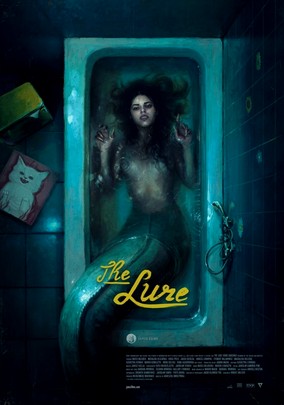
2015’s The Lure is as odd a film as one can imagine- dreamlike and sometimes even absurd. The story mixes a strange blend of the horror genre with musical numbers, but I would wobble to the side of gothic horror for classification purposes.

Oddly enough, some of the choreography numbers are reminiscent of 2016’s La La Land, but that is where the comparisons between those films end as the former musical numbers dark and the latter cheery.

A tough film to review, The Lure is rather disjointed, but kudos for creativity and unpredictability.

Bravely directed by a female (more kudos!),  Agnieszka Smoczynska, a Polish filmmaker, the story is a cross between an autobiography of her troubled youth, and a retelling of the Hans Christian Anderson fairy tale, The Little Mermaid.

Besides the obvious Polish language content the film does not appear overly Polish- it might have been nice to be exposed to some of the cultures.

The film immediately gets off to a mysterious start as two teenage girls, later revealed to be mermaids/vampires named Silver and Golden, emerge from the water and follow a rock band back to a tacky nightclub where the band regularly performs for patrons there for the strippers.

It is sometime in the 1980s.

The girls perform music and strip, becoming an act called “The Lure”. While Golden continues to thirst for blood, Silver falls in love with a bassist causing her to yearn to be a real girl, and subsequently has surgery to remove her tail and grow real-girl legs.

As part of the fairy tale, if her intended marries someone else Silver will turn into sea foam and die.

The story is perplexing and difficult to follow, yet something is mesmerizing and escapist about it.

I wonder if Smoczynska intended the film to make total sense or left it open to a bit of interpretation. The film is a mix of fairy tales and real-life experiences.

Some portions appear to be rather dream-like, for example, the nightclub singer has thoughts or visions involving Silver and Golden, but what is unclear is whether she is experiencing reality or imagination.

Props must be given to The Lure for originality alone. The film stirs up multiple genres and creates something truly unique.

In particular, the characters of Silver and Golden are transfixing, at times they are sweet and kind, then fangs come out at a moment’s notice revealing evil and a carnivorous bloodthirst revealing a grotesque, haunting countenance.

How Smoczynska created these characters is awe-inspiring and the up-and-coming director must have a wealth of imagination deep within.

On the other hand, the plot never really comes together enough to grab hold of the viewer in a riveting way.

While Silver and Golden are clever characters and we feel some empathy for them, I also never felt completely gripped by them either. I felt no connection to any of the supporting characters either.

Any attempt at figuring out the plot will only leave the viewer frustrated. I would advise taking The Lure as an experience, not a puzzle to unravel.

The Lure (2015) has elements of immeasurable fascination and an enormous creative edge. Attempts to create a unique fable meshed with a disturbing central theme are successful.

The overall story is way too confusing for the average user and ultimately ends up dragging towards the final portion with the final climax a wee bit unsatisfying.

A brave and inventive attempt at achieving something fresh and imaginative in cinema.

Jigsaw-2017

Jigsaw-2017

Director The Spierig Brothers

Starring Matt Passmore, Tobin Bell

Scott’s Review #739

Reviewed April 9, 2018

Grade: C-

As a fan of the horror genre, and specifically of the Saw film franchise, which debuted in brutal form in 2004 and was directed by James Wan, I am sad to say that it has sadly become a lesser version of what was once clever writing mixed with astounding, tortuous kills.

Jigsaw is the eighth installment in a series that has now run out of steam. It is simply riding on the coattails of what was once its glory days.

The 2017 film can only be appreciated by die-hard fans of the series; it will be unsuccessful in attracting new fans.

Admittedly, Jigsaw does begin significantly as the viewer is thrust into the midst of a compelling rooftop police chase that results in a fleeing criminal, Edgar Munsen, being shot by detectives.

Unknown if events are connected, the action shifts to a remote barn where (in typical Saw fashion) five individuals are held captive, each with a noose around their neck.

Throughout the film, we get backstories-stories of each victim as well as a connecting story of a pathologist, Logan Nelson (Matt Passmore), his sister, and the possibility that John Kramer has either returned from the grave or a copycat killer is on the loose, emulating his shenanigans.

The basic premise and tone of 2017’s Jigsaw are similar to those of the preceding seven installments. However, this version seems a bit watered down and glossy by comparison.

My recurring thought throughout the feature was a reminiscence of a horror version of a network episodic drama- think CBS’s Criminal Minds or the like. This is not a compliment.

The camera style is of a slick production with nary a raw or authentic moment- incredibly produced with good-looking people in peril.

Fans of the previous Saw films will undoubtedly expect the now-familiar twist towards the end of the film- a clever story turn to make one character revealed to be not what they appear to be or even in cahoots with the serial killer, “Jigsaw” (John Kramer).

This quality does surface in Jigsaw, but the surprise is so lame and inexplicable that it is hardly worth mentioning.  Suffice it to say the expected resurfacing of Kramer is an absolute sham. Instead, we are fed a less-than-satisfying riddle of one character faking his death and another sequence occurring ten years earlier.

This twist might be worth its salt if better written, but the reasoning seems thrown together without much thought to staying true to the characters or history.

Other familiar elements in Jigsaw abound, so a fan of Saw, Saw II, or Saw III will undoubtedly find tidbits that will satisfy them.

The film is like a trip to McDonald’s or a neighborhood burger joint- one will more or less get what is expected.

As the barn victims are given choices via a tape-recorded message by a sinister John Kramer voice, each is given a test and must ultimately confess their sins. As fans know, Saw victims are far from innocent and always harbor a neatly tucked away secret.

Such horrific acts like a haggard young mother smothering her screaming baby and framing her husband for the deed or a thief stealing a woman’s wallet and causing her to die when her asthma medicine is missing were thought of by the writers.

Another character once sold a motorcycle with a faulty brake line to an innocent man who later crashed and was killed. These aspects are the fun in a film like Jigsaw in that the tortures the victims endure have elements of “serves him or her right”.

Another solid point about Jigsaw is the kills, which is what fans of the Saw franchise have come to know and love.

In this one, we delightfully witness a victim’s leg severed, another impaled with needles, and yet another gleefully attempting to shoot one of the other victims trapped in the barn to allow her freedom, only to realize the gun is rigged to shoot herself instead.

These are fun moments that make Jigsaw less than all bad.

Having created the eighth version of a once great franchise that introduced the world to the term “torture horror”, by 2017 has grown ultimately stale and tired with a few glimpses of former glory created in the familiarity aspects.

All great things must end, and the Saw series has more than crumbled from its former days of glory.

Loving Vincent-2017

Loving Vincent-2017

Director Dorota Kobiela, Hugh Welchman

Voices Douglas Booth, Saoirse Ronan

Scott’s Review #738

Reviewed April 5, 2018

Grade: B+

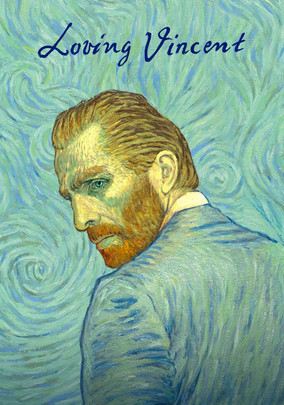
Loving Vincent (2017) is a unique animated feature that is quite the artistic experience and vastly different from any typical film of this genre.

Being the first of its kind to be a wholly painted animated feature, hopefully, other films will follow suit, resulting in an exuberance in creativity.

While Vincent van Gogh’s biography is fascinating, the dramatic plot often left me wondering about the accuracy of all the details.

Still, the film is to be celebrated for its progressive and edgy nature.

Cleverly, the actors starring in the vehicle act while they are subsequently drawn so that the viewer can imagine the action as if it were a standard film since the drawings mirror the actors involved.

For example, Saoirse Ronan can clearly be distinguished as the daughter of a local boatman, who was rumored to be keeping close company with van Gogh before his death. We know it is the actress, but in painting form, eliciting a surreal experience.

The action begins one year following tortured artist, Vincent van Gogh’s, tragic suicide. Postman Joseph Roulin asks his son Armand to deliver Van Gogh’s last letter to his brother, Theo.

Suspicion surrounds the artist’s death as mere weeks earlier his mood was calm and level-headed, making his death cause for alarm. From this point, Armand traverses throughout France to spend time with those who had dealings with Van Gogh during the last days of his life.

Those characters include his doctor, an innkeeper, and others who may hold clues to his death’s mystery.

From a story perspective, Loving Vincent is a compelling piece as mystery and suspicion are cast around the actual death of the artist. This is not so much a whodunit as we know of the resulting suicide, however, the film casts some doubt about the why of that fateful night.

Did someone drive Van Gogh to take his own life suddenly? What was the romantic situation between either Marguerite or perhaps even Adeline? The supposed copying of Van Gogh’s art by his doctor, Dr. Paul Gachet, is fascinating.

Through these dramatic and intriguing facets, I began to wonder what was factual and what was not.

The brilliant part of Loving Vincent is the unusual and artistic method by which the film is created.

The fact that the film is about one of the most respected and appreciated artists of all time is no accident, and this perfectly encapsulates the overall tone of the film.

Throughout the one hour and thirty-four-minute duration of the film, I was continually enamored by its ” look.” Exquisite and quite beautiful, the filmmakers chose classically trained painters over traditional animators, and I feel this makes all the difference.

The use of actual Van Gogh paintings was an instrumental part of the film, which was modified to fit into the allotted screen room. The cast performed the film, as if it were a play, in front of a green screen, and then the painters created their magic—pretty incredible!

Also, mind-blowing uses colors to change the time of day (brightness and darkness), which results in a highly effective tone.

By creating a visual masterpiece of cinematic beauty, Loving Vincent (2017) is a feast for the eyes.

Although it is unclear whether the story is true to form or whether facts are embellished, the film succeeds as a work of art and provides a good glimpse into the life of one of the world’s most beloved and tortured artists.

Oscar Nominations: Best Animated Feature Film

Coco-2017

Coco-2017

Director Lee Unkrich

Voices Anthony Gonzalez, Benjamin Bratt

Scott’s Review #737

Reviewed April 4, 2018

Grade: B+

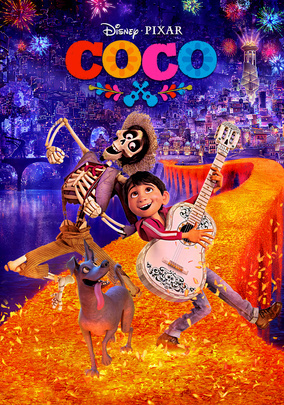
Winner of the 2017 Best Animated Feature Academy Award, Coco is an exuberant and colorful affair, filled with marvelous lighting and a Mexican cultural infusion that serves the film well, making it feel robust in its diversity and inclusion.

The overall theme of family, traditions, and musical celebration is apparent, making for good razzle-dazzle with lots of upbeat songs and dance.

Mixed in is a lovely inter-generational theme, where older folks are respected, something lacking in today’s real world.

Miguel Rivera is a twelve-year-old boy living in Mexico with his extended family, including his elderly great-grandmother, Coco, who is sadly suffering from intermittent dementia.

Through flashbacks, we learn that Coco’s father (Miguel’s great-great-grandfather) was an aspiring musician who abandoned the family for greener pastures.

Subsequently, the Rivera clan banned all music in favor of a modest shoe-making business.

As Miguel realizes his passion for music, he comes into conflict with his family, who have other aspirations for him. Miguel embarks on a fantastic journey to the magical and somewhat frightening land of his deceased ancestors, coinciding with the festive Day of the Dead celebration, a Mexican cultural tradition.

There, he realizes the true nature of his great-great-grandfather’s sudden departure.

Coco is a film that all family members can enjoy, and it is structured just that way. The blatant use of multiple generations greatly appeals to the idea of blending the family unit.

Pixar successfully sets all the correct elements in place for a successful film, and the well-written story only adds layers. The film is quite mainstream, yet appealing to the masses.

Perhaps very young viewers may become frightened by some of the skeleton-laced faces of Miguel’s ancestors in the other world where he visits. Still, these images are somewhat tame and mixed with vibrant colors and extraordinary production numbers.

These images are undoubtedly meant to entertain rather than frighten, and the creatures have a friendly vibe.

Having viewed the film on an airplane traveling cross-country (admittedly not the best way to watch a film), the lovely and touching musical number “Remember Me (Lullaby)” entranced me, so much so that I was moved to tears right on the plane.

How’s that for effectiveness?

The emotional impact of this song impressed me immensely about Coco, even when the story is occasionally secondary to the visual or musical elements.

In fact, the story began to lag slightly until the aforementioned big musical number came into play. The song really kicked the emotional action into high gear, and I became more enamored with the characters and their connections to one another.

Miguel and his relatives’ love became more apparent, and the conclusion is pleasing and satisfactory.

A slight miss in the film, corrected midway through, is Miguel’s bratty and entitled nature. He heaves sighs when he does not get his way, which seems more apparent early on and was quite the turn-off.

At first, I did not care for the character, yet I knew I was supposed to.

Thankfully, the character becomes the film’s hero and ultimately proves to be a sweet, likable person. I pondered, “Is that what kids like these days?”

Pixar does it again, creating a family-friendly experience with a positive yet non-cliched message of belonging, forgiveness, and the importance of family connections that feels fresh.

In current times of divisiveness, especially with immigration and other cultures being attacked, how appropriate is it to experience Coco (2017), a feel-good yet not contrived project?

Oscar Nominations: 2 wins-Best Original Song-“Remember Me” (won), Best Animated Feature Film (won)

Carmen Jones-1954

Carmen Jones-1954

Director Otto Preminger

Starring Dorothy Dandridge, Harry Belafonte

Scott’s Review #736

Reviewed April 3, 2018

Grade: B+

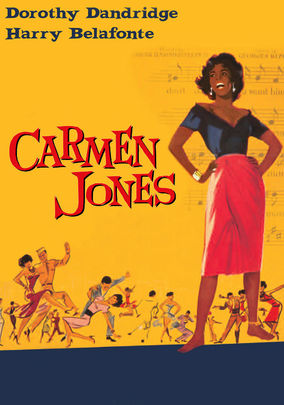
It was pretty taboo at the time of release (1954) because it featured an all-black cast with no white members. Carmen Jones is to be celebrated for her contribution to film history for this groundbreaking feat alone.

Directed by Otto Preminger (who, ironically, is Caucasian), the film features legendary actress Dorothy Dandridge in a Marilyn Monroe-style performance worthy of the stars’ talents.

The film is a musical with an inevitable tragedy at the conclusion.

The 1954 feature is based on a 1943 stage production of the same name, based on the music of the famous 1875 Georges Bizet production of Carmen.

These facets add to the film’s richness, as it is layered with solid historical detail, and the well-known tragic elements make the conclusion unsurprising.

Brazen and beautiful, Carmen is a seductress who works in a parachute factory in North Carolina during World War II.

After trading fists with a co-worker, Carmen is jailed and assigned to handsome Corporal Joe (Harry Belafonte), who is to escort her to the authorities.

While Carmen is not shy about pursuing the young man, his fiancée, virginal Cindy Lou, fumes and schemes to keep her man.

The result is a triangle. Carmen and Joe eventually fall madly in love, leaving poor Cindy Lou behind, but their love faces hurdles.

The somewhat lighthearted first portion of the film, with coquettish humor, is offset by a much darker path it takes.

As Carmen and Joe finally profess their love and share a night of passion, she leaves him in the middle of the night, unable to endure prison time.

This results in Joe being imprisoned, as the couple ultimately cannot stay apart despite repeated obstacles to their happiness.

An additional character, a boxer named Husky, with designs on Carmen, is introduced, complicating matters.

In a sad form, much like the opera Carmen, the final scene is devastating and startling as Joe treads a dark, gloomy path of destruction. The character of Joe is nuanced- at first, a “nice guy”; the character is an example of complexity and what a man will do for love.

The viewer wonders what will become of Joe and how he could risk his life performing an act in the heat of passion.

In 1954, what a profound and fantastic role for a female, let alone a black female. Typically cast in roles such as maids, servers, or even less glamorous parts, Dandridge was wonderful to see capture a challenging role of this caliber.

She is a vixen as she sinks her teeth into the meaty and flirtatious Carmen.

Dandridge’s pizzazz, flair, and singing and dancing performances made her a star, and she is forever known as a groundbreaking talent.

There cannot be enough said about the importance of casting all-black actors in Carmen Jones. Monumental, of course, given the time.

The result is a film of significance to black culture, showing that they no longer needed to appear in “white films” as supporting players but could carry a movie on their own.

How profound and remarkable this was!

My only criticism of the film is undoubtedly related to the progress made for black actors and characters, though there is still plenty more work to be done.

At times, the filming feels a shade dated (there are more great roles for black actors now) and has a slightly grainy look.

Some of the supporting characters’ acting is also not the strongest, but as Carmen Jones is a historical film, liberties must be taken.

Thanks to the genius and the funding of Preminger, who needed to produce the film independently due to a lack of interest, the result is a film that has gone down in history as worthy, edgy, and open-minded.

Wisely casting talented stars with great pipes, the film is a solid success.

Oscar Nominations: Best Actress-Dorothy Dandridge, Best Scoring of a Musical Picture

Golden Globe Nominations: 2 wins-Best Motion Picture-Musical or Comedy (won), New Star of the Year-Actor-Joe Adams (won)

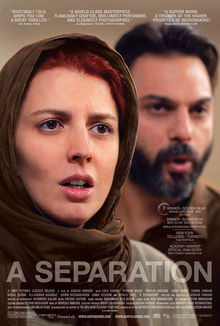
A Separation-2011

A Separation-2011

Director Asghar Farhadi

Starring Leila Hatami, Peyman Moaadi

Scott’s Review #734

Reviewed March 21, 2018

Grade: A

A Separation is a 2011 Iranian film that won the Best Foreign Language Film Academy Award statuette, the first Iranian film to receive the honor.

The film is a wonderfully complex family drama that weaves typical family issues (divorce and school issues) with more complicated cultural leanings, and keeps going with story nuances.

A Separation is directed by the acclaimed Asghar Farhadi, who is also responsible for the brilliant screenplay- this is a top-notch film.

Presumably set in Tehran, or a more progressive (by Iranian standards) city in Iran, husband and wife Nader and Simin reside with their teenage daughter, Termeh, and Nader’s elderly father, who has Alzheimer’s disease.

Frustrated by her husband’s refusal to leave the country for a better life, Simin files for divorce, but male judges reject her wish.

When she leaves her family anyway, Nader is forced to hire a pregnant caregiver, Razieh, to tend to his ailing father.

After a controversial tragedy ensues, causing Razieh to suffer a miscarriage, the film shifts directions and adds an entirely new layer to the already fascinating story.

Farhadi is keen to tell a good story. He traditionally mixes themes of culture and social class interestingly, as his future 2017 work, The Salesman, would also do.

Thanks to Farhadi’s innovative storytelling, more attention is paid to Iran and Iranian culture, humanizing its citizens through the craft of film.

We see Iranian people just like ourselves and not the radical or dangerous individuals we are programmed to see.

In A Separation, there are no clear-cut protagonists or antagonists, and the viewer’s allegiances may shift throughout the film.

Do we champion Simin for desiring a better life for herself and Termeh or scold her for refusing to live with her family? A progressive woman for sure, she is a layered character in her ambitions and her autonomy.

Nader is also a complex character- heroic for desiring the best care for his father, but he is also fraught with danger and a bad temperament, which is the main reason for the second half of the film and leads to Razieh’s predicament.

Viewers will not be sure whether Nader is a good man, a villain, or a hybrid of the two. This becomes the heart of the story and makes for an enthralling character-development experience.

As if the brilliant screenplay was not enough to demand a good watch, the acting across the board is wonderful.

A cast including seasoned Iranian actors Leila Hatami and Peyman Moaadi as Simin and Nader; these are my favorites and are quite adept at carrying along with the nail-biting tension in masterful form.

Shades of Alfred Hitchcock are evident throughout the film as the tension unfolds to a crescendo and the action builds and builds and builds in layers upon layers of good stuff.

The quick editing and unique camera angles mirror some classic works of the famous director.

A Separation succeeds because of its fast-paced, tightly edited construction; in a way that, at over two hours long, it moves quickly and leaves viewers pondering, wondering, thinking, and questioning.

Asghar Farhadi has quickly become a prominent director, faced obstacles in his native country, and yet surpassed them to create a great film.

I look forward to many more of his works.

Oscar Nominations: 1 win-Best Original Screenplay, Best Foreign Language Film (won)

Independent Spirit Award Nominations: 1 win-Best International Film (won)

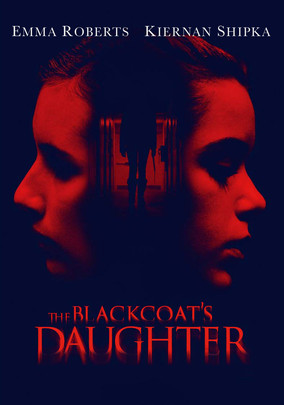
The Blackcoat’s Daughter-2017

The Blackcoat’s Daughter-2017

Director Oz Perkins

Starring Emma Roberts, Kiernan Shipka

Scott’s Review #732

Reviewed March 12, 2018

Grade: B+

The Blackcoat’s Daughter is an eerie 2017 independent horror film that combines various chilling elements to achieve its goal.

While slow at times, the film is primarily a fusion of the supernatural, the occult, and the psychological. It offers a unique experience and is unpredictable in nature.

Parts of the film are downright scary and spooky as religion meets satanism, always a safe bet for an unsettling experience.

Writer/Director Oz Perkins should be well on his way to a successful career in the industry with this, almost full-on artsy, film.

The action begins in a prestigious Catholic boarding school in a quiet, wintry area of upstate New York. As students (largely unseen) leave the school for a February break, Kat (Kiernan Shupka), and Rose (Lucy Boynton) are left behind when their parents do not arrive to pick them up.

While the girls hunker down for the night, hoping their parents show up the next day, a third girl, Joan (Emma Roberts), who may be a psychopath, is en route towards the school, enlisting the help of a strange married couple (Bill and Linda), whose daughter had died years ago and was the same age as Joan.

Also in the mix are two school nuns who are rumored to be Satanists.

Little is known about the town, but the fact that nobody is around making the setting a significant plus.

This may very well be due to budgetary restrictions associated with the film. Still, regardless, the use of very few characters or extras is a score, with the number of principal characters below ten.

The cold and bleak nature of the town and Joan’s stark journey create a very successful ambiance.

Many scenes throughout The Blackcoat’s Daughter are set during nighttime in relative seclusion. Given the icy texture of upstate New York in the middle of winter, the setting chosen by Perkins is spot on and quite atmospheric.

The overall story of The Blackcoat’s Daughter is peculiar and mysterious and does not always make complete sense.

In fact, by the time the film concludes and the credits roll, not much of the film adds up from a story perspective, leaving me somewhat unsatisfied.

Since Bill and Linda’s daughter looks identical to Rose, are we to assume that the events at the school occurred a decade before the events involving Joan? What ends up happening to Kat is perplexing, haunted by spirits, and forced to kill, is she healed at the end of the film? Or is Kat Joan?

Too many loose ends are left.

The film is heavy on the violence and the gore and dares not hold back in showcasing the victim’s pain and suffering before they cease to exist. More than one character lies bleeding and immobile as the killer calmly approaches to finish the deed.

Three characters are decapitated in horrific form as we later see their severed heads lined up in a boiler room. The demonic chanting “Hail, Satan!” may turn some viewers off, as would the overall storyline.

Those who feel that 1973’s The Exorcist is disturbing need not see this film as similar elements abound.

Also worthy of a quick mention is the cool, unique musical soundtrack created by singer/songwriter Elvis Perkins, brother of the director.

With goth/techno elements, the score is noticed (in a good way) at various points throughout the running time and adds to the film’s overall feel.

The Blackcoat’s Daughter (2017) succeeds as a disturbing and experimental piece of independent horror-making that will pique the interests of horror aficionados.

With plenty of blood-letting and squeamish parts, Oz Perkins knows what works. The story, though, would have been improved by a clear, definitive beginning, middle, and end, to avoid a confusing outcome.

Still, I look forward to more works from this up-and-coming director.

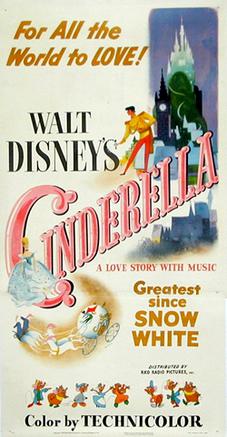
Cinderella-1950

Cinderella-1950

Director Clyde Geronimi, Hamilton Luske, Wilfred Jackson

Voices Ilene Woods, Eleanor Audley

Scott’s Review #731

Reviewed March 7, 2018

Grade: A-

Cinderella is a lovely 1950 Walt Disney production that rejuvenated the animated film genre after a sluggish 1940s.

The film glistens with goodness and bright colors, offering a charming fairy tale-based story based on hope and “happily ever after.”

Cinderella is enchanting on all levels.

The story is told mainly in narration, especially to explain its history. We learn that Cinderella’s parents have both died, leaving her an orphan who lives with her wicked stepmother, Lady Tremaine.

Her stepsisters, Drizella and Anastasia, are jealous of Cinderella’s natural beauty. She is regularly abused and berated, and forced to work as a servant in a rundown chateau, tending to the trio’s needs and demands.

Despite her unhappy life, Cinderella makes the most of it and befriends mice, birds, and many other animals she meets, singing and dancing merrily.

Life chugs along for our heroine until one day, the King of the royal palace decides to throw a lavish Ball for his son, the Prince, to find his soulmate and marry her finally. The King requests that all eligible unmarried women attend.

As Cinderella excitedly requests to go, Lady Tremaine cruelly grants her request, provided all of her work is done. She has no intention of making things easy on her.

In proper fairy tale form, the Prince falls madly in love with Cinderella while facing many hurdles on the pair’s way to happiness.

Given the time when Cinderella was made (1950), the timing was excellent for a lavish production, to say nothing of the fantasy that many young girls undoubtedly experienced a handsome prince rescuing them, whisking them away from a life of doldrums to undying love.

Female empowerment had not yet taken hold during the 1950s, so the male-rescuing female message was palpable and appealing to many. Dated not the least bit, a story of true love overcoming hardship can always find an audience.

The production’s colors and animations are lush and powerful, oozing perfection and dripping with fantastic elements of romance and spectacular wealth.

An example of this is the lavish ball at the palace. As Cinderella’s Fairy Godmother transforms the young girl and her transportation into a magical fantasy of horses, gowns, and carriages, the ball is pretty extravagant in its beauty.

Engaging, with a bit of humor mixed in, are the supporting characters of the three evil ladies and the bumbling Grand Duke- interestingly voiced by the same person as the King. As Drizella and Anastasia attempt to impress Prince Charming, their awkward and haphazard mannerisms and scowls perfectly counterbalance the charm and grace of Cinderella in a sometimes comical fashion.

Comparisons must be made to 1937’s masterpiece, Snow White and the Seven Dwarfs. Both could easily be companion films, watched sequentially to better study and marvel at their similarities.

Snow White and Cinderella are purely “good” characters, singing lovely tunes, embracing animal friends and various forms of wildlife- they are both more or less “saved” by men.

In the present day, instead of being offensive or “old-fashioned,” it remains enchanting and a celebration of true love.

Cinderella is a treasure to be enjoyed after all these years. It never ages or becomes dated or irrelevant, which is a true testament to the power of film. Carving a story of values, honesty, hard work, and good payoff, generations of fans can appreciate this everlasting treasure.

Oscar Nominations: Best Scoring of a Musical Picture, Best Original Song-“Bibbidi-Bobbidi-Boo,” Best Sound Recording

The Florida Project-2017

The Florida Project-2017

Director Sean Baker

Starring Willem Dafoe, Brooklynn Prince

Scott’s Review #730

Reviewed February 28, 2017

Grade: A

Incorporating a realism and authenticity rarely found in mainstream films, the 2017 independent drama film The Florida Project offers the viewer a glimpse into the underbelly of society, largely from a child’s perspective.

We meet a group of poverty-stricken folks residing in a crummy hotel outside of Disney World.

Shot almost entirely on location, the film is humorous, dramatic, pathetic, and compelling—a must-see. The balance between a child’s carefree outlook and the real-life adult reality is key.

Director Sean Baker, famous for the ground-breaking and brilliant transgender-themed indie from 2015, does it again with a gritty flavored location shot feast of a story involving the welfare-stricken, prostitute-laden Floridians holing up at a cheap motel.

The plot follows six-year-old Moonee, played by Brooklynn Prince, as she and her problem-prone mother, Halley (Bria Vinaite), attempt to avoid trouble and the police.

They while away the hot summer months, pandering and stealing from tourists as Halley dabbles in prostitution after failing to get a job at a nearby Waffle House.

In addition to Moonee and Halley, other prominent characters rounding out the hotel community are Bobby Hicks (Willem Dafoe), who manages the Magic Castle Motel, and is the father figure and voice of reason to the others, Ashley, Halley’s friend, Jancey, and Scooty, friends of Moonee’s.

The group holds a special bond since they are all barely existing on limited funds in a world laden with drugs, violence, and various unsavory characters.

With initial thoughts of an R-rated Little Rascals, the early scenes involve only the children as they create juvenile pranks including car spitting, bed jumping, and more serious mischief like setting fire to abandoned condos.

All non-actors, the child scenes are genuinely brilliant, and enough praise cannot go to little Brooklynn Prince, the sweet yet precocious six-year-old central child character.

The film’s final scene involving this treasured little girl is heart-wrenching and poignant, as the scene is fraught with raw emotion on the part of Prince.

Dafoe is brilliant in the role of Bobby and the actor chooses a character he does not often play. Frequently playing villains, he shines as a good man attempting to keep things together in an evil world.

On the lookout for child predators and the police, he watches out for the kids, as he sadly knows their lives will only get worse as they grow into teenagers and adults, sure to experience misery or tragic lives.

The most successful and riveting component of The Florida Project is the honest portrayal of the characters and the gritty, realism the viewer experiences.

The fact that Baker shot the film entirely on location is immeasurable and key to the story.

In a slice-of-life way, we are brought into this world for the duration of the film and learn the inner workings of the hotel, the streets, and the hotel parking lots. We live the characters’ lives and feel their struggles and small triumphs.

Most importantly, we empathize with their hopelessness—they are basically stuck, with little hope of finding a better life.

To avoid a complete downer of a film, Baker incorporates a few humorous moments, mainly the light and fun scenes between Halley and Moonee. As they dance around in their hotel room or outside on the hotel lawn as an unexpected downpour erupts, the close bond between mother and child is apparent.

The boisterous trio of kids also breaks up the monotonous adult tension of the other characters as they frolic and play without a care in the world.

The adults versus kids outlook is apparent.

Surely one of the best films of 2017, The Florida Project examines a forgotten and depressing segment of the American population and provides a sobering reality of the world in modern times.

With the Trump era in full swing, this film’s release is timely in American history and gives a sobering look at the United States in general.

Oscar Nominations: Best Supporting Actor-Willem Dafoe

Independent Spirit Award Nominations: Best Feature, Best Director-Sean Baker

A Fantastic Woman-2017

A Fantastic Woman-2017

Director Sebastian Lelio

Starring Daniela Vega

Scott’s Review #729

Reviewed February 27, 2018

Grade: A

A Fantastic Woman is a 2017 Chilean film that is groundbreaking in subject matter and has received many accolades, including an Oscar nomination for Best Foreign Language Film.

Especially worthy of mention is the film’s lead actress, Daniela Vega, the first transgender woman to present an award at the Oscars and a dynamo performance in her represented film.

Besides the cultural achievements, the film succeeds in its own right as a compelling drama.

The film gets off to a sweet and romantic start as we meet Marina (Vega), a young waitress and aspiring singer, and Orlando (Francisco Reyes), a mature, affluent man thirty years her senior.

After surprising her with a lovely birthday cake, the pair begin to embark on a serious relationship, as Marina has recently moved in with Orlando.

When tragedy strikes and Orlando is rushed to the hospital after collapsing, Marina must face the harsh reality of her partner’s narrow-minded family and suspicions from law enforcement.

What a wonderful starring vehicle for this astounding young talent, Vega. The film shares a story that has never been told before, though the transgender genre is slowly coming into its own—like 2015’s brilliant Tangerine.

With A Fantastic Woman, though, the storytelling is more intimate, personal, and explicit from Marina’s point of view. Faced with financial issues and losing her love, she is forced to hurdle obstacles centered around her lifestyle that she had thought had been conquered through her open life with Orlando, who loved her for who she is.

Vega expresses so much with her wide-eyed stares and introspective glazed looks. A remarkably subdued performance, she does not have a traditional blowup or dramatic, emotional scene. Instead, she calmly goes from scene to scene, her anger and heartbreak brimming under the surface.

As she is verbally insulted and degraded by Orlando’s bitter ex-wife, Marina stands her ground and calmly accepts the verbal attack. Even when Orlando’s thuggish relatives physically assault her with tape, she is calm in her reaction.

This is a testament to Vega’s talents.

Perhaps the most touching subplot involves Marina’s struggle to retain the dog that Orlando kindly gave her. When Orlando’s son refuses to let her keep the dog, Marina reaches her breaking point and begins to fight dirty, refusing to hand over the keys to Orlando’s flat until she gets her way.

The tender affection she has for the animal is wonderful. Despite having a few people in her corner, the dog is her pride and joy and best friend.

As stellar as Vega is, and the film belongs to her, credit and mention must be given to the supporting players, mainly unknown actors to me.

Though we feel no sympathy for Orlando’s ex-wife or his relatives, they are competently portrayed and we do feel their anger and spite.

We do not know much about the back-story, but we do know that Orlando has revealed his involvement with a trans woman and he is proud of Marina.

Actor Reyes is a dream as Orlando and we wistfully imagine a different film centered solely on his romance with Marina. In their short time together, the audience falls madly in love with the duo.

A Fantastic Woman (2017) succeeds as a nuanced, level-headed drama with a powerful message and a timely approach. Never veering over the top or being too preachy, the film is an excellent telling of a topical subject matter.

I only hope that more stories about this genre are told in the future. It is a goldmine of uncharted story-telling with so much potential.

Oscar Nominations: 1 win-Best Foreign Language Film (won)

Independent Spirit Award Nominations: 1 win-Best International Film (won)

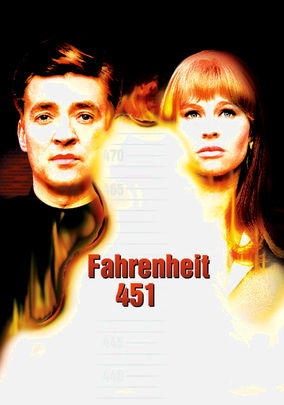
Fahrenheit 451-1966

Fahrenheit 451-1966

Director Francois Truffaut

Starring Oskar Werner, Julie Christie, Cyril Cusack

Scott’s Review #728

Reviewed February 26, 2018

Grade: B+

Based upon the famous and fantastic classic 1953 novel Fahrenheit 451 by Ray Bradbury, the film adaptation is futuristic and dystopian.

Directed by French filmmaker Francois Truffaut and starring Julie Christie, the “it” girl of the late 1960s, the film succeeds as an incredible, new wave, edgy, progressive hybrid. Various elements aid in making the film seem set in the future, all with hints of the great director Alfred Hitchcock sprinkled in the mix.

Indeed, the novel is superior, but Fahrenheit 451 is a worthy watch if only for Christie alone.

Christie plays a dual role as Clarisse, a young schoolteacher with progressive and forbidden views, and Linda, the vastly different spoiled wife of the central character, Guy Montag, played by German actor Oskar Werner.

The trio exists in a futuristic world where a totalitarian government has banned all literature, deeming it insufficient for society. A force called Firemen, where Guy works, can search anyone anytime and burn all books as needed.

Clarisse and Guy begin questioning the government’s motivations as Guy stashes a copy of Charles Dickens’s David Copperfield, which puts the pair in danger.

What I like most about the film is its mysterious and foreboding concept, which is downright scary. What if books were suddenly non-existent and forbidden?

Like the novel, the film references luscious and brilliant literary works of art, so much so that the viewer will undoubtedly feel how this reality would be devastating.

As with similar titles such as “1984” and “Brave New World,” the futuristic world and the “Big Brother is watching” theme is critical to its success.

Director Truffaut, an ardent fan of the master Hitchcock, seamlessly incorporates elements of suspense and key “Hitchcockian” moments, specifically with the musical score.

Truffaut used Bernard Hermann, the same composer Hitchcock used in 1966’s Torn Curtain, but more importantly, the prevalence of strings is reminiscent of classics like Psycho and Vertigo.

A fight scene behind frosted glass so that only shadows can be seen is a direct homage to Hitchcock’s famous style.

To accompany the Hitchcock comparisons, an exciting film anecdote is that legendary Hitchcock superstar Tippi Hedren was desired for the central dual role. Still, he would not allow it since she and Hitchcock were embroiled in a feud then, and she was under contract.

The possibilities this would have presented are endless. But alas, Christie is no slouch as the film’s female star.

Christie deserves significant kudos. She plays both characters to the hilt and is one of the film’s best aspects.

Anyone who has read Bradbury’s novel will understand how the character of Clarisse is expanded in the film. One wonders if this was done to showcase more of Christie.

Regardless, Clarisse and Linda’s characters are entirely different from each other, and the actress is superb. Unfortunately, this film is not among Christie’s most remembered films.

My main detraction of Fahrenheit 451, the film, is that having recently read the novel, there is no comparison, as the book is far superior. However, the film is perfect and contains some beautiful visuals and imagery.

So few times can a film usurp the beauties of the written word, and how ironic given the subject matter of the destruction of books.

Fahrenheit 451 (1966) is a stylistic, artistic film with a relaxed vibe. It features a tremendous performance from one of the ’60’s most considerable talents.

The film initially received fair to middling reviews and is now largely forgotten, but it’s nice to take down from the dusty old shelves of the Hollywood obscure now and then.

Oscar Nominated Animated Short Films-2017

Oscar-Nominated Animated Short Films-2017

Directors Glen Keane, Florian Babikian, Dave Mullins, Ru Kuwahata, Jan Lachauer

Scott’s Review #727

Reviewed February 21, 2018

Grade: A-

It was amazing to have the honor of viewing the five short films nominated for the 2017 Academy Award for Best Animated Short Film at my local art theater.

Far too often dismissed as irrelevant or completely flying under the radar of animated offerings, it is time to champion these fine little pieces of artistic achievement.

Each of the five offers a vastly different experience, on par with or even superseding the full-length animated features. Still, each offers inspired or hopeful messages or dark, devious, and edgy stories.

Below is a review of each Short.

Garden Party-2016

Perhaps the strangest of all the shorts,  the viewer is transported into an eerie world of amphibians.

It seems like a pair, but it is unclear if this is so. They seem to expand or multiply as they follow their primal instincts, navigating a wealthy mansion.

Containing spilled champagne, a revolver, various items, and evidence of a party, the amphibians jump around and communicate from room to room.

When eventually they descend on a dead and bloated fat man in a vast swimming pool, the film ends mysteriously.

The short was impressively a French animation school’s graduation project. Grade: A-

Lou-2017

An impressive Pixar product, Lou is the more accessible of all the entries with a heartfelt and uplifting message.

In this age of school bullying awareness, the piece is essential. Chubby J.J. enjoys snatching other kids’ toys on the playground, keeping them for himself.

A sweet creature named Lou collects lost toys and shapes himself using the toys, returning them to various parts of the playground for the kids to find the next day. When Lou and J.J.’s worlds collide, Lou teaches J.J. a valuable lesson in goodness and fairness.

Lou is an excellent short film that must be seen by small children and adults alike to experience a humanistic, wonderful tale. Grade: A

Dear Basketball-2017 (won)

The shortest of all the entries, Dear Basketball, is a piece written by NBA superstar Kobe Bryant. It features a lovely narrative by a young boy (presumably Bryant himself) who develops a love for the game of basketball and his inevitable rise among the ranks of athletes.

As he ages, his body wears down, and he realizes his time on the court has ended.

The storytelling in Dear Basketball inspires young boys and girls everywhere. Although it is a piece about basketball, it can be an inspired message about anything.

My one slight gripe to this Short is its minimal length and I wonder if it could have been fleshed out slightly. Grade: B+

Revolting Rhymes-2016

By far my favorite of the bunch and also by far the longest in length, Revolting Rhymes is based on the book of the same name by legendary author Roald Dahl.

It is a dark and disturbing collection of intertwined fairy tales.

As a wolf engages an older woman in a coffee shop and regales her with stories of his two nephews, he incorporates the stories of Little Red Riding Hood, Snow White, and the Three Little Pigs into his storytelling until the wolf does something dire to the woman.

The short is only part one of a two-part collection as part one concludes with a cliffhanger assuring the viewer will see the next chapter.

With a crisp written story and intelligent premise, Revolting Rhymes is the most unique and deserving of the Oscar statuette since its complexities make it the most cerebral. Grade: A

Negative Space-2017

Negative Space, another wonderful French nugget, is an exemplary stop-motion story about an odd relationship between a father and son.

The pair’s psychological elements are not too heavily dissected, but with a longer piece, they could have some bonding issues. The father works as a frequently traveling businessman, and father and son strangely bond solely over packing a suitcase and the efforts to never leave an inch of suitcase space underutilized.

As the father eventually dies and lies in a coffin, the son is bothered by the leftover space the coffin leaves.

A macabre and humorous Short, I was left wanting more backstory of said father and son, but what a clever tale Negative Space is. Grade: A

Happy Death Day-2017

Happy Death Day-2017

Director Christopher B. Landon

Starring Jessica Rothe, Israel Broussard

Scott’s Review #726

Reviewed February 20, 2018

Grade: C+

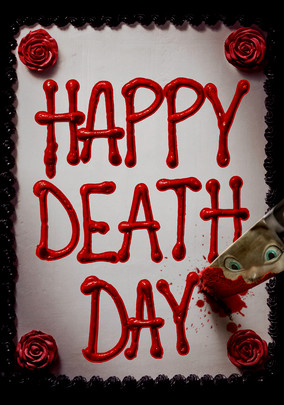
Happy Death Day is a 2017 horror/slasher film that cleverly incorporates the “Groundhog Day” theme into its story.

Oddly, the film was released in October instead of February, a missed marketing opportunity.

Despite a unique premise, the film is overly complicated, especially for this genre. Rather than succeeding as a late Friday night treat, Happy Death Day becomes tough to follow, leaving too many questions and puzzling thoughts in the after-effects.

We first meet snobbish and sarcastic sorority sister, Theresa “Tree” Gelbman (Jessica Rothe), as she awakens with a pounding headache and a bad attitude one morning in the dorm room of a handsome classmate, Carter Davis (Israel Broussard).

She barely remembers the drunken tryst as she haggardly goes about her morning. Today is her birthday! Irritated by the day, she dismisses her kindly roommate and her father.

She is rude to a former one-night stand, finally going to a party, where she is followed and brutally murdered by a figure wearing a campus mascot mask.

She suddenly awakens to the same morning she has just experienced!

Perplexed, Tree spends the remainder of the film on the hunt to figure out who killed her and unravel the mystery of halting the events by going on a continuous “loop” of the same night, each time uncovering more clues.

Mixed in with the events, Tree realizes she has feelings for Carter and should become a more sociable person.

Star Jessica Rothe is excellent in a breakout film role, though she had a small part in the musical La La Land in 2016.

Her chemistry with Broussard is adequate, though when we talk horror, romance is not at the top of the list, blood is.

Unfortunately, Happy Death Day offers few accurate kills or scares—the film is rated PG-13, for heaven’s sake.

A nice aside and testament to the character of Tree is her possession of both “good girl” and “bad girl” qualities. Trendy in slasher films is that the girl who parties and has sex is offed before very long, but in Happy Death Day, we are served both in the same character.

Tree is, in fact, butchered, but when brought back to life, the character eventually blossomed into the clear heroine. This is a nice twist on a traditionally written character.

I enjoyed the perpetual whodunit factor that screenwriter Scott Lobdell carves into the fabric. A bevy of suspects is introduced and the tale changes direction with each loop.

The story becomes more complex with each loop, and characters’ stories or motivations shift each time. Furthermore, a few more characters are introduced giving the story more layers.

This is both a strength and a problem—Trees professor Dr. Gregory Butler, her secret lover, is a suspect.

Is Tree’s sweet roommate, Lori, who wants nothing more than to treat her friend to a lovely birthday cupcake, too good to be true?

Things spiral out of control from a story perspective at a certain point.

What is the point of the local serial killer, John Tombs, injured and conveniently staying at the campus hospital, other than to serve as a red herring? Who is the masked killer and why do they suddenly disappear from the story? How is Tree able to seemingly change the details of her murder so much so that it ends up never happening?

The reveal of the actual killer is perfect, but how did we get to this point? By the big reveal at the end, I had stopped trying to figure out the film.

Slightly above par, Happy Death Day (2017), while spirited and reaching for something different, becomes muddled and senseless, leaving the viewer wondering how all the various “groundhog day” stories add to a satisfying conclusion.

Sadly, by the film’s conclusion, one will likely not wish to waste time bothering to care. Still, some props for creativity must be awarded.

Mudbound-2017

Mudbound-2017

Director Dee Rees

Starring Carey Mulligan, Garrett Hedlund

Scott’s Review #724

Reviewed February 12, 2018

Grade: B+

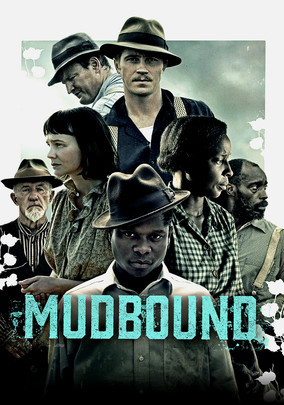
Mudbound is a 2017 Netflix period drama that transports viewers to a time of racism and struggles as World War II ravaged Europe.

The piece is set mainly in rural Mississippi; however, during the 1940s, most people, especially black people, had a vastly different way of life.

The film depicts the hardships and struggles of two families living on the same land, one white and one black, and how their lives intersect dramatically.

The film received several Oscar nominations, including for Adapted Screenplay, Supporting Actress, Song, and Cinematography. I will suffice it to say I support the latter two mentions in the group but not the former.

While the final act kicks the film into much-needed high gear, and the filming detail of the rural southern terrain is quite apt, I kept waiting for a stunning scene involving the usually excellent Mary J. Blige to erupt, but sadly nothing ever came.

While inspired, the writing would not get my vote in the screenplay category either, especially when other, more worthy films (think Mother!) were bypassed.

The mood of Mudbound is immediately impressive as we are introduced to the grizzled and muddy town of Marietta, Mississippi, a sort of farm wasteland. Brothers Henry and Jamie McAllan struggle to bury their recently deceased “Pappy” as the lands are ravaged by a driving storm.

When Henry briefly leaves Jamie in the watery grave the pair has dug, Jamie is panic-stricken that Henry will not return. In this way, director Dee Rees reveals a significant clue to tension between the brothers as the film rewinds to sometime earlier when times were happier for the brothers.

Mixed in with the trials and tribulations of brothers McAllan, is Henry’s wife Laura (Carey Mulligan), who shares a loveless marriage with him, while secretly lusting after Jamie.

A poor black family resides and works on the McAllan farm, and must endure hardship and racism from the white residents of Marietta, especially when their son Ronsel returns from World War II, a celebrated hero.

Old habits die hard as the Ku Klux Klan rears its ugly head, targeting the young soldier for daring to bed with a German woman abroad.

As most of the film meanders during the first hour or so with odd edits and pacing, I did not easily connect with many of the characters, though I wanted desperately to.

There seemed to be not enough buildup to the ultimate drama. The film is shot in a way that you know you are watching something of substance, but it takes a long, long time to reach a crescendo.

The aforementioned criticism of Mary J. Blige, who portrays long-suffering matriarch Florence Jackson, is not of the part itself or her acting; rather, I expected a gritty, meat-and-potatoes-style performance from the talented lady.

I disagree with her Oscar nomination, and instead would have chosen the brilliant Michelle Pfeiffer from Mother!

Praise must be written for Mulligan’s performance, shamefully overlooked, like the haggard, intellectually unfulfilled housewife, Laura. As she wistfully buries her nose in a novel to escape her dull life, or longingly looks at Jamie, disappointed with her loneliness, we feel every emotion that Mulligan plays.

A consistent problem with Mudbound was that it lacked a grand emotional scene from either Blige or Mulligan.

The film’s racist subject matter can be utterly challenging to watch as a significant character sees their tongue removed and another character forced to make a difficult choice. This action leads to a deadly turn of events and the murder of another character, resulting in a lifetime of secrets.

The final thirty minutes are the best part of Mudbound.

A must-notice historical feat is Rachel Morrison’s nomination in the cinematography category. She is the first female to receive this honor, and it is certainly about time. Morrison successfully fills Mudbound with the perfect mood—both picturesque greenery and a depressing, downtrodden aura.

This is not as easy as one might imagine, but creative talent achieves this effortlessly.

Mudbound has received much attention but is not the masterpiece some are touting it as. It takes way too long to hit its stride, the film has good aspects and some missed opportunities.

Perhaps a better-put-together film would have resulted in a brilliant experience instead of “only” a good watch. I recommend Mudbound, but I expected and hoped for much more than I was given.

Oscar Nominations: Best Supporting Actress-Mary J. Blige, Best Adapted Screenplay, Best Original Song-“Mighty River”, Best Cinematography

Independent Spirit Award Nominations: 1 win-Robert Altman Award (won)

Pinocchio-1940

Pinocchio-1940

Director Ben Sharpsteen, Hamilton Luske

Voices Cliff Edwards, Dickie Jones

Scott’s Review #723

Reviewed February 1, 2018

Grade: B+

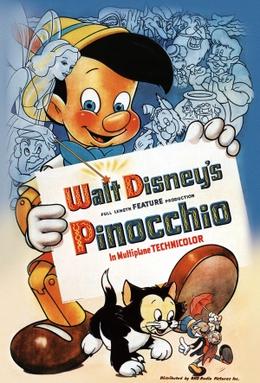
As a follow-up to the marvelous 1937 Walt Disney production of Snow White and the Seven Dwarfs, 1940’s Pinocchio is a darling tale of a wooden puppet longing to become a real boy.

The film vastly differs from its predecessor in that the protagonist is male, and the thematic elements are Italian (based on an Italian children’s novel). Still, similarly, Pinocchio is a touching experience and is magical and whimsical, telling a humanistic story about wishes and dreams coming true.

As narrated by a fantastic, cheerful little insect named Jiminy Cricket, an elderly woodcarver named Geppetto creates a wooden puppet named Pinocchio and wishes upon a star for the puppet to become a little boy.

A mysterious yet lovely Blue Fairy arrives one night and tells Pinocchio that he must be brave and truthful for the desired effect to occur- Jiminy serves as his conscience. Throughout the remainder of the film, Pinocchio’s morals are tested by unsavory characters who attempt to steer him down a dark path.

Certainly, Pinocchio is intended to be a message film for little boys and girls everywhere about the importance of honesty and truthfulness. However, some comic elements are mixed to avoid making the experience too dark or scary.

This is evidenced by the legendary way Pinocchio’s nose grows longer with each fib he tells. The film preaches a valuable lesson, which is why the adorable story holds up so well in the present.

Some values never go out of flavor.

In superb Disney form, Pinocchio features an emotional tearjerker of a scene towards the end of the film as Geppetto mourns the loss of his son.

The scene is sweet and touching and will fill even the hardest of hearts with feelings- regardless of age. In this way, Pinocchio becomes even more of a timeless treasure and is a film that the entire family, generations upon generations, can enjoy together.

Films of this nature are so important as a bonding form.

Enough praise cannot be given to Pinocchio’s incredibly effective theme song, “When You Wish Upon A Star,” belted out by Jiminy Cricket. The resounding tune is as emotional as it is timeless and bold. It is belted out at just the ideal time during the film and is still associated with the legendary film.

In fact, over the years, the song has become synonymous with the Walt Disney Company itself.

One slight oddity of the film is that Geppetto—clearly at the grandfather’s age—is the father of a young boy. This might have been perceived as sweet in 1940, but in 2018, it may have been perceived as a bit creepy or at least unusual.

Still, this is a minor flaw that can be easily overlooked. I have come to assume Geppetto is the grandfather in the story.

For those in the mood for a charming, classic animated Disney picture, 1940s Pinocchio is a mesmerizing and creative experience. At its core, it is a timeless benevolent lesson in goodness and purity.

Pinocchio is artistically filmed and told, and it can be enjoyed by anyone, regardless of age or gender.

Oscar Nominations: 2 wins Best Original Score (won), Best Original Song-“When You Wish Upon a Star” (won)

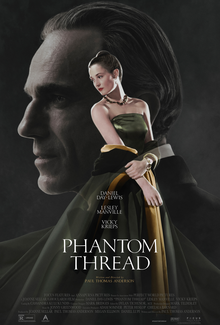
Phantom Thread-2017

Phantom Thread-2017

Director Paul Thomas Anderson

Starring Daniel Day-Lewis, Vicky Krieps, Lesley Manville

Scott’s Review #722

Reviewed January 31, 2018

Grade: A

Phantom Thread is a 2017 gem that should ideally be studied in film schools and remembered for decades to come, or at the very least discussed and dissected among those fortunate enough to see it currently.

Set in England during the 1950s and centering on the dress-making industry, the film mixes romance with a bizarre psychological element that leaves the viewer breathless as the final act comes to a dramatic and startling conclusion.

Daniel Day-Lewis brilliantly portrays Reynolds Woodcock, an esteemed and famous dressmaker who lived and worked in London in the 1950s.

He creates lavish dresses for the members of high society, including the wedding gown for the famous Belgian princess. Masterful at his work, he is also controlling and demanding, requiring plenty of support and attention from his equally controlling sister, Cyril (Lesley Manville).

When he meets Alma Elson, a waitress from a countryside resort, the pair fall into a relationship. She acts as his assistant, muse, and lover. Complexities develop between Reynolds, Alma, and Cyril as the plot progresses in cerebral and nail-biting fashion.

The film is ravishing and a feast for the eyes if only for the classic costumes alone.  Each dress that Reynolds creates is exceptional and at the height of glamour. His domineering nature only makes this realistic as perfection is his modus operandi and his dresses are evidence of this.

In one particularly fantastic sequence, Reynolds begrudgingly creates a dress for the boozy Barbara Rose, a rich and mature woman who promptly falls asleep drunk at her wedding and soils the garment.

A livid Reynolds, along with Alma, strips Barbara of the dress, rather than see her sleep in and tarnish it.

However, the main draw to the film is the excellent, intricate main plot involving Reynolds, Cyril, and Alma.

This weaving of personalities and their nuances must be attributed to the fabulous direction of Paul Thomas Anderson,  known for edgy, dark films such as 1997’s Boogie Nights and 1999’s Magnolia.

He comes up with a masterpiece in Phantom Thread.

The three principal characters are pretty unlikeable and the viewer’s allegiances may change throughout the tale. Appearing to be the innocent, debutante character of the film, the character of Alma will be surprised, especially in the film’s final act.

A successful nuance is the scenes involving characters breaking bread with others as events unfold over Danishes, omelets, and crisp asparagus. Sometimes the banter involves discussions and debates about the preparation of the food.

This characteristic is a dream for any foodie and the meals aid in the progression of the plot.

Earlier in the film, Alma is scolded by a maid for nearly picking poisonous mushrooms, which later becomes a major clue and part of the film’s conclusion.

During a pivotal scene between Reynolds and Alma, she prepares a delicious mushroom omelet for her love as motivations, secrets, and desires surface.

The grand twist that Anderson reveals at the end of the film will only leave the viewer open-mouthed and quickly reviewing the events and circumstances of the entire movie.

Anderson’s close-up scenes are magical, and each actor is allowed to be very expressive. The camerawork in several breakfast scenes—Alma and Cyril gazing at each other, revealing emotions that border between hatred and mutual respect—is effectively done.

Manville, in particular, does so much with her blue eyes as she sips coffee and peers over her cup with venomous indignation at her foe.

How splendid is the comparison of Cyril to the famous Hitchcock villainous Mrs. Danvers from the classic 1940 film in her cold and creepy mannerisms?

I hope that Phantom Thread will eventually be appreciated and analyzed as a cinematic work of art.

Deservedly honored with a 2017 Best Picture, Best Actor, Best Supporting Actress, Best Director, and Best Costume Academy Award nomination, the film is a lesson in excellent writing, bizarre angles, and essential effects.

Let’s hope that this film will be recognized as the great work it is.

Oscar Nominations: 1 win-Best Picture, Best Director-Paul Thomas Anderson, Best Actor-Daniel Day-Lewis, Best Supporting Actress-Lesley Manville, Best Original Score, Best Costume Design (won)

Sleeping Beauty-1959

Sleeping Beauty-1959

Director Clyde Geronimi, Les Clark, Wolfgang Reitherman, Eric Larson

Voices Mary Costa, Bill Shirley

Scott’s Review #721

Reviewed January 30, 2018

Grade: B+

Sleeping Beauty is a 1959 musical fantasy film and Walt Disney’s sixteenth animated production. By this point, Disney was a master at crafting wonderful and magical productions, and Sleeping Beauty was a solid work.

However, due to mixed reviews and poor box office performance, Disney films were retired for many years. The effort achieves a lighter tone than heavies like Dumbo and Bambi but is enjoyable nonetheless.

In a magical land of royalty, fairies, and both good and evil, King Stefan and Queen Leah, the benevolent leaders of the land, finally conceive their first child, Princess Aurora.

After proclaiming a memorable holiday and celebration, a festive scene turns dark when an evil and powerful fairy, Maleficent, jealous with rage, puts a curse on the innocent baby.

Thanks to a kindly fairy, the curse of death on Aurora’s sixteenth birthday is slightly blocked in favor of Aurora falling into a deep sleep- only to be awakened by true love’s kiss.

The characters in Sleeping Beauty are pretty lovely and, overall, sweet and kind. My favorite characters are the three fairies: Flora, Fauna, and Merryweather. Each has her personality but wields special magical powers—all good-natured.

While Flora and Fauna possess song and beauty, which they bestow on Aurora, Merryweather arguably saves the young girl’s life. The three women are also instrumental in being the unsung heroes of the film, while the handsome Prince Phillip gets star billing.

Compared to many other Disney films, Sleeping Beauty is quite the show. It is lush with colors as bright as stars, and the sparkles that drizzle from the fairies’ wands ooze magic that will make children giggle with delight and adults marvel with adoration.

In this regard, Sleeping Beauty is extravagant and the most expensive Disney production to date.

Maleficent is a fantastic villain, and when she finally turns into a lethal, fire-breathing dragon, this is sure to scare youngsters watching the film for the first time. Sure to mention, Maleficent’s web of thorns that she uses to surround Aurora’s castle is a spectacle in and of itself.

Upon watching the film, I continue to draw comparisons to another of Walt Disney’s famous films, 1937’s Beautiful Snow White and the Seven Dwarfs, as both films resemble each other in a sheer mass of ways.

The beautiful and innocent main female characters, both in peril from devious, older women, clearly jealous of Snow White’s and Aurora’s goodness, are apparent.

Besides, both contain dashing princes who come to the rescue in just the nick of time and kindly little things who assist in the drama.

Perhaps Sleeping Beauty’s similarities to Snow White and the Seven Dwarfs—in fact, the pair would be perfect to watch together on a rainy Saturday afternoon—led me to conclude that Snow White is the more charming and grabbing of the two films.

Also, Sleeping Beauty does not triumph in the important humanistic lessons that the Dumbo and Bambi (my favorites of all the Disney films) have.

Sleeping Beauty contains elements of an empathetic, feel-good animated experience. A King, a Queen, a Prince, a vicious villain, giddy fairies, and a beautiful heroine are all represented in this delicate and satisfying Disney venture- not the greatest in the pack, but assuredly a good time.

Oscar Nominations: Best Scoring of a Musical Picture

The Big Sick-2017

The Big Sick-2017

Director Michael Showalter

Starring Kumail Nanjiani, Zoe Kazan

Scott’s Review #720

Reviewed January 29, 2018

Grade: B+

The Big Sick, a 2017 independent “dramedy” film, takes what could be a standard premise and turns it upside down, offering a fresh perspective on a familiar tale about a prospering relationship.

The screenplay is the standout as the writing is intelligent and crisp. Thanks to exceptional acting by all four principal characters, The Big Sick is a success and worth watching.

The story follows an interracial couple, Emily and Kumail, played by Zoe Kazan and Kumail Nanjiani, who have recently started casually dating. Kumail is a standup comic living in Chicago who meets the flirtatious Emily after a club performance one night.

They share a one-night stand and agree never to see one another again.

As the smitten pair break their promise and form a romance, a tragedy occurs, landing Emily in a coma.

Kumail must handle Emily’s parents, Beth (Holly Hunter) and Terry (Ray Romano), who are angry with Kumail for misleading Emily and not telling her about his strict Muslim parent’s intentions of marrying him off by arranged marriage.

The screenplay (nominated for a 2017 Oscar nomination) is loosely based on the relationship between actor/writer Nanjiani (who stars), and Emily Gordon (who co-wrote the screenplay).

Especially since Nanjiani stars, the film is sincere and authentic, as if Nanjiani is living the role.

The chemistry between Nanjiani and Kazan during their many scenes at the start is a significant plus to the film. Before the drama takes off, the audience will become fully invested in the pair as a couple.

Whether the couple flirts as Kumail drives Emily home or fights when Emily learns about his Muslim culture’s belief in arranged marriage, the couple has a tremendous connection, and it shows.

The story fabric takes an interesting turn about midway through when Emily is stricken with a debilitating illness.

A medically induced coma is needed, as Kumail is forced to pretend to be her husband, this opens up many moral and legal ramifications that the film chooses essentially to ignore, instead of dealing with the relationships between Kumail and Emily’s distraught parents.

Hunter and Romano are excellent in the parent roles. Hunter is the more showy of the two and has more meat, while Romano holds his own and powers a vital comedy club scene in which he defends his wife from a callous heckler.

Admittedly, the film decides to go the “happily ever after” route, this is hardly a surprise given that Judd Apatow is the producer.

Remember, this is the same guy who produced safe films such as Superbad (2007) and Anchorman 2 (2013). Still, the story within The Big Sick is an enjoyable, character-driven ride, if not unpredictable.

A darker-tinged affair might have set this film over the top as it contains many other credible film qualities.

The addition of comic talent in the supporting roles of Kumail’s comedy club buddies adds a good balance and nicely counterbalances the drama so that it does not become too dour.

Much of the film involves Emily in a coma, so comic talent such as SNL’s Aidy Bryant and Comedy Central’s Kurt Braunohler are suitable ads.

I enjoyed the inclusion of the traditional Pakistani custom of arranged marriages, but at times this seems played for laughs rather than being a significant obstacle to the couple.

Kumail’s controlling mother parades one young Pakistani girl after another in front of her son as a way of encouraging him to select one of them. Kumail’s traditional family is played as stereotypes and the lighthearted foils of the film.

The Big Sick (2017) succeeds with crisp, witty dialogue and a solid story that nicely complements the intended comedy.

A few too many stereotypes and goofiness keep the action light even when compared to the more serious parts—great acting all around.

Oscar Nominations: Best Original Screenplay

Independent Spirit Award Nominations: 1 win-Best Supporting Female-Holly Hunter, Best First Screenplay (won)

Beach Rats-2017

Beach Rats-2017

Director Eliza Hittman

Starring Harris Dickinson

Scott’s Review #719

Reviewed January 26, 2018

Grade: A-

Beach Rats is a 2017 coming of age film penned and directed by Eliza Hittman, a young female director from Brooklyn, New York, who incorporates her familiar geographical settings into only her second feature film.

2013’s It Felt Like Love received two Independent Film nominations, and Beach Rats has followed suit, garnering a Best Actor nomination and a Best Cinematography mention.

The film is a terrific story of conflict that its target audience will surely relate to.

The film is very low-budget but a successful character study of a young man named Frankie, played by newcomer Harris Dickinson, who wrestles with family issues and his sexuality while hanging out with his troubled friends and dating his sometime girlfriend.

Beach Rats is not a downer but rather an interesting glimpse into a teenager’s life and struggle with self-identity.

Mirroring It Felt Like Love, Hittman uses plenty of locales unique to Brooklyn, the most identifiable being the borough’s watery, nighttime beaches, which gives the film an authentic feel.

Many scenes are shot outdoors, which is a strong point of the film. Like many independent films, Beach Rats uses several “non-actors” in small roles, adding depth to the blue-collar, sometimes harsh, Brooklyn feels.

With only two features to her credit, Hittman is successful at having her hand-print on her films, making them identifiable as her own.

It is interesting how the director chooses a male character to write for. Similar to the female Liza in It Felt Like Love, both she and Frankie are vulnerable and coming to terms with their sexual feelings and desires.

The fact that Liza is straight and Frankie, at most, bisexual, is the only strength of the complex writer/director.

Dickinson is perfectly cast as Frankie. Good-looking, with chiseled features and a lithe, toned body, his bright blue eyes are expressive, as the audience empathizes with his many dilemmas.

Beach Rats is much more than a traditional “gay film”, which is admirable, it is more complex than that.

By 2017, the common theme of coming to terms with one’s sexuality has been explored.

According to Frankie, he “just has sex with men” and refuses to identify as either gay or bisexual. It is implied that because of his group of trouble-making friends, who only want to get high, he might be faced with resistance if he ever came out to them.

The supporting cast is well represented, Frankie’s mother, Donna (Kate Hodge), is faced with a tricky predicament as her husband, Frankie’s father, has just died of cancer, ripping the family apart.

She knows that Frankie keeps things from her, is she figuring out Frankie’s sexual secrets?

Donna implies that it is okay for Frankie to tell her anything, admirable, combined with her problems. Frankie’s girlfriend, Simone, is coming into her own as Frankie is, and even though the duo shares a sweet relationship, it appears doomed for failure.

The most interesting scenes in Beach Rats occur between Frankie and the mostly older men he meets virtually or in person. Though Frankie is quite nervous, Dickinson always makes the character appear confident and well beyond his years.

Being street-smart, he is never taken advantage of, as he is familiar with young men and older men. Why he mostly prefers older men is never explained, but it might have anything to do with seeking to fill the void left by his deceased father.

Or is it simply to reduce the risk of running into anyone he might know within his age group?

Hittman is not shy about featuring nudity, yet each scene is tastefully done and never seems to be for either shock value or to elicit a gasp. Full frontal nudity is featured, as well as scenes of Frankie engaging in sexual acts with both the men and his girlfriend.

Sure, Dickinson has a perfect body, but his assets are not on display unnecessarily.

More often than many “box office” films, independent films are given much creative freedom to tell a good story. Thankfully, in the case of Beach Rats, the audience is lucky enough to view a quiet, introspective tale of a conflicted adolescent and how he deals with demons and complex feelings.

Particularly for the predominantly LGBT audience who will see the film, Beach Rats (2017) will have much to offer.

Independent Spirit Award Nominations: Best Male Lead-Harris Dickinson, Best Cinematography

Darkest Hour-2017

Darkest Hour-2017

Director Joe Wright

Starring Gary Oldman

Scott’s Review #718

Reviewed January 24, 2018

Grade: A-

Darkest Hour (2017) is a British historical film that showcases legendary actor Gary Oldman’s astounding portrayal of Winston Churchill.

Known for numerous other fine-acting performances in films such as the Harry Potter series (2001-2011), JFK (1991), and Batman Begins (2005), this performance easily transcends all of the others as he brings perfection to complex role-infusing humor, drama, and many idiosyncrasies of the storied historic figure.

Churchill is the best role of Oldman’s lengthy career.

Director Joe Wright, famous for classy European films such as Pride and Prejudice (2005), Atonement (2007), and Anna Karenina (2012), traditionally offers rich, intelligent experiences with an upper-crust, often British theme and fills his characters with wry humor and wit.

In Darkest Hour, a film that belongs to Oldman, by the way, Churchill is the master of gruff sarcasm and cantankerous charm.

During the tumultuous time of 1940,  with the barbaric grips of Nazi Germany settling upon both England and France (Allies in World War II), a disheveled England is frustrated with their current Prime Minister, Neville Chamberlain, for being weak.

Chamberlain begrudgingly appoints Winston Churchill as his successor, amid limited support.

The film discusses Churchill’s early days in charge as the war and the Nazi presence loomed larger and larger- especially as the historic Dunkirk situation comes into fruition.

Darkest Hour is a good quality film —it has a certain historic richness and the feeling of experiencing a worthy and relevant film. For those of us who did not live during the 1940s, the film will likely serve as an educational experience into the events of the day.

Hundreds of films have been made over time that have explored the events during World War II in fantastic detail, but this film is unique in that it not only provides a perspective of the Allied countries “back against the wall” situation but the ups and downs and pressures that Churchill, the man, faced.

Despite a few quick clips of Hitler and very old black-and-white footage and newspaper headlines of the crazed leader, the focus is not on the enemy country. No actor was used to play Hitler; rather, the focus is on Churchill and the decisions he made and the influences he was faced with.

Pressured to appease the militant German country and reach a “peaceful” deal, Churchill instead listened to the voices of the ordinary, everyday, British people to get his decision to fight the Germans and not back down.

Clever and relevant to 2017 cinema, the film spotlights the famous Dunkirk situation, when British forces were trapped on the shores of Dunkirk, with German planes looming overhead.

Many men were saved, thanks in large part to Churchill and British and French civilian boats that aided in the rescue.

The 2017 film Dunkirk would make an excellent companion piece to Darkest Hour because its subject matter is similar to that of Darkest Hour.

Not surprisingly, both films received Academy Award nominations for Best Picture.

A great lesson I carried away from the film is with Churchill himself.

Sure, I knew that he was the Prime Minister of England during the 1940s and was instrumental in the events of the bloody war, but I knew little about the man himself.

Thanks to Wright and, of course, Oldman, the viewer will learn the good and bad characteristics of this man. A heavy drinker, commonly downing champagne with lunch and brandy the rest of the day, he was initially not well-liked, nor taken very seriously by British royalty.

With Churchill’s bubbling personality, Oldman is fantastic at filling the role with humor, frustration, and just the correct amount of empathy and concern.

Despite his temper, we can tell that he loves his country and is proud of the people living there—that is why he is adamant about conquering the enemy. So, we know he is a good man despite his temper tantrums.

Oldman also successfully embodies the mannerisms that this historical figure contained.

Kristin Scott Thomas also gives a worthy performance, albeit in a small role, as the mature and graceful wife, who can both support and match wits with her husband.

Thanks to a brilliant acting performance by Gary Oldman, who takes on a difficult role that could easily be botched by lesser talent, Darkest Hour is a 2017 historical drama worth seeing.

He makes a film that could have been dull and flat into a worthy watch to both learn something and be amazed at a truly great acting performance.

Oscar Nominations: 2 wins-Best Picture, Best Actor-Gary Oldman (won), Best Production Design, Best Cinematography, Best Makeup and Hairstyling (won), Best Costume Design

GoldenEye-1995

GoldenEye-1995

Director Martin Campbell

Starring Pierce Brosnan

Scott’s Review #717

Reviewed January 19, 2018

Grade: B

By 1995, after a record six years between films, the James Bond franchise re-emerged with energy, with Pierce Brosnan assuming the role of the MI6 agent and breathing fresh life into the character.

The charming and suave Irish actor gave the role a new direction, last played by Timothy Dalton, who gave Bond a more brooding quality. The resulting GoldenEye offers mixed results, though the casting is a vast improvement over its predecessor.

GoldenEye sees other monumental roles recast- that of Judi Dench as M and Samantha Bond as Miss Moneypenny.

The film has a slick look and a compelling story, but at times, it is tough to follow, and overall, despite containing all the elements, something seems to be missing.

Or maybe I refer to the other Bonds more? Still, the offering is far from a bad watch.

GoldenEye kicks off with, in hindsight, a major clue to the story as Bond  (Brosnan) and fellow 00 agents, Alec Trevelyan (Sean Bean), infiltrate a Soviet facility in northern Russia in 1986, searching for chemical weapons.

Sinister Soviet General Ourumov tragically kills Alec, and Bond mourns the loss of his friend.

The action resumes in present times (1995) as, now in gorgeous Monte Carlo, Bond follows the beautiful and sadistic Xenia Onatopp, a crime syndicate member known for crushing men with her thighs.

Xenia and Ourumov travel to Siberia, where they destroy a bunker holding GoldenEye satellites and kill everyone except the computer programmer, Boris (Alan Cumming), and the lone survivor, Natalya  (Izabella Scorupco).

In a clever twist, it is revealed that Alec has betrayed British Intelligence and is himself leading the crime syndicate.

In one of the quietest and best scenes, Bond and M have an interesting exchange in her office as M (a woman) calls Bond out on his arrogance and chauvinism, saying it is a new day.

Dench adds a ton of modern female sensibility to the role (about time in 1995), as Bond now reports to a woman. The scene is important as it leads the two characters to achieve mutual respect and arguably parleys the franchise into a new, more female-empowering direction.

A great positive to GoldenEye is the setting, which I think does wonders for the film as a whole- the bitter, blustery, Siberian set gives a soothing feeling, especially while watching the film during the ravages of winter, snug with a warm blanket and heaters.

Regardless, the sets are realistic, never cheesy, and loaded with atmosphere- so the film itself looks wonderful.

Issues abound with the frenetic pacing of the film- at times, I found myself losing track of the action or the sequence of events.

Understandably, as in many Bond films, events circle the globe and, surely, London, Russia, and Monte Carlo are great locations, but especially within the film’s final climax, I suffered from sensory overload.

Furthermore, Brosnan is not one of my favorite Bonds. Sure, he has the charisma, the looks, and the charm to pull off the role, but something about him does not measure up to Sean Connery, Roger Moore, George Lazenby, or Daniel Craig- certainly, he supersedes Timothy Dalton.

Don’t get me wrong- I do not despise him as Bond, but nothing stands him out against the others either.

The villains in GoldenEye are perfectly adequate if not spectacular. Sean Bean gives Alec a sly, ” aw, shucks appeal and defines good-looking, but his motivations for switching sides are not very exciting- something about Nazis in World War II, the Cossacks, and revenge are quickly mentioned, but it doesn’t much matter.

General  Ourumov is effective- with his sinister look, he is the perfect Bond villain. Xenia is little more than a cartoon character (with the name to boot), and her gimmick quickly wears thin.

Finally, Cummings, as the programmer, is played only for laughs, and his final chant of “I am invincible!” as he freezes into solid ice is mildly humorous.

The title theme song, “GoldenEye”, performed by Tina Turner, is forgettable at best and one of the most lackluster in the illustrious musical catalog.

GoldenEye features many of the standard Bond elements and is a decent entry in the franchise.

With the debut of a new Bond, the film has a fresh, very modern, and technical feel that, along with a fantastic setting, overlooks some flaws in the storytelling.

Filled with bombast and a crowd-pleasing method, GoldenEye (1995) is hardly the best Bond film, but not the worst.

Octopussy-1983

Octopussy-1983

Director John Glen

Starring Roger Moore

Scott’s Review #716

Reviewed January 17, 2018

Grade: A-

Hardly regarded as one of the most stellar of entries in the James Bond franchise, 1983’s Octopussy is nonetheless a guilty pleasure of mine.

This is undoubtedly because the film was the first installment I was allowed to see in the movie theater, and it is filled with exciting memories.

As the film stands in the current days, it is perfectly fine, containing all of the enjoyable elements necessary for a good Bond film- interesting villains, solid action, and gorgeous women.

Perhaps at times a bit silly, Octopussy is still quite the fantastic watch.

Roger Moore, admittedly looking slightly aged and sagging, returns to the fold as 007, the shaken, but not stirred action hero known as James Bond. However, he is, true to form, as witty and suave as he always is with witty one-liners and a mischievous smirk.

Moore ritualistically infuses the character with a measure of comedy- a wink of the eye or a raised eyebrow adds humor to the character so that any other actor who has portrayed Bond.

In this installment, Faberge eggs, clowns, and gorilla suits are featured.

Attempting to escape from East Berlin to West Berlin, 009- dressed as a circus clown- is murdered on the estate of a British Ambassador while attempting to deliver a fake Faberge egg.

Assuming the Soviets are involved, MI6 instructs Bond to investigate the matter, and a complex smuggling ring is uncovered- featuring a gorgeous female smuggler named Octopussy (Maud Adams), along with sinister Afghan exiled prince Kamal Kahn (Louis Jourdan), and his bodyguard, Gobinda.

Watching the film in 2018, even though it was made in 1983, Octopussy does not suffer from the dreaded “1980s look” that so many other films do; it seems surprisingly clean and fresh.

The colors are vibrant- especially in the prevalent circus and clown scenes, and the best two scenes- the airplane and train scenes- still bristle and crackle with good action.

As the climax to Octopussy culminates, the inevitable heroine and main Bond girl- Adams’s “Octopussy”- has been bound and gagged and taken hostage by the baddies in a fleeing airplane, Bond grabs hold of the fuselage, and begins a harried flight over the mountains of remote India, clinging for dear life.

The scene climaxes with an exciting fight scene atop the rooftop of the speeding plane as Bond and Gobinda fight to the death, as Kamal unsuccessfully attempts to twist and turn the plane and rid themselves of pesky Bond.

The scene is still compelling and loses none of its appeal over the years, never appearing dated.

The train sequence is still relevant but does suffer from a small dose of silliness.

The action is plentiful as Bond races against time to prevent a Russian missile from detonating and killing thousands of American citizens, and worthy of note is the timely Cold War subject matter of the Russians versus the Americans, plentiful in American cinema during this time.

As Bond dons a phony-looking gorilla outfit- embarrassing even for the comical Roger Moore- he can successfully take off the costume and sneak out of a train car, all before the three seconds that it takes for Gobinda to turn around and slice the head off of the gorilla, thinking it is Bond.

Suspension of disbelief is required.

Impressive is the female empowerment slant evident. From the strong businesswoman character that Adams portrays- she is decisive, intelligent, and savvy, she is neither cowering nor impressionable, and cannot be bullied or pushed around.

Albeit her name, “Octopussy”, does teeter on male chauvinism. Be that as it may, her gang of feminist followers, all wielding assault rifles, are quite inspiring and, at this point, unusual for a Bond film- typically masculine leaning.

Octopussy (1983) is an overlooked, under-appreciated, too easily dismissed slice of goodness served up with a bit of comedy, plenty of action, and good, solid villains- everything that makes a Bond film a Bond film.

The film is worthy of a viewing.

Welcome to my blog!1,552 reviews posted so far! I'm Scott Segrell and I reside in Stamford, CT. My site features hundreds of film reviews I have written since I launched the site in 2014. I hope you enjoy reading my latest reviews or searching for your own favorites to see if we agree. Please see my Recent Posts section, and don't forget to utilize the tags and category links.