Tag Archives: Rob Morgan

Smile-2022

Smile-2022

Director Parker Finn

Starring Sosie Bacon, Jessie Usher

Scott’s Review #1,342
Reviewed February 8, 2023

Grade: B+

I was prepared to award Smile (2022), a new supernatural horror film, with an exceptional ‘A-‘ grade until it dissipated during the final act and became too confusing.

The story collapsed mightily, leaving too much ambiguity and a messy plot that turned chaotic, so my initial reaction was one of dissatisfaction.

But then I remembered that I watched some of it with my hand closed to cover my eyes, and my jaw dropped open during other parts.

Smile is one of the scariest horror films I’ve seen in quite a while, with striking visuals and a handful of terrifying scenes. I’ll probably never see someone smirk again without thinking of this film.

Matters get off to a thumping start when Dr. Rose Cotter (Sosie Bacon) witnesses a bizarre, traumatic incident involving one of her patients. The troubled patient claims to see a haunted smile and suddenly kills herself in the presence of Rose.

Shaken, Rose starts experiencing frightening occurrences that she can’t explain as she turns to white wine to calm her nerves. As an overwhelming terror begins taking over her life, Rose must confront her troubling past to survive and escape her horrifying new reality.

But what does the link to her past have to do with the present?

That’s where Smile does a deep dive south, but I’m willing to forgive Rose’s trip to her abandoned childhood home, where her mother, who has a mental illness, offered herself while a guilt-ridden Rose did nothing to help.

There’s also Rose’s bitchy, self-centered sister, Holly (Gillian Zinser), to contend with.

The implausible storyline can be forgiven by the knowledge that Smile is director Parker Finn’s first feature film! Greats like Hitchcock and Tarantino didn’t knock it out of the park with their first releases either, but the brilliance was noticeably there.

The opening sequence, for example, is one of the best I’ve seen in horror this decade. I didn’t anticipate something so gruesome and palpable to occur right away. Rose’s patient is immediately terrified of Rose, which is a clear indication that something is seriously wrong.

The next best scene happens at Rose’s nephew’s birthday party. On an otherwise lovely afternoon, the boy’s living room is filled with brightly packaged presents from friends and family gathered nearby. He eagerly picks up his Aunt Rose’s specially wrapped gift.

What is wrapped inside is too gruesome to describe, but suffice it to say the party is ruined, the nephew traumatized, and all the party guests in agreement that Rose should be immediately sent to the loony bin.

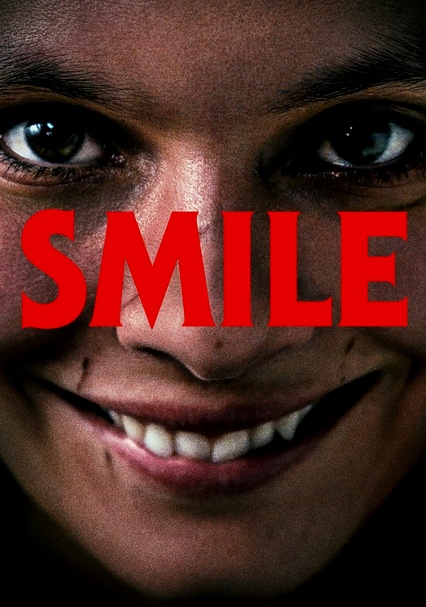
It’s other aspects that give Smile a significant victory. Any character who dons that sinister smile (see poster art above), whether real or imagined, haunts me in my dreams.

Those who scare easily need not see this film.

An interracial aspect (the Caucasian Rose’s boyfriend is black, and Holly’s husband is Indian) scores major points from a diversity perspective, and more minor characters provide a robust helping of cultural richness as well.

Sosie Bacon, daughter of Kevin Bacon and Kira Sedgwick, may be headed for Hollywood fame of her own as she easily carries the film. She emits a combination of calm, vulnerability, and intelligence, which makes the character relatable.

The film received positive reviews from critics but was criticized for patterning itself too closely after its counterparts, The Ring (2002) and It Follows (2014), but since those films were excellent, I didn’t mind a bit.

I don’t think we necessarily need a sequel to Smile (2022), but I’m anxious to see what Parker Finn comes up with next. He’s got the jumps and the cinematography down, and hopefully, he stays in the horror genre.
Don’t Look Up-2021

Don’t Look Up-2021

Director Adam McKay

Starring Leonardo DiCaprio, Jennifer Lawrence, Meryl Streep

Scott’s Review #1,220

Reviewed January 16, 2022

Grade: A

In the times of the COVID pandemic, ‘water cooler’ films have ceased to exist. Once, employees would gather around the water cooler to discuss a current film or television show. These days, with many working from home, this activity has waned.

Too bad, because Don’t Look Up (2021) is one of those films.

It was not on my radar until a flurry of scuttlebutt and controversy brought the film to the forefront of my mind and many others. Super topical and mired in irony, everyone should see it, but those who need to won’t.

It’s a brazen and in-your-face look at how science and facts are dismissed by some who can’t see the forest for the trees, or in this case, a giant comet speeding towards planet Earth. In the year 2021, amid controversy over COVID-19, including the prevention of mask-wearing and vaccinations, Don’t Look Up portrays those as simply stupid.

As they are.

Those viewers who are conspiracy theorists, Trump supporters, or I daresay even too self-absorbed to look past their own lives are the ones who should see the film the most. You will be mocked and used as fodder for the entertainment of the more intelligent species of human beings.

But perhaps learn a thing or two?

Led by director Adam McKay, famous for satirical works such as 2015’s The Big Short, he satirizes the current state of worldly affairs masterfully, using political comparisons and the world-weary science versus non-science approach.

McKay also writes and produces.

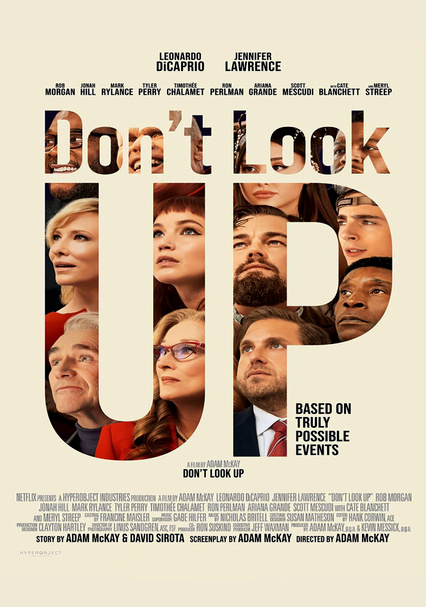
He enlists an all-star cast who were chomping at the bit to be part of his relevant and brilliant project. Leonardo DiCaprio, Jennifer Lawrence, Meryl Streep, Mark Ryland, and Cate Blanchett are just a handful of participating stars.

Kate Dibiasky (Jennifer Lawrence) is an astronomy graduate student who, along with her professor, Doctor Randall Mindy (Leonardo DiCaprio), makes a discovery of a comet on a collision course with Earth. It is expected to arrive within six months and destroy most of the planet.

They are shocked and dismayed when their attempts to get anyone to pay any attention are hijacked by the media and the President of the United States of America, President Orlean (Streep). Instead, folks in high power attempt to use the ‘story’ for either ratings or political gain.

With the help of Doctor Oglethorpe (Rob Morgan), Kate and Randall embark on a media tour that takes them to the airwaves of The Daily Rip, an upbeat morning show hosted by Brie (Cate Blanchett) and Jack (Tyler Perry). While Randall embarks on an affair with Brie, the scientists attempt to gain the attention of the social media-obsessed public before it’s too late.

As the title states, look up?!

President Orlean and her psychopathic son, and Chief of Staff, Jason (Jonah Hill), are patterned after former President Donald J. Trump and his son. Their nastiness and dismissive attitude, driven solely by personal gain, are despicable.

Hysterically and satisfying, they each get their proper comeuppance.

Orlean’s demise at the end of the film is particularly satisfying. Stay post-credits for this treat.

Don’t Look Up is not a conventional film- it’s better than that. Its special sauce is its powerful message and reassurance for viewers to not take good old-fashioned common sense for granted. Despite the naysayers, the use of one’s brain is a valuable commodity.

The urgency of the matter is not meant to be taken for granted, but there are enough comedic elements to classify it as such- a dark comedy.

DiCaprio is terrific in the lead role. Nervous and struggling to express himself, his frustration is palpable as he tries to warn the world of impending doom. The actor can play any character, and it’s great seeing him add a sexy, middle-aged nerd to his repertoire.

Lawrence is a killer. Her character has no filter and is known to burst into rage, making her outbursts particularly engaging. Kate will call an idiot an idiot. Her outburst at the President is a remarkably terrific scene.

Despite the laughter, Don’t Look Up (2021) sends a dire message. It mirrors the current times and what trouble we are in.

The grim final sequence, when Randall, Kate, and family sit around the dinner table enjoying a Thanksgiving-style meal, is also a reminder to keep loved ones close and treasure every moment.

Oscar Nominations: Best Picture, Best Original Screenplay, Best Film Editing, Best Original Score

The Last Black Man in San Francisco-2019

The Last Black Man in San Francisco- 2019

Director Joe Talbot

Starring Jimmie Fails, Jonathan Majors

Scott’s Review #1,018

Reviewed May 1, 2020

Grade: A

The brilliance of The Last Black Man in San Francisco (2019) is multi-fold. The immediate call-out is that the work is the creation of up-and-coming director Joe Talbot, an artist with an excellent eye for both the visual and humanistic aspects of cinema.

Whoever influenced this young man deserves props, for he has a great future ahead of him. Given that this is his film debut and he also co-wrote it, the future is indeed bright. The film is loosely based on the life of Jimmie Fails, his childhood best friend, who also stars.

A24 is arguably the new “it” film studio for independent entertainment offerings, and this is to be celebrated.

Indie films provide creative artists with the means and time to develop their products and tell stories that are fraught with meaning, and in many cases, dare to go where other films have not ventured, at the risk of turning off a mainstream audience.

This is to be celebrated and championed, and has resulted in many fantastic and unique films. Hereditary (2018), Midsommar (2019), and The Lighthouse (2019) immediately spring to mind.

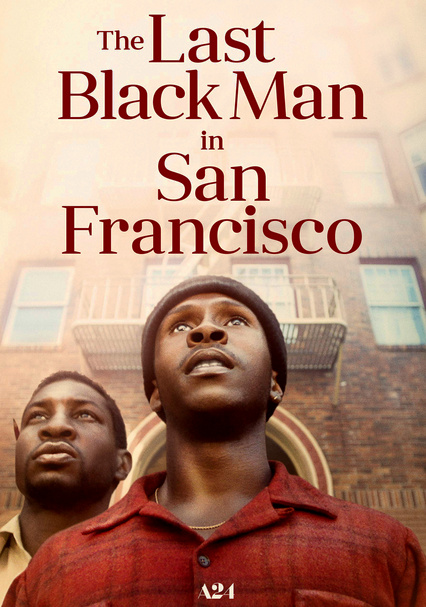
The Last Black Man in San Francisco gets off to an interesting start as two young black men, Jimmie (Fails) and Mont (Jonathan Majors), wait for the bus as men clad in protective gear appear to clean polluted waters.

The implication is clear that residents are not protected while the men are. Protesters chant while images of the changes San Francisco has experienced over the years are shown.

The two then skateboard to a Victorian house in the city’s Fillmore District, where Jimmie grew up and says it was built by his grandfather in 1946.

Their skateboard trip is cerebral and surrealistic and has ten glorious cinematic moments.

It is evident that Talbot is channeling either an autobiographic story or one of a friend- it proves to be the latter. Unclear is if Mont is supposed to be Talbot, but my guess would be in the affirmative.

Jimmie and Mont are inseparable, residing both at Mont’s grandfather’s house (played by a startlingly elderly Danny Glover) and the house that Jimmie’s grandfather built.

The friends trudge along with their daily lives by enduring insults hurled at them by a neighborhood gang and fixing up the Victorian house whose owners neglect it, only to be subsequently evicted.

Jimmie and Mont are fantastically nuanced, rich characters, each for different reasons. Jimmie is pained that his city has forgotten his grandfather and his legacy, which have been cast aside for progress and wealth.

His father (Rob Morgan) is angry, his mother, a recovering drug addict, is barely in his life, as they run into each other by chance on the city bus. Jimmie’s Aunt (Tichina Arnold) resides outside the city and serves as his confidante.

Mont is creative, yearning to write a play based on the local gang, but struggles to create the words or authentically express his voice. He works in a fish shop and frequently acts out his thoughts about others down by the water. Considered odd, he is a good guy and loyal to his grandfather.

Since a female love interest is never mentioned (another high point of the film), neither Jimmie’s nor Mont’s sexuality is ever discussed, nor is a potential relationship between the two ever mentioned.

The ambiguity works remarkably well and evokes comparisons to the groundbreaking Moonlight (2016).

When a sudden death erupts, the proceedings, Mont finally finds his voice and composes an improvised stage play which he stars in as a dedication to the fallen victim.

He elicits responses from the people in attendance (including all principal cast members) as a shocking secret erupts, resulting in disarray. This takes the already layered film in a new direction as all Jimmie thought to be true is suddenly shattered.

In a word, the film feels fresh, both visually and from a story perspective.

Fails and Majors are a top young talent with bright futures who add a patient climb to their characters amid a film that paces slowly but steadily, letting the events unfold in a thought-provoking way.

I eagerly await the next project by the talented Talbot.

In a film industry hungry for new ideas, the creator of The Last Black Man in San Francisco (2019) offers a journey into the minds of two black men, written not as stereotypes, but as interesting and intelligent individuals, who are not looking forward, but looking backward.

The film provides characters who are not standard but are so much more than that.

Independent Spirit Award Nominations: Best First Feature, Best Supporting Male-Jonathan Majors

Mudbound-2017

Mudbound-2017

Director Dee Rees

Starring Carey Mulligan, Garrett Hedlund

Scott’s Review #724

Reviewed February 12, 2018

Grade: B+

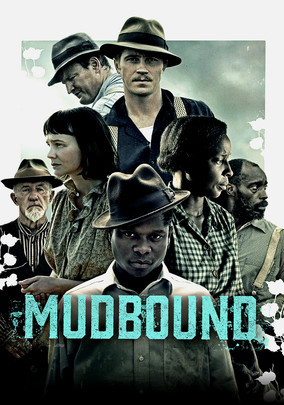
Mudbound is a 2017 Netflix period drama that transports viewers to a time of racism and struggles as World War II ravaged Europe.

The piece is set mainly in rural Mississippi; however, during the 1940s, most people, especially black people, had a vastly different way of life.

The film depicts the hardships and struggles of two families living on the same land, one white and one black, and how their lives intersect dramatically.

The film received several Oscar nominations, including for Adapted Screenplay, Supporting Actress, Song, and Cinematography. I will suffice it to say I support the latter two mentions in the group but not the former.

While the final act kicks the film into much-needed high gear, and the filming detail of the rural southern terrain is quite apt, I kept waiting for a stunning scene involving the usually excellent Mary J. Blige to erupt, but sadly nothing ever came.

While inspired, the writing would not get my vote in the screenplay category either, especially when other, more worthy films (think Mother!) were bypassed.

The mood of Mudbound is immediately impressive as we are introduced to the grizzled and muddy town of Marietta, Mississippi, a sort of farm wasteland. Brothers Henry and Jamie McAllan struggle to bury their recently deceased “Pappy” as the lands are ravaged by a driving storm.

When Henry briefly leaves Jamie in the watery grave the pair has dug, Jamie is panic-stricken that Henry will not return. In this way, director Dee Rees reveals a significant clue to tension between the brothers as the film rewinds to sometime earlier when times were happier for the brothers.

Mixed in with the trials and tribulations of brothers McAllan, is Henry’s wife Laura (Carey Mulligan), who shares a loveless marriage with him, while secretly lusting after Jamie.

A poor black family resides and works on the McAllan farm, and must endure hardship and racism from the white residents of Marietta, especially when their son Ronsel returns from World War II, a celebrated hero.

Old habits die hard as the Ku Klux Klan rears its ugly head, targeting the young soldier for daring to bed with a German woman abroad.

As most of the film meanders during the first hour or so with odd edits and pacing, I did not easily connect with many of the characters, though I wanted desperately to.

There seemed to be not enough buildup to the ultimate drama. The film is shot in a way that you know you are watching something of substance, but it takes a long, long time to reach a crescendo.

The aforementioned criticism of Mary J. Blige, who portrays long-suffering matriarch Florence Jackson, is not of the part itself or her acting; rather, I expected a gritty, meat-and-potatoes-style performance from the talented lady.

I disagree with her Oscar nomination, and instead would have chosen the brilliant Michelle Pfeiffer from Mother!

Praise must be written for Mulligan’s performance, shamefully overlooked, like the haggard, intellectually unfulfilled housewife, Laura. As she wistfully buries her nose in a novel to escape her dull life, or longingly looks at Jamie, disappointed with her loneliness, we feel every emotion that Mulligan plays.

A consistent problem with Mudbound was that it lacked a grand emotional scene from either Blige or Mulligan.

The film’s racist subject matter can be utterly challenging to watch as a significant character sees their tongue removed and another character forced to make a difficult choice. This action leads to a deadly turn of events and the murder of another character, resulting in a lifetime of secrets.

The final thirty minutes are the best part of Mudbound.

A must-notice historical feat is Rachel Morrison’s nomination in the cinematography category. She is the first female to receive this honor, and it is certainly about time. Morrison successfully fills Mudbound with the perfect mood—both picturesque greenery and a depressing, downtrodden aura.

This is not as easy as one might imagine, but creative talent achieves this effortlessly.

Mudbound has received much attention but is not the masterpiece some are touting it as. It takes way too long to hit its stride, the film has good aspects and some missed opportunities.

Perhaps a better-put-together film would have resulted in a brilliant experience instead of “only” a good watch. I recommend Mudbound, but I expected and hoped for much more than I was given.

Oscar Nominations: Best Supporting Actress-Mary J. Blige, Best Adapted Screenplay, Best Original Song-“Mighty River”, Best Cinematography

Independent Spirit Award Nominations: 1 win-Robert Altman Award (won)