Tag Archives: Dorothy Malone

Basic Instinct-1992

Basic Instinct-1992

Director Paul Verhoeven

Starring Michael Douglas, Sharon Stone

Scott’s Review #1,545

Reviewed August 24, 2026

Grade: B+

Basic Instinct (1992), starring Michael Douglas and Sharon Stone, is a titillating thriller like Fatal Attraction (1987), both of which set the tone for many films patterned after it well into the 1990s.

It was the must-see film of 1992 and became a slick, stylistic mega blockbuster hit.

Body of Evidence (1993) and Sliver (1993), starring Madonna and Stone, respectively, are quick examples of the film’s influence.

Plus, Douglas starred in Fatal Attraction, so several films are connected.

With Basic Instinct, there is an immediate, sizzling sexual tension at hand, largely due to Stone’s smoldering kinkiness and bisexuality.

The actor was a relative newcomer at the time and moved to the forefront of Hollywood notoriety mainly due to the controversial full-frontal crotch exposure, which made headlines and shocked millions.

Other controversies surrounded Basic Instinct, which I will get to in a moment.

The film also put director Paul Verhoeven on the map. Unfortunately, he followed up Basic Instinct with the dreadful yet similarly veined film, Showgirls (1995).

The mysterious Catherine Tramell (Stone), a beautiful crime novelist, becomes a suspect when she is linked to the brutal death of a rock star. The dangerous and sensual femme fatale confidently struts her stuff as she toys with local police, leading a game of cat and mouse.

Primarily investigated by San Francisco homicide detective Nick Curran (Douglas), Catherine seduces him into an intense and addictive relationship. At the same time, the murder case becomes increasingly complicated when more seemingly connected deaths occur.

Is Nick’s life in danger? What does the mysterious character named Roxy (Leilani Sarelle) have to do with the central plot?

Besides being known for making Stone an A-list star, the film borrows from the likes of Alfred Hitchcock and Brian De Palma. This is a marvelous treat for fans of those directors.

In particular, Vertigo (1958) and Psycho (1960) clearly influenced it.

The brutal ice-pick murder at the very beginning is a direct nod to the famous shower scene in Psycho, but with the gender roles reversed (a man is killed instead of a woman).

For Vertigo, Catherine Tramell echoes the icy, enigmatic, and stylish blonde archetype seen in Kim Novak, and both films use San Francisco as a moody, atmospheric backdrop.

Finally, a lush, suspenseful musical score by Jerry Goldsmith pays homage to Hitchcock’s frequent composer, Bernard Herrmann.

As for De Palma, his thriller Body Double (1984) deals directly with voyeurism, obsession, and dangerous, manipulative femme fatales. It’s a direct stylistic and thematic stepping stone to Basic Instinct.

The film is enthralling and edge-of-your-seat intense for most of the way and has an unexpected, arguably jaw-dropping twist ending, but after a while it becomes a bit too gimmicky to earn a solid A grade.

It’s almost as if it borrows so much from other films that it lacks a real identity of its own, though it’s still an entertaining and shocking film.

I don’t share the repeated accusations of misogyny and homophobia that have gnawed at the film ever since it was released.

Sure, the killer is a female, and the killer is also bisexual, but that actually makes the events erotic and tinged with sexual energy and unpredictability; perhaps I merely wanted to enjoy the film.

On the other hand, one can argue that the film is boldly feminist. Catherine plays by her own rules and confidently, sometimes callously, consumes her prey.

She rejects traditional female passivity and wields total sexual, financial, and intellectual power over men.

Decades later, feeling slightly dated, mostly because similar films have more longevity, Basic Instinct (1992) nonetheless is recommended mostly for the smoldering chemistry between Douglas and Stone and for the creation of a badass female character.

Oscar Nominations: Best Film Editing, Best Original Score
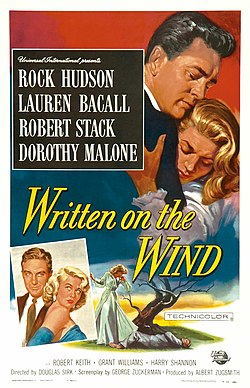
Written on the Wind-1956

Written on the Wind-1956

Director Douglas Sirk

Starring Rock Hudson, Lauren Bacall, Robert Stack

Scott’s Review #1,529

Reviewed April 20, 2026

Grade: A-

The terms ‘melodrama’ and ‘soap opera’ unfortunately come with a negative connotation, conjuring up disparaging adjectives like sappy or overwrought. Mix in poor acting, and you’ve got yourself a bad film.

But director Douglas Sirk, well known in the 1950s for his Hollywood melodramas like All That Heaven Allows (1955), Imitation of Life (1959), and Written on the Wind (1956), crafts beautiful visual effects amid powerful performances and compelling storylines.

Casting A-list movie stars only adds to the credibility.

Written on the Wind stars Rock Hudson and Lauren Bacall as complicated characters on the cusp of a relationship, but hindered by other selfish characters who are determined to pursue their own romantic desires.

Hudson starred in an impressive six Douglas Sirk films while Bacall’s career was beginning to wane, leading her to accept the role.

The action makes stops in New York City and Miami before settling in oil-rich Texas, where a central dysfunctional family dynasty led by Jasper Hadley (Robert Keith) is the main focus.

Hadley’s alcoholic son, Kyle (Robert Stack), is in love with Lucy (Bacall), whom he woos and marries. At the same time, Kyle’s scheming, self-destructive sister, Marylee (Dorothy Malone), has her sights set on Kyle’s childhood best friend, the dashing Mitch (Hudson), who longs for romance with Lucy.

The foursome banter, lust after, and become involved in dramatic situations, which lead to secrets and eventually death. Subjects like alcoholism, unrequited love, miscarriage, murder, and a court trial are explored.

While the situations may sound like nothing more than a sudsy afternoon daytime drama, the acting and rich writing more than raise the film above mediocrity.

The juicy sequences alone will entice the rabid viewer.

The exceptional chemistry between Hudson and Bacall is a winning formula, and viewers easily root for them to be together, and they immediately seem destined to be. Their scenes smolder with passion and determination, but both characters are too righteous and benevolent to let anything happen.

After all, Lucy is married to Kyle, and learns she is pregnant, though she remains terribly unfulfilled.

It’s easy to like Mitch and Lucy, especially when they’re contrasted with unsympathetic characters like Kyle and Marylee. Rich and spoiled, Kyle is a lustful playboy, a womanizer, and terribly insecure and jealous.

Marylee is a boozy nymphomaniac, callous and never satisfied.

Kyle and Marylee are not explored as much as they might have been with a longer running time, so they have hints of being one-dimensional. But both actors’ powerful performances leave audiences mesmerized by their characters.

Marylee nearly steals the show with her fiery bedroom negligee dance to a hi-fi blaring “Temptation,” while another character dies tragically a floor below.

You might say we ‘love to hate’ both characters.

Since Sirk and Hudson were both gay, though not publicly so at the time (1956), keen viewers can notice hidden clues about the situations Hudson might have been facing in real life.

We can see how Hudson would have had attractive women like Marylee fawning over him and practically begging him to bed them. Unable to be receptive to their advances, instead, he would feel guilty and lonely.

Besides wonderful writing, Sirk’s direction is inspiring. The opening sequence features a clever ‘the beginning is the ending ‘ approach that many filmmakers borrowed over the years in their cinematic works.

The audience immediately sees Kyle stagger outside the palatial mansion, brandishing a gun and finally collapsing. While the wind whistles, a desk calendar is shown with the pages quickly turning to eighteen months prior when the story really begins.

This opening scene will be recreated at the end of the film, making for instant attention.

Other spicy add-ons, like fine furniture throughout the estate, a grand dinner beginning with a fruit-cocktail appetizer, more than a few sophisticated martinis served, and modern sports cars being driven, lend a robust flair of wealth and glamour to the production.

A sequence was even modeled after a flashy Manhattan nightclub, the 21 Club.

For a trip into a world of wealthy yet tortured characters, Written on the Wind (1956) is top-notch. Some cliches can be forgiven, as melodrama was hardly done any better than this film.

Oscar Nominations: 1 win-Best Supporting Actor-Robert Stack, Best Supporting Actress-Dorothy Malone (won), Best Song-‘Written on the Wind.’

Golden Globe Nominations: Best Performance by an Actress in a Supporting Role in any Motion Picture-Dorothy Malone