Tag Archives: Matthew A. Cherry

Oscar Nominated Animated Short Films-2019

Oscar-Nominated Animated Short Films- 2019

Directors: Daria Kashcheeva, Matthew A. Cherry, Karen Ruper Toliver, Rosana Sullivan, Kathryn Hendrickson, Bruno Collet, Jean-Francois Le Corre, Siqi Song

Scott’s Review #986

Reviewed February 4, 2020

Grade: A-

Having the honor of being able to view the five short films nominated for the 2019 Academy Award for Best Animated Short Film at my local art theater was pretty amazing.

Far too often dismissed as either irrelevant or completely flying under the radar of animated offerings, it is time to champion these fine little pieces of artistic achievement.

On par with, or even superseding, full-length animated features, each of the five offers a vastly different experience, yet each presents either inspired or hopeful messages or dark, devious, and edgy stories.

The commonality this year is relationships, and not necessarily between human beings, as one of them features a darling relationship between a cat and a dog.

Below is a review of each of the shorts.

Memorable-2019 (France)

This offering is the most visually enticing of the five nominees. In the story, a French painter slowly falls prey to the ravages of dementia, while his wife suffers alongside him as his memory disintegrates. He sinks into a world of impressionistic shapes, vivid with gorgeous color.

The film is both beautiful and heartbreaking, making it a challenging watch. The swirling colors and fragmented shapes provide a lush and melancholy feel.

The viewer will likely empathize with the only two characters to appear (husband and wife) and relate to each of them as they experience the misery and confusion, with the assurance of what the outcome will be.  Grade: A

Sister-2019 (China)

Sister is a touching tribute to a person who does not even exist.

A man thinks back to his childhood memories of growing up with an annoying little sister in China in the 1990s. What would his life have been like if things had gone differently? Would the siblings annoy each other or be the best of friends?

With political overtones, the piece describes the inhumane law that Chinese parents could only have one child, the mother forced to abort an impending birth.

Traditional Chinese colors of red and black are used, and the imaginary sister is cute and energetic, a tragic realization of the terrible loss of potential life in a damaged nation. Grade: A-

Hair Love-2019 (USA) (Won)

Created by a team from the United States and strongly considered the front-runner, Hair Love feels the shortest of the bunch and is the most accessible of all the nominees, but hardly fluff either.

A young black girl battles with her wild head of hair on a special day. After she unsuccessfully tries to create a gorgeous hairstyle by watching YouTube videos, she desperately enlists the help of her kindly father. At first disastrous, they manage some success.

The relationship is at first unclear. Is he a single dad? Is he her dad at all? Is he an older brother? The puzzle is quickly resolved with the revelation of the mother’s whereabouts in a tender and heartfelt ending. Grade: A

Kitbull-2019 (USA)

My personal favorite of the bunch, Kitbull, is tough to watch at first.

Any animal abuse in the film makes my stomach turn, and the beginning turned me off as I anticipated giving the piece a low rating.

Instead, Kitbull results in a marvelous experience as a darling and compassionate story of the relationship between a kind cat and a suffering dog.

The unlikely connection brought tears to my eyes as the cat, presumed to be an independent alley cat, came to the rescue of the pit bull, suspected of being in a dog fight. Any animal lover will watch this short with a mix of anger, empathy, and finally, joy.

The sobering reality that so much animal abuse still exists in the world is a both mind-blowing and cruel reality. Grade: A

Daughter-2019 (Czech Republic)

Daughter is a brief, yet vague film that is both confusing and yet resilient and creative. The story consists of two characters- a father and daughter, both of whom seem to suffer from regret.

The father appears to be either sick and recovered, or to have died (unclear if the story is told via flashbacks). The frequent pained expressions of both characters as they yearn to rewind the clock and treasure moments of the past, both of hardships and joy, are lessons that every viewer can appreciate and relate to.

The misshapen ceramic figures and the facial movements, especially the blinking eyes, do much to elicit an emotional reaction from the audience. Grade: B+
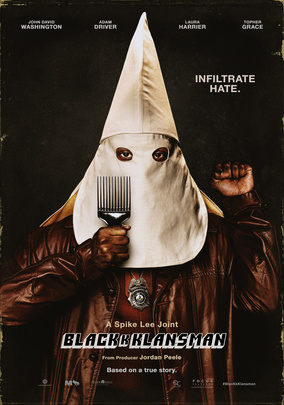
BlacKkKlansman-2018

BlacKkKlansman-2018

Director Spike Lee

Starring John David Washington, Adam Driver

Scott’s Review #802

Reviewed August 14, 2018

Grade: A

Spike Lee’s latest offering, BlacKkKlansman (2018), is a brilliant effort and oh so timely given the tumultuous political climate in the United States in 2018.

Despite the film being set in the early 1970s, the racial issues and tensions that Lee examines are sadly still an enormous problem today. Lee infuses some humor and even romance into the drama, so the film is not too preachy or heavy.

A grand and relevant effort that all should watch.

As the film commences, we are treated to a clip from the 1939 classic Gone With the Wind, and BlacKkKlansman concludes with prominent clips of racial tensions circa 2017.

The timeline is crucial and influential, as the film clearly demonstrates that racism is still alive and well.

Lee, a known liberal, clearly puts a left spin on his work. BlacKkKlansman will likely not be seen by conservative filmgoers, which is sad, as valuable lessons can be learned by viewing this piece.

The story is based on a true story memoir written by Ron Stallworth, the first black police officer to be hired by the Colorado Springs police department. He successfully infiltrates the local chapter of the Ku Klux Klan with startling results.

The film begins with a speech by a doctor (Alec Baldwin) offering a “scientific explanation” of white superiority in 1957. Fast-forward to the early 1970s, where the rest of the film occurs.

Ron is initially hired by the police force as part of a progressive initiative for diversity, but he quickly moves into a detective role. He manages to pose as a KKK member via telephone while another detective, Flip Zimmerman (Adam Driver), goes to meetings in person.

Lee’s focus is clearly on the overall content and message of the film, and therefore, little character development is achieved. I admittedly did yearn to know the “hows ” and ” whys” of many of the characters, but the film is not really about the characters individually, and I am okay with this.

Why did Ron desire so much to become a police officer? What was his childhood like? How did Patrice become President of the black student union? What was her childhood like? What upbringings did some of the KKK members have?

Indeed, not enough time would have been allowed to answer these questions—minor gripe.

Lead actor John David Washington, son of Denzel Washington, was unknown to me before watching this film. He is tremendous in his role, as is Driver in his supporting role of Zimmerman, but again, these are not character-driven roles.

Washington has tremendous chemistry with his love interest, played by Laura Harrier. Ron and Patrice discuss politics and dance the night away, but she is an activist and a cop, making their chances of a happily ever after tough to imagine. Their romance is atypical of most films as it is based on intelligence and not silly, melodramatic aspects.

On the acting front, Topher Grace as the racist David Duke is tremendous. With a kindly demeanor mixed with a bubbling under the hatred of blacks and Jewish people, Lee makes sure he is the foil.

A delicious scene towards the end of the film, when Duke gets his comeuppance of sorts, is well done and received a thunderous roar from the theater audience.

Lee is careful to ensure the bad guys get their just due and are all portrayed as complete fools. With a false sense of nationalism, many hate minorities simply because they feel they are taking over their beloved country.

Not to harp on this, but BlacKkKlansman will attract those who already agree with Lee’s beliefs and politics. If only those who disagree would give the film a chance. Unlikely.

The final five minutes of BlacKkKlansman arguably are the most pivotal experience of the entire film, but they have nothing to do with the actual story portrayed in the rest of the production.

Lee concludes the 1970s portion of the film satisfyingly, then fast forwards to the horrific events that took place in Charlottesville, Virginia, in 2017 when protesters clashed with a racist group, resulting in an innocent woman’s death.

The controversial remarks of President Trump, refusing to cast blame on the racist group, are shown. Sitting in a crowded movie theater, these clips had the most significant reaction from the audience, with some flipping Trump the finger, while others sobbed in anguish and disbelief that we have achieved so little as a nation.

Rarely has a more pertinent or meaningful film been made for the current political climate in the United States. BlacKkKlansman (2018) brilliantly ties racism spanning one hundred and fifty years together and shows how it still exists.

Amid this message, however, lies a great drama containing humor and importance.

Oscar Nominations: 1 win-Best Picture, Best Director-Spike Lee, Best Supporting Actor-Adam Driver, Best Adapted Screenplay (won), Best Original Score, Best Film Editing