Tag Archives: Romolo Valli

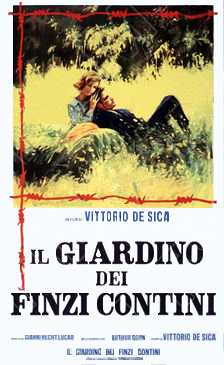
The Garden of the Finzi-Continis-1970

The Garden of the Finzi-Continis-1970

Director Vittorio De Sica

Starring Lino Capolicchio, Dominique Sanda

Scott’s Review #1,551
Reviewed September 21, 2026

Grade: A

The Garden of the Finzi-Continis (1970) is a powerful film requiring patience and concentration.

The intended audience is a cerebral viewer who appreciates quality cinema and the beauty of fine filmmaking as an art form.

Vittorio De Sica directed it, and it’s based on the book of the same name by Giorgio Bassani.

The film is a slow burn with an amazing build-up and a knockout punch at the end. The view of the calm before the nazi storm that changes the world is explored.

The time period is 1938-1943.

The title refers to a wealthy Jewish family living in Italy amid the dark period. When Jews are banned from the country club, they open their lavish garden on their idyllic estate to the friends of their children, Alberto (Helmut Berger) and Micòl (Dominique Sanda).

As the Fascist movement grows stronger, however, it affects everyone in the family’s orbit, including themselves.

Georgio (Lino Capolicchio) is the central character and in love with Micòl, a girl he has known since childhood. They share a special connection, but she sees him as a friend, while the hunk Giampiero (Fabio Testi), another friend, is in the mix.

The acting is fabulously subdued, especially by Capolicchio and Sanda. Like the film itself, their performances are a slow build and low-key, which is to their credit.

It takes time to fall in love with them.

Sanda, a gorgeous physical specimen, plays Micòl mysteriously and flawlessly as she does in The Conformist (1970). She dazzles the camera whether she stares out into the distance or straight ahead, pondering life and love.

It’s hard to know exactly what she is thinking, but that is a part of her beauty. Her porcelain skin and green eyes express so little and yet so much.

We understand why  Georgio is in love with her. Her social status, beauty, and familiarity are evident, and Capolicchio conveys himself carefully.

When he realizes Micòl doesn’t share his affection, he is quietly devastated yet keeps his emotions in check.

His father, played by Romolo Valli in another terrific performance, calmly tells Giorgio how Micòl is out of his league and it’s best he face heartbreak at a young age rather than an old age.

This parallels the harsh, cold realities of the rest of the film, where the characters (adults and young adults) must face deadly consequences for who they are.

In the most emotional scene at the film’s conclusion, Micòl’s elderly grandmother sits in a child’s classroom clutching her granddaughter, painfully realizing her life of privilege is ending, and likely her life.

She and other Jews have been shuffled into what amounts to jail cells while they await their fates.

Some characters escape, and some do not.

The film is about waiting around. The Finzi-Continis know that horror awaits around the corner, but they don’t know what to do. Do they flee? Where would they go? Do they enjoy what they can control while they can?

They sit around a dining room table, eat, celebrate, and move life along. What else can they do?

More restrictions are placed on Jews. They can’t have servants anymore. Soon, they are banned from libraries.

The cinematography is astounding. Noticeably, the earlier parts of the film are sunny and warm, filled with golden summer and shots of the characters playing tennis on the Finzi-Contini estate.

As the political climate darkens and the family faces deportation, the lighting transitions to stark, cold tones, stripping away the garden’s protective illusion.

That’s why the garden is so important to the film’s theme.

This is one of a handful of great Italian films that let us experience the police state through a family’s daily life and the intimate stories of individuals.

The Garden of the Finzi-Contini (1970) is an eloquent, beautiful, deeply moving film.

Oscar Nominations: 1 win-Best Screenplay Based on Material From Another Medium, Best Foreign Language Film (won)
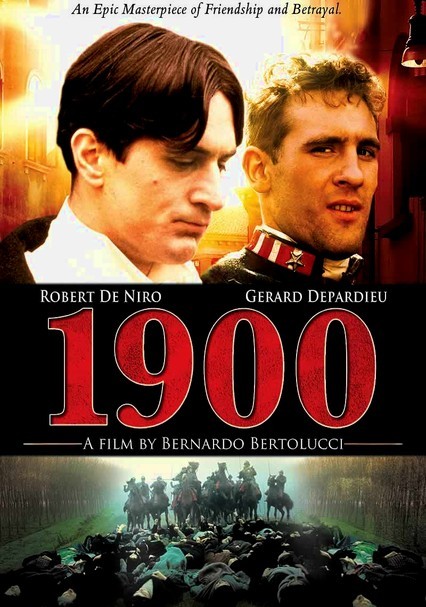
1900 (Novecento)-1977

1900 (Novecento)-1977

Director Bernardo Bertolucci

Starring Robert De Niro, Gerard Depardieu, Dominique Sanda

Top 250 Films #201

Scott’s Review #984

Reviewed January 28, 2020

Grade: A

An epic to rival all epics, 1900 (Novecento) (1977) is a grandiose offering of monumental proportions featuring legendary actors and created by a brilliant director.

With a running time of a whopping 317 minutes in its original version, 1900 is known as one of the longest commercially released films ever made.

The cinematography is breathtaking, and the historical themes, such as friendship, class distinctions, and rivalry, are explored in depth.

The key is to let the experience marinate and blossom through a slow, patient build.

Brilliant director Bernardo Bertolucci’s tale follows the lives of two Italian men, a peasant named Olmo (Gerard Depardieu) and landowner Alfredo (Robert De Niro), both ironically born on January 1, 1900.

Inseparable as children, the two become estranged as their differing social statuses pull them apart. Their conflicts mirror the political events in Italy, as both fascism and socialism gained prominence there.

Here is a bit of background on the film.

Due to its length, the film was presented in two parts when originally released in many countries, including Italy, East and West Germany, Denmark, Belgium, Norway, Sweden, Colombia, Pakistan, and Japan.

In other countries, such as the United States, a single edited-down version of the film was released.

The latter is not the way to watch this film. I do not like heavily edited films, especially in an epic like 1900, so the full-length version is highly recommended.

The film opens on April 25, 1945, the day Italy is liberated from the fascists, and this is key to the political message Bertolucci crafts. As peasants revolt against the landowner, Alfredo (De Niro) and female laborers wield deadly pitchforks, creating an atmosphere of chaos.

We know nothing of Alfredo yet, but we know enough to realize he is rich and perceived as a tyrant. The natural reaction is to sympathize with them because they are oppressed.

As the film backtracks to the turn of the century, a more elegant scene emerges: the births of two infants, Alfredo and Olmo. The sequence is sweet, and both babies are bright and filled with promise.

Sadly, this is not meant to be.

A railway track is an important addition to the film, culminating in the finale.

The most interesting aspect of the film is the dynamic development of Alfredo and Olmo as they grow. Alfredo resents his family’s wealth and sides with Olmo, a socialist. Alfredo sees his family as false and Olmo and his family as genuine.

This aspect is timeless and can be related to by any viewer with any intelligent sense of the world today. The obvious analogy between the haves and have-nots is clearer than ever in this film. Frightening is that some have-nots are convinced they will one day become the haves.

The messages and feelings elicited in 1900 are strong and emotional. Aren’t all men created equal? On the surface, they are, but Alfredo and Olmo are not equal. As the birth scene reveals and as Bertolucci makes clear, they are born with advantages and disadvantages.

These characteristics are what they are, and as human beings grow and learn social norms, financial differences become more pronounced and humanistic connections weaker.

If the social aspects of the film or the brilliant cinematography are not enough to please a viewer, the historical lessons presented are second to none. One can revel in the political and historical excitement that characterized Europe throughout the forty-five years the film is set.

I wish Hollywood made more films like this.

1900 (Novecento) (1977) can be enjoyed as both a grandiose, dramatic period piece, revered for its majestic and flourishing design, and as a thought-provoking film about unresolved social class distinctions in the world.

I found the film a treasure that works on all levels and showcases just how good a director Bertolucci is.

This film is not his best-known work, but for fans of cinema as an art form, this is a must-see.

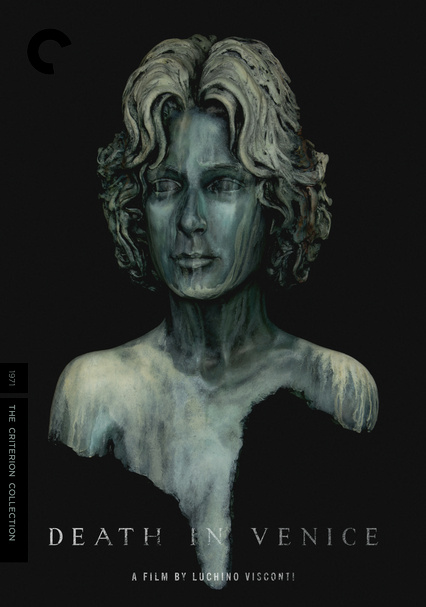
Death in Venice-1971

Death in Venice-1971

Director Luchino Visconti

Starring Dirk Bogarde, Björn Andrésen

Top 250 Films #248

Scott’s Review #1,014

Reviewed April 22, 2020

Grade: A

Death in Venice (1971) is a haunting and tragic story of a depressed middle-aged man who becomes obsessed with a fourteen-year-old Polish boy while on holiday in Venice.

The story, on the surface, is dark and dour, not for the judgmental or the closed-minded. With a deeper dive and a haunting musical score, the film provides beauty and impressionism.

The film is based on the novella Death in Venice by German author Thomas Mann, published in 1912 as Der Tod in Venedig.

Gustav von Aschenbach (Dirk Bogarde) is a lonely composer who travels to Venice for health reasons and a recipe for recovery. His maladies are unclear at the start, but are assumed to be sent to the picturesque city as a form of therapy.

While enjoying a tranquil holiday, he spots Tadzio (Björn Andrésen), a stunning, youthful beauty staying with his family at the luxurious Grand Hôtel des Bains, just as Gustav is.

Their encounters run rampant as they are viewed by the audience from afar, but never speak to each other.

This is the brilliance of Death in Venice. A more standard approach may have been to make the story more forceful.

If Gustav had approached, harassed, or even molested Tadzio, the direction of the film would have vastly changed, and he would have been deemed a pervert.

Suddenly, the film would have been about a pedophile preying on a youngster, rather than incorporating a beautiful subtext of longing and unfulfilled passion.

The masterful classical numbers that open and close the film help to achieve this mindset.

The controversial subject matter, still taboo by today’s progressive standards, is not gratuitous but is quite obsessive. Worthy of mention is that Gustav’s plight begins harmless enough as he appreciates a beautiful image, almost like gazing at a sculpture- think Michelangelo’s David- since we are in Italy.

But when he begins to follow Tadzio and see him more and more, his desperation increases as his health deteriorates. For a while, it is unclear whether the boy even realizes he is an object of affection. It is Gustav’s feelings and emotions that are most explored.

As a side story, the city of Venice is gripped by a cholera epidemic, and the city authorities do not inform the holiday-makers of the problem for fear that they will flee the vital city.

In 2020, amid the vicious COVID-19 pandemic gripping the world, this classic film takes on a whole new importance. As Venice officials downplay the epidemic while tourists increasingly fall ill, a modern realism is conjured for the audience.

Death in Venice, as the title should make clear, is not a love story; otherwise, it would be called Love in Venice. Gustav’s lust for Tadzio is unrequited. Neither is Gustav’s sexuality clear, though he is assumed to be bisexual.

In one of the film’s saddest scenes, also the finale, Gustav lounges on the sandy beach in ill health, dressed in an improper white suit. He sees Tadzio playfully frolicking with an older boy, and afterward walks away and turns back to look at Gustavo.

As Tadzio outstretched his arms toward the water, Gustav did the same as if he was enveloping the boy. The moment is breathtaking.

Many symbolic and meaningful scenes occur, like when Gustav visits a barber who insists he will return his customer to his youth. The results are ghastly.

Dyeing his grey hair black, whitening his face, and reddening his lips to make him look younger leaves a macabre, somber image of a man feebly attempting to turn back the hands of time, something we can all relate to. His heavily made-up face is meant to hide his insecurities.

Incorporating an ingenious mix of beauty, tragedy, obsession, and loneliness, Italian director Luchino Visconti crafts a brilliant and painful dissection of human emotion.

The subject matter of Death in Venice (1971) will not appeal to all viewers. Still, those brave enough to traverse the sometimes-rocky waters will find an underlying treasure and a meaningful cinematic experience.

Oscar Nominations: Best Costume Design

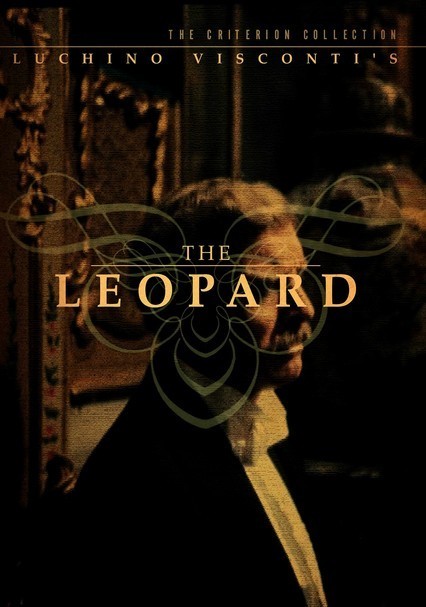
The Leopard-1963

The Leopard-1963

Director Luchino Visconti

Starring Burt Lancaster, Claudia Cardinale

Scott’s Review #991

Reviewed February 18, 2020

Grade: A

One of the great works in cinematic history, I preface this review by stating that I viewed the English-dubbed version of the brilliant The Leopard (1963), starring Burt Lancaster and Claudia Cardinale.

This version is considerably shorter, at two hours and forty-one minutes, than the Italian version, which is three hours and five minutes.

As grand as the former is, my hunch is that something is lost in translation with the latter. The English version has no subtitles and is available only on DVD, so the film is difficult to follow but is rich in texture.

An interesting tidbit is that the film’s surgery was performed without director Luchino Visconti’s input – the director was unhappy with the editing and the dubbing.

This point is valid since some voices are Italian and French, sounding too American and unauthentic.

Admittedly inferior, the English version is nonetheless extravagant and lovely on its own merits, though I would die to see the original version if it were available.

The time is during the 1860s, when the tumultuous era affected Italy and, more specifically, Sicily. Prince Don Fabrizio Salina (Lancaster) is at a crossroads between holding onto the glory he once knew and accepting the changing times, welcoming a more modern unity within the country.

A new mayor surrounds him, Don Calogero Sedara (Paolo Stoppa), who has a gorgeous daughter, Angelica (Cardinale).

He intends to marry Fabrizio’s French nephew, Tancredi Falconeri (Alain Delon).

The film dissects the changing times in Italy.

The visual treats for the viewer are astounding and by far the best part. The lovely, palatial estates are gorgeous, with decorative sets, bright and zesty colors, and meals displayed during parties that captivate audience members.

The costumes are state-of-the-art, and each frame can easily be a painting on a canvas. A tip is to pause the film, study it, and immerse yourself in its style.

Many film comparisons, both past and yet to come, can easily be made when you think about it.

An Italian Gone with the Wind (1939), if you will, with Angelica as Scarlett and Tancredi as Rhett (okay, the chemistry is not quite the same, but similarities do exist), and Concetta as the long-suffering Melanie; the characters can be compared.

The grand ball, the costumes, and the ravaged country are more prominent comparisons.

Nine years after The Leopard, a little film entitled The Godfather (1972) would change the cinematic landscape forever.

Director Frances Ford Coppola must have studied this film, as there are plentiful scenes of the Italian landscape and the culture in which both are immersed. Even snippets of the musical score mirror each other.

What a grand film to borrow and cultivate from!

Despite all the beautiful trimmings that make The Leopard a masterpiece, the film belongs to Lancaster in the best role of his career.

The hunk in 1953’s From Here to Eternity, as the Prince, he is aged to perfection, distinguished-looking with graying sideburns.

The film is an epic extravaganza, and the actor leads the charge, carrying the film.

He is a stoic man, but not without fault and emotion, wearing his heart on his sleeve, realizing that he must adapt to the changing times. We feel his quandary and embrace the character as a human being.

Attention-paying fans must be forewarned that the plot is basic and complex because of the absence of subtitles; however, the story is not highly complex.

The story is about how the Prince maneuvers his family through troubled (and changing) times to a more secure position. This is the film’s overarching theme.

Suffering from dubbing and quality control issues can do nothing to ruin a spectacular offering that is a cinematic gem and testament to the staying power of The Leopard (1963).

I eagerly await the day when the traditional Italian version can be found and discovered. It will be a treat to eat.

Until then, the film is a historical epic that can be appreciated for the dynamics and importance it so richly deserves.

Oscar Nominations: Best Costume Design, Color

Golden Globe Nominations: New Star of the Year-Actor-Alain Delon