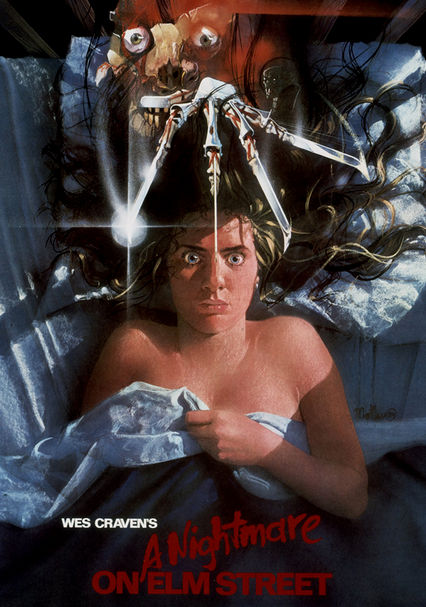
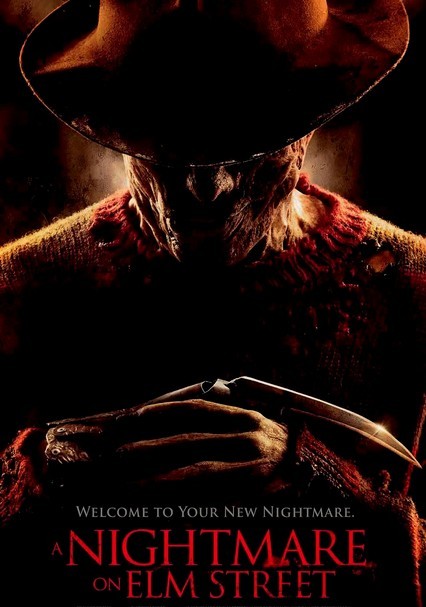
A Nightmare on Elm Street-2010

A Nightmare on Elm Street-2010

Director Samuel Bayer

Starring Jackie Earle Haley, Rooney Mara

Scott’s Review #1,023
Reviewed May 14, 2020

Grade: C-

Rather a pointless remake, but unsurprising given the speedy attempts at re-doing almost every successful horror franchise in recent memory, A Nightmare on Elm Street (2010) offers nothing that the original did not provide better.

Any film that is considered a dud with the word “nightmare” in the title is ripe for the picking as far as jokes and mockery go.

The film is not too terrible but is rather mediocre and average to the taste.

There is no reason to watch this offering over the 1984 original, besides perhaps a moment of curiosity.

A quick recap or re-introduction. Freddy Krueger (Jackie Earle Haley), a serial killer who crosses the worlds of dreams and reality to slice and dice his victims with his razor-sharp blade-fingered glove, is on the loose in small-town America.

As Nancy (Rooney Mara) and her pals fight for their lives, they also uncover clues to a shocking secret from their past.

Freddy was a known child molester decades earlier and was tracked down and burned alive by angry parents seeking revenge after he escaped prison.

He has vowed to destroy the children of those parents, who all conveniently still live in the same town.

Capitalizing on the box-office success of a commercially successful yet critically subpar 2009 offering of Friday the 13th, the light bulb went off, and A Nightmare on Elm Street was green-lit and born.

The intention was to make Freddy and the film harsher and scarier than the 1984 original.

This is a severe misstep, as what made the original so good was Freddy’s character. What 1980s teenager doesn’t fondly recall oozing with delight at Freddy’s one-liners and quips as he playfully toys with his prey before slitting their throats?

New Freddy is sinister, violent, and banal. Boring!

Earle Haley, a character actor known for 1977’s Breaking Away and finding a well-deserved career resurgence with the brilliant Little Children (2006), is cast as the brutal villain, sans any of the humor.

The actor, small in stature, is cast well on paper and doesn’t purposely ruin the role. It’s just that he is not Robert Englund and therefore never has a chance.

While admittedly Earle Haley is menacing, he lacks the charisma and charm to do very much with the role except try to recreate something that is not his to begin with.

The rest of the teens in the cast are decent but hardly spectacular. The “final girl” is Nancy Thompson (Rooney Mara), changed to Nancy Holbrook in this version in another eye-rolling mistake since no reason is explained for the name change.

It’s like changing Freddy Krueger’s name to Freddy Kelly.

Regardless, Mara champions on in a role she is way too good for. The actress, about to reach stardom for gems like The Girl with the Dragon Tattoo (2011) and Carol (2015), needed a start.

Fair enough.

From a visual standpoint, the film has some jump scares and frights that are stock fare for slick, mainstream horror films, almost becoming clichés now.

The sets are decent, with some of the houses and a church worthy of mention. Darkness is the main ingredient of this film- it is horror after all, and the filming has a very dark texture even during bright scenes.

Some nice kills flesh out the rest of the experience.

If there is money to be made in Hollywood, it will be made. The true motivator of remaking A Nightmare on Elm Street (2010) was profit over art.

This is a reality and not so much a criticism; after all, it’s called the entertainment biz for a reason.

The changes made to the script do it no favors, and if a remake had to be done, it was better left alone and not fooled with.

Jackie Earle Haley does his best, but he is not and never will be the real Freddy Krueger. Robert Englund has that dubious honor.
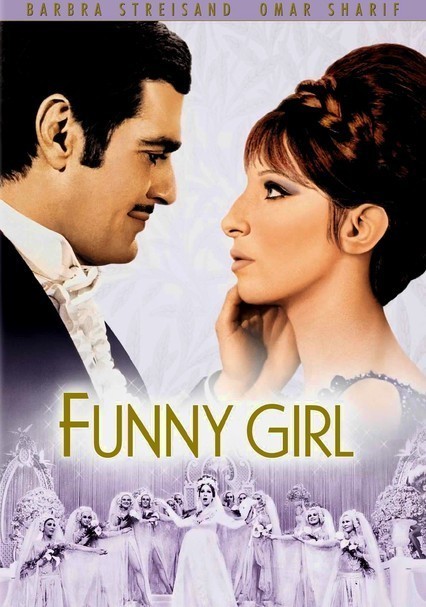
Funny Girl-1968

Funny Girl-1968

Director William Wyler

Starring Barbra Streisand, Omar Sharif

Scott’s Review #1,022

Reviewed May 11, 2020

Grade: B+

Barbra Streisand won the Academy Award for Best Actress for her outstanding portrayal of Fanny Brice in Funny Girl (1968).

She brought to the big screen a role she made famous on Broadway.

The role is vitally important and sends a powerful message: an unconventional woman with extraordinary talent can succeed in showbiz, leaving prim and proper starlets salivating with jealousy.

Features the classic tunes “People” and “Don’t Rain on My Parade” as well as the title track.

Fanny (Streisand) is an unhappy Jewish New Yorker, living in semi-poverty and dreaming of the big time.

Her mother (Kay Medford) and others in the community try to persuade Fanny to live an everyday life far from the hot, judgmental glare of the stage, but she will have none of it.

Finding success on her terms in Ziegfeld Follies throughout World War I, she also finds love and passion with the suave Nick Arnstein (Sharif) following her debut performance.

The story is loosely based on the life and career of the honest Fanny and her stormy relationship with the entrepreneur and gambler, Nick.

Taking nothing away from Sharif, who is more than adequate, the film belongs to Streisand. Despite being a novice, producers wanted no one but Streisand in the role, since she had hit a home run in the stage version.

A brief consideration of having Shirley MacLaine star in hindsight seems laughable and unimaginable.

Sharif’s suave, dangerous, swarthy characterization balances perfectly with Streisand’s naivety and innocence. The Jewish woman and the Muslim man must also have raised an eyebrow or two at the time.

Streisand is a breath of fresh air in a role that could mimic real life and reflect film in 1968 and beyond. Glamour girls were the height of fashion throughout the 1950s and 1960s, when looks sometimes usurped talent.

With the lifting of the Hollywood Code, women found grittier, dirtier roles. Streisand, as Fanny, proves that a self-proclaimed ugly duckling can rise to the top of the cream.

Refusing to get a nose job or otherwise alter her appearance or name, she mirrors Fanny in many ways, inspiring both women and men to be themselves to achieve truth.

Director William Wyler, no stranger to Hollywood success with pictures such as Mrs. Miniver (1942) and The Best Years of Our Lives (1946), knows how to pace and balance a film and to present a cheery, splendid offering, careful not to make the movie too lightweight.

Comic scenes, such as when Fanny upstages everyone and prances around the stage as a pregnant newlywed, becoming the talk of the town, are the best ones.

The film succeeds when it is fun.

Sharif does his best in a small role, which is surprising given the character’s importance, but the dramatic moments aren’t the best scenes.

They are okay and certainly not overacted by the stars, but do not work as well as when Streisand belts out “People” on a lonely sidewalk.

The issue is that Streisand is Funny Girl, and even prominent actors like Sharif never had a chance. The one exception is Medford, who goes toe to toe with Streisand in every scene with gusto and humor.

Funny Girl (1968) may suffer from a few overly melodramatic moments that slow it down, especially in the central romance, but its central message is to stay true to one’s colors.

Refusing to be influenced by elders or even her beau, Fanny inspires viewers. With delightful musical numbers and zesty wardrobe pieces, the film has a cheery and fun veneer, but more lies beneath the surface.

Whether the intention is a sing-along experience or a deeper meaning, the film has something for everyone.

Oscar Nominations: 1 win-Best Picture, Best Actress-Barbra Streisand (won), Best Supporting Actress-Kay Medford, Best Score of a Musical Picture-Original or Adaptation, Best Song Original for the Picture-“Funny Girl”, Best Sound, Best Cinematography, Best Film Editing

Golden Globe Nominations: 1 win-Best Motion Picture-Comedy or Musical, Best Director-William Wyler, Best Actress-Comedy or Musical-Barbra Streisand (won), Best Original Song-‘Funny Girl’

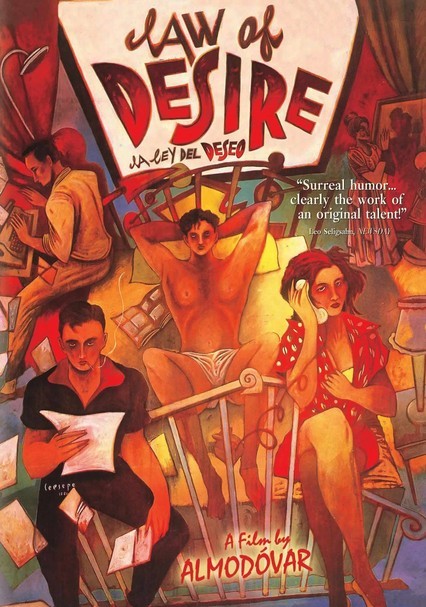
Law of Desire-1987

Law of Desire-1987

Director Pedro Almodovar

Starring Eusebio Poncela, Carmen Maura

Scott’s Review #1,021

Reviewed May 8, 2020

Grade: B+

Law of Desire or La ley del Deseo (as translated in original Spanish) is a 1987 film written and directed by Pedro Almodóvar.

Quite groundbreaking for its time and penned by a respected director, the film was rich in offering what was rarely presented in films during the 1980s- a complex love triangle between two men and a trans woman.

The fact that the trans woman is the sister of one of the men is a bonus for the soap opera premise.

In 2020, when LGBTQ+ films are more plentiful in cinemas (at least at the indie level), Law of Desire suffers slightly from a dated feel, and parts drag.

It’s tough to criticize a piece this brazen when it was released in arthouse and musty metropolitan theaters.

As groundbreaking as the film must be given credit for, the story now feels sillier than it should, and more outlandish than it probably intended to be over thirty years ago.

The fabulous setting of Madrid, Spain, is the backdrop for the luscious tale of love, obsession, jealousy, and revenge, think the prime-time television series Dynasty on steroids.

Cocky Pablo (Eusebio Poncela), a successful gay film director with his pick from a bevy of young, good-looking gay males, is madly in love with Juan (Miguel Molina), though he has a roving eye.

Suave Antonio (Antonio Banderas), who comes from a conservative family, is new to the gay scene and falls madly in love with Pablo when Juan goes to find himself.

Tina (Carmen Maura), who likes men and women, has just been dumped and is vulnerable.

Besides the obvious daring gender-bending, this story could be a simple one told many times across many genres.

Almodóvar spins things into a frenzy as the plot unfolds, adding manipulations, subplots, and bizarre characters into the mix.

For example, Ada is Tina’s surrogate daughter and is a precocious ten-year-old girl in love with Pablo. Ada refuses to go back with her mother (Bibi Andersen/Bibiana Fernández) when her mother returns to whisk her off to Milan to meet a man she has just met.

The gay subtext is what is center stage here. Back in the 1980s, the term LGBTQ+ was on nobody’s radar, and having any representation at all in cinema was still a territory barely scratching the surface.

This point kept returning to me throughout the film, and I imagined how fresh the experience would have been to any gay man or gay woman fortunate enough to have seen it. I am not sure any of the characters would serve as great role models, but the representation is nice.

Almodóvar adds a good deal of naked flesh for an added treat.

Several comic scenes arise with gusto. Antonio, who lives at home with a religious zealot of a mother, convinces Pablo to sign his letters from “Laura P”, a character from his latest play, to trick Antonio’s nosy mama.

Tina, not much of an actress, is cast in Pablo’s one-woman theatrical productions. She thinks her performance is great, but Pablo thinks she stinks. The comical moments are the ones that work best, giving the plentiful offbeat characters a chance to let loose and shine.

Towards the conclusion, Law of Desire takes a tragic and Shakespearean turn. A drunken Juan is thrown off a cliff to his death, prompting an investigation with Antonio and Pablo both prime suspects.

Finally, a kidnapping and police stand-off ensues with a murder/suicide providing the film’s final moments.

I am not a fan of the title that Almodóvar chose. Preferably, a title that is a bit more titillating. Even Lust of Desire or Object of My Desire would have been better choices.

Law of Desire screams of a tepid episode of television’s Law & Order.

For a director with such an outlandish approach and such bizarre characters, the title is bland, banal, and tough to remember.

Those seeking a kinky and provocative late-night affair will find Law of Desire (1987) a good old time. It lacks a clear message, instead offering a sexy romp and a dreary ending.

Running the gamut of adding musical score pieces as unique as the 1970s The Conformist, a film also shrouded in same-sex desire, to cheesy 1980s synth-laden beats, adds some confusion.

Nonetheless, diversity and inclusiveness are good recipes to chow down on and celebrate.

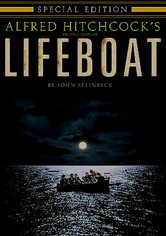
Lifeboat-1944

Lifeboat-1944

Director Alfred Hitchcock

Starring Tallulah Bankhead, William Bendix

Scott’s Review #1,020

Reviewed May 6, 2020

Grade: A-

Alfred Hitchcock, well-known for big, bouncy, suspenseful productions, creates a stripped-down, intimate story of adventures while adrift on a survival boat, leaving plenty of tension and peril.

Lifeboat (1944), now teetering on extinction from memory save for fans of the director, deserves appreciation and respect for the brilliant direction and outstanding cinematography alone.

The film was met with controversy and some derision for sympathetic depictions of a German U-boat captain (Walter Slezak) amid the horrors of World War II.

Events begin in the middle of calm Atlantic Oceanic waters after a cruel battle results in a German U-boat and a British/American ship sinking each other, leaving fewer than a dozen civilians and service members to survive in one Lifeboat.

The haughty, glamorous columnist Connie Porter (Tallulah Bankhead), clad in the finest fur coat, is irritated by a run in her stocking, a travesty in her mind.

She is slowly joined by other survivors, including a young British woman with a dead baby, a steward, a U.S. Army nurse (Mary Anderson), a wealthy entrepreneur, and other people from most walks of life.

Lifeboat plays out like a more cerebral version of a disaster film. Think- a brilliant man’s version of The Poseidon Adventure (1972), said with love since it’s one of my favorite films. But with Lifeboat, darkness and a sense of sadness are missing from the 1970s’s more lightweight disaster films.

The black-and-white camerawork helps tremendously, as do the mist, the rain, and the intense beating sun. The weather elements play an essential role, as do the characters themselves.

Speaking of characters, the individuals are plentiful and diverse, ranging from British, American, Black, German, wealthy, and working-class to eventually dead and alive with a gruesome leg amputation taking place mid-stream.

Each is well-written and exhibits fear, bravery, and suspicion of the other’s motivations. The German captain communicates with Connie in his native tongue, causing confusion among the other survivors.

Events would hardly be complete without a good melodramatic romance, and it is a treat to see two formulate. Connie and handsome John (John Hodiak) share a love/hate relationship, clearly from opposite backgrounds, while the more stable Alice and Stanley (Hume Cronyn) even decide to marry!

Genteel Alice reveals a marriage and an affair to Stanley, uncovering the layers and complexity of the character.

My favorite character is Connie, and Bankhead is a pure delight in the bitchy, no-nonsense role. She enshrouds the camera from the first scene.

Reminiscing about Bette Davis, the actress has a similar composure, stance, and trademark cigarette but slowly reveals her insecurities and desperation.

What fun she is to watch!

A tender and poignant scene occurs at the end of the film and is lovely to witness, especially given the tumultuous time of the mid-1940s. A drifting young German soldier attempts to board and shoot at the survivors but is apprehended.

Disputes occur, but instead of shooting or casting the lad overboard to drown, he is saved and presumably provided food and water. Does he inquire why they don’t kill him? The message is powerful and anti-war.

The direction methods are brilliant, and they look as realistic as possible in 1940s cinema, where CGI was decades away. Hitchcock had me fooled as I bought lock, stock, and barrel that the Lifeboat was in the middle of rough and murky waters instead of a Hollywood studio tub.

The creative method of gathering so many characters into one shot wonderfully and effectively provides a claustrophobic feel, as the lack of food and drinking water causes hysteria and emotion.

The one-set approach is marvelous and perfect for the film’s specific storyline.

After decades of underexposure and playing second or third fiddle to other Hitchcock masterpieces, Lifeboat (1944) is finally getting some notice and acclaim. The trend continues here, as the film contains enough frights and perils to keep anyone guessing which characters will sink and which will swim.

Although it may not be the best watch on a cruise ship or other watery surfaces, the escapade will delight fans of classic black-and-white thrill cinema.

Oscar Nominations: Best Director- Alfred Hitchcock, Best Original Story, Best Cinematography, Black-and-White

A Nightmare on Elm Street-1984

A Nightmare on Elm Street-1984

Director Wes Craven

Starring Heather Langenkamp, Robert Englund

Scott’s Review #1,019

Reviewed May 4, 2020

Grade: A-

Pioneer horror director Wes Craven, famous for reinvigorating the slasher genre with humor, wit, and satirically ponderous situations, created the iconic A Nightmare on Elm Street (1984), which introduced the legendary character of Freddy Krueger (Robert Englund) to audiences.

Followed by eight sequels or re-introductions, the debut is a clever affair and a breath of fresh air in the too-often formulaic world of slashers.

And who could deny the satisfaction of seeing future Hollywood royalty, Johnny Depp, succumb to the villainous Krueger?

A group of unsuspecting teenagers is tortured both consciously and unconsciously as they dream the nights away by a hideously disfigured man clad in a striped shirt and a gloved hand with razors.

He taunts and teases the teens unmercifully as they reside, party, and have sex in small-town America, mainly spending their time in high school or on the cursed Elm Street.

The main girl to experience Freddy’s devious wrath is Nancy Thompson (Heather Langenkamp), who uses caffeine and more drastic measures to stay awake and alive!

To review A Nightmare on Elm Street without mentioning the Friday the 13th or Halloween franchises would be foolhardy since combined, they make up the “Big Three” of the entertaining slasher genre, each living on in infamy.

To provide a quick chronology, A Nightmare on Elm Street ran from 1984 to 1994, adding a crossover with Friday the 13th in 2003, and an unnecessary remake in 2010. Friday the 13th hit cinemas in 1980 and never looked back until the uninspired 2009 remake.

Finally, Halloween debuted in 1978 and is still churning out relevant chapters.

Whereas Friday the 13th and Halloween chose to stick with a more realistic formula- a crazed killer wielding a butcher knife or an ax, the brief foray into outer space with Jason X (2002) notwithstanding, A Nightmare on Elm Street is the more cerebral of the three.

It mixes dreams and reality, leaving the viewer perplexed, filled with thoughtful questions, and scared.

As each victim is gleefully toyed with, invaded, and killed in their dreams, and thus killed by the burnt killer, more complexities exist.

Released right smack in the middle of the 1980s- the decade of decadence, where a snug suburban life meant safety and sweet dreams, the target audience is the teenage crowd.

At the height of the Reagan years, when everyone and their neighbor had a vacation house, a boat, or a BMW, this film scared the daylights out of most viewers. Sleep did not come easily for those who took Freddie’s taunts to heart.

While frightening, A Nightmare on Elm Street does not take itself as seriously as Friday the 13th or Halloween does. Infusing humor and snickering fun is a great recipe to differentiate itself from its brethren by taking on straight-ahead horror.

The film can blur the boundaries between the imaginary and the real, toying with audience perceptions at every turn and making them think.

Imaginative, this is not always the film’s key to success. Craven needs to be careful that his story does not teeter off into the absurd or the outlandish, which it did in later installments.

Credit must be given to Englund, who takes crazy Freddy off to orbit with dizzying rapidity, going over the top only once or twice. And who can ever forget the frightening children’s rhyming song featured in the film?

The story always eclipses effects, and Craven is wise to craft a backstory for Krueger to enjoy, almost making him sympathetic, but then harshly bringing reality back and making the killer a child murderer.

Still, the parents who took their brand of vengeance and burned Freddy alive are not saints but sinners. This allows Krueger just enough empathy to keep audiences engaged. He’s a fun villain!

A Nightmare on Elm Street (1984) is a timeless classic that introduced the world to one of the horror genre’s best villains.

Unlike Jason and Michael Myers, who are faceless, Freddy Krueger was played by a single actor, Robert Englund, who brought him energy, zest, and charm.

He will forever live on in the hearts of slasher fans everywhere.

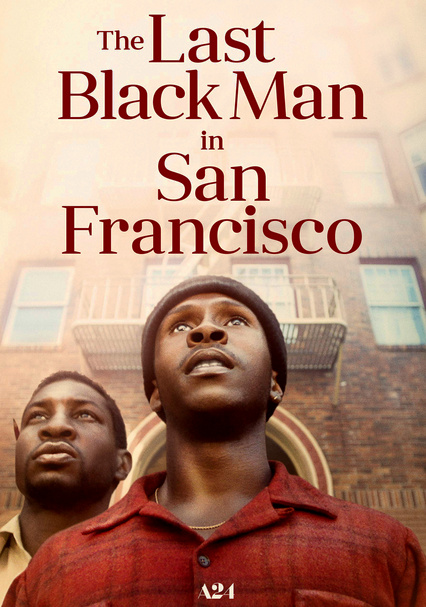
The Last Black Man in San Francisco-2019

The Last Black Man in San Francisco- 2019

Director Joe Talbot

Starring Jimmie Fails, Jonathan Majors

Scott’s Review #1,018

Reviewed May 1, 2020

Grade: A

The brilliance of The Last Black Man in San Francisco (2019) is multi-fold. The immediate call-out is that the work is the creation of up-and-coming director Joe Talbot, an artist with an excellent eye for both the visual and humanistic aspects of cinema.

Whoever influenced this young man deserves props, for he has a great future ahead of him. Given that this is his film debut and he also co-wrote it, the future is indeed bright. The film is loosely based on the life of Jimmie Fails, his childhood best friend, who also stars.

A24 is arguably the new “it” film studio for independent entertainment offerings, and this is to be celebrated.

Indie films provide creative artists with the means and time to develop their products and tell stories that are fraught with meaning, and in many cases, dare to go where other films have not ventured, at the risk of turning off a mainstream audience.

This is to be celebrated and championed, and has resulted in many fantastic and unique films. Hereditary (2018), Midsommar (2019), and The Lighthouse (2019) immediately spring to mind.

The Last Black Man in San Francisco gets off to an interesting start as two young black men, Jimmie (Fails) and Mont (Jonathan Majors), wait for the bus as men clad in protective gear appear to clean polluted waters.

The implication is clear that residents are not protected while the men are. Protesters chant while images of the changes San Francisco has experienced over the years are shown.

The two then skateboard to a Victorian house in the city’s Fillmore District, where Jimmie grew up and says it was built by his grandfather in 1946.

Their skateboard trip is cerebral and surrealistic and has ten glorious cinematic moments.

It is evident that Talbot is channeling either an autobiographic story or one of a friend- it proves to be the latter. Unclear is if Mont is supposed to be Talbot, but my guess would be in the affirmative.

Jimmie and Mont are inseparable, residing both at Mont’s grandfather’s house (played by a startlingly elderly Danny Glover) and the house that Jimmie’s grandfather built.

The friends trudge along with their daily lives by enduring insults hurled at them by a neighborhood gang and fixing up the Victorian house whose owners neglect it, only to be subsequently evicted.

Jimmie and Mont are fantastically nuanced, rich characters, each for different reasons. Jimmie is pained that his city has forgotten his grandfather and his legacy, which have been cast aside for progress and wealth.

His father (Rob Morgan) is angry, his mother, a recovering drug addict, is barely in his life, as they run into each other by chance on the city bus. Jimmie’s Aunt (Tichina Arnold) resides outside the city and serves as his confidante.

Mont is creative, yearning to write a play based on the local gang, but struggles to create the words or authentically express his voice. He works in a fish shop and frequently acts out his thoughts about others down by the water. Considered odd, he is a good guy and loyal to his grandfather.

Since a female love interest is never mentioned (another high point of the film), neither Jimmie’s nor Mont’s sexuality is ever discussed, nor is a potential relationship between the two ever mentioned.

The ambiguity works remarkably well and evokes comparisons to the groundbreaking Moonlight (2016).

When a sudden death erupts, the proceedings, Mont finally finds his voice and composes an improvised stage play which he stars in as a dedication to the fallen victim.

He elicits responses from the people in attendance (including all principal cast members) as a shocking secret erupts, resulting in disarray. This takes the already layered film in a new direction as all Jimmie thought to be true is suddenly shattered.

In a word, the film feels fresh, both visually and from a story perspective.

Fails and Majors are a top young talent with bright futures who add a patient climb to their characters amid a film that paces slowly but steadily, letting the events unfold in a thought-provoking way.

I eagerly await the next project by the talented Talbot.

In a film industry hungry for new ideas, the creator of The Last Black Man in San Francisco (2019) offers a journey into the minds of two black men, written not as stereotypes, but as interesting and intelligent individuals, who are not looking forward, but looking backward.

The film provides characters who are not standard but are so much more than that.

Independent Spirit Award Nominations: Best First Feature, Best Supporting Male-Jonathan Majors

My Darling Clementine-1946

My Darling Clementine-1946

Director John Ford

Starring Henry Fonda, Victor Mature

Scott’s Review #1,017

Reviewed April 30, 2020

Grade: A-

Esteemed director John Ford, mostly known for crafting the very best in the Western genre for four decades, creates a timeless story that is character-driven and unpredictable.

My Darling Clementine (1946) provides a superb atmosphere amid a depressing ambiance led by Henry Fonda, the appealing leading man of the day. The iconic American Western folk ballad, “Oh My Darling, Clementine,” appears during the opening and closing credits to bookend the classic.

In 1882, events began when a group of men herded cattle through the Old West en route to California. The Earp brothers (Wyatt, Morgan, Virgil, and James) encountered the sinister Clanton family, who salivated over the profit the animals could supply them.

After being rebuffed for a sale, the Clantons kill young James and steal the cattle. Wyatt (Fonda) vows revenge and settles in at Tombstone, Arizona, where he befriends the dangerous Doc Holliday (Victor Mature), Clementine Carter (Cathy Downs), the ravishing Chihuahua (Linda Darnell), and Mac, the local bartender.

The film is based on real-life Western figures and events. Wyatt Earp was a lawman and gambler, while Doc Holliday was a gambler, gunslinger, and dentist. Both men participate in the famous and bloody gunfight at the OK Corral, the thirty-second shootout between law enforcement officers and outlaws, regarded as the most well-known battle in the American Wild West.

This makes the film both historical and fun for viewers anticipating some truth. The rest is a created story.

During My Darling Clementine, one can delve into other avenues of enjoyment besides the action on screen. The rich surroundings are glorious and plentiful.

Much of the action takes place outdoors, which is a treat. The spacious and wide-open exteriors are a marvel to watch. The exquisite clouds and sprawling lands are evident, as is the black-and-white cinematography, which adds a measure that color film would have ruined.

Unlike other Westerns, there is surprisingly little racism to be found. Commonly, American Indians are classified as the enemy and subsequently mistreated. Other than one quick scene where an unnamed Indian is booted out of town, a racist moment can be found.

Quite a few Mexican characters appear, most prominently Chihuahua, the apple of every man’s eye. To see Mexican culture represented and celebrated with dancing and country colors is a nice addition.

The pacing is also superior, with little lag or drag time. The short running time of one hour and thirty-six minutes is beneficial, as events get dirty quickly. The saloon scenes, which are simply a must in this genre, are excellent, with their combustible energy.

So much transpires within each scene as the patrons eat, drink, dance, sing, and fight. Interesting characters like the bartender and Granville Thorndyke, a stage actor who performs Shakespeare, make the film very fleshed out from a character perspective.

A minor demerit that must be aimed at the film is the awkward decision to write a perplexing ending that sours the wrap-up. When the big shootout concludes, Wyatt decides to depart Tombstone, bidding adieu to a confused Clementine at the schoolhouse, wistfully promising that he will look her up if he returns.

This is weak and unsatisfying, considering she moved to the West from the East to be with Doc, who dies. Why would she decide to stay, and why would he leave, considering the pair were drawn to each other as the film escalated? I was expecting a “happily ever after” moment.

My Darling Clementine (1946) is an elite treasure in a genre that is commonly one-note and riddled with stereotypes and inadequate treatment of those who are not white, masculine men. Sure, the whiskey flows heavily as the guns are cocked and loaded at a moment’s notice.

But, with arguably two main heroes (Wyatt and Doc), well-crafted supporting characters, and a stoic final fight, this film has it all, providing depth and freshness to an often-stale cinematic genre.

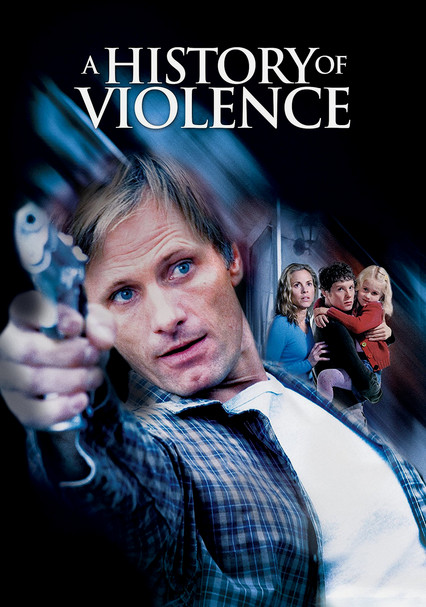
A History of Violence-2005

A History of Violence-2005

Director David Cronenberg

Starring Viggo Mortensen

Scott’s Review #1,016

Reviewed April 28, 2020

Grade: B+

David Cronenberg has directed films such as Videodrome (1983), The Fly (1986), and Crash (1996), stories safely classified as “off the beaten path”.

With A History of Violence (2005), he creates a film that, on the surface, appears conventional and even wholesome at the onset, a family drama or thriller that turns sinister and bloody as it lumbers along.

The Christian-like small Indiana town is the perfect backdrop for quietly inflicting mayhem and terror on its characters.

Stars Viggo Mortensen and Ed Harris give tremendous portrayals.

Tom Stall (Mortensen) lives a quiet midwestern life and owns a quaint little diner nestled in the center of town. He is a popular man and quite neighborly, befriending the many patrons who visit his lovely eatery.

At his side are his adoring wife Edie (Maria Bello) and children, Jack and Sarah.

If they owned a golden retriever and resided in a house with a white picket fence, they would define the all-American family.

Late one night, two men attempt to rob the restaurant, and when they attack a server, Tom kills both robbers with surprising ease and skill, barely blinking at his violent tendencies.

He is professed a hero by the townspeople, and the incident makes him a local celebrity.

Tom is then visited by the frightening, scarred gangster Carl Fogarty (Harris), who insists that Tom is a notorious Philadelphia gangster named Joey Cusack. Tom is perplexed and vehemently denies the claims, but Fogarty begins to stalk the Stall family.

Because of the pressure, Tom’s family life hits crisis mode.

As the film ticks along, the plot thickens, and the puzzle pieces are rife with mystery.

Is Fogarty merely a liar, holding a vendetta against the person who killed his men? Does Tom suffer from amnesia, having forgotten his past life due to an accident?

Has Tom fled the criminal life seeking refuge and a new life in middle America, safely leaving his troubles behind? Does the truth lie somewhere in the middle of these possibilities?

Bello is cast as Edie, Tom’s loyal wife. Bello is a stellar actor and does a wonderful job in the complicated role.

Far too often, especially in thrillers, the wife’s role is as lacking in challenge as it is in glamour. The ever-supportive wife must be a drag to play with, but pays the bills.

Edie is different, and as soon as the viewer has her figured out, she acts out of the blue, which will surprise the viewer about this type of character. This has a lot to do with Bello’s pizzazz and acting chops.

I adore the film’s setting.

A far cry from the bustling City of Brotherly Love, Philadelphia, the rural setting of Indiana becomes even more important as the action eventually flows to the city.

The quiet mornings, the imagined smell of fresh-brewed coffee, the sizzle of bacon on the grill at Tom’s Diner, and, finally, crickets chirping in the distance all evoke the potent atmosphere and surroundings that work in this film.

A History of Violence (2005) is a superior film that contains excellent writing, the best aspect of the rich experience.

A top-notch screenplay by Josh Olson leaves the viewer not only with mounting tension but also with the mystery of what will happen next and what the truth is.

Mortensen, commonplace in recent Cronenberg films, has found his niche playing complex yet humanistic characters, which must be a challenge for the actor and a splendid reward for the audience.

Oscar Nominations: Best Supporting Actor-William Hurt, Best Adapted Screenplay

A Fish Called Wanda-1988

A Fish Called Wanda-1988

Director Charles Crichton

Starring John Cleese, Kevin Kline, Jamie Lee Curtis

Scott’s Review #1,013

Reviewed April 20, 2020

Grade: B

A Fish Called Wanda (1988) is an intelligent and witty British-American comedy that was a sleeper hit upon its release, garnering critical acclaim and awards.

The heist-flavored production has good comic timing and brisk acting. I adored it not quite as much as most critics, though admirable is a quick wit and energetic timing, to be respected in comedies.

With some silly moments thrown in that feel staged and unnecessary, the film is not as brilliant as some would say and is not a memorable entry in the comedy genre.

A crooked foursome, all from shady backgrounds and manipulative tendencies, come together to commit the heist of the century. They are about to get away with it until the London police arrest one of them.

Can the other three, now on the lam, persuade their comrade’s lawyer to reveal the location of the stolen loot?

Will they double-cross each other to find stolen diamonds that the gang leader has secretly hidden?

The players are con artist Wanda Gershwitz (Jamie Lee Curtis), Otto West (Kevin Kline), her lover posing as her sibling, George Thomason (Tom Georgeson), and his right-hand man, Ken Pile (Michael Palin), an animal lover with a stutter.

Each has their motivations while relying on the others to get what they want, presumably at the other’s expense, as events escalate to dire urgency.

The film gets props for being different.

Frequently, in the comedy genre, laughs are attempted at a dizzying speed, so that often they do not feel fresh. They also usually contain stereotypical or stock characters who serve little purpose other than to move events along for the sake of character development.

A Fish Called Wanda is quirky, to say the least, with some intelligently written dialogue and sequences, especially the reveal of where the key to the safe deposit box containing the diamonds is housed.

The film’s title is a major clue.

The chemistry between the actors is the best part of the film, especially between Kline and Curtis, two actors with exceptional comic timing.

As they spar, bicker, and plot not just against each other but against the others they are in cahoots with, the antics get wilder and wilder.

Kline was recognized with an Oscar nomination for Best Supporting Actor and a win. His character, Otto, is also the most developed.

The final sequence, which takes place at Heathrow Airport in London, is a fun wrap-up to the caper. A gun, a steamroller, and wet cement are key elements in the wacky finale as characters run rampant inside the airport and on the airport tarmac as an airplane is about to take off for parts unknown.

Many other scenes take place in London since that is where the film was shot.

Where the film loses me a bit is in its very limited sense of the subject matter’s meaning. The group is made up of con artists and other unsavory characters, but little more. There are no characters to root for or empathize with, and the events that transpire are quite silly and superfluous.

While the story is fun, what is the point? All the characters manipulate each other, but that is it.

Going against the grain in cinema is always appreciated, and the comedy genre is too often stagnant and trite, rarely feeling fresh.

A Fish Called Wanda (1988) is an encouraging project that dares to offer new and inventive gags and physical comedy. The film hits some high marks and strikes out in others, leaving an uneven result.

Oscar Nominations: 1 win-Best Director-Charles Crichton, Best Supporting Actor-Kevin Kline (won), Best Screenplay Written Directly for the Screen

A Few Good Men-1992

A Few Good Men-1992

Director Rob Reiner

Starring Tom Cruise, Jack Nicholson, Demi Moore

Scott’s Review #1,012

Reviewed April 15, 2020

Grade: B+

A Few Good Men (1992) is a film firmly ensconced in the mainstream Hollywood courtroom drama genre.

If all the necessary elements had not been well-woven, the results might have been trite or even cringeworthy.

Nonetheless, with big stars and excellent acting, director Rob Reiner (yes, “Meathead” from All in the Family) lucks out with a predictable screenplay that is compelling and made better by the sum of its parts.

The film will never bore and is a standard edge-of-your-seat thrill ride.

The drama was rewarded with several year-end niceties, including nominations for the upper-crust Academy Awards. Best Supporting Actor, Best Film Editing, Best Sound Mixing, and, surprisingly, the lofty Best Picture statuette.

With no shame for the embarrassment of riches, deserved or undeserved is the real question; the film walked away empty-handed on Oscar night.

When cocky and handsome military lawyer Lieutenant Daniel Kaffee (Tom Cruise) and his co-counsel, Lieutenant Commander JoAnne Galloway (Demi Moore), are assigned to a murder case, their investigation uncovers a hazing ritual that could implicate high-ranking officials.

U.S. Marines Lance Corporal Harold Dawson (Wolfgang Bodison) and Private First Class Louden Downey (James Marshall) are facing a general court-martial, accused of murdering fellow Marine William Santiago at the Guantanamo Bay Naval Base in Cuba.

Kaffee and Galloway are to determine if higher-ranking officers orchestrated and forced the lower-ranking men to carry out a “code red” order: a violent extrajudicial punishment, and their form of justice, to kill the young victim, thus silencing him forever.

The questionable part of the plot is whether Base Camp Commander Jessup (Jack Nicholson) administered the order or instead ordered Santiago’s commanding officer, Lieutenant Jonathan James Kendrick (Kiefer Sutherland), to merely “train” Santiago to become a better Marine.

This is where the courtroom drama takes center stage with gusto.

As good as Moore, Sutherland, and Marshall are in offering compelling roles, the film belongs to Cruise and Nicholson, the veterans of the group.

The best scenes come at the end of the film as Cruise and Nicholson spar in the courtroom with bombast and trickery.

Nicholson as Jessup is brooding and traditional, a lifelong military man channeling honor and dedication at any cost. Cruise as Kaffee has something to prove and wants to win at any cost. So, they tangle in a fierce machismo way.

When he catches Jessup in a lie, just as a spider captures a fly, the scenes crackle with grit and energy.

The unforgettable line, “You can’t handle the truth!” is uttered by Nicholson.

A Few Good Men will both satisfy and dissatisfy those with a connection or a penchant for the military. On the one hand, the military is celebrated in the film as a model of efficiency in the world, and its decorated appeal is to be admired.

But the film also stands up and questions the hypocrisy of one of the oldest establishments and its male domination and bullying methods, not so different from a classic college fraternity.

The courtroom trial of a patriotic group is serious business.

While not a revolutionary film, sticking to a tried-and-true courtroom drama script seen in television drama series since the beginning of time, A Few Good Men (1992) provides a hefty two hours and twenty minutes of pure entertainment.

Powerful acting across the board makes the film a superior experience and a thought-provoking message of whether unthinkingly following orders without thought is still a relevant approach, not just in the military, but anywhere.

Oscar Nominations: Best Picture, Best Supporting Actor-Jack Nicholson, Best Sound, Best Film Editing

A Day at the Races-1937

A Day at the Races-1937

Director Sam Wood

Starring Groucho Marx, Chico Marx, Harpo Marx

Scott’s Review #1,011

Reviewed April 13, 2020

Grade: B

The Marx Brothers created a collection of successful films throughout the 1920s and 1930s, including A Day at the Races (1937), which continues the zany adventures of the bumbling men.

Not as laugh-out-loud funny as their earlier works, particularly the memorable Duck Soup (1933), which is considered their best achievement, the film has trademark chuckles and physical comedy for miles that celebrate their vaudeville roots.

A horse and a private sanitarium are the major players in this installment.

The film suffers from a myriad of stereotypes and startling racial overtones, as any apt viewer will likely need to remind themselves of the decade the film was made. Thankfully, these scenes are brief and not the highlight of the story.

A Day at the Races belongs to the Marx Brothers as their klutzy humor and one-liners are the best parts, leaving the romantic leads and the foils as standard characters. Backstage problems were prevalent, leaving some continuity issues for the final product.

Judy Standish (Maureen O’Sullivan) owns the struggling Standish Sanitarium, which she can barely afford to keep afloat. The devious J.D. Morgan (Douglass Dumbrille) owns a nearby racetrack and nightclub and aspires to use the sanitarium space to open a successful casino.

Hugo Z. Hackenbush (Groucho Marx), a horse doctor, treats the wealthy Mrs. Upjohn (Margaret Dumont), who she thinks is a “real” doctor, and agrees to back the sanitarium financially, but only if Hackenbush runs it.

Suspicions arise when Morgan and his business manager attempt to locate the real Hackenbush in Florida.

Meanwhile, Judy’s fiancé, singer Gil Stewart (Allan Jones), who performs in Morgan’s nightclub, has just spent his life’s savings on a racehorse named Hi-Hat. He hopes that the horse he purchased from Morgan will win a big race and the money will save the sanitarium.

Hi-Hat is afraid of Morgan and runs away whenever he hears Morgan’s voice. All the principal players gather for a hysterical conclusion as an exciting horse race ensues with a case of mistaken identity mixed in for good measure.

The main attractions are Groucho, Harpo, and Chico, as they provide a robust dose of clumsy, action-filled pranks, misunderstandings pop, and bops that keep them fluttering about the silver screen in a fast-paced fashion.

The other characters serve as either foils or support for the trio of funny men, so much so that they feel like stock characters. Jones and O’Sullivan have some chemistry as the straight leads and a few tender moments, but neither is the film about them.

The running time of one hour and fifty minutes feels long for a genre film like this, and several scenes meant only to balance the physical comedy could have been eliminated.

The famous exchange between Hackenbush and Mrs. Upjohn, in which she exclaims, “I’ve never been so insulted in all my life!” and he replies, “Well, it’s early yet,” is a classic comedy and heartwarming to the eyes and ears, as the pacing between the characters is nice.

A Day at the Races (1937) feels dated during some scenes and is a stark reminder that inclusion did not always exist in cinema and that laughs were to be had at the expense of minority groups. Putting this aside, the writing is witty and entertaining as a comic creation and a perfect showcase for the Marx Brothers to continue their fantastic run of films.

The film might be suggested as part of a marathon or binge-watching effort rather than as a stand-alone since better chapters can be found elsewhere.

Oscar Nominations: Best Dance Direction

Tag-2018

Tag-2018

Director Jeff Tomsic

Starring Ed Helms, Jeremy Renner, Jon Hamm

Scott’s Review #1,010

Reviewed April 10, 2020

Grade: D

Tag (2018), starring Ed Helms, weakly attempts to re-create some semblance of magic that The Hangover trilogy (2009-2013) initially had, in which the actor starred.

The result is an over-the-top and self-indulgent mess that incorporates the standard gags that raunchy comedies always do and a little more.

The characters are caricatures, and the film provides no character development or anything fresh to stay with the viewer after the credits roll at the end.

The most interesting part is post-credits, where the real-life figures the film is based upon appear.

The film gets off to a dumb start as Hogan Malloy (Helms), an established physician, inexplicably gets a job as a janitor at an esteemed corporation to go undercover and “tag” Bob Callahan (Hamm).

The childhood friends, along with “Chilli” Cilliano (Jake Johnson), and Kevin Sable (Hannibal Buress) attempt to pursue and “tag” their other buddy Jerry Pierce (Jeremy Renner), who has alluded to the “loser award” for the past thirty years, given to the member last tagged during May, when their annual contest is held.

The rest of the film piggybacks on this premise as the group pursues Jerry in tired form as adventures ensue. The specifics are running through other people’s apartments, tumbling down fire escapes, impersonating older women, and continued use of backflips, stop-motion editing, and nutty situations.

You get the idea.

The least appealing quality of Tag is that it feels forced and too derivative of similar films. The filmmakers try to create a “buddy film” and a camaraderie between the characters that never amounts to much. The reason for this is that they embed each character with specific qualities that define them instead of making them fresh or creative in any way.

We meet Chilli as he smokes pot with his father, revealing that he is divorced, unemployed, and a pothead. Bob is uptight, business-like, and the ladies’ man. A token black character (Kevin) is the comic relief.

The characters are one-note and uninspired.

Other weak points from a character standpoint are prevalent. Hogan is written as the “straight man,” meaning the most sensible of the group. He is the main character and has a competitive streak that his wife, Anna (Isla Fisher), shares.

Her character is most irritating as she has fits of rage and then turns sweet. Fisher has been cast in raunchy comedies for most of her career, so it would be nice to see her branch out to better roles.

Finally, Hogan’s mother, the local bartender, and a fitness worker are written poorly.

As a bonus, the film adds a homophobic sequence to offend audiences. Meant for laughs, as are most offensives, the male fitness worker is lightly interrogated as the men attempt to locate Jerry.

A back-and-forth involving presumptive oral sex is written as a joke, and in addition to being unnecessary, the sequence goes on and on.

Wishful thinking is for genre comedies to finally create something fresh and stereotype-free or make mockeries of groups of people.

Predictably, the conclusion is silly and trite. The film culminates in a hokey wedding scene when the friends are tricked by Jerry’s fiance, who fakes a pregnancy and miscarriage in a gag-worthy effort. A moment of feigned sincerity is followed by a juvenile rapid-fire torrent of “You’re It!” that would make a ten-year-old boy roll his eyes in disbelief.

Tag is not a complete disaster. If one sticks to the entire watch, a couple of tidbits of pleasure emerge. Familiar classic rock songs like Danzig’s “Mother,” Ozzy Osbourne’s “Crazy Train,” and “Mmm Mmm Mmm Mmm” by Crash Test Dummies are interspersed throughout the running time.

An added romantic triangle between Bob, Cheryl (Rashida Jones), and Chilli has potential if it were not relegated to a subplot with no resolution. Both men have chemistry with Cheryl and possess some likeability.

A film that will certainly wind up in the $1.99 (or less) bargain bin, Tag (2018) might have been a relaxed effort by the cast of actors to shoot, but they must have had more fun than anyone watching it will have.

With big-name stars and an interesting premise on paper anyway, the film fails to deliver the goods, embellishes based on a true story to the max, and results in a complete waste of time.

A Dangerous Method-2011

A Dangerous Method-2011

Director David Cronenberg

Starring Keira Knightley, Viggo Mortensen, Michael Fassbender

Scott’s Review #1,009

Reviewed April 9, 2020

Grade: B+

A literal psychological-themed drama, if ever there was one, director David Cronenberg uses popular actors of the day to create a film based on a non-fiction book.

Famous psychoanalysts, Sigmund Freud and Carl Jung, share a tumultuous relationship when they catch the eye of the first female psychoanalyst, who was a patient of each.

Thanks to a talented cast and an independent feel, the result is a compelling piece and a history lesson in sexual titillation, jealousy, passion, and drama, among real-life elite sophisticates.

Set on the eve of World War I in Zurich, Switzerland, a young woman, Sabina Spielrein (Keira Knightley), suffering from hysteria, begins a new course of treatment with the young Swiss doctor Carl Jung (Michael Fassbender).

He uses word association, dream interpretation, and other experimental methods as part of his psychoanalytic approach. He finds that the humiliation and sexual arousal triggered Spielrein’s condition, which she felt as a child when her father spanked her naked.

They embark on a torrid affair.

Jung and friend and confidante, Sigmund Freud (Viggo Mortensen), explore various psychoanalytic methods, but cracks appear in their friendship as they begin to disagree more frequently on matters of psychoanalysis.

When Spielrein, now a student, meets Freud, she confides in him about her relationship with Jung, which leads to animosity between the men.

Spielrein embarks on other lovers as she tries to reconcile the geniuses, allowing their psychoanalytic studies to continue developing with relevance.

The film is intelligently written and, for any viewer fascinated with psychology or sexual interest, a wonderful marvel.

Since Freud and Jung are two of the most recognizable names in behavioral science and Spielrein is one of the most influential women in the field, the production is as much a historical and biographical study as it is dramatic enjoyment.

Spanking, bondage, and sexual humiliation for gratification and pleasure, strong taboos at the turn of the twentieth century, are explored and embraced in delicious and wicked style.

Given that Fassbender, Mortensen, and Knightley are easy on the eyes, they provide further stimulation than if less attractive actors were cast.

Nonetheless, the actors’ eye candy is matched by their acting talent, as each immerses themselves in their pivotal role.

Cleverly and uniquely, the film is not a trite romantic triangle or giddy formulaic genre movie. Rather, the sets, costumes, and cinematography are fresh and grip the audience.

Carl Jung is the central figure, and the film gives plenty of screen time to both his personal and professional experiences. He wrestles between remaining committed to his wife or giving in to his deepest desires with Spielrein- we can guess how this turns out!

The early scenes between Fassbender and Knightley crackle with passion and will make many blush and smirk with naughtiness.

The title is bold but doesn’t always live up to the subject matter. More sensual, fun, and intelligent than dangerous, the film is hardly raw or gritty, surprising given it’s an independent project.

It is softer to the touch, especially during scenes between Jung and Speilrein, than hard-edged.

The film discusses and explores many early psychoanalytic ideas about approach and remedy, making it more of a study than a thriller.

A Dangerous Method (2011) received stellar reviews and year-end awards consideration, but it failed at the box office.

Hardly a popcorn film and deeply accepting of its indie roots, the film ought to be shown in high-school or academic psychology classes- whether in abnormal or general studies remains a question.

With a fascinating story that risks making the prudish blush or turn away, the film will please those independent thinkers, sexual deviants, or those aching for an expressive and satisfying film.

Annabelle Comes Home-2019

Annabelle Comes Home-2019

Director Gary Dauberman

Starring Mckenna Grace, Patrick Wilson, Vera Farmiga

Scott’s Review #1,008

Reviewed April 7, 2020

Grade: B

Annabelle Comes Home (2019) was made as a sequel to 2014’s Annabelle and 2017’s Annabelle: Creation, and as the seventh installment in The Conjuring Universe franchise overall.

Lest we forget the uninspiring The Nun (2018) it is not necessary to view the films in sequence and with this version, it can serve as a stand-alone film just fine.

At this point in the series, it’s becoming increasingly challenging to connect all the dots from previous offerings. The film is a fun, scary-light experience, which works well.

Borrowing the babysitting theme from the 1978 horror masterpiece Halloween, the film is neither dull nor formulaic, providing some visual creativity to an otherwise B-movie experience.

Franchise fan favorites Patrick Wilson and Vera Farmiga return to their popular roles, but only in the beginning and end of the film, letting the younger set take center stage as they bear the brunt of angry demons.

Presumed to take place sometime after Annabelle but before Annabelle: Creation, demonologists Ed (Wilson) and Lorraine Warren (Farmiga) are determined to stop the frightening Annabelle from wreaking further havoc and drag the possessed doll to the safety of their locked artifacts room, placing her behind sacred glass and enlisting a priest’s holy blessing.

After a curious teenage girl snoops, Annabelle is reawakened angrier than usual and unleashes a torrent of evil spirits into the Warren house. Ten-year-old daughter, Judy (Mckenna Grace), must be savvy and outsmart the dangerous demons before it’s too late.

Annabelle herself, the doll statuesque and holding a grotesque smirk on its made-up face, with bright blue/green eyes, has quietly become a fixture within the horror community, now easily recognizable to mainstream audiences everywhere.

That Annabelle does not speak or walk, but only stares, unless possessed by a spirit, is a big part of the fun and the scares. She tends to appear rather than move around, which is part of her appeal.

And the pretty red ribbons in her hair are a bonus.

The 1970s time period is fabulous, as the set and art design teams deserve major props for authenticity. Warren’s house, for example, is a fantastic showcase for the yellow and brown trimmings prevalent in any middle to upper-middle-class residence during this decade.

The flowered wallpaper enshrouding the downstairs hallway and the pink frosted birthday cake are delightful additions. The standard feathered hairstyles and plaid-patterned clothes are timeless trademarks and always a hoot.

From a fright perspective, the film provides a perfect balance of buildup and edge-of-your-seat thrills.

The best example of this is when nosy Daniela (Katie Sarife), already curious about the Warrens, breaks into the artifacts room, determined to talk to the dead.

Her motivations are believable, given that her father recently died in a car accident, and she is a fan favorite. Chaos ensues as she unleashes such evil forces as the Black Shuck, the Ferryman, and the Bride.

The film tries a bit too hard to appeal to a tween or teenage audience with a silly romance between the main character, Mary Ellen (Madison Iseman), a perfect, virginal babysitter, and her high school crush, Bob (Michael Cimino).

He even serenades her after an idea by the pizza deliveryman, and conveniently lives across the street.

This portion of the story is unnecessary and feels like filler, as Mary Ellen is responsible enough not to let a boy into the house she is looking after.

Annabelle Comes Home (2019) is a commendable horror effort, intelligently blending both supernatural and classic horror subgenres with ease and perfect balance.

Staying true to its franchise roots and incorporating groovy production and musical score elements representing the decade it celebrates, the film holds up well in a myriad of similar films that rely on gimmicks and cheap thrills more than this one does.

I Confess-1953

I Confess-1953

Director Alfred Hitchcock

Starring Montgomery Clift, Anne Baxter

Scott’s Review #1,007

Reviewed April 2, 2020

Grade: A-

I Confess (1953) is an early effort by the brilliant Alfred Hitchcock with a decidedly religious slant but keeps the suspense and thrills commonplace like his other films.

The picture is not one of his best-remembered works but one of his least-remembered projects. This is unwarranted because the film contains all the standard elements known to the director, creating an entertaining and enthralling effort.

Montgomery Clift and Anne Baxter are featured as big Hollywood stars of the day.

Although he was not a fan of exterior shoots where he couldn’t control the elements, filming was done mainly on location in Quebec City. Numerous shots of the city landscape and interiors of its churches and other emblematic buildings, such as the Château Frontenac, were heavily featured.

This factor adds to the enjoyment as French sophistication and culture are added, and the accents provide a European influence, which is especially powerful during the final act.

A handsome Catholic priest, Father Michael Logan (Clift), wants nothing more than to be a good priest, but his calling is made complicated after someone confesses a murder to him, and he’s subsequently blamed for the death.

A World War II veteran, he harbors secrets told in the back story as a strong connection to another character comes to light. An easy way to clear his name is to reveal exactly what he knows, but doing so would break his vows as a clergyman and alienate members of his community who trust he will keep their steamy secrets very private.

Ruth Grandfort (Baxter) is a respected member of society, married to her husband Pierre (Roger Dann), a member of the Quebec legislature. They live comfortably in a lavish house with servants and regularly throw cosmopolitan parties befitting people of their stature.

Amid martinis and festive party games, Ruth keeps not one secret but two and is being blackmailed for her shenanigans. Her connection to Father Michael slowly bubbles to the surface.

Christian viewers will neither be offended nor completely embraced either. Hitchcock does not mock religion but makes sure of the conflict and demons that can encircle even a pious or righteous man.

As far back as the 1940s, Rebecca was toying with viewers and frequently adding an LGBTQ uncertainty; this can be said of I Confess.

Assumed to be in love, Father Michael offers little romantic passion or zest towards Ruth, and the connection seems one-sided. Could his descent into the Catholic Church be a front to cover up his sexuality?

Only Hitchcock will know the answer.

Eagle-eyed Hitchcock fans will undoubtedly discover similarities to his other works.

In the very first scene, an unknown man is strangled to death, collapsing to the floor. This is reminiscent of the 1948 masterpiece, Rope (1948), when an identical sequence occurs. The audience knows nothing about the stranger- yet.

In both films, even after death, the character becomes integral to the plot twists and turns in store. The tremendous use of shadows and lighting is on careful display, mirroring the look of the soon-to-come The Wrong Man (1956).

While not the cream of the crop among Hitchcock’s best film entries or even a top ten offering, I Confess (1953) deserves a viewing or two on its own merits.

Clift and Baxter have excellent chemistry and mystique, and the plot is enough to keep audiences well-occupied.

The final twenty minutes provide cat-and-mouse revelry and a shocking death, perfect for a dramatic climax to a film oozing with Hitchcock’s finest traits.

A Cat in Paris-2010

A Cat in Paris-2010

Director Jean-Loup Felicioli, Alain Gagnol

Starring (ENGLISH) Marcia Gay Harden, Steve Blum 

Scott’s Review #1,006

Reviewed April 1, 2020

Grade: A-

For any lover of all things cats or all things Paris, A Cat in Paris (2010) is a double-punch winner in themes alone and a pure treat.

The French-made film was nominated for the Academy Award for Best Animated Feature along with Chico and Rita (2010), another foreign language animated feature, both considered surprise entries.

This was monumental, as it helped allow subsequent non-American features into the mix.

The former is a moody and mysterious caper story involving a cat and a young Parisian girl and the adventures they share.

The traditional ink colors and hand drawings are lovely and creative, adding to the inventive mood.

The feline-centered story and feminist empowerment angle provide a unique and memorable experience.

The French-language version features native-language voices, while the English version has English speakers.

The main protagonist of the film is Dino, a pet cat who leads a double life. By day, he lives with his friend Zoe (Lauren Weintraub), a little mute girl whose mother, Jeanne (Marcia Gay Harden), is a detective in the Parisian police force.

He sneaks out of the window each night to work with Nico (Steve Blum), a slinky cat burglar with a heart of gold, who regularly evades captors as he glides and swishes from rooftop to rooftop with the picturesque Paris skyline serving as a backdrop.

Dino’s two worlds collide when one night Zoe decides to follow Dino on his nocturnal adventures and falls into the dangerous hands of Victor Costa (JB Blanc), an intimidating gangster who is planning the theft of a rare statue.

Now the cat and cat burglar must team up to save Zoe from the bumbling thieves, leading to a thrilling acrobatic finale on top of Notre Dame.

In an acute tongue-in-cheek final moment, Nico gives Jeanne a snow globe with the Cathedral of Notre Dame in it as a Christmas present.

Despite the film being animated, this does not take away from the cultural and sophisticated Parisian experience.

Delicious views of the distinguished Eiffel Tower and the luminous, glowing skylines of the City of Lights assuredly will captivate each viewer fortunate enough to have ever visited the magical city in person, or those who have daydreamed an afternoon away imagining experiencing the grand city.

Alfred Hitchcock’s work is mirrored throughout A Cat in Paris, specifically his film To Catch a Thief (1955). That film is set along the French Riviera instead of in Paris but features a cat burglar, a thrilling rooftop climax, and enough cat-and-mouse thrills to last a lifetime.

The director’s work is easy to spot, and the filmmakers are wise to adapt to his style, carefully weaving elements into an animated film with the hopes of exposing children to intelligent filmmaking.

Adults will equally love the film.

At a mere one hour and five minutes, nearly teetering on the classification of a short film instead of a full-length feature, A Cat in Paris (2010) more than accomplishes what it sets out to in the limited time.

Utilizing fantastic silhouettes, lit shapes, and angles, the visual treats alone make this one exceptional.

Adding tidbits of the greatest film director of all time’s work without outright stealing it is a wise choice.

May more intelligent international animated films like this one receive the exposure they deserve from mass audiences.

Oscar Nominations: Best Animated Feature Film

Exodus-1960

Exodus-1960

Director Otto Preminger

Starring Paul Newman, Eva Marie Saint

Scott’s Review #1,005

Reviewed March 30, 2020

Grade: A-

Creating a monumental epic about the modern state of Israel, director Otto Preminger’s vast project Exodus (1960) is a bold adaptation of the Leon Uris novel from 1958.

Starring stars of the day for added Hollywood spice and a romantic element, the result is a sprawling war drama with robust proportions and a hefty running time.

The film sometimes lags or even drags, but the message’s enormous importance and influence on stimulating Zionism should never be forgotten.

With the treacherous World War II barely in the rear-view mirror, Israeli resistance fighter, Ari Ben Canaan (Paul Newman), attempts to bring six hundred European Jewish Holocaust survivors from British-blockaded Cyprus into newly developed Palestine.

At the camp, he meets Kitty Fremont (Eva Marie Saint), an American volunteer nurse. The pair teams up with others to attempt to liberate the survivors.

The action eventually switches to Palestine, where other characters and motives come into play in a complex story. During this time, opposition to the partition of Palestine into Arab and Jewish states was heating up, leading to tension, bombs, and death among similar types of people.

Central to the main plot is a young love story involving spirited Dov Landau (Sal Mineo), a radical Zionist resistance group member, and Karen Hansen Clement (Jill Haworth), a young Danish-Jewish girl searching for the father from whom she was separated during the war.

Exodus has so much story going on and multiple plots to follow.

Besides the tense story, the main draw is the two love stories told amid the political turmoil.

Newman and Saint have marginal chemistry; he is an eye candy who electrifies the screen, and she seems too old for him and does not photograph well. Kitty, a widow, hedges on her romantic feelings for Ari, but they ultimately unite.

A gorgeous sequence occurs when the two share a delicious meal of fish and martinis amid a rooftop restaurant overlooking the dazzling landscape. She later dines with his parents and his mother, a classic Jewish mother who, in stereotypical fashion, cooks and fusses.

The fresh-faced pairing of Dov and Karen is reminiscent of Tony and Maria from West Side Story. Doomed from the start, the youngsters are opposites in many ways: hot-headed, sensible, and resilient. He is bronze and swarthy; she is blonde and blue-eyed.

I fell in love with the couple more than Ari and Kitty and rooted for their happily-ever-after moment, which sadly never occurred.

At nearly four hours, the film is best watched in segments, perhaps even four, to let the action marinate overnight. The sweeping cinematic photography and the lush exterior sequences aid the complex drama.

A drawback was not seeing the film on the big screen, which was almost a must in hindsight and limited by the DVD quality over Blu-Ray.

Nonetheless, the film is delicious in nearly every way. When tedium is about to occur, an event snaps the viewer back to immediate attention.

A notable fun fact is that Preminger boldly hired blacklisted screenwriter Dalton Trumbo, on the dreaded Hollywood blacklist for over a decade for communist leanings, to write the script.

Together with Spartacus (1960), made the same year, Exodus is credited with ending the practice of Blacklisting in the motion picture industry. The importance of what is written on the blank page is arguably surpassed by the man who wrote those pages.

Exodus (1960) nearly rivals the epic of all epics, Lawrence of Arabia (1962), in its cinematography of exotic and sacred landscapes in daring and forbidding lands.

Perhaps twenty minutes could be carved out when the action loses momentum. Still, with great direction, a top-tier cast, and a history lesson in the harshness of war and generations of conflict, the film resonates with the realism of the subject matter.

Oscar Nominations: 1 win-Best Supporting Actor-Sal Mineo, Best Music Score of a Dramatic or Comedy Picture (won), Best Cinematography, Color

Golden Globe Nominations: 1 win-Best Performance by an Actor in a Supporting Role in any Motion Picture-Sal Mineo (won), New Star of the Year-Actress-Jill Haworth, Best Original Score-Motion Picture

A Better Life-2011

A Better Life-2011

Director Chris Weitz

Starring Demian Bichir

Scott’s Review #1,004

Reviewed March 26, 2020

Grade: B+

A Better Life (2011) is a heartwarming and timely project that focuses on and showcases Hispanic culture, both positively and negatively.

The film explores illegal immigration amid a powerful family drama.

Lead actor Demian Bichir deservedly earned a Best Actor Oscar nomination for his sensitive portrayal of a man who wants only the best for his son, even as life stacks the odds against him.

The film is an atypical Hollywood production, told simply and with heart.

Carlos Galindo (Bichir) is a struggling Los Angeles gardener who manicures the lawns of the rich and famous in sunny California with his partner and close friend Blasco.

Carlos lives a content life but is always on guard because he is an illegal immigrant and worries about his son Luis (Jose Julian) falling in with the wrong crowd.

When one day Carlos’s sister loans him $12,000 to purchase a truck he needs for his job, he hits his stride, only to have the truck stolen.

Desperate, Carlos and Luis are determined to get back the truck while avoiding trouble with the law.

The film’s title, while basic and not sexy, is powerful in its simplicity. Bold and thought-provoking, this is merely what Carlos wants for Luis and what every father wants for his son.

His trials and tribulations are a constant; he strives to teach Luis to stay on a positive path and avoid the mistakes Carlos made.

Regardless of the political discussion the film could have, what lies beneath is a heartwarming story of cherished love between a man and his son.

Cleverly, the film provides a hopeful final message for both major characters.

I adore the rich Mexican culture the film represents. A battle of traditional appreciation of one’s roots versus immersing oneself in American culture is examined.

Nearly the entire cast is of Hispanic descent, and with numerous scenes of ethnic flavor, from restaurants and cafes to nightclubs and street life, the film is authentic and fresh.

Thankfully, the filmmakers do not try to pull off the insulting ploy of casting white actors clad in Mexican garb or a big-name actor in the role of Carlos.

Many of the characters even seem like non-actors.

The Los Angeles setting is highly successful, especially since the low-budget independent film uses tons of exterior shots.

The camerawork isn’t exceptional but feels fresh, letting the warm climate marinate with viewers so they feel immersed in the Southern California neighborhoods.

The contrast between the East Los Angeles area where Carlos lives versus where he works is a harsh reality for most landscapers.

Bichir more than deserves the accolades heaped upon him for this mesmerizing and intelligent role. He quietly portrays an empathetic man who is an unsung hero and a representative of many fathers who never get their due respect, especially if they are undocumented immigrants.

When Luis denounces Mexican music, Carlos’s pain is evident as he endures what surely breaks his heart.

Bichir’s realism and commitment to the characters’ truth drive the film.

A Better Life (2011) is a story rich with poignancy and relevance, showcasing the plight of a good man. Now, almost ten years later, the film is arguably more important than ever since immigration has become a hot-ticket item in the turbulent political climate.

Do hardworking, undocumented people deserve a break from being in the United States? The answer seems obvious, and the film skews steadily to the left, but is there any other strong viewpoint?

Oscar Nominations: Best Actor-Demian Bichir

Independent Spirit Award Nominations: Best Male Lead-Demian Bichir

A Beautiful Mind-2001

A Beautiful Mind-2001

Director Ron Howard

Starring Russell Crowe

Scott’s Review #1,003

Reviewed March 25, 2020

Grade: A-

A Beautiful Mind (2001) is a superior-made film based on the life and times of American mathematician John Nash, a Nobel Laureate in Economics and Abel Prize winner.

The biography explores Nash’s battles with schizophrenia and the delusions he suffered, causing tremendous stress on friends and family.

The film is well-written and brilliantly acted, but it deserves a demerit for its factual inaccuracies, especially regarding Nash’s complex sexuality and family life.

This leaves a gnawing paint-by-the-numbers approach aimed only at mass appeal.

The film was an enormous success, winning four Academy Awards for Best Picture, Best Director, Best Adapted Screenplay, and Best Supporting Actress.

It was also nominated for Best Actor, Best Film Editing, Best Makeup, and Best Original Score.

Arguably one of the best films of 2001, it cemented director Ron Howard’s reputation as a mainstream force to be reckoned with in the Hollywood world.

The project was inspired by the Pulitzer Prize-nominated book of the same name.

Starting in 1947, we meet Nash (Russell Crowe) as a virginal, socially awkward college scholar at Princeton University. He is a whiz at science and mathematics, coming up with unique and dynamic ideas for problem-solving.

Rising the ranks in respectability, he is given an important job with the United States Department of Defense, tasked with thwarting Soviet plots.

He becomes increasingly obsessive about searching for hidden patterns and believes he is being followed, sinking further into depression and secrecy.

A Beautiful Mind is an important film because it brings to light the overwhelming issue of mental health and the struggles one suffering from it is forced to endure.

Nash largely lives in a fantasy world and has imaginary friends who have followed him for decades by the time the film ends.

Nash conquers his demons with little aid of medication, causing a controversial viewpoint. Amazing that the man was able to rise above, but is this a realistic message for those suffering from hallucinations?

Russell Crowe carries the film, fresh off his Oscar win the year before for his stunning turn in Gladiator (2000). He would have won for portraying Nash had he not recently received the coveted prize.

Crowe, hunky at this point in his life, convincingly brings the brainy and nerdy character, rather than the stud, to life, adding layers of empathy and warmth to the role.

We root for the man because he is as sensitive as he is a genius.

Jennifer Connelly, in what is disparagingly often described as the wife-or-girlfriend role, does her best with the material given.

My hunch is her Oscar nomination and surprising win have more to do with piggybacking off the slew of other nominations the film received.

She is competent as the supportive yet strong Alicia, Nash’s wife. In her best scene, she flees the house after a confused Nash leaves their infant daughter near a full bathtub, putting her life in danger.

The most heartfelt scene occurs during the conclusion.

After many years of struggle, Nash eventually triumphs over this tragedy and, finally, late in life, receives the Nobel Prize. This is a grand culmination of the man’s achievements and a sentimental send-off for the film.

The aging makeup of all principal characters, specifically Nash and Alicia, is brilliantly done.

Despite the heaps of accolades reaped by A Beautiful Mind, several factual points are reduced to non-existence.

It is questionable why Howard chose not to explore Nash’s rumored bisexuality, instead of passing him off as straight.

Admittedly, the film is not about sexuality, but isn’t this a misrepresentation of truth? Nash had a second family, which is also never mentioned.

These tidbits, eliminated from the film, leave a glossy feel, as if Howard picked and chose what to tell and not to tell for the sake of the mainstream audience.

Bringing needed attention to a problem of epic proportions, A Beautiful Mind (2001) addresses mental health issues in the United States.

The methods may be questionable, and the film has an overall safe “Hollywood” vibe, but it must be credited for a job well done in a film that is not only important but also displays a good biography for viewers eager to learn about a genius who faced unrelenting issues.

Oscar Nominations: 4 wins-Best Picture (won), Best Director-Ron Howard (won), Best Actor-Russell Crowe, Best Supporting Actress-Jennifer Connelly (won), Best Screenplay Based on Material Previously Produced or Published/Adapted Screenplay (won), Best Original Score, Best Makeup, Best Film Editing

(500) Days of Summer-2009

(500) Days of Summer-2009

Director Marc Webb

Starring Joseph Gordon-Levitt, Zooey Deschanel 

Scott’s Review #1,002

Reviewed March 20, 2020

Grade: B

(500) Days of Summer (2009) is an unconventional love story that deserves props for being different, but never completely catches fire as a film effort.

What it tries to do left-of-center from most conventional romantic comedies is to be admired, but I did not feel much connection to the characters, and the result seemed pointless.

The independent film garnered some praise for being unique and clever. Still, it’s overshadowed by a gnawing, forced feeling, like the filmmakers are trying to be edgy for the sake of being edgy and adding contrived story elements.

The lead characters conveniently both like an obscure band and an obscure artist, throwing them immediately together.

The film is a modest effort but will only be remembered as an indie project with a bit of unfulfilled potential.

When his girlfriend, Summer (Zooey Deschanel), unceremoniously dumps him, greeting card copywriter and hopeless romantic Tom (Joseph Gordon-Levitt) spins into depression and begins reflecting on the year-long relationship the pair spent together, looking for clues as to what went wrong.

As he rummages through the good times and the bad times, his heart reawakens to find what is most important.

The Los Angeles backdrop sets the tone for the five hundred days of Tom and Summer.

Director Marc Webb, a first-time director at this point, now known more for The Amazing Spider-Man reboot franchise (2012-2014), steers in an experimental direction.

Shown somewhat like a “year in the life” of the young lovebirds’ blossoming relationship, the film is presented in a nonlinear narrative, jumping between various days within the five hundred days of Tom and Summer’s relationship.

There is an on-screen timer showing the day, which is a nice addition.

Props are given for the creativity Webb infuses. The romantic comedy genre, not my favorite, is constantly saturated with formulaic films, predictable from the start.

Frequently told from the female perspective, (500) Days of Summer tells the story from the male perspective, even reversing the traditional gender stereotypes. Tom is the lovesick romantic, and Summer is the rough-and-tumble, one-night-stand type.

This is nuanced and throws the entire genre upside down.

The characters are questionable, and the one easiest to relate to is Tom. There is some confusion and mystery with some motivations. The audience can understand how Tom falls head over heels for Summer, immediately smitten.

His depression is deep and to be taken seriously, but he is depressed because of Summer, and any history or previous causes of depression are not mentioned.

It feels like his depression is a convenient way of adding a story element.

Summer is even more perplexing and not deeply explored. Is she merely playing the field? After a song-and-dance scene where she explains she is not looking for anything serious and wants a casual romance, she suddenly marries another man.

She hurriedly tells Tom that she discovered her husband was her true love and that she now believes in love, whereas Tom doesn’t anymore.

Again, this feels more like storyline-dictated writing versus anything character-rich.

Despite receiving a Best Screenplay Independent Spirit Award nomination, two Golden Globe Award nominations, and oodles of praise, (500) Days of Summer (2009) is a non-conformist piece with some nice moments but feels irrelevant.

The lead actors are talented and do a decent job with the material given, but meander through the experience since it is more about the film than the acting.

The result is not a pure dud, but neither is it a pedigree winner.

Independent Spirit Award Nominations: 1 win-Best Feature, Best Male Lead-Joseph Gordon-Levitt, Best Screenplay (won)

50/50-2011

50/50-2011

Director Jonathan Levine

Starring Joseph Gordon-Levitt, Seth Rogen

Scott’s Review #1,001

Reviewed March 17, 2020

Grade: B+

Cancer is an incredibly tricky subject to portray in a film. Especially tough when any comedic bits are incorporated- the risk lies in jokes not going over well or being misinterpreted.

In 50/50 (2011), director Jonathan Levine and writer Will Reiser craft an intelligent, genuine story based on a true story, led by upstart actor Joseph Gordon-Levitt, who shines in the lead role.

Comic actor Seth Rogen joins to anchor the comedy.

Healthy twenty-something Seattle resident, Adam Lerner (Gordon-Levitt) experiences severe back pain and is shocked to learn he has a malignant tumor in his spine.

Devastated, his world is upended.

Adam is usually accompanied by his best friend Kyle (Rogan).

While Kyle is brash and outspoken, Adam is reserved and mild-mannered. They are opposites, but inseparable friends. Adam is dating artist Rachael (Bryce Dallas Howard), whom Kyle despises, adding conflict to the story.

The screenplay and Gordon-Levitt’s performance are the film’s strongest elements. The title of the film is poignant because Adam is given the dubious news that he has only a 50/50 chance of surviving his cancer.

The young actor brings heart and soul to his challenging role, and his acting keeps the scenes from feeling clichéd or manufactured. This, naturally, is due to the excellent writing by Will Reiser.

He crafts a sincere, straightforward script that avoids razzle-dazzle but remains heartfelt.

My only criticism of 50/50 is that I would have liked a bit more darkness. As we all know, real-life cancer patients must endure the ravages that brutal disease inflicts. The film never really goes there to show how devious the disease is or what happens to the human body.

I get that the film toes the line carefully, but even after shaving his head, Adam doesn’t lose much weight or suffer other visible indignities.

The toned-down approach feels PG-rated rather than R-rated as it might have been.

This is largely forgivable because the film’s main message outweighs it. The film shows that love and friendship can be the best healers and the root of good, kind humanity. This is something every viewer can take away, and it makes the film lovely and worth watching.

The romantic comedy elements do not work, and I am not even sure they are necessary. The main draw is the undying friendship between Adam and Kyle and Adam’s experiences with other cancer patients along his journey.

Combining comedy and cancer is not easy, but thanks to exceptional writing and a talented cast, 50/50 (2011) succeeds in its aims.

The film and Gordon-Levitt earned Golden Globe nominations but missed out on Oscar nominations. If the film’s intended result is to ease cancer patients’ minds and provide meaningful entertainment, it’s a major win.

Independent Spirit Award Nominations: 1 win-Best Feature, Best Supporting Female-Anjelica Huston, Best First Screenplay (won)

Giant Little Ones-2019

Giant Little Ones-2019

Director Keith Behrman

Starring Josh Wiggins, Darren Mann

Scott’s Review #1,000

Reviewed March 13, 2020

Grade: B+

Giant Little Ones (2019) is an independent LGBTQ film about both coming to terms with one’s sexuality and accepting and embracing other people for whom they love, and how they wish to spend their life.

It’s an honest and resilient coming-of-age story, most reminiscent (but rawer) of the recent Love, Simon (2018), told from a teenager’s perspective and the pressures and emotions of youth.

The subject matter has been explored to death in cinema, but there is still something fresh and meaningful that is offered.

High school chums Franky Winter (Josh Wiggins) and Ballas Kohl (Darren Mann) have been best friends since diapers. They joke around, go bike-riding, and knock back a six-pack together.

They are handsome, integral parts of the swim team, and popular with girls. Each has a steady girlfriend with who they anticipate soon going all the way. Any teenage girl would love to trade their life with the boys.

On the night of Franky’s seventeenth birthday party, Franky and Ballas get drunk together and spend the night crashing in the same bed. An unclear incident of a sexual nature occurs, altering and damaging their friendship.

Each boy has one sister and a set of parents, but Franky’s are more prominent, with a story of their own. His father, Ray (Kyle MacLachlan) divorced Franky’s mother, Carly (Mario Bello) after coming to terms with being gay.

While the focal point is on the teenage set, and Franky more than Ballas, it’s nice to see parents in these types of films with more to do than just pour coffee or offer unheeded advice.

MacLachlan and Bello are fascinating to watch, carefully distant from each other, but also have mutual respect. Both characters’ struggles are pointed out by Carly angrily lashing out that Ray was certainly not gay when she married him; Ray experiences guilt at wounding Franky emotionally.

The film is careful, admiringly so, to include two high school students who are already outwardly gay. The characters are not ridiculed or repressed, and one, Franky’s best friend Mouse (Niamh Wilson), is assumed to be slowly coming to terms with being transgender.

The other is a popular boy on the swim team. These representations are strong, though both characters face some level of opposition, so their plights are not easy.

The most heartfelt and poignant scene is when Franky and Ray reconnect as father and son in a treasured dialogue, where Ray explains how he met his partner. The beautiful moment blossoms because it’s Franky who asks Ray how he and his partner met.

Any LGBTQ person can attest to the powerful and heartwarming moment when they are asked about their significant other. The proud look in Ray’s eyes and the quiet cadence with which he carefully warns Franky not to label himself, but rather stick with those he connects to, is lovely and sentimental.

I like how Giant Little Ones is not a love story between the two boys and ambiguous is not only whether their friendship can be fixed, but whether one or both is gay, bi-sexual, curious, or merely experimenting with their sexuality.

The film avoids labels and boasts no clear-cut angle, steering clear of anything too preachy or defined. This supports its overall point.

A minor criticism is that, despite the boys being best friends and on equal footing, Franky becomes the central character, while Ballas is not explored thoroughly. Ballas borders on sociopathic behavior and has a ton of anger, but why? Is it only his sexuality?

The character remains mostly a mystery, and I was eager to learn more about him and what drives him.

Giant Little Ones (2019) is a heartfelt and intimate coming-of-age story about friendship, self-discovery, and the power of love without labels. The young actors are all natural, believable, and earnest, and the seasoned supporting cast lends credibility to a tiny, low-budget picture.

The LGBTQ community will embrace this film, while anyone else will be touched by its honesty and poignancy.

Countdown-2019

Countdown-2019

Director Justin Dec

Starring Elizabeth Lail, Jordan Calloway

Scott’s Review #999

Reviewed March 12, 2020

Grade: B

Countdown (2019) is a modern horror film that accomplishes what it intends to do- it entertains the audience.

With jumps, frights, and some comedic elements, it borrows heavily from the Final Destination (2000-2011) and Happy Death Day (2017-2019) franchises.

The film does not reinvent the wheel, conventionally steering the course. The superstitious elements become hokey and unbelievable, but the film has enough momentum to offer a solid product, especially pleasing to genre fans.

When a young nurse (Elizabeth Lail) downloads an app that claims to predict precisely when a person is going to die, it tells her she only has three days to live. With time ticking away and death closing in, she must find a way to save her life before time runs out.

She struggles to figure out how to delete the app while piecing together the puzzle to break a curse and thwart a threatening demonic spirit. Her sister is also threatened.

Director Justin Dec, a newcomer to the cinema, does not waste any time beginning the action, as events debut at a college keg party. A group of revelers decides to play a drinking game after downloading the new Countdown app, which is supposed to determine how long you have left to live.

Thinking the app is a joke, unlucky Courtney (Anne Winters) is startled to see that she has only three hours to live. After refusing to drive home with her drunken boyfriend, Ethan, she is murdered at home by an evil spirit, while Ethan crashes his car, a tree spearing through the seat that Courtney would have been sitting in.

With this sequence, the audience is hooked, as the pacing is well-maintained. With the app clock ticking down dangerously towards zero, a theme heavily promoted throughout the film, we can’t wait to see how or if Courtney is killed.

Red herrings, like a man following her or a shower curtain that moves, are presented for good suspense. Assumed to be the “main girl”, Courtney’s death is surprising, and the main title then appears, fooling the audience. There is more to come.

Carrying a horror film is not easy, but actor Lail rises to the occasion. Resembling a young Christina Applegate, Quinn is strong and independent. Many of the scenes take place at the hospital where she works, though she also makes time to see her father and sister.

Quinn’s mother has recently died, and Quinn blames herself. She connects with Matt (Jordan Calloway), who lost his brother after stealing his toy. Quinn is a character that viewers can admire and emulate.

Countdown deserves credit for incorporating a wide range of diversity. Matt is black, making his romance with Quinn an interracial one. Several Asian, Latino, or Black characters are featured in many scenes, showcasing a diverse representation of multiculturalism.

Unfortunately, and surprisingly, no LGBTQ characters are featured. Comic relief store owner, Derek (Tom Segura), would have been the perfect character to make gay, but this was not to be.

To build on this, a timely and progressive Me Too side story is added, when a well-respected doctor at the hospital makes a move on Quinn. He reports the incident to Human Resources when she rebuffs his advances. She is suspended, without an investigation, until other women come forward throughout the film.

While this would be an essential message in another type of film, the relevance does not work or fit the rest of the story.

The ninety-minute running time is a splendid approach, so the film never drags or dulls. The final twenty minutes or so are a letdown as Quinn and a priest realize that to break the curse, one must trick it by having someone else die out of sequence.

This is all too like Final Destination, but not as good, as Quinn ends up fighting with the spirit, killing herself with an overdose of morphine, while drawing a circle on her arm where a syringe with Naloxone can subsequently revive her.

For a new director eager to break into the horror genre, Justin Dec borrows heavily from previous films, presenting a copycat story that is paced perfectly. It provides enough interest and good casting to warrant a follow-up.

Due to low box-office returns, I doubt Countdown (2019) will become a mainstay franchise, but Dec may have a promising future ahead of himself.

5 Against the House-1955

5 Against the House-1955

Director Phil Karlson

Starring Brian Keith, Kim Novak

Scott’s Review #998

Reviewed March 11, 2020

Grade: C-

5 Against the House (1955) is a film that may have influenced heist films such as the Rat Pack Ocean’s 11 (1960) or countless other films featuring groups of young men holding up an establishment for money.

The film is mediocre and lacks memorable content. Nothing distinguishes it from other movies with similar themes.

Star Brian Keith is charismatic in the lead, but the chemistry with Kim Novak goes nowhere with any of the actors.

The film is mildly interesting, with a few tense moments but little more. 

Four Midwestern University college pals, Brick (Keith), Al (Guy Madison), Ronnie, and Roy, devise a grand casino heist while drunk and partying one weekend in Reno. The idea is to go through with their plan and then return the cash to prove they can get away with the high-stakes prank.

But when one of the group betrays the others and plots to keep the money for himself, he imperils them all.

Novak plays Kaye, Al’s girlfriend, who recently became a singer at a local nightclub.

The standouts from the cast are Keith and William Conrad because the then-unknown actors became television stars in later years, for Family Affair and Jake and the Fat Man, respectively.

Keith is great in the lead role of Brick, the tormented and conflicted ex-veteran of the Korean War, unable to forget tragedies he saw while abroad. He is a remarkable every man with an edge, angry and out to prove something to the world. He also needs the money that the heist will provide him.

The character is interesting and empathetic.

Conrad is gruff and memorable as a cart operator who plays an essential role in the film’s finale. Sent to retrieve cash from the money room, using the prerecorded message to make him believe that there is a desperate man with a gun in the cart who will shoot him if he does not cooperate, Conrad does wonders with his eyes and facial expressions.

The luscious Novak, soon to be a household name in the stunning and cerebral Alfred Hitchcock film Vertigo (1958), is not as compelling as Kaye.

The main reason is that she has little to do but stand around and serve as window dressing. This is too bad since the actress has talent and charisma for miles, but this work is beneath her.

It was not her debut but one of her early films, What’s a Girl to Do? To add insult to injury, another singer dubbed her voice. Novak needed the paycheck.

Director Phil Karlson is unsuccessful at bringing the picture entirely- circle but does pepper in some nice exterior night scenes of Reno. The casino sequences are commendable, and the set pieces are properly zesty and flashy when appropriate.

However, trimmings never complete a film, and 5 Against the House needs more meat on the bone than it serves up.

The heist is the main attraction. Some tension does exist, but not enough, and the finale is a letdown. After the unspectacular robbery, Brick leaves the others behind and escapes with the money. A pursuit ensues. Kaye, having alerted the police, follows them, and a tepid standoff follows.

Ultimately, Brick changes his mind while Al and Kaye embrace on a crowded street. The feeble final scene is a romantic sendoff for the couple, who didn’t have much chemistry.

5 Against the House (1955) contains an adequate cast and a few positive tidbits worth mentioning, but the story is way too predictable. The conclusion, which should be the high point, disappoints, and the actors are too old to be believable as college-aged students.

Many other film noir or heist films released before or after this film are superior and better crafted.

Scary Stories to Tell in the Dark-2019

Scary Stories to Tell in the Dark- 2019

Director Andre Ovredal

Starring Zoe Colletti, Michael Garza

Scott’s Review #997

Reviewed March 10, 2020

Grade: C+

Admittedly, not having read the series of books that Scary Stories to Tell in the Dark (2019) is based on, nor knowing the books even existed, may have influenced my opinion. Still, the film is lackluster at best, serving up some creative moments, but more silly ones.

The film is too polished, uneven, and feels too similar to modern projects like It (2017) or the television series Stranger Things to have its individuality.

A few interesting moments or sequences exist, but not enough to recommend.

The creepy children’s books written by Alvin Schwartz are adapted into film form, as the 1968 Halloween period is brought to life.

The small town of Mill Valley, Pennsylvania, serves as the backdrop for the historic Bellows family mansion, which has loomed over the city for decades and holds a haunting mystery.

Sarah, a young girl with dark secrets, has transformed her troubled life into a series of terrifying stories, written in a book that has transcended time.

After a group of impressionable teenagers discover Sarah’s terrifying home, they uncover her stories, and they become all too real.

The visual effects and images are the film’s high point.

Several visceral and stylistic sequences deserve admiration and mention. When one of the panicked teenagers scrambles into a mental institution, he is met with a horrific, blood-red glowing image that surrounds him.

As he attempts to escape, a ghastly, bloated figure slowly approaches him from all sides.

Later, a freakish person known as The Jangly Man, able to reconstruct itself from separate body parts, pursues one of the teens. These scenes are credible and inventive. The look of the film is its only real success.

The late 1960s time period both works and doesn’t work. Getting off to a splendid start, the theme song performed by Donovan, “Season of the Witch”, also incorporated over the closing credits, is a positive and provides a nice mystique.

Since the date is supposed to be Halloween, this is fitting, though too few other seasonal reminders ever exist so that the viewer soon forgets it is Halloween at all.

Attempts to make the characters look the part are feeble, resulting in modern actors clad in 1960s attire, which reduces authenticity.

Mentions of the Vietnam War, while politically left-leaning, are only added for story purposes, feeling staged.

Once and for all, a note to filmmakers: making a character wear glasses to appear intelligent is a gimmick done to death and no longer works.

Actor Zoe Margaret Colletti is fine in the central role of Stella and does her best with the material she is given.

Still, the realism is lacking, resulting in an overwrought quality. The character feels more like a Nancy Drew-type than anything more profound.

Viewers are supposed to believe the convoluted story that Sarah was abused and now resides, as an older woman, in a secret room and scripts a book of horror stories that come to life and wreak havoc on those who enter the haunted house.

Stella manages to channel Sarah, as an adult, and convinces her to stop writing and cease the terror with a weak message of female empowerment. The events are so far-fetched, and the storyline is dictated that it eliminates any character development from the film.

Scary Stories to Tell in the Dark (2019) struggles to determine its target audience. Is it young adults or an older audience seeking a Halloween-themed scare?

The story is too complex and confusing for both the audience and anyone else.

The visual effects are fantastic, especially the stylistic red and black end credits, but the overall context suffers from a lack of continuity and becomes a forgettable experience.

Welcome to my blog!1,552 reviews posted so far! I'm Scott Segrell and I reside in Stamford, CT. My site features hundreds of film reviews I have written since I launched the site in 2014. I hope you enjoy reading my latest reviews or searching for your own favorites to see if we agree. Please see my Recent Posts section, and don't forget to utilize the tags and category links.