Tag Archives: Alain Delon

The Concorde…Airport ’79-1979

The Concorde…Airport ’79-1979

Director David Lowell Rich

Starring Alain Delon, Susan Blakely, Robert Wagner

Scott’s Review #1,078

Reviewed November 7, 2020

Grade: B

The fourth and final installment of the popular Airport film franchise, The Concorde…Airport ’79 (1979) has an appealing, sophisticated international flavor, mainly French, that may turn off some viewers seeking a more traditional, domestic offering.

The three previous installments contained a wholesome Americana quality that is lacking in this one. The rich culture is the high point for me in a film that by all accounts is not very good.

By the late 1970s, the disaster genre had all but crashed and burned, so the film was commercially unsuccessful, and the franchise was thus abandoned.

The plot is utterly ridiculous, even by disaster standards, and my hunch is that ideas for what could go wrong on an airplane were hard to come by. After all, it’s not easy to top an airliner crashing and sinking into the ocean, leaving most passengers unscathed.

This time, we experience an airplane flying upside down (more than once!), nose-diving (more than once!), and nearly doing backflips and somersaults (more than once!).

Disappointing is the limited amount of deaths that occur despite these treacheries, unless you count a shooting inside an apartment and a suicide that have little to do with the plane ride.

Back to my original point, the cultured and vibrant foreign presence, specifically Paris and its lustrous and historic offerings, is the high point of The Concorde…Airport ’79.

The City of Lights is prominently featured as a team of American Olympic athletes travels from Washington, D.C., to Moscow, with a layover at Charles de Gaulle Airport.

The heavenly site of the Eiffel Tower is an immediate identifier as French pilot, Captain Paul Metrand (Alain Delon), flies the state-of-the-art Concorde to the United States to transport its passengers to the games.

There is a strong French flavor to this film. During the Paris layover, George Kennedy’s Joe Patroni, now a pilot, befriends a gorgeous woman named Francine, with whom he bonds over dinner.

They and others embark on a fabulous French bistro experience and have the time of their lives. Who cares that she is later revealed to be a prostitute? The setting oozes with French goodness, food, and sexy accents.

One peculiarity is why the trip goes from Paris to Washington, D.C., back to Paris, and then on to Moscow. It’s a bit confusing and unnecessary.

Unintentionally funny is how the Concorde is attacked by a drone en route to Paris, and then a bomb is planted on the plane before takeoff to Moscow.

Trouble occurs in the same plane with the same passengers.

You would think anyone with half a brain would sit the second leg out, perhaps hopping on the nearest boat or train out of town.

The main story is secondary and quite superfluous. Robert Wagner plays Kevin Harrison, a corrupt arms dealer who plots the destruction of the Concorde because news reporter and girlfriend, Maggie Whelan (Susan Blakely) has evidence of his weapons sales to communists.

He plans to blow up the plane, killing all the passengers, instead of hiring an assassin to kill only Maggie when she lands and before she can tell authorities.

The plot is completely story-driven.

Several celebrity cameos are added mostly for comic relief and largely go nowhere.

Jimmie Walker as the pot-smoking, saxophone-playing Boise, and Martha Raye’s bathroom-crazed Loretta are ridiculous by any standards. Charo’s one scene as Margarita, a woman who sneaks her dog onto the plane and is subsequently kicked off the flight, is a waste of time.

I would have rather witnessed another scene of Loretta needing to use the restroom or Boise getting high.

And Susan Blakely overacts throughout the film.

Despite all these hard knocks, The Concorde…Airport ’79 (1979) is good entertaining fun, not to be taken seriously, and encouraged for fans of the genre.

There is much fun to be had with the guest stars, once A-list, now B or C-list, and the crash-landing finale over the snowy Alps is pretty cool.

Just know what you are getting yourself into.
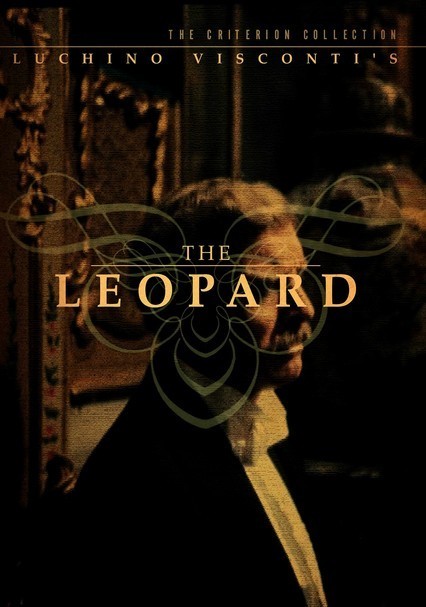
The Leopard-1963

The Leopard-1963

Director Luchino Visconti

Starring Burt Lancaster, Claudia Cardinale

Scott’s Review #991

Reviewed February 18, 2020

Grade: A

One of the great works in cinematic history, I preface this review by stating that I viewed the English dubbed version of the brilliant The Leopard (1963) starring Burt Lancaster and Claudia Cardinale.

This version is considerably shorter, at two hours and forty-one minutes, than the Italian version, which is three hours and five minutes.

As grand as the former is, my hunch is that something is lost in translation with the latter. The English version has no subtitles and is available only on DVD, so the film is difficult to follow but is rich in texture.

An interesting tidbit is that the film surgery was performed without director Luchino Visconti’s input – the director was unhappy with the editing and the dubbing. This point is valid since some voices are Italian and French, sounding too American and unauthentic.

Admittedly inferior, the English version is nonetheless extravagant and lovely on its own merits, though I would die to see the original version if it were available.

The time is during the 1860s, when the tumultuous era affected Italy and, more specifically, Sicily. Prince Don Fabrizio Salina (Lancaster) is at a crossroads between holding onto the glory he once knew and accepting the changing times, welcoming a more modern unity within the country.

A new mayor surrounds him, Don Calogero Sedara (Paolo Stoppa), who has a gorgeous daughter, Angelica (Cardinale).

He intends to marry Fabrizio’s French nephew, Tancredi Falconeri (Alain Delon).

The film dissects the changing times in Italy.

The visual treats for the viewer are astounding and by far the best part. The lovely, palatial estates are gorgeous, with decorative sets, bright and zesty colors, and meals displayed during parties that captivate audience members.

The costumes are state-of-the-art, and each frame can easily be a painting on a canvas. A tip is to pause the film, study it, and immerse yourself in its style.

Many film comparisons, both past and yet to come, can easily be made when thought about. An Italian Gone with the Wind (1939), if you will, with Angelica as Scarlett and Tancredi as Rhett (okay, the chemistry is not quite the same, but similarities do exist), and Concetta as the long-suffering Melanie, the characters can be compared.

The grand ball, the costumes, and the ravaged country are more prominent comparisons.

Nine years after The Leopard, a little film entitled The Godfather (1972) would change the cinematic landscape forever.

Director Frances Ford Coppola must have studied this film, as there are plentiful scenes of the Italian landscape and the culture in which both are immersed. Even snippets of the musical score mirror each other.

What a grand film to borrow and cultivate from!

Despite all the beautiful trimmings that make The Leopard a masterpiece, the film belongs to Lancaster in the best role of his career. The hunk in 1953’s From Here to Eternity, as the Prince, he is aged to perfection, distinguished-looking with graying sideburns.

The film is an epic extravaganza, and the actor leads the charge, carrying the film. He is a stoic man, but not without fault and emotion, wearing his heart on his sleeve, realizing that he must adapt to the changing times. We feel his quandary and embrace the character as a human being.

Attention-paying fans must be forewarned that the plot is basic and complex because of the absence of subtitles; however, the story is not highly complex.

The story is about how the Prince maneuvers his family through troubled (and changing) times to a more secure position. This is the overlying theme of the film.

Suffering from dubbing and quality control issues can do nothing to ruin a spectacular offering that is a cinematic gem and testament to the power of The Leopard’s (1963) staying power.

I eagerly await the day when the traditional Italian version can be found and discovered. It will be a treat to eat.

Until then, the film is a historical epic that can be appreciated for the dynamics and importance it so richly deserves.

Oscar Nominations: Best Costume Design, Color