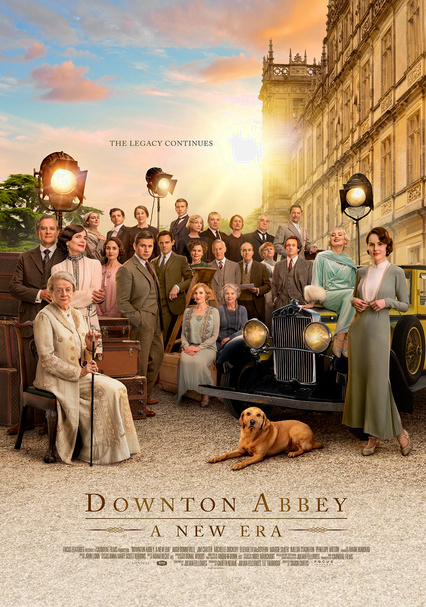
Downton Abbey: A New Era-2022

Downton Abbey: A New Era-2022

Director Simon Curtis

Starring Hugh Bonneville, Michelle Dockery, Maggie Smith

Scott’s Review #1,261
Reviewed May 30, 2022

Grade: B+

Following the success of the 2019 film adaptation of the television series Downton Abbey, which aired on PBS from 2010 to 2015, a sequel was produced. This was unsurprising, given that the fan-favorite was both critically and commercially well-received.

Downton Abbey: A New Era (2022) will undoubtedly please fans of the series and may even attract new audiences who have not yet been exposed to it.

The trials and tribulations of the Crawleys, their friends, and staff are a treat as new situations and drama arise for the group to navigate, discussed over tea and crumpets.

The film is like visiting a cherished friend after a long absence.

Award-winning creator Julian Fellowes is thankfully still involved and was given screenwriting credit. This means that the formula is still the same, and nobody has tried to reinvent the wheel or veer the characters off course.

The year is 1928.

The main action centers around the sudden news that grand dame Violet Crawley, Dowager Countess of Grantham (Maggie Smith), has inherited a villa in the south of France from a former suitor who has just died. Some of the family must travel to France and figure out the mystery.

Secondly, A film production company requests to use Downton for a silent film. Robert (Hugh Bonneville) and retired butler Mr. Carson (Jim Carter) disapprove. Still, Robert’s eldest daughter and estate manager, Lady Mary Talbot (Michelle Dockery), says the income would cover the cost of replacing Downton’s leaking roof.

The household staff is eager to see the film stars and scrambles to make things as lovely as possible for the incoming actors.

The terrific thing about Downton Abbey: A New Era is that nearly all of the almost thirty principal characters are given some storyline.

Plus, there are a handful of new characters to give screen time to.

Surprisingly, as in Downton Abbey (2019), the main ‘super couple’, servants Anna (Joanne Froggatt) and Bates (Brendan Coyle) are given almost nothing to do. They are seen, but their child is not, and some drama would have been nice. Perhaps a mysterious illness or a malady for the couple to endure?

Maybe next time.

Still, everyone else is represented, and the feeling for viewers is warm and fuzzy.

Below are some highlights.

Robert frets at the possibility that he may be half French and his birth a result of a tryst between Violet and the villa owner. Mary’s absent husband allows for a flirtation to develop between her and a member of the film.

Gay butler Thomas (Robert James-Collier) finds himself pursued by the film’s big star.

Cora (Elizabeth McGovern) keeps a health secret, while a bedridden Violet’s health declines in bed. Newlywed servants Daisy (Sophie McShera) and Andy (Michael Fox) scheme to unite his lonely father with the cook, Mrs. Patmore (Lesley Nicol).

Finally, Miss Baxter (Raquel Cassidy) eagerly awaits a marriage proposal from nervous Mr. Molesley (Kevin Doyle).

In addition, new characters, such as actors Guy Dexter (Dominic West), Myrna Dalgleish (Laura Haddock), and director Jack Barber (Hugh Dancy), are instant fan favorites, immediately connecting with the mainstay characters.

This is ingenious writing that can serve as a valuable lesson for any soap opera writer. Always write new characters by sharing stories with existing ones rather than writing in silos. It works wonders.

The historical relevance of approaching the 1930s is not missed, as ‘talkies’ taking over the film industry meant the kiss of death for most silent film stars.

The popular LGBTQ+ storyline is wonderfully written. A gay man in 1928 was doomed to either a life of hiding or one of loneliness, and one character wisely references a ‘cruel world’ regarding the viewpoint of the lifestyle.

Times were not changing just yet.

I am crossing my fingers that a third Downton Abbey film will be made. The characters and storylines remain vibrant, especially as the timeline progresses into the 1930s and the dire 1940s, when World War II breaks out.

Downton Abbey: A New Era (2022) proves that in the COVID-19 era, a trusted old friend is needed tremendously, even on the silver screen.

Unbreakable-2000

Unbreakable-2000

Director M. Night Shyamalan

Starring Bruce Willis, Samuel L. Jackson

Scott’s Review #1,260

Reviewed May 29, 2022

Grade: A-

Following the brilliant and massive critical and commercial success of The Sixth Sense (1999), M. Night Shyamalan hit his stride and became a household name for blending supernatural and psychological elements into a web of compelling storytelling.

Following 2002’s Signs, credibility tapered a bit, but Unbreakable (2000) is an overlooked gem falling in the shadows of The Sixth Sense, which everyone remembers best when they talk about the director.

The Sixth Sense and Unbreakable are also strong counterparts because they both star Hollywood legend Bruce Willis, who, it can be argued, began to gain respectability within the industry with the former.

He continues his superior acting and calm character approach.

Unbreakable is part thriller, science fiction, and superhero film, so I have categorized it accordingly.

It’s part of an Unbreakable film series and was followed by Split (2016) and Glass (2019), which took years to develop and were decent if underwhelming projects.

Unbreakable is by far the best of the bunch.

David Dunn (Willis) is a regular guy who works as a security guard at a college football stadium. He is a former star college quarterback whose dreams of stardom never materialized because of a car accident.

He lives a somewhat melancholy yet decent life with his wife, Audrey (Robin Wright), and son Joseph.

One day, David boards a train. The train experienced a devastating derailment with an enormous casualty number. David awakes in the hospital to find that he is the sole survivor of the wreck. He is left unscathed.

Elijah Price (Samuel L. Jackson) arrives on the scene as a mysterious comic book expert who takes a liking to David and his experience. He offers a bizarre explanation as to why David escaped without a single scratch that counters Elijah’s health- he is a frail man who is constantly at risk of breaking his bones.

Elijah and Joseph begin to believe that David is a superhero. At first, David rebuffs this notion but slowly begins to realize he has extrasensory perception.

What is the link between David and Elijah?

I’m not always a big superhero fan, and sometimes the storylines are riddled with cliches, stereotypes, and predictability.

But Unbreakable is fascinating and unpredictable. It’s also dark and cerebral, with a surprise ending, leaving me to summarize it as a different sort of superhero film with layers of cool elements.

It’s a non-traditional superhero film, and I love that quality.

There’s a suspension of disbelief, of course. The idea that one character can rig a train accident and other crimes is a bit of a stretch. Still, the characters David and Elijah are compelling enough that I forget those pesky little plot holes and enjoy the experience.

If the story sometimes falters, the riveting train sequence more than makes up for it. We see David quietly enjoying the train ride until all hell breaks loose.

The shattered glass, derailment, and chaos are fabulous entertainment, as well as a source of wonder about what comes next and what the sequence means for the rest of the story.

There are plenty of twists and turns in Unbreakable.

Almost as riveting, though in a different way, is the opening scene of Unbreakable, which will immediately grab the viewer.

It is 1961, and an African American woman is told that her baby’s arms and legs are broken. This is later a key to the story, but at this time, we know not what this intrigue has to do with anything.

Unbreakable (2000) is incredibly fresh and original. It can easily be watched as a double feature with The Sixth Sense, but it is nothing like that film except for its director and actor.

But, they are M. Night Shyamalan’s best films, and Unbreakable provides tremendous thought and conceptualization while creating daring camera work long remembered after the first viewing.

The Talented Mr. Ripley-1999

The Talented Mr. Ripley-1999

Director Anthony Minghella

Starring Matt Damon, Jude Law, Gwyneth Paltrow

Scott’s Review #1,259

Reviewed May 27, 2022

Grade: A

The Talented Mr. Ripley (1999) is a psychological thriller that is Hitchcockian and would make the famous director, the esteemed Alfred Hitchcock, damned proud.

The film features suspense, thrills, mystique, and great writing, and is an exceptional adaptation of Patricia Highsmith’s 1955 novel of the same name.

A fun fact is that Highsmith also wrote the novel that Hitchcock’s 1951 film Strangers on a Train was based on.

In my opinion, the title role is the best of Matt Damon’s lengthy career, rivaling that of his debut in Good Will Hunting (1998), also a tremendous effort.

His riveting portrayal showcases that he plays several layers simultaneously: calculating, sinister, vulnerable, jealous, and unhinged.

Sometimes all at once.

He was shockingly omitted from the Best Actor Oscar list, which is unforgivable considering his great work. Instead, he was nominated in later years for lesser films like Invictus (2010) and The Martian (2016).

With his blonde, clean-cut hairstyle, short and parted on the side, and big, studious glasses, he is half wholesome and half creepy.

The fact that the character is gay is icing on the cake and delicious for a film set in the 1950s, when having an alternative lifestyle was strictly forbidden.

The setting is mainly the lavish, sunny coastal Italy of the late 1950s. Tom Ripley (Damon) craves a lifestyle of luxury and manipulates his way into the life of wealthy playboy Dickie Greenleaf (Jude Law).

When Dickie’s father asks Tom to bring his errant son back home to America, Dickie, and his beautiful expatriate girlfriend, Marge Sherwood (Gwyneth Paltrow), never suspect the dangerous extremes to which Ripley will go to make their lifestyle his own.

The best part of The Talented Mr. Ripley is the compelling suspense and the twists and turns that result. It’s astounding how many layers the plot has without the experience feeling confusing or poorly paced.

Speaking of the pacing, this is another achievement of the film. Director Anthony Minghella wisely quickens the pace from the snail’s pace of his earlier film The English Patient (1996), which I loved.

We immediately learn a great deal about Tom and how he makes his living by charming people and forging signatures to make ends meet.

His innocent deceit soon turns fatal as he spirals downward and becomes a pathological liar and sociopath in addition to a cold-blooded murderer.

Law is tremendous as Dickie, and the bold character is ambiguous in his sexuality, while Tom’s is clearer. I love this about Law’s character. He is handsome and a ladies’ man, which would make him ripe for the picking for a closeted gay man in the 1950s to become enamored.

The key to ponder is whether the feeling is mutual. This remains ambiguous.

The acting, superior in every way, is made all the richer by the film’s character study, which cleverly dissects the relationship between Tom and Dickie.

The best scene occurs on a small boat as tensions reach a crescendo between the two men. This results in dire activity.

Besides the opening in New York, the rest of the story is set in Italy and is mostly shot on location. This only enhances my enjoyment of the film because it showcases the Mediterranean and southern Italy more than the more familiar cities.

Not to disappoint, astounding sequences in Rome and Venice do occur.

Because of the cinematography and locales, the film has a glossy, polished look, which is terrifically counterbalanced by the story’s darkness.

Think American Psycho (2000), but more subdued with a larger budget.

The Talented Mr. Ripley (1999) is one of the best to emerge from a terrific decade in cinema. It is not as well remembered as some others, but I strongly encourage a watch to uncover a series of riches driven by bold storytelling.

Oscar Nominations: Best Actor in a Supporting Role-Jude Law, Best Screenplay Based on Material Previously Produced or Published, Best Art Direction, Best Costume Design, Best Original Score

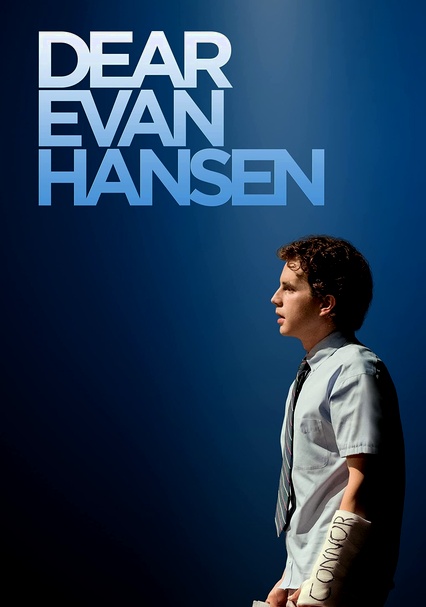
Dear Evan Hansen-2021

Dear Evan Hansen-2021

Director Stephen Chbosky

Starring Ben Platt, Kaitlyn Dever, Amy Adams

Scott’s Review #1,258

Reviewed May 25, 2022

Grade: A-

From the very first scene, Dear Evan Hansen (2021) grabbed me by the collar and never let me go. Providing an emotional wallop that mixes perfectly with meaningful and catchy pop songs, the film is one that nearly everyone can relate to.

The oftentimes painful world of teenage angst is the central storyline, and the dangerous and unfortunately too timely pandemic of mental illness is examined in heartwrenching form.

Dear Evan Hansen has a relevance that I found to be powerful and profound, leaving me not soon forgetful of the experience.

I had never seen the hugely popular Broadway stage version, so I only had a limited understanding of what the story was about going in.

Still, as much as the subject matter is of great importance, the film’s follow-through is what is tremendous and emotional, with superb acting all around.

Tony, Grammy, and Emmy Award winner Ben Platt reprises his stage role as the anxious, isolated high schooler named Evan Hansen who craves companionship and understanding.

He suffers the same quandary that many fellow teenagers face in a world rendered impersonal and heartless. He tries to survive the pressures and the chaos of the social-media age.

Lonely, he meets a young man named Connor Murphy (Colton Ryan) who is as wounded as Evan is. They have an odd first (and only) exchange after which Connor steals a therapy assignment of Evan’s, a letter to himself.

Soon after, Connor commits suicide, and his parents, played by Amy Adams and Danny Pino, assume that the boys were best friends.

Evan lies about the events to spare Connor’s parents, which ultimately leads to events spiraling out of control.

I’m well aware of the outpouring of negative reviews that have been hurled at the film, and I don’t understand nor agree with any of them.

My hunch is that the stage version may have been even more potent because it’s a live production and the raw emotion is right there, but the film does right by it.

Sure, Platt looks older than a teenager. The actor was twenty-seven years old when he filmed Dear Evan Hansen and a mere twenty-two or so when it appeared on Broadway, but so what? With talent as superior as he is, why cast a movie star?

I didn’t hear anyone complain when Olivia Newton-John played the iconic role of Sandy, a seventeen-year-old in Grease (1978) at the ripe old age of thirty.

Sometimes a suspension of disbelief is required.

Platt is a terrific casting choice and encompasses the role of Evan completely. He is shockingly good in dramatic scenes or when he comically fumbles over his words. His dramatic voice perfectly infuses the production’s most recognizable number You Will Be Found.

Besides, there are big stars in Dear Evan Hansen. Amy Adams plays the emotionally drained but hopeful Cynthia Murphy, blessed with affluence at the price of losing a son. Julianne Moore plays the haggard nurse and financially struggling mother of Evan.

Both are fabulous.

The film is directed by Stephen Chbosky, who is responsible for the terrific and sorely underappreciated film adaptation of the novel The Perks of Being a Wallflower (2012), which he also wrote. He knows how to tell a coming-of-age story.

There are a couple of foul balls to be aware of, but the emotion to be felt far exceeds these pesky matters.

The film occasionally overplays its casting with the inclusion of a few stock characters, like the Indian technology wizard and the perky, straight-A student with the same problems as everyone else. Still, the characters don’t have enough to do to make them bothersome.

The chemistry between Platt and Kaitlyn Dever as the romantic interest is only tepid, but I didn’t watch this film for the teen romance.

I could not disagree with the torrent of negative reviews for Dear Evan Hansen (2021) more, and urge anyone reading this review to take in the film and be prepared for a tearjerker that feels authentic and justified in its existence.

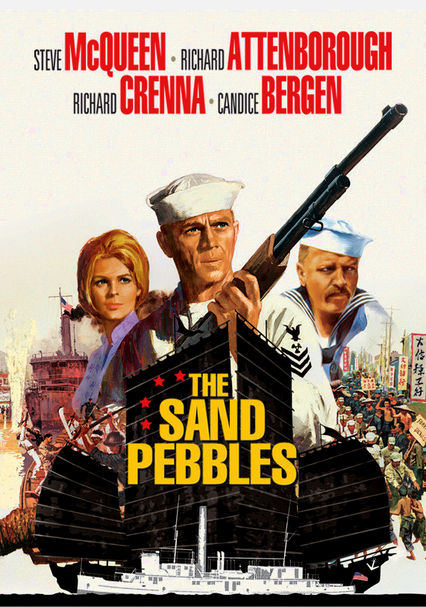
The Sand Pebbles-1966

The Sand Pebbles-1966

Director Robert Wise

Starring Steve McQueen, Richard Attenborough

Scott’s Review #1,257

Reviewed May 18, 2022

Grade: A-

The 1950s and 1960s can collectively be defined as the two decades that represent the grandiose film epic: instantly recognizable, sprawling, lengthy cinematic efforts that often span a period of time.

The Sand Pebbles (1966) safely falls into this category, mainly because it’s a war film and one minute shy of a three-hour extravaganza.

The film was a critical and commercial success at its release and received several Academy Award nominations (see more below). Still, despite being a fantastic watch, it is not remembered as well as one might expect.

Something makes the film fly under the radar, and I’m unsure why. It might be that an anti-war message film was not as typical as it would become. In 1966, a United States movement had only begun to question the government and war in general.

It wasn’t fantastic or acceptable yet.

Robert Anderson adapted the screenplay from Richard McKenna’s 1962 novel, which is very similar.

Robert Wise, famous for directing the memorable The Sound of Music just a year earlier in 1965 and the legendary West Side Story in 1961, is at the helm, delivering superior direction, especially in the exterior and lush, oceanic sequences.

Star Steve McQueen was at the height of popularity when this film was made, which undoubtedly helped get butts in the seats to drool over the blue-eyed actor in his Navy attire.

The Sand Pebbles has a heavier touch and promotes an anti-war viewpoint from its main character. Therefore, it delivers a strong message alongside the expected elements of a war film.

It’s similar to The Bridge on the River Kwai (1957), made nearly a decade earlier.

The Asian locales and the parallels with the controversial Vietnam conflict of the time will not be lost on the viewer.

We go back to 1926 when the USS San Pablo was patrolling the Yangtze River during the clashes between Chiang Kai-shek’s communists and Chinese warlords.

Eight-year veteran machinist Jake Holman (McQueen), new to the self-named “sand pebbles” crew, immediately draws suspicion because of his independent streak.

Ordered to protect Americans, including schoolteacher Shirley Eckhart (Candice Bergen), Jake and the gunboat crew are unwittingly drawn into a bitter nationalistic feud that holds grim consequences.

Besides his unforgettable turn in The Getaway in 1972, this is McQueen’s finest role, and I’m not the biggest fan of his, nor do I think he is the most outstanding actor.

He has tremendous material to work with in The Sand Pebbles and hits all the right notes throughout. The character is rootable and relatable.

The film also presents a fascinating look at Navy life with the camaraderie and depth of the supporting characters.

There is comedy and drama, and the additions of Richard Attenborough and Richard Crenna are stellar.

Naturally, Bergen is McQueen’s romantic love interest, as Shirley and Jake have fledgling feelings for each other.

Though the film ends abruptly, there is enough pain, death, and confusion to leave the viewer thinking afterward, and I always champion that aspect of the film.

The Sand Pebbles (1966) is an underrated production that simmers beneath some other classics from the same decade but is a terrific watch for many reasons.

Despite its timeliness, it has an old-world feel, representing a foray into the dangerous early-1970s cinema history that is yet to come.

Oscar Nominations: Best Picture, Best Actor-Steve McQueen, Best Supporting Actor-Mako, Best Art Direction-Color, Best Cinematography-Color, Best Film Editing, Best Original Music Score, Best Sound

Golden Globe Nominations: 1 win-Best Motion Picture-Drama, Best Director-Robert Wise, Best Actor-Drama-Steve McQueen, Best Supporting Actor-Richard Attenborough (won), Mako, Best Screenplay, Best Original Score, Most Promising Newcomer-Female-Candice Bergen

Antlers-2021

Antlers-2021

Director Scott Cooper

Starring Keri Russell, Jesse Plemons

Scott’s Review #1,255

Reviewed May 13, 2022

Grade: B+

Antlers (2021) is a film co-produced by Guillermo del Toro, who is famous for dark, humanistic treasures like Pan’s Labyrinth (2006) and the Oscar-winning The Shape of Water (2017).

His name attached to the project conjures images of supernatural and otherworldly creations, along with some murky elements. While the film does contain his influence, if looked at carefully, it’s in a tepid way, and I wouldn’t call it a del Toro-type film.

But it’s not as if he directed it either; he only helped fund it. Scott Cooper, known for films like Crazy Heart (2009) and Black Mass (2015), which are both very good, does a fantastic job of incorporating horror elements and impressive cinematography to create a bleak and grey atmosphere that is perfect for horror.

The plot is the weak point in an otherwise exceptional offering. The story has a standard setup and unsatisfying ending, except for an attempt to set the stage for a potential sequel.

Because of the COVID-19 pandemic, Antler’s release date was postponed twice and flew under the radar, as many films did in the early 2020s.

Plus, star Jesse Plemons received an Oscar nomination for The Power of the Dog (2021) by the time the film hit the screens, so it’s doubtful he’d make a return appearance.

I’m not sure the film is good enough to warrant a follow-up, but I did thoroughly enjoy the perfect trimmings and quality acting, even though the story didn’t completely satisfy me.

The film is based on the short story The Quiet Boy by Nick Antosca.

The action is set in a rural, isolated Oregon town where a middle-school teacher (Keri Russell) and her sheriff brother (Plemons) become entangled with her taciturn student Lucas (Jeremy T. Thomas), whose dark family secrets lead to terrifying encounters with a legendary ancestral creature known for creating debauchery.

The dazzling cinematography by Florian Hoffmeister perfectly encapsulates the setting of the Pacific Northwest, making it appear grim and constantly cloudy. The foreboding presence is only enhanced by incorporating a dark mine as the main set, where the dire events unfold.

Russell does a fine job carrying the film, and Cooper and the team provide a character-driven approach to the story. Julia has returned to her hometown after the suicide of her father, who we quickly learn was abusing her as a little girl.

She bonds with Lucas, who is also abused, and this portion of the story works well. We get the bond, and they connect well. He’s got a different set of daddy issues, though, since his wolf-like papa salivates at the sight of him and is diseased from an incident in the mine.

But the Julia/Lucas relationship ultimately has very little to do with a wild creature running around killing a student and a principal. A quick scene involving a local townsperson explaining an ancient curse is uninspired, even if Graham Greene plays him from Dances With Wolves fame (1990).

I was more invested in the Julia and Paul raising Lucas angle and what comes next over the silly folklore curse that we’ve seen countless times in films.

The texture of Antlers easily earns it a solid B+ rating because it’s spooky and scary in some sequences. When Julia and Principal Ellen (Amy Madigan) separately approach the run-down Weaver house, the camera follows the characters, making the audience feel like they are the ones entering the house.

We know bad things will soon happen, and that makes it fun.

Because of the excellent camera work and use of lighting, I’d never want to set foot in Cispus Falls.

As an aside for every film writer out there, it’s time to discard the anti-LBGTQ slurs once and for all. Aren’t we beyond this? Can’t we write one character calling another a ‘loser’ and leave it at that?

The visceral style of Antlers (2021) is more than enough reason to recommend it. A straight-ahead supernatural horror film with a grim veneer is the reason to see it.

The ho-hum story is somewhat secondary.

The Phantom of the Opera-1962

The Phantom of the Opera-1962

Director Terence Fisher

Starring Herbert Lom, Michael Gough, Heather Sears

Scott’s Review #1,254

Reviewed May 12, 2022

Grade: B+

It’s not the best-known film adaptation of Gaston Leroux’s famous 1910 French novel, but it is the most horrific.

Hammer Horror Productions’s acquisition of this is a significant win since the story is ideally suited for the horror genre.

I’ve not yet seen the 1925 silent film version of The Phantom of the Opera starring Lon Chaney, which I hear is terrific, so I cannot compare that to this.

The possibilities for a macabre telling are endless. Terence Fisher, a familiar director in Hammer films, is back at the helm to mix the dreariness of a musty London theater with the creepy face mask of its lonely and wounded inhabitant.

I’ve said it before, but it bears repeating in this review: The horror films achieved astounding achievements by making lemonade out of lemons budget-wise. The limited funds necessitated creativity, seen in every series frame, especially the colorful sets and costumes.

The Phantom of the Opera (1962) is no different and even better than some others in the brilliant mix of mood and sympathy for its primary victim, specifically the luminous and disfigured ‘phantom’ played by Herbert Lom.

Dastardly Composer Lord Ambrose D’Arcy, wonderfully played by Michael Gough, and his bullied backer, Harry Hunter (Edward De Souza), struggle to find a replacement for the female lead in their new opera after she quits and flees town in the wake of a gruesome theater murder.

When a new prospect, the virginal Christine Charles (Heather Sears), disappears after the advances of Ambrose, Harry cautiously investigates, unaware that there is a lonely figure inhabiting the theater.

Meanwhile, a mysterious masked man (Lom) who is eerily familiar with the opera holds Christine captive and offers to groom her to play the part.

He is a mix of crazy and passionate, and his plight is sympathetic when what he’s been through is finally explained.

The atmosphere sets The Phantom of the Opera apart from similar films of the 1960s, even Hammer films.

This is never more evident than in an early scene when the camera follows the characters on the misty streets of London. The darkness and shadows become prominent as they walk through the streets and dark alleys.

Five years into his association with the production company, Fisher has hit his stride. A limited budget might reduce another director to a fretting basket case, but the result and ease he parlays to The Phantom of the Opera is quite beautiful.

Many scenes are set in the theater, adding a foreboding element to the events. Dusty yet brimming with musicianship and artistry, it’s fun to watch the characters sneak around and scheme within the confines of this structure.

Therefore, the mood and trimmings are exquisite without actually being so.

The music sequences are impressive without going on for too long. Although the locale is switched from Paris to London for obvious reasons, the foremost being that the actors are British, this doesn’t hamper the overall experience.

The best and most gruesome scene occurs when a poor chap swings across the theater stage in a neck rope, dead as a doornail. The creaking sound of the rope as the man swings back and forth is chilling and dubious.

Lom is my favorite actor in the film. His character’s backstory is impressive and humanistic. Who can’t relate to being cheated out of work that is rightfully theirs?

Gough, also familiar to Hammer Horror fans, is tremendous as the treacherous main villain.

Sears is okay, but perhaps not the greatest actress or best choice for the role. She’s rather bland and unmemorable.

The Phantom of the Opera (1962) falters when its ending is too sudden, and many Hammer films suffer the same fate.

This film is not for those expecting a grandiose Andrew Lloyd Webber-style musical, but for fans of down-and-dirty horror, it’s just what the doctor ordered.

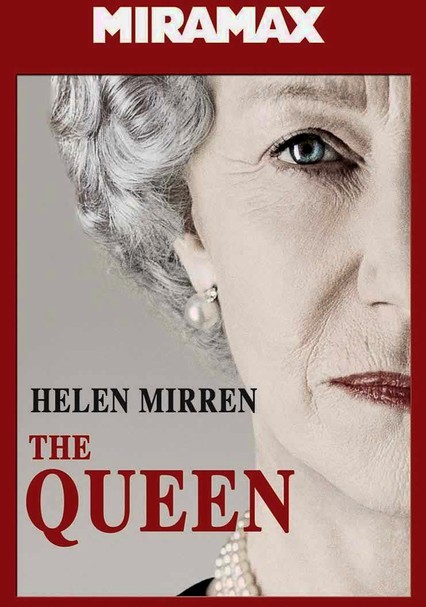
The Queen-2006

The Queen-2006

Director Stephen Frears

Starring Helen Mirren

Scott’s Review #1,253

Reviewed May 8, 2022

Grade: A

Before the Netflix series, The Crown (2016-2023), loudly stomped into existence and took the world on a historical journey through the trials and tribulations of British royalty, there was The Queen (2006).

Starring Helen Mirren, the film is a quiet telling of the life and times of Queen Elizabeth II, especially immediately after the death of Princess Diana and the conflict and contention that took place.

Ironically, The Crown was created and primarily written by Peter Morgan, who also wrote The Queen.

He created The Crown because of The Queen, so there is an instant correlation between the two brilliant projects, and the handwriting is very similar.

Stephen Frears, who also directed Judi Dench to an Oscar nomination for Philomena (2013), is at the helm and earned an Oscar nomination for directing, as well as a win for Mirren.

The Queen is a terrific film across the board, and Mirren is phenomenal in her portrayal of the grand dame. She cleverly fuses stiffness and stoicism with subtle warmth and humanity few see from the queen, at least publicly.

Layers of complexity are provided to an already mysterious public figure.

Following the death of Princess Diana in a fiery auto accident, Great Britain’s Queen Elizabeth II (Mirren) and Prime Minister Tony Blair (Michael Sheen) struggled to reach a compromise on how the royal family should publicly respond to the tragedy.

The family’s need for privacy and the public’s demand for an outward show of mourning are in the balance. It causes mayhem and drama behind the sacred walls of Buckingham Palace.

The performances by Mirren and the direction are what make The Queen pure magic and a standout among the many royalty-themed films that have emerged since the beginning of motion pictures.

First of all, Mirren looks like Queen Elizabeth II, and this goes way beyond wearing glasses and a sweater or having the same hairdo. She encompasses the role, and this is no small feat.

The mannerisms, speech patterns, and low-key attitude are the amazing nuances the actress can somehow channel.

It feels more than Mirren dressing up like royalty and showing up scene after scene. She does something much more with the queen’s unspoken looks and inner workings that becomes apparent to the viewer.

Frears chooses to include many close-ups of the characters, mainly of Mirren, which focus on what each character is thinking and pondering.

The film is very subdued, with a lovely musical score adding texture and appeal to each frame. The inclusion of archival footage lends a powerful sense of realism.

Merely nine years after the real-life death of the uber-popular Diana, the event was still so fresh in the minds of viewers that releasing The Queen at this time was a stroke of genius.

It’s no secret that while Queen Elizabeth II is respected, she is worlds away from wildly popular Diana and emits a coolness that baffles the public.

Thanks to Mirren, the public gets a glimpse into the heart and soul of a mysterious person, and that’s a good feeling indeed.

However, Mirren couldn’t have delivered fully without the talents of Michael Sheen as Prime Minister Tony Blair. Generations apart and with differing views, they spar and respect each other, slowly forging a friendship of sorts.

The Queen (2006) hardly needs bombs, bombast, or quick editing to get its point across, though speaking of editing, a fantastic job of it with family scenes of Diana.

The film lures the viewer into its web and makes them feel like an insider amongst the walls of royalty.

Oscar Nominations: 1 win-Best Picture, Best Director-Stephen Frears, Best Actress-Helen Mirren (won), Best Original Screenplay, Best Costume Design, Best Original Score

War Wolves-2009

War Wolves-2009

Director Michael Worth

Starring Michael Worth, John Saxon

Scott’s Review #1,252

Reviewed May 7, 2022

Grade: C-

Technically, a horror-television film that aired on the Syfy network, War Wolves (2009) is an abysmal experience in both filmmaking and plot.

Bad dialogue and juvenile special effects are just the tip of the iceberg in what could easily be a hard-hitting review.

But, strangely enough, even with bad films, pleasure is to be found and sometimes more than is rightly earned.

My final rating of ‘C-‘ is my gift to the film that currently rates an anemic 8% audience favorability rating on Rotten Tomatoes.

The only saving grace is the inclusion of veterans Adrienne Barbeau (Escape from New York-1981) and John Saxon (Black Christmas-1974) into the mix, though Barbeau’s character is completely throwaway.

Saxon is the co-lead, and what a treat to see the seasoned actor do his best with weak material.

The action begins on the battlefields of the Middle East, presumably Afghanistan, where veteran Jake Gabriel (Michael Worth) is cursed with lycanthropy during a gunfight. He is aware of this and struggles to suppress his inner werewolf once he quickly returns to the United States.

His military comrade and girlfriend, Erika (Natasha Alam), and other female former soldiers begin to grow fangs and develop a fancy for the taste of blood.

Jake resists, but members of his “pack” attempt to hunt him down and convert him to the more thrilling life their changes are introducing them to.

Saxon plays a commander named Tony who is sent to the States to apprehend Jake before he can infect others and is joined by Frank Bergman (Tim Thomerson), his best friend and polar opposite.

Barbeau plays a woman named Gail who talks incessantly about her deceased husband.

Hopefully, Saxon, Barbeau, and Thomerson were thrown what little monetary breadcrumbs existed in the budget for this film. They play their parts earnestly while providing much-needed professionalism.

Poor Barbeau even throws in a southern accent to her northern California-hailing character in an attempt to make her more interesting.

I’ll say one thing. The above-average acting by the veterans makes up for the tepid and wooden acting by the rest of the cast. But casting gorgeous female ‘actresses’ as military personnel has a market too.

Unsurprisingly, the plot doesn’t add up, and it’s never explained why Jake is infected in the first place or what anyone’s motivations are besides the obvious infecting and destroying the infecters.

The pale attempts at below-the-surface humanistic connections either go nowhere or result in the reaction of ‘who gives a shit, let’s see more blood’!

Worth mentioning is that star Michael Worth also directs the film.

A better title than War Wolves would have been desirable. Although a humorous take on the word ‘werewolves’, it doesn’t roll off the tongue very well and conjures images more aligned with parody versus seriousness.

Unfortunately, Worth doesn’t play the film for laughs, and it’s meant to be taken seriously, at least on paper.

Tony and Frank have experienced this mission before, and it causes Tony to be estranged from his family, a weak attempt at creating humanistic drama that never goes anywhere other than one conversation with an unseen family member from a pay phone.

I daresay the film is a load of fun, providing some unintended laughs, especially in the final act.

When the female pack appeared with cute, tiny brown noses, with matching pointy ears, and uttered demonic dialogue to appear threatening, I roared with laughter.

War Wolves (2009) is a film focused on the werewolf genre that is merely a blip on the radar and is probably forgotten already.

It’s not my favorite horror sub-genre of all time, but I’d still list The Wolf Man (1941) and An American Werewolf in London (1981) as the best entries.

But, for the 12:30 a.m.-to 2 am timeslot on a boozy Saturday night, War Wolves is an appropriate fit.

Really bad movies can be fun too.

The Pacifier-2005

The Pacifier-2005

Director Adam Shankman

Starring Vin Diesel

Scott’s Review #1,251

Reviewed May 1, 2022

Grade: C

The Pacifier (2005) is the kind of film that has been made for decades in one form or another.

The setup is familiar and puts its macho movie star in situations that go against type or are deemed a bit feminine, and lightweight, all for the sake of a laugh.

From Jack Lemmon and Tony Curtis donning women’s clothing in Some Like It Hot (1959) to Michael Keaton in Mr. Mom (1983) to Arnold Schwarzenegger in Kindergarten Cop (1995), there is a pattern to follow.

And those are just the decent films.

In 2005, the sexy Vin Diesel was one of Hollywood’s highest-grossing leading men, churning out hits like Boiler Room (2000) and The Fast and the Furious (2001) to rabid audiences.

Known primarily for his action films, the muscular star had the bright idea to domesticate himself and put himself in a situation where he would comically change baby diapers or vacuum a living room.

Unfortunately, The Pacifier is juvenile in nearly every way, with canned gags and predictability for miles. Diesel is terrific to look at, but he isn’t the best actor in the world, which undermines the film’s credibility.

Despite cliché after cliché and ridiculous situations, the film will occasionally elicit a chuckle or two from anyone brave enough to watch it.

That’s mostly because Diesel is willing to emerge in one scene covered in shit. But don’t expect much more from The Pacifier.

Shane Wolfe (Diesel) is an elite Navy SEAL with muscles and charisma for miles. He is the type of man who would run into a fire and save a baby or swim out to sea to save a drowning child.

One day, he makes a grave error in judgment when he fails to keep scientist Howard Plummer (Tate Donovan) safe from assassination, and the man is killed.

Riddled with guilt, he is assigned to protect Plummer’s five children when the mother, played by Faith Ford, needs to leave the country temporarily. The kids include rebellious Zoe (Brittany Snow), Seth (Max Thieriot), and clingy Lulu (Morgan York).

The kid’s pet duck is along for the ride, pushing the seasoned veteran to his breaking point.

Predictably, when Shane is not busy tending to the kids, there is a secret project contained somewhere in the household that he must uncover.

Of course, a film like The Pacifier requires some romance, so the inclusion of Principal Claire Fletcher (Lauren Graham) is for the sole purpose of having someone for Shane to fall in love with.

There is not great chemistry between Diesel and Graham, so I wasn’t invested in them. The casting of the children is so one-dimensional with standard characteristics that it would be easy to laugh at.

I chose not to do this but rather strove to find something enjoyable in The Pacifier.

It’s a cute film, but it’s so mainstream, dull, and generic that it deserves the bland grade of C I am awarding it.

Diesel is the only appealing factor to The Pacifier.

Why make the bad guys as stereotypical as possible? They are North Korean, and the ‘twist’ that Shane’s boss is in cahoots with them is as surprising as realizing the two-week-old Chinese leftovers in the fridge have gone bad.

The film makes a small comparison to the superior The Sound of Music (1965), which the filmmakers must have realized, as they incorporate it into the story. The kids that Shane is in charge of are behaving badly and attempting to play a practical joke on him.

In the end, there is a chase sequence, a reveal, peril, and a happy ending in more or less that order.

The Pacifier (2005) is a Disney film, so there is a safe, family-friendly vibe throughout. It marginally entertains largely on the strength of Diesel.

He is sexy and macho, and has enough charisma to make you forget the bevy of standard gags and silly situations he and the audience must endure.

The Object of My Affection-1998

The Object of My Affection-1998

Director Nicholas Hytner

Starring Jennifer Aniston, Paul Rudd

Scott’s Review #1,249

Reviewed April 24, 2022

Grade: B

The Object of My Affection (1998) is a romantic comedy riddled with the standard clichés and obvious plot setups of similar films.

As a whole, it is plot-driven rather than character-driven.

The redeeming factor is that it takes a left-of-center approach and delves into LGBTQ territory, albeit in a soft-touch way, which more mainstream American films were only starting to do in the late 1990s.

The best part of the film is the casting of Jennifer Aniston and Paul Rudd, who have tremendous chemistry as a potential couple who have no chance of riding off into the sunset together.

At least in any romantic sort of way. He is gay, and she is straight, and nothing can change that.

Though fluffy, The Object of My Affection deserves some level of praise.

Several gay men can easily relate to a situation where they find a female friend who is enamored with them and experience a return of affection differently.

It’s common to fantasize about what might have been if feelings had been different, and, as the film explores, even to try to go straight.

The film itself has a definite Will & Grace vibe, a popular television program emerging at this time, and even has the same location. The main characters become the very best of friends, watching movies together and sharing intimate moments, just like a romantic couple would.

The late 1990s were a time when gay characters took center stage, so The Object of My Affection gets a thumbs up for being part of the herd.

Nina Borowski (Jennifer Aniston) lives in Brooklyn, New York, and works as a social worker. She invites her new gay friend, George (Paul Rudd), to move into her apartment after he breaks up with his longtime lover, Robert (Tim Daly).

Meanwhile, Nina gets pregnant and decides to keep the baby, but ends her relationship with the child’s father, her controlling boyfriend Vince (John Pankow).

As Nina and George live and experience her pregnancy together, they grow close, and Nina realizes she’s beginning to fall in love with her friend.

Aniston and Rudd work well together as a couple, as friends, or otherwise, and the chemistry is terrific. Even during the sappiest of scenes, and there are many of them, I always smiled a bit at their bond.

When Nina and George have the inevitable dramatic scene and express their feelings, it doesn’t feel as forced as one might expect. Their bond is solidified, and the film unsurprisingly has the pair remain in each other’s lives, presumably forever.

In satisfying form, Nina and George do ride off into the sunset along with little Molly, but in solid relationships with other mates. Each character finds their destiny and soulmate while keeping in each other’s lives.

While nice, there are many hurdles the filmmakers could have gone further with, but don’t. The message is clear- regardless of sexuality, race, religion, or politics, a friend is a friend and a bond is meant to be forever.

It’s a warm message that is the basis for what the intent was, and the film delivers a heartfelt story that eases the conflict of real life, and perhaps that is needed sometimes.

As much as The Object of My Affection (1998) has its heart in the right place with a progressive and inclusive slant, the film is bogged down by clichés and a fairy-tale ending.

It’s a nice, fulfilling fantasy film, but skates over hard-hitting, realistic issues in favor of kid-glove-type situations, making it feel dated nearly twenty-five years later.

Other films in the years ahead would supersede the premise and take it to different, more interesting levels, delving further and further outside the box.

But, a nice attempt.

National Lampoon’s Christmas Vacation-1989

National Lampoon’s Christmas Vacation-1989

Director Jeremiah S. Chechik

Starring Chevy Chase, Beverly D’Angelo

Scott’s Review #1,248

Reviewed April 23, 2022

Grade: A-

Made several years after the first in the National Lampoon’s Vacation series (1983-2015), the inevitable production of National Lampoon’s Christmas Vacation (1989) is my personal favorite of the bunch and the most laugh-out-loud.

Silly personified, but the jokes work, and the enjoyment carries throughout the entire running time.

In retrospect, you knew they were going to do it. What better fodder for the bumbling Griswold family than to have them reunite with extended family on such a seasonal holiday?

The gags and awkward situations are ripe for the picking, as situation after setup is done exceptionally well and with grand humor.

The silliness works, and the film is a recommended watch with the family gathered around the holidays.

Viewers can either relate directly to the film or inevitably know families that resemble the incompetent yet lovable Griswolds.

As the holidays approach, Clark Griswold (Chevy Chase) is determined to have a perfect family Christmas. He motivates his wife, Ellen (Beverly D’Angelo), and their children to ensure everything is in order, including the tree and house decorations.

Naturally, things quickly go awry in the greatest of humor.

His hick cousin, Eddie (Randy Quaid), and his family show up unplanned and start living in their camper on the Griswold property.

Even worse, Clark’s employers renege on the holiday bonus he needs, causing a great deal of stress for the family patriarch.

For starters, the film has a cool holiday vibe. The setting is wisely the Midwest United States, somewhere outside of Chicago, Illinois. Snow is to be found everywhere, and Christmas decorations and lights are lit all over the place throughout the film.

This creates a suburban, homey atmosphere that is warm and friendly.

Most viewers can snuggle up by a warm fireplace with delicious hot cocoa and enjoy the film. The environment is one of the finest achievements in National Lampoon’s Christmas Vacation.

A classic moment and the film’s funniest scene occurs when Clark excitedly decorates the inside and outside of the house to the nth degree and blows the town’s electric circuit as a result, leading to uproar among his neighbors.

Proud Clark’s ego is suddenly deflated, and the man must rise above it all to somehow enjoy his family Christmas.

Watching the film decades after its release is still great fun as a nostalgia offering. The tacky Griswold Ford LTD station wagon with paneled siding is garish and unsightly (then and now), and anyone growing up in the 1980s can easily recall suburban families piling into this gas-guzzling car.

Not every aspect works perfectly in National Lampoon’s Christmas Vacation, like the unappealing yuppie neighbors Todd and Margo (played by Nicholas Guest and Julia Louis-Dreyfus) or Eddie and his redneck family.

These roles are a bit too over-the-top and secondary inclusions to be the major win the film is.

The real wins from the supporting cast are Clark’s immediate family. His parents and Ellen’s parents are perfectly cast and provide excellent comic timing and seasoned wit.

Special notice goes to John Randolph, Diane Ladd, and Doris Roberts.

And who won’t fall in love with Clark’s senile Aunt Bethany, played with hilarity by Mae Questel (the voice of animated Betty Boop and Olive Oyl)?

Predictably, and well-intentioned, all the Griswold problems quickly fade away when Clark receives his annual Christmas bonus after all, and all characters have a lovely send-off while singing ‘The Star-Spangled Banner’ just in the odd way that the Griswolds would do.

National Lampoon’s Christmas Vacation (1989) used to be a traditional Christmas viewing for me, but it has shamefully fallen out of favor over the years.

It might be time to dust off this forever gem that provides laugh after laugh, fun, and togetherness for the whole family.

Madagascar-2005

Madagascar-2005

Director Eric Darnell, Tom McGrath

Voices Ben Stiller, Chris Rock, David Schwimmer

Scott’s Review #1,247

Reviewed April 17, 2022

Grade: B-

Madagascar (2005) is a film that I found mildly entertaining but struggled to enjoy as much as others might.

Films with a target audience of ages thirteen and under are a tough sell for me because I don’t see them very often.

Having no children, I have few opportunities to join in on the children’s games or sit at the kiddie table and get in that mindset.

Nonetheless, this film somehow crossed my radar.

It’s lighthearted and juvenile, but playfully fun, sending a positive message of friendship and dedication. Not a fan of the zoo at all, my curiosity was piqued at how this angle would be represented, if at all.

Would the zoo’s captivity face off against the natural African wildlife?

The screenwriters tread carefully, keeping their audience in mind, and don’t go for any deep messages or environmental or animal issues, playing it quite safe.

Madagascar suffers from blandness and predictability, knowing that the audience isn’t quite ready to think outside the box, and their parents will obediently sit beside them, watching the film.

The result is a film brimming with possibilities that it never realizes. It’s a ready-made family film and nothing more.

Alex the Lion (Ben Stiller) is the king of the urban jungle and the main draw at New York’s Central Park Zoo.

He and his best friends, Marty the zebra (Chris Rock), Melman the giraffe (David Schwimmer), and Gloria the hippo (Jada Pinkett Smith), have spent their lives at the zoo, with admiring fans and tasty meals provided for them.

In their minds, they have it pretty good.

Yet Marty yearns for more and lets his curiosity get the better of him when he escapes the zoo to explore the world.

He and his friends wind up aboard a ship back to Africa, are then shipwrecked on Madagascar, and are left to fend for themselves in the wild.

They face dangers and allies during their adventures and wrestle with whether to return to the zoo or remain in their natural habitat.

There is plenty of humor to occupy the crowd, but most of the jokes are tepid or fall flat altogether. They have very little substance to offer, but rather are silly gags meant to keep the adventure going.

Big stars like Rock, Schwimmer, and Stiller are cast most likely to appeal to parents forced to go to the show with their kids.

Recognizable voices always sell tickets in the animated world.

Secondary characters work better than the main cast. Sacha Baron Cohen as King Julien XIII is a standout.

Mildly entertaining and soft touch in its approach, Madagascar (2005) left me feeling dull and yearning for something a bit more challenging and robust in the field of kids’ films.

Its intent is merely to entertain rather than challenge, so the result is a middle-of-the-road experience for me.

I’ll take the Toy Story (1995-2019) films any day.

The Convent-2000

The Convent-2000

Director Mike Mendez

Starring Adrienne Barbeau

Scott’s Review #1,246

Reviewed April 16, 2022

Grade: C+

I debated whether to give Adrienne Barbeau top-billing recognition for The Convent (2000).

After all, she doesn’t even appear, save for a quick silhouette scene that probably wasn’t even the actress, until the final third of the film.

Since I am a fan of Barbeau’s work, mainly the television series Maude, and films like The Fog (1980) and Escape From New York (1981), I decided to throw caution to the wind and cement her star status.

The film itself is not very good and could use all the help it can get. It’s campy beyond belief, amateurish, hokey, and poorly acted, with enough ridiculous one-liners to make me wonder whether director Mike Mendez was purposely trying to make a bad film.

But before I get all curmudgeonly and smack this film in the face with an ‘F’ rating, I’d like to justify my more-than-generous ‘C+’ rating.

If The Convent had tried to take itself seriously and produced shit like this, I would have gone for the jugular in my review, but it knows it’s a silly film and instead embraces this fact wholeheartedly.

Still, I kept wondering whether the film was some nod to the slasher film genre that took over the world from the late 1970s until the late 1980s, or if it feebly tried to merge the slasher and zombie genres to produce something fresh.

If made in, say, 1985, The Convent would have fit snugly amongst the heaps of other similarly themed films patterned after superior feasts like Halloween (1978) and Nightmare on Elm Street (1984).

The film opens impressively enough when a young woman named Christine walks into a convent and goes batshit crazy, shooting every nun she sees and burning the place to the ground.

I grinned because Christine looked exactly like Uma Thurman’s character in Quentin Tarantino’s 1994 masterpiece, Pulp Fiction, with bright red lipstick and dark shades. Even her outfit looks the same.

Unfortunately, that’s where any parallels end. From this point, the plot is basic and uninspired.

A coed named Clorissa (Joanna Canton) joins her best friend Mo (Megahn Perry) and a group of college students on a dare to venture into the aforementioned convent (now rebuilt) and tangle with nun and priest spirits rumored to be inhabiting the structure.

After Mo is left alone and the rest of the bunch dine at Denny’s, the plot goes from standard to wacky as the returning students are bitten and become possessed by Satanists who want to beckon Satan back to earth.

There is an attempt to sacrifice a virgin among the group to help with this.

Conveniently, Christine (now older) lives down the street after spending a thirty-year stint in the loony bin. The badass woman comes barreling to the rescue with her motorcycle and an arsenal of machine guns to kick Satan’s ass.

The fun begins when Barbeau finally appears. With her dangling cigarette and macho talk, the actress is in her comfort zone. The dialogue between her and the other characters is so bad that, once again, I wondered whether this was the intent. I truly hope it was.

The robotic heads twitching and the green-eyed students now glowing align perfectly with the gimmicky art direction and juvenile special effects. I’ve seen better on a 3 pm daytime soap opera.

Rapper Coolio easily plays the most irritating character in a ridiculous role as a loud policeman. This attempt at comedy fell completely flat, and I was more entertained by the gay satanist who cleverly decides that if he and another virgin boy have sex, they will be spared.

Once the credits rolled, I was happy not to have to endure any more of the one-hour and twenty-minute experience.

After my five-minute reflection, I decided to interpret the film as a comical satire rather than anything more.

The Convent (2000) isn’t distinct enough to earn the ‘it’s so bad it’s good’ award because it lacks any identity.

However, for a midnight movie that is so goofy and over-the-top that there is plenty to mock, the film is a fun time.

And, it’s always a joy to see Barbeau in anything she is willing to appear in.

Death on the Nile-2022

Death on the Nile-2022

Director Kenneth Branagh

Starring Armie Hammer, Tom Bateman, Gal Gadot

Scott’s Review #1,245

Reviewed April 15, 2022

Grade: B+

Death on the Nile (2022) is a modern remake of the 1978 thriller of the same name, which in turn is based on Agatha Christie’s famous 1937 novel, one of many stories the author wrote.

I love a good whodunit, and the fact that I already knew the outcome from seeing the original film did not lessen the entertainment and suspense that befell me.

It only made me salivate with anticipation about how the new incarnation would handle the inevitable big reveal during the film’s final chapter.

As the suspects are locked in a boat, bar one character boldly announces that the murderer is in this room and will be unmasked.

Death on the Nile is a meat-and-potatoes offering peppered with glamour.

Similar to the remake of Murder on the Orient Express (2017), Hercule Poirot (Kenneth Branagh) is once again enshrouded by mysterious folks with money to burn and secrets to hide. One of them has murdered a wealthy young heiress with her own set of secrets, and Poirot must quiz and entrap the perpetrators aboard a sailing vessel.

Or could there be more than one murderer?

The setting of mystical Egypt and the luminous Nile River in northern Africa puts the players amid gorgeous locales. This only enhances the juiciness and the appetite for a good, solid murder mystery.

Our hero’s lush Egyptian vacation aboard a glamorous river steamboat turns into a deadly search for a murderer when a picture-perfect couple’s idyllic honeymoon is cut short by the killing of one of them.

It turns out that almost everyone aboard has a reason to want her dead. Naturally.

Set against an epic landscape of sweeping desert vistas and the majestic Giza pyramids, Poirot peels back the onion of the lives of his fellow vacationers. He discovers jealousy and deceit as he gets to know the wealthy cosmopolitan travelers.

The trip includes the honeymooners, Simon and Linnet, played by Armie Hammer and Gal Gadot, Bouc (Tom Bateman), a long-time friend of Poirot’s, Euphemia (Anette Bening), a renowned painter and Bouc’s mother, Salome (Sophie Okonedo), a black jazz singer, and her niece Rosie (Letitia Wright), Linnet’s maid, Linnet’s godmother, and her companion, and a doctor who used to date Linnet.

It would seem as if all roads lead to Linnet, which it does since she is the character who suffers her fateful demise. What is key is that every character has a connection to her, making the puzzle all the more intriguing and interesting to figure out.

Branagh, coming directly from his Oscar-winning film Belfast (2022), deserves the most credit because he not only stars in but directs the movie as he did with Murder on the Orient Express.

Michael Green once again creates the screenplay. The consistency is crucial and satisfying to the overall product, and the two films can be watched back-to-back with ease.

There is trust that the anticipated enjoyment will be fulfilled, and for me, it was.

Death on the Nile is not high art but merely slick entertainment done quite well. There is considerable manipulation for the audience to endure, and the setup of the potential suspects and the victim’s background is presented directly to the viewer.

This was welcomed.

I didn’t mind the implausibility of every character having reason to kill the heiress, nor did I mind a mystery character racing around the ship, causing mayhem, then changing into formal evening wear in less than thirty seconds flat.

The numerous plot devices are to be expected from a film like Death on the Nile, and I happily and willingly fell for them hook, line, and sinker. The wealth of most of the characters is a splendid intrigue and only adds to the enjoyment.

Considering the time is the 1930s, a same-sex relationship and a brewing romance between the caucasian Poirot and the black Salome are fabulous additions.

Rumor has it that there will be another production of an Agatha Christie novel adaptation directed by and starring Branagh, and I can’t wait for this. He has dusted off the old whodunit storyline and updated it with a spectacle about crimes of passion that feels fresh.

The result is a modernized Death on the Nile (2022) brimming with fun and pleasure while never taking itself too seriously.

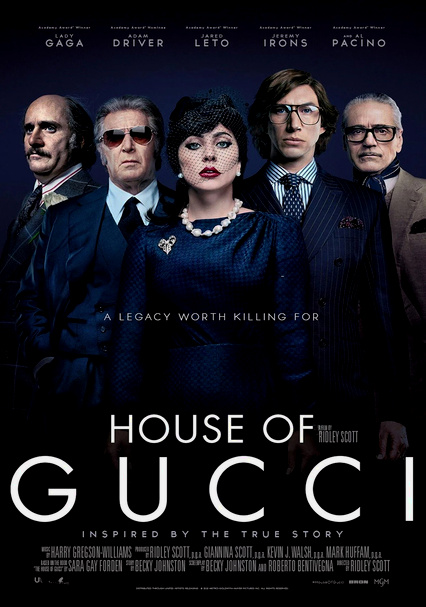
House of Gucci-2021

House of Gucci-2021

Director Ridley Scott

Starring Lady Gaga, Adam Driver, Jared Leto

Scott’s Review #1,244

Reviewed April 10, 2022

Grade: B+

Upon the release of 2021’s House of Gucci, much award buzz surrounded the film, especially for Lady Gaga’s performance. A story of a once lofty Italian fashion family of the 1970s, 80s, and 90s seemed a prime winner on many levels.

Sadly, reviews quickly turned mediocre or downright lethal as more and more people saw the film, reducing it to a meager one lonely Oscar nomination in a category viewed as minor.

The accolades were expected to be much loftier, but the buzz was tarnished very quickly. Critics largely dismissed the work as too campy and melodramatic for its own good but did praise the acting. Some ripped it to shreds entirely.

Mainstream audiences were a bit kinder than the average critic.

While I recognize the criticisms and even agree with some, mostly its uneven pacing, I find House of Gucci a resounding guilty pleasure. The main appeal is Lady Gaga, who takes charge, playing an unlikable manipulator whom you shouldn’t root for but will anyway.

Here is a brief synopsis for those not familiar with the real-life story of the rise and crumble of the Gucci empire.

The shocking true story of the family behind the Italian fashion empire inspires the film. When Patrizia Reggiani (Lady Gaga), an outsider from humble beginnings, marries Maurizio Gucci and all his wealth, her unbridled ambition and manipulations tear the once close-knit family apart.

The family legacy quickly unravels and triggers a domino effect of betrayal, decadence, revenge, and murder.

With a cast including heavyweights such as Al Pacino, Jeremy Irons, Salma Hayek, and Jared Leto, there is much to focus on in the acting department. Besides Hayek, who plays a psychic, all contain Gucci blood.

All are terrific except Leto, who suffers from overreaching for the stars in terms of the emphasis he puts on being a red-blooded Italian man. He overacts.

Notably, all the principal cast members are American, not Italian, which is why I found their language, culture, and mannerisms to be authentic, a testament to their talent.

The fact that the legendary Ridley Scott directs House of Gucci is a surprise. Known for either science fiction or different sorts of offerings like Alien (1979), Blade Runner (1982), and Gladiator (2001), House of Gucci feels like a stretch for the seasoned director by way of subject matter.

Perhaps he phoned it in? There is little that is a cinematic spectacle in House of Gucci and its straight-ahead drama. Some argue it’s shot like a television movie. While I disagree that it’s as dismal as all that, I do get the point.

From the camera lens, the film is saved tremendously by the juicy and lavish sequences that transpire in Milan, Italy. The decadence of the 1980s is never more apparent than amid the fashion capital of the world.

With luxurious estates, nightclubs, and enough exterior scenes to satisfy anyone who has been to Milan (I have!), it’s enough to save most viewers from the ho-hum story.

I’ve mentioned earlier how House of Gucci feels uneven. It’s hard to pinpoint precisely, but there’s a feeling of a gaping hole or something missing from the film. Sure, there is enough drama and schemes to make television’s The Bachelor proud, but there is a glaring misfire throughout.

I would have assured that Lady Gaga made the Best Actress Oscar list, but sadly, this was not to be. This is too bad because she gives it her all as badass Patrizia. She is a woman not to be fucked with, and when she turns the tables on her husband and the love of her life, he had better watch out.

It’s a shame that all the dots didn’t connect for House of Gucci (2021).

With such a terrific cast, juicy locales, and a respected director, the film could have been a contender. Instead, it’s a pretty good film that does not need to be watched a second time.

Oscar Nominations: Best Makeup and Hairstyling

Modesty Blaise-1966

Modesty Blaise-1966

Director Joseph Losey

Starring Monica Vitti, Terence Stamp, Dirk Bogarde

Scott’s Review #1,243

Reviewed April 9, 2022

Grade: B

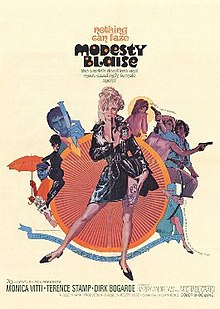
Modesty Blaise (1966) is a campy, over-the-top escapist film loosely based on a British comic strip. It features a relaxed style but a convoluted plot.

The story doesn’t matter much, and the film feels based on the James Bond film series with some Dick Tracy and Brenda Starr comic elements thrown in.

Throughout the action, I chuckled at the characters’ situational comedy antics. Both heroes and villains get mixed up in one hokey situation after another, and all the actors seem well aware that they are not performing Shakespearean comedy.

They forge ahead, making it as much of a zany offering as humanly possible.

Much of the film is reminiscent of television, Get Smart, a foolish but sweet-natured 1960s spy-genre offering.

I challenge the odd decision to make a film of this genre a bloated one hour and fifty-seven minutes. A spry ninety or ninety-five minutes would have been ample time to wrap up the experience and allow audiences to head for the exits.

This might prevent some from realizing how silly a film they’d just sat through

Modesty Blaise is not a traditionally good film but grooviness and pizazz are the main attractions as characters indulge in an orgy of colorful situations and preposterous setups.

Lavish locales like Amsterdam, and London, and the roaring beaches off the coast of the Mediterranean Sea bring the film back from going too far off the rails and pepper it with some cultivation.

If you’re in the right mood, Modesty Blaise is a chuckle fest, but don’t waste your time if you’re aching for high art. The psychedelic, groovy art design and Mad Men-like sets won me over.

I quickly forgot to try and piece together the complicated plot.

I didn’t care who was who or who was trying to outwit who and why. And I was okay with that.

Gorgeous Italian actress Monica Vitti leads the charge, followed by the dashing English actor Terence Stamp. Together, they make a lusty and good-looking pair, though Vitti gets no acting accolades.

Her looks are the primary reason for her casting win.

The actress plays a beautiful former criminal named Modesty who decides to go straight and work for the Secret Service. They send her to infiltrate a ring of jewel thieves, but the stuck-up older regime does not especially respect her.

She shrugs it off and offers her best services.

Soon after she joins the gang, sophisticated and dangerous head honcho Gabriel (Dirk Bogarde) grows suspicious of his new charge; Modesty realizes that British Intelligence gave her a mission they could care less if she survives.

She then enlists her former partner, Willie (Stamp), to help her out of her peril while outsmarting both sides.

Most action scenes are ludicrous, and the likelihood of any of the stories being true is slim to none. Plenty of sequences are set on a luxury yacht or some other water transportation, and Vitti and Stamp are clad in as little as possible.

I smirked at more than one James Bond nod, though some influence on the still-to-be-made Diamonds Are Forever (1971) is noticed.

If I’m making Modesty Blaise out to be a terrible film, it’s not.

The gimmicky angle of having Modesty appear with a different hairstyle in every sequence is clever and enjoyable (my preference is for her as a blonde).

When she is imprisoned in a spiraling-colored basement cell and must climb out the roof for help, the set design is one of the best I’ve ever seen. The creative team gets an A-plus for expressiveness and imagination, which is why Modesty Blaise is so fun.

Dirk Bogarde and Rossella Falk play cartoonish criminals Gabriel and Clara, who are deliciously wicked. I was amazed at Gabriel’s towering purple cocktail and craved a sip to see exactly what he was drinking.

Satisfyingly, both main villains get their comeuppance.

The film is foolish, campy, and a silly time wrapped up in fantastic artistry from a creative team that deserves more credit than they probably received.

Modesty Blaise (1966) is a messy but enjoyable film. I found it endearing more than I probably should have. It’s the guiltiest pleasure in a chest of sub-par spy comedy films.

La Bamba-1987

La Bamba-1987

Director Luis Valdez

Starring Lou Diamond Phillips, Esai Morales

Scott’s Review #1,242

Reviewed April 3, 2022

Grade: A-

The brief musical career of Mexican rock ‘n’ roll star Richie Valens is showcased in a lovely little film called La Bamba (1987).

The film spawned a massive United States number-one hit, the title track by the band Los Lobos, which filled the summer with rich culture and a hummable beat.

The song is a remake of Valen’s 1958 hit, and I’m humming it as I write this review!

The film itself is flavorful and tinged with Latino colors and traditions, such as the importance of family. It provides a much-needed look at diversity and recognition of a young talent taken way too soon.

His rise to stardom is the main focus. Still, his influence on his family, most notably his younger brother, is not forgotten, as love, respect, jealousy, and conflict engulf their relationship.

Valens, a Los Angeles teenager played by Lou Diamond Phillips, becomes an overnight rock ‘n’ roll success in 1958, thanks to a love ballad called “Donna” that he wrote for his girlfriend (Danielle von Zerneck), whose parents didn’t want her to date a Latino boy.

But as his star rises, Valens clashes with his jealous brother, Bob (Esai Morales), and is haunted by a recurring nightmare of a plane crash, which terrifies him and coincides with his first national tour alongside Buddy Holly (Marshall Crenshaw).

Foreshadowing indeed. It’s common knowledge that Valens tragically died in a plane crash over Iowa, alongside Holly and other prominent musicians.

Lou Diamond Phillips is fantastic in the lead role of Ritchie. The actor can entertain the audience while staying true to the Mexican star’s life. Not merely physically resembling him, Phillips brings Ritchie’s famous life and energy to the table.

Not lasting long in this world, the actor infuses as much soul as he can into the ill-fated singer, successfully creating a dedication to his life.

The supporting actors are all terrific. Morales is highly talented; his character, Bob, is conflicted by his brother’s success yet closely bonded to him.

As Mama Connie, Rosanna DeSoto is fiercely protective of her cub while championing his career path and natural talent.

Finally, Elizabeth Pena deserves praise for playing Rosie, the victimized girlfriend of Bob.

The interracial romance between Ritchie and Donna is also a central theme in La Bamba. Many decades after their brief romance, interracial relationships are commonplace, but there are still those who object.

The chemistry between Phillips and von Zerneck is palpable, but mostly I imagined how nice it would have been between the real-life figures, and the endless possibilities had the singer not perished.

Director and writer Luis Valdez deserves credit for giving this relationship meaning by making it clear that other marginalized minority communities can be assured that most people support their unions.

La Bamba (1987) is a film where all the parts come together in perfect form. The music, the culture, and the characters all brim with life and meaning, ironically, since the biography could have easily been a downer.

Instead, it inspires and teaches unity and the forever-lasting power of music.

Yes, there are occasional cliches, but I enjoyed the film immensely.

The Karate Kid-1984

The Karate Kid-1984

Director John G. Avildsen

Starring Ralph Macchio, Pat Morita

Scott’s Review #1,241

Reviewed April 2, 2022

Grade: B+

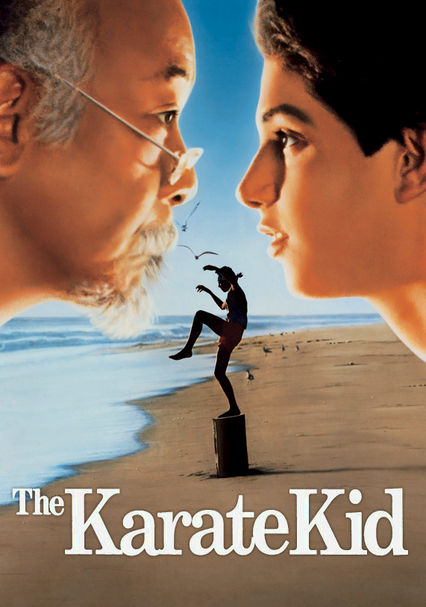
The Karate Kid (1984) is a wholesome and predictable film from the commercial era of the 1980’s cinema.

With a clever marketing pitch about a bullied boy overcoming obstacles, the film is utterly predictable. But the warm message and chemistry between the two leads make the film work marvelously.

It’s a truthful film that showcases the power of friendship.

The film was a smash at the box office, becoming one of Hollywood’s biggest sleeper summer hits of 1984, making the lead actor, Ralph Macchio, an enormous star and household name. It also successfully brought karate to American households, spanning a new trend and appreciation for Asian sports.

Three tired sequels before the franchise finally ran out of steam. A relaunch emerged in 2010 with mixed results.

Daniel (Macchio) moves to Southern California with his mother, Lucille (Randee Heller). Still, he quickly finds himself the target of a group of bullies who study karate at the Cobra Kai dojo.

This heightens in severity when he becomes smitten with the ex-girlfriend (Elisabeth Shue) of the lead bully, Zabka (Johnny Lawrence), who vows revenge on Daniel.

Fortunately, Daniel befriends Mr. Miyagi (Noriyuki “Pat” Morita), a kindly repairman who is a martial arts master himself. Miyagi takes Daniel under his wing, training him in a more compassionate form of karate, and prepares him to compete against the brutal Cobra Kai.

The Karate Kid is very sweet but never too saccharin-laced, and is easy to compare to Rocky (1976).

In a clear example of manipulation and copycatting, Robert Mark Kamen, who wrote the screenplay, was instructed to write something similar to Rocky, which won the Academy Award for Best Picture.

Avildsen also directed that critically acclaimed film.

The result is Rocky-lite. The Karate Kid would be a great warm-up film before the headliner, Rocky, takes the screen.

The mission is to tell a story about an underdog rising to glory while staying true to himself. The Karate Kid is a product, but it is extremely likable and a fist-pumping good time. It’s not the sort of film one necessarily needs to see repeatedly, nor will it be studied in film school.

The main reason The Karate Kid works is the chemistry and connection between Macchio and Morita. The latter is terrific casting since Morita was usually known for comedic roles, but he works against type in his memorable role.

His character is kind and humble, and it’s impossible not to fall in love with him. As a mentor, he coaches Daniel on valuable, truthful life lessons.

Macchio surprisingly carries the film. Handsome and charismatic, he also represents anyone who has ever felt like an outsider or different from everyone else. He’s the boy next door but with an ethnic overtone.

He is clearly different and, therefore, disliked by some.

The elements that don’t work as well are the traditional love triangle, hardly a triangle because one of the three is the villain, and the stereotypical nature of the bully gang.

Shue plays her part well, but the romance between Ali and Daniel is the supporting act to the fight scenes, which inevitably show up mostly towards the end of the film.

The finale is very familiar in sports-type films because it’s all too obvious how events will play out. Surprisingly, though, it’s a satisfying payoff as every character wins out, even the villainous Johnny.

Though he is soundly defeated, he learns a lesson from Daniel and comes to respect him. So, he repents.

It’s a powerful message that stayed with me and made me appreciate the approach to valued storytelling.

Safe and sturdy for a PG audience, The Karate Kid (1984) may feel dated and struggle to resonate with modern audiences, but the message remains poignant and fresh—hard work, determination, and respect equal success and satisfaction.

This may be a point easy to ridicule and pick apart, but the film works well.

Oscar Nominations: Best Supporting Actor-Pat Morita

Jaws-1975

Jaws-1975

Director Steven Spielberg

Starring Roy Scheider, Richard Dreyfuss, Robert Shaw

Scott’s Review #1,240

Reviewed March 28, 2022

Grade: A

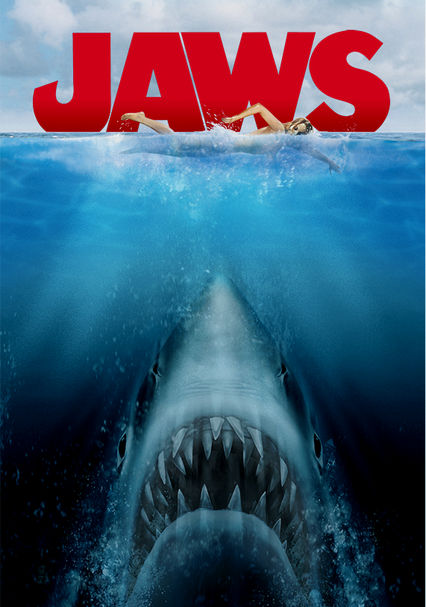
The directorial breakthrough by the iconic Steven Spielberg is Jaws (1975).

The film is such a legendary and familiar project that even stating the name to pretty much any human being immediately conjures images of a man-eating great white shark and the unforgettable ‘duh-duh, duh-duh’ musical score.

It’s the film that famously made people afraid to go into the water, just as Hitchcock’s 1960 masterpiece, Psycho, made people afraid to take a shower.

Whenever I’m near the ocean, I think of this film.

Jaws is a hybrid horror/thriller/adventure/action film, whereas the subsequent sequels were all straight-ahead horror films that cast more teenagers, and some were better than others.

Spielberg teaches a valuable lesson: much can come from very little, and a small budget can create greatness. What he accomplishes with Jaws is admirable, to say the least.

In Jaws, the story is more about three men trying to destroy a killer shark and their relationship with it. The scary aspect, always terrific in horror, is that we do not know what the shark’s motivation is.

Why does it kill?

It’s a brilliant film that holds up well decades later, even if the shark feels less authentic over time. But you must always keep the time a film was made in mind.

When one summer day, a young woman is killed by a shark while skinny-dipping near the New England tourist town of Amity Island, police chief Martin Brody (Roy Scheider) wants to close the beaches.

He clashes with the mayor, Larry Vaughn (Murray Hamilton), who overrules him, fearing the loss of tourist revenue will hurt the town during the summer season.

Dismissed as a mere boating accident, the great white shark then kills a young boy in full view of a beach crowd, resulting in panic and mayhem. It’s as if the shark is determined to be taken seriously.

Oceanographer Matt Hooper (Richard Dreyfuss) and grizzled ship captain Quint (Robert Shaw) offer to help Brody capture the killer shark, and the trio engages in an epic battle with the beast.

Jaws is a film you can watch multiple times and still enjoy. Setting aside the horror elements, the film delivers adventure and heart-pounding thrills every minute once the men dare to try to foil the shark.

The fun, as in any film of this kind, is not knowing when or where danger will strike, only that it inevitably will come.

Scheider excels in his household name-making role as the determined police chief. He cares deeply about the townspeople and is therefore a likable hero.

During frequent scenes, he gazes out to the water, a troubled look on his face, pained and feeling responsible for the deaths.

The audience empathizes with him.

Lorraine Gary, who would later play a lead role in poorly received films, is terrific as the supportive yet challenging wife, Ellen. She is the yin to his yang, and it comes across on-screen.

The best scenes of the film are the very first one, when the girl is eaten by the shark, and the later one, when Brody yells at everyone on a crowded beach to flee the water. Munching on the first victim, this is the scene where the dreaded music makes its debut.

From this point, the audience knows that hearing this music means the shark is nearby.

In the other scene, the panic is breathtaking and palpable, and the audience feels sympathy for Brody. He obediently takes the blame for the chaos and the deaths and makes it personal when his son is victimized.

The scene sets the tone for the scramble and mayhem.

Jaws (1975) has it all: adventure, thrills, horror, action, a hero, and blood. The technical aspects are astounding, with underwater sequences and effects that still hold up.

It arguably created what became known as the summer blockbuster.

Oscar Nominations: 3 wins-Best Picture, Best Film Editing (won), Best Original Dramatic Score (won), Best Sound (won)

Golden Globe Nominations: 1 win-Best Picture-Drama, Best Director-Steven Spielberg, Best Screenplay, Best Original Score (won)

Two Evil Eyes-1990

Two Evil Eyes-1990

Director George Romero, Dario Argento

Starring Adrienne Barbeau, Harvey Keitel

Scott’s Review #1,239

Reviewed March 26, 2022

Grade: B+

Two legendary masters of horror, American director George Romero, famous for zombie films, and Italian director Dario Argento, famous for stylistic horror,  team up to create a thrilling double-bill horror feast.

For fans of the genre, the idea is titillating, to say the least, and the follow-through is a robust success.

There is a gnawing television-film feel to each film that is eventually overshadowed by the reminder that grand directors are at the helm.

Cleverly, they base their films on the works of the poet Edgar Allan Poe, famous for macabre, peculiar poems and short stories.

‘The Facts in the Case of M. Valdemar’ (1990) and ‘The Black Cat’ (1990) are the featured tales.

Having seen many Argento and Romero works, with Suspiria (1977) and Dawn of the Dead (1978) as my respective favorites, the fun is seeing how each film contains familiar aspects of the other, with a sprinkling of the 1960 Hitchcock masterpiece, Psycho, thrown in for good measure.

Fun fact- Psycho star Martin Balsam appears in ‘The Black Cat’ story.

In the first feature, ‘The Facts in the Case of M. Valdemar’, Adrienne Barbeau plays an ex-flight attendant named Jessica who plots with her lover, Dr. Robert Hoffman (Ramy Zada), for her elderly husband’s money.

While liquidating large amounts of cash, her husband’s lawyer grows suspicious and warns her that there will be consequences should her husband die in the next three weeks.

Naturally, he does, and events grow weird and terrifying.

In the second film, ‘The Black Cat, Harvey Keitel plays an unlikable man named Rod Usher who works as a crime scene photographer. He suffers the consequences when he viciously kills his girlfriend’s cat.

In his attempts to rid himself of both his girlfriend and the cat, they continue to reappear, much to his chagrin. With two detectives on his tail, the finale is both grim and satisfying.

If forced to choose, I am more partial to ‘The Facts in the Case of M. Valdemar,’ mostly because of the casting of Barbeau, whom I am a big fan of.

It’s also the winner of the two when it comes to the unexpected conclusion.

Barbeau carries the film, even in its short run, and imbues a character who could easily be dismissed as a gold-digging bitch with likability. Jessica feels some sensitivity and truly wants no harm done to her husband; she only desires some money.

After all, in her mind, she deserves the payoff for having married an older man.

Romero’s influence is apparent, but not as much as Argento’s is in ‘The Black Cat’. A gruesome scene at the conclusion, when a character’s decomposing body lumbers forward, immediately brought me back to the zombie delights of ‘Dawn of the Dead.

The music in the opening credits reminds me of Argento films in general. A mysterious, high-pitched synthesizer sound peppers the experience with highly effective, horrific beats.

I did not enjoy the prevalent cat torture scenes in ‘The Black Cat,’ and they are tough to sit through. I was somewhat encouraged by the knowledge that the dead cat does, in the end, exact revenge on its torturer.

I chuckled at the numerous references to ‘Psycho,’ mostly when Balsam’s character, Mr. Pym, appears. When the man climbs a flight of stairs, it’s a similar scene in ‘Psycho’ with a deadlier result.

Another scene of draining shower water immediately conjures up the legendary shower scene in ‘Psycho’.

Casting heavyweights like Barbeau, Keitel, Balsam, Tom Atkins, John Amos, and Kim Hunter lends credibility to a project that could easily have been dismissed as a throwaway horror double feature.

The experience is much better than that, as the compelling nature and minute-by-minute thrills will keep the audience invested and longing to know what happens next.

‘The Facts in the Case of M. Valdemar’ (1990) and ‘The Black Cat’ (1990) effectively pair two of the best horror directors in dedication to the best horror poet.

Perhaps a longer duration for each film might have allowed time for more character exploration, but the results are just fine.

King Richard-2021

King Richard-2021

Director Reinaldo Marcus Green

Starring Will Smith, Aunjanue Ellis-Taylor

Scott’s Review #1,238

Reviewed March 13, 2022

Grade: B+

King Richard (2021) is an inspirational, feel-good Hollywood film with a strong message. It champions the little guy rising beyond expectations to achieve greatness.

Audiences will be left with a warm feeling of possibility and the idea that nearly anything can be achieved with hard work and determination.

The story of the world-famous tennis stars, the Williams sisters, and their parents, happens to be true, lending the necessary credibility to make this film quite enjoyable. It’s a conventional film that contains many cliches, yet it’s a heartwarming family drama.

Richard Williams (Will Smith) is determined to write his daughters, Venus and Serena, into the tennis history books while also keeping them educated and away from the drug-infested streets of Compton, California, where they reside.

Along with his wife Brandy (Aunjanue Ellis), they defy all odds in their meteoric rise to fame and fortune just as Richard had planned.

The Williams family’s story is told in an uplifting fashion as they face trials and tribulations along the way, like gang violence and racism. The sisters would soon become two of the world’s greatest sports legends.

An excellent performance by Smith leads the film, though I’m careful to make the bold statement that it’s his best role ever. I haven’t seen Ali (2001), but have heard he brings down the house in that role, again playing a real-life figure.

Time will tell.

The lesson learned about Smith is that when he skirts away from his usual summer popcorn blockbuster action roles, in which there are many, he is truly a great actor.

Plenty of backstories are given to Richard, and the violence and marginalization he has faced in his past, living as a child in Louisiana. His occasional shrewdness and feistiness can be forgiven as the character is explored very well.

Aunjanue Ellis, unknown to me before this film, is a revelation. As Brandy, in the assumed second-in-command supportive wife role, she does way more than one might have expected. In one tense scene, she lays down the law with Richard and refuses to play the second fiddle.

Ellis brings a subdued toughness and quiet to the role that not all actresses can bring.

The casting all around is strong. Saniyya Sidney and Demi Singleton as Venus and Serena are believable, though they are not given the material that Smith and Ellis are afforded.

Delightful are Jon Bernthal and Tony Goldwyn in supporting roles as coaches.

Director Reinaldo Marcus Green sticks to a straight-ahead approach and achieves his intended goal. He forges into R-rated territory with some of the gang relationships and an occasional racist remark.

Still, the effect is soft-touch only, and the main message is how a struggling black family can succeed.

I enjoyed the depictions of California and then sunny Florida throughout the 1980s and the 1990s, and finally into more recent times. It felt realistic and appropriate to the film, especially when real-life incidents like the Rodney King police beatings were shown.

The editing team is flawless, especially in the multiple tennis match sequences, which are very difficult to shoot and make seem real. The continuity is exceptional and a massive undertaking.

A safe passage and not a film to be watched a second time or dissected much with post-credit discussions, King Richard (2021) is nonetheless a winner. It provides enough positive vibes to leave its viewers smiling and determined to beat any odds.

Oscar Nominations: 1 win-Best Picture, Best Actor-Will Smith (won), Best Supporting Actress-Aunjanue Ellis, Best Original Screenplay, Best Film Editing, Best Original Song-“Be Alive”

Dead Snow-2009

Dead Snow-2009

Director Tommy Wirkola

Starring Vegar Hoel, Stig Frode Henriksen

Scott’s Review #1,237

Reviewed March 12, 2022

Grade: B

First off, the cover art (pictured above) of the 2009 Norwegian horror-comedy film Dead Snow is simply incredible.

The creepy Nazi head embedded in the snow with a background chainsaw is perfect marketing and genuinely artistic.

It automatically makes the tired zombie horror genre feel fresh and alive with endless possibilities.

The film itself is a decent watch, and tongue-in-cheek sensibilities are necessary to appreciate the movie.

There is a hint of art film qualities peppered throughout, and it’s not a run-of-the-mill mainstream horror film either, but a sense of humor and embracing the ridiculousness is required.

In other words, one must be a fan of the genre to watch Dead Snow. Otherwise, it will not win people over with a great storyline or character enrichment.

It’s a slice-and-dice ’em affair, and after a slow build, it goes into overdrive with the kills and thrills.

The familiar setup of a group of young people, this time intelligent medical students, heading off for a long weekend of booze and sex in a remote location gets Dead Snow off to an intriguing start.

A lonely cabin in the middle of the snowy mountains of Norway is the primary setting for the Arctic Easter bloodbath.

The eight of them plan to ski and relax during the time away. After one of their group disappears while on a solo cross-country hike, a mysterious resident (Bjørn Sundquist) provides the remaining visitors with a backstory.

In the last days of World War II, a battalion of Nazi soldiers disappeared into the nearby woods after the residents turned on them, and their zombified corpses remain on the prowl in the area looking for fresh meat.

Of course, the students hoot and snicker at the stranger’s proclamations, but the audience knows full well the Nazi soldiers will emerge eventually.

After all, in the very first scene, one of the students who never shows up to join the others is killed by an unidentifiable figure in the dark woods.

If nothing else, Dead Snow is prime-grade entertainment. I eagerly awaited who from the group would be butchered first and how it might happen.

As all fans of the slasher horror genre know, those who party or have sex are not long for this world, and Dead Snow is no different.

What is different from a straight-ahead release is the dark humor that encompasses the film. When one student who is deathly afraid of blood must remove his arm with a chainsaw after being bitten, he does so with deep seriousness and precision.

The macabre scene nearly rivals some others, like when a male member of the group is seduced for sex by a female member of the group while sitting on the toilet in the cold outhouse.

Enough splatters of blood exist to forget how silly the Nazi soldiers look. But the makeup and creative team do a superior job of making the zombies look horrific too. In particular, their leader, Colonel Herzog, is a combination of sexy and hideous.

The international quality and the Norwegian language require subtitles, but that is no problem for me. This brings sophistication and intelligence that I appreciate, raising the film above the mediocrity that it may have suffered from had it been an American release.

The foreign lands add mystique.

Dead Snow, at one hour and thirty minutes, is short enough not to wear out its welcome, which it starts to do in the final fifteen minutes or so.

A chase scene across the snowy mountains and motivation for some ancient gold coins are explained as the final character makes it to safety in an until then missing car.

Or do they?

Providing some fun without taking itself too seriously, Dead Snow (2009) contains no message nor any marquee stars.

Making Nazis the evil ones is no stretch, so there is immediately enough rooting value to forgive some of the students for their idiotic decisions.

It’s a bloody fun time but not much more.

No Time to Die-2021

No Time to Die-2021

Director Cary Joji Fukunaga

Starring Daniel Craig

Scott’s Review #1,236

Reviewed March 6, 2022

Grade: A-

Celebrating the twenty-fifth in the iconic James Bond film franchise, No Time to Die (2021) is Daniel Craig’s fifth and final appearance as the British MI6 agent.

As of this writing, it is yet to be determined who will next step into the shoes of the legendary character, but Craig was able to make the character his own since his debut in Casino Royale (2006).

He retains his hunky and muscular portrayal with a sullen and serious tone.

No Time to Die is visually and stylistically similar to the recent handful of films that came before it, with a slick and modern look and feel.

The difference is that the film is about relationships and has a shocking conclusion that nearly rivals Mrs. James Bond’s death in On Her Majesty’s Secret Service way back in 1969.

James Bond utters a few quips or one-liners, and we can agree that Craig does not play the character in the same way that Roger Moore did. But, there exists a dark and dreary tone throughout and more than one surprising death.

It’s a serious affair.

I love the parallels to On Her Majesty’s Secret Service that emerge mainly in the beginning and end of the film.

The inclusion of the famous Louis Armstrong song ‘We Have All the Time in the World’ recalls both love and loss experienced by Bond and is played in full during the closing credits.

This is a special treat for fans of that film, myself included. I felt emotionally connected to No Time to Die, which was a significant score for it.

In an extended opening sequence, a young girl named Madeleine witnesses the murder of her mother by terrorist Lyutsifer Safin in a failed attempt to murder her father, Mr. White (appearing in Casino Royale). Madeleine shoots Safin (Rami Malek), but he survives and rescues her after she falls into a frozen lake. This connects them for life.

In the present, after the capture of villain Blofeld, Madeleine (Léa Seydoux) is vacationing in Southern Italy with Bond when Spectre’s assassins ambush him. He incorrectly assumes Madelaine has betrayed him, and he ends their relationship after they escape death.

Depressed, Bond retires to Jamaica but returns to action after his friend Felix Leiter (Jeffrey Wright) from the CIA turns up asking for help. The mission to rescue a kidnapped scientist turns out to be far more treacherous than expected, leading Bond onto the trail of a mysterious villain armed with dangerous new technology.

With the emotional and relationship investments successfully sealed, any worthy Bond film should have great action with interesting locales, stellar villains, and relevant Bond girls. In this regard, the film gets a solid B+ with those as mentioned earlier, bumping it up a notch.

The chase throughout southern Italy is fabulous, with delicious scenery of the culturally lavish country getting the film off to a fast start.

Other sequences in Chile and Cuba show the sophistication and investment in quality locales. Naturally, London is heavily featured, and I adore the grand and frequent aerial views that allow prominent landmarks to be discovered.

Although actor Malek can be creepy in his roles and play a dastardly villain, I wasn’t delighted with the character of Safin. Not appearing in an obvious fashion until midway through his screen time is limited, and his motivations murky- I wanted more.

The casting is terrific, but the character is underwhelming and not explored to his full potential.

Christoph Waltz’s limited appearance as an imprisoned Blofeld is excellent, and double agent Logan Ash (Billy Magnussen) and scientist Obruchev (David Dencik) prove quality secondary villains.

The storyline with Felix and the returns of Moneypenny, Q, and M (now played by Ralph Fiennes) is solid.

Main Bond girl Madelaine did not win me over at first, but by the end, I was heavily invested, especially since she is a powerful female character and a true romantic partner to Bond. A new female 007, played by Lashana Lynch, is a progressive inclusion that breathes new life into MI6.

May both appear in the future?

Time, and perhaps another viewing, will determine how No Time to Die (2021) ranks compared to other Bond films. At a hefty two hours and forty-three minutes, the film drags in the middle section, and some characters receive limited exploration.

The nods to history and the heavy emotional investment kept me glued to my seat.

Oscar Nominations: 1 win-Best Original Song-“No Time to Die” (won), Best Sound, Best Visual Effects

I Love You Phillip Morris-2009

I Love You Phillip Morris-2009

Director John Requa, Glenn Ficarra

Starring Jim Carey, Ewan McGregor

Scott’s Review #1,235

Reviewed March 5, 2022

Grade: A-

Easily the most daring and arguably the best film role of Jim Carey’s career, I Love You Phillip Morris (2009) is a delightful romantic comedy featuring same-sex characters in the central roles.

At the risk of being too fluffy, there is a sardonic and wry wittiness that I fell in love with.

Those criticizing the film as ‘gay porn’ are silly since there is hardly a sex scene to be critical of or anything more than would appear in a traditional male/female romantic comedy.

Prudes wouldn’t see a film like I Love You Phillip Morris anyway.

It is based on the 1980s and 1990s real-life story of Texas con artist, impostor, and multiple prison fugitive Steven Jay Russell, who was clever beyond belief and successful at outwitting his opponents.

I Love You, Phillip Morris is the directorial debut by John Requa and Glenn Ficarra, who received a nomination from the Writers Guild of America Award for Best Adapted Screenplay.

Steven Russell  (Carrey) becomes a cop, gets married, and starts a family, but after a terrible car accident, he vows to be true to himself.

Thus far in his life, he has played by the rules and done what is expected of him, and because of the crash, he pivots to an emotional bloodletting.

The key irony is that Steven is telling the audience his story from his deathbed, so most of the activity is in the past. This is the hook because it made me wonder how and why he died. But is there a twist?

He comes out of the closet, moves to Florida, and finances a luxurious lifestyle with bad checks and credit cards. Arrested and now in prison, Steven meets Phillip (Ewan McGregor), a mild-mannered inmate who becomes the love of his life.

Determined to build a beautiful life with his partner, Steven embarks on another crime spree.

The film caters to the LGBTQ+ audience but has a crossover appeal so that all audiences can enjoy it. This is in large part thanks to the screenwriters and whoever had Carey and McGregor in mind for the film.

Too often, films centering around gay characters are deemed second-fiddle and not profitable, but with bigger stars, the audiences will come.

I Love You Phillip Morris is an independent film that builds momentum when the message is that big stars are comfortable in gay roles, something Heath Ledger and Jake Gyllenhaal taught us a few years earlier in Brokeback Mountain (2005).

Jim Carey, fabulous in The Mask from 1994, and having his share of hits and misses over the years, is perfect in the role of Steven. It’s the most interesting role he has portrayed since he gets to provide his usual physical humor in a role that matters.

LGBTQ+ audiences see a character who makes them laugh without the typical gay stereotypes.

Straight audiences will see a character whose sexual identity doesn’t matter to them.

Props go to McGregor as well, who makes a perfect counterpart for Carey as the calm, cool, and collected ‘straight man’. The film could not have worked without him.

He meshes so well with Carey that the audience instantly roots for Steven and Phillip to ride off into the sunset despite being criminals.

The stereotypes are limited, but the subject matter of AIDS, especially given the time in which the film is set, is given notice. This is a win, and Requa and Ficarra are very careful not to teeter too close to the edge of doom and gloom while respecting the disease.

At its core, I Love You Phillip Morris (2009) is a romantic comedy, and the trials and tribulations of Steven and Phillip are told. I immediately fell in love with them, and viewers will too.

It’s a film that feels fresh and alive, with a rich exploration of character that is not easy to come by.

Welcome to my blog!1,553 reviews posted so far! I'm Scott Segrell and I reside in Stamford, CT. My site features hundreds of film reviews I have written since I launched the site in 2014. I hope you enjoy reading my latest reviews or searching for your own favorites to see if we agree. Please see my Recent Posts section, and don't forget to utilize the tags and category links.