Tag Archives: Frances Bay

Blue Velvet-1986

Blue Velvet-1986

Director David Lynch

Starring Kyle MacLachlan, Laura Dern, Isabella Rossellini

Top 250 Films #65

Scott’s Review #343

319022

Reviewed January 9, 2016

Grade: A

Based on a 1963 Bobby Vinton tune of the same name, Blue Velvet (1986) is an independent noir thriller directed by the master of the weird and the unusual, David Lynch.

It is surreal in look and so mysterious- almost a precursor to Lynch’s fantastic television series, Twin Peaks. I adore the film and find new facets to it with each passing viewing.

Though it’s not an easy or mainstream watch, the payoff can be big, and you know you are watching a deep, layered film.

The story can be tough to understand in full, but it goes something like this: Under the guise of a cheerful, suburban surface, evil lurks somewhere.

College student, Jeffrey (MacLachlan) discovers a severed human ear lying in an abandoned lot, delivers it to police detective John Williams, and reconnects with the detective’s daughter, Sandy (Dern).

Sandy, being privy to secret information about the case, reveals that a mysterious woman, Dorothy Valens (Isabella Rossellini), resides in an apartment key to the case. Jeffrey and Sandy decide to investigate further, only to get themselves in over their heads as the mystery deepens.

The film’s dreamlike quality is very compelling and intriguing. Layers upon layers come to the forefront as the story unfolds, and very few answers are ever provided- this adds to the mystery and is really the point of the film.

Many aspects are open to interpretation.

The relationship between Jeffrey and the much older Dorothy is fascinating, but what about his chemistry with the innocent Sandy? And who is the Yellowman? When the youngsters see Dorothy perform “Blue Velvet” at her nightclub, it is a great moment in the film.

The character of Frank Booth, played by Dennis Hopper, must be one of the strangest in film history, as the man is maniacal and bizarre beyond measure. With his unusual sexual tastes- he enjoys inhaling gas and sadomasochism- he is a unique character. He is also quite abusive to Dorothy.

The film is a throwback to classic film noir from the 1950s, and a clear femme fatale, Dorothy, is central to the film.

I find the film so compelling since its subject matter is secrets. Many secrets and dark corruption, as well as various forms of left-of-center dealings, reside in this small North Carolina town- it is the audience’s challenge to put all the pieces of this puzzle together.

Oscar Nominations: Best Director-David Lynch

Independent Spirit Award Nominations: 1 win-Best Feature, Best Director-David Lynch, Best Male Lead-Dennis Hopper, Best Female Lead-Isabella Rossellini (won), Laura Dern, Best Screenplay, Best Cinematography
The Karate Kid-1984

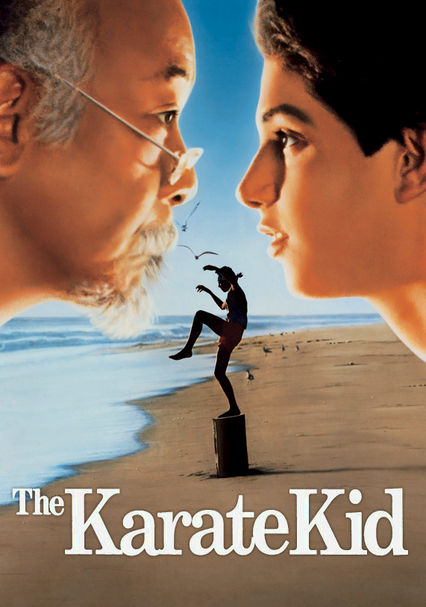
The Karate Kid-1984

Director John G. Avildsen

Starring Ralph Macchio, Pat Morita

Scott’s Review #1,241

Reviewed April 2, 2022

Grade: B+

The Karate Kid (1984) is a wholesome and predictable film from the commercial entrails that were the 1980’s cinema.

With a clever marketing pitch about a bullied boy overcoming obstacles, the film is utterly predictable. But the warm message and chemistry between the two leads make the film work marvelously.

It’s a truthful film that showcases the power of friendship.

The film was a smash at the box office becoming one of Hollywood’s biggest sleeper summer hits of 1984, making the lead actor Ralph Macchio an enormous star and household name. It also successfully brought karate to American households spanning a  new trend and appreciation for Asian sport.

The film was followed by three tired sequels before the franchise finally ran out of steam. A re-launch emerged in 2010 with mixed results.

Daniel (Macchio) moves to Southern California with his mother, Lucille (Randee Heller), but quickly finds himself the target of a group of bullies who study karate at the Cobra Kai dojo.

This heightens in severity when he becomes smitten with the ex-girlfriend (Elisabeth Shue) of the lead bully, Zabka (Johnny Lawrence) who vows revenge on Daniel.

Fortunately, Daniel befriends Mr. Miyagi (Noriyuki “Pat” Morita), a kindly repairman who is a martial arts master himself. Miyagi takes Daniel under his wing, training him in a more compassionate form of karate, and prepares him to compete against the brutal Cobra Kai.

The Karate Kid is very sweet but never too saccharin-laced and is easy to compare to Rocky (1976).

In a clear example of manipulation and copycatting, Robert Mark Kamen, who wrote the screenplay, was instructed to write something similar to Rocky which won the Academy Award for Best Picture.

Avildsen also directed that critically acclaimed film.

The result is Rocky-lite. The Karate Kid would be a great warm-up film before the headliner Rocky takes the screen.

The mission is to tell a story about an underdog rising to glory while staying true to himself. The Karate Kid is a product but is extremely likable and a fist-pumping good time. It’s not the sort of film one necessarily needs to see repeatedly nor will it be studied in film school.

The main reason that The Karate Kid works is because of the chemistry and connection between Macchio and Morita. The latter is terrific casting since Morita was usually known for comedic roles but works against type in his memorable role.

His character is kind and humble and impossible not to fall in love with. As a mentor, he coaches Daniel with valuable and truthful life lessons.

Macchio surprisingly carries the film. Handsome and charismatic, he also represents to the audience anyone who has ever felt like an outsider or different from everyone else. He’s the boy next door but with an ethnic overtone. He is clearly different and therefore unliked by some.

The elements that don’t work as well are the traditional love triangle, hardly a triangle because one of the three is the villain and the stereotypical nature of the bully gang.

Shue plays her part well but the romance between Ali and Daniel is the supporting act to the fight scenes which inevitably show up mostly towards the end of the film.

The finale is one very familiar in sports-type films because it’s all too obvious how events will play out. Surprisingly though, it’s a satisfying payoff as every character wins out, even the villainous Johnny.

Though he is soundly defeated, he learns a lesson from Daniel and comes to respect him. So, he repents.

It’s a powerful message that stayed with me and made me appreciate the approach to valued storytelling.

Safe and sturdy for a PG audience, The Karate Kid (1984) may feel dated and flounder for modern audiences but the message remains poignant and fresh. Hard work, determination, and respect equal success and satisfaction.

This may be a point easy to ridicule and pick apart but the film works well.

Oscar Nominations: Best Supporting Actor-Pat Morita

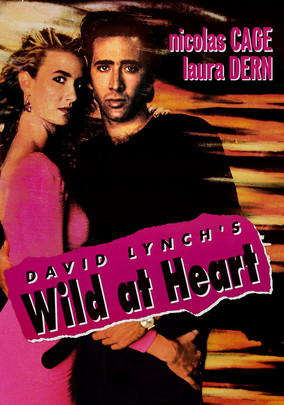
Wild at Heart-1990

Wild at Heart-1990

Director David Lynch

Starring Nicolas Cage, Laura Dern

Scott’s Review #1,230

Reviewed February 19, 2022

Grade: B+

David Lynch has created some weird films. Blue Velvet (1986) and Mulholland Drive (1992) are masterpieces that skew the odd and peculiar facets of human behavior. But Wild at Heart (1990) takes the cake as the strangest in the lot.

Fascinatingly unhinged, yet hard to understand, it’s got the Lynch handprint from start to finish, but only a warm-up act as stacked against those other films.

Somehow the film is classified as a comedy. It’s got to be one of the darkest of dark comedies. Anyone who is not a Lynch fan will not appreciate or get this film- I am a Lynch fan and I’m not sure I even got it. I do appreciate it though.

It’s also the best role of Diane Ladd’s career in which she plays a fiendish, witchy mama. The graceful actress belts a home run in her storied performance.

A situation occurs during the opening sequence that sets the tone for the rest of the film. Sailor Ripley (Nicolas Cage) serves prison time for a self-defense killing and reunites with his girlfriend Lula Fortune (Laura Dern) when he is released.

Lula’s mother, Marietta (Diane Ladd), is desperate to keep them apart and hires a hitman to kill Sailor. But those are only the start of his troubles when he and Bobby Peru, played by Willem Dafoe, an old buddy who’s also out to get Sailor, try to rob a store.

When Sailor lands in jail again, he may be destined never to reunite with Lula ever again.

Wild at Heart is a love story about Sailor and Lula and the many obstacles they must overcome to live happily ever after.

Cage and Dern are terrific though I fantasized while watching how nice it would have been to see Kyle MacLachlan in the role of Sailor. A Blue Velvet reunion would have been splendid since his chemistry with Dern in that film was top-notch. Nonetheless, I enjoyed watching Cage and Dern as the romantic leads.

The many references to The Wizard of Oz are delightful like when an image of Marietta flying through the air on a haggard broomstick appears just like the Wicked Witch of the West. When Lula desperately clicks her red heels three times to no avail we strangely wonder where the home she wants to return to is.

The film is one of those that is hard to take seriously or focus on the plot too much. This is evidenced by the inclusion of Twin Peaks (1990-1991; 2017) alumni Sheryl Lee, Sherilyn Fenn, and Grace Zabriskie. They play The Good Witch, Girl in Accident, and Juana Durango, respectively.

Each character is indescribable in their strangeness.

The nuttiness continues with bizarre turns from Crispin Glover and Harry Dean Stanton.

Interesting is how Wild at Heart was released the same year as Twin Peaks was. The inclusion of a seedy bar named One-Eyed Jacks which appears in both productions is about all that is comparable with each other. The main events in Wild at Heart are in Texas and Washington for Twin Peaks.

Forgetting the storylines, the best part about Wild at Heart is the cinematography. Enough dark and dusty highway sequences emerge using glowing and moody lighting and foreboding cracks and crevices in other visceral scenes. Cigarette smoking has never looked as sexy or dangerous as it does in this film.

Despite there being admirable and perfectly Lynch-y elements to Wild at Heart (1990) the film is just too far overboard for me to fall in love with.

I’ll pull out my copies of Blue Velvet and Mulholland Drive any day before Wild at Heart.

Oscar Nominations: Best Supporting Actress-Diane Ladd

Independent Spirit Award Nominations: 1 win-Best Supporting Male-Willem Dafoe, Best Cinematography (won)

The Grifters-1990

The Grifters-1990

Director Stephen Frears

Starring John Cusack, Anjelica Huston, Annette Bening

Scott’s Review #597

Reviewed January 9, 2017

Grade: B-

The Grifters (1990) is a film that has witty writing and an overall appeal. It is unique and quirky and is in the style of a charismatic film noir from one of the golden ages of film, the 1930s, and the 1940s.

Additionally, the film has a very sharp, clean look to it.

The performances, especially Anjelica Houston, are excellent. All three principles, (John Cusack and Annette Bening) give fantastic performances and feed off each other so that the chemistry works quite well.

Cusack plays a small-time crook named Roy Dillon, inept in ways, and estranged from his mother (Huston). When she returns to town, she along with his girlfriend (Bening), all attempt to con and outmaneuver each other for their gain.

The film is set in sunny Los Angeles.

As compelling as the film sounds on paper, I did not find myself completely captured by it. It took me a while to get into the film and by the time I finally did, it had ended.

Overall, well made, and respectable, and I can see how some people would love it, but for me, there remained something missing.

Oscar Nominations: Best Director-Stephen Frears, Best Actress-Anjelica Huston, Best Supporting Actress-Annette Bening, Best Screenplay Based on Material from Another Medium

Independent Spirit Award Nominations: 2 wins-Best Feature (won), Best Female Lead-Anjelica Huston (won)