Tag Archives: Larry Gates

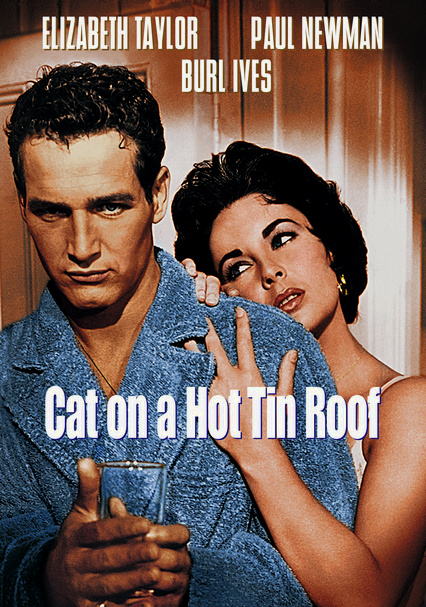
Cat on a Hot Tin Roof-1958

Cat on a Hot Tin Roof-1958

Director Richard Brooks

Starring Paul Newman, Elizabeth Taylor

Scott’s Review #1,356

Reviewed April 12, 2023

Grade: B+

If not for a drastically modified ending that completely changes the scope and message of the film version of Cat on a Hot Tin Roof (1958), it would have ranked a solid ‘A.’

Instead, it is reduced to a grade of ‘B+,’ which is a shame because the film, for the most part, is fabulous-themes such as greed, jealousy, and heartbreak are explored.

Director Richard Brooks, who never shied away from controversial subject matters in later films like In Cold Blood (1967) and Looking for Mr. Goodbar (1977), created the screenplay with James Poe as a collaborator.

The film is based on Tennessee Williams’s 1955 Pulitzer Prize-winning play of the same name. It stars the titular talented actors  Elizabeth Taylor, Paul Newman, Burl Ives, Jack Carson, Madeleine Sherwood, and Judith Anderson.

After Brick Pollitt (Newman) injures himself while drunkenly revisiting his high school sports-star days, he and his tempestuous wife, Maggie (Taylor), visit his family’s Mississippi plantation for the sixty-fifth birthday of his aggressive father, Big Daddy (Ives).

In declining health, Big Daddy demands to know why Brick and Maggie haven’t given him a grandchild, unlike Brick’s brother, Gooper (Carson), and his overbearing wife, Mae (Sherwood).

The accusations result in shadowy secrets involving an unseen ‘football buddy’ and best friend of Brick’s that brim close to the surface but are never wholly unleashed.

In 1958, Newman and Taylor were each at the top of their game, and their talent, good looks, and chemistry nearly smoldered off the screen.

Easy on the eyes, to say the least, one can relax with the comfort of witnessing good-looking people with tremendous acting talent hash it out.

The rest of the cast, especially Ives and Anderson, give bravura performances as fury and family drama emote most of the film’s running time.

Nearly rivaling the ferocity of the bitter scenes between Brick and Maggie is a lengthy and ultimately tender scene between Brick and his father.

The sequence is for the ages and infuses some sympathy for the materialistic Big Daddy, who tearfully admits to loving his father. This drifter loved his son more than life itself.

Ives should have won the Best Supporting Actor Oscar but missed a nomination for Cat on a Hot Tin Roof entirely. Instead, the actor won the Academy Award for a film called The Big Country.

Shot like a play because it’s based on one. Cat on a Hot Tin Roof feels claustrophobic and stuffy despite the glamour of the family estate where most of the action takes place.

Servants serve and scamper after the four little rascals belonging to Gooper and Mae, nicknamed ‘Sister Woman,’ while cutting the cake and dealing with party favors for the rich and powerful.

Sadly, the film is nearly ruined with a piss-poor and severely botched wrap-up reuniting Brick and Maggie, cementing their sexual union and ascertaining the fact that they are a straight couple.

You see, in the original play, Brick’s sexuality is heavily in question, but the film removes almost all of the homosexual themes.

The hated Hays Code limited Brick’s portrayal of sexual desire for Skipper and diminished the original play’s critique of homophobia and sexism.

These elements are central to the story, and their removal leaves a massive void in the film. We assume that Brick had erectile difficulties due to his injuries and drinking, but the point is weak and uneven, and also makes the continued mention of Skippy irrelevant.

Newman, in particular, was unhappy with the film.

Brooks wonderfully portrays Southern traditions and the hot summer atmosphere, making the characters feel suffocated and anxious. Doom and gloom hover over the film.

However, a stark change in the writing and Williams’s original concept is unforgivable, save for all the other elements of Cat on a Hot Tin Roof (1958).

After seeing the film twice, I yearn for the authenticity of seeing or reading the play.

Oscar Nominations: Best Picture, Best Director-Richard Brooks, Best Actor-Paul Newman, Best Actress-Elizabeth Taylor, Best Screenplay-Based on Material from Another Medium, Best Cinematography-Color

Golden Globe Nominations: Best Motion Picture-Drama, Best Director-Motion Picture-Richard Brooks

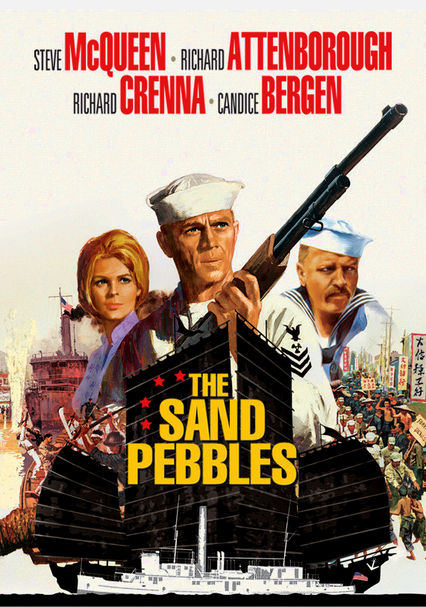
The Sand Pebbles-1966

The Sand Pebbles-1966

Director Robert Wise

Starring Steve McQueen, Richard Attenborough

Scott’s Review #1,257

Reviewed May 18, 2022

Grade: A-

The 1950s and 1960s can collectively be defined as the two decades that represent the grandiose film epic: instantly recognizable, sprawling, lengthy cinematic efforts that often span a period of time.

The Sand Pebbles (1966) safely falls into this category, mainly because it’s a war film and one minute shy of a three-hour extravaganza.

The film was a critical and commercial success at its release and received several Academy Award nominations (see more below). Still, despite being a fantastic watch, it is not remembered as well as one might expect.

Something makes the film fly under the radar, and I’m unsure why. It might be that an anti-war message film was not as typical as it would become. In 1966, a United States movement had only begun to question the government and war in general.

It wasn’t fantastic or acceptable yet.

Robert Anderson adapted the screenplay from Richard McKenna’s 1962 novel, which is very similar.

Robert Wise, famous for directing the memorable The Sound of Music just a year earlier in 1965 and the legendary West Side Story in 1961, is at the helm, delivering superior direction, especially in the exterior and lush, oceanic sequences.

Star Steve McQueen was at the height of popularity when this film was made, which undoubtedly helped get butts in the seats to drool over the blue-eyed actor in his Navy attire.

The Sand Pebbles has a heavier touch and promotes an anti-war viewpoint from its main character. Therefore, it delivers a strong message alongside the expected elements of a war film.

It’s similar to The Bridge on the River Kwai (1957), made nearly a decade earlier.

The Asian locales and the parallels with the controversial Vietnam conflict of the time will not be lost on the viewer.

We go back to 1926 when the USS San Pablo was patrolling the Yangtze River during the clashes between Chiang Kai-shek’s communists and Chinese warlords.

Eight-year veteran machinist Jake Holman (McQueen), new to the self-named “sand pebbles” crew, immediately draws suspicion because of his independent streak.

Ordered to protect Americans, including schoolteacher Shirley Eckhart (Candice Bergen), Jake and the gunboat crew are unwittingly drawn into a bitter nationalistic feud that holds grim consequences.

Besides his unforgettable turn in The Getaway in 1972, this is McQueen’s finest role, and I’m not the biggest fan of his, nor do I think he is the most outstanding actor.

He has tremendous material to work with in The Sand Pebbles and hits all the right notes throughout. The character is rootable and relatable.

The film also presents a fascinating look at Navy life with the camaraderie and depth of the supporting characters.

There is comedy and drama, and the additions of Richard Attenborough and Richard Crenna are stellar.

Naturally, Bergen is McQueen’s romantic love interest, as Shirley and Jake have fledgling feelings for each other.

Though the film ends abruptly, there is enough pain, death, and confusion to leave the viewer thinking afterward, and I always champion that aspect of the film.

The Sand Pebbles (1966) is an underrated production that simmers beneath some other classics from the same decade but is a terrific watch for many reasons.

Despite its timeliness, it has an old-world feel, representing a foray into the dangerous early-1970s cinema history that is yet to come.

Oscar Nominations: Best Picture, Best Actor-Steve McQueen, Best Supporting Actor-Mako, Best Art Direction-Color, Best Cinematography-Color, Best Film Editing, Best Original Music Score, Best Sound

Golden Globe Nominations: 1 win-Best Motion Picture-Drama, Best Director-Robert Wise, Best Actor-Drama-Steve McQueen, Best Supporting Actor-Richard Attenborough (won), Mako, Best Screenplay, Best Original Score, Most Promising Newcomer-Female-Candice Bergen

Airport-1970

Airport-1970

Director George Seaton

Starring Burt Lancaster, Dean Martin, Helen Hayes

Scott’s Review #1,059

Reviewed September 2, 2020

Grade: A

The film that helped launch the popular disaster genre that captivated much of 1970s cinema, Airport (1970), led the pack in innovation and entertained audiences with a large cast of A-list Hollywood stars in peril.

What fun!

The blueprint continued with The Poseidon Adventure (1972), Earthquake (1974), and The Towering Inferno (1974).

Interestingly, Airport contains little death, unlike the others, which systematically killed off cast members in a reverse whodunit, more like “who gets it”.

It holds up quite well.

Airport is pure bliss for me. An enormous fan of the disaster epic, this one satisfies my obsessions with airports and airplanes, adding late-1960s sophistication and style, plus a healthy dose of subplots.

From a romantic triangle to mental illness to an elderly stowaway named Ada (Helen Hayes), the storylines mesh so that there’s never a dull moment. Events unfold over a twenty-four-hour period, with a busy, snowy Chicago airport as the backdrop.

The cinematic spectacle was based on a little-known novel of the same name by Arthur Hailey, adapted into a screenplay by George Seaton, who also directed the flick. I love it when a director also writes the dialogue because a better experience often prevails.

Seaton directed Miracle on 34th Street (1947) and a slew of other films, so he knows a thing or two about pulling the heartstrings while offering adventure.

The film was rated “G,” so it’s a family-friendly affair.

A cold and snowy winter night in Chicago results in flight delays and a 707 plane getting stuck on the runway in snow and mud. As crews dig to free the plane, Airport manager Mel Bakersfield (Burt Lancaster) is forced to work overtime.

His furious wife Cindy (Dana Wynter) demands a divorce. He’s in love with Tanya anyway, a pretty customer relations agent for the airline, Trans Global Airlines, a clever play on Trans World Airlines.

Other characters emerge, including a high-spirited chief mechanic (George Kennedy) and Vernon, a married TGA captain having an affair with stewardess Gwen (Jacqueline Bisset), who is pregnant with his child.

The heavy is a mentally disturbed man named D.O. Guerrero (Van Heflin) who is so down on his luck that he desperately crafts a handmade bomb and takes out an insurance policy that his struggling wife Inez (Maureen Stapleton) will receive upon his death.

He boards a plane to Rome with most of the other characters, intent on detonating the bomb, killing himself, and leaving Inez with some financial relief. When she catches on, she hurries to the airport, desperate to stop the flight from departing. Of course, things don’t go so well.

The Guerreros are my favorite characters. D.O. could have easily been written as a villain, one-note, and dastardly, but he isn’t. He is a sympathetic character, pained and wounded; his troubles are the result of war, and he oozes compassion.

Stapleton is tremendous as Inez, the suffering wife who loves her husband and desperately wants them to have a nice life. The actress gives a gut-wrenching performance that should have won her the Oscar.

Instead, it went to Hayes’s comic talents.

The main appeal of these stories is that the audience slowly gets to know and falls in love with the characters. They become like good friends.

The pacing is so good that the real action takes place only in the last forty-five minutes of the film.

Strong characters and rich stories are offered as the buildup, and we know that peril is eventually coming, and indeed it does.

The special effects and the airplane set are fantastic for 1970. The luxury airline, with its plush seats and catered meals, is on display, and the entire length of the plane, including the cockpit, is used extensively.

Characters walk up and down the aisles frequently, creating the illusion of a vast, stylish airliner, even though a small set was probably used.

The stewardesses and pilots offer a glimpse of what a luxury it used to be to fly in style without the annoyances of long security lines, check-ins, and constant hassles.

Hell, D.O. casually walks on the plane with a bomb, and Ada gets on without a second glance when she claims to be giving a passenger their dropped wallet!

Airport (1970) set the tone for similar films and successfully mixes sudsy, dramatic stories of its characters’ lives with the thrills and plights of those same characters in danger.

I don’t consider it the fluff that many others do, but a satisfying, well-constructed film that still holds up well.

Three sequels followed the film and were hilariously spoofed by the comedy Airplane! (1980).

It bears repeated viewings.

Oscar Nominations: 1 win-Best Picture, Best Supporting Actress-Helen Hayes (won), Maureen Stapleton, Best Screenplay Based on Material from Another Medium, Best Original Score, Best Sound, Best Costume Design, Best Art Direction, Best Cinematography, Best Film Editing

Invasion of the Body Snatchers-1956

Invasion of the Body Snatchers-1956

Director Don Siegel

Starring Kevin McCarthy, Dana Wynter

Scott’s Review #895

Reviewed May 8, 2019

Grade: B+

Invasion of the Body Snatchers (1956), released during the mid-1950s, a time of post-War World II unity and prosperity in America where neighborhoods snuggled cheerily by the fireplaces with nary a care in the world, sought to make the public paranoid, and it worked.

Thanks to a foreboding premise, audiences got to ponder the possibilities of pod people cloning human beings and invading the planet, scaring the daylights out of the masses, and resonating with critics.

Playing like an extended episode of The Twilight Zone, and to the film’s credit, it preceded the television series.

The film successfully achieves thought-provoking post-film dialogue at a brief one-hour and twenty-minute running time.

It has been crowned with cult-classic status and similar creepy-themed genre films that blossomed during the 1950s.

Set in the fictional sunny California town of Santa Mira, the film gets off to an exciting start as we witness a screaming man in an emergency room attempting to be calmed by staff. The harried man claims to be a doctor and recounts, via flashbacks, the events leading up to the present day.

Our main character, Dr. Miles Bennell (Kevin McCarthy), and his ex-girlfriend Becky (Dana Wynter) team up after several patients report relatives acting robotic and strange.

When half-created bodies in pods are soon discovered, Miles and Becky know something is amiss in their town and race to figure out the mystery of the “pod people” while others turn into emotionless human-like beings.

The epidemic is caused by extraterrestrial life. The intention is for humanity to lose all emotions and a sense of individuality, creating a simplistic, stress-free world.

An interesting facet of Invasion of the Body Snatchers is how time has changed the reaction to the film. In 1956, the thought of aliens taking over the world seemed plausible and frightening since the man had not yet walked on the moon, and astronomy was a new venture.

The peaceful tranquility of the United States of America was in danger of being overtaken, the film exclaimed, and viewers fell for the scare tactics.

The film was created to be a political allegory, and boy did this sure work.

Decades later, the United States’ vibe is more integrated and flourishes with more diversity and acceptance of other cultures and beings. The country is also more chaotic, so the invasion of the “pod people” is less scary and perhaps even more embraced by those living in Malcontent.

Invasion of the Body Snatchers suffers from poor aging and a message rethink and teeters on feeling dated.

The acting is marginally good, if not spectacular, but it does not need to be Oscar-worthy to have the desired effect. The actors deliver their lines with dramatic gusto, successfully conveying suburban Americans’ troubled paranoia to audiences who will surely be on the edge of their seats as the drama unfolds.

The characters never think outside the box, only in straightforward terms, so the motivations are earnest.

The black and white cinematography is palpable yet subdued, and the lack of colors provides substance. While the 1950s was a wonderful time for film, it was also a less edgy time for cinema.

The 1960s brought fewer restrictions and more shocking elements, but Invasion of the Body Snatchers is compartmentalized, feeling more like a long episodic television thriller.

Double-billed with the equally frightening The Day the Earth Stood Still (1951) would make for delicious 1950s science-fiction viewing.

I remain partial to the stunning, vibrantly colored 1978 remake, which features superior filmmaking and more layered production values. The original Invasion of the Body Snatchers (1956) holds its own and is a recommended watch.

The Strange One-1957

The Strange One-1957

Director Jack Garfein

Starring Ben Gazzara, Pat Hingle

Scott’s Review #129

70118583

Reviewed July 23, 2014

Grade: B

The Strange One is a strange (no pun intended) obscure psychological drama from 1957 starring a very young Ben Gazzara and George Peppard.

The setting is a military academy where bullying and intimidation run rampant between the young cadets and some of the staff.

The sadistic lead bully is Gazzara, who is mesmerizing in his low-key yet frightening portrayal of a macho guy who gets what he wants and decides to destroy his victims.

The film reminds me of an extended Twilight Zone episode. It feels like a television thriller but is effective as a black-and-white shot.

Gazzara stands out in the cast as a charming, sadistic bully in a military academy who terrorizes and manipulates anyone in his path.

One flaw is there is no explanation for his behavior. How did he become so terrorizing? Was he abused? What is his motivation?

In a sense, however, this makes it all the more fascinating.

Some homoerotic scenes are surprising to find in films in 1957 when the Production Code was so strict.

The Strange One is an interesting little film.