Category Archives: Top 250 Films

Rope-1948

Rope-1948

Director Alfred Hitchcock

Starring Farley Granger, John Dall, James Stewart

Top 250 Films #26

Scott’s Review #323

60020558

Reviewed January 5, 2016

Grade: A

Rope (1948) is one of my favorite Alfred Hitchcock films and a film that flies under the radar amongst his catalog of gems. Made in 1948, the movie, set as a play (and based on a 1929 play), uses one set only and appears to be one long take, making it an understated film.

The action takes place inside a luxurious Manhattan apartment with a stunning panoramic skyline. Intelligent with subtle nuances that in current viewings are not as subtle, the tiny (nine) cast is fantastic at eliciting a fine story that never seems dated.

Starring Hitchcock stalwart Jimmy Stewart, the film features Farley Granger (Strangers On A Train, 1951) and John Dall.

Granger and Dall portray Phillip and Brandon, two college students who strangle a fellow student as an experiment to create the perfect murder. Immediately after the murder, they host a dinner party for friends, including the father, aunt, and fiancée of the victim, all in attendance.

Stewart plays Brandon and Phillip’s prep school housemaster,  Rupert Cadell, who is suspicious of the duo.

To further the thrill, the dead body is hidden inside a large antique wooden chest in the center of their living room, as their housekeeper unwittingly serves dinner atop the dead body.

The film is macabre, clever, and quite experimental.

The very first scene is of Phillip strangling the victim, David, with a piece of kitchen rope, which is an unusual way to start a film. Typically, there would be more buildup and then the climax of the murder, but Hitchcock is far too intelligent to follow the rulebook.

Ironically, Phillip is the weak and submissive one, despite having committed the crime. Brandon is dominant and keeps Phillip in check by coaxing him to be calm and in control.

The fact that many of the guests have a relationship with the deceased, munching on their dinner while wondering why David is not attending the party, is gleeful irony. Plenty of drinks are served, and as Phillip gets drunker and drunker, he becomes more unhinged.

The film reminds me of some aspects of Who’s Afraid of Virginia Woolf, also based on a play and primarily featuring one set – both dinner parties with alcoholic consumption, secrets, and accusations becoming more prevalent as the evening progresses.

The plot unfolds chillingly throughout one evening as Rupert slowly figures out that what he had previously taught Brandon and Phillip in an intellectual, hypothetical classroom discussion has been taken morbidly seriously by the two.

The homosexual context is hard to miss in this day and age, but remarkably, it was over the heads of the 1948 Production Code censors, who had no idea of what they were witnessing.

Phillip and Brandon are a gay couple who live together, and Hitchcock has admitted to this in later years. If watched closely, one will notice that in any shot where Brandon and Phillip are speaking to one another, their faces are dangerously close, so we can easily imagine them kissing.

This is purely intentional by Hitchcock.

Rope (1948) is a daring achievement in innovative filmmaking. It should be viewed by any aspiring filmmaker or anyone who enjoys robust and clever camera angles and stories, seeking an extraordinary adventure in a calm, subtle, and engaging narrative.
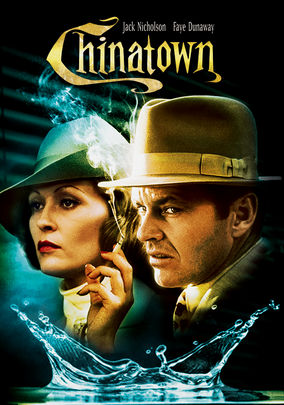
Chinatown-1974

Chinatown-1974

Director Roman Polanski

Starring Jack Nicholson, Faye Dunaway

Top 250 Films #27

Scott’s Review #321

374030

Reviewed January 3, 2016

Grade: A

Chinatown (1974) is like a perfectly aged fine red wine- with each passing year or viewing, it becomes more and more spectacular.

A thinking man’s film, if you will, Chinatown is a complex puzzle, just waiting to unravel in a layered, complicated fashion. However, this is to its credit, as it is a fantastic, rich film noir, and as good as cinematic writing gets.

Set in the 1930s, the set pieces and art direction are flawless – as great a film in terms of look as it is in story.

Director Roman Polanski and star Jack Nicholson are primarily responsible for the film’s success.

The direction is a marvel as the cinematography, flow, and pacing are astounding. A slow build, the film takes off at just the perfect point as the mystery deepens, building to a crescendo.

Nicholson plays Jake Gittes, a handsome Los Angeles private investigator hired by a woman claiming to be Evelyn Mulwray. Evelyn desires to have her husband followed, as she suspects him of an affair with another woman.

Jake begins tailing the woman’s husband, only to uncover an intriguing mystery involving the Los Angeles water supply. Soon, the real Evelyn Mulwray (Faye Dunaway) turns up and the film segues into a masterful web of complications and turns of events.

One will not see the ending coming.

Nicholson leads the film as only he can. With his charismatic, aww shucks attitude, mixed with humor, he is eye candy for the camera, as he takes the case and becomes more and more immersed in the action.

This film was a pivotal point for him as he began a slew of worthwhile and abundant performances in pictures.

Let us not forget to mention the acting performance of Dunaway. Smoldering, sexy, classy, intelligent, and vulnerable, she perfectly plays almost every emotion.

Chinatown, Bonnie and Clyde (1967), and Mommie Dearest (1981) are her best works in a career that spanned decades of success.

Chinatown (1974) is an entity unto itself in film noir. It is incredibly well-written, nuanced, and flawless.

This film simply must be seen.

The final thirty minutes- in addition to the “great reveal” are also violent, shocking, and extraordinary. A blueprint of what great filmmaking truly is.

Oscar Nominations: 1 win-Best Picture, Best Director-Roman Polanski, Best Actor-Jack Nicholson, Best Actress-Faye Dunaway, Best Original Screenplay (won), Best Original Dramatic Score, Best Sound, Best Costume Design, Best Art Direction, Best Cinematography, Best Film Editing

Frenzy-1972

Frenzy-1972

Director Alfred Hitchcock

Starring Jon Finch, Barry Foster

Top 250 Films #28

Top 40 Horror Films #7  

Scott’s Review #244

Frenzy_movieposter

Reviewed May 17, 2015

Grade: A

Frenzy (1972) is a latter-day Alfred Hitchcock film that returns the masterful director to his roots in London, England, Hitchcock’s country of origin, and where his early films were made.

As with numerous other Hitchcock stories, the protagonist is falsely accused of murder and struggles mightily to prove his innocence before time runs out and he meets his doom.

The film is distinctly British, featuring an entirely British cast, and includes a humorous side story about the primary investigator’s wife. This terrible cook prepares exotic yet unappetizing meals for her husband.

This comic relief perfectly balances the heavy drama encompassing the main murder story, as Frenzy is one of Hitchcock’s most violent and graphic.

Made in 1972, he was able to include much more explicit content. A neck-tie murderer, who also rapes his female victims, is on the loose in London.

In the opening sequence, we see a dead woman floating in the Thames River during broad daylight, nude, except for a necktie that she has been strangled with. A crowd of spectators races to see what all the fuss is.

We then meet the central character of the film, down-on-his-luck bartender Richard Blaney, who is fired from his job as a bartender by his hateful boss.

Blaney has a loyal girlfriend in Babs, a barmaid at the same local watering hole. Babs is sexy, yet plain. He also has a successful ex-wife, Brenda, who runs a dating company. Blaney regularly sponges money and dinners from Brenda. Also in the picture is successful fruit-market trader, Bob Rusk, who is a friend of Blaney’s.

All four of these central characters have much to do with the main plot.

As events begin to unfold, the film is not a whodunit as traditionally it could have been. Instead, the audience knows very quickly who the murderer is and their motivations, which is an interesting twist in itself.

Regardless of this knowledge, the film is quite compelling as a classic Hitchcock horror thriller.

It is interesting for Hitchcock fans to compare this film with many of his earlier works. Released in 1972, at a point in film history where aforementioned sensors were more lax, it is the first Hitchcock film to feature nudity.

It is also the film of Hitchcock’s that features the most brutal rape/murder scene of all, surpassing the shower scene from Psycho, in my opinion.

The victim’s ordeal is prolonged, as she begins praying, thinking she will only be raped, at first unaware that her attacker is also the neck-tie murderer and her life is running short. This leads to a sad, gruesome outcome for her.

One of the most interesting murder scenes takes place off-camera and is an ingenious idea by Hitchcock. The neck-tie murderer lures a victim to his apartment complex under the guise of being a friend of hers.

They walk upstairs to his unit and go inside, all the while the camera remains poised outside of the apartment so the viewer only imagines the horrors occurring inside.

The camera then slowly goes back down the stairs and out onto the street and looks up at the murderer’s window. The fact that the victim is one of the principal characters makes one’s imagination run wild as to what is transpiring inside the apartment and the viewer is filled with grief.

This is a brilliant choice by Hitchcock and so effective to the story.

Another great scene is the potato truck sequence.

As the neck-tie murderer has dumped his victim, like garbage, into a potato sack, he is panicked to realize that she has taken his pin from his jacket and presumably clenched it in her fist as a clue, despite her demise.

What will he do now?

The long scene features the murderer inside the potato truck attempting to unclench his pin from her hand and escape the moving truck without being caught.

It is my favorite scene in Frenzy.

Frenzy (1972) is a return to triumph for Hitchcock, after the complex Topaz (1969) and Torn Curtain (1966), underappreciated political thrillers made a few years before this film.

He returns to the horror genre like gangbusters throwing some good, sophisticated British humor into his recipe for good measure.

What a treat this film is.

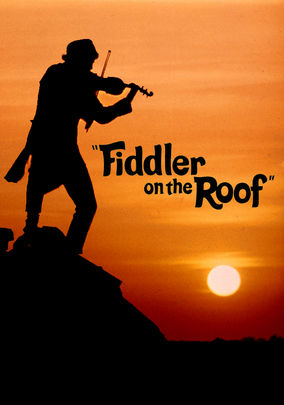
Fiddler on the Roof-1971

Fiddler on the Roof-1971

Director Norman Jewison

Starring Topol, Norma Crane, Rosalind Harris

Top 250 Films #29

Scott’s Review #123

499456

Reviewed July 21, 2014

Grade: A

Fiddler on the Roof is a fantastic musical from 1971 based on the popular stage version. It tells the story of a Russian Jewish family living in tumultuous times, both before and during the Russian Revolution.

The film has everything and is very well made, truly doing justice to the stage version. It contains dancing, drinking, festive parties, love, and sing-alongs. It also includes politics, hardships, and tragedy.

Led by the patriarch of the family, Teyve, played fantastically by Topol, he explains (often narrating directly to the audience, which is a goldmine in style) life in his Russian village with five daughters and no sons and an overbearing wife. They are a poor family and struggle to make ends meet.

They navigate life with the help of song and dance, dealing with situations such as romance, primarily focusing on the three oldest girls, and the political upheaval surrounding their country.

It is tough for a film version of a famous musical to be top-notch and even compare to the stage version, but the film is excellent- “Tradition”, “Matchmaker”, and “If I Were a Rich Man” immediately stick in the viewer’s head.

The film has a rich, earthy feel, with a predominance of brown and grey colors. Russian history is explored, lending it complexity and an educational quality, rather than merely providing a simple, feel-good experience. To put it simply, the story is layered and not one-note.

Politics, progressive thinking versus conservatism, and the generation gap are explored and the characters learn and adapt to a changing world, especially the parents.

One interesting aspect is the progressive onset of the Russian Revolution as it gradually drew closer.

Fiddler on the Roof is quite lengthy (179 minutes), but does not seem that long. This film (and play) is a marvel.

Oscar Nominations: 3 wins-Best Picture, Best Director-Norman Jewison, Best Actor-Chaim Topol, Best Supporting Actor-Leonard Frey, Best Scoring: Adaptation and Original Song Score (won), Best Sound (won), Best Art Direction, Best Cinematography (won)

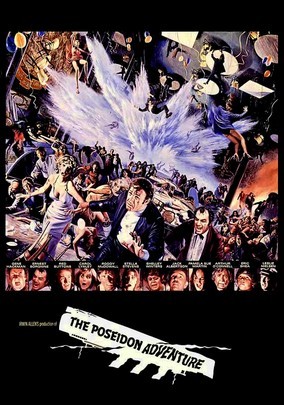
The Poseidon Adventure-1972

The Poseidon Adventure-1972

Director Ronald Neame

Starring Gene Hackman, Ernest Borgnine, Shelley Winters

Top 250 Films #30

Scott’s Review #214

867891

Reviewed January 17, 2015

Grade: A

The disaster genre, primarily represented in film during the 1970s, includes some of my personal favorites, and The Poseidon Adventure (1972) is easily at the top of the list.

Set on a lavish ocean liner, the SS Poseidon, on New Year’s Eve, the doomed ship falls victim to a powerful tsunami while sailing from New York to Athens on its final voyage, causing it to topple over and leaving a handful of survivors to meander through the bowels of the ship in an attempt to find a way out and be rescued.

They are led by a stubborn preacher, played by Gene Hackman.

The appeal of The Poseidon Adventure is, of course, watching the cast of characters in peril and guessing which ones will meet their fates and how- think of a slasher film without the horror component.

Featuring an ensemble cast of Hollywood celebs of the day, the characters are introduced to the audience before the tidal wave erupts, so we care for them immensely.

There is the former hooker with the heart of gold married to a gruff cop (Stella Stevens and Ernest Borgnine as Mike and Linda Rogo).

Then there is the sweet-natured older couple on the cruise to see their grandchild (Shelley Winters and Jack Albertson as Manny and Belle Rosen).

Pamela Sue Martin plays the teen girl, Susan, who falls madly in love with the preacher, Reverend Scott. Along with her younger brother, Robin, they are traveling to see their parents, who await their arrival.

Roddy McDowall plays a waiter named Acres.

Lastly, Red Buttons plays James Martin, a health-conscious bachelor, and Carol Lynley plays shy singer Nonnie.

Reverend Scott is the moral focal point of the film and questions god several times throughout.

The sets are extraordinary- the colorful Christmas tree in the grand dining room is fantastic. The entire New Year’s Eve party scene is my favorite- it is festive, extravagant, and mixed in with a scene where the ominous tsunami is rapidly approaching.

The festive celebration quickly turns into confusion as the sirens begin to sound, and finally, panic as furniture begins to fly.

Visually this scene is the most intricate- the ship turns upside down after the crash, thus giving the illusion that the bottom of the ship is the top.

Tricky.

From this point on all of the sets to follow are intended to be upside down- a crafty and effective style, but none more than the dining room scene.

A victim toppling and crashing into a giant clock is a memorable scene.

As the group of survivors haggardly make their way throughout the ship they encounter underwater explosions, dead bodies, rushing water, and disputes, mainly between Reverend Scott and Rogo, as to how to proceed to safety.

One by one a handful of the group meets their fates in gruesome fashion- falling into a fire, a heart attack, and falling to one’s death.

Shelley Winters is the comic relief of the film with her humorous quips about her weight, and her death scene brings me to tears each time I experience it.

A heavyset older woman who at one time was a dynamite high school swimmer, she attempts to help the group by holding her breath and swimming underneath the engine room, which is blocked- she does inevitably save the Reverend Scott’s life but succumbs to a heart attack shortly thereafter.

It is a powerful, heartbreaking scene.

The film is a great adventure. What makes The Poseidon Adventure (1972) so timeless and continues to bring so much pleasure? Certainly not high-brow nor high art, but it does not need to be.

It is simply meant to be enjoyed for what it is- a thrilling, fun, entertaining ride.

Oscar Nominations: 1 win-Best Supporting Actress-Shelley Winters, Best Song Original for the Picture-“The Morning After” (won), Best Original Dramatic Score, Best Costume Design, Best Sound, Best Art Direction, Best Cinematography, Best Film Editing

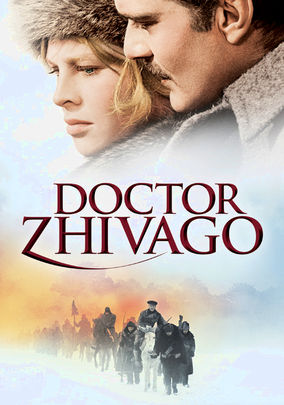
Doctor Zhivago-1965

Doctor Zhivago-1965

Director David Lean

Starring Julie Christie, Omar Sharif, Rod Steiger

Top 250 Films #31

Scott’s Review #42

449931

Reviewed June 18, 2014

Grade: A

Doctor Zhivago (1965) is a great film to watch on a cold night or throughout the crisp winter or holiday season.

The film is a classic masterpiece directed by the talented David Lean (Lawrence of Arabia, 1962, A Passage to India, 1986), whose perfectionism is evident in his epic films.

Nearly every scene could be a painting, so the cinematography alone is reason enough to become enchanted with art.

Of course, the story is also a goldmine as a sprawling decades-long love story unfolds amid the ravages of the bloody Bolshevik Revolution.

The film is set in the bitter cold of Russia (although all scenes were actually shot in Spain), and the harshness of the climate and the war combine with a doomed love story set against the backdrop of numerous battles and wartime effects.

Nearly all sequences are set in the winter, and the blustery and icy effects are nestled against numerous scenes of cozy, candlelit cabins or more extravagant, glowing surroundings.

Viewers must be surrounded by fire, flaming candles, or another form of warmth as a snowstorm or blizzard besets the outdoors for a perfect viewing experience.

A large-screen television or a cinema is simply a must to watch this film, as it is epic on the grandest scale.

Omar Sharif and Julie Christie (a gorgeous star in her day) are cast perfectly as Uri and Lara, young forbidden lovers enthralled with one another but involved with significant others.

The film dissects their initial meeting and their story over the years, experiencing marriages, births, and deaths throughout the ravages of Russia in the early twentieth century.

Despite their affairs, neither is deemed unsympathetic—quite the contrary.

Audiences will fall in love with the pair and become enchanted as they watch their love-tortured adventures unfold.

Sharif and Christie are just magnificent and utterly believable as a couple.

The set pieces are magnificent and flawless in design and detail (my favorite is the Ice Palace).

The cinematography is breathtaking, and the content is remarkably close to the superior novel by Boris Pasternak, evoking a sense of “really being there” in the viewer.

Doctor Zhivago (1965) is a brilliant film, perfect for a snowy winter evening.

Oscar Nominations: 5 wins-Best Picture, Best Director-David Lean, Best Supporting Actor-Tom Courtenay, Best Screenplay Based on Material from Another Medium (won), Best Music Score-Substantially Original (won), Best Art Direction, Color (won), Best Cinematography, Color (won), Best Costume Design, Color (won), Best Film Editing

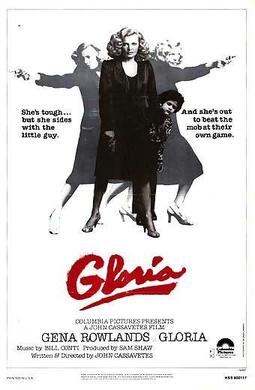
Gloria-1980

Gloria-1980

Director John Cassavetes

Starring Gena Rowlands

Top 250 Films #32

Scott’s Review #166

60000794

Reviewed September 9, 2014

Grade: A

Gloria (1980) is an action/thriller film that features the standard action-crime thriller elements, including shoot ‘em up, guns-blazing, clichéd fare, but contains an interesting and appealing leading character, a gritty atmosphere, and witty dialogue.

It is a significantly better film than most indistinguishable action films.

Directed and written by independent film master, John Cassavetes, who wanted to make a more conventional, mainstream film than was typical for him- think the very left of center, brilliant A Woman Under the Influence, also starring Gena Rowlands, and Gloria was the perfect film for him to create with Rowlands as the focal point.

Made in 1980, Gloria perfectly portrays New York City at the time.

New York City was gritty, dirty, rough, crime-infested, violent, and chaotic, and the film frequently travels throughout Manhattan, the Bronx, and New Jersey, with many scenes shot directly on the streets of New York.

Several other scenes are set in dingy apartments, hotels, seedy bars, and rundown streets, and are highly effective in portraying a gloomy atmosphere. The cinematography in the film is perfect.

The heart of the film lies with Rowlands (Cassavetes’s wife), who gives a mesmerizing performance as a former mob girlfriend who, by circumstance, must protect a young Hispanic boy from execution by the mob because of an informant’s book he clings to for dear life.

No other actress could have played this role of a tough-talking, brash New Yorker as well as Rowlands does. The boy’s father, played by Buck Henry, is a scared accountant with ties to a company fronted by the mob.

He fears his entire family will be murdered and hands his kid over to Gloria. Julie Carmen gives a brief but effective performance as Phil’s frazzled mother.

I wish Henry and Carmen had been given more screen time and fleshed-out characters because both had huge potential. The film belongs to Rowlands- she is no-nonsense, tough, and so convincing in the part.

I also enjoyed the casting of John Adames as the kid, Phil. His performance was inexplicably panned by many critics and I’m not sure why.

I also love the unique opening credits as intense folk/jazz music plays over watercolor portraits that turn into the skyline of New York City and the music has a melancholy and eeriness to it.

Amid the violence, there is a sweet bond that develops between Gloria and Phil that is not too sentimental or cheesy.

A great, compelling, late 1970s/early 1980s film that has some definite Godfather and Dirty Harry influence in texture and characters, especially with some of the mobster characters.

The appeal of the film is that it has a heart but never delves into schlock. Surprisingly rated only PG, it is gritty, but not lewd or harsh and seems dirtier than it is with barely any filthy language.

The chemistry and heartfelt connection between Gloria and Phil are darling without being too sappy or safe. Gloria is a fast-paced, action gem that is both appealing and tough.

Oscar Nominations: Best Actress-Gena Rowlands

The Wizard of Oz-1939

The Wizard of Oz-1939

Director Victor Fleming

Starring Judy Garland, Ray Bolger, Frank Morgan

Top 250 Films #33

Scott’s Review #34

70039535

Reviewed June 17, 2014

Grade: A

The Wizard of Oz is a magical film and one of my all-time favorites. Made in 1939, it still holds up amazingly well, and the nuances continue to be admired, especially given the period in which it was made. 1939 and Gone With the Wind belong to this film, as both were and are true classics.

This film is so deeply embedded in people’s minds that it can be challenging to examine it objectively. I fondly recall watching this gem annually as it aired on television each holiday season—traditionally around Thanksgiving if memory serves.

It’s a marvel from start to finish and masterfully artistic. How creative to show the first portion in black and white with dusty muted colors, not to mention the astounding twister sequence- done using a stocking.

Then, we are introduced to a magical world filled with luscious colors and the mind-blowing depth of art direction. Munchkin-land, Glinda the Good Witch, and Emerald City are beautiful, lavish, and treat.

Who does not become teary-eyed during Judy Garland’s rendition of “Somewhere Over the Rainbow”? The poignancy is given by the tragic (yet successful) life the star would lead.

Margaret Hamilton’s performance as the Wicked Witch/Elmira Gulch is deliciously nasty. She almost sneers at the camera as she mocks Dorothy, who whimpers in tears while missing Auntie Em. One can tell she thoroughly enjoyed this role.

And The Wizard of Oz is not simply a pop culture hit- it has merit and creativity. The special effects hold up tremendously well and were simplistic back then. There was no CGI in those days, but it was, in many ways, better than today’s CGI.

Audiences of all ages must see this film at least once, preferably on Blu-Ray. Judy Garland, later a tragic, troubled, and lost figure, captures an innocence that has been sadly lost through the years.

The characters (The Cowardly Lion, Scarecrow, and Tin Man) are perfectly cast and uniquely created without being too over-the-top.

Very few films are timeless, and this is one of them.

Oscar Nominations: 1 win-Outstanding Production, Best Song-“Over the Rainbow” (won), Best Art Direction, Best Special Effects

The Conformist-1970

The Conformist-1970

Director Bernardo Bertolucci

Starring Jean-Louis Trintignant, Stefania Sandrelli

Top 250 Films #34

Scott’s Review #212

70054715

Reviewed January 10, 2015

Grade: A

The Conformist, directed by Italian director Bernardo Bertolucci and based on the 1950s novel by Alberto Moravia, is a complex film that tells the story of one man’s complicated life during the Italian Fascist era (1922-1943).

Due to a traumatic childhood event, he is troubled and strives to “conform” to a “normal”, traditional lifestyle despite his underlying wounds and desires, which he struggles to repress.

The character in question is Marcello Clerici, played by Jean-Louis Trintignant, who works for the secret police in support of the Fascist government.

Marcello yearns for a quiet life that everyone else seems to have. He is set up with a beautiful new wife and is ordered to assassinate his college professor, who is a leader of an anti-Fascist party.

Throughout the story, Marcello is tormented, via flashbacks, by his troubled childhood and the film delivers a marvelous, creative use of camera angles, style, and design.

It is a dreamlike film that makes full use of childhood memories from the perspective of the protagonist.

The film is a character study in the highest regard yet is also beautiful to look at making it very multi-faceted. Marcello is troubled as evidenced by his backstory. In many ways he is weak, refusing to accept who he is or admit his deepest desires.

Mixed in with the complexity of his character is a unique character named Anna (Dominique Sanda), the college professor’s gorgeous blonde wife who appears to be bisexual, enticing both Marcello and his wife, Giulia, played by Stefania Sandrelli. Marcello, in particular, becomes transfixed and obsessed with Anna.

A truly heartbreaking moment arrives later in the film and is my favorite scene in The Conformist. As the assassination attempt is made on a lonely and secluded, yet picturesque country road, the result is murder, betrayal, and surprise.

When one character non-verbally speaks to another with mostly facial expressions and emotionally and pathetically pleads for their life through a car window it is as tragic as it is poetic.

The scene is wrought with drama and sadness.

Additionally, Marcello’s troubled childhood involving a homosexual experience involving a chauffeur named Lino resurfaces years later in an unlikely way and leads to the shocking conclusion of the film.

The very last frame of the film leaves the viewer pondering what is to become of Marcello next.

Marcello’s mother and father add mysterious layers to the film. His father is securely an inmate in a mental hospital while his mother is a boozy older woman who sleeps until noon.

While these characters are not explored as completely as they might have been, it does lead one to ponder why Marcello is the way that he is and if his parents have any bearing on his persona.

In a particularly fascinating scene, Anna seductively dances with Marcello’s wife at a crowded dancehall, they do the tango, as amidst her affair with Marcello, she is clearly in love with his wife, making the dynamic confusing yet at the same time fascinating to view.

The Conformist heavily influenced storied directors such as Frances Ford Coppola, Martin Scorsese, and Steven Spielberg. A beautiful scene of leaves blowing in the wind almost mirrors a similar scene contained in Coppola’s The Godfather Part II.

A film that is as captivating as it is filled with influence, The Conformist is an interesting watch for both the style and the mystique that surrounds it.

Oscar Nominations: Best Screenplay Based on Material from Another Medium

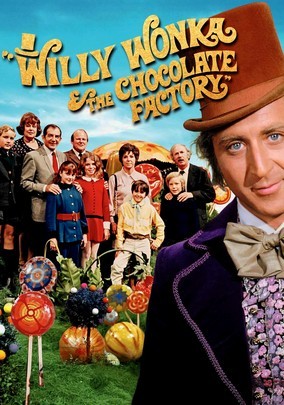
Willy Wonka and the Chocolate Factory-1971

Willy Wonka and the Chocolate Factory-1971

Director Mel Stuart

Starring Gene Wilder, Jack Albertson

Top 250 Films #35

Scott’s Review #206

60020949

Reviewed December 18, 2014

Grade: A

More than just a children’s movie, Willy Wonka and the Chocolate Factory (1971) is a terrific, imaginative, fantasy film that is timeless and meant for all ages to enjoy.

The mastery and creativity of the sets and art direction are astounding, and the story is sweet, whimsical, and captivating. Often, with children’s movies, we are treated to stories that are either dumb or contrived, which will entertain five-year-olds but bore or cringe adults.

Willy Wonka and the Chocolate Factory is none of the above. It is intelligent, filled with magic, and has a heart.

Charlie Bucket is a poor child whose mother earns a living by washing clothes. Along with his four bedridden grandparents, they lives a meager existence in a small cottage somewhere in Europe.

Particularly close with his Grandpa Joe, the two of them become obsessed with a contest held by mysterious Willy Wonka, the owner of an enormous chocolate factory nearby.

The contest consists of five “Golden tickets” being hidden in Wonka bars. The five lucky winners will receive a lifetime supply of candy and a tour inside the long-since-closed chocolate factory.

After a series of circumstances, Charlie obtains one of the tickets and the adventure begins.

The build-up to the trip into Willy Wonka’s factory is gripping- mainly because the viewer knows that a magical treat is in store and is filled with curiosity- what will the chocolate factory look like? What is Mr. Wonka like?

The four other winners- Augustus Gloop, Veruca Salt, Violet Beauregarde, and Mike Teevee are all unique and creatively written characters- all spoiled brats in their way, so Charlie is the “normal” child and has a true rooting value to him.

As the five children, along with a designated parent- or in Charlie’s case, Grandparent, begin their journey throughout the chocolate factory the audience is treated to a psychedelic experience with fantastic sets- a river made of chocolate, an entirely edible garden, lickable wallpaper, a bubble room, and a frightening riverboat.

The film is bright and colorful within the walls of the factory which perfectly contrasts Charlie’s dreary existence in the outside world.

As the four bratty children meet their fates in joyfully imaginative ways- gum chewer Violet blows up like a blueberry after chewing experimental Wonka gum that she is warned not to, Veruca is deemed rotten after throwing a fit and topples down a garbage chute.

The film is breathtaking and imaginative, filled with wonderment.

Gene Wilder plays the role of Wonka as over-the-top and it works tremendously.

All of the child actors play their roles competently as each character is distinguished from the others.

I love the scary riverboat tunnel scene as it is frightening, psychedelic, and magnificent. I also love the contrast between the enchanting colorful second half to the bleakness of the first. The sets are some of my favorites in their lavishness.

Specifically, the relationship between Charlie and Grandpa Joe is wonderful. Grandpa Joe is a father figure to Charlie, but so is Willy Wonka in a completely different way.

The greed of the children is also interesting and one hurrahs as each one gets his or her comeuppance.

The songs from the film are remarkable and quite cutting edge- each time one of the lucky five golden ticket winners meets their doom, the Oompa Loompas sing a tune that visually has weird shapes and colors-psychedelic and very hippy, of the late 1960’s-early 1970s era.

Other numbers such as “I’ve Got a Golden Ticket”, “Cheer up Charlie”, and “The Candy Man” are memorable.

A film for the ages, Willy Wonka and the Chocolate Factory (1971) is a celebration of creative film and quite cerebral at times and is far superior to most children’s fantasy/musical films.

Skip the 2005 remake starring Johnny Depp and enjoy the original.

Oscar Nominations: Best Scoring: Adaptation and Original Song Score

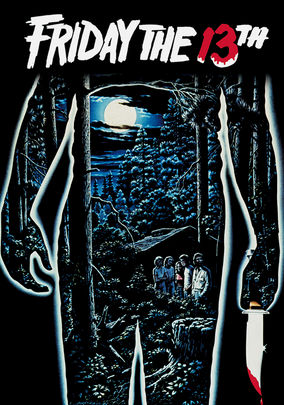
Friday the 13th-1980

Friday the 13th-1980

Director Sean S. Cunningham

Starring Betsy Palmer, Adrienne King

Top 250 Films #36

Top 40 Horror Films #8

Scott’s Review #115

525111

Reviewed July 17, 2014

Grade: A

Friday the 13th (1980) is one of my favorite films (horror and otherwise) of all time, as I have such fond and scary memories of watching it at too young an age!

My highlight was watching this film alongside the star, Betsy Palmer, herself, in a movie theater in later years.

I can watch this film countless times and never tire of it. Is it high art? Hardly. Is it brilliant filmmaking? Not a chance. However, for whatever reason, this film holds a special place in my heart, and I love it.

The premise involves seven young adults, all squeaky clean and All-American looking, who flock to Camp Crystal Lake for a summer involving counseling, partying, and frolicking around the lake.

They engage in strip poker, smoke pot, and play jokes on each other, but share a good spirit.

Through flashbacks, we learn that two brutal camp counselor killings occurred years ago and the camp has been unsuccessful at reopening since that time due to strange events like bad water.

The residents of the town are convinced that there is a curse involving the lake and warn the teenagers to stay far away, specifically, one loony townsperson named Ralph, who frequently shows up proclaiming messages from god and other rants of doom.

Inevitably, the teens begin to be systematically hacked to bits one by one in creative fashion such as a slit throat, ax to the head, a dagger through the neck, and other good, old-fashioned horror kills.

The film has many standard horror elements- a dark, ominous storm, a mysterious hidden killer lurking in the shadows, giving first-time viewers a suspenseful whodunit.

Could the killer be crazy Ralph, one of the counselors? Or Steve Christie, the man opening the camp?

As each victim is killed one begins to narrow down the remaining suspects to the crimes and at least one red herring comes into play, which leads us to try to figure out the conclusion, which, critically speaking, is an enormous surprise.

The looming killer, whose feet and arms/hands are the only parts shown throughout is successfully ominous. As the killer angrily watches the counselors swim and goof around, one of them gets a sixth sense of being watched and is sure she sees someone in the trees, but quickly shrugs it off.

Another ominous scene involves one counselor setting up an archery game for the kids as another counselor jokingly shoots an arrow nearby.

They both laugh, but the foreshadowing of what is to come is fantastic.

Betsy Palmer and Adrienne King add so much to this film, which would not be nearly as good if not for them.

The conclusion involving a knockdown drag-out, mud fight is my favorite sequence, in addition to the final thirty-minute chase scene around the camp and its vicinity.

The final character hides in closets, storerooms, and bushes, and a cat-and-mouse game climaxes. Great stuff.

The big twist at the end almost rivals, and is very similar to, the shocking ending to the 1976 horror classic Carrie.

The sound effects are spectacular- the distant loons and the creepy sound effects add a ton to making Friday the 13th a classic fright-fest.

The line “kill her mommy, she can’t hide” is undoubtedly permanently etched in horror fan’s minds.

Friday the 13th (1980) has successfully held the test of time and is now a highly regarded classic within the horror genre.

A highly entertaining, mainstream, cut above the rest, and a fun must-see for all horror fans.

Shadow of a Doubt-1943

Shadow of a Doubt-1943

Director Alfred Hitchcock

Starring Joseph Cotten, Teresa Wright

Top 250 Films #37

Scott’s Review #117

60010878

Reviewed July 17, 2014

Grade: A

Shadow of a Doubt (1943) is a black-and-white Alfred Hitchcock film set in a quaint California town, where a killer lurks. The town is idyllic and wonderful: People attend church on Sundays and meet at the drug store for ice cream sodas.

The film was shot on location in a small town in California, rather than on a soundstage, adding considerable authenticity.

The Newton family is at the center of the thriller, led by Charlie (Teresa Wright), a young woman who idolizes her recently visiting Uncle, also named Charlie (Joseph Cotton). They are very close- almost like father and daughter.

When Uncle Charlie is suspected of being the notorious Merry Widow Murderer, Charlie is conflicted. Could her Uncle be the murderer?

Shadow of a Doubt is one of Hitchcock’s more straightforward films, and the town itself is a huge plus. It’s quiet and family-oriented- what could go wrong? But evil pervades the city, and events slowly begin to turn dark.

A scene in which the family sits down for a quiet meal that turns into a conversation about death is famous and influential. The train sequence is nicely shot. There is also a fantastic side plot involving two friends playing an innocent game of “How would I murder you?”, unaware of the irony of the game itself.

The film is not as flashy or complex as other Hitchcock films, specifically Vertigo (1958), but that aspect works to its credit.

Hitchcock adored the idea of a small town with foreboding secrets, and this film is quite a gem.

Shadow of a Doubt (1943) is a good, old-fashioned thriller and a must-see for Hitchcock fans.

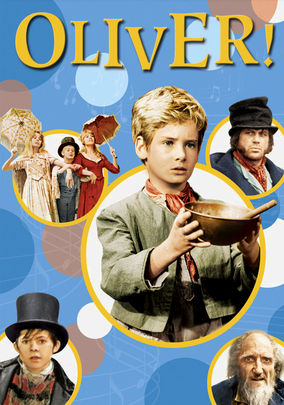
Oliver!-1968

Oliver! -1968

Director Carol Reed

Starring Mark Lester, Oliver Reed, Jack Wild

Top 250 Films #38

Scott’s Review #203

822391

Reviewed December 10, 2014

Grade: A

Oliver! is a 1968 film based on Charles Dickens’ novel Oliver Twist, which was later adapted into a successful stage musical. The film surprisingly won the Academy Award for Best Picture that year.

Surprising, not because Oliver! is poor, it is magnificent, but it was not predicted to take home the honor.

Telling the tale of the woeful orphan Oliver, the film comes across as a dark musical with a wholesome, happy-ending feel, primarily because of its musical compositions, which inevitably lend a cheerier tone.

When the film begins, Oliver lives in a despicable orphanage outside of London. A drawing of straws forces meek Oliver to ask for more gruel.

After being deemed a problem child, he is sold for cheap to an undertaker, where he is bullied. Defeated, Oliver makes his way towards the big city in hopes of finding his fortune.

He then meets sinister characters such as Fagin, the Artful Dodger, and Bill Sikes, as well as the sympathetic Nancy and Mr. Brownlow.

I love the musical numbers in the film, and for me, they are the strongest aspect of Oliver. The film would have been much darker had it not been for the musical.

Numbers such as “Consider Yourself”, “Food, Glorious Food”, and “As Long As He Needs Me” stick with audiences for days.

The entertaining songs lighten the somber moments- as noted earlier, when meek Oliver dares to ask for more gruel, the enchanting “Food Glorious Food” cannot help but be hummed along to, which lightens the mood of the scene.

I also enjoy how the film contains the long-ago popular trend of containing two acts with an intermission in between- very grand and classy, and an aspect of the film I wish would return in today’s movies.

The London art direction is magnificent, revealing a cold, industrial feel, mixed in with a warm, sunny atmosphere when Oliver stays at the palatial estate of Mr. Brownlow.

The bright and enchanting musical number “Who Will Buy?” is the perfect backdrop for this setting and my favorite number.

Nancy (Wallis) is one of the most complex characters- a prostitute, she happily sings, in denial about her life, in “It’s a Fine Life”, secretly wishing her life was better than it is.

Later, conflicted over helping Oliver or standing by her man, she sings a melancholy number, “As Long As He Needs Me”, which cements her role as a tragic, sad character.

However, as she leads a drunken barroom in a dance of “Oom-Pah-Pah”, the drama is thick when she attempts to help Oliver at the risk of putting her own life in severe jeopardy.

Shani Wallis fills the character with heart and feeling.

Oliver! is a much darker film than one might imagine.

Curiously rated G, the film should have at least been rated PG. The film’s heart is that of a children’s movie- to me personally, a turn-off, but the film is much stronger than that.

Some subject matters (like pedophilia) are toned down from Dickens’ novel, but not completely toned down.

Examples- the novel made clear overtones of child abuse by the thieves by Fagin, yet there is none of that in the film. Contrasting this, the film blatantly shows the beating death of Nancy, albeit out of camera range, but the audience gets enough of a glimpse to ascertain what is happening.

The shooting and swinging death of Bill Sikes borders on brutality.

A glaring flaw of the film is that Oliver’s voice is dubbed by a female singer rather than actor Mark Lester. To me, it’s pretty apparent the voice is not male.

The character of Bill Sykes is convincingly played by Oliver Reed, nephew of director Carol Reed.

Perfect around holiday time, Oliver! (1968) is a terrific musical drama, to be enjoyed for eons to come.

Oscar Nominations: 5 wins-Best Picture (won), Best Director-Carol Reed (won), Best Actor-Ron Moody, Best Supporting Actor-Jack Wild, Best Screenplay Based on Material from Another Medium, Best Score of a Musical Picture-Original or Adaptation (won), Best Sound (won), Best Costume Design, Best Art Direction (won), Best Cinematography, Best Film Editing

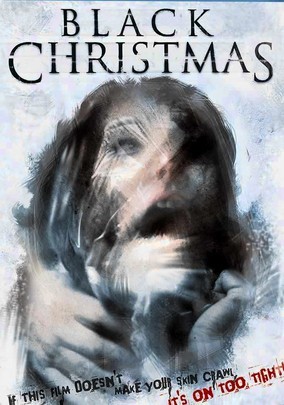
Black Christmas-1974

Black Christmas-1974

Director Bob Clark

Starring Olivia Hussey, Margot Kidder

Top 250 Films #39

Top 40 Horror Films #9

Scott’s Review #309

70057846

Reviewed December 29, 2015

Grade: A

Black Christmas (1974) is one of my all-time favorite horror films and, in my opinion, an underappreciated classic.  Somehow, it is just not the first, second, or third film mentioned when most discuss the influential horror films of years past.

My hubby and I make sure to watch it every holiday season.

It largely influenced Halloween (another of my passions), particularly from the killer’s point of view, camera shots, and the seasonal element.

It is pretty horrifying in several key scenes, in fact, and I am proud to list it as one of my favorite films.

Black Christmas is a must-see for fans of the horror genre.

The setting (a cold and snowy Christmas) is perfect, and the film is shot quite darkly. There are Christmas lights and carolers to create a significant winter holiday atmosphere. Most of the film takes place at night, and the location is primarily inside a vast, somewhat creepy, sorority house. The ambiance is well thought out.

Several sorority girls, led by boozy Barb (Margot Kidder) and sweet-natured Jess (Olivia Hussey), prepare to depart for the holiday season by having a small farewell Christmas party. Recently, the girls have been harassed by a prank caller spouting nonsensical gibberish daily.

As in true horror fashion, the girls are systematically offed one by one as events turn dire. Two subplots that ultimately merge with the central plot include Jess’s pregnancy with her suspicious boyfriend, Peter, and the search in the park for a missing young girl.

The best part of Black Christmas is that it is an honest, raw film, made on a small budget, that eschews gimmicks and contrivances.

It has authenticity.

A disturbing film for sure,  one victim being posed in a rocking chair continuously rocking back and forth next to the attic window, while said victim is bound in plastic wrap, holding a doll, mouth, and eyes wide open, is one of the most chilling in horror film history.

The nuances of the killer also scare and the brilliance of this is that his motivations are mysterious and unclear (in large part the success of Michael Meyers as well). We never fully see the killer except for his shape and eyes, and that is the brilliance of the film.

The one slight negative to the film is the decision to make the cops appear incompetent. The desk sergeant, in particular, is a complete dope- one wonders how he got his job- as a sexual joke by one of the girls goes over his head while the other detectives laugh like fools.

Why is this necessary? I suppose for comic relief, but isn’t that the purpose of Mrs. Mac, the overweight, boozy sorority mother?  Her constant treasure hunt for hidden booze (the toilet, inside a book) is comical and fun.

Her posing and posturing in front of the mirror (she is a very frumpy, average woman) are a delight and balance the heavy drama.

The conclusion of Black Christmas is vague and fantastic and works very well. Due, once again, to the police errors, the final victim’s fate is left unclear as we see her in a vulnerable state, unaware that the killer is looming nearby.

We only hear a ringing phone and wonder what happens next.

My admiration for Black Christmas (1974) only grows upon each viewing as I am once again compelled, to notice more and more ingenious nuances in the film.

Can’t wait until next Christmas to watch it again.

The Boys in the Band-1970

The Boys in the Band-1970

Director William Friedkin

Starring Kenneth Nelson, Frederick Combs

Top 250 Films #40

Scott’s Review #658

Reviewed July 4, 2017

Grade: A

An excellent counterpart to the equally brilliant and equally unpleasant Who’s Afraid of Virginia Woolf? (1966) The Boys in the Band is also a stage production made into a feature film.

As such, shot very much like a play and seemingly in one long take, the film is highly effective and delicious in wit and dark humor. With a macabre and bitter element, the characters snipe and ridicule each other during a birthday party.

The Boys in the Band is a groundbreaking film on many levels, as it is one of the first LGBTQ+ films to feature gay characters in prominent roles. Furthermore, it has the dubious honor of being the first film to use the word “cunt”.

Regardless, the film is fantastic and a must-see for anyone intrigued by LGBTQ+ film history. All of the actors appeared in the stage production and reprised their roles for the film version.

The setting is the Upper East Side of Manhattan in the late 1960s.

Michael, a writer, is hosting a birthday party for his good friend, Harold. When Michael receives an urgent call from his straight and married college chum, Alan, he begrudgingly invites him over at the risk of having his lifestyle exposed.

One by one, the guests arrive for the party. Emory is quite effeminate and loud, Hank and Larry are masculine and a couple, but with monogamy issues and Hank’s marriage as obstacles.

Bernard, a black bookstore clerk is an amiable, nice guy.

“Cowboy”, a dim-witted hustler, and Harold, the sarcastic, bitter, guest of honor, round out the attendees.

As the night wears on, the party turns into a free form of insults, bad feelings, and vicious conversation. Alan and Emory get into a fistfight, and later a hurtful telephone game forces everyone to call the one person they truly love which results in anxiety and sadness for most of the guests.

The key aspect of The Boys in the Band is that it is shot like a play would be, with a highly effective result. In this way, especially mid-way through the film when the guests are all in the same closed room, the action becomes suffocating and stifling as the fangs are bared by a few of the guests.

Director, Friedkin, uses many close-ups of his characters to further portray their raw emotions.

My favorite characters are Alan and Hank as these characters are the most complex.

Both are married, and both hit it off famously, although Alan’s sexuality is never completely revealed. He is married but troubled, and the audience never learns why, although we could wager a guess that he is, indeed, conflicted by his sexuality.

What will become of him? Will he accept his sexuality or live a repressed existence?

Hank, during a divorce from his wife, lives with Larry as a couple. Hank is complex because he is transitioning from a straight life to a gay lifestyle and that must have been very difficult in the late 1960’s- for this reason, I find the character of Hank quite brave.

The film does not explore this angle as much as it could have, but a character such as Hank fleshes out the cast in a positive way. Alan and Hank are multi-dimensional characters whereas some of the others contain gay stereotypes.

I would have enjoyed a deeper dive into the personal lives of some of the characters, but the film is really about the emotions many of the characters possess and feelings of love, some unrequited, and there are too many characters for each to receive his due focus.

Plus, the main focus of the film is the back-and-forth banter between the characters.

The Towering Inferno-1974

The Towering Inferno-1974

Director John Guillermin

Starring Paul Newman, Steve McQueen, Faye Dunaway

Top 250 Films #41

Scott’s Review #194

1059232

Reviewed November 15, 2014

Grade: A

The Towering Inferno (1974) epitomizes the disaster film craze heaped on audiences throughout the 1970s (Airport, Airport ‘75 and ‘77, The Poseidon Adventure (1972), and Earthquake (1974) to name a few).

I am (guilt-free) a huge fan of this 1970s movie genre, though some certainly look down on it, I am not one of them and feel The Towering Inferno is one of the greatest.

The film is enormous and has such a sense of adventure and danger.

The grand film tells of the trials and tribulations of an enormous cast of characters trapped inside an inferno-flamed skyscraper – led by Paul Newman and Steve McQueen (fun fact- the two actors reportedly despised each other).

An incredible skyscraper is erected in San Francisco, at one hundred and thirty-eight floors it is professed to be the tallest building in the world and incredibly state-of-the-art. At the ribbon-cutting ceremony, an elaborate party is held atop the building overlooking the gorgeous Pacific Ocean.

Due to faulty electrical wiring, the building catches fire and the cast of characters faces one challenge after another to escape the grips of death.

The stellar cast features stars like William Holden, Faye Dunaway, Fred Astaire, Robert Wagner, Jennifer Jones, and O.J. Simpson in addition to Newman and McQueen.

The film is quite a soap opera style- numerous characters are introduced, many having affairs with each other or suffering some sort of conflict.

Wagner having a torrid office romance with his secretary played by then up-and-coming star Susan Flannery is deliciously sexy and I yearned to know more about both characters.

Holden’s son-in-law is responsible for the faulty electrical system yet blames his father-in-law for cutting budgets.

Another subplot involves Astaire’s character attempting to swindle Jones’s character but then falling in love with her. The plots are so melodramatic that, given the period of the film, it has a definite primetime television soap opera style to it- think Dallas or Dynasty in a state of peril.

I enjoyed the enormous cast and trying to guess who will be killed off next and in what elaborate way the film will burn them to death is a joy to watch- several victims fall or jump to their deaths, which eerily (and sadly) bring back morbid images of jumpers from the World Trade towers on 9/11.

The beginning of the film shows a dedication to firemen everywhere and the film has a definite moral and heroical quality to the firemen sent to rescue the people in the building. They are portrayed as heroes and intended not to be forgotten amid all the drama encompassing the story. This is admirable.

The special effects are elaborate and quite impressive- the glass elevator rescue scene is amazing! The beautiful set designs are a treat to watch as each lobby, apartment, or lounge in the skyscraper is exquisitely designed at the height of the 1970s style.

Every sofa or carpet featured is plush, colorful, and sophisticated. The skyscraper, made of glass, is an amazing element of the film, and the aerial views of the building, especially while ablaze are impressive, to say the least- remember- 1974 was long before CGI. I am assuming small replicas of the building were used, but what an achievement from a visual perspective.

The effects certainly champion the syrupy story elements.

My only small gripe with The Towering Inferno is, assumed to be 138 stories high, the action taking place at the top of the tower- the rooftop as well as the party scenes on the top floor- do not feel that high- The scenic outlook overlooking the water and some land feel about twenty-five stories high, not one hundred and thirty-eight.

Some find The Towering Inferno (1974) to be nothing more than schmaltzy drama- I say schmaltz was never done better.

Enjoy this feast of a big film.

Oscar Nominations: 3 wins-Best Picture, Best Supporting Actor-Fred Astaire, Best Original Dramatic Score, Best Song-“We May Never Love Like This Again” (won), Best Sound, Best Art Direction, Best Cinematography (won), Best Film Editing (won)

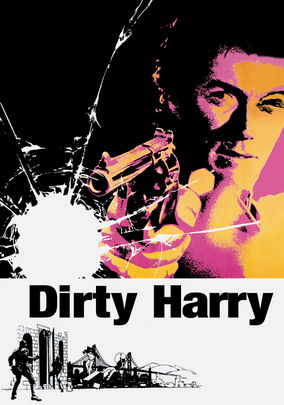
Dirty Harry-1971

Dirty Harry-1971

Director Don Siegel

Starring Clint Eastwood, Harry Guardino

Top 250 Films #42

Scott’s Review #443

445522

Reviewed July 4, 2016

Grade: A

Dirty Harry (1971) is a classic crime drama that became a signature role for Clint Eastwood as the title character, a role he has played four more times.

Dirty Harry set the tone for the plethora of crime thrillers and police action films that filled theaters throughout the 1970s and 1980s. This film still holds up very well and is a masterpiece of the cat-and-mouse/detective genre.

Quiet and controlled, but filled with anger below the surface (we learn a drunk driver killed his wife), Harry Callahan is a tough cop in San Francisco who has seen it all. He is a red-blooded American good guy, though he is brooding and has a mind of his own, oftentimes disagreeing with his superiors and their rules.

He epitomizes good versus evil.

A vicious killer named Scorpio (based on the real-life Zodiac killer) is on the loose, having killed two people already. His motives are unclear, but that is rather unimportant. What is important is that he threatens to kill one person per day unless his demands of $100,000 are met.

Harry is immediately assigned to the case despite his reputation for being difficult and violent. This leads to a cat-and-mouse game between Harry and Scorpio in Harry’s pursuit of the criminal.

Scorpio is played by Andy Robinson, who is a fantastic villain- perhaps one of the most frightening in film history. His dirty blonde locks, yet angelic face, combined with maniacal facial expressions make his portrayal quite frightening.

He is a sniper so he is continually perched on rooftops seeking his next victim. As he watches a couple eating ice cream in the park or a woman swimming in a rooftop pool, we feel a sense of voyeurism and dread.

His disturbing sense of humor and sadistic personality make him quite scary.

The film succeeds in large part because of its grit and violence.  And it is a very masculine film. Harry is a take-no-prisoners kind of guy and he is hell-bent on stopping Scorpio from killing- no matter what.

In a very effective scene, Harry chases Scorpio to a vast football field and uses torture to elicit a confession from Scorpio. It is a bloody and intense scene, but quite necessary to who Harry is.

Of course, this tactic backfires as Scorpio is released from the hospital and set free. This leads to a further feud between the two men.

A bonus of Dirty Harry, and one aspect that gives so much authenticity, is the on-location setting of San Francisco. From the Golden Gate bridge to the illustrious mountains outside of the city and the Pacific Ocean, these elements give a dash of realism to an already gritty film. Chinatown and Dolores Park are also featured.

Highlighting all of this is a sequence where Scorpio forces Harry to go from locale to locale on foot in part of a wicked game to save a victim.

Harry’s famous lines as he points his gun at the perpetrators and mocks them by asking them if five or six bullets in his gun are now legendary as is his “Do I feel lucky? Well, do you, punk?”

On the surface a bit silly and gimmicky, these catchphrases somehow still work.

The school bus finale as Harry and Scorpio once again square off is great. As Scorpio hijacks a bus filled with grammar school students, he tricks the students, unaware of his intentions, by engaging them in children’s song sing-alongs as the harried bus driver drives out of the city.

When one child catches wind of the situation, Scorpio turns nasty, scaring the children into a frenzy.

Dirty Harry (1971) is a classic cop film that I never tire of watching. For the genre, it is as good as it gets and holds up well. After all of these years, it is tough to disassociate Clint Eastwood from the role of “Dirty Harry”.

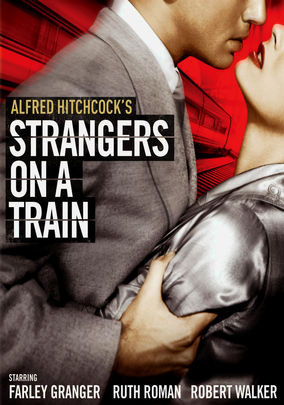
Strangers on a Train-1951

Strangers on a Train-1951

Director Alfred Hitchcock

Starring Farley Granger, Robert Walker

Top 250 Films #43

Scott’s Review #318

70002912

Reviewed January 2, 2016

Grade: A

A thrill-ride-per-minute film, Strangers on a Train is a classic suspense story filled with tension galore, a great Alfred Hitchcock film from 1951 that marked the onset of the “golden age of Hitchcock,” which lasted throughout the 1950s and 1960s.

A British version of the film exists somewhere, but I have yet to see it.

The American version is a brilliant, fast-paced experience featuring complex and interesting characters, including one of the greatest villains in screen history, and a riveting, heart-pounding plot.

Who can forget the essential ominous phrase “criss-cross”?

The film begins with a clever shot of two pairs of expensive shoes emerging from individual taxi cabs. Both are men, well-to-do and stylish.  They board a train and sit across from each other, accidentally bumping their feet.

We are then introduced to the two main characters: tennis star Guy Haines (Farley Granger) and wealthy Bruno Anthony (Robert Walker). They engage in conversation, and immediately, we become aware that Bruno is assertive and Guy is more passive.

Ultimately, Bruno manipulates Guy into thinking they will exchange murders- Bruno will kill Guy’s unfaithful wife, Miriam, while Guy will murder Bruno’s hated father.  While Bruno takes this dire “deal” seriously, Guy thinks Bruno is joking.

A psychological complexity of the film is the implied relationship between Guy and Bruno. Indeed, there are sexual overtones as flirtation and bonding immediately develop while they converse on the train.

They are complete opposites, which makes their relationship compelling—the devil and the angel, if you will. The mysterious, profound connection between these two men fascinates throughout the film.

Robert Walker makes Bruno a deliciously villainous character. He is devious, clever, manipulative, and even comical at times. His wickedness is mesmerizing, to the point that the audience roots for him.

Hitchcock wisely makes the victim, Miriam (wonderfully played by Laura Elliot), devious, adding to Bruno’s rooting value during her death scene. His character is troubled and almost rivals Norman Bates and Hannibal Lecter as a lovable, evil villain.

Later in the film, when Guy is playing tennis, he gazes into the stands to see the spectators turning left and right in tandem with the moving tennis ball, and the audience sees a staring straight ahead, immersed in the sea of swaying heads.

It is a highly effective, creepy scene.

The pairing of Guy and his girlfriend, Anne (a seemingly much older Ruth Roman, and interestingly, despised by Hitchcock), does not work. Could this be a result of the implied attraction between Bruno and Guy? Or is it a coincidence?

Roman’s casting was forced upon Hitchcock by the Warner Bros. studio.

Hitchcock reveals his “mommy complex,” a common theme in his films, as we learn that there is something off with Bruno’s mother, played by Marion Lorde, but the exact oddity is tricky to pin down.

She and Bruno comically joke about bombing the White House, which gives the scene a jarring, confusing edge. Is she he reason that Bruno is diabolical?

The theme of women’s glasses is used heavily in Strangers On A Train. Miriam, an eyeglass wearer, is strangled while we, the audience, witness the murder through her dropped glasses. The scene is gorgeous and cinematic in black and white and continues to be studied in film schools everywhere.

Later, Anne’s younger sister, Barbara (comically played by Hitchcock’s daughter, Pat Hitchcock), who also wears glasses, becomes an essential character as Bruno is mesmerized by her likeness to the deceased Miriam, and a mock strangulation game at a dinner party goes awry.

The concluding carnival scene is high-intensity and contains impressive special effects for 1951.

The spinning-out-of-control carousel, panicked riders, and cat-and-mouse chase scene leading to a deadly climax make for a fantastic end to the film.

Strangers On A Train (1951) is one of Hitchcock’s best classic thrill films.

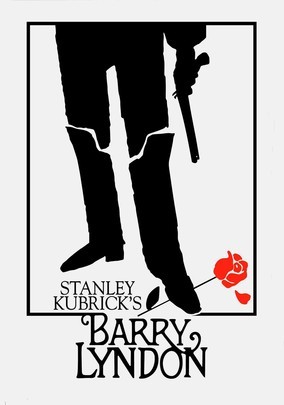
Barry Lyndon-1975

Barry Lyndon-1975

Director Stanley Kubrick

Starring Ryan O’Neal

Top 250 Films #44

Scott’s Review #211

284790

Reviewed January 4, 2015

Grade: A

Barry Lyndon (1975) is a sprawling, beautiful film by famed director Stanley Kubrick. The film is set in the 18th century.

Extremely slow-paced, yet mesmerizing, every shot looks like a portrait, and the inventive use of lighting via real candlelight in certain scenes makes this film a spectacle in its subdued beauty, to say nothing of the gorgeous sets and costumes.

The film is nothing short of a marvel to view.

The story centers around Ryan O’Neal, who plays an Irish man named Redmond Barry.

Redmond is a poor Irish man but is an opportunist. The film follows his life travels throughout Ireland, England, and Germany, as he becomes involved in duels, is robbed, impersonates an officer, is reduced to becoming a servant, gambles, marries a rich widow, and feuds with his stepson.

When he woos and marries the wealthy Countess of Lyndon, he settles in England to enjoy a life of wealth and sophistication. He changes his name to Barry Lyndon. His ten-year-old stepson, Lord Bullingdon, becomes a lifelong enemy as their hatred for each other escalates and is the focal point of Act II of the film.

The supporting cast is filled with unique characters and in particular, the three sinister characters (Lord Bullingdon, Mother Barry, and Reverend Runt) are delicious to watch especially when they square off against one another as is the case with Runt and Mother Barry.

Barry’s two love interests (Lady Lyndon and a German war widow) are entertaining to watch and Lady Lyndon’s costumes are exquisite. Furthermore, Chevalier de Balibar, a wealthy gambler who takes Barry under his wing is a delight.

As with many masterpieces, if not for the great casting, the film would not be as wonderful.

My three favorite scenes include the vicious confrontation between Mother Barry and Reverend Runt- an initially polite conversation between two selfish characters gradually spins into viciousness, the duel between Barry Lyndon and Lord Bullingdon- bitter rivals square off in an awkward yet dramatic duel, and when Barry passionately kisses his dying friend- an unexpected homoerotic scene.

Barry Lyndon delves into the issue of class and class distinction and clearly defines the haves and the have-nots and the struggles of the poor to obtain wealth by any means and for the wealthy to retain their good fortunes.

At a running time of over three hours, it may initially turn viewers off, but as time goes on the film will grip hold of the viewer and not let go.

Having now seen Barry Lyndon (1975) four times, each time I enjoy the film more and more as I become more absorbed by and immersed in the masterpiece.

It’s like a fine wine- it gets better with each taste.

Oscar Nominations: 4 wins-Best Picture, Best Director-Stanley Kubrick, Best Screenplay Adapted from Other Material, Best Scoring: Original Song Score and Adaptation or Scoring: Adaptation (won), Best Costume Design (won), Best Art Direction (won), Best Cinematography (won)

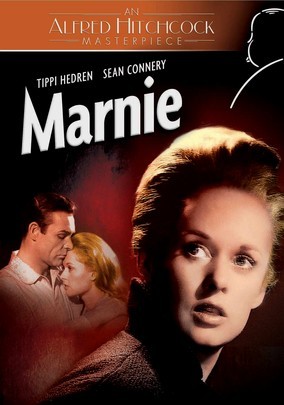
Marnie-1964

Marnie-1964

Director Alfred Hitchcock

Starring Sean Connery, Tippi Hedren

Top 250 Films #45

Scott’s Review #180

60000769

Reviewed October 4, 2014

Grade: A

When evaluating Alfred Hitchcock’s many films, Marnie (1964) is one of the more complicated. In recent years, it has earned higher praise than it did at its release, similar to Vertigo (1958).

It features one of Hitchcock’s most complex psychological characters and is as much a character study as a psychological thriller.

Tippi Hedren stars as Marnie Edgar, a troubled young woman who travels from one financial company to another, using a false identity and her good looks to insinuate herself into a clerical job without references. Over time, she steals thousands from the companies by gaining their trust.

Eventually, she is caught by Mark Rutland, a handsome, wealthy widower and client of one of the firms, played by Sean Connery. Infatuated with Marnie, he strikes a deal with her: She will marry him, but he will not turn her over to the police.

Marnie gives most of her stolen money to her disabled mother, Bernice, in Baltimore, played by Louise Latham.

Why Bernice is crippled, avoids affection with Marnie, and why Marnie despises most men and is terrified of the color red make up the film’s mysterious nature. Diane Baker is compelling as Lil, the sister-in-law to Mark and somewhat nemesis of Marnie.

The film features three scenes I am enamored with each time I watch it. In one scene, Marnie hides and waits in the bathroom until all the employees have gone home for the night. She carefully steals money from her employer’s safe and prepares to make her escape. Suddenly, she notices an unaware cleaning woman with her back to Marnie, yet blocking the exit.

How will Marnie escape unnoticed? The surprise in this scene is excellent. Hitchcock plays the scene without music, which adds to the tension—brilliant.

In an emotional scene later in the film, Marnie’s horse, Forio, is injured, and a sobbing Marnie must choose between killing her beloved friend or letting him suffer until a veterinarian can be summoned.

It is a heart-wrenching scene.

The third scene takes place at a racetrack as Marnie and Mark are enjoying one of their first dates together. However, the date is ruined when a former employer of Marnie’s, who has been victimized, recognizes her and makes accusations.

Marnie turns from a sweet girl to an ice queen seamlessly.

A huge controversial aspect of the film is that, while not shown, it is heavily implied that Mark rapes Marnie on their honeymoon. The following day, Marnie attempts suicide but is rescued by Mark.

This scene was filmed carefully so viewers didn’t hate Mark. Perhaps saving Marnie the next morning lessens what he did the night before in the eyes of the audience? This is open to debate.

Hedren excels at portraying the complexities of Marnie’s character throughout the entire film and does an excellent job in a demanding role.

As excellent as Hedren is (and she is fantastic), I have difficulty accepting her as a poor, icy criminal, and this issue arises each time I watch the film.

Could this be a result of having identified Hedren as the sophisticated, glamorous socialite in The Birds made a year earlier so many times? This is quite possibly so.

The set of Marnie was reportedly fraught with tension during filming. This tension was mainly between Hedren and Hitchcock, who refused to speak with each other throughout the filming. This may have added to the tension, and Hedren appears anxious.

Could this be art imitating life? As the ending nears, Marnie and Mark align and form a team as they try to avoid the police altogether; Mark, more or less, becomes an accomplice.

The final reveal seems rushed. It takes place mostly in flashbacks and wraps up quickly. Marnie has blocked much of her childhood from her memory, which seems far-fetched.

Still, Marnie (1964) is a complex, psychological classic from Hitchcock’s heyday.

Goodfellas-1990

Goodfellas-1990

Director Martin Scorsese

Starring Ray Liotta, Robert De Niro, Joe Pesci

Top 250 Films #46

Scott’s Review #349

70002022

Reviewed January 9, 2016

Grade: A

Director Martin Scorsese adapts Goodfellas, a crime-mob film, from Nicholas Pileggi’s 1986 nonfiction book. Pileggi helped Scorsese write the screenplay.

The film is more matter-of-fact in its telling than the purely dramatic The Godfather, with added wit and humor, and excellent editing.

Featuring powerful acting by Ray Liotta, Robert De Niro, and Joe Pesci, it is a memorable classic mob film that can be enjoyed via repeated viewings.

Largely ad-libbed, the film is rich in good dialogue and contains one of the highest totals of curse words in film history.

The film is told from the first-person narrative of the lead character, Henry Hill.

Henry, now in the Witness Protection Program, recounts his years affiliated with the mob from 1955 to 1980.

We meet Henry as a youngster in Brooklyn, New York. He is half-Italian, half-Sicilian. He idolizes the “wise guys” on the streets and intends to one day join their ranks.

From there, the film describes the trials and tribulations of Henry’s group of miscreants. Henry meets and falls in love with Karen (Lorraine Bracco), and their tumultuous love story is explored through tender moments and affairs.

What I love most about Goodfellas is the love of the characters and the sense that you are part of the action. The film is a highly stylized family drama- gritty nonetheless, but the viewer feels like they are part of things and a family member- milestones are celebrated, and meals are shared.

We see Henry grow from a teenage gullible boy who idolizes the neighborhood men to being part of the group.

The other characters, such as vicious and volatile Tommy DeVito (Pesci) and Jimmy “The Gent” Conway (De Niro), are aged and mature.

Bracco’s character is interesting. Unlike most of the female characters in The Godfather films, she is not content to merely sit on the sidelines and look past her husband’s shenanigans and torrid affairs with floozies.

She is a more modern, determined woman, and Bracco plays her with intelligence and a calm demeanor. She wants to be Henry’s equal instead of just some trophy wife.

Pesci deservedly won the Best Supporting Actor Oscar for his role; he is brutal and filthy but a mesmerizing character.

During a memorable scene, his character Tommy jokingly teases Henry, but when Henry responds in a way that displeases Tommy, the scene grows tense, and Tommy becomes increasingly disturbing.

His famous line “What am I a clown- do I amuse you?” is both clever and haunting in its repercussions.

I adore the soundtrack that Scorsese chose for the film—spanning decades, he chooses songs true to the times, such as “Layla” (1970) or “Remember (Walking in the Sand)” (1964), which are just perfect.

Worth noting is that when a scene plays, sometimes the song is mixed in with the narrative so that it enhances the scene altogether—becoming a part of it rather than simply background music.

If one is looking for the perfect mob film, one that contains music, wit, charm, and fantastic writing, Goodfellas is among the best.

I prefer The Godfather and The Godfather II, but while Goodfellas has similarities to these films, it is also completely different and stands on its own merits.

Oscar Nominations: 1 win-Best Picture, Best Director-Martin Scorsese, Best Supporting Actor-Joe Pesci (won), Best Supporting Actress-Lorraine Bracco, Best Screenplay Based on Material from Another Medium, Best Film Editing

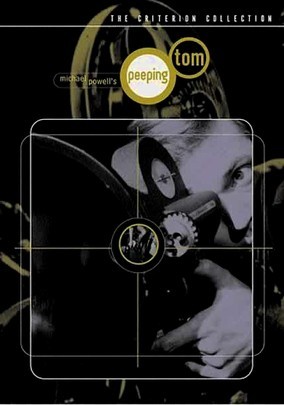
Peeping Tom-1960

Peeping Tom-1960

Director Michael Powell

Starring Nigel Davenport

Top 250 Films #47

Top 40 Horror Films #10

Scott’s Review #127

848669

Reviewed July 22, 2014

Grade: A

Peeping Tom is a brilliant 1960 horror film directed by Michael Powell.

It is a British film released the same year as Psycho. The two films share similarities in that they both feature more character-driven villains than many other contemporary horror films.

Both feature male killers with a sympathetic (to them) female.

Set in London, it tells the story of an assistant cameraman who kills his victims by using a camera with a spike on the end of it as he is videotaping the fear in their eyes, which he later plays back for his own psychological needs.

The killer has emotionally damaged himself, and the film explores this aspect in depth; his father tormented him as a child with weird, traumatic experiments used on the boy for research.

I love this aspect of the film compared with other films of the genre, where the killer typically has no sympathetic aspects and whose motivations are usually explored minimally.

The audience has sympathy for this killer, which, strangely, is absurd and shocking.

Ahead of its time, viewers were initially turned off by the film upon its release. Director Michael Powell’s (ironically playing the terrible father in videotape scenes) career was ruined.

Anna Massey (later to appear in the Hitchcock masterpiece Frenzy, 1972) plays the sweet-natured girl next door who develops a crush on the killer. Her blind and boozy mother is a fascinating character as she suspects and strangely bonds with the killer.

The film has an erotic and voyeuristic quality that has been unmatched in horror.

Peeping Tom (1960) is now widely regarded as a masterpiece, and I concur with that assessment. It is one of the most interesting and unique horror films ever made.

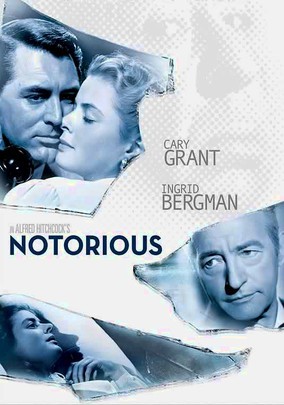
Notorious-1946

Notorious-1946

Director Alfred Hitchcock

Starring Cary Grant, Ingrid Bergman

Top 250 Films #48

Scott’s Review #265

813874

Reviewed August 11, 2015

Grade: A

Notorious is a classic Alfred Hitchcock film from 1946, a period that preceded his golden age of brilliant works in the 1950s and 1960s, but it is a marvel all the same.

Perhaps not as wonderful as future works, but that is like comparing prime rib to filet mignon. Shot in black and white, the subject matter is familiar to Hitchcock fans- political espionage.

The film contains elements familiar with Hitchcock’s films- romance with suspenseful plot.

Starring two greats of the time (and Hitchcock stalwarts), Carey Grant and Ingrid Bergman, one is immediately enthralled by the chemistry between the characters they play- T.R. Devlin and Alicia Huberman. Devlin, a government agent, recruits Alicia, per his bosses, to spy on a Nazi sympathizer, Alex Sebastian (Claude Raines), who is affiliated with her father.

Her father, having been convicted and sentenced to prison, has committed suicide. Alicia’s allegiance is questioned as she takes drastic measures to prove her loyalty and complete the hated assignment.

The film is set between Miami and the gorgeous Rio De Janeiro, where much of the action is set at Alex’s mansion.

A blueprint for his later works, Hitchcock experiments with creative camera shots and angles- specifically the wide and high shot overlooking an enormous ballroom.

I also love the airplane scene- subtly, Hitchcock treats the audience to background views of Rio from the view of the airplane as Devlin and Alicia converse.

The plane is slowly descending for landing, which allows for a slow, gorgeous glimpse of the countryside and landscape in the background.

Subtleties like these that may go unnoticed make Hitchcock such a brilliant director.

The character of Alicia is worth a study. Well known for his lady issues, did Hitchcock hint at her being an oversexed, boozy, nymphomaniac?

I did not think the character was written sympathetically, though, to be fair, she is headstrong and loyal in the face of adversity.

She parties hard, drives at 65 miles per hour while intoxicated, and falls into bed with more than one man. It is also implied that she has a history of being promiscuous.

Made in 1946, this must have been controversial during that period. The sexual revolution was still decades away.

Notorious also features one of Hitchcock’s most sinister female characters: Madame Sebastian (Leopoldine Konstantin). The woman is evil personified, and her actions are reprehensible. She is arguably the mastermind behind all of the dirty deeds and a fan of slow, painful death by poisoning.

My favorite scene is, without a doubt, the wine cellar scene. To me, it epitomizes good, old-fashioned suspense and edge-of-your-seat entertainment.

A cat-and-mouse game involving a secret rendezvous, a smashed bottle, a key, champagne, and the grand reveal enraptures this scene, which goes on for quite some time and is the climax.

Perhaps Notorious is not quite as great a film as Vertigo (1958), Psycho (1960), or The Birds (1963), but it is a top-notch adventure/thriller that ought to be watched and respected.

Oscar Nominations: Best Supporting Actor- Claude Rains, Best Original Screenplay

The Seventh Seal-1957

The Seventh Seal-1957

Director Ingmar Bergman

Starring Max von Sydow, Gunnar Bjornstrand

Top 250 Films #49

Scott’s Review #497

70127971

Reviewed October 23, 2016

Grade: A

The Seventh Seal (1957) is an Ingmar Bergman Swedish masterpiece that, after three mere viewings, I am just beginning to appreciate and fall in love with.

It is not that I did not “get” the dark, artsy theme to begin with- I did, but The Seventh Seal is a savory dish meant for repeated offerings, and with each, I have loved it even more.

The subject matter of the plague and the Black Death is heavy.

It is a quiet yet powerful, dark art film about death.

The film is shot in black and white, which does nothing but enhance the cold, stark concepts of the film. The color would have certainly made the film cheery or bright- if that can be said, given the subject matter.

Instead, the filming is cold yet illuminating, and the whites seem very white, while the blacks seem very dark, which symbolizes the film’s concepts.

In the story, a disillusioned medieval knight, Antonius Block (Max von Sydow), returns home from war, disenchanted with life. He fought in the Crusades and returned home to Sweden to find it plagued by the Black Death.

He begins to play a game of chess alone- and is visited by Death- a hideous pale creature shrouded in black. Antonius challenges Death to chess- his fate is left so long as the game continues.

Throughout the film, Antonius is the only character who can see Death- the other characters cannot, making the film open to interpretations.

The other characters in the story are a troupe of actors that Antonius meets along the way to his castle, and a young, fresh-faced girl who has been branded a witch and is fated to be burned at the stake is featured.

Since she is close to death, Antonius takes a particular fascination with her.

Throughout the film, as well as the trials and tribulations of the characters, Death continuously lurks around, watching these characters, which is a fascinating part of the film. They cannot see him, so we can only assume their time in this world is limited.

What makes The Seventh Seal so powerful is its honesty—harsh as it is. The knowledge that death is coming for these people is fascinating. Many characters discuss God in length and pray, as religion is an enormous aspect of the film.

It almost contains a good vs. evil, God vs. devil component, and again, important to stress, highly open to interpretation. Great art films are.

Numerous scenes reverberate and are significant iconic moments in film history decades later. The scene of Antonius and Death playing chess on the beach is chilling and ghost-like. Death- his pale face and a black cloak would frighten anyone. This scene has been referenced numerous times over the years.

My favorite is the inevitable final shot of peasants being led to their fate by Death. They are pulled begrudgingly by a rope reminiscent of the Pied Piper titled “Dance of Death.”

The individuals are dressed in black and are atop a hill surrounded by the sky, making the morbid scene highly effective.

The Last Supper scene is powerful, and the group enjoys the final meal, unsure of what fate has in store for them the next day.

I anticipate more viewings of this brilliant piece of filmmaking.

The Long Goodbye-1973

The Long Goodbye-1973

Director Robert Altman

Starring Elliott Gould

Top 250 Films #50

Scott’s Review #830

Reviewed November 14, 2018

Grade: A

Nearly a full-fledged character study of one man’s moral fiber, The Long Goodbye (1973) is an edgy piece of direction by the famous mastermind Robert Altman.

The setting of Los Angeles’ underbelly is both fabulous and practical, as is the dim lighting and excellent camera work prevalent throughout. The film is not cheery, but rather bleak, which suits me just fine, given the dreary locale.

Perhaps a more obscure Altman offering, but the film sizzles with zest and authenticity.

The film is based on a story written by Raymond Chandler in 1953.

Altman, however, opts to change the setting from 1950 to present times- 1970s Los Angeles and present a film noir experience involving deceit and shenanigans where all is not as it seems.

I think this is a wise move and I could not help but draw many comparisons (mainly the overall story) to Chinatown (1974), released the year after The Long Goodbye, but a film much better remembered.

Elliott Gould is wonderful as Phillip Marlowe, a struggling private investigator, and insomniac. He is asked by a friend, Terry Lennox, for a ride to the Mexico border one night and agrees to do the favor.

This leads to a mystery involving police, gangsters, and Eileen and Roger Wade after Phillip is questioned regarding his connection to Terry, who is accused of murdering his wife Sylvia.

The seedy side and complexities of several characters are revealed as the story unfolds and the plot gradually thickens.

My favorite aspects of The Long Goodbye are not necessarily the primary storytelling, though the writing is filled with tension.

As the film opens an extended sequence featuring a “conversation” between Phillip and his cat is both odd and humorous. The finicky feline refuses to eat anything other than one brand of cat food. As Phillip tries reasoning with the cat through talking and meowing, he is forced to venture out in the middle of the night to an all-night grocery store.

Altman, known to allow his actors free-reign for improvised dialogue, appears to allow Gould to experiment during this scene.

Phillip’s neighbors, a bundle of gorgeous twenty-something females, seem to do nothing except exercise on their balcony, get high, and request he buy them brownie mix for a “special occasion”.

As they stretch topless, usually in the background and almost out of camera range, they are a prime example of an interesting nuance of the film. The girls are mysterious but have nothing to do with the actual plot adding even more intrigue to the film.

In one of the most frightening scenes in cinematic history and one that could be straight from The Godfather (1972), crazed gangster, Marty Augustine (Mark Rydell), slices the beautiful face of his girlfriend to prove a point to Marlowe.

In a famous line, he utters, “That’s someone I love. You, I don’t even like.” The violent act is quick, unexpected, and fraught with insanity.

Finally, the film’s conclusion contains a good old-fashioned twist worthy of any good film noir. In the end, the big reveal makes sense and begs to raise the question “why did we trust this character?”

In addition to the viewer being satisfied, Marlowe also gets a deserved finale and proves that he cannot be messed with nor taken for a fool.

The Long Goodbye is undoubtedly the best film of Gould’s career. With a charismatic, wise-cracking persona, the chain-smoking cynic is deemed by most as a loser. He is an unhappy man and down on humanity but still wants to do what is right. He lives a depressed life with few friends and the company of only his cat.

While he is marginally entertained by his neighbors, he goes about his days only barely getting by emotionally. Gould is brilliant at relaying all these qualities within his performance.

The addition of the title theme song in numerous renditions is a major win for the film and something noticed more and more with each repeated viewing. The ill-fated gangster’s girlfriend hums along to the song playing on the radio at one point, and a jazz pianist plays a rendition in a smoky bar.

This is an ingenious approach by Altman and gives the film a greater sense of mystery and style.

There is no question among cinema lovers that Robert Altman is one of the best directors of all time.

In his lengthy catalog filled with rich and experimental films, The Long Goodbye (1973) is not the best-remembered nor the most recognizable.

I implore film fans, especially fans of plodding mystery and intrigue to check this great steak dinner of a film out.