Category Archives: Jack MacGowran

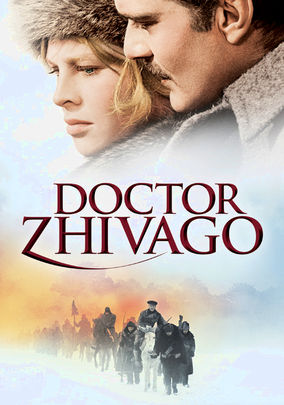
Doctor Zhivago-1965

Doctor Zhivago-1965

Director David Lean

Starring Julie Christie, Omar Sharif, Rod Steiger

Top 250 Films #31

Scott’s Review #42
449931

Reviewed June 18, 2014

Grade: A

Doctor Zhivago (1965) is a great film to watch on a cold night or throughout the crisp winter or holiday season.

The film is a classic masterpiece directed by the talented David Lean (Lawrence of Arabia, 1962, A Passage to India, 1986), whose perfectionism is evident in his epic films.

Nearly every scene could be a painting, so the cinematography alone is reason enough to become enchanted with art.

Of course, the story is also a goldmine as a sprawling decades-long love story unfolds amid the ravages of the bloody Bolshevik Revolution.

The film is set in the bitter cold of Russia (though all scenes were shot in Spain), and the harshness of the climate and the war combine with a doomed love story set against the backdrop of numerous battles and wartime conditions.

Nearly all sequences are set in winter, and the blustery, icy effects are set against numerous scenes of cozy, candlelit cabins or more extravagant, glowing surroundings.

Viewers must be surrounded by fire, flaming candles, or another form of warmth as a snowstorm or blizzard rages outside for a perfect viewing experience.

A large-screen television or a cinema is simply a must to watch this film, as it is epic on the grandest scale.

Omar Sharif and Julie Christie (a gorgeous star in her day) are cast perfectly as Uri and Lara, young forbidden lovers enthralled with one another but involved with significant others.

The film dissects their initial meeting and their story over the years, experiencing marriages, births, and deaths throughout the ravages of Russia in the early twentieth century.

Despite their affairs, neither is deemed unsympathetic—quite the contrary.

Audiences will fall in love with the pair and become enchanted as they watch their love-tortured adventures unfold.

Sharif and Christie are just magnificent and utterly believable as a couple.

The set pieces are magnificent and flawless in design and detail (my favorite is the Ice Palace).

The cinematography is breathtaking, and the content is remarkably close to the superior novel by Boris Pasternak, evoking a sense of “really being there” in the viewer.

Doctor Zhivago (1965) is a brilliant film, perfect for a snowy winter evening.

Oscar Nominations: 5 wins-Best Picture, Best Director-David Lean, Best Supporting Actor-Tom Courtenay, Best Screenplay Based on Material from Another Medium (won), Best Music Score-Substantially Original (won), Best Art Direction, Color (won), Best Cinematography, Color (won), Best Costume Design, Color (won), Best Film Editing
The Exorcist-1973

The Exorcist-1973

Director William Friedkin

Starring Ellen Burstyn, Jason Miller, Linda Blair

Top 250 Films #59

Top 40 Horror Films #13

Scott’s Review #326

14546619

Reviewed January 5, 2016

Grade: A

Making a lasting mark on cinematic history and impossible not to be familiar with through some form of pop culture, The Exorcist (1973) is a classic supernatural horror film that transcends the genre to become a Hollywood success story.

Along with Rosemary’s Baby (1968) and The Omen (1976), these three films share similarly haunting “religious” themes and explore dark, sinister topics such as “god versus the devil” and “good versus evil”.

The Exorcist is a masterpiece on every level and is adapted from the 1971 hit novel of the same name.

The story centers on “demonic possession” and was quite simply a shocking subject when The Exorcist was released in 1973, scaring the wits out of those brave enough to see it (especially Christians) everywhere.

Some abhorred the subject matter and refused to have any part of the film; their loss.

Ellen Burstyn stars as Chris MacNeil, a noted actress who relocates to Georgetown to film a movie. In tow is her twelve-year-old daughter, Regan (Linda Blair).

As shooting on the film wraps, Regan begins acting very strangely —making noises, becoming belligerent, and urinating on the floor during a dinner party. Worried, Chris enlists the assistance of priests (Max von Sydow and Jason Miller).

Things progress from bad to worse as Regan spirals out of control, and Chris and the priests determine that an exorcism is the only resolution to the problem.

The Exorcist, mainly director William Friedkin, sets up the film in a clever way by using various technical elements to build the tension.

For starters, the eerie musical score is highly effective at scaring the audience, and it is similar to that of Rosemary’s Baby. The film is also lit very well, so it appears dark with dim lighting- the cinematography and the windy rustling of leaves in the exterior sets are great.

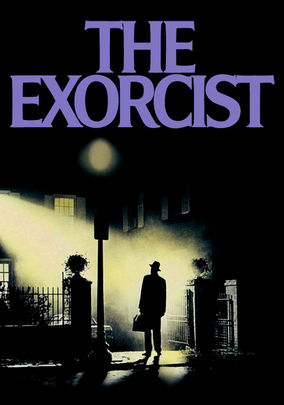
The cover art of the film should indicate the unique style used: black and white. A man with a hat and suitcase peers up at the second floor of a house where a glowing light illuminates. The image is intriguing and haunting.

Enough cannot be said for Linda Blair’s performance as Regan, especially in the final act. During the “pea soup” and “Jesus crucifix” scenes, a different voice was used, but Blair’s facial expressions and emotions are admirable.

As Regan is bedridden, angry, scared, and emotional, there is no limit to Blair’s range. Throughout a large part of the film, she is a sweet, young girl, innocent, so much so that her transformation is both shocking and disturbing to witness.

The final act of the film- the “exorcism” is riveting and a groundbreaking aspect of film history. The terrifying scene, all taking place in one child’s tiny bedroom, elicits fright and is nail-bitingly intense.

The Exorcist (1973) is a highly influential film that has inspired filmmakers for decades and still resonates with audiences today.

Oscar Nominations: 2 wins-Best Picture, Best Director-William Friedkin, Best Actress-Ellen Burstyn, Best Supporting Actor-Jason Miller, Best Supporting Actress-Linda Blair, Best Screenplay Based on Material from Another Medium (won), Best Sound (won), Best Art Direction, Best Cinematography, Best Film Editing