Tag Archives: Andrea Martin

Anastasia-1997

Anastasia-1997

Director Don Bluth, Gary Goldman

Voices Meg Ryan, John Cusack

Scott’s Review #1,530
Reviewed April 27, 2026

Grade: B

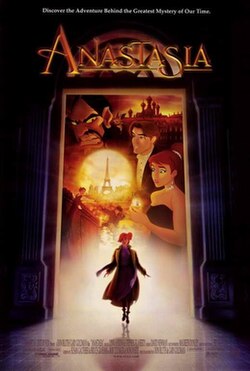
Anastasia (1997) is an animated film that explores emperors, duchesses, and the Romanov royal family of Russia, offering an important early-twentieth-century history lesson.

Surprisingly, not a Disney film, it’s the first release from Fox Animation Studios, resulting in an overall decent effort. It has potency but lacks the magic of other darling animated creations of the past.

An evil and vengeful wizard named Rasputin (Christopher Lloyd) casts a curse on the royal family as a dazzling ball commences in 1916, and young Anastasia disappears as their palace is overrun by killers, leaving most of the family dead.

She and her grandmother, whom she eventually is separated from when the Dowager Empress Marie (Angela Lansbury) flees on a train, are saved by a mysterious servant boy who whisks them to a secret room.

Years later, the Grand Duchess offers a reward for Anastasia’s return, but finally gives up amid a legion of imitators and attempted schemers, leaving her flustered and hopeless.

Two Russians, Dimitri (John Cusack) and Vlad (Kelsey Grammer), initially plan to pawn off a phony discovered through auditions, but are shocked to learn that an orphan girl named Anya (Meg Ryan) is the real Anastasia.

Dimitri, who has fallen in love with Anya, is torn between his feelings and a potentially lucrative payday.

The film’s wintry backdrop is visually exquisite, with snow, lights, and the glitz and glamour associated with Paris, setting the story in Saint Petersburg and launching the action amid fabulous costumes and palace trimmings at the ball.

A dangerous train ride from Saint Petersburg to the east, winding up in Paris, is also a high point of the film.

The central characters, Anya, Dimitri, and Vlad, escape terrible fates that the evil Rasputin is plotting against them. They slink from first class to the luggage car to finally leap from the train itself in a daring escape.

They then stowaway on a ship bound for Paris.

The trio’s adventures make the film enjoyable and edge-of-your-seat at times.

Another highlight is a compelling sequence in which Rasputin gets Anya to sleepwalk to the edge of the ship, attempting to make her jump to her death. She sees her dead siblings in a sunny pool of warmth as they invite her to dive in and join them.

The glowing, hallucinogenic interplay of summer sun and winter-driving rain aboard the ship is both majestic and frightening. It also shows the connection between her and her siblings, as well as feelings of loss.

I wasn’t entralled with the characters of Rasputin or the hapless Bartok (Hank Azaria), a minuscule albino bat sidekick, who eventually ‘turns good’.

Rasputin, stuck in a mysterious limbo until he kills off the remaining Romanov (Anya), is portrayed as cartoonish and over-the-top. His threats become redundant, as does his one-note nature.

The characters’ situation is complicated by a weird situation in which, because of foiled attempts on the lives of Dimitri, Vlad, and Anya, they are forced to return to the ‘real world’ and kill Anya there.

It makes little sense, feels juvenile, and the characters were wisely omitted from the stage version.

The musical numbers are charming, but they do not knock it out of the park. Tepidly nominated for an Oscar nomination, “Journey to the Past” is okay, but nothing memorable either.

What works best is the romance between Anya and Dimitri, who have tremendous chemistry. Since he is immediately smitten with her, it is interesting to see how the film handles the eventual revelation of his villainy and his subsequent redemption.

Since it’s clear the film will have a ‘happily ever after’ ending, the anticipation of a final showdown reduces some of the predictability.

The reunion between Anya and her grandmother is touching and sentimental without being too mushy. Even in an animated film, powerful performances can be achieved, and the characters can touch their audience as much as a live-action film.

An entertaining film with heart and a intellectually stimulating backdrop, it has enough to recommend to children and adults alike. I could have done with a better villain or perhaps no villain at all, which makes Anastasia (1997) feel more juvenile and less sophisticated than it should have been.

Oscar Nominations: Best Original Musical or Comedy Score, Best Original Song-“Journey to the Past”
 

Black Christmas-1974

Black Christmas-1974

Director Bob Clark

Starring Olivia Hussey, Margot Kidder, John Saxon

Top 250 Films #39

Top 40 Horror Films #9

Scott’s Review #309

70057846

Reviewed December 29, 2015

Grade: A

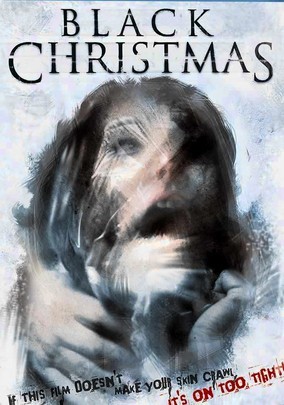
Black Christmas (1974) is one of my all-time favorite horror films and, in my opinion, an underappreciated classic.  Somehow, it is just not the first, second, or third film mentioned when most discuss the influential horror films of years past.

My hubby and I make sure to watch it every holiday season.

It largely influenced Halloween (another of my passions), particularly from the killer’s point of view, camera shots, and the seasonal element.

It is pretty horrifying in several key scenes, in fact, and I am proud to list it among my favorite films.

Black Christmas is a must-see for fans of the horror genre.

The setting (a cold and snowy Christmas) is perfect, and the film is shot quite darkly. There are Christmas lights and carolers to create a significant winter holiday atmosphere. Most of the film takes place at night, and the location is primarily inside a vast, somewhat creepy sorority house. The ambiance is well thought out.

Several sorority girls, led by boozy Barb (Margot Kidder) and sweet-natured Jess (Olivia Hussey), prepare to depart for the holiday season by having a small farewell Christmas party. Recently, the girls have been harassed by a prank caller spouting nonsensical gibberish daily.

As in true horror fashion, the girls are systematically offed one by one as events turn dire. Two subplots that ultimately merge with the central plot include Jess’s pregnancy with her suspicious boyfriend, Peter, and the search in the park for a missing young girl.

The best part of Black Christmas is that it is an honest, raw film, made on a small budget, that eschews gimmicks and contrivances.

It has authenticity.

A disturbing film for sure,  one victim being posed in a rocking chair continuously rocking back and forth next to the attic window, while said victim is bound in plastic wrap, holding a doll, mouth, and eyes wide open, is one of the most chilling in horror film history.

The nuances of the killer also scare, and the brilliance of this is that his motivations are mysterious and unclear (in large part, the success of Michael Meyers as well). We never fully see the killer except for his shape and eyes, and that is the brilliance of the film.

The one slight negative of the film is the decision to portray the cops as incompetent. The desk sergeant, in particular, is a complete dope- one wonders how he got his job- as a sexual joke by one of the girls goes over his head while the other detectives laugh like fools.

Why is this necessary? I suppose for comic relief, but isn’t that the purpose of Mrs. Mac, the overweight, boozy sorority mother?  Her constant treasure hunt for hidden booze (the toilet, inside a book) is comical and fun.

Her posing and posturing in front of the mirror (she is a very frumpy, average woman) are a delight and balance the heavy drama.

The conclusion of Black Christmas is vague and fantastic and works very well. Due, once again, to the police errors, the final victim’s fate is left unclear as we see her in a vulnerable state, unaware that the killer is lurking nearby.

We only hear a ringing phone and wonder what happens next.

My admiration for Black Christmas (1974) only grows upon each viewing as I am once again compelled to notice more and more ingenious nuances in the film.

Can’t wait until next Christmas to watch it again.

My Big Fat Greek Wedding-2002

My Big Fat Greek Wedding-2002

Director Joel Zwick

Starring Nia Vardalos, John Corbett

Scott’s Review #806

Reviewed August 28, 2018

Grade: B+

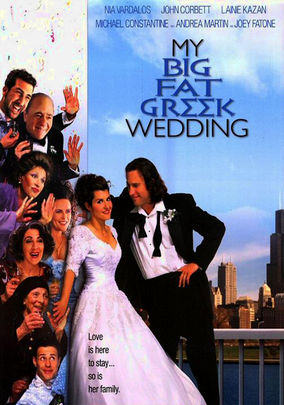
My Big Fat Greek Wedding is a romantic comedy from 2002 that became a surprising sleeper hit at the time of release. A novel story idea, the film was even recognized with a Best Original Screenplay Oscar nomination.

The film achieved success the old-fashioned way by garnering word-of-mouth buzz despite little promotion.

Good-natured, earnest, and tender, the film was nonetheless marred by an abysmal sequel and short-lived television series- a lesson learned in leaving well enough alone.

Comedian Nia Vardalos reportedly wrote the story as a one-woman play and word of mouth among Hollywood A-list celebrities led to a film version starring Vardalos herself. This casting choice adds enormous authenticity as the writer’s vision shines through on-screen.

The film has a fresh and modern feel to it. Otherwise, the supporting cast is brilliant and perfectly selected. From handsome love interest John Corbett to veterans like Lainie Kazan and Andrea Martin, everyone plays their part to the hilt and seems to be having a ball with the comic elements.

Dowdy Toula Portokalos is a lonely thirty-year-old Greek woman, considered the black sheep of her family. Of traditional roots, she is expected to marry and bear children as quickly as possible.

Toula still lives at home and works in the family restaurant in bustling Chicago, yearning for something more out of life.

When she sees dashing school teacher Ian Miller (Corbett) in the restaurant one day, she makes an embarrassing attempt to catch his attention. Through a computer class, Toula blossoms and finally lands her man, but the drama is just beginning as the couples and their individual families’ differing cultures collide.

My Big Fat Greek Wedding is written very well and, again, the authenticity is what shines through in each scene. Admittedly, it often feels like a television sitcom and many scenes play for obvious laughs, but the laughs work. The funniest of these scenes is when Toula and Ian (now engaged) decide to invite his parents to dinner at her parent’s house.

Predictably, events go awry as his parents-conservative and reserved, do not mesh well with hers-festive and bombastic.

Vardalos and Corbett may not have the greatest chemistry in film history, but the build-up and the romance are so charming that we can overlook the lack of lustful vigor or the sexual tension between the pair.

The film feels more like a PG-rated Cinderella story than anything heavier. Predictably, the couple shares a happily-ever-after ending.

As much of a jewel as My Big Fat Greek Wedding was in 2002, the risk with a film of this nature is to hold up well over time. Specifically, in the romantic comedy genre, films of this ilk have a short relevant shelf-life (if deemed relevant at all).

The humorous Windex references may be lost on audiences over time or just become stale over the years.

Some can deem My Big Fat Greek Wedding (2002) as fluff- mainly based on the romantic comedy genre it exists in. But it’s of better worth than that, mainly because of the fresh and genuine use of culture and differing backgrounds.

The film has a quality that most of the standard “rom coms” do not possess, that of authenticity. Yes, it contains Greek stereotypes, but the overall vibe of the film is that of a sunny, fun, happy experience.

An uplifting film can sometimes be just what the doctor ordered.

Oscar Nominations: Best Original Screenplay

Independent Spirit Award Nominations: 1 win-Best Debut Performance- Nia Vardalos (won)