Tag Archives: Leo G. Carroll

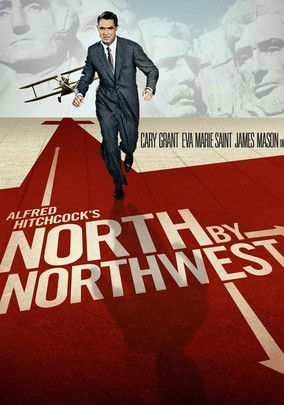
North by Northwest-1959

North by Northwest-1959

Director Alfred Hitchcock

Starring Cary Grant, Eva Marie Saint

Top 250 Films #15

Scott’s Review #90
60000544

Reviewed July 3, 2014

Grade: A

North by Northwest is a 1959 Alfred Hitchcock film, released during the director’s heyday (1950s and 1960s).

It is considered one of his most commercially successful films. It is mainstream fare that contains all the elements of a great Hitchcock film: adventure, intrigue, romance, and suspense.

Unlike in some of his other films, his characters are straightforward and not psychologically wounded, as in some of his others. This is not a slight but merely makes the film “for the masses.”

Charismatic Cary Grant plays the role of successful advertising executive Roger Thornhill. He works in bustling New York City, has a secretary, and is well respected in his circle.

While enjoying drinks at the club the evening before a planned trip to the theater, he becomes a victim of mistaken identity—thought to be George Kaplan- and is accosted by henchmen at a lavish Glen Cove, Long Island mansion.

After a botched attempt on his life, he is arrested and ultimately must race across the United States on the lam to find the real George Kaplan.

The incredible locales range from New York City to Long Island, Indiana, Chicago, and Mount Rushmore.

The film is exciting from start to finish, never letting up, and features a common theme of Hitchcock’s- an “everyman” falsely accused of a crime attempts to prove his innocence.

It differs from some Hitchcock films in that there is not as much psychological analysis of the characters, but rather a good, old-fashioned adventure story with many twists and turns.

In many ways, North by Northwest is a precursor to the enormously popular James Bond films, as Grant brought style, sexiness, and charisma to this sleek feature.

The set style and design look perfect. The lush Long Island estate set is flawless, with a grand staircase and a well-constructed library—not to mention the exterior shot of the enormous house.

The house in Mount Rushmore is sleek, quite trendy, and reeks of high sophistication. It is pretty grand and situated on an incline, featuring an airplane runway.

The chemistry between Grant and Eva Marie Saint is apparent and oozes from the screen from the moment they bump into each other on a train traveling from New York to Chicago. As they dine in the dining car, a flirtatious scene unfolds-the landscape whizzes by in the background, with the comforting train whistle and ambient noise working well.

Their relationship is established, and the characters are intrigued and slightly mistrustful of each other, which lends the scene an edge and complexity that works.

The film features a cutting-edge graphic design in the opening credits, similar to the design used in Vertigo during the same period. The green colors and the sophisticated advertising style of the graphics kick the film off in a creative, ultra-cool, modern way.

Interestingly, Martin Landau’s implied homosexuality in Leonard, henchman to the main villain, Phillip Vandamm, is precisely how Landau played the role. During Hitchcock’s time, homosexuality was strictly prohibited in film, but it was subtly portrayed.

Leonard’s fascination and jealousy towards Vandamm are intertwined with levels of flirtation and vengefulness.

Scene after scene of North by Northwest is filled with suspense—the crop duster scene is my favorite. Shot without music and on location in a dreary, clear, middle-of-nowhere field somewhere in Indiana, the scene is layered with suspense throughout.

Thornhill is scheduled to meet Kaplan at a designated spot. A lonely bus stop, random passing cars thought to be the intended, a deadly airplane, and an explosion all occur, creating a fraught scene.

New fans of Hitchcock should begin with this one—it is mainstream and one of his finest. It contains all the traditional Hitchcock elements, and all the pieces come together perfectly.

North by Northwest (1959) is a masterpiece.

Oscar Nominations: Best Story and Screenplay Written Directly for the Screen, Best Art Direction, Color, Best Film Editing
Strangers on a Train-1951

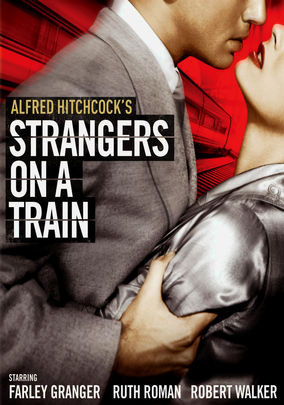
Strangers on a Train-1951

Director Alfred Hitchcock

Starring Farley Granger, Robert Walker

Top 250 Films #43

Scott’s Review #318

70002912

Reviewed January 2, 2016

Grade: A

A thrill-ride-per-minute film, Strangers on a Train is a classic suspense story filled with tension galore, a great Alfred Hitchcock film from 1951 that marked the onset of the “golden age of Hitchcock,” which lasted throughout the 1950s and 1960s.

A British version of the film exists somewhere, but I have yet to see it.

The American version is a brilliant, fast-paced experience featuring complex and interesting characters, including one of the greatest villains in screen history, and a riveting, heart-pounding plot.

Who can forget the essential ominous phrase “criss-cross”?

The film begins with a clever shot of two pairs of expensive shoes emerging from individual taxi cabs. Both are men, well-to-do and stylish.  They board a train and sit across from each other, accidentally bumping their feet.

We are then introduced to the two main characters: tennis star Guy Haines (Farley Granger) and wealthy Bruno Anthony (Robert Walker). They engage in conversation, and immediately, we become aware that Bruno is assertive and Guy is more passive.

Ultimately, Bruno manipulates Guy into thinking they will exchange murders- Bruno will kill Guy’s unfaithful wife, Miriam, while Guy will murder Bruno’s hated father.  While Bruno takes this dire “deal” seriously, Guy thinks Bruno is joking.

A psychological complexity of the film is the implied relationship between Guy and Bruno. Indeed, there are sexual overtones as flirtation and bonding immediately develop while they converse on the train.

They are complete opposites, which makes their relationship compelling—the devil and the angel, if you will. The mysterious, profound connection between these two men fascinates throughout the film.

Robert Walker makes Bruno a deliciously villainous character. He is devious, clever, manipulative, and even comical at times. His wickedness is mesmerizing, to the point that the audience roots for him.

Hitchcock wisely makes the victim, Miriam (wonderfully played by Laura Elliot), devious, adding to Bruno’s rooting value during her death scene. His character is troubled and almost rivals Norman Bates and Hannibal Lecter as a lovable, evil villain.

Later in the film, when Guy is playing tennis, he gazes into the stands to see the spectators turning left and right in tandem with the moving tennis ball, and the audience sees a staring straight ahead, immersed in the sea of swaying heads.

It is a highly effective, creepy scene.

The pairing of Guy and his girlfriend, Anne (a seemingly much older Ruth Roman, and interestingly, despised by Hitchcock), does not work. Could this be a result of the implied attraction between Bruno and Guy? Or is it a coincidence?

Roman’s casting was forced upon Hitchcock by the Warner Bros. studio.

Hitchcock reveals his “mommy complex,” a common theme in his films, as we learn that there is something off with Bruno’s mother, played by Marion Lorde, but the exact oddity is tricky to pin down.

She and Bruno comically joke about bombing the White House, which gives the scene a jarring, confusing edge. Is she he reason that Bruno is diabolical?

The theme of women’s glasses is used heavily in Strangers On A Train. Miriam, an eyeglass wearer, is strangled while we, the audience, witness the murder through her dropped glasses. The scene is gorgeous and cinematic in black and white and continues to be studied in film schools everywhere.

Later, Anne’s younger sister, Barbara (comically played by Hitchcock’s daughter, Pat Hitchcock), who also wears glasses, becomes an essential character as Bruno is mesmerized by her likeness to the deceased Miriam, and a mock strangulation game at a dinner party goes awry.

The concluding carnival scene is high-intensity and contains impressive special effects for 1951.

The spinning-out-of-control carousel, panicked riders, and cat-and-mouse chase scene leading to a deadly climax make for a fantastic end to the film.

Strangers On A Train (1951) is one of Hitchcock’s best classic thrill films.

Rebecca-1940

Rebecca-1940

Director Alfred Hitchcock

Starring Laurence Olivier, Joan Fontaine

Top 250 Films #96

Scott’s Review #345

895272

Reviewed January 9, 2016

Grade: A

The only Alfred Hitchcock film to win the coveted Best Picture Oscar trophy, Rebecca is a very early offering in the famous director’s repertoire.

His heyday being well ahead of this film (the 1950s and 1960s saw his best works), Rebecca is a blueprint of fine things to come and, on its own merits, is a great film.

Shot in black and white, the film is a descent into mystery, intrigue, and madness with a gothic look.

Laurence Olivier stars as wealthy widower Maxim de Winter, whose first wife, the title character Rebecca, died sometime before the story begins. In a clever twist, the character of Rebecca is never seen but takes on a life of her own through the tellings of the rest of the cast.

Joan Fontaine plays a nameless, naïve young woman who meets the sophisticated Maxim and marries him, becoming the new Mrs. de Winter.

This development is met with disdain by the servants who work in the Grand de Winter mansion, Manderley, a character in its own right.

The housekeeper, Mrs. Danvers (Judith Anderson), is cold and distant from Maxim’s new wife. She begins to reveal an obsession with the deceased Rebecca, which creates jealousy and intimidation for Fontaine’s character, to the point where she starts to doubt her sanity and decision-making capabilities.

Thanks to Hitchcock’s direction, Rebecca is a fantastic, old-style film with layers of mystery and wonderment. The mansion, Manderley, is central to the story, as is Mrs. Danvers’s creepy obsession with Rebecca.

She keeps the dead woman’s bedroom neat, a sort of shrine to her memory, so much so that, despite the time the film was made, 1940, a lesbian element is crystal clear to attention-paying audiences.

This aspect may not have been noticed at the time, but it is apparent now.

The film is also a ghost story since the central character, Rebecca, is never seen.

Could she be haunting the mansion? Is she dead, or is this a red herring created to throw the audience off the track? Is the new Mrs. de Winter spiraling out of control? Is she imagining the servant’s menacing actions? Is Maxim in on the tormentor, simply seeking a replacement wife for his steadfast love?

The pertinent questions are asked not only of the character but also of the audience as they watch with bated breath.

The climax and finale of Rebecca (1940) are fantastic.

As the arguably haunted mansion is engulfed in flames and the sinister Mrs. Danvers can be seen lurking near the raging drapes, the truth comes to the surface, leaving a memorable haunting feeling to audiences watching.

Rebecca is a true classic.

Oscar Nominations: 2 wins-Outstanding Production (won), Best Director-Alfred Hitchcock, Best Actor-Laurence Olivier, Best Actress-Joan Fontaine, Best Supporting Actress-Judith Anderson, Best Screenplay, Best Original Score, Best Art Direction, Black and White, Best Cinematography, Black-and-White (won), Best Film Editing, Best Special Effects

Spellbound-1945

Spellbound-1945

Director Alfred Hitchcock

Starring Ingrid Bergman, Gregory Peck

Top 250 Films #206

Scott’s Review #1,015

Reviewed April 24, 2020

Grade: A-

One of Alfred Hitchcock’s early American films, after his voyage from his home base in London to the United States soil, proved profitable and critically acclaimed.

Spellbound (1945) followed Rebecca’s box office and awards success (1940).

Probably the most spoofed of all the Hitchcock works in the 1977 Mel Brooks parody High Anxiety, Spellbound provides a psychological storyboard that uses enough vehicles like amnesia, hypnosis, and danger to impress any daytime soap opera writer.

Not in the director’s top arsenal or remembered well, but a stellar effort.

Youthful Doctor Anthony Edwardes (Gregory Peck) arrives one day at the sprawling Green Manors Mental Asylum as the new director.

After falling for each other immediately, the beautiful Doctor Constance Petersen (Ingrid Bergman) discovers that Edwardes is not who he claims he is. Instead, he is a paranoid amnesiac impostor, more reminiscent of a patient. This gives new meaning to the phrase “the inmates are running the asylum.”

Constance becomes obsessed with answering the following questions: What happened to the real Dr. Edwardes? If Edwardes has been kidnapped or murdered, who is responsible? Who is the gorgeous man she has just fallen head over heels for?

The intelligent psychoanalyst must practice what she preaches by becoming a sleuth and figuring out what is happening. The action occurs in bustling New York City and snowy Rochester, New York.

I love the progressive nature of the story.

To have a leading female character with a lofty professional status is admirable, given the year 1945, when female roles were beginning to evolve.

While most of the roles that Hollywood heavyweight Bette Davis portrayed in the 1930s and 1940s were vital and substantial, this was the exception and not the norm.

Bergman, quite beautiful, does not need to play sex kitten to make her character sexy. She does well with that by wearing glasses and a lab coat, using her character’s intelligence to her advantage.

In 1945, Alfred Hitchcock was still considered a “new” director by most and was only beginning to make his mark on audiences unfamiliar with his work. His cunning and masterful use of lighting and shadows to produce suspense is evident in Spellbound.

The faces of Constance and Anthony glow with a combination of warmth and suspicion, and both are wonderful at eliciting emotion through subdued facial expressions. While Peck is slightly wooden, it does add a dimension to his uncertain character.

With Hitchcock, the atmosphere is everything. The treats are magnificent, like shots of the old Penn Station and Grand Central Station, monumental parts of everyday New York City life. They provide a glimpse of bustling commuter life in the 1940s before most of us were born.

Undoubtedly, many extras and non-actors were used to enrich the scenes and offer what regular people looked like in those days.

As Constance and Anthony team up to determine what secrets lie beneath his subconscious, they board a train for the seclusion of upstate New York, where more secrets are revealed. A heavy dose of psychoanalysis and hypnotism allay the film’s best scene.

Anthony sinks into a dreamlike world where he sees strange objects fraught with symbolism: a man with no face, scissors, playing cards, eyes, and curtains. What do they all mean? Fans will have fun piecing together the clues to solve the mystery.

The works of Salvador Dali, a famous surrealist artist known for bizarre and striking images, are displayed during the dream sequence. Though limited, they envelop the scene with fright and mystique and are a perfect addition to the odd sequence.

Shot in black and white, the final scene adds a blood-red image as a character turns a revolver on themselves and commits suicide. When Anthony drinks a glass of milk, the camera is inside the bottom of the glass, creating a hallucinogenic effect.

While Peck does his best with a peculiar character, Anthony is not as interesting as Constance, Doctor Alex Brulov (Michael Chekhov), or Doctor Murchison (Leo G. Carroll). I would have loved more scenes or a backstory for Brulov, as it would have allowed me to get to know him better.

Anthony has some light annoyances, such as when he inexplicably passes out whenever events become too much for him.

Spellbound (1945) is the perfect accompaniment for a snowy winter night, with its warm and cozy look, soothing atmosphere, and musical score.

Perfect to watch in tandem with High Anxiety (1977) for a double punch of suspense and appreciation for the film, with the humor and satire it furnishes. While not the best of Hitchcock films, it stands proudly on its merits.

Oscar Nominations: 1 win-Best Motion Picture, Best Director-Alfred Hitchcock, Best Supporting Actor-Michael Chekhov, Best Scoring of a Dramatic or Comedy Picture (won), Best Cinematography, Black-and-White, Best Special Effects

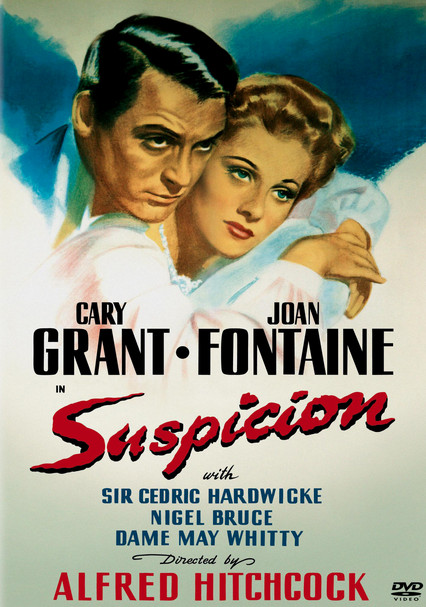
Suspicion-1941

Suspicion-1941

Director Alfred Hitchcock

Starring Cary Grant, Joan Fontaine

Scott’s Review #1,029

Reviewed June 3, 2020

Grade: B+

An early American effort by the master of suspense Alfred Hitchcock (1941) follows the Oscar-winning Rebecca (1940) with a similarly themed film.

A dazzling beauty (Joan Fontaine) is manipulated by her charming husband (Cary Grant), but is he gaslighting her and plotting her death, or is it all in her mind? The puzzle unfolds with a sizzling final thirty minutes that eclipses the remainder of the film, which drags and plods along slowly.

Wealthy but insecure Lina McLaidlaw (Fontaine) meets handsome and irresponsible playboy Johnnie Aysgarth (Grant) on a train in England. He charms her into eloping despite the strong disapproval of her father, General McLaidlaw (Sir Cedric Hardwicke), who thinks Johnnie is after the family’s money.

After a lavish honeymoon and return to an extravagant new home, Lina discovers that Johnnie has no job and no income, habitually lives on borrowed money, and intends to try to sponge off her father.

She talks him into getting a job, which he embezzles from.

Lina begins to think that not only is Johnnie after her money, but he intends to kill her. She becomes aware of his financial schemes and motivations, feeling conflicted over her love for him and her survival.

Events kick into high gear after a friend’s death, an insurance policy, and discussions with an author’s friend, Isobel Sedbusk (Auriol Lee), a writer of mystery novels about untraceable poisons. A bizarre dinner conversation surrounding ways to get away with murder causes Lina to start unraveling.

Many suspensions of disbelief must be contained in frustrating measures throughout most of the film, and a bothersome level of female mistreatment is to be endured.

From the very first scene, Lina’s insecurity gnaws at me. She is gorgeous, rich, and intelligent, so why does she feel, and is perceived even by her parents, as a lonely spinster sure to become an old maid?

Despite Hitchcock’s love of glasses on female characters, brandishing Lina with gawky bifocals hardly makes her an ugly duckling. Johnnie’s nickname, “Monkeyface,” is jarring and insulting.

The determination not to make Hollywood royalty Carey Grant too bad of a guy does not work. It feels like a weak effort to suddenly change the story to thwart the perception of a character as not a villain but someone to feel sympathetic toward.

Unclear is if this was Hitchcock’s decision or the mighty studio’s (my best guess would be the latter since Hitchcock was not afraid to take risks). The audience hardly has a chance to let their emotions marinate as the big reveal quickly culminates in the end credits rolling, and the film concludes.

A significant positive to Spellbound is the hidden tidbits brewing beneath the main saga of the Hollywood glamour boy and girl (Grant and Fontaine).

A clever LGBTQ+ revelation among two supporting characters can be unearthed decades before the terminology was invented. Hitchcock loved his gay characters, who could not be openly gay, though the director did his best to offer the now-obvious idiosyncrasies.

Sophisticated Isobel seems to live alone in her quaint and lovely cottage, but during a dinner party, a blonde woman wearing a suit and tie, clearly butch, joins the conversation. As Isobel asks her to pour more wine, we realize she is hardly a servant but Isobel’s lesbian lover!

The stunning yet highly subtle revelation is prominent to eagle-eyed viewers and cagey enough to catch on. In addition to these lovely ladies, an odd-looking male dinner guest wearing glasses and discussing murder novels is an interesting character, though we see little of him.

The same can be said for Lina’s sophisticated mother, Mrs. Martha McLaidlaw (Dame May Whitty), and Lina and Johnnie’s maid, Ethel (Heather Angel). Both, playing minor roles, add subtle delights to the film.

Suspicion (1941) is an early Hitchcock film that is rarely mentioned among his best works. The film is a tough sell because of its tedious pace, the lead character’s inexplicable insecurity, and the unfulfilling story conclusion.

The suspense and activity in the final act (mostly the stunning edge of the cliff car drive) promote the film to an above-average rating, but grander works were soon to follow in the decades ahead.

The most fun is noticing the delicious peculiarities of interesting supporting characters.

Oscar Nominations: 1 win-Outstanding Motion Picture, Best Actress-Joan Fontaine (won), Best Scoring of a Dramatic Picture