Tag Archives: Action

One Battle After Another-2025

One Battle After Another-2025

Director Paul Thomas Anderson

Starring Leonardo DiCaprio, Sean Penn, Chase Infiniti

Scott’s Review #1,497

Reviewed October 20, 2025

Grade: A

In my opinion, one of the modern great directors, Paul Thomas Anderson has released One Battle After Another (2025), a film rich with thrills and relevance. Sought to be made for years, the film is inspired by the 1990 novel Vineland by Thomas Pynchon with some narratives by Anderson peppered in.

Undoubtedly, Anderson was influenced by the current state of the United States in terms of immigration issues and tyrancy in the ICE (United States Immigration and Customs Enforcement) organization.

While immigration is not a new hot button issue, the inhumanity heaved onto ‘illegal immigrants’ and some US citizens is current as well as powerful.

Additionally, a frightening tone of racism and ‘white power’ is an underlying theme of the film contrasting covert hatred by a group of white supremisists with the humanity of revolutionaries who attack the political system.

Therefore, the film has an overwhelming modern feel.

Otherwise, the breakneck twists and turns and action make One Battle After Another the crown jewel in storytelling fun and an Anderson offering that could easily be added to his top 5 of all time.

Events follow an ex-revolutionary explosive device expert, “Ghetto” Pat Calhoun / “Rocketman” / Bob Ferguson (Leonardo DiCaprio) who is forced back into his former combative lifestyle when a corrupt military officer pursues him and his daughter.

With new identies, they had assumed they could live a peaceful life of tranquility but they were in for a rude awakening.

Set in present times, the film begins fifteen years before events later in the story but with a clear linkage. This ensures the audience is invested in the characters especially in the latter half as we get to know them better.

While DiCaprio can never deliver a bad performance and firmly grips the lead role as the intelligent yet comically clumbsy Bob, other actors shine making One Battle After Another an ensemble piece dripping with award worthy performances and hefty accolades.

DiCaprio improvises his way through the script with stutters and stammering enveloping his character with endearing qualities like forgetting a vital password or falling off a roof. Nonetheless, he possesses sentimenal and introspective moments towards his life and teenaged daughter, Willa Ferguson / Charlene Calhoun, played by Chase Infiniti.

Infiniti is tremendous in what is her breakout role playing a mixed race girl attempting to lead an everyday life while having to pay for the crimes and mistakes of her parents.

Playing confident, yet scared and vulnerable, Infiniti is quite the find. Is she destined to follow in her parents footsteps?

Teyana Taylor is brutally talented as she plays Perfidia Beverly Hills, a tough as nails, take no prisoner, kick ass young woman known to tease and humiliate her prey strictly for laughs.

Regina Hall and Benicio del Toro leverage their kind hearted and supportive characters with emotional flare and some needed humor especially on the part of del Toro.

The standout, however is Sean Penn. Giving a bravura performance as the hated and racist Colonel Steven J. Lockjaw, a military officer who pursues the French 75, he sneers and pouts, never playing the character over the top or for laughs.

He truly believes he comes from a superior race while bedding the women he despises.

A three-way highway car chase scene nearly rivals classic sequences in The French Connection (1971) and The Getaway (1972). As three separate drivers points of views are featured along a hilly highway with deadly results the audience is treated to rear view mirror and reaction shots.

I honestly did not know what would happen next and was delighted at the outcome.

Hopefully, as the years go by One Battle After Another (2025) will be remembered for embracing different genres and delivering a powerhouse final product. With great acting, editing, storytelling, and action the film has got it all.

Add in a timely message and you’ve got yourself a gem.

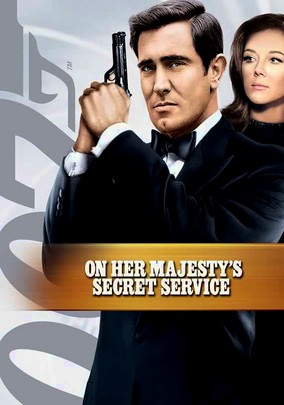
On Her Majesty’s Secret Service-1969

On Her Majesty’s Secret Service-1969

Director Peter Hunt

Starring George Lazenby, Diana Rigg 

Top 250 Films #17

Scott’s Review #156

28630765

Reviewed August 19, 2014

Grade: A

On Her Majesty’s Secret Service (1969) is often derided by fans of the James Bond franchise, which is a shame, as it is artistically and story-wise top of the heap and my personal favorite from the series.

Bond, now played by George Lazenby, is on the hunt for arch-nemesis Blofeld, played by Telly Savalas. Blofeld is intent on securing amnesty for his past deeds and is threatening to ruin the world’s food supply if his demands are not met.

Often known among Bond historians as “the one with George Lazenby”, who, if not for Sean Connery returning to the series in the next film, could have lasted much longer in the role, is a breath of fresh air and wonderfully cast.

Lazenby brings his form of charisma, great looks, and charm to the role and Sean Connery is a tough act to follow, but Lazenby succeeds in spades.

Diana Rigg is one of the best Bond girls of all time as she is intelligent, sophisticated, confident, and beautiful, a great counterpart to Bond- she is more his equal, rather than simply just a conquest for him, and the two actors have real chemistry.

Telly Savalas is effective as the Blofeld, though not my all-time favorite Bond villain by any stretch- something is missing in his performance.

In typical Bond fashion, the film begins in sunny Portugal, side steps to London, and finishes in cold Switzerland. I love the icy, snowy Switzerland locales in the film and the ski chase, downhill bobsled chase, car chase on ice, and subsequent blizzard, which are brilliantly atmospheric.- a perfect film to view on a cold winter’s night!

I love the inside quips in this one especially when Lazenby says “I bet this never happened to the other fellow” and “He had lots of guts” both are laugh-out-loud clever.

The shocking and tragic ending is uncharacteristic of a Bond film and a brilliant change from many of the films as Bond is humanized.

On Her Majesty’s Secret Service (1969) is more character-driven than the other films in the franchise while still providing lots of adventure, and should be revered as a more layered Bond offering.

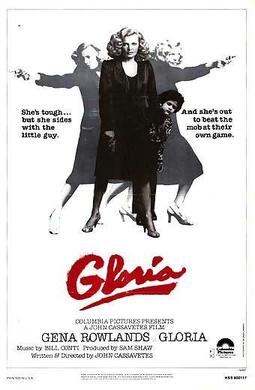
Gloria-1980

Gloria-1980

Director John Cassavetes

Starring Gena Rowlands

Top 250 Films #32

Scott’s Review #166

60000794

Reviewed September 9, 2014

Grade: A

Gloria (1980) is an action/thriller film that features the standard action-crime thriller elements, including shoot ‘em up, guns-blazing, clichéd fare, but contains an interesting and appealing leading character, a gritty atmosphere, and witty dialogue.

It is a significantly better film than most indistinguishable action films.

Directed and written by independent film master, John Cassavetes, who wanted to make a more conventional, mainstream film than was typical for him- think the very left of center, brilliant A Woman Under the Influence, also starring Gena Rowlands, and Gloria was the perfect film for him to create with Rowlands as the focal point.

Made in 1980, Gloria perfectly portrays New York City at the time.

New York City was gritty, dirty, rough, crime-infested, violent, and chaotic, and the film frequently travels throughout Manhattan, the Bronx, and New Jersey, with many scenes shot directly on the streets of New York.

Several other scenes are set in dingy apartments, hotels, seedy bars, and rundown streets, and are highly effective in portraying a gloomy atmosphere. The cinematography in the film is perfect.

The heart of the film lies with Rowlands (Cassavetes’s wife), who gives a mesmerizing performance as a former mob girlfriend who, by circumstance, must protect a young Hispanic boy from execution by the mob because of an informant’s book he clings to for dear life.

No other actress could have played this role of a tough-talking, brash New Yorker as well as Rowlands does. The boy’s father, played by Buck Henry, is a scared accountant with ties to a company fronted by the mob.

He fears his entire family will be murdered and hands his kid over to Gloria. Julie Carmen gives a brief but effective performance as Phil’s frazzled mother.

I wish Henry and Carmen had been given more screen time and fleshed-out characters because both had huge potential. The film belongs to Rowlands- she is no-nonsense, tough, and so convincing in the part.

I also enjoyed the casting of John Adames as the kid, Phil. His performance was inexplicably panned by many critics and I’m not sure why.

I also love the unique opening credits as intense folk/jazz music plays over watercolor portraits that turn into the skyline of New York City and the music has a melancholy and eeriness to it.

Amid the violence, there is a sweet bond that develops between Gloria and Phil that is not too sentimental or cheesy.

A great, compelling, late 1970s/early 1980s film that has some definite Godfather and Dirty Harry influence in texture and characters, especially with some of the mobster characters.

The appeal of the film is that it has a heart but never delves into schlock. Surprisingly rated only PG, it is gritty, but not lewd or harsh and seems dirtier than it is with barely any filthy language.

The chemistry and heartfelt connection between Gloria and Phil are darling without being too sappy or safe. Gloria is a fast-paced, action gem that is both appealing and tough.

Oscar Nominations: Best Actress-Gena Rowlands

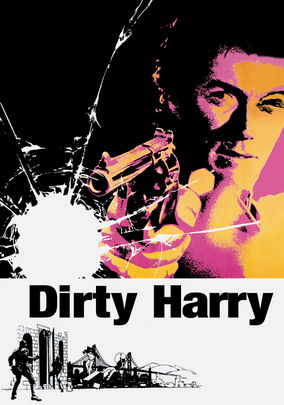
Dirty Harry-1971

Dirty Harry-1971

Director Don Siegel

Starring Clint Eastwood, Harry Guardino

Top 250 Films #42

Scott’s Review #443

445522

Reviewed July 4, 2016

Grade: A

Dirty Harry (1971) is a classic crime drama that became a signature role for Clint Eastwood as the title character, a role he has played four more times.

Dirty Harry set the tone for the plethora of crime thrillers and police action films that filled theaters throughout the 1970s and 1980s. This film still holds up very well and is a masterpiece of the cat-and-mouse/detective genre.

Quiet and controlled, but filled with anger below the surface (we learn a drunk driver killed his wife), Harry Callahan is a tough cop in San Francisco who has seen it all. He is a red-blooded American good guy, though he is brooding and has a mind of his own, oftentimes disagreeing with his superiors and their rules.

He epitomizes good versus evil.

A vicious killer named Scorpio (based on the real-life Zodiac killer) is on the loose, having killed two people already. His motives are unclear, but that is rather unimportant. What is important is that he threatens to kill one person per day unless his demands of $100,000 are met.

Harry is immediately assigned to the case despite his reputation for being difficult and violent. This leads to a cat-and-mouse game between Harry and Scorpio in Harry’s pursuit of the criminal.

Scorpio is played by Andy Robinson, who is a fantastic villain- perhaps one of the most frightening in film history. His dirty blonde locks, yet angelic face, combined with maniacal facial expressions make his portrayal quite frightening.

He is a sniper so he is continually perched on rooftops seeking his next victim. As he watches a couple eating ice cream in the park or a woman swimming in a rooftop pool, we feel a sense of voyeurism and dread.

His disturbing sense of humor and sadistic personality make him quite scary.

The film succeeds in large part because of its grit and violence.  And it is a very masculine film. Harry is a take-no-prisoners kind of guy and he is hell-bent on stopping Scorpio from killing- no matter what.

In a very effective scene, Harry chases Scorpio to a vast football field and uses torture to elicit a confession from Scorpio. It is a bloody and intense scene, but quite necessary to who Harry is.

Of course, this tactic backfires as Scorpio is released from the hospital and set free. This leads to a further feud between the two men.

A bonus of Dirty Harry, and one aspect that gives so much authenticity, is the on-location setting of San Francisco. From the Golden Gate bridge to the illustrious mountains outside of the city and the Pacific Ocean, these elements give a dash of realism to an already gritty film. Chinatown and Dolores Park are also featured.

Highlighting all of this is a sequence where Scorpio forces Harry to go from locale to locale on foot in part of a wicked game to save a victim.

Harry’s famous lines as he points his gun at the perpetrators and mocks them by asking them if five or six bullets in his gun are now legendary as is his “Do I feel lucky? Well, do you, punk?”

On the surface a bit silly and gimmicky, these catchphrases somehow still work.

The school bus finale as Harry and Scorpio once again square off is great. As Scorpio hijacks a bus filled with grammar school students, he tricks the students, unaware of his intentions, by engaging them in children’s song sing-alongs as the harried bus driver drives out of the city.

When one child catches wind of the situation, Scorpio turns nasty, scaring the children into a frenzy.

Dirty Harry (1971) is a classic cop film that I never tire of watching. For the genre, it is as good as it gets and holds up well. After all of these years, it is tough to disassociate Clint Eastwood from the role of “Dirty Harry”.

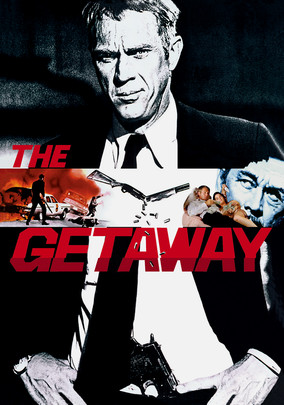
The Getaway-1972

The Getaway-1972

Director Sam Peckinpah

Starring Steve McQueen, Ali MacGraw

Top 250 Films #58

Scott’s Review #439

539604

Reviewed July 3, 2016

Grade: A-

The Getaway (1972) is a classic action film by director Sam Peckinpah, known for works such as Straw Dogs and The Wild Bunch.

His films are known as “guy films” and are a rather violent experience.  The Getaway is no exception, though it is not immensely brutal either. Still, there is more than one macabre scene and one dastardly villain.

For fans of Peckinpah, The Getaway is a must-see.

The film features Steve McQueen and Ali MacGraw, who are perfectly cast as lovers Doc and Carol McCoy. Inescapable was their chemistry, and art mirrored life as the two were embroiled in a torrid love affair during the shooting, and later, they were married.

We meet Doc in a Texas prison, where his parole has just been denied. Doc and Carol decide to make a deal with corrupt businessman Jack Benyon to ensure Doc’s release. One stipulation is for Doc to participate in a bank heist with two of Jack’s men (Rudy and Frank).

The heist goes off, but things go awry, and Doc and Carol head for El Paso with a large sum of money, being pursued by Rudy and a double-cross attempt by Jack.

Rudy kidnaps veterinarian Harold and his young wife Fran (Sally Struthers) to aid him with his injuries, taking them along as he pursues Doc and Carol.

Mixed in with the already complicated plot is a con man who attempts to steal Doc and Carol’s money.

Doc and Carol are clearly the heroes of the film and are meant to be rooted for, and the characters work very well together. Yes, they are criminals themselves, but they are portrayed as nice and not hurting anyone who does not deserve it. Doc does spare Rudy’s life at one point, and I think this only reinforces his appealing anti-hero character.

The love story is also a significant aspect of the filmmaking, making Doc and Carol likable. A few sweet, tender scenes of their romance are mixed in, adding a nice balance to the otherwise testosterone-fueled events.

The Getaway features spectacular editing, particularly at the beginning of the film, where we watch Doc in prison, going through his day-to-day rituals, which are seamlessly interwoven with other stories in the movie.

The musical score matches perfectly with the editing, adding a provocative element of intrigue. These components add the necessary elements to a film like this- edge-of-your-seat!

I love the Texas setting.

Characters are constantly traveling to get somewhere- either by train, by car, or on foot- so we see much of the Texas countryside, almost giving The Getaway a Western flavor.

It is certainly a hot and humid environment, though McQueen always has a sophisticated suit on and MacGraw looks stylish and put together.

And from a prop perspective, I never tire of seeing those early 1970s sedans driving at high speeds.

Unfortunately, as with most Peckinpah films, women are not portrayed in a positive light, though Carol is one of the strongest of his female film characters. Yet, in one tough scene, she is smacked around by Doc after he realizes she slept with Jack to ensure his release from prison.

The most confusing and weak character is Fran. In a strange bit of writing, she inexplicably falls madly in love with her kidnapper, Rudy, even as he abuses and humiliates her- while her husband is around. This is odd and tough to watch and not the best part of The Getaway.

Her character is not developed well and it is head-shaking why she feels any passion for Rudy.

The heart of the film belongs to Doc and Carol as they are on the lam for much of the time and this is a successful part of The Getaway- hence the title. Will they get caught, will they escape?

The characters remind me of Bonnie and Clyde, so we wonder if Doc and Carol will meet the same fate, but of course, we like them so we do not want that.

The Getaway is a fast-paced, down-home, red-blooded sort of action film. It is stylized, gritty, and sometimes violent. The chicken wing scene between Rudy, Fran, and Harold starts light and turns ugly, adding to the unpredictable nature of the film.

A supreme offering by Peckinpah.

From Russia with Love-1963

From Russia with Love-1963

Director Terence Young

Starring Sean Connery, Daniela Bianchi

Top 250 Films #76

Scott’s Review #615

Reviewed February 5, 2017

Grade: A

From Russia with Love (1963) is only the second film in the storied James Bond franchise. It is a sequel to the debut installment, Dr. No, and received twice the budget.

This is evident as the cinematography and the look of the film are exquisite, with scenes of chase and battle galore.

The film is lavish and grand and what a Bond film ought to be, consisting of adventures through countries, gorgeous location sequences, and a lovely romance between Bond (Sean Connery) and Bond girl, Tatiana (Daniela Bianchi), but is not in my top Bond girls of all time.

Terence Young returned to direct the film with successful results.

Vowing revenge on James Bond for killing villainous Dr. No, SPECTRE’s Number 1 (seen only speaking and holding a cat) recruits evil Number 3, Rosa Klebb, a Russian director and defector, and Kronsteen, SPECTRE’s expert planner, to devise a plot to steal a Lektor cryptographic device from the Soviets and kill Bond in the process.

Klebb recruits expert killer Donald “Red” Grant and manipulates Tatiana into assisting. The story takes Bond mainly through Istanbul, Turkey, into a gypsy camp and via the Orient Express through Yugoslavia to the ultimate climax.

The villains in From Russia with Love are outstanding and a major draw to the film.

Klebb (Lotte Lenya) and Grant (Robert Shaw) are perfectly cast. Klebb, militant and severe with her short-cropped red hair, has a penchant for deadly footwear (she has a spike that shoots out from her boot containing venom that kills in seconds) and casually flaunts her lesbianism in front of Tatiana.

I admire this level of diversity in early Bond films—it was 1963, which was extremely rare.

Grant, on the other hand, is handsome and charismatic and has a chest of steel. With his good looks and bleached blonde hair, he is a perfect opponent for Bond as the final battle between him and Bond aboard the Orient Express is a spectacular fight scene and a satisfactory conclusion to the film.

The action sequences are aplenty and compelling, especially the Orient Express train sequence finale, which is grand. As Bond and Tatiana, along with their ally Ali Kerim Bey, a British Intelligence chief from Istanbul, embark on a journey, they are stalked by Grant, who waits for an opportunity to pounce on his foes.

This sequence is the best part of the film for me- Grant, posing as a sophisticated British agent, has a cat-and-mouse conversation with Bond and Tatiana over a delicious dinner of Sole.

Grant drugs Tatiana by placing capsules in her white wine- the fact that he orders Chianti with Sole- a culinary faux pas- gives him away.

Other notable aspects of From Russia with Love are the soon-to-be familiar cohorts of Bond who will be featured in Bond films for years to come: M, Q, and Miss Moneypenny become treasured supporting characters that audiences know and love.

Mere novices in this film, it is fun to see their scenes- especially lovelorn Moneypenny.

An odd scene of sparring female gypsies is both erotic and comical as the two women wrestle and fight over a gypsy chief, only to forget their rivalry and both bed Bond- falling madly in love with him as the two women suddenly become the best of friends.

The chemistry between Connery and Bianchi is good but nothing spectacular, and it is not the real highlight of this Bond entry. Don’t get me wrong—they make a gorgeous couple—his dark looks and her statuesque blonde figure look great, but I found the pairing just decent rather than spectacular.

The action sequences, especially the Orient Express scenes, are a spectacle, and the many location shots in and around Istanbul are ravishing.

From Russia with Love (1963) is a top entry in the Bond series and a film that got the ball rolling with fantastic Bond features- it is an expensively produced film, and this shows.

Inglourious Basterds-2009

Inglourious Basterds-2009

Director Quentin Tarantino

Starring Brad Pitt, Christoph Waltz

Top 250 Films #92

Scott’s Review #589

Reviewed January 7, 2017

Grade: A

Inglorious Basterds (2009) is simply a great movie. Blending many film genres, it is hard to categorize, but that is because it is a Quentin Tarantino film, and that says it all.

The film as a whole contains excellent acting, is wonderfully shot, and is extremely detail-oriented, plus it has the familiar “Tarantino” style of music and sound, the chapter breakdown, and the heavy violence.

Set mainly in German-occupied France during the early 1940s, during World War II, the action centers around two stories- Shosanna (Melanie Laurent), a teenage girl whose entire family is killed after being discovered hidden by a dairy farmer.

He is a Jewish sympathizer, and Shosanna barely escapes with her life when an SS Colonel, brilliantly played by Christoph Waltz, interrogates the man.

Three years later, now living in Paris and owning a cinema, she plots her revenge. The other story is also of a revenge plot by a group of Jewish-American soldiers to kill as many Nazis as possible.

Both stories eventually intersect with a grand finale inside a cinema.

The story itself is richly nuanced and unlike many generic films of today. The fantastic set design and the perfection of every last set-piece are amazing. Long scenes play out slowly but bristle with authenticity and good dialogue.

Take the first scene for example- as the SS Colonel, aptly nicknamed the “Jew Hunter” plays cat and mouse with the dairy farmer, politely asking for two glasses of milk, the audience knows the payoff will be huge, but the conversation crackles with good dialogue.

What strikes me most about the film is the intelligent writing. The many scenes of conversations between characters- a chat over strudel and cream, a trivia game at a bar, and the aforementioned scene at the farmhouse, bristle with unique, clever written dialogue so that the scenes are far from mere filler.

Of course, this is also a characteristic of Tarantino.

At over two and a half hours Inglourious Basterds (2009) is long but satisfying.

My only criticism is of Brad Pitt. I didn’t buy him as a Tarantino guy and found his character the only weak point of the film. His southern drawl just did not draw me in like I thought it might.

He was touted as the main character (perhaps because he was the biggest star), but he plays a supporting role.

Oscar Nominations: 1 win-Best Picture, Best Director-Quentin Tarantino, Best Supporting Actor-Christoph Waltz (won), Best Original Screenplay, Best Sound Editing, Best Sound Mixing, Best Cinematography, Best Film Editing

Kill Bill: Volume 1 and Volume 2-2003/2004

Kill Bill: Volume 1 and Volume 2- 2003/2004

Director Quentin Tarantino

Starring Uma Thurman, David Carradine

Top 250 Films #98

Scott’s Review #322

6003123660032563

Reviewed January 3, 2016

Grade: A

Despite being released as separate films (Fall of 2003 and Spring of 2004), Kill Bill: Volume 1 and Kill Bill: Volume 2 are one grand, sprawling feature.

The films were shot as one, but at a running time of over four hours, it was impossible to release them as one, so director Quentin Tarantino decided to release his masterpiece martial arts film as two sequential films.

I have decided to review them as one since Volume 2 is a clear continuation of Volume 1.

From a story perspective, Kill Bill is a basic revenge thriller. The plot is not complex nor ingenious and is rather ordinary containing B-movie components- think the really bad Kung-Fu films of long ago.

What makes Kill Bill an extraordinary masterpiece, however, is the style that exudes from the film, thanks to the direction and creation of Tarantino.

The film is brimming with good flavor and crackling dialogue of an intelligent sort.

Characters have long conversations with each other-not for redundancy’s sake- in between the endless martial arts and bloody sequences.

We meet our heroine, The Bride (Uma Thurman), in a chapel in El Paso, Texas. About to be married to her groom, the entire wedding party is suddenly assassinated in a bloody fashion by the Deadly Viper Assassination Squad.

Their leader, Bill (David Carradine), shoots The Bride after she reveals to him that she is carrying his baby.

The film flashes forward four years later- The Bride has survived the massacre but has been comatose ever since. When a hospital worker rapes her, she escapes and vows revenge on each one of her attackers- the revenge culminating with Bill.

Her path of destruction leads her to Japan.

Like most of Tarantino’s films, Kill Bill is divided into chapters and often goes back and forth from past to present.

The brilliance of Kill Bill is its pizazz. We know The Bride will get her revenge on the assassins, we just do not know in what way or how bloody the slaughters will be.

The film contains copious amounts of blood and swords and machetes are everywhere to be found.

The slow drawl dialogue as The Bride has conversations with her prey before she kills them, oftentimes ends in a big fight scene. Her first revenge, against Vernita (Vivica A. Fox), is unique in that it takes place in Vernita’s kitchen as her young daughter is happily eating her breakfast cereal.

The entire battle ensues in the kitchen and we are left watching blood and cereal.

It is Tarantino’s unique style of filmmaking and storytelling, adding violence, and long character conversations, that give Kill Bill, and all of his other classic films, his unique brand, and stamp of approval.

I dearly hope he continues to make films that challenge the norm, for years to come.

Thunderball-1965

Thunderball-1965

Director Terence Young

Starring Sean Connery, Claudine Auger

Top 250 Films #99

Scott’s Review #364

1046268

Reviewed January 9, 2016

Grade: A

By 1965, the James Bond franchise was embarking on its fourth segment, and the budget reflected the success of the preceding films.

Thunderball reaps the benefits of an enormous budget and is. As a result, it is a grand, epic film. Its sheer magnitude makes it one of my favorite Bond films simply because of its look.

The special effects are a marvel.

By this time, Sean Connery had comfortably immersed himself in the role of Bond, utilizing his charm and ability to exude charisma.

In this story, two NATO atomic bombs have been stolen by SPECTRE and held the world to ransom for millions in diamonds. They are threatening to detonate one of the bombs in a major city in either the United States or England. Mr. Bond must race against time to deter this from happening.

For starters, the opening sequence is one of my favorites. Bond attends the funeral of a deceased SPECTRE agent (number 6) at a lavish chateau in France. The agent is disguised as his widow, but Bond is not fooled.

This sets the stage as a dramatic fight scene ensues between the two “men.”

The main villain of Thunderball is Emilio Largo (Adolfo Celi), a handsome, suave SPECTRE agent (number 2). He is rich and sophisticated, a quality that is reflected throughout the film.

His grand estate is set and filmed in the Bahamas, giving most of the film a steamy, posh look, with bluish-green waters and white, crispy sand.

It’s the most gorgeous backdrop.

Largo is a great Bond villain and on par with Bond. He also has charm, good looks, and charisma.

The main Bond girl is Domino, played by Claudine Auger. Largo’s mistress is typically clad in black and/or white, hence her name.

Auger has the perfect balance of beautiful looks, sophistication, and intelligence, and is an ideal match for Bond. The chemistry between Connery and Auger is palpable and a significant factor in the film’s success.

What sets Thunderball apart from some Bond films is the central portion of the film, mainly in the second half, which takes place underwater.

In a clear example of showcasing the modern technology of the time (1965), some complained that these sequences went on too long and did not advance the plot.

These points may have some validity, but oh, are they so visually appealing! The exotic underwater world is majestic.

Thunderball has it all and is one of the most gorgeous Bond films. It is big, bombastic, and filled with bright colors.

It contains all the elements of a great Bond film, so it has held up remarkably well over the years.

Oscar Nominations: 1 win-Best Special Visual Effects (won)

Diamonds Are Forever-1971

Diamonds Are Forever-1971

Director Guy Hamilton

Starring Sean Connery, Jill St. John

Top 250 Films #100

Scott’s Review #328

60000705

Reviewed January 6, 2016

Grade: A

Despite Diamonds Are Forever (1971) being one of the lower-rated James Bond films, this is actually one of my favorite films of all time and many would disagree with me.

Some say Sean Connery phoned this performance in, some say there was little chemistry between him and Jill St. John and tension-filled the sets leading to a sub-par offering, but I think this is a great film.

I love the Las Vegas locale, the bright lights, flashy costumes, and a ritzy underbelly- and the Vegas car chase is amazing.

A bright, shiny Ford Mustang takes center stage throughout the sequence, and if one looks closely, one will realize that nearly all the cars are Ford- fun fact!

The title song by Shirley Bassey is great- sultry and stylish only enhanced by the glitzy setting. One immediately imagines the film oozing with diamonds as it does.

The villains are interesting and Mr. Wint and Mr. Kidd were the first openly gay Bond villains, which, in 1971 was groundbreaking.

Yes, they are evil and slightly silly, but what a risky and surprising blatant scene to see the gentlemen holding hands.

St. John is a sophisticated and intelligent Bond girl and the action in this film is plenty.

Diamonds Are Forever (1971) contains all the elements for an enjoyable Bond experience.

Oscar Nominations: Best Sound

Goldfinger-1964

Goldfinger-1964

Director Guy Hamilton

Starring Sean Connery, Gert Frobe

Top 250 Films #114

Scott’s Review #337

22041809

Reviewed January 9, 2016

Grade: A

By the time Goldfinger (1964) was released, the third in the James Bond franchise, the films were huge successes, and the budget was not to be spared a dime.

The lavish sets prove this, and Goldfinger is one of the best Bond films. It contains all the necessary elements for success: interesting villains, Bond girls, gadgets, and locales.

By 1964’s Goldfinger, Ian Fleming’s franchise had hit its stride and was achieving runaway success.

The intriguing premise immediately sets the tone- 007 is assigned to investigate a massive gold smuggling scheme. The conspirator is Auric Goldfinger (Gert Frobe), who hatches a plot to contaminate Fort Knox’s United States Bullion Depository.

His goal, naturally, is to control the world.!

The adventure takes Bond from the United Kingdom to Switzerland and finally to the United States in  Kentucky and Florida.

The main Bond girl, a villain, is uniquely named Pussy Galore. The film implies that the character is bisexual and she is tough. James Bond becomes intrigued by and smitten with her.

Goldfinger has the honor of containing one of the greatest Bond villains of all time- the title character of Goldfinger. Big and burly, he is menacing-looking, and actor Frobe is perfectly cast.

We first meet the man cheating at gin rummy poolside at a lavish Miami Beach hotel, while Bond looks on from dozens of floors up, with the assistance of Goldfinger’s moll, Jill Masterson.

In one of the greatest scenes in Bond history, a knocked-out Bond awakens to find Jill dead—and completely covered in gold paint! This scene, which occurs early on, sets up the Bond/Goldfinger rivalry outstandingly.

Goldfinger’s henchman, Oddjob, is also a grand Bond villain. He is Asian, menacing, and wears a trademark steel-rimmed hat, which he uses to kill his victims. Jill’s sister, Tilly, seeks revenge on Goldfinger but finds herself a victim of Oddjob’s infamous bowler hat as she flees for her life.

Following 1962’s From Russia With Love, an exceptional Bond film with nary a flaw, Goldfinger excels slightly because it has all the right ingredients and is firing on all cylinders.

Everything flows with precision.

Unforgettable is the climax of Goldfinger at the legendary Fort Knox itself. Goldfinger’s private army, an atomic device, a countdown to destruction, and Oddjob all make for a satisfying and riveting conclusion to one exceptional Bond entry.

Oscar Nominations: 1 win-Best Sound Effects (won)

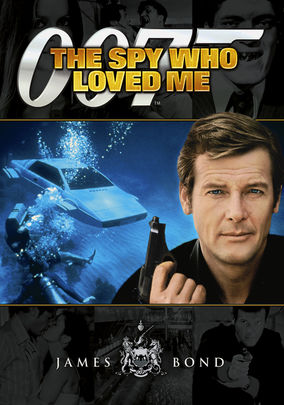
The Spy Who Loved Me-1977

The Spy Who Loved Me-1977

Director Lewis Gilbert

Starring Roger Moore, Barbara Bach

Top 250 Films #137

Scott’s Review #637

Reviewed April 27, 2017

Grade: A-

The Spy Who Loved Me (1977) is pure James Bond- an installment of the franchise that successfully contains all of the elements of an exceptional Bond film- and then some.

By this time Roger Moore was firing on all cylinders and had made the character of James Bond his own- Sean Connery who?

With his third appearance in the role, Bond exudes charisma and wry wit, combined with a fabulous story, sexy Bond girls, and a villain worthy of his role, The Spy Who Loved Me achieves near perfection, save for too drawn out of an ending- otherwise, an excellent, memorable film that does not feel dated in the least.

When Soviet and British submarines begin to vanish, the two sides team up and send their best agents forward to uncover the circumstances surrounding the disappearances.

Barbara Bach plays Major Anya Amasova, also known as Agent Triple X, a Soviet agent, and naturally Bond becomes enamored with her beauty and intelligence.

Together they face off against a megalomaniac named Karl Stromberg, who is intent on destroying the world with nuclear missiles and creating his underwater world. Stromberg’s sidekicks are Jaws, a giant with steel teeth, and a deadly vixen named Naomi.

Interestingly, if watched as a companion piece to a Bond film of the 1960s, as I did this time around (You Only Live Twice), the viewer will notice the change in how Bond female characters are treated.

No longer servile and obedient to the male characters (Bond specifically) Bond women are now his equals in every way, matching him in career success and intelligence.

The main “Bond girl”, (Anya), is a shining example of this, which the film immediately offers. In one of my favorite scenes, Anya is in bed with a handsome man- when “Agent Triple X” is paged, we assume the agent is the man until Anya slyly responds to the message- it is nonchalant, yet a brazen way to make the point that women have emerged as powerful and sexy figures in the modern Bond world.

The chemistry between Moore and Bach is immeasurably important to the success of the film and their romance is dynamic- they simply have “it” and their scenes smolder with sensuality. To complicate matters, Bond has killed an agent whom Anya was in love with and she plans to kill Bond as soon as their mission is victorious.

Director, Gilbert, also adds a slice of Bond’s back story- giving truth and rich history to the story and mentioning Bond’s deceased wife (married and killed in On Her Majesty’s Secret Service), a subject Bond deems off-limits.

This ode to the past only enhances the connection between these two characters.

Villains play an important part in the success of The Spy Who Loved Me.

Take Stromberg- he is sophisticated, mature, worldly, and rich- and quietly insane. He also has a lavish dining room in his underwater submarine with exotic fish swimming about through visible tanks- a gorgeous element to this film.

Through a trap door,  victims meet their demise by a vicious killer shark swimming about. One unlucky female assistant, who has double-crossed Stromberg, meets her maker in bloody fashion. Later, Bond sees a severed hand floating about in one of the tanks.

This is great creative writing and adds nuances to the film.

Hulking henchman, Jaws, who would return in the next installment, Moonraker, dazzles and impresses with his deadly, steel teeth.

A great scene, aboard a high-speed train, and a throwback to 1963’s From Russia With Love, is action-packed.

Naomi meets her demise after an ill-fated helicopter chase scene. I would have liked to have gotten more screen time and gotten to know this character. Her brief, but obvious flirtation with Bond is all too short- and he never even gets to share a bed with her!

Not to be outdone, the locales in the film are lavish and gorgeous- Egypt and Italy are countries explored, and scenes are shot on location in each country in grand fashion.

The Egyptian pyramids are featured as a chase and a murder occur during a nighttime exhibit- also fantastic are the gorgeous shots of Sardinia- a beautiful region in Italy, where Stromberg’s hideout is set.

A mini gripe is a lengthy conclusion to the film. As Bond struggles to recalculate the two nuclear missiles set to destroy New York and Moscow, Bond must rush to make sure they do not hit their intended target.

The “final act” of the film just goes on too long with way too many soldiers and men running around in a panic. The action is great, but enough is enough by the end.

Roger Moore once commented that The Spy Who Loved Me (1977) was his favorite of all the Bond films to make- it is easy to see why he felt this way.

The film contains all of the necessary elements to make it one of the top entries in all of the film franchises and has a magnificent feel to it.

Oscar Nominations: Best Original Score, Best Original Song-“Nobody Does It Better”, Best Art Direction

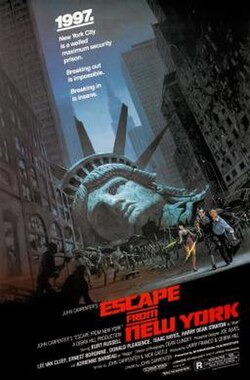
Escape from New York-1981

Escape from New York-1981

Director John Carpenter

Starring Kurt Russell, Adrienne Barbeau

Top 250 Films #141

Scott’s Review #344

60002839

Reviewed January 9, 2016

Grade: A

Escape from New York (1981) epitomizes a great action film to me.

Too often, action films are filled with run-of-the-mill characters, are plot-driven, and are mediocre stories that lack creativity. I adore Escape from New York, however.

The creativity and amazing direction by John Carpenter allows the film to soar high above what is typical for this genre.

The unique premise sets things off immediately as we follow the mission of ex-con Snake Plissken (Kurt Russell) to save an important figure in peril.

In futuristic 1997, we learn that due to skyrocketing crime throughout the United States, New York City has been fenced off and turned into a maximum-security prison.

All of the most hardened and demonic criminals have been isolated on Manhattan Island to fend for themselves- free to kill or be killed as they like.

The rest of the country is presumably crime-free- though we never see the rest of the country.

The President of the United States (Donald Pleasence) is taken hostage when Air Force One crashes on Manhattan Island. Snake is injected with a poison that will kill him in twenty-four hours unless he successfully rescues the president and returns him alive and well.

I love this film because it is strictly Carpenter’s vision.

Due to the success of 1978’s Halloween, he was given creative freedom and a big budget to film in St. Louis (doubling for New York).

The film contains eerie synthesizer music (reminiscent of Halloween and Halloween II) which sets the tone exceptionally well. The dark and abandoned sets are wonderful and capture a futuristic world oh so well.

The audience will undoubtedly become enraptured as Snake’s mission is to do or die- if he does not save the president he dies. As Snake arrives atop the World Trade Center via glider, now post 9/11, this scene takes on a haunting quality.

Snake then immerses himself into the gloomy world of Manhattan facing all sorts of dangers along the way. Punk rock-looking creatures scurry around the city- many insane, and Snake meets odd character after odd character in his quest to save the president.

His main ally is Cabbie, played by Ernest Borgnine.

The villain of the story is Duke, not well cast nor well developed, but this can be overlooked because of his super rad Cadillac and his two fascinating accomplices- Maggie (Barbeau) and Brain (Harry Dean Stanton).

The lavish sets include the New York Public Library and Grand Central Station- I love that there are so many iconic New York City locales featured- but the fact that they are not shot in the genuine areas does not bother me.

The art direction is done so well that I was fooled.

Escapism fare, but a unique entry in the action genre. Thanks to fantastic direction and a likable star, Escape from New York (1981) succeeds.

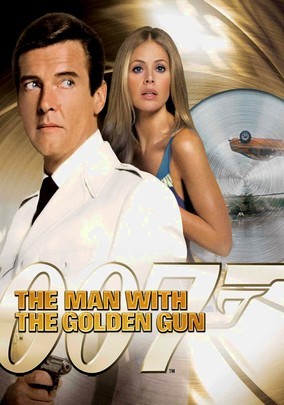
The Man with the Golden Gun-1974

The Man with the Golden Gun-1974

Director Guy Hamilton

Starring Roger Moore, Christopher Lee, Britt Ekland

Top 250 Films #142

Scott’s Review #346

28370063

Reviewed January 9, 2016

Grade: A

Though not typically regarded as one of the more appealing of James Bond films, and the second chapter to feature Roger Moore, Sean Connery’s replacement, The Man with the Golden Gun (1974) is one of my favorites, firmly placed in my top 5 of 007 offerings.

This could be the result of the film being one of my first introductions to the world of 007 as a child.

Moore seems more comfortable in the role than he did in the uneven Live and Let Die, released in 1973.

Qualities that make The Man with the Golden Gun a success include the wonderful casting of Christopher Lee, a famed horror film icon, in the central role of Francisco Scaramanga, the title character, and nemesis of Bond.

Who cannot think of Count Dracula while watching Lee act- his dark, swarthy looks, angular face, and his deep baritone voice make for a perfect villain.

Known in large part for participation in Hammer Horror films opposite another legend, Peter Cushing, this is casting at its finest and a true high point of the film.

To summarize the story, MI6 receives a golden bullet with “007” sketched on the side, a clear threat to the life of James Bond. It is assumed to have been sent by the famed assassin, Scaramanga, whose trademark is a deadly golden gun.

Bond is ordered to remove himself from his current mission, but he pays no mind and sets out to find Scaramanga on his own, leading him into a mystery involving a stolen solar energy weapon feared to destroy the world.

The adventure takes Bond to a bevy of gorgeous locales such as Hong Kong, Thailand, Macau, and the South China Sea where our villain resides on a private island reached only by helicopter.

I found the main locale of the sunny deserted island and Scaramanga’s dwarf sidekick, Nick Nack, great aspects of the film. Majestic caves, sandy beaches, and a gorgeous array of water set the tone with gorgeous fantasy elements.

Servant Nick Nack is sinister, but with a sweet smile, one almost trusts him as he serves lunch or expensive champagne to guests sure to be killed afterward.

The secret maze of mirrors that Bond finds himself in is made perfect by Nick Nack’s taunting and cackling. And the flying car that Scaramanga and Nick Nack drive-in, though gimmicky, is a real hoot.

A demerit to The Man with the Golden Gun that I have always been able to look past since other factors usurp her importance is the miscasting of Britt Eklund as Bond’s assistant, Mary Goodnight.

The writer’s pen Goodnight as simpering, silly, and a big goof. An attempt at comic relief falls flat as the character epitomizes a blonde bubblehead- constantly screwing up everything.

Scaramanga’s girlfriend and co-Bond girl, Andrea Anders, played by Maud Adams is much better, though we do not get to know the character very well before she is offed.

Fortunately, Adams would return to star in Octopussy in 1983.

Perhaps middling at times and suffering from some negative characteristics, The Man with the Golden Gun (1974) is a love of mine, a trip down memory lane to a time as a child when I was first discovering my love and zest for James Bond films.

This offering cemented my love of Roger Moore in the central role and I still adore watching this film.

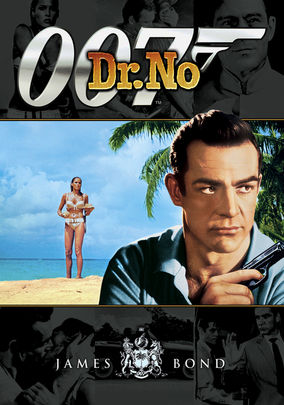
Dr. No-1962

Dr. No-1962

Director Terence Young

Starring Sean Connery, Ursula Andress

Top 250 Films #145

Scott’s Review #667

Reviewed July 27, 2017

Grade: A-

Watching the 1962 film that launched the James Bond franchise into the legendary status it has since become, Dr. No is rich in history and a blueprint for what the Bond films would encompass in the decades to follow.

Admittedly, while more essential than the more sophisticated and fleshed-out chapters to come, the film is nonetheless a superb entry in the franchise and a chapter to be cherished on its own merits.

Charismatic Sean Connery, soon to forever be identified in the role of James Bond, fills the role with a masculine confidence oozing from the screen in every scene.

His performance in the role is so seamless that one might assume he had been playing Bond for years rather than being a novice.

And who can forget the character’s first entrance- in a casino, confidently gambling and introducing himself to Sylvia Trench, a character initially slated to be his steady girlfriend?

The film version of Dr. No is adapted from the first Ian Fleming spy novel of the same name, which is clever. As the years passed, the Bond films were modified from the originally written pages, so it is cool and original to have them closely mirror the book.

Lacking a hefty budget, the action is set in London and Jamaica and at Crab Key, a fictional island off Jamaica.

When Strangways, a British Intelligence Chief, is killed and his body taken by assassins known as “the Three Blind Mice,” who also steal files related to Crab Key island, and a mysterious man named “Dr. No,” Bond is summoned to his superior’s (M) office in London and tasked with determining whether the incident has anything to do with radio interference of missiles launching in Cape Canaveral.

Naturally, it does, and the adventure sets off a series of dramatic events involving henchmen, scrapes with death, and Bond’s bedding of more than one beautiful woman before facing the ultimate showdown with the creepy title character., who is missing both hands.

Notable and distinguishable to the film are the fabulous, chirpy, child-like songs featured. From the tuneful, harmonic, nursery rhyme, “Three Blind Mice”, sung calypso style, to the sexy and playful, “Under the Mango Tree”, both are light, yet filled with necessary mystery.

The fact that the former is featured at the beginning and end implies that the same villains are joyfully singing the happy tune, is a good indicator.

Dr. No is also inspired by the introduction of the crime organization SPECTRE, which any Bond fan knows very well and is a staple of the franchise.

As Dr. No, Joseph Wiseman is well cast, though sadly, we only see him in the latter part of the film. Much more character potential is left untouched, though the mystique of knowing the man exists but not what he looks like is worth mentioning.

Admittedly, the assumption that the audience will not be witty enough to realize that Dr. No and Miss Taro (a villainous secretary) are Caucasian actors wearing unconvincing makeup is silly.

Why the choice was made not to cast authentically ethnic actors is unclear. My guess is the powers that be wanted to go a safer route due to the uncertainty of the franchise at that time.

Still, for a first try, Dr. No gets it just about right.

What woman in 1962 was sexier or cast more perfectly than Ursula Andress as the gorgeous and fiery sex kitten Honey Ryder? This casting was spot on, and who can forget her sultry introduction to the film as she emerges from the roaring waves on the beach in a scantily clad bathing suit?

The set designs and locales also work well in the film.

The sets are contemporary, specifically the spacious prison apartment in which Bond and Honey briefly reside. Sleek and sophisticated, the sofa, rug, and tables exude luxury and class.

Dr. No (1962) is a worthy film on its own merits and a fantastic introduction to the world of James Bond and the many trademark elements and nuances that the films contain.

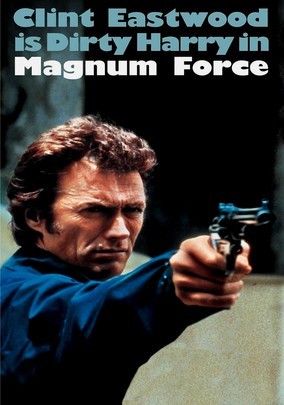
Magnum Force-1973

Magnum Force-1973

Director Ted Post

Starring Clint Eastwood, Hal Holbrook

Top 250 Films #148

Scott’s Review #336

60021588

Reviewed January 9, 2016

Grade: A

The follow-up to the original action thriller to end all action thrillers, Dirty Harry, 1973’s Magnum Force is as good as the original in my opinion but flies under the radar as compared to the acclaimed Harry.

Both films are similar in style and grit, but Magnum Force holds sentimental memories for me, as I remember watching the film countless times on rainy Saturday afternoons as a kid.

The similarities abound between both films as the screenwriter and score are by the same writer and composer, respectively.

Admittedly, Magnum Force is more conventional and less dirty than its predecessor.

Playing not just the same role of Harry Callahan, the grizzled, hard-nosed Inspector from Dirty Harry, but Clint Eastwood also plays him in quite the same manner.

Not one to blow anyone away with his dazzling acting talent, Eastwood is smart to keep to the status quo. The character is tough, and no-nonsense, but has a take-prisoner vulnerability we love and admire.

In this chapter, a syndicate of vigilante cops is taking matters into their own hands by assassinating known criminals who have been let off the hook either by connections or some other form of loophole.

The pattern is for uniformed patrol officers to pull over a criminal for a mundane reason only to shoot and kill them on the side of the road at point-blank range. They deserve it, but are the cops justified in their actions?

The appeal and mystery of the film are that the police officers wear dark helmets that hide their identities from the audience adding a level of intrigue.

The film offers up a moral question- do the criminals get what they deserve, and do the policemen have the right to justify their actions?

Especially relevant is the final thirty minutes of the film, as Harry and the central “villain”, Lieutenant Briggs (Holbrook)  have a standoff and discuss the topic.

Magnum Force is a shoot-’em-up action flick, so this debate is skirted over largely in favor of car chases and fight scenes. But the point can be thought about.

The best sequence of the film is the finale, as Callahan is lured to an abandoned garage and chased by three remaining cops. The big reveal is that Briggs is running the show and as he drives around in his early 1970’s Ford LTD, soon to become battered and weathered, it is a great scene, especially for those who enjoy car chases.

Magnum Force is a no-frills “guy” film, but one done very well and with an interesting, semi-controversial premise.

The film is the 1970s action genre at its very best.

Surprisingly, and to the film’s credit, one can discuss the film after watching it instead of it being a generic, forgettable flick.

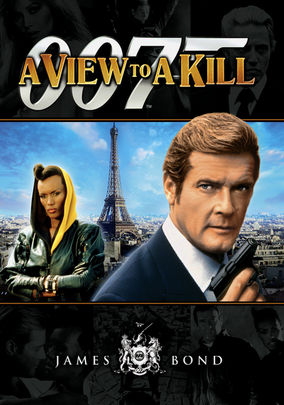
A View to a Kill-1985

A View to a Kill-1985

Director John Glen

Starring Roger Moore, Christopher Walken, Grace Jones

Top 250 Films #151

Scott’s Review #484

60002473

Reviewed September 21, 2016

Grade: A

Not exactly deemed a masterpiece, or even a treasured favorite, among the masses of James Bond lovers, A View to a Kill (1985) holds a soft spot for me.

It is one of the first Bond films that I was fortunate enough to see in the movie theater and it has continued to enamor me all these decades later.

Yes, it has flaws (to be mentioned later), but it is a classic, fun, exciting, mid-1980s Bond offering. It contains Roger Moore- in his final Bond appearance, the exotic Grace Jones, a great villain, and on-location treats such as Paris and Iceland- who could ask for anything more?

We are re-introduced to MI-6 agent James Bond on the snowy slopes of Siberia as he discovers the body of 003, along with a Soviet microchip believed to belong to the wealthy Max Zorin (Christopher Walken).

Bond attends a horse sale hosted by Zorin and discovers he is drugging the horses to make them perform better.

It is also revealed that he intends to destroy Silicon Valley to rule the microchip industry. In Zorin’s camp is a mysterious woman named May Day and an odd Nazi scientist named Dr. Carl Mortner.

Events conclude in San Francisco as the action-packed finale takes place in a mine and overlooking (via blimp) the historic Golden Gate Bridge.

I completely get the criticisms hurled at this film- both Roger Moore and, as a secondary character, Lois Maxwell as Miss Moneypenny, had gotten quite long in the tooth by this point in the franchise (1985), which is a shame because both are favorites of mine.

Most glaring in the “bad” department is Tanya Roberts as the main Bond girl, Stacy Sutten- almost rivaling Halle Berry (Die Another Day) as screamingly awful.

Not appearing as a major character until quite late in the film, Stacey is a wealthy heir, to who Zorin is attempting to pay five million dollars to relinquish her shares in Silicon Valley (she refuses).

Robert’s acting is quite poor- she has no chemistry with Moore, and comes across as a dimwit, despite being written as a doctor or scientist of some sort. Regardless, she does not work as a Bond girl.

Yes, the cartoon-like chase around San Francisco with the brooding police chief is unintentionally funny- another negative to the film.

But here are some strengths- Fantastic is Walken as the main villain role of Zorin. Psychotic, loony tunes, and such a pleasure to watch. With his bleached blonde hair and grimacing sneer, a particularly controversial, and favorite scene of mine is when Zorin, machine gun in hand, sprays bullets from left to right, undoubtedly killing dozens, as he gleefully laughs.

This was unprecedented in Bond films up to this point as most villains contained a safer personality- Zorin is positively monstrous and to be feared.

Also worth mentioning is Jones as May Day, simply mesmerizing in the role- although sadly her character is weakened toward the end did she believe Zorin was capable of love??

Countering the anemic chemistry between Bond and Roberts, the chemistry between Jones and Moore sizzles.

This is not the first time Bond has explored an interracial (white and black) romance- far from it. Live and Let Die- circa 1973 takes this honor. I would have enjoyed much more exploration on an emotional level between Bond and May Day instead of the animalistic physical attraction.

One may wonder with all the recognizable flaws with the film, why the A-rating? Because simply put this film is fun and contains all the elements a Bond film ought to. The action is plentiful- who can forget the nail-biting Eifel Tower chase or the Paris car chase- sans car roof?

Not high art, but a grand favorite of mine, A View to a Kill (1985) is entertainment personified. The pop title-theme song, performed by Duran Duran, which became a #1 hit in the summer of 1985, is a wonderful aspect of the film and immediately takes me back to a different time.

I suppose the film does as well and that is a great part of my fondness for it.

Mad Max-1979

Mad Max-1979

Director George Miller

Starring Mel Gibson

Top 250 Films #237

Scott’s Review #1,070

Reviewed October 15, 2020

Grade: A-

Mad Max (1979) is a gritty and dirty film that is nothing like any other film coming before it. There are an edginess and an “off the beaten track” quality that sucks you in and pummels you into submission with its energy and ferocity.

The film is raw and not slick and hats off for that. This is all done with fun intentions and it’s meant to be enjoyed, but the film has brutality and power that must be experienced to be believed.

The plot is not the most important quality, nor is it the most believable, but it’s the trimmings that make Mad Max unforgettable.

I haven’t seen the two follow-up sequels, Mad Max 2 (1981) or Beyond Thunderdome (1985), but my understanding is they are more family-friendly films, disappointing to hear after viewing the raw power of the original.

The undesirable Fury Road (2015), is an enormous critical and commercial success, but the appeal lost on me, is to be skipped in favor of the first.

I disliked that film.

But alas, a treasure such as the original can never be duplicated. The revenge-themed, fast car-driving, lewd masterpiece, is a must-see cult classic.

It stands the test of time.

In a post-apocalyptic future, an angry cop Max Rockatansky (Mel Gibson) is looking forward to retiring, having had enough of the derelicts that populate his region. One day, his world is shattered when a malicious gang murders his family as an act of retaliation, forcing a devastated Max to hit the open road seeking vengeance.

As he travels the Australian outback’s empty stretches of highway, he tours the bloodstained battlegrounds ruled by low-life bikers who feed on violence.

Mad Max made Mel Gibson a star. His breakthrough role, led to future work in the action and buddy genres, specifically the Lethal Weapon franchise (1987-1998) with tepid success from any artistic standpoint until he bravely took on more creative and challenging roles.

Max is his finest action character and most authentic feeling. He mixes a blend of rage, sentimentality, and humanity, perfectly, never missing a beat.

And his youthful looks are enchanting to see.

The multitude of scenes featuring super fast-cars, motorbike gangs, and leather-clad creatures with colorful tattoos and missing teeth are just the icing on the cake of the fun that lies ahead.

Names like Toecutter and Bubba give you an idea here.

These are all great add-ons, but the revenge-seeking Max is the one to watch. The scene is immediately set when the grizzled Nightrider is killed by Max in a chaotic police chase. His gang goes rampant and loots and destroys shops and businesses, raping both women and men. All hell breaks loose.

The best sequence is also the most horrific.

Taking place on the open road, naturally, a sweet vacation by Max, wife Jessie (Joanne Samuel), and son Sprog begins with a pleasant drive, only to result in a chase scene climaxing with Sprog’s death and Jessie languishing in intensive care.

The image of Sprog and Jessie lying on the open road, tattered and torn, is memorable and sticks with you.

The film is intelligent if studied thoroughly enough, and a study in film school is recommended. Credit must be given to director George Miller who knows his way around a camera.

The cinematography lends much to the film and a feeling of being there is the desirous result. The editors deserve a special prize for their brilliant efforts.

Undoubtedly influencing countless action genre selections of the 1980s and 1990s, most running the gamut between only marginally fun (the Terminator franchise-1984-present) or downright atrocious (The Running Man-1987), Mad Max (1979) breathes life into the genre.

Action films are categorically known to be one-dimensional but by adding a cool Australian locale, characters who are filled with cartoon bombast and punky zest, and a futuristic mystique, Miller crafts well.

It’s a low-budget flick, destined for underground viewership and appreciation, that is somehow nearly flawless.

M3GAN 2.0-2025

M3GAN 2.0-2025

Director Gerard Johnstone

Starring Allison Williams, Violet McGraw

Scott’s Review #1,484

Reviewed July 6, 2025

Grade: C+

Shifting from science fiction/horror to science fiction/action, M3GAN 2.0 (2025) peppers in enough humor and witty quips from its barbie-like central robotic doll named M3GAN (Amie Donald/Jenna Davis) to keep things entertaining.

I expected more horror elements, which are sorely missing to its detriment. This is peculiar since the slasher elements of the first installment are what made it campy fun.

The story ultimately lost me due to erratic storytelling, preposterous moments, and events that were difficult to follow. Throw in some over-the-top acting, and, at best, M3GAN 2.0 delivers a popcorn summer entertainment classification.

M3GAN (2023) is much superior.

The second chapter follows M3GAN being reluctantly rebuilt by its roboticist and creator, Gemma (Allison Williams), to combat a humanoid military robot named AMELIA (Ivanna Sakhno), which was built using M3GAN’s technology and is attempting an AI takeover.

But, is M3GAN being manipulated?

Writer and director Gerard Johnstone swaps the original’s horror software for a more action-leaning approach that doesn’t prove to be an upgrade. Fight sequences and a car chase overtake any creepy moments.

However, he wisely keeps and even increases the number of quips delivered by the fiendish robot, and some are laugh-out-loud delightful with saucy expletives thrown around for good measure.

M3GAN primarily engages in banter with Gemma, easily pointing out her shortcomings while remaining a loyal friend and protector to Cady (Violet McGraw).

These are the fun moments, like when M3GAN admits that Gemma is reasonably attractive enough to lure a man to bed. Her sarcastic and slightly robotic voice worked perfectly, so I longed for more of these scenes.

The character of M3GAN is the main attraction. More mature and with a cute bob-like hairstyle, she is older and wiser but just as sinister. She has presumably progressed from a young adult ‘friend’ to a grown woman capable of superior thought process and calculating strategy.

The writing and motivations of the characters are overcomplicated and confusing.

Four different sets of potential villains are thrown into the complex mix. Christian Bradley, a cybersecurity expert whom Gemma meets on her book tour, Alton Appleton, a corrupt tech billionaire, the U.S. Army, and AMELIA.

It’s challenging to keep track of who the good guys are or who the bad guys are, and this includes the allegiance of M3GAN.

An attempt to highlight the dangers of AI to government and technology is a timely and vital message, and is weakly referenced.

Rather than making it a central part of the film, it is merely glossed over without anything to make that message resonate with the audience.

The hokey plot-driven story and kung-fu-like action sequences unfortunately outshine the more satisfying one-liners delivered by M3GAN.

Much of the acting is either alarmingly cartoonish or altogether wooden, mainly on the part of the villains (former) or young actor McGraw, who makes Cady too pouty and brooding.

Williams, most known for Get Out (2017), adequately carries the film while being upstaged by a robot.

M3GAN 2.0 (2025) is a ho-hum affair that may result in the termination of the young franchise unless Johnstone wises up and reverts to more comedy and more horror in a potential M3GAN 3.0 effort.

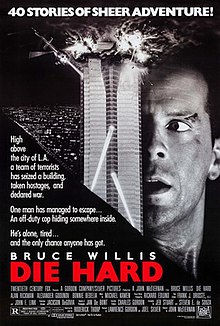
Die Hard-1988

Die Hard-1988

Director John McTiernan

Starring Bruce Willis, Alan Rickman, Bonnie Bedelia

Scott’s Review #1,458

Reviewed December 28, 2024

Grade: B+

Die Hard (1988) is one of the best action films of the late 1980s and 1990s. Because of its success and mainstream appeal, it spawned dozens of copycat films patterned after it.

It features hunky Hollywood star Bruce Willis in his breakout role, propelling him to a box-office stronghold that lasted for many years. He would later appear in more cerebral offerings like Pulp Fiction (1994) and The Sixth Sense (1999), but Die Hard put him on the map.

Is it a Christmas film, or is it not? It can be debated.

Depending on one’s socioeconomic leanings, Die Hard can be seen as a film that puts the working-class Joe in the driver’s seat and makes yuppies or corporate types look like incompetent fools.

The film, watched decades after its making, is guilty of stereotypes and clichés. It is riddled with nearly every action film standard one-liner intended to evoke laughter, which now seems silly and contrived.

Hokey? Yes, but it’s also fun and a chance to watch the muscular and sweaty Willis run barechested for most of the running time.

Like Friday the 13th (1980), the film produced several sequels, all subpar to the original.

New York City policeman John McClane (Willis) is visiting his estranged wife (Bonnie Bedelia) in Los Angeles on Christmas Eve. He joins her at a posh holiday party in the headquarters of the Japanese-owned business she works for.

The festivities are quickly interrupted by a group of terrorists led by the crazed but calm Hans Gruber (Alan Rickman), who take over the exclusive high-rise and everyone in it.

McClane realizes that he must save the day.

John McTiernan, who directs, knows his way around the action genre, and Die Hard is easily his best. Other notable works include Predator (1987) and The Hunt for Red October (1990), so he also knows how to create an action star.

The season, the setting, and the villain are other high points of Die Hard.

The perfect setup is a glossy high-rise in downtown Los Angeles at a glitzy corporate party on Christmas Eve. Drizzling with possibilities, McTiernan adds the German terrorists for good measure and a slice of necessary Americana, a fixture of the 1980s ‘USA good, Europe bad’ mentality.

Naturally, McClane is a good old-fashioned American boy. While he initially wants his successful wife, Holly (Bonnie Bedelia), to be a traditional homemaker, he realizes she’s good at being a corporate officer.

But, the traditional and conservative mindset still shines through.

In a stroke of genius and authenticity, the real Fox Plaza in Century City was used for the skyscraper rather than an ineffectual mock set. This adds a lot to the enjoyment, and glimpses of The Towering Inferno (1974) crossed my mind.

In standard fashion, the feds, detectives, television reporters, and police officers are primarily incompetent, except for McClane. This adds to the earlier notion that the working-class guy is the movie’s hero.

Actor Paul Gleason, well-known for a similar curmudgeonly role in 1985’s The Breakfast Club, bears much of the brunt. As he callously shouts at police officer Powell (Reginald VelJohnson), he also frets at the mayor’s reaction to the handling of the situation with repeated ‘the mayor will have my ass’ remarks.

Interestingly, Powell, who bonds over the radio with McClane, is the only character to receive a competence award. The relationship between the two male cops is warm, respectful, and a high point.

The other well-written character is the main villain, Hans. Played deliciously by Rickman, he’s a baddie for the ages, cold and calm, and his deadly tumble from the top of the enormous building is satisfying to patient fans.

Die Hard (1988) centers around the good hero cop besting the bad guys from Germany in a definitive pro-American theme popular for the times.

While the terrible 1980s hairstyles, clothes, and cheesy dialogue do not hold up well, the action is, and the film can surprisingly be watched repeatedly.

Oscar Nominations: Best Film Editing, Best Visual Effects, Best Sound Effects Editing, Best Sound

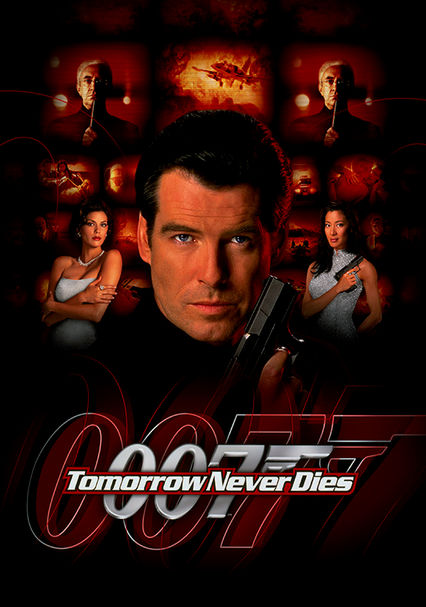
Tomorrow Never Dies-1997

Tomorrow Never Dies-1997

Director Roger Spottiswoode

Starring Pierce Brosnan, Michelle Yeoh, Jonathan Pryce

Scott’s Review #1,394

Reviewed August 28, 2023

Grade: B

Pierce Brosnan made four appearances as the legendary film character, James Bond. While he gets a marginal thumbs up as a whole and is not my favorite Bond he has the ‘look’ and suave charisma.

This works in his favor and makes him purely believable with every ridiculous one-liner or flat dialogue.

Tomorrow Never Dies (1997) is the second chapter in the Brosnan book and is only marginally superior to GoldenEye made two years earlier in 1995. All bets are that the two subsequent Bond films starring Brosnan nosedive quickly.

All good Bond films must contain specific qualities like a good villain, a sexy yet strong ‘Bond girl’, dazzling stunts and chase scenes, a memorable theme song, and more than one exotic locale.

It’s just what the blueprint is and must never be broken.

Therefore, Tomorrow Never Dies feels more like the producers, and director, Roger Spottiswoode, and writer, Bruce Feirstein sought a check box checking off exercise rather than creating anything brilliant or memorable.

I deem this film rather ordinary. Not bad but not superior either falling middle of the road when compared to other Bond franchise films.

Media mogul Elliot Carver, played completely over the top by actor Jonathan Pryce wants his news empire to reach every country on the globe, but the Chinese government will not allow him to broadcast there.

Carver then decides to use his media empire to wreak war between the Western world and China. Thankfully, James Bond (Brosnan) is on the job and travels to China to stop him with the help of Chinese secret agent Wai Lin (Michelle Yeoh).

Anyone who knows a Bond film knows that the plot is secondary to the aforementioned necessary characteristics. The story either got too complicated as the film progressed or I lost interest because at some point all I recollect was a news media tycoon wanting to start World War III over television ratings.

Yeoh is an exceptional ‘Bond girl’ though the dose of progressivism, diversity, and female empowerment she brings to the table makes the term beneath her. Her charisma, and martial arts chops, make her a kick-ass rival though she naturally ends up head over heels for Bond.

Still, the lengthy scenes between Yeoh and Brosnan do contain strong chemistry as they decimate the bad guys and save the world together.

I expected a bit more from Teri Hatcher’s character of Paris Carver, a former girlfriend of Bond who is now Carver’s trophy wife. The setup was superior and the love triangle could have gone further than killing off her character after just a couple of scenes.

As great as an actor as Pryce is it’s tough to believe he’s the same actor who made films like Two Popes (2019) and The Wife (2017) so good. He turns Elliot into a caricature dead set on controlling the world proving that an actor can’t always bring a mediocre script to life.

Tomorrow Never Dies brings the viewers to lavish locations like Bangkok, China, Hamburg, Germany, and in and around London. The tone has a definitively Asian feel which works like You Only Live Twice did in 1967.

Finally, the title theme song and opening performed by Sheryl Crow is abysmal but oddly sounds much better in the version that plays over the ending credits.

I marginally recommend Tomorrow Never Dies (1997) mostly for those in the Brosnan camp which I am aware there are many.  Its best quality lies in the level of equality between Bond and the main female character Wai Lin which is another proof of how relevant the franchise remains.

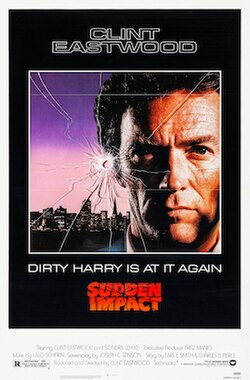
Sudden Impact-1983

Sudden Impact-1983

Director Clint Eastwood

Starring Clint Eastwood, Sondra Locke

Scott’s Review #1,388

Reviewed August 12, 2023

Grade: B+

The groundbreaking and highly influential Dirty Harry, released in 1971 spawned four sequels. Sudden Impact (1983) is the third. It is directed, produced by, and stars Clint Eastwood (making it the only Dirty Harry film to be directed by Eastwood himself) and co-starring Sondra Locke, the star’s longtime girlfriend.

On the surface, the film is standard fare and relatively conventional featuring slick cinematography, a predictable story, shoot ’em-ups, and cartoon villains.

It’s also quite bloody and violent with a theme of justice being served.

Exactly what you’d expect from any action/thriller to come out in the two decades following the original.

The cliches and story setups had by 1983 been seen in so many crime thriller genre films that they feel tired and stale and can be predicted at length.

The expected Dirty Harry catchphrase in Sudden Impact is, “Go ahead, make my day” which is probably what the film is best remembered for though some assume the famous line appears in Dirty Harry.

This isn’t a glowing testament for Sudden Impact.

United States President Ronald Reagan embarrassingly used the “make my day” line in a March 1985 speech threatening to veto legislation raising taxes.

The secret weapon of Sudden Impact though is the inclusion of Locke who is a tour de force in acting and raises the film quite a bit. Her romance with Eastwood (on and off the silver screen) simmers with chemistry making Sudden Impact feel like a much better film than it is.

Jennifer Spencer (Sondra Locke) is a thirty-something blonde bombshell who along with her much younger sister was gang raped, but the crime went unpunished. She now hunts down those responsible one by one and gruesomely shoots them in the testicles before killing them.

She’s not a gal to be messed with.

The murders attract the attention of Harry Callahan (Eastwood), who is on a forced vacation due to his violent approach to police work.

The case gets complicated when Harry develops a relationship with Jennifer, and it’s up to Harry to make the right decision when Jennifer’s life is threatened for a second time.

Locke and Eastwood always do well with marginal material- think Bronco Billy (1980) or Every Which Way But Loose (1978). Both of those films are more comical so it’s riveting to see them co-star in a violence-based thriller.

Not to dwell on Locke (okay, I must), but she’s the best part of Sudden Impact. The first scene involves one of her vigilante murders and her cold, calm, steadiness is magnificent. Through icy eyes, she is filled with rage though is wise and calculating.

When she is not blowing balls to bits, Jennifer leads a successful life as an author and escapes to a whimsical carnival town outside San Francisco to focus on her work. She also finds time to finish killing the remaining members of the gang of rapists.

Locke mesmerizes in every scene she appears in.

Eastwood is good too but his character is the same grizzled, sick of criminal, guy with a gun he’s been since the beginning. Harry’s arguments with the suits in the top office are tired and the actors cast are handily stock types.

The win is Eastwood’s scenes with Locke. As they share dinner there is a romantic tenderness that perfectly offsets the rest of the story. We ask, will he send her to prison or let her go when he inevitably finds out she’s the killer?

Is she justified?

The rapists are cartoon-like and poorly cast and there is no character development. The main villain, Mick (Paul Drake) shrieks and wails and delivers his dialogue in over-the-top fashion. He’s a poor man’s ‘Scorpio’ who he tries to emulate.

A female villain, an assumed lesbian named Ray Parkins, in a purely politically incorrect fashion, has every lesbian stereotype imaginable.

I liken Sudden Impact (1983) to a McDonald’s meal. A greasy Big Mac, fries, and a shake. It’s not fine dining but it’s satisfying and one knows exactly what to expect. Only in this case, Locke is the special sauce.

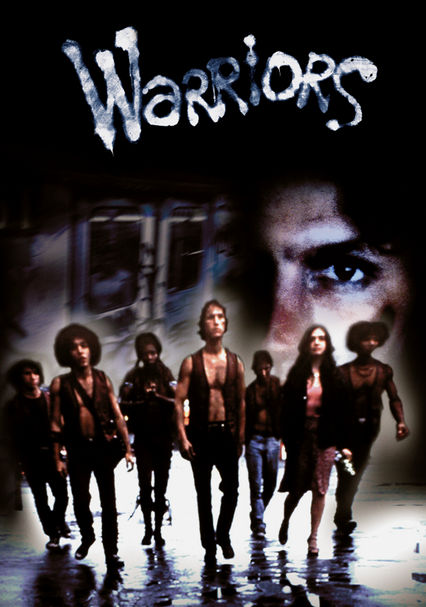
The Warriors-1979

The Warriors-1979

Director Walter Hill

Starring Michael Beck, Deborah Van Valkenburgh

Scott’s Review #1,383

Reviewed July 31, 2023

Grade: B+

The Warriors (1979) is an entertaining gang-themed action-thriller that is a perfect watch for a late Saturday night. Reportedly, it caused friction and outbreaks of fights in movie theaters when it was released but decades later doesn’t feel as dangerous as it might have upon release.

The film does terrific work with some art direction that melds live-action with colorful drawings of characters. This infuses an artistic experience and raises results way above dumb action flicks like Rambo (1982), Death Wish (1974), and countless others.

In perhaps a peculiar comparison, The Warriors reminds me a bit of Escape from New York by John Carpenter which came two years later. The isolated Manhattan streets and other areas with a post-apocalyptic feel merge the two films, in my mind anyway.

The film suffers a bit from a dated and obscure categorization and is not remembered as well as perhaps it should be. The acting isn’t terrific either but strangely this makes the experience a bit more raw and enjoyable.

After being wrongly accused of killing a charismatic gang leader named Cyrus, a Coney Island street gang known as the Warriors must hoof their way home which is miles from where the death occurred. They are pursued by both police and enemy gangs one of which framed them for Cyrus’s execution.

The ambiance and atmospheric qualities are the best aspects of the overall film. So many Big Apple treats can be found especially the infamous Central Park which takes center stage. The lavish and picturesque park wasn’t as safe and pristine in the late 1970s as in 2023 and the film uses this to its advantage.

Characters never know who or what might be lurking behind a bench or a tree. A particularly fun scene features a young Mercedes Ruehl being groped by a gang member only to be revealed to be a sexy policewoman who quickly puts the perp in handcuffs.

The other locales featured are plentiful and include Van Cortlandt Park, Union Square, 96th Street and Broadway, and Riverside Park. The beauty of this is that the action doesn’t include only Manhattan but other boroughs like the Bronx and Brooklyn showing the vastness of NYC.

The main romance is between Swan (Michael Beck) and Mercy played by Deborah Van Valkenburgh. The pair have a sliver of chemistry but I wasn’t watching the film for doey-eyed young people.

One scene was exceptionally done when the couple laid eyes on some well-dressed and upstanding teenagers on the subway who could easily be their doppelgangers.

Maybe them in another life? The forlorn look on the faces of Swan and Mercy reveals much as the couples all eye each other perhaps thinking the same thing.

Walter Hill directs the film and is well-versed in the action genre creating the popular film 48 Hours (1982). He paces and choreographs the action sequences so well that it’s as if the viewer is watching a dance routine occur.

The opening sequence gets the tone of the film out in the open as the storied Wonder Wheel on dusty Coney Island is on full display. Even the bright and windy shore feels gloomy and ominous as leather-clad gang members make it their turf.

The finale salutes the Warriors with a song, ‘In the City by Joe Walsh which I particularly enjoyed because it’s a great song.

Though unrealistic for the time, it’s nice to see gang members of different ethnicities team up together in diverse representation.

The film is a perfect watch for cinema fans thirsty for old New York City locales and greasy, dirty subway stations. Because the real Manhattan wasn’t too different from what The Warriors (1979) showcases.

The Four Musketeers-1974

The Four Musketeers-1974

Director Richard Lester

Starring Oliver Reed, Michael York, Faye Dunaway

Scott’s Review #1,379

Reviewed July 17, 2023

Grade: B

The Four Musketeers (1974) is a sequel to the film The Three Musketeers made a mere year earlier. It takes the second half of the famous novel by French author Alexandre Dumas with the original film covering the first half.

A recommendation is to watch the sequel directly after the original so there is less struggle to figure out what is going on. I did not do that so connecting the plot points was a struggle.

A further negative is the omission of any English subtitles making hearing or ascertaining the events of the film difficult. British accents are tough.

King Louis XIII’s (Jean-Pierre Cassel) four swashbuckling heroes engage in chivalrous and daring adventures when Cardinal Richelieu (Charlton Heston) and his evil accomplice Milady de Winter (Faye Dunaway), kidnap the queen’s dressmaker, Constance (Raquel Welch).

The heroes are D’Artagnan (Michael York), Athos (Oliver Reed), Porthos (Frank Finlay), and Aramis (Richard Chamberlain).

It’s a British swashbuckler film so the adventures are prevalent and the physical comedy is fast and furious. It’s like a sitcom at times with over-the-top and outlandish fight sequences and one-liners.

The frequent low-cut tops on the female characters are intended to channel the male viewer’s thirteen-year-old boy.

The film gets darker than I anticipated in the final act which is to its credit with two deaths. This surprised me in a good way because so much of The Four Musketeers is light-hearted.

The death by the beheading of a major character is well-done. The heroes watch an executioner perform his duties to the fiendish character from across a lake. The decapitation is not exactly shown but it’s done almost in a tremendously effective silhouette and from a distance.

The costumes and attention to detail from a historic perspective are superior elements of the film. One can imagine being in the French countryside during the Anglo-French War in the 1600s. The sets and lighting are bright so the result is colorful and picturesque style.

The cast is made up of several A-list Hollywood stars of the time and each adequately does their share to light up the screen. My favorites are Dunaway as the villainess and Reed as a ‘good guy’, a refreshing change for the actor who usually appears as the heavy.

Reed and Dunaways share some scenes mostly in flashbacks that made me want to see more of their romance but this is not to be. Athos was unaware that Milady de Winter was a criminal which left a permanent branding mark.

Still, what little I got featured tremendous chemistry between the pair and I would have liked to have seen more.

Where the film loses me a bit is with the silliness which follows the same formula that made The Three Musketeers a success. Feeling redundant were the endless sword fight scenes and tongue-in-cheek winking.

The film tries hard to be a comedy but adds in darker moments too so it leaves an unbalanced quality.

Some actors get short shrift. Christopher Lee as Count De Rouchfort is a secondary villain and has little to do except prance around in a wig, uniform, and eye patch. His character is no Dracula and does not feel dangerous.

The Four Musketeers (1974) is good entertainment from a solidly professional cast. Hardly a masterpiece it’s a bang ’em up comedy adventure with a few moments of death and destruction.

Violent Night-2022

Violent Night-2022

Director Tommy Wirkola

Starring David Harbour, John Leguizamo

Scott’s Review #1,355

Reviewed April 9, 2023

Grade: B

Violent Night (2022) isn’t the straight-ahead slasher flick with a holiday theme that I thought it might be. Part magic, part action, and part dark comedy make the film a peculiar yet strangely satisfying experience.

In a warped way, of course.

I’m not sure what director Tommy Wirkola was specifically going for, but Violent Night is an entertaining one-hour-and-fifty-two-minute experience. Best watched around the Christmas holidays, I watched the film on a cross-country flight from Los Angeles to New York City in April and still enjoyed it.

It’s a cool concept with lots of gore, a ritzy mansion as the primary setting, and a pleasing interracial element that adds diversity. The film is also a strange take on a jovial Christmas message, like a Lifetime television movie.

A lot is going on in Violent Night, and it openly patterns itself after Home Alone (1990), which one character has just watched for the first time.

David Harbor plays a not-so-jolly Santa Claus who guzzles beer in a London pub on Christmas Eve just before he is set to traverse the world distributing toys to children.

Depressed at the state of the world and the overwhelming amount of naughty people on his list, Santa arrives in upper-crust Greenwich, Connecticut, and witnesses a team of mercenaries breaking into a wealthy family compound and taking everyone inside hostage.

Led by Scrooge (John Leguizamo), the bad guys, dressed as Christmas characters, take the family hostage, demanding money they know is hidden on the estate. St. Nick must save the day and kick some ass to maintain the spirit of Christmas.

The characters, though mostly over-the-top, are my favorite part of Violent Night.

The audience is meant to like seven-year-old Trudy (Leah Brady), a darling innocent with interracial parents who are separated. Jason (Alex Hassell) is part of a wealthy family, and his wife, Linda (Alexis Louder), is a kind woman who has her daughter’s best interests at heart.

All Trudy wants for Christmas is for her parents to be back together.

The other characters are played for laughs, especially grand dame Gertrude, deliciously played by Beverly D’Angelo. She’s terrific as the queen, rich bitch whose family kisses her ass at every turn, hoping to keep in her good graces.

Leguizamo pairs well with Harbour’s Santa, who is effective as the beefy, boozy man. He is a good fellow, but has lost his belief in the magic of Christmas. The relationship between Santa and Trudy also works well.

A couple of belly chuckles exist, which is always a good thing. As Santa takes off on his reindeer-led sleigh to deliver toys, he promptly vomits on the pub bartender’s head. Soaked with barf, she proudly exclaims, ‘He is Santa!’

Violent Night is good fun, though severely unrealistic. The film gets a bit too hammy towards the conclusion when the bad guys get their comeuppance on the spacious mansion’s snowy exterior. One character’s decision to burn money to keep warm is too far-fetched, and the villains quickly disintegrate into caricatures.

The happily-ever-after conclusion and the resurrection of a character are underwhelming and worthy of a Hallmark television-movie send-off.

The Connecticut mansion is a cool set, and the Christmas trimmings make it flourish with strong design. The plentiful rooms and secret attics are fun to watch.

I’ve never seen the film Bad Santa (2003), but from what I know of it, Violent Night (2022) seems on par. Be forewarned, the ‘violent’ in the title is true to form, and the violence is fast and furious at times, with a snug message wrapped within.