Category Archives: Clive Swift

Frenzy-1972

Frenzy-1972

Director Alfred Hitchcock

Starring Jon Finch, Barry Foster, Anna Massey

Top 250 Films #28

Top 40 Horror Films #7  

Scott’s Review #244

Frenzy_movieposter

Reviewed May 17, 2015

Grade: A

Frenzy (1972) is a later-day Alfred Hitchcock film that returns the masterful director to his roots in London, England, his country of origin, and the place where his early films were made.

As with numerous other Hitchcock stories, the protagonist is falsely accused of murder and struggles mightily to prove his innocence before time runs out and he meets his doom.

The film is distinctly British, featuring an entirely British cast, and includes a humorous side story about the primary investigator’s wife. This terrible cook prepares exotic yet unappetizing meals for her husband.

This comic relief perfectly balances the heavy drama encompassing the main murder story, as Frenzy is one of Hitchcock’s most violent and graphic films.

Made in 1972, he was able to include much more explicit content. A neck-tie murderer, who also rapes his female victims, is on the loose in London.

In the opening sequence, we see a dead woman floating in the Thames River during broad daylight, nude, except for a neck-tie that she has been strangled with. A crowd of spectators races to see what all the fuss is about.

We then meet the central character of the film, down-on-his-luck bartender Richard Blaney, who is fired from his job as a bartender by his hateful boss.

Blaney has a loyal girlfriend in Babs, a barmaid at the same local watering hole. Babs is sexy, yet plain. He also has a successful ex-wife, Brenda, who runs a dating company. Blaney regularly sponges off Brenda for money and dinners. Also in the picture is successful fruit-market trader Bob Rusk, who is a friend of Blaney’s.

All four of these central characters play a significant role in the main plot.

As events begin to unfold, the film is not a whodunit as traditionally it could have been. Instead, the audience quickly learns who the murderer is and their motivations, which is an interesting twist in itself.

Despite this knowledge, the film is quite compelling as a classic Hitchcock horror-thriller.

It is interesting for Hitchcock fans to compare this film with many of his earlier works. Released in 1972, at a time in film history when such sensors were more lax, it is the first Hitchcock film to feature nudity.

It is also the film of Hitchcock’s that features the most brutal rape/murder scene of all, surpassing the shower scene from Psycho, in my opinion.

The victim’s ordeal is prolonged, as she begins praying, thinking she will only be raped, at first unaware that her attacker is also the neck-tie murderer, and her life is running short. This leads to a sad, gruesome outcome for her.

One of the most interesting murder scenes takes place off-camera and is an ingenious idea by Hitchcock. The neck-tie murderer lures a victim to his apartment complex under the guise of being a friend of hers.

They walk upstairs to his unit and go inside, all the while the camera remains outside the apartment, so the viewer only imagines the horrors unfolding inside.

The camera then slowly goes back down the stairs and out onto the street, and looks up at the murderer’s window. The fact that the victim is one of the main characters makes one’s imagination run wild about what is transpiring inside the apartment, and the viewer is filled with grief.

This is a brilliant choice by Hitchcock and so effective to the story.

Another great scene is the potato truck sequence.

As the neck-tie murderer has dumped his victim, like garbage, into a potato sack, he is panicked to realize that she has taken his pin from his jacket and presumably clenched it in her fist as a clue, despite her demise.

What will he do now?

The extended scene features the murderer inside the potato truck attempting to unclench his pin from her hand and escape the moving truck without being caught.

It is my favorite scene in Frenzy.

Frenzy (1972) is a return to triumph for Hitchcock, after the complex Topaz (1969) and Torn Curtain (1966), both underappreciated political thrillers made a few years earlier.

He returns to the horror genre like gangbusters, throwing in some good, sophisticated British humor for good measure.

What a treat this film is.
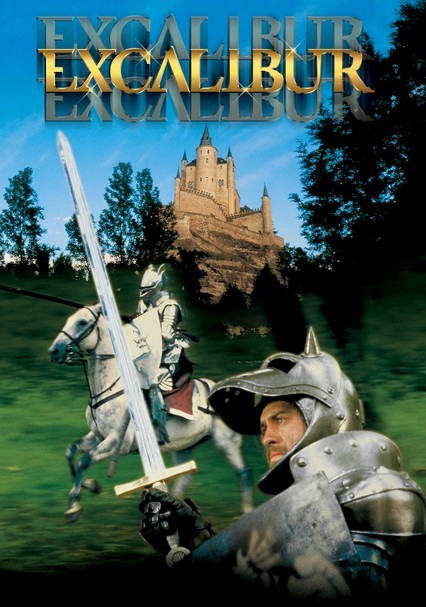
Excalibur-1981

Excalibur-1981

Director John Boorman

Starring Nigel Terry, Nicholas Clay, Helen Mirren

Scott’s Review #1,108

Reviewed February 4, 2021

Grade: B+

John Boorman, best known for directing the 1972 disturbing classic Deliverance, returns to the fold with a steamy fantasy rich in lavish sets, visual treats, and an incredible atmosphere.

This is where the film succeeds.

We are taken to a medieval world where we embrace jealousy, sex, and schemes.

Boorman not only directs but also produces and co-writes the project along with the screenwriter Rospo Pallenberg.

Excalibur (1981) retells the legend of King Arthur, a British leader from the fifth and sixth centuries, mostly told by folklore, and the Knights of the Round Table, based on the 15th-century Arthurian romance Le Morte d’Arthur, at behemoth length, by Thomas Malory.

The table is symbolic because it implies that there is no head and, therefore, a democratic forum.

This telling is quite adult and not suitable or comprehensible for children.

Famous legends like Merlin (Nicol Williamson), Lancelot (Nicholas Clay), Queen Guenevere (Cherie Lunghi), and Morgana (Helen Mirren) appear alongside Arthur (Nigel Terry) in a furious battle for control.

In a flurry of handsome European actors who would later become famous, Patrick Stewart and Liam Neeson both appear.

Most of the male cast are masculine, hunky, and very handsome. These traits cascade into how good they look in full-body armor, shields, and swords, fighting bloody battles with each other.

Homoerotic scenes exist just as they did in Deliverance. Lest we only focus on the male cast, Helen Mirren is delightful as an evil seductress who oozes sex appeal.

The magical sword of Excalibur starts in the hands of a British lord, Uther Pendragon (Gabriel Byrne), and then, years later, finds its way to his bastard son, Arthur, who is destined to become king but doesn’t realize why.

Merlin helps Arthur fulfill his fate by bringing together the Knights of the Round Table at Camelot and unifying the country.

Years later, Arthur faces greater tests ahead in pursuit of love, the Holy Grail, and his nation’s survival as some attempt to steal the treasure for their advantage.

Excalibur had me with its visuals, and I immersed myself in the spectacular style and artistic set design, with gorgeous sequences.

Several creative, glimmering shots of someone emerging from or submerged underwater are featured. They are startlingly beautiful.

I pretended I had been whisked away to an otherworld of enchantment that I could sit back and enjoy.

The knowledge that the entire film was shot in Ireland captivated me. The breathtaking greenery and waterfalls are dreamlike. When Lancelot beds Guenevere in the forest, they both appear nude. Their pale white flesh against the green is both magical and seductive.

And a treat for one’s curious eyes.

The story is overly complicated, with reality mixed with either dreams or fantasy, and some of the plots confused me. I finally got to a point where the intricacies became too much for me to comprehend, especially against the stunning backdrops.

The plot became too jumbled and messy, so it is advisable to drift off and take it all in rather than trying to make sense of everything.

A visual marvel, Excalibur (1981) will delight the apt film fan. I fantasized about how the picture would look and feel on the big screen, but I wasn’t that lucky.

The story is obviously far-fetched and ludicrous at times, but somehow that doesn’t matter and didn’t hinder my enjoyment of it.

I was treated to good-looking people in armor, unique costumes, and various states of undress. And that’s just fine with me.

A Passage to India-1984

A Passage to India-1984

Director David Lean

Starring Judy Davis, Peggy Ashcroft

Scott’s Review #971

Reviewed December 24, 2019

Grade: A-

David Lean, famous for his sweeping, masterpiece epics including Lawrence of Arabia (1962) and Doctor Zhivago (1965), returns with his swan song, a grandiose and lavish film, A Passage to India (1984).

Though not quite on the same level as the two other mentions, the brilliant cinematography alone makes this one a winner.

The story is compelling with a mystery and he said/she said rape story that deepens, exploring racism and religion, assuredly switching viewer allegiances between characters.

A Passage to India is based on the famous E.M. Forster novel from 1924. Along with A Room with a View (1908) and Howards End (1910), the three make up a series that examines class differences and hypocrisy among the British.

All three are set at least partially in England and were all adapted to film with immeasurable success. While the film is potent and meaningful, it is the least brilliant of the three, but only by a hair.

Set in the 1920s, the British had control over India causing some tensions in the air. Adela Quested (Judy Davis) sails from England to India with Mrs. Moore (Peggy Ashcroft), the mother of her intended bridegroom, whom they plan to see when they arrive at their destination.

The women have a wonderful relationship and excitedly anticipate their adventure.

After Mrs. Moore meets the kindly Dr. Aziz Ahmed (Victor Banerjee), becoming enamored and enraptured, the women accompany him to an exploration of ancient caves, along with a guide.

When Adela and Ahmed are left alone, she suddenly appears frantic, accusing the Indian Doctor of attempted rape, setting off a blistering scandal that causes public debate and divides the townspeople, culminating in a trial.

The story is naturally the focal point of the film, but not the strongest part. At first left aghast at the accusations hurled at Aziz, by all appearances a wonderful man, the intention is for the viewer to be unclear of what transpires when Aziz and Adela are alone. The events, if any exist, take place off-screen, so we only see a disheveled Adela flee the caves in panic.

The rest is left to the viewer’s imagination and to wonder what happened. As the truth is eventually revealed, we wonder about the intended motivations and the ramifications the accusations will have on the central characters.

The film is successful at interestingly discussing racism and assumptions, leading major characters to disagree. Adela and Mrs. Moore wind up at odds after the events, with Moore refusing to believe Aziz did anything wrong.

This is a bold stance to take as the women are good friends and we would assume one would support the other. While Moore is liberal and open-minded, Adela is conservative and buttoned-up, making the ideological differences clearer.

Did Adela imagine the attack? Did somebody else attack her?

The cinematography is brilliant and the pure excellence of the film is. The plentiful exterior scenes are delectable and simmer with beauty within each frame. Since many of them take place in the grandiose mountains or caves the results are exquisite.

One can easily sit back and revel in the majestic sequences and many scenes are still and quiet which enhances the effects. As with other Lean epics, it advisable is to see this film on the biggest screen known to mankind.

At one-hundred and sixty-four minutes, the film is hardly non-stop action, but rather slightly laborious and lumbering. Some parts are a tad too slow, but the payoff is mighty and there is a measure of intrigue throughout, especially once the cave incident occurs.

I hate to say the film drags, but perhaps fifteen to twenty minutes could have been shaved off. When Lean is at the helm, a hefty running time is a guarantee.

A Passage to India (1984) is a film by a respected director that culminates a lengthy and inspired career boldly. While not his best film, this should not detract from the excellent experience the film provides.

Grandiose sequences and sophisticated style make the film able to be viewed more than once, a marvel for a film released in the lackluster 1980s.

Oscar Nominations: 2 wins-Best Picture, Best Director-David Lean, Best Actress-Judy Davis, Best Supporting Actress-Peggy Ashcroft (won), Best Screenplay Based on Material from Another Medium, Best Original Score (won), Best Sound, Best Art Direction, Best Costume Design, Best Cinematography, Best Film Editing