Tag Archives: LGBTQ+

Brokeback Mountain-2005

Brokeback Mountain-2005

Director Ang Lee

Starring Heath Ledger, Jake Gyllenhaal

Top 250 Films #25

Scott’s Review #338
70023965

Reviewed January 9, 2016

Grade: A

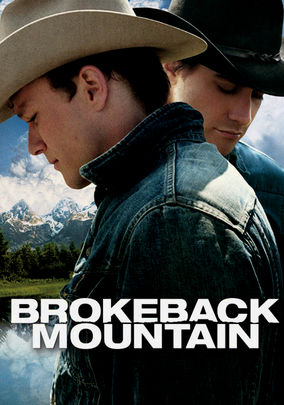
Brokeback Mountain (2005) is a groundbreaking film and one of the most significant releases of the 2000s. Never before had an LGBT film received as much exposure and widespread viewership as this one did.

Robbed of the 2005 Best Picture Academy Award (the great, but not as great, Crash won), Brokeback Mountain received other tremendous accolades and word-of-mouth buzz that helped it achieve great success.

A treasure that must always be remembered and appreciated.

Perfectly cast, Heath Ledger and Jake Gyllenhaal play two cowboys who fall madly in love with each other. The film spans a period from 1963 to the early 1980s. Through the years, we see their unbreakable bond tested by outside factors- namely, being gay is forbidden at this time and location, Wyoming and Texas.

Jack Swift (Gyllenhaal) and Ennis Del Mar (Ledger) meet one summer in 1963 when they are both hired by grizzled Joe Aguirre (Randy Quaid) to herd sheep on Brokeback Mountain in remote Wyoming.

They immediately form a friendship that turns physical on one drunken night. From this point, the men are inseparable and share a insurmountable passion.

Due to the times, there is no possible way they can openly share life, so they arrange for periodic “fishing trips”, away from their wives and children so that they can spend time together in secret.

The chemistry is evident between Ledger and Gyllenhaal, which is extremely important to the success of the film.

The audience needs to truly buy their bond and director Ang Lee is successful at eliciting wonderful performances from each actor. This is especially crucial during the first forty-five minutes of the film as all the scenes are only the two actors together.

The famous “tent” scene, in which Jack’s and Ennis’s passion first erupts is perfectly choreographed- it is as much animalistic as it is passionate and this sets the tone for the rest of the film.

Eventually, other characters are introduced and Ennis and Jack live lives largely separate from each other. Michelle Williams plays Alma, a kind-hearted country girl, married to Ennis. She accidentally stumbles on Jack and Ennis’s secret and keeps this hidden throughout the years.

Williams is fantastic in the role- sweet, yet saddled with the pain of knowing her husband is in love with another man causes her to mistrust and eventually destroys their marriage.

Jack forges a life in Texas and marries well-to-do Lureen (Anne Hathaway), but the marriage is a sham, Lureen’s father hates Jack, and Jack cannot forget Ennis. Jack is the aggressor, the one more confident with his sexuality, and one would surmise, would be the one more likely to be “out” if circumstances were different.

He looks for other men, even going to Mexico to find some companionship.

The ending of the film is tragic and heartbreaking and we witness Ennis being a good father to his now grown-up kids. A wonderful scene is written between Ledger and Kate Mara, who plays his daughter. She asks the lonely Ennis to attend her wedding and the scene is sweet and tender.

Another scene involving Ennis meeting Jack’s parents is monumental- as important as what is said in this wonderful scene is what is left unsaid.

Brokeback Mountain (2005) is an honest, graceful, and brave film, that thanks to the talents and direction of Ang Lee, was able to be made.

The exceptional cast led by Ledger and Gyllenhaal is dynamic and enables the film to come together as one masterpiece, that will surely never be forgotten.

Oscar Nominations: 3 wins-Best Picture, Best Director-Ang Lee (won), Best Actor-Heath Ledger, Best Supporting Actor-Jake Gyllenhaal, Best Supporting Actress-Michelle Williams, Best Adapted Screenplay (won), Best Original Score (won), Best Cinematography

Independent Spirit Award Nominations: 2 wins-Best Feature (won), Best Director-Ang Lee (won), Best Male Lead-Heath Ledger, Best Supporting Female-Michelle Williams

The Boys in the Band-1970

The Boys in the Band-1970

Director William Friedkin

Starring Kenneth Nelson, Frederick Combs

Top 250 Films #40

Scott’s Review #658

Reviewed July 4, 2017

Grade: A

An excellent counterpart to the equally brilliant and equally unpleasant Who’s Afraid of Virginia Woolf? (1966) The Boys in the Band is also a stage production made into a feature film.

As such, shot very much like a play and seemingly in one long take, the film is highly effective and delicious in wit and dark humor. With a macabre and bitter element, the characters snipe and ridicule each other during a birthday party.

The Boys in the Band is a groundbreaking film on many levels, as it is one of the first LGBTQ+ films to feature gay characters in prominent roles. Furthermore, it has the dubious honor of being the first film to use the word “cunt”.

Regardless, the film is fantastic and a must-see for anyone intrigued by LGBTQ+ film history. All of the actors appeared in the stage production and reprised their roles for the film version.

The setting is the Upper East Side of Manhattan in the late 1960s.

Michael, a writer, is hosting a birthday party for his good friend, Harold. When Michael receives an urgent call from his straight and married college chum, Alan, he begrudgingly invites him over at the risk of having his lifestyle exposed.

One by one, the guests arrive for the party. Emory is quite effeminate and loud, Hank and Larry are masculine and a couple, but with monogamy issues and Hank’s marriage as obstacles.

Bernard, a black bookstore clerk is an amiable, nice guy.

“Cowboy”, a dim-witted hustler, and Harold, the sarcastic, bitter, guest of honor, round out the attendees.

As the night wears on, the party turns into a free form of insults, bad feelings, and vicious conversation. Alan and Emory get into a fistfight, and later a hurtful telephone game forces everyone to call the one person they truly love which results in anxiety and sadness for most of the guests.

The key aspect of The Boys in the Band is that it is shot like a play would be, with a highly effective result. In this way, especially mid-way through the film when the guests are all in the same closed room, the action becomes suffocating and stifling as the fangs are bared by a few of the guests.

Director, Friedkin, uses many close-ups of his characters to further portray their raw emotions.

My favorite characters are Alan and Hank as these characters are the most complex.

Both are married, and both hit it off famously, although Alan’s sexuality is never completely revealed. He is married but troubled, and the audience never learns why, although we could wager a guess that he is, indeed, conflicted by his sexuality.

What will become of him? Will he accept his sexuality or live a repressed existence?

Hank, during a divorce from his wife, lives with Larry as a couple. Hank is complex because he is transitioning from a straight life to a gay lifestyle and that must have been very difficult in the late 1960’s- for this reason, I find the character of Hank quite brave.

The film does not explore this angle as much as it could have, but a character such as Hank fleshes out the cast in a positive way. Alan and Hank are multi-dimensional characters whereas some of the others contain gay stereotypes.

I would have enjoyed a deeper dive into the personal lives of some of the characters, but the film is really about the emotions many of the characters possess and feelings of love, some unrequited, and there are too many characters for each to receive his due focus.

Plus, the main focus of the film is the back-and-forth banter between the characters.

Maurice-1987

Maurice-1987

Director James Ivory

Starring James Wilby, Hugh Grant

Top 250 Films #111

Scott’s Review #14

60010639

Reviewed June 17, 2014

Grade: A

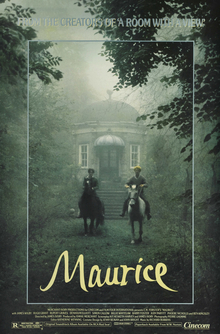
A brilliant film adaptation of the E.M. Forster novel set at Cambridge University during the turn of the twentieth century, it tells the story of oppression and social norms that took place at the time.

It is a gorgeously shot film, with beautiful landscapes, photography, and costumes.

Reminiscent of the British films “A Room with a View”, and “Howard’s End”, it is a male love story during a time when it was forbidden and lives were ruined because of sexuality like this.

The film’s characters make choices: some repressed, others celebrate, with differing results. In the middle of it, all is a beautiful love story.

Maurice (1987) is a timeless, brave treasure.

Oscar Nominations: Best Costume Design

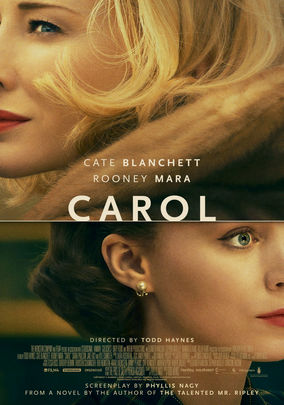
Carol-2015

Carol-2015

Director Todd Haynes

Starring Cate Blanchett, Rooney Mara

Top 250 Films #117

Scott’s Review #308

80058700

Reviewed December 27, 2015

Grade: A

My comparison would be that this film is the female version of Brokeback Mountain (2005).

Carol is a story of hidden romance and secret lives in the early 1950s when it was difficult to lead an alternative lifestyle openly (or even in hiding!).

The film is a marvel in its honest storytelling, exquisite class, and gracefulness with excellent cinematography and a nice, heartwarming tale.

Carol is directed by Todd Haynes, a director known for films about doomed romances faced with societal challenges. Carol is a wonderful piece of work.

The film contains two equal female lead roles- Carol Aird (Cate Blanchett) is a gorgeous, sophisticated socialite.  She exudes confidence and style in everything that she does.

Always perfectly dressed, well made up, manicured fingernails, her mannerisms relay confidence, and control. She is married to a wealthy businessman, Harge (Kyle Chandler), who is madly in love with her, yet they are divorcing because of her “problem”.

The fact that Carol is a lesbian is known to Harge and they share somewhat of an understanding, and a five-year-old daughter. The divorce they are going through is difficult.

Therese Belevit (Rooney Mara), is the polar opposite of Carol.  Young, and naïve, she is a part-time shopgirl, fascinated by photography. She dates men and goes to parties, living out a typical young girl’s life.

When Carol and Therese meet at the store where Therese works, they are immediately enamored with one another and a friendship develops. Both seem caught off guard and the chemistry between the two actresses sizzles.

The focus is the budding romance between Carol and Therese, and the societal differences that they face, not to mention the age difference between the two women. I found the chemistry quite evident thanks to Blanchett and Mara.

Worlds apart, the two women somehow find their way to each other and form a bond. Their relationship is tender, gentle, and carefully laid out for the audience. They are neither animalistic nor barbaric in a sexual way, but rather sweet.

When Therese takes a spontaneous car trip from New York to Chicago, leaving her boyfriend, Richard, conflict develops. He wants them to run off to Paris but Therese wants to be with Carol. He breaks up with Therese and accuses her of having a crush on Carol.

Therese and Carol’s romance is finally consummated in a mid-western hotel. It is New Year’s Eve and Todd Haynes chooses to shoot this scene in a romantic, spontaneous way. They are celebrating the holiday, but both are blue and vulnerable. It makes perfect sense that they would turn to one another.

The film delves into many different emotions that Carol and Therese face- love, glee, anger, rage, confusion, rejection, and loneliness. These adjectives and the tone of the film are why it succeeds.

From an acting perspective, both Blanchett and Mara are great, but I am more partial to Blanchett’s performance. She embodies this character. From when she orders a martini dry with one olive, to how she brazenly approaches Therese, she is a woman in control. But faced with family issues she becomes vulnerable and we see her as human.

Besides the interesting story of a love faced with many challenges, the look of the film is grand. The sets, hairstyles, clothes, and makeup are graceful and rich. To summarize- everyone looks great and it portrays a perfect picture of the 1950s.

A progressive Hollywood tale, Carol showcases glamour, and great acting, and sends a powerful message of acceptance and struggle during a difficult time to be “different”, to fulfill one’s life.

Oscar Nominations: Best Actress-Cate Blanchett, Best Supporting Actress-Rooney Mara, Best Adapted Screenplay, Best Original Score, Best Cinematography, Best Costume Design

Independent Spirit Award Nominations: 1 win-Best Feature, Best Director-Todd Haynes, Best Female Lead-Cate Blanchett, Rooney Mara, Best Screenplay, Best Cinematography (won)

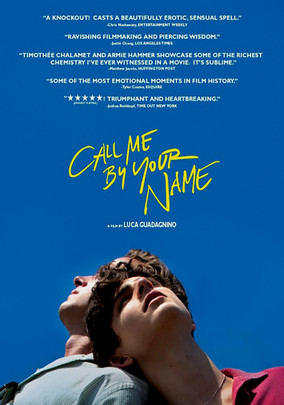
Call Me By Your Name-2017

Call Me By Your Name-2017

Director Luca Guadagnino

Starring Timothée Chalamet, Armie Hammer

Top 250 Films #118

Scott’s Review #708

Reviewed December 27, 2017

Grade: A

Call Me by Your Name (2017) is a gorgeous film. It is simply beautiful in storytelling, cinematography, and acting.

A humanistic film that crafts a lovely tale of young love, friendship, and emotions, which is breathtaking to experience.

In fact, in the LGBT category, I would venture to proclaim that this film is groundbreaking. It leaves behind any tried-and-true homophobic elements and instead tells a good story that is fresh, sincere, and simply flawless.

The period is the summer of 1983, and the landscape is the beautiful Italian Riviera.

Seventeen-year-old Italian-American Elio (Timothée Chalamet) dreams of spending the summer away, living with his affluent parents in a small village. His world is rich with culture and learning—his father (Michael Stuhlbarg) is a professor, and his mother is a translator.

A brilliant student, Elio wiles away the days reading, playing music, and flirting with his girlfriend, Marzia.

When a handsome twenty-four-year-old American student, Oliver (Armie Hammer), arrives for a six-week stay to assist Elio’s father on a project, desire and first love blossom between the young men as they struggle with their burgeoning relationship.

Directed by Luca Guadagnino, who has also directed the lovely 2009 film, I Am Love, is a man known for stories of desire in small Italian villages.

Call Me By Your Name is the third in a trilogy, I Am Love and 2015’s A Bigger Splash being the others.

The setting is crucial to the story, as both the summer heat and the world of the intellectual scholars are nestled into a grand shell of culture. The philosophical nature of the story is palpable—the film exudes intelligence and sophistication.

By 2017, the LGBT genre had become populated with films in the romantic, drama, and comedy sub-genres, but many use the standard homophobic slant to elicit drama and conflict.

Not to diminish the importance of homophobic discussions to teach viewers, Call Me By Your Name stands alone in that homophobia is not an issue in this story.

Given the time of 1983, this may be surprising—at the very cusp of the AIDS epidemic, this topic is also not discussed; rather, the subject matter is simply a love story between two males and the coming-of-age story that their love expresses.

The film is quite moving; Elio and Oliver are characters filled with texture and raw emotion. Oliver is confident, charismatic, and a great catch for any lucky young lady in the village.

Hammer fills the role with poise and humanity.

Chalamet, a beautiful young man, gives the complex role his all, as so much can be conveyed not by dialogue, but by expressions on the actor’s face.

As Oliver slow dances with a local girl, the wounded look that Chalamet reveals, his eyes welling up with tears, is heartbreaking. Seventeen is a tough age for most young men, but when coming to terms with one’s sexuality, it can be excruciating.

The final scene is poignant, as it features a five-minute-long sequence of gazing into Chalamet’s eyes, during which many emotions are expressed.

Enough credit cannot be given to Stuhlbarg as Elio’s father, as he gave one of the best speeches ever performed in film history. The actor gives a subtle and poignant performance as the sympathetic and knowing father.

His speech, marked by understanding and warmth, is riveting and inspirational—to be cherished. Mr. Perlman is a role model to fathers everywhere and the ideal parent for any gay son.

One scene that could stir controversy is the sure-to-be-controversial “peach scene”. Involving an innocent peach used during a sex act, the scene is erotic and borders on “icky”, but is also vital to foster the connection between Oliver and Elio.

Another potential risk to the film is that Oliver is twenty-four, while Elio is seventeen, making Elio underage. However, the film never portrays Oliver as more of an aggressor, and the relationship remains tender and consensual.

Call Me By Your Name (2017) is not just a great LGBT film but a film for the ages.  Beautifully crafted with gorgeous landscapes and nuanced, powerful acting, the sequences are subtle and carefully paced.

The film is simply a treasure.

Oscar Nominations: 1 win-Best Picture, Best Actor-Timothée Chalamet, Best Adapted Screenplay (won), Best Original Song-“Mystery of Love”

Independent Spirit Award Nominations: 2 wins-Best Feature, Best Director-Luca Guadagnino, Best Male Lead-Timothée Chalamet (won), Best Supporting Male-Armie Hammer, Best Cinematography (won), Best Editing

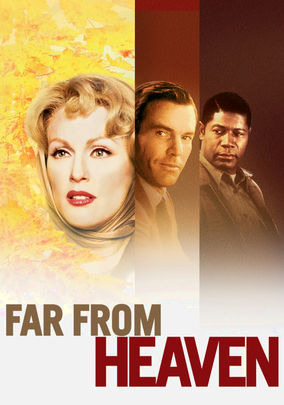
Far From Heaven-2002

Far From Heaven-2002

Director Todd Haynes

Starring Julianne Moore, Dennis Haysbert

Top 250 Films #127

Scott’s Review #332

60025011

Reviewed January 8, 2016

Grade: A

Far From Heaven (2002) is a gorgeous film, set in 1950’s upper-class and sophisticated Connecticut, that tackles not one, but two, separate social issues, in a wonderful story-telling fashion.

An interracial couple fraught with discrimination, and a homosexual husband hiding his secret lifestyle encompass this amazing film by acclaimed director Todd Haynes.

In years to follow, Haynes would also direct such masterpieces similar to the period (and story) of Carol (2015).

For starters, the cinematography and art direction are simply breathtaking- the beautiful and colorful small town in Connecticut, on the surface, prim and proper, is oozing with secrets and scandal just waiting to bubble to the surface.

An aerial view of the town allows the viewer to see this perfectly carved town in a sweeping motion.

Far From Heaven contains many similarities to All That Heaven Allows, made in 1955, and also focuses on a great scandal in a small, seemingly idyllic New England town.

Cathy Whitaker (Julianne Moore) seems to have everything perfectly styled and kept at home in affluent Connecticut, a successful husband named Frank (Dennis Quaid), who is an advertising executive, beauty, and a neighborhood filled with friends.

One night when Frank is working late, Cathy surprises him with dinner at the office, only to be surprised herself by catching Frank passionately kissing another man. In an awkward scene, Frank admits to Cathy that he needs conversion therapy, but instead turns to alcohol and continues to secretly see men.

Devastated, Cathy befriends her gardener, Raymond Deagan (Haysburt), a handsome black man, and slowly begins a relationship with him. Needless to say, this causes gossip and scandal amongst the townspeople.

Far From Heaven is fantastic story-telling, weaving, in essence, two main social stories together.

Frank questions his sexuality, afraid to admit he is gay and risking his reputation and career. Undoubtedly, he is a tormented individual and we see him slowly come to terms with his sexuality.

Haynes, fantastic at crafting a worthy story, carves a similar tale in 2015’s Carol, only she is a woman confident about her sexuality, but hiding it from society. Since the time in both films is the 1950s, the sexual revolution has not occurred, let alone anything gay-related.

The center story though belongs to Cathy and Julianne Moore portrays her to perfection. I would argue that Cathy is Moore’s best role- along with Amber Waves from Boogie Nights.

Hurt and betrayed by her husband, she suddenly is filled with new and dangerous emotions- falling in love with a black man in a not very open-minded time.

Moore and Haysbert have fantastic chemistry from their very first scene together.

I love how Haynes showcases the perfection of the town- the lawns are perfectly mowed, the flower beds flawless, and everyone appears cheerful and colorful. But when something in their little town becomes amiss (in this case Cathy going against the grain) the fangs come out and the animals bear their teeth.

A wonderful scene showcases Cathy and Raymond’s slow dancing in a solely black bar. They sway as one and Cathy is accepted by the black patrons. Raymond (and his daughter) are not treated the same way by the white folks of the town once they catch wind of the shenanigans going on between the interracial couple.

Far From Heaven (2002) is a beautiful film- from the way it looks and is shot, to the powerful acting performances all around. Moore may be the star and the central character of the film, but Quaid and Haysbert certainly deserve their due.

They each give layered performances as wounded and tortured men- and the conclusion of the film- perceived as open-ended- is also not a happily ever after climax.

Oscar Nominations: Best Actress-Julianne Moore, Best Original Screenplay, Best Original Score, Best Cinematography

Independent Spirit Award Nominations: 5 wins-Best Feature (won), Best Director-Todd Haynes (won), Best Female Lead-Julianne Moore (won), Best Supporting Male-Dennis Quaid (won), Best Cinematography (won)

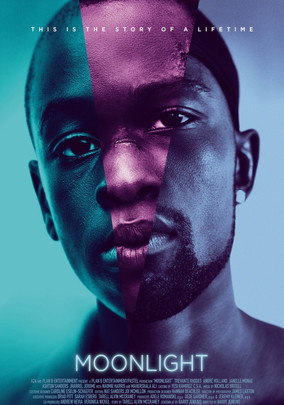
Moonlight-2016

Moonlight-2016

Director Barry Jenkins

Starring Trevante Rhodes, Andre Holland

Top 250 Films #167

Scott’s Review #512

80121348

Reviewed November 6, 2016

Grade: A

Moonlight (2016) is an excellent film rich in character and grit. It tells the story of one man’s life, from childhood to teenage years to adulthood, sharing the bonds he forms and the demons he wrestles with.

The acting is fantastic, and the story is poignant and truthful.

The film is not preachy but instead tells a story, leaving the audience to sit and observe, quietly formulating their opinions.

Moonlight is a mixture of beauty and heartbreak and is told very well.

The film is divided into three chronological chapters that describe the central character’s life.

Chiron is a shy, docile young boy of six or seven living in the drug-filled world of Miami, Florida, in the 1980s. He is bullied for being “different,” though he does not know why he is shunned. Chiron is introverted and distrustful.

A kind-hearted drug dealer named Juan (Mahersala Ali) takes a shine to Chiron, whose own mother becomes more and more absent and emotionally abusive to her son.

Naomie Harris plays Paula, mother to Chiron and herself a drug addict. Juan and his girlfriend Theresa (Janelle Monae) become surrogate parents to Chiron and share their home with him as needed.

Chapter two focuses on Chiron as a teenager, still bullied and coming to terms with his sexuality and feelings of insecurity. By this time, his mother has spiraled out of control, and his life is a sad one.

He is filled with emotions such as rage, despair, and confusion. An experience with his best friend, Kevin, changes the direction of his life. Kevin is his saving grace and a decent person amidst his troubled life.

In chapter three, we are re-introduced to Chiron as an adult, having wholly reinvented himself and become a changed man, but is he changed for better or worse? People from his past resurface at this time, and Chiron must face various demons and emotions and come to terms with himself and the others surrounding him.

Does his story have a sad or a happy ending? This is the question we are left wondering.

The aspect that impressed me the most is the storytelling and the ground broken with this film.

From an LGBTQ+ perspective, by this time (2016), we have experienced numerous offerings on the subject. Still, the fact that Moonlight is not only a character study but a love story between two black men has not yet been done to this degree in cinema, or arguably at all, especially in mainstream fare.

Happily, Moonlight is receiving critical praise. The fact that Chiron lives in a macho, male-driven society makes his self-acceptance all the more challenging for him.

The direction in Moonlight is impressive, and director Barry Jenkins deserves much praise.

Quiet scenes of Chiron as a boy asking Juan and Theresa why the bullies call him a specific name are heartbreaking. Another scene muted and in slow motion, reveals an abusive Paula calling Chiron a degrading name, leaving him confused and hurt.

The tender scenes between Chiron and Kevin are sweet and passionate and are told on a humanistic level.

Moonlight delves into such territory as loneliness and self-identity. It is an interesting film for anyone who has struggled with these issues or is empathetic to those who have.

Moonlight (2016) breaks stereotypes and molds a subtle and low-key film that speaks volumes.

Oscar Nominations: 3 wins-Best Picture (won), Best Director-Barry Jenkins, Best Supporting Actor-Mahershala Ali (won), Best Supporting Actress-Naomie Harris, Best Adapted Screenplay (won), Best Original Score, Best Cinematography, Best Film Editing

Independent Spirit Award Nominations: 6 wins-Best Feature (won), Best Director-Barry Jenkins (won), Best Screenplay (won), Best Cinematography (won), Best Editing (won), Robert Altman Award (won)

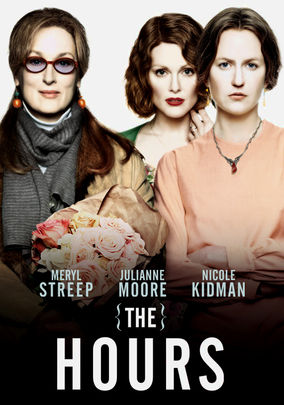
The Hours-2002

The Hours-2002

Director Stephen Daldry

Starring Nicole Kidman, Julianne Moore, Meryl Streep

Top 250 Films #169

Scott’s Review #803

Reviewed August 17, 2018

Grade: A

The Hours (2002) is a film containing the ultimate in acting riches. With names like Nicole Kidman, Meryl Streep, and Julianne Moore associated with the film this is not surprising.

Not solely belonging to the ladies, however, Ed Harris, in particular, is dynamic in his role as are all the other males who appear in the film.

Told in three different sections in chronological order, but going back and forth, the stories all share connections via the novel Mrs. Dalloway, written by Virginia Woolf.

One of the best films of the decade!

Each segment of the film takes place within a single day, but decades apart. Wisely, director Stephen Daldry switches between the stories frequently leaving sort of a cliffhanger, making the drama more compelling and spicy.

In 1923, a depressed Virginia Woolf is portrayed by an unrecognizable Nicole Kidman in a role that won her the Best Actress Oscar.

Woolf resides outside of London and struggles to complete her novel amid nervous breakdowns and the watchful eye of her husband, who is aware of her mental pain.

In 1951, Laura Brown (Julianne Moore) seemingly has it all, living the “American Dream”. Residing in a nice neighborhood with a loving husband, she is pregnant with her second child, spending the days at home raising her young son, Richie, whom she is very close to yet does not understand.

After a fleeting lesbian dalliance with a neighbor, Laura goes off to a hotel with bottles of pills, intending to kill herself. She changes her mind after reading Woolf’s novel and dozing off, deciding instead to make a different decision.

Finally, in 2001, Clarissa (Meryl Streep), is bisexual and in a same-sex relationship. She lives with Richard (Harris), whom she dated in college, now the best of friends. He is gay, stricken with the AIDS virus, and close to committing suicide as he plans to jump out of a window.

This story (present times) is crucial to the film because it involves two characters from the 1951 story. These characters intersect with others in a touching and heart-wrenching way.

The greatest parts of The Hours are the brilliant acting and the richly written storytelling. Arguably, Kidman, Streep, and Moore all could have won Oscars for their performances, and I must mention that as brilliant as Kidman is (she is the sole Oscar recipient), and Streep is just universally good, I would have given the Oscar to Moore- the standout in my opinion.

Glamorous and intelligent, warm to her son, she makes a monumental and controversial decision. The character should not be sympathetic- yet she is. This is a testament to Moore’s infusing the character with confidence, reasonable thoughts, and even some empathy. We finally understand why she does what she does.

May I boast for a moment about Harris’s performance? Richard, once known as Richie as a kid (this will give something away), has lived a difficult life.

Abandoned, wounded, and suffering much loss, he is a tragic figure, pained beyond belief. His suffering is so monumental that we almost welcome his demise, and Harris offers so much of himself in this difficult role. He is both physically and emotionally hurt and Harris portrays this in spades.

Uniquely, all three stories work independently of each other. Yes, characters from one appear in another, but they are like well-crafted vignettes. Similarly, they each begin with breakfast, then involve the planning of a party or celebration of some sort, and culminate in sadness.

Yet, the film does not feel like a downer or preachy in any way, but rather, good, solid, humanistic story-telling, which I adore.

Sure, the film is considered a drama, but it also contains multiple gay or bisexual characters and therefore must be included in the chambers of LGBT filmmaking.

With an A-list cast, the film helps lead the charge (successfully so) to bring more rich LGBT films to center stage and garner mainstream audiences.

The great aspect of The Hours is that it is a mainstream film- a good solid drama.

Based on a Pulitzer Prize-winning novel by Michael Cunningham, The Hours (2002) does not try to draw parallels with each story or necessarily connect them in an obvious fashion.

Rather, the film version provokes thought both with LGBT and feminist approaches. Each female central character lives in a world run by men, as Woolf argues in her novel.

The film brilliantly adapts the novel and brings it to large audiences in a fantastic, riveting fashion.

Oscar Nominations: 1 win-Best Picture, Best Director-Stephen Daldry, Best Actress-Nicole Kidman (won), Best Supporting Actor-Ed Harris, Best Supporting Actress-Julianne Moore, Best Adapted Screenplay, Best Original Score, Best Costume Design, Best Film Editing

Philadelphia-1993

Philadelphia-1993

Director Jonathan Demme

Starring Tom Hanks, Denzel Washington

Top 250 Films #171

Scott’s Review #782

Reviewed July 3, 2018

Grade: A

Having the powerful distinction of being one of the first Hollywood LGBT films to deal with heavy issues such as HIV/AIDS and homophobia, Philadelphia (1993) is a film to champion.

The film does contain some less-than-positive stereotypes across the board, but was a tremendous box office success and more importantly introduced a large audience to a still (at that time) taboo subject.

Hopefully, this had a tremendous effect on creating an understanding of a vicious disease and its ramifications.

Tom Hanks deservedly won the Best Actor Oscar for his lead performance of an AIDS and discrimination victim as did the heartbreaking theme song “Streets of Philadelphia”, penned by Bruce Springsteen, win for Best Original Song.

Director Jonathan Demme creates a world quite realistic in portrayal at the corporate level. Hotshot attorney Andrew Beckett (Hanks) has a promising future at one of the country’s largest law firms in Philadelphia.

Assigned a high-profile case, it is noticed that Andrew has developed lesions across his body and is subsequently fired from the firm. After deciding to sue the firm and having no luck finding an attorney to represent him, he finally meets struggling black attorney, Joe Miller (Denzel Washington), who begrudgingly takes the case to gain exposure.

Philadelphia is a film that is a courtroom drama with a cause and is firmly ensconced in the “message movie” genre.  A lesser version, and perhaps one made even a decade or so after 1993, might be reduced to the Hallmark television movie category.

Fortunately, the timing is perfect and Philadelphia can be remembered as a film championing LGBT rights.

Hanks’s performance is just dynamic- his character is meant to be empathetic, a victimized man unjustly suffering not only discrimination but a death sentence. The audience knows what is to come and as Andrew loses more weight and appears more sullen and haggard, the tale increases in sadness.

The final act of Andrew’s court victory is to be celebrated, but also is heartbreaking as a feeble and dying Andrew now lies close to death.

Hanks brilliantly infuses Andrew with courage, heart, and values, so much so that he becomes a hero to the audience even if their sexuality is different than his.

As much as the undying love for Hanks is deserved, the powerful supporting cast is a treasure. Washington is not as sympathetic a character as Andrew is, but learns a lesson and eventually leaves his machismo on the sidelines.

The heart-wrenching death scene culminating in the hospital room involves lover Miguel (Antonio Banderas), surrounded by Andrew’s family, all-embracing as one. There is beauty mixed with tragedy in this one scene alone.

Even Mary Steenburgen as the tough defense lawyer shows some heart. And who can say more about the dynamic Joanne Woodward as Andrew’s mother?

Unfortunately, there are a few stereotypes to endure, and sadly many early LGBT films (and some still do!) include these for emphasis- or perhaps ignorance? Nonetheless, these make the film seem slightly dated given the LGBT progress made in the decades since the film was released.

Joe Miller is portrayed as a macho guy afraid to be viewed as gay- he even jokes around about being a “man” with his wife. Joe also grimaces when he shakes hands with Andrew and suddenly realizes Andrew has AIDS.

Nearly all of Andrew and Miguel’s gay friends are effeminate- this hardly seems possible.

Such is a monumental achievement when a film breaks barriers by telling a story of critical importance. Philadelphia (1993) does just that by patiently asking its audience for tolerance, understanding, and heart.

In return, the film educates, floods with emotion, and breaks hearts. Other LGBT films would come along that were arguably even better, but Philadelphia is a groundbreaking experience sure to be remembered as the first of its kind.

Oscar Nominations: 2 wins-Best Actor-Tom Hanks (won), Best Original Screenplay, Best Original Song-“Streets of Philadelphia” (won), “Philadelphia”, Best Makeup

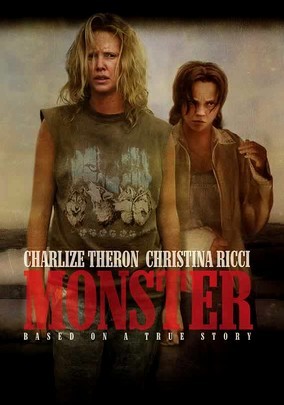
Monster-2003

Monster-2003

Director Patty Jenkins

Starring Charlize Theron, Christina Ricci

Top 250 Films #174

Scott’s Review #347

60032559

Reviewed January 9, 2016

Grade: A

Monster (2003) may feature one of the best acting performances of all time-Charlize Theron simply embodies the role of the notorious female serial killer, Aileen Wuornos, in a simply astounding triumph.

The mannerisms, the anger, and the charisma that Theron portrays are nothing short of brilliance.

This brazen acting is simply the best aspect of Monster and the main reason to witness the film.

Besides this, the film itself is also great.

The film immediately focuses on Theron- we meet the down-on-her-luck prostitute sitting in tatters underneath an overpass.

Suicidal and with five dollars to her name, she goes to a dive bar for one last beer- having blown someone for the five dollars she reasons that the money will go to waste if she does not spend it.

Her older confidante is Thomas, a grizzled man assumed to be an occasional client of hers, who is played by Bruce Dern. She goes to a gay bar and meets Selby Wall (Christina Ricci), a lesbian.

Aileen insists she is not gay but winds up spending the night with her in Selby’s family home. The two form a connection and bond immediately, spending more time together and becoming immersed in each other’s lives.

When Aileen is brutally raped and beaten by a client, she begins down a dark and murderous path, killing men she meets after she steals their money.

Selby eventually catches on to this and is conflicted over whether to turn her friend in or serve as an accomplice to her crimes as the police close in on the pair.

Enough cannot be said of Theron’s performance. She simply becomes Wournos- from her walk to her infamous manic mannerisms, and her hair flip.

Theron, a gorgeous woman, gained weight, used false teeth, and became simply unrecognizable in the role of a brutal, angry, and trashy-looking woman.

Ricci also deserves praise, but plays her role as a bit clueless or dimwitted, counterbalancing Theron’s manic, in-your-face role. It works well. Both characters are longing for love and companionship and both are misfits.

In a sweet scene, the pair go roller skating together, hand in hand, to the famous rock song, “Don’t Stop Believin”.

This is a great scene.

One can argue the fact that director, Patty Jenkins, softens the way that Wournos is written. Known as a hardened, mean woman, Jenkins writes her as much more sympathetic.

This can also be attributed to the fact that Theron emits some vulnerability to the character- the woman never knew love until she met and bonded with Selby.

Needless to say, Monster (2003) is a dynamic, energetic film, thanks in large part to the powerful performance of Charlize Theron- a role that awarded her the Best Actress Academy Award.

Oscar Nominations: 1 win-Best Actress-Charlize Theron (won)

Independent Spirit Award Nominations: 2 wins-Best First Feature (won), Best Female Lead-Charlize Theron (won), Best First Screenplay

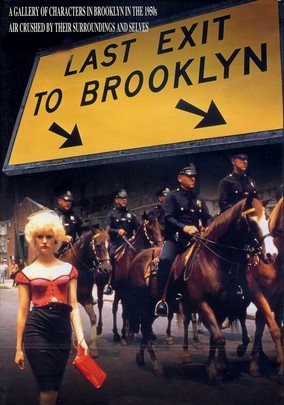
Last Exit to Brooklyn-1989

Last Exit to Brooklyn-1989

Director Uli Edel

Starring Stephen Lang, Jennifer Jason Leigh

Top 250 Films #176

Scott’s Review #152

70141619

Reviewed August 13, 2014

Grade: A-

Last Exit to Brooklyn is a slice-of-life type film that takes place in the early 1950s and is set in lower-class Brooklyn, NY.

It tells the story of a group of struggling neighborhood people- sex workers, union members, drag queens, etc. whose lives intersect. Also in the neighborhood is a military base where soldiers come and go on their way to war-torn Korea.

The central characters, though there are several with small yet interesting stories, are Harry, played by Stephen Lang, a sexually conflicted union worker with a wife and newborn child.

He is in love with a selfish drag queen, and Marilyn Monroe lookalike, Tralala, played superbly by Jennifer Jason Leigh, a prostitute whose best days are behind her, and who will do anything for attention.

The sets and cinematography in the film are very well done- the feeling of despair and hopelessness are accomplished by the dowdy streets, homes, and bars that the cast frequents.

Some of the characters are sympathetic- the aforementioned plus Tralala’s love interest, the Diner boy madly in love with Tralala, and the virginal seeming (but not really), Donna, portrayed by a young Rikki Lake. Other characters are abhorrent in their violence and hatred.

Last Exit to Brooklyn is quite a dark film and sometimes tough to watch but captures a dreary time and atmosphere. The Brooklyn set is excellent in its dreariness.

Jennifer Jason Leigh is the standout as the tough-talking, boozy prostitute who is losing her luster and the final scene of the film is truly a heartbreaker.

The topics of union, strike, bisexuality, gangs, and drag queens are covered and unique characters and conflict/loneliness are presented.

This film is an overlooked gem from 1989.

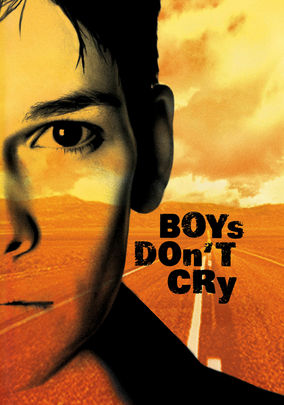
Boys Don’t Cry-1999

Boys Don’t Cry-1999

Director Kimberly Peirce

Starring Hilary Swank, Chloe Sevigny

Top 250 Films #177

Top 10 Most Disturbing Films #10

Scott’s Review #340

27422770

Reviewed January 9, 2016

Grade: A

Boys Don’t Cry (1999) is a fitting tribute to real-life figure Brandon Teena, a transgender man from Nebraska, who adopts a male identity and attempts to find love with Lana, played by Chloe Sevigny. Brandon is played by Hilary Swank.

Sadly, Brandon was brutally raped and murdered at the hands of some local men- a fact that the film does not gloss over.

Boys Don’t Cry is a heartbreaking and tragic film that will disturb some with its shocking and violent content- sadly it is a true story.

Swank deservedly walked away with the Best Actress Oscar statuette.

Set in working-class Nebraska and in the heartland, Brandon has the cards stacked against him from the start. Not exactly the most open-minded of areas, the film also sets a working-class environment for Brandon as most of his friends are poor factory or bar workers.

Born as Teena Brandon and female, Brandon (Swank) is a drifter and in trouble with the law for various unpaid tickets. He befriends ex-convicts John and Tom and becomes part of their crowd, falling in love with Lana- they are all unaware of Brandon being a female.

When Brandon’s secret is revealed, Lana is accepting and the pair decide to run away together, but Tom and John decide to murder Brandon.

Swank’s portrayal of Brandon is brilliant and believable and very few actresses could successfully pull this off. Swank has angular, androgynous features to begin with, but her drastic physical transformation is jaw-dropping.

Having closed-cropped hair and a male swagger, Swank immerses herself in the role, so much so, that as I watched the film I completely forgot that Brandon was not physically male.

Her physical transformation is not the sole reason for the fantastic performance though- Swank is emotionally there in the role and in a heartbreaking scene, after being beaten and raped, is treated poorly by a sheriff handling the accusations- just when Brandon could use an understanding ear.

What a cold world it can be for someone different from most others as Boys Don’t Cry reveals in a brutal, honest fashion.

Anyone who knows the true story of Brandon Teena knows he led a painful, tragic life, but was also filled with life and love- mainly for Lana.

Worth mentioning is Sevigny’s performance as Lana- in love with the person that was Brandon, not so much the gender. Sevigny portrays Lana as supportive, confused, and loving.

Director, Kimberly Peirce, became obsessed with the real-life case and does a fantastic job at tackling the film in a true, compelling way. To say nothing of the writing and the acting, Peirce also successfully uses a hand-held camera during Brandon’s strip scene and a surreal, muted light to portray the gloomy mid-west and the cold, hard lives that most of the characters lived.

Impressively, Peirce accomplished all of this on a shoe-string budget and took a wealth of inspiration from independent film legend John Cassavetes, who proved that gorgeous films can be made for very little money.

Many scenes take place in bars as Lana, a devoted karaoke singer, croons one tune after another, the highlight being Restless Heart’s 1988 country hit, “The Bluest Eyes In Texas”, which Lana sings in Brandon’s presence.

The use of somber songs gives the film a tragic soundtrack.

Famed film critic, Roger Ebert, described Boys Don’t Cry as “Romeo and Juliet set in a Nebraska trailer park”.

Boys Don’t Cry (1999) is an enormous victory in film for the LGBT community and, along with Brokeback Mountain (2006), is a perfect double-feature, as both are similar films, only one featuring males, the other females.

Both are tragic, bleak and all too real.

Oscar Nominations: 1 win-Best Actress-Hilary Swank (won), Best Supporting Actress-Chloe Sevigny

Independent Spirit Award Nominations: 2 wins-Best First Feature (Over $500,000), Best Female Lead-Hilary Swank (won), Best Supporting Female-Chloe Sevigny (won), Best First Screenplay, Producers Award

Sunday Bloody Sunday-1971

Sunday Bloody Sunday-1971

Director John Schlesinger

Starring Glenda Jackson, Peter Finch, Murray Head

Top 250 Films #182

Scott’s Review #1,062

Reviewed September 15, 2020

Grade: A

Whether it’s the late 1960s style with British sophistication or the ahead-of-its-time subject matter, John Schlesinger’s Sunday Bloody Sunday (1971) is a brazen and mature piece of filmmaking.

With fantastic acting mostly on the part of Glenda Jackson and Peter Finch, the film is subdued enough to contain the drama while letting the underlying plot marinate and flourish rather than being forced or overdone.

That’s not to say Sunday Bloody Sunday is an easy watch. The main characters stew and simmer rather than explode as the audience comes to grips with their feelings, emotions, and motivations as painful as they can be.

Schlesinger offers the complexities of the characters as we get inside their heads during multiple scenes as cameras carefully pan in on their facial expressions. The intention is to read their minds or think we know what they are thinking.

The three characters featured are Alex (Glenda Jackson), a divorced and restless recruitment worker, a young, free-spirited artist, Bob (Murray Head), and a gay, Jewish, doctor named Daniel (Peter Finch).

Bob openly dates both Alex and Daniel, who are aware of the existence of the other and even have common friends. Instead of scheming against the other in hopes of poisoning their character with Bob, they deal with acceptance and a host of other emotions.

A triangle ensues, though not one with a clear couple to root for, nor is it clear who we want to root for. Sunday Bloody Sunday is not that trite or simplistic and this is the beauty of the film.

Each character can be analyzed for individual motivations, peculiarities, and desires that sometimes overlap. The added perk of one character being straight, one character being bisexual, and one character being gay only adds flavor and lustful desire. Sunday Bloody Sunday is a character study if ever there was one.

Screenwriter, Penelope Gilliatt, writes a piece so bristling with the unpredictability that the characters and situations are deep and troubling. My favorite character is Daniel, the most adjusted of the three, but a character who would typically be written as the most maladjusted.

Schlesinger had directed the brilliant Midnight Cowboy (1969) two mere years earlier, a film that depicted gay characters as troubled and self-hating. Gilliatt crafts Daniel as confident, successful, and masculine, avoiding all stereotypes.

I immediately had thoughts of Ken Russell’s masterpiece, Women in Love, made only one year earlier in 1970, and starring Jackson. Featuring four characters rather than only three, both films are British and feature the complexities of sexual orientation, jealousy, and loneliness.

Women in Love is a slightly better film, but only by a small margin, probably because there is one additional character to consider. Both explore then barely touched territory when it was still taboo to explore homosexuality in film.

Adorable is a scene at a Bar Mitzvah given to Daniel’s nephew. As the merriment commences several women are bound to be interested in Daniel, what with him being a successful doctor. He doesn’t have any interest naturally but politely makes small talk with one woman.

The scene is so natural and at ease that it is wonderful and reaffirming to see a gay character treated with such dignity and richness, his problems not being a result of being gay but of being a human being.

Daniel and Alex compete for Bob’s affection but in a polite way. Instead of hating each other, they hate the situation. Bob is not the nicest guy in the world so the question can be raised as to why they both feel the way they do about him.

But this hardly matters when the heart wants what it wants.

The most interesting and realistic scenes occur when each couple lies in bed together or makes small talk over a meal. This offers a glimpse of what day-to-day treasures they each could enjoy.

Those in the mood for a film rife with emotion and psychologically complex feelings wrapped inside a good drama will find Sunday Bloody Sunday (1971) a pure treat. Trimmings like glimpses of the gorgeous city of London lend themselves to added nuances.

Each time this film is viewed it could easily be watched from the perspective of either Alex, Bob, or Daniel.

Oscar Nominations: Best Director-John Schlesinger, Best Actor-Peter Finch, Best Actress-Glenda Jackson, Best Original Screenplay

Dog Day Afternoon-1975

Dog Day Afternoon-1975

Director Sidney Lumet

Starring Al Pacino, Chris Sarandon

Top 250 Films #203

Scott’s Review #185

450423

Reviewed October 13, 2014

Grade: A-

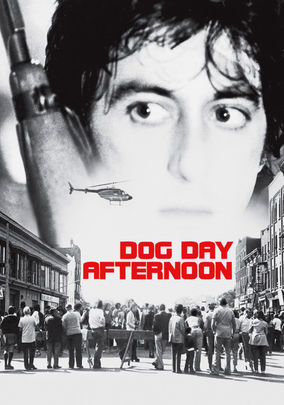
Director Sidney Lumet successfully sets the smoldering hot summer afternoon in New York City for his 1975 film Dog Day Afternoon, as Al Pacino plays Sonny, an unemployed, desperate man who, while married with two kids, has a gay lover, Leon, (brilliantly played by Chris Sarandon) who he is attempting to help finance a sex change operation.

Based on a true story, Sonny, along with his dimwitted friend Sal- played by John Cazale, decides to rob First Brooklyn Savings Bank.

Predictably, their plans go awry when Sonny burns a ledger during the robbery attempt and a pedestrian sees the smoke and alerts the police.

As the police become aware of the attempted heist, a standoff ensues between Sonny and the cops, led by Detective Moretti, played by Charles Durning, and the robbery receives media coverage.

Most of the action is set inside the stifling hot bank and directly outside on the street and gradually the supporting characters come into play- the hostages, Sonny’s mother, wife, and lover all make contact with Sonny in some way or another and his motivations become clearer to the audience.

Dog Day Afternoon is a somewhat message movie that is anti-establishment, in this case, anti-police and questioning of the government and the financial establishment, (Lumet also directed Network, challenging establishment).

This is evidenced when after a standoff with police, the crowd sides with Sonny as he chants Attica! Attica!, which is a direct reference to a recent prison riot.

Sonny speaks for the working class- the poor, struggling, underpaid workers who cannot afford to feed or adequately take care of their families.

The heat and humidity compare perfectly to the pressure felt by most middle-class people that still resonates today and leaves the viewer contemplating his or her life.

Sonny relates to the bank tellers who do not make much money. Besides, Sonny is sympathetic to the audience in another way. Leon, recently hospitalized at Bellevue Hospital, is emotionally dependent on Sonny. He would be lost without him.

They share a lengthy and heartfelt phone conversation that is the heart of the film- gay romance had not been explored this way by 1975 in cinema, and the romance was neither shoved down the audience’s throat nor was it looked past entirely.

Their relationship is tender and deep, yet still somewhat ambiguous.

Would they stay together? What would become of Sonny’s wife and two children? Would he leave them for Leon in a world that was not ready to accept two homosexual men together? Is that the reason for Leon’s desire for a sex change operation?

Chris Sarandon, in too small a part, is wonderful as the gay lover, struggling with a sexual identity crisis. Al Pacino gives, per usual, a brilliant portrayal as he takes on a complex character who is far from one-dimensional.

Perhaps not a masterpiece, Dog Day Afternoon, is a very good film, but neither is it strictly a gay-themed movie nor an action/thriller- it’s more complex than that.

Ironically, Sonny is portrayed as the hero of the film as it is not a standard good police versus bad bank robber type of film- quite the contrary. It is much, much more than that.

Oscar Nominations: 1 win-Best Picture, Best Director-Sidney Lumet, Best Actor-Al Pacino, Best Supporting Actor-Chris Sarandon, Best Original Screenplay (won), Best Film Editing

The Killing of Sister George-1968

The Killing of Sister George-1968

Director Robert Aldrich

Starring Beryl Reid, Susannah York

Top 250 Films #210

Scott’s Review #228

220px-Original_movie_poster_for_the_film_The_Killing_of_Sister_George

Reviewed March 13, 2015

Grade: A-

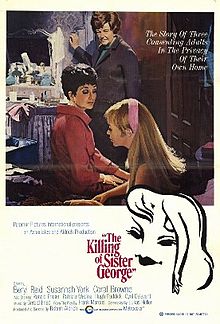
The Killing of Sister George is a British film drama, adapted from a 1964 stage production that was a risky subject matter to tackle for the times- lesbianism- in the late 1960s.

Directed by Robert Aldrich, well known for Whatever Happened to Baby Jane, The Killing of Sister George is a similarly dark tale of loneliness, desperation, and an actress who falls from former grace and success into despair, confusion, and anguish.

It also has some witty, crackling, comedic moments to avoid being a true downer.

Sister George is a successful, well-regarded actress on a popular soap opera named Applehurst. Her character is the wholesome presence in a town fraught with manipulation and drama. She is the moral focal point of the show.

In real life, however, George (interestingly called by her character’s name), is troubled.

She is bitter, angry, and a person with alcoholism, and she frequently berates and even abuses her partner, Childie, played by Susannah York. A third central character in the film is TV Producer Mercy Croft, who is powerful and confused about her sexuality.

When the soap opera powers-that-be decide to kill off the beloved Sister George, the real George’s life begins to spiral out of control.

As enjoyable a film as it is and certainly featuring the competent talents of Beryl Reid in the title role, I cannot help but ponder and fantasize how wonderful the casting of Bette Davis- reportedly considered for the role and inexplicably not cast- would have been.

Davis, famous for playing grizzled, mean, unsympathetic characters, would have knocked this role out of the park, and, sadly, she did not have the chance.

At its core, the film is a sad character study of one woman’s pain and anguish at being discarded. Presumably unable to be hired anywhere else, her soap opera character is her life.

She loves Childie but is not entirely fulfilled by her, either, and the vibrant, polished Mercy threatens that relationship.

This is an interesting triangle as George does not always treat Childie well, but loves her all the same. Childie is a simple character, childlike, and needs a strong mate to counter-balance the way she is- someone to take care of her.

Without a job or prospects, this would be difficult for George. Does Childie love George or want a meal ticket?

The film is understandably rated X for content, presumably for a very explicit sex scene between Mercy and Childie, and when a drunken George molests two nuns in the back seat of a London taxi cab.

These scenes are both cutting-edge and admirable in their risk-taking.

The scene set at the real-life London lesbian club (the Gateway Club) and featuring mostly real-life lesbians is excellent. It provides a real-life glimpse into the gay/lesbian world and lifestyle during the period.

A brave, groundbreaking, risk-taking film with bravura direction from Aldrich, The Killing of Sister George (1968) is a forgotten gem that needs to be rediscovered by film fans everywhere and is an early journey into gay and lesbian cinema.

Death in Venice-1971

Death in Venice-1971

Director Luchino Visconti

Starring Dirk Bogarde, Romolo Valli

Top 250 Films #248

Scott’s Review #1,014

Reviewed April 22, 2020

Grade: A

Death in Venice (1971) is a haunting and tragic story of a depressed middle-aged man who becomes obsessed with a fourteen-year-old Polish boy while on holiday in Venice.

The story on the surface is dark and dour and not for the judgmental or the closed-minded. With a deeper dive and a haunting musical score, the film provides beauty and impressionism.

The film is based on the original novella Death in Venice, written by German author Thomas Mann, and published in 1912 as Der Tod in Venedig.

Gustav von Aschenbach (Dirk Bogarde) is a lonely composer who travels to Venice for health reasons and a recipe for recovery. His maladies are unclear at the start but are assumed to be sent to the picturesque city as a form of therapy.

While enjoying a tranquil holiday, he spots and becomes obsessed with the stunning, youthful beauty of Tadzio (Bjorn Andresen), who is staying with his family at the luxurious Grand Hôtel des Bains, just as Gustav is.

Their encounters run rampant as they are viewed by the audience from afar but never speak to each other.

This is the brilliance of Death in Venice. A more standard approach may have been to make the story more forceful.

If Gustav had approached, harassed, or even molested Tadzio, the direction of the film would have vastly changed, and he would have been deemed a pervert.

Suddenly the film would have been about a pedophile preying on a youngster, rather than incorporating a beautiful subtext of longing and unfulfilled passion.

The masterful classical numbers that open and close the film help to achieve this mindset.

The controversial subject matter, still taboo by today’s progressive standards, is not gratuitous but is quite obsessive. Worthy of mention is that Gustav’s plight begins harmless enough as he appreciates a beautiful image, almost like gazing at a sculpture- think Michelangelo’s David- since we are in Italy.

But when he begins to follow Tadzio and see him more and more his desperation increases as his health deteriorates. For a while, it is unclear whether the boy even realizes he is an object of affection. It is Gustav’s feelings and emotions that are most explored.

As a side story, the city of Venice is gripped by a cholera epidemic, and the city authorities do not inform the holiday-makers of the problem for fear that they will flee the vital city.

In 2020, with the vicious COVID-19 pandemic gripping the world with savage ferocity, this classic film takes on a whole new importance. When the Venice officials downplay the epidemic as tourists increasingly fall ill, a modern realism is conjured to the audience.

Death in Venice, as the title should make clear, is not a love story, otherwise, it would be called Love in Venice. Gustav’s lust for Tadzio is unrequited. Neither is Gustav’s sexuality clear, though he is assumed to be bisexual.

In one of the film’s saddest scenes, also the finale, Gustav lounges on the sandy beach in ill health dressed in an improper white suit. He sees Tadzio playfully frolicking with an older boy and afterward walks away and turns back to look at Gustavo.

As Tadzio outreaches his arms toward the water, Gustav does the same as if he is enveloping the boy. The moment is breathtaking.

Many symbolic and meaningful scenes occur like when Gustav visits a barber who insists he will return his customer to his youth. The results are ghastly.

Dyeing his grey hair black whitening his face and reddening his lips to try and make him look younger leaves a macabre and somber image of a man feebly attempting to turn back the hands of time, something all of us can relate to. His heavily made-up face is meant to hide his insecurities.

Incorporating an ingenious mix of beauty, tragedy, obsession, and loneliness, Italian director, Luchino Visconti crafts a brilliant and painful dissection of human emotion.

The subject matter of Death in Venice (1971) will not appeal to all viewers, but those brave enough to traverse the sometimes-rocky waters will find an underlying treasure and a meaningful cinematic experience.

Oscar Nominations: Best Costume Design

Anything-2017

Anything-2017

Director Timothy McNeil

Starring John Carroll Lynch, Matt Bomer

Scott’s Review #1,472

Reviewed March 17, 2025

Grade: B

Anything (2017) is a sweet LGBTQ+ independent film written and directed by Timothy McNeil. It is based on a play that he performed in Los Angeles.

While it is nice to see longtime character actor John Carroll Lynch (Fargo, 1996, and Zodiac, 2007) in a starring role and Matt Bomer looking fabulous in drag, the film suffers from contrivances and treads lightly.

The stagey setups, cliched situations, and popcorn dialogue feel forced, and the ambiguous conclusion is unfulfilling.

However, McNeil and the cast deserve kudos for showcasing a story never told before and fraught with possibilities with a powerful ‘love is love’ message.

Deeply depressed after his wife’s death, Early Landry (Lynch) survives a suicide attempt and moves from a small town in Mississippi to flashy Los Angeles to live with his loving yet controlling sister, Laurette (Maura Tierney).

While there, he develops a complicated and tender relationship with a transgender sex worker named Freda (Matt Bomer). They bond over their shared loneliness and past traumas, sparking a friendship and gradually more.

Early immediately captured me. A hulking man, his kindness and gentleness ooze from him when he takes a run-down apartment in a shady section of L.A. Surrounded by drug addicts and questionable neighbors, he makes friends simply because he is lovely.

Because Lynch frequently plays villains, this was a nice change of pace to witness, and I suspect the actor also enjoyed it.

McNeil kindly writes the character as non-judgmental and savvy despite his Mississippi origins. Oftentimes, in cinema, a Deep South character is written as racist, stupid, or both.

Instead, Early is accepting of different lifestyles. Lynch effortlessly carries the film because he gives the character authenticity and sensitivity.

I wanted to be friends with him.

On the other hand, Freda’s character took most of the film to win me over. Her unpredictable, defensive, and cutting remarks imperfectly represent typical drag queen caricature behavior.

It also took me until the conclusion not to think of McNeil’s reason for casting Bomer as a vehicle to see the pretty actor in drag. Bomer is a great actor in anything he appears in and does his job effectively.

But when Freda callously insults Early when they first meet by nicknaming him ‘Havisham,’ a character from Charles Dicken’s novel Great Expectations, she seems cutting for the sake of being insulting.

I also wanted to know more about Freda. How did she wind up in Los Angeles as a streetwalker? What was her upbringing like? We can guess it wasn’t great, but not much is said.

My reaction improved to championing Freda after a fantastic, ill-fated dinner party scene. Early invites Laurette, her husband, and their son to his apartment for dinner to meet Freda. When Laurette quickly realizes Freda is transgender, she guzzles white wine and lets loose on Freda, fearing she is manipulating her brother.

Despite the story’s groundbreaking nature, the feeling is predictable. Of course, Laurette will object to the romance as much as Freda’s friends call her a dreamer for wanting a ‘9 to 5 life’.

Straight and narrow, Early shakes Freda’s drug dependency in only one night while enduring her venom, vomiting, and unbelievably quick recovery, almost in the snap of his fingers.

I wanted a more definitive conclusion and had questions left in my back pocket that were never answered. Will the couple move in together? What will Freda do for a living? Does Laurette even know Freda is a prostitute?

Unfortunately, Early and Freda never have a sex scene, so the sexual complexities of their assumed relationship feel swept under the rug.

Though sweet-natured and carefully plotted, Anything (2017) has so much more potential story to tell that the results feel lacking.

Cruising-1980

Cruising-1980

Director William Friedkin

Starring Al Pacino, Paul Sorvino, Karen Allen

Scott’s Review #1,469

Reviewed March 9, 2025

Grade: B+

Cruising is a 1980 effort that brought the LGBTQ+ community into mainstream cinema at least for a brief moment shortly before HIV/AIDS changed its image and trajectory.

The film was derided by critics and gay rights protesters who believed it stigmatized them.

Decades later, Cruising has become more accepted and even admired by some, especially in the LGBTQ+ community. It’s a film that most community members have heard of, allowing it to make its mark in cinema history.

William Friedkin, famous for directing The French Connection (1971) and The Exorcist (1973), writes and directs the film, loosely adapting it from a novel by The New York Times reporter Gerald Walker.

The story is about a serial killer targeting gay men, particularly the men associated with the leather scene in the late 1970s. A psychopath is scouring New York City gay clubs and viciously torturing and stabbing gay men to death.

Resembling the victims physically, Detective Steve Burns (Al Pacino) is asked to wear leather attire, and frequent the city’s hardcore clubs to lure the killer.

As Steve becomes immersed in club hopping, he begins to identify with the subculture more than expected. Meanwhile, he behaves distantly around his girlfriend, Nancy (Karen Allen), the police force’s homophobia becomes apparent and the killer remains at large throughout one hot summer.

Initially, Richard Gere was slated to star but Pacino ended up with the role.

Pacino, being Pacino, gives it his all in an uneven script and unclear character motivations. The ending is exceptionally muddled and peculiar, leaving an unsatisfying feeling, while I also somewhat admire its ambiguity.

Dusting off this relic was an absolute pleasure. It gave me a glimpse into the LGBTQ+ leather scene of long ago, with authentic New York City gay clubs and clubgoers.

Cruising also features a variety of exterior NYC locales, such as Columbia University, the Meat Packing district, and an opening view of the Manhattan skyline.

Though too young to remember the scene being showcased, I do remember traveling into Manhattan to go to work with my father as a very young boy and the dangerous city I was always warned about.

Friedkin and cinematographer James Contner exceptionally depict New York City in the late 1970s/early 1980s. The gritty and crime-ridden streets capture the time like similar films Taxi Driver (1976) and Gloria (1980) did.

I also adore seeing the clubs and bars from an LGBTQ+ perspective, though I’m unsure if non-LGBTQ community members would appreciate this aspect of the film.

Nonetheless, fans of Pacino should add this to their list. While not on par with his most tremendous role as Michael Corleone in The Godfather series (1972-1995), he was in his prime before he started overacting and taking on inferior roles.

It’s also a damned good crime thriller!

Cruising reminds me of a Dirty Harry (1971) film only set in NYC, particularly the killer. With a low and taunting voice, and a fondness for teasing his victims before killing them, the similarities are apparent and work well.

The killer’s motivation is weakly explained in a flashback with his father.

Since we more or less see the killer’s identity early on, the film is not so much a whodunit until the final scene when another character is found dead after the killer is apprehended.

Is the new killer Steve or the victim’s jealous boyfriend? Is Steve closeted? These questions are left unanswered.

The production is superior and the glowing park scenes with shadows and insect sounds only enhance the thrills and perils of the characters.

The film shows plenty of bare male asses unusual for this time in American cinema and dares to show plenty of simulated and apparent complete on sex. Forty minutes of X-rated male-on-male action footage needed to be cut, in which Pacino may or may not have participated.

While the screenplay has gaping holes and the conclusion less than satisfying, Cruising (1980) is a win in my book for showcasing an unrepresented group of people and taking me back to a fascinating time.

I Saw the TV Glow-2024

I Saw the TV Glow-2024

Director Jane Schoenbrun

Starring Justice Smith, Jack Haven

Scott’s Review #1,467

Reviewed February 17, 2025

Grade: A-

I Saw the TV Glow (2024) is a bizarre independent psychological drama/horror film co-produced by Emma Stone and her husband.

It was produced by their Fruit Tree production company and distributed by A24, a brilliant independent film distributor, immediately giving the film credibility and a broad audience.

Writer/director Jane Schoenbrun perfectly depicts teenage angst via a visually cerebral and creative avenue. They sprinkle pink lettering and a colorful, moody aesthetic that is impressive.

The film is more than mysterious; it is hypnotic, with a dark mood evoking the dark underbelly of life in the suburbs.

Delving deeper after my initial viewing, I realized the film is an allegory for being transgender, which I did not know. Having that knowledge makes perfect sense because the characters feel trapped in their skin and fear being buried alive.

Transgender people often feel like the “egg crack,” a term for the moment in a trans person’s life when they realize their identity does not correspond to their assigned gender.

The film depicts bleak life in the suburbs and transitions between 1996 and 2026 when the main character is a teenager and finally a middle-aged man.

Owen (Justice Smith) is trying to make it through life in the suburbs when his older classmate, Maddy (Jack Haven), introduces him to a mysterious late-night TV show, a vision of a supernatural world beneath their own.

Both are loners and immediately bond over the young adult television show The Pink Opaque, which follows teenagers Isabel and Tara as they use their psychic connection to fight supervillain Mr. Melancholy, who has the power to warp time and reality.

Enthralled, Owen’s view of reality begins to crack.

I Saw the TV Glow is an unusual experience, especially during the 2006 chapter when Maddy returns to town after years away. When she explains that she paid a man to bury her alive, mirroring the finale of The Pink Opaque, the sequence is frightening, macabre, and hard to follow.

I wondered if she was speaking literally or figuratively.

But Maddy is trapped inside her own body, in her case, the wrong gender, and yearns to break out of her coffin. She encourages Owen to do the same, though it’s not clear if he identifies as female, is gay, or is just trapped in suburbia in a dead-end job.

In 2026, we realize that Owen has remained in the small town, mainly at the same job cleaning a movie theater, with his mother and stepfather long dead.

Sadly, he is still trapped inside his own body, aching to come to the surface. He screams out that he is dying and needs help, but nobody ever seems to notice.

He mentions a family, but they are never seen. Are they imagined? Is he living the life of a gay man or a straight man? Owen is mixed race, so what other issues does he face?

I wanted more concrete answers.

Even though the story is focused on a transgender lifestyle, Schoenbrun is never blatant about it.

Growing up in the lonely suburbs, I can relate to the feeling of suffocation at being unable to get out. Many are trapped for decades with the sameness day after day. Young people face this dilemma constantly, so I Saw the TV GLow is an essential film for most.

Debatable is whether I Saw the TV Glow was not overtly marketed as a trans film or even an LGBTQ+ film purposely. At a time in United States history when the trans community is under attack, they need all the support they can get.

The myriad of awards notice and star power (Emma Stone) supporting this film is reaffirming and another reason I love A24 so much.

But I Saw the TV Glow (2024) is a film with many interpretations and meanings.

Independent Spirit Award Nominations: Best Feature, Best Director, Jane Schoenbrun, Best Screenplay, Best Lead Performance-Justice Smith, Best Supporting Performance-Jack Haven

Queer-2024

Queer-2024

Director Luca Guadagnino

Starring Daniel Craig, Drew Starkey

Scott’s Review #1,462

Reviewed January 20, 2024

Grade: A

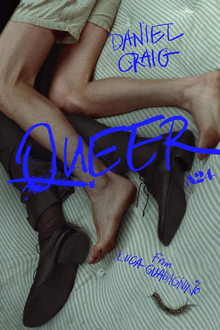
Daniel Craig sheds his James Bond (007) image for a more nuanced and challenging role in Luca Guadagnino’s film, Queer (2024). His layered and complex character must have been a dream role for the actor reportedly frustrated with the one-note Bond character.

Guadagnino, well-known for the similarly LGBTQ+-themed Call Me By Your Name (2017), trades Italy for Mexico and later Ecuador in his latest and darker project.

The film is a winning ticket and on an even keel with Call Me By Your Name, although I prefer the latter by a smidgeon. Queer is an exceptional film given the fabulous combination of elements like muted color tones, unrequited love, and the 1950s time period.

The sex scenes are pretty delicious and leave nothing to the imagination, providing titillation and appetite.

I was impressed by the unique incorporation of 1990s grunge band Nirvana in various sequences, including a beautiful rendition of ‘All Apologies’ by Sinead O’Connor as the film opens.

The funky, crisp blue/purple credits, which appear handwritten, are cool and modern, adding to the visual pleasures to come.

Events begin in 1950 when we meet William Lee (Craig), an American expatriate living in Mexico City, passing time by bar hopping and indulging in sexual activities with younger men.

One evening, he catches sight of Eugene Allerton (Drew Starkey), a young GI who is also an American expatriate. Lee becomes obsessed with Allerton and pursues him across various bars, hoping to gain his affection.

The men develop a relationship, but Eugene maintains an emotional distance from Lee. Despite Lee’s interest in a full-time connection, he is often seen with a mysterious red-haired woman.

As time marches on, Lee’s dependency on drugs and alcohol deepens, and the pair take an exotic and hallucinogenic trip to Ecuador to visit a wacky female doctor (Lesley Manville).

Will Lee and Eugene forge a dangerous same-sex relationship? Or will they go their separate ways as merely two ships passing at night?

The character of Lee is reportedly based on William S. Burroughs, a famous American author during the Beat Generation (a literary subculture of the 1950s).

His 1985 novella, Queer, is adapted.

Craig is dangerously good as Lee, invoking loneliness and hopefulness seemingly interchangeably in a given scene.

He’s relatively out of the closet, miraculous given that the gay rights movement would not happen for almost twenty years, but this begs the question of the progressive culture of Mexico City.

The audience realizes that Lee is yearning for a connection with another man and has repeatedly been unable to find it. Sure, he pays for the services of male prostitutes, but it’s not about the sex for him.

It’s a more profound desire.

As Lee embarrassingly admits his feelings for Eugene in a drunken confessional, Craig flawlessly reveals Lee’s pain. The actor rises way beyond the heights of James Bond in an acting extravaganza.

I adore the texture that Guadagnino films in. The gloomy streets and the fuzzy colors add the proper setting of emptiness and fulfillment.

Lee’s artist apartment is, in one way, calm and, in another way, bleak and shrouded with unhappy experiences. It’s littered with empty bottles and discarded drug paraphernalia.

The moments when Lee and Eugene are together in a movie theater or out to dinner when Lee imagines the pair embracing or stroking the young man’s face, are both tender and sad.

While the film doesn’t end happily, anyone familiar with Call Me By Your Name shouldn’t be surprised. Instead, Guadagnino showcases the reality and desperation of what being gay was like a long time ago.

It will not satisfy everyone, and the story teeters off course toward the end when the men get to South America, but the score and dazzling visuals make up for this.

Thanks to superior direction and a lead performance of excellence, Queer (2024) is a grand achievement in humanity and the complications that emerge when faced with emotions and desires that are not fulfilled.

Emilia Pérez-2024

Emilia Pérez-2024

Director Jacques Audiard

Starring Karla Sofía Gascón, Zoe Saldaña, Selena Gomez

Scott’s Review #1,455

Reviewed December 15, 2024

Grade: A

Emilia Pérez (2024) is a brilliantly unique film that uses musical numbers to tell the riveting story of a transgender Mexican crime lord, her transition from male to female, and her difficult separation from her family.

Jacques Audiard, most known for A Prophet (2009) and Rust and Bone (2012), directs this unique and brave film.

Boldly featuring transgender actress Karla Sofía Gascón in the title role, the film showcases her talents and a needed burst of transgender representation in cinema.

The film also defies genres and expectations. Is it a crime thriller? A musical? An LGBTQ+ film? It’s a bit of each with an operatic spin.

On paper, it might seem jarring to watch a film about a Mexican drug cartel set against musical numbers, but I was immediately captured.

Emilia’s character is a feared cartel leader who enlists a lawyer, Rita (Zoe Saldañato), to help her disappear and achieve her dream of becoming a woman while whisking her clueless wife Jessi (Selena Gomez) and children off to snowy Switzerland.

While officially French, Emilia Pérez feels Latin since it is set mainly in Mexico, and most of the film is in Spanish.

The film follows several women’s journeys in Mexico through liberating song, dance, and bold visuals, each pursuing their happiness. Emilia is center stage, and Rita, Jessi, and Emilia’s later love interest, Epifanía (Adriana Paz), also have their own stories, giving it an excellent ensemble feel.

Rita is an unappreciated lawyer stuck in a dead-end job, Jessi wants to move on from her presumed-to-be dead husband, and Epifanía intends to move on from her abusive husband.

Audiard makes it clear that the women cannot escape the drug cartel world even though they’d like to. Emilia even champions a movement to identify the victims of cartel-related deaths, attempting to give back to others with her new life.

Emilia Perez is a significant victory because it’s so different, and that word kept returning to me. Rather than a straightforward transgender story, it mixes many other genres and creative song and dance numbers.

Could Broadway be in its future?

Each musical number is excellent, but two themes resonate most and support the story best.

When Emilia, now pretending to be her children’s long-lost aunt, puts her son to bed, he confesses he still recognizes her scent (“Papá”). She quietly weeps, knowing he will never see the truth.

The other theme is merged into three musical numbers. After meeting with doctors in Bangkok (“La vaginoplasty”) and Tel Aviv (“Lady”), Rita finds a surgeon who agrees to perform the procedure on Emilia after hearing Manitas’ recollections of gender dysphoria during childhood (“Deseo”).

The numbers explain the transition procedure in graphic detail while reminding the audience of the powerful emotional toll the transition takes on a person.

The film’s final chapter is an energetic and classic crime thriller with a major reveal of the truth to a significant character. A deadly car chase scene culminates in a fiery explosion and a reminder that rarely can anyone leave the drug cartel circuit alive.

The release of Emilia Perez in the year 2024, when there is current United States legislation to limit or exterminate transgender rights altogether, is a powerful reminder of why it’s essential to showcase a film like this.

Fortunately, the film’s slew of year-end award nominations has increased viewership and, thus, awareness of this critical topic.

Oscar Nominations: 2 wins-Best Picture, Best Director-Jacques Audiard, Best Actress-Karla Sofía Gascón, Best Supporting Actress-Zoe Saldaña (won), Best Adapted Screenplay, Best Film Editing, Best Cinematography, Best Original Score, Best Original Song-“El Mal,” (won) “Mi Camino,” Best Makeup and Hairstyling, Best Sound, Best International Film

My Beautiful Laundrette-1985

My Beautiful Laundrette-1985

Director Stephen Frears

Starring Gordon Warnecke, Daniel Day-Lewis

Scott’s Review #1,451

Reviewed November 10, 2024

Grade: A-

My Beautiful Laundrette (1985) is an early LGBTQ+-themed British film directed by Stephen Frears. He would later become well-known for directing The Queen (2006).

Though the film is choppy and contains several stories, the LGBTQ+ story is one of the few in the genre that represents a satisfying and hopeful ending. Later, and admittedly, more defined films, like Brokeback Mountain (2006) and Boy’s Don’t Cry (1999), were harsher and more realistic.

The British flavor, interracial pairing, and class differences make My Beautiful Laundrette a lovely watch. But, it’s also all over the place.

In a seedy corner of London, a young Pakistani, Omar (Gordon Warnecke), is given a run-down laundromat by his affluent uncle Nasser (Saeed Jaffrey), who hopes to turn it into a successful business.

Soon after, Omar is attacked by a group of racist punks but realizes their leader is his former lover, Johnny (Daniel Day-Lewis). The men resume their relationship and rehabilitate the laundromat together, but various social forces threaten to compromise their success.

Omar’s father is an unhappy former left-wing journalist, who has turned to alcohol. Nasser’s daughter, Tania, is meant to be Omar’s future bride, while Nasser is in love with his mistress, Rachel (Shirley Anne Field).

Besides these storylines, there is a complicated relationship between brothers Nasser and Hussein, and a drug smuggling storyline.

While every story has some intrigue and shapes the structure, the male romance is not front and center enough to be completely developed.

Omar and Johnny hold interest because despite differences they connect and are truly in love. Politically, Omar is left-wing, and Johnny is right. Omar is upper class while Johnny is working class. Omar is Pakistani while Johnny is British.

Being 1985 and early in the LGBTQ+ genre, Frears focuses mostly on their romance and less on their differences. There is a brief sequence where Omar treats Johnny as a lowly employee but for the most part, they are in love.

It takes a long time to showcase Omar and Johnny making My Beautiful Laundrette only marginally an LGBTQ+ effort.

There is no mention of the A.I.D.S. epidemic which would have made it a different kind of film.

The romance between Nasser and Rachel is marvelous. They are a couple the audience shouldn’t root for but do anyway. Rachel is the other woman, merely a mistress, but why is she so appealing? Why do Nasser and Rachel connect so well?

Shirley Anne Field pours kindness and empathy into her character while Saeed Jaffrey relays his love for Rachel to Nasser. Yes, he is married but the marriage is traditional and his wife is Pakistani. We know that at another time Nasser and Rachel would have a chance.

When Tania snaps at Rachel and accuses her of being a woman who so easily lives off a man, Rachel reminds her that she does too. Rachel is from a different generation where opportunities for women are scarce.

Field makes the scene her own and wins over the audience which could have been against her.

The Rachel/Nasser romance parallels the Omar/Johnny love story. Both couples live secret lives, hidden from the world and shrouded in secrecy.

This is evident in a powerful scene when the two couples are simultaneously romantic in the laundrette. Neither sees each other at first but the audience sees both couples. This mirrors their mutual love and it’s a beautiful sequence.

While sometimes there is too much to follow, most of the material is poignant and relevant making My Beautiful Laundrette (1985) a film to recommend.

It has an LGBTQ+ presence but is not restricted to that genre offering other nice stories to the experience.

It also leaves one feeling hopeful which is sometimes needed in cinema.

Oscar Nominations: Best Original Screenplay

All of Us Strangers-2023

All of Us Strangers-2023

Director Andrew Haigh

Starring Andrew Scott, Paul Mescal, Claire Foy

Scott’s Review #1,439

Reviewed September 22, 2024

Grade: A

A moody, dark-lit experience, All of Us Strangers (2023) is a dreamy affair in all the best ways. It’s a bit of a ghost story combined with a love story and can be challenging to explain. 

Especially noteworthy are some elements like the lighting and mood which serve as enhancers. The lavish setting of London, England, and its surroundings are presented as lonely and depressing.

Loneliness is an encompassing description of the film summing up the character-driven story set mostly in an enormous yet almost vacant luxury high-rise apartment.

The vacant building is an effective backdrop to the main character’s experience.

We get inside his head and travel down a tunnel of self-reflection and acceptance just as he does. It’s unclear what is imagined or real, raising the stakes and catapulting the viewer into a world of questions.

The best pleasure comes after finishing the film and wondering how all the pieces come together or even if they do. I wasn’t sure what happened in the conclusion but the overall experience left me thinking. 

The British film follows a lonely screenwriter named Adam who works as a television writer. He develops an intimate relationship with his mysterious male neighbor while revisiting memories from the past involving his parents.

Andrew Haig directs the film and Andrew Scott plays the screenwriter from which the story is his vehicle. Paul Mescal plays his neighbor and love interest.

Haigh is best known for efforts like 45 Years (2015) and Lean on Pete (2017). Both are quiet films and character-driven. All of us Strangers is the best of the trio, though.

The film also has some teary moments of sweetness mostly shown through an LGBTQ+ lens but the film is not only for members or allies of the community but for anyone with a heart or craving something cerebral.

Viewers who have lost parents far too soon before feelings are expressed and only cherished memories remain will find All of Us Strangers to resonate mightily.

Specific to the LGBTQ+ community, what gay man wouldn’t want to travel thirty years into the future and have deep conversations with his parents about his lifestyle? Having missed those prominent years because of death. 

In the story, Adam’s parents died in a car accident when he was a child. Since he never ‘came out’ to them he travels to their house outside of London and imagines conversations with them separately and together. 

The best scenes are between Andrew Scott and Claire Foy who plays Adam’s mother. They are lengthy and poignant and brilliant acting by both are showcased. 

In an ideal fantasy, his mother would leap into Adam’s arms and champion his lifestyle becoming his most ardent supporter. Haig writes the scenes better than that as real-life situations might play out with conflict and misunderstandings.

The mother wants to understand and support but has hesitancies and ideas about a lifestyle different than Adam’s. The scenes become tense and complex not because of shouting but because of a deep struggle for understanding.

Not to be outdone by Foy’s performance in the unique relationship between father and son deliciously played by Jamie Bell. 

Adam has resented his father’s emotional distance for years never forgetting how he needed his father’s support as a child and never got it.

In a powerful scene, Adam and his father embrace. The embrace is one that Adam needed as a child.

The film is for everyone because why wouldn’t anyone want to visit their dead parents years later? Even if still alive there are things between parent and child never said or expressed. 

So many scenes are emotional, poignant, and meaningful in All of Us Strangers. 

The finale is trippy and made me recall David Lynch’s Mulholland Drive (1992) where what is real may not be and who we think a character’s life is all about may not be so.

Though wrapped in fantasy, All of Us Strangers (2023) is focused on grief through a deep emotional lens and uses superior acting to tell its story.

Independent Spirit Award Nominations: Best Film, Best Director-Andrew Haigh, Best Lead Performance-Andrew Scott

Strange Way of Life-2023

Strange Way of Life-2023

Director Pedro Almodóvar

Starring Ethan Hawke, Pedro Pascal

Scott’s Review #1,425

Reviewed April 22, 2024

Grade: A-

Pedro Almodóvar is a unique film director. Spanish, his films are flavorful, saucy, and unpredictable. He tends to mix melodrama, wacky humor, and a colorful landscape frequently sprinkling LGBTQ+ elements even if they are not classified with that specific genre.

I adore his films though they frequently blur together for me.

Though a Spanish film, Strange Way of Life (2023) is only Almodóvar’s second English language film and to my knowledge his first short feature film.

Watching the brief thirty-one-minute offering I fantasized about a full-length feature or even a television series based on the story and characters.

Since it’s short we get right down to business quickly.

One day Silva (Pedro Pascal) rides a horse across the desert to Bitter Creek to visit Sheriff Jake (Ethan Hawke). It is quickly revealed that twenty-five years earlier, the sheriff and Silva, worked together as hired gunmen.

They fell in love during a passionate encounter with three whores and barrels of wine who ditched the men when they realized they were not valued.

Silva provides Jake with the excuse that the reason for his trip is not to go down the memory lane of their old friendship but rather to rescue his son Joe (George Steane) from persecution for being suspected of killing Jake’s late brother’s wife, also a whore.

After Jake and Silva sip wine and enjoy a lovely meal they quickly engage in animalistic sex and reignite their long-dormant passion.

While Silva is gung-ho about reuniting Jake has reservations.

Pascal, who is everywhere due to the success of his television series The Last of Us is fabulous to watch. His sexy machismo pairs well with his passion for his soulmate. Because his character of Silva intends for him and Jake to live out their days running a ranch he is a more inspiring character than Jake.

This point is a nod to the groundbreaking Brokeback Mountain (2006) whose characters also flirted with running a ranch together during a time when any gay relations were forbidden territory.

Hawke is quite good too though I’m partial to Pascal. Buttoned up and law-abiding he rebuffs Silva’s advances, at first.

It’s nice to see Hawke in a gay role. Both characters are masculine thereby dismissing silly LGBTQ+ stereotypes that too often appear in cinema.

It also doesn’t hurt to get a glimpse of Pascal’s bare butt or Hawke’s buff physique as they while away time in the bedroom.

I love the sweaty and muscular Western genre being the backdrop of an LGBTQ+ film and tipped upside down. Not to reduce it to a tepid John Wayne film cliche there exists a gorgeous and melodic fado singer throughout the film.

It is performed by Manu Ríos.

This counterbalances the Quentin Tarantino-ish blood and violence with lovely music.

The film is titled after a 1960s Portuguese fado song by Amália Rodrigues

Since Strange Way of Life is a brief experience many facets could have been explored. Why did Silva leave Jake in the first place? What made him suddenly have a realization after twenty-five years? Were there other men at that time?

Being critical that the film is short and deserves full-length feature status it nonetheless deserves to be towards the top of Almodóvar’s catalog a testament to its power.

Strange Way of Life (2023) successfully takes a macho genre like the Western and lights it on fire proving that two men can be tough and tenderly love each other.

Spoiler Alert-2022

Spoiler Alert-2022

Director Michael Showalter

Starring Jim Parsons, Ben Aldridge, Sally Field

Scott’s Review #1,399

Reviewed September 15, 2023

Grade: A-

Spoiler Alert (2022) comes dangerously close to being classified as a Hallmark Television Movie of the Week tearjerker with standard cliches and a predictable storyline. While the ending is no surprise, the film works incredibly well and fires on all cylinders.

I laughed, cried, and felt an enormous connection to the central characters in what could become a seasonal holiday watch.

I recently reviewed another film that, on the surface, sounded saccharin and contrived but pulled me in nonetheless. The lesson learned is not to make assumptions about the quality of films.

The direction is conventional, but the story and characters are absorbing and heartwarming with spectacular acting, especially among the two lead actors, Jim Parsons and Ben Aldridge. An added gift is the appearance of Sally Field in a supporting role as an overbearing but lovable mom.

In 2001, Michael Ausiello (Parsons), a writer for TV Guide, begrudgingly goes to a gay nightclub with his best friend in Manhattan. There, he meets photographer Kit Cowan (Ben Aldridge), and the two instantly connect.

As they begin dating, Michael struggles with insecurities about not being attractive enough for Kit, since he was an overweight child. Kit is athletic and good-looking, oozing confidence. Michael was a ridiculed kid watching soap operas with his mother and creating a pretend sitcom family.

He also overindulges in the Smurfs collection.

They both admit their fears of being in a long-term relationship since neither of them has been in one before, but they decide to continue dating.

Hurdles then plague the couple as Kit must come out to his parents, Bob (Bill Irwin), and Marilyn (Field), to explain who Michael is, and ultimately they all must face Kit’s stage IV cancer diagnosis.

I recognize how Spoiler Alert doesn’t possess the most original screenplay, written by David Marshall Grant and LGBTQ+ advocate Dan Savage, and based on a story written by real-life Michael Ausiello.

The tried and true story point of a gay male character struggling to come out to his parents has been done for decades in LGBTQ+ films.

The insecure partner feels inferior to the more confident partner, and it affects their relationship. This point has also been discussed before. Michael is convinced that Kit will dump him for someone else.

Hell, we’ve seen both of these cliches as recently as 2022 in Bros., a fantastic LGBTQ+ mainstream film that used both.

In Spoiler Alert, they work because of Parsons and Aldridge and the chemistry they have together, and the nuanced delivery of the characters separately.

While they each want love and a relationship, neither is desperate. As they banter back and forth, Michael awkwardly removes his clothes during their first intimacy, and the actors playfully frolic immediately at ease with one another.

Many cute scenes follow.

Events then grow serious as we move beyond Kit’s uneven coming out to his parents (of course, they embrace Kit and Michael instantly!) and dive headfirst into Kit’s cancer battle.

The film makes no secret that Kit will die of cancer. It’s practically shown in the opening scene as he and Michael lie in a hospital bed together, and Michael narrates the story.

It’s called Spoiler Alert for a reason. But instead of ruining the film, it only enhances the love story to come. We know that Kit and Michael become soul mates, and the pleasure is watching them grow and flourish together.

Since Michael’s mother, and presumed best friend, died of cancer, it only strengthens the investment in the character.

As Kit becomes weaker, my fondness for the two men becomes stronger. The maturity and love for one another are apparent, especially when Michael selflessly invites a man whom Kit had an affair with to say goodbye to Kit.

It’s a touching scene, but not as touching as the scene where Michael and Kit’s parents sob over Kit’s hospital bed.

Yes, Spoiler Alert (2022) may have manipulated me with a conventional film, but Parsons and Aldridge have better chemistry than most opposite-sex couples.

I thoroughly enjoyed my way through the film without dry eyes.