A Clockwork Orange-1971
Director Stanley Kubrick
Starring Malcolm McDowell, Patrick Magee
Top 250 Films #11
Top 10 Most Disturbing Films #7
Scott’s Review #295
Reviewed December 11, 2015
Grade: A
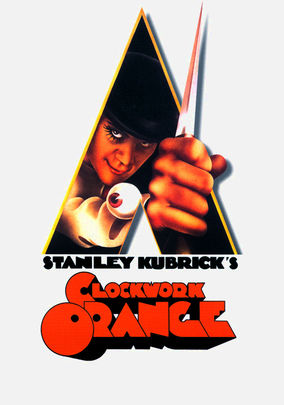
A Clockwork Orange (1971) is a groundbreaking Stanley Kubrick film, and my personal favorite in his collection, with his movies appearing on my Top 100 Favorite Films list.
Adapted from the 1962 Anthony Burgess novel, once thought unfilmable, it becomes a psychedelic, creative, and fascinating experience from start to finish.
Bizarre and thought-provoking, Kubrick tells the story of a London sociopath living in futuristic London, and the strange behavioral modifications performed on him after he is apprehended by the police, in an attempt to “reform” him and transition him into a valuable member of society.
The film explores profound social and psychological themes, posing thought-provoking questions about them.
Interspersed with classical music and featuring excellent, colorful sets, A Clockwork Orange is a masterpiece in bizarre cinematic artistry.
Alex DeLarge loves classical music (specifically Beethoven), violence, and hanging out with friends. He constantly skips school, beats people up, and parties with his friends. His pet snake is his best friend, and his parents seem afraid of him.
Finally arrested after murdering an odd lady with dozens of cats, Alex is sent away to prison, where he volunteers for an experimental “Ludovico” technique, which Alex assumes is a “get out of jail free” card.
What follows is a freakish, uncomfortable experience for Alex.
The film contains startling and disturbing scenes throughout- when Alex and his team of “droogs” become inebriated from a concoction of milk laced with drugs and embark on an evening of self-proclaimed ultra-violence, they drive to the country where they break into wealthy author F. Alexander’s house and beat him, crippling him for life.
They rape his wife while forcing him to watch, all the while Alex happily sings “Singin’ in the Rain,” timing the beats of the song to acts of violence.
The brutality and creativity of this scene are mesmerizing and certainly unforgettable.
We, the audience, might despise a character like Alex; however, we feel sympathy for him as his “reformation” begins. A disturbing scene, which is forever embedded in my mind, involves the attachment of a contraption forcing Alex’s eyelids wide open.
At the same time, he watches violent scenes and is administered a drug to make him sick, thereby associating the violence with illness.
He becomes psychologically screwed up.
Alex (thanks to an excellent portrayal by Malcolm McDowell) is charismatic and humorous and, in some warped way, quite likable to the audience, despite his devious ways.
A Clockwork Orange continues to disturb me after multiple viewings – who can forget the sinister grin that Alex wears and the creepy eyelash with mascara that he sports?
The film conveys an interesting message about human nature as Alex shifts from predator to prey. We ask: “Are human beings naturally prone to violence?”
The direction of the film is breathtaking – the weird colors, the (as traditional with Stanley Kubrick) long-shot camera angles, and the intense musical crescendos.
The genre of classical music is a fantastic and ominous choice, almost adding a level of sophistication to Alex and the violence.
The weird supporting characters (Alex’s parents, the probation officer, and his parents’ roommate) and the suddenly fast-forwarded sex scenes were unheard of for their time.
With immensely creative, unconventional filmmaking, a moral message, and thought-provoking questions about humanity, A Clockwork Orange (1971) is a groundbreaking, fantastic, trippy experience.
A masterpiece from top to bottom.
Oscar Nominations: Best Picture, Best Director-Stanley Kubrick, Best Screenplay Based on Material from Another Medium, Best Film Editing