Tag Archives: Margot Kidder

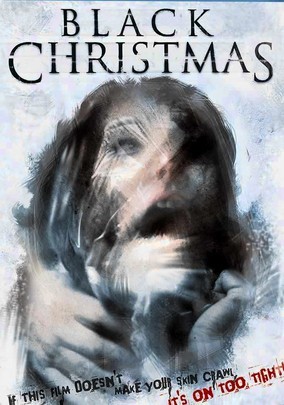
Black Christmas-1974

Black Christmas-1974

Director Bob Clark

Starring Olivia Hussey, Margot Kidder

Top 250 Films #39

Top 40 Horror Films #9

Scott’s Review #309
70057846

Reviewed December 29, 2015

Grade: A

Black Christmas (1974) is one of my all-time favorite horror films and, in my opinion, an underappreciated classic.  Somehow, it is just not the first, second, or third film mentioned when most discuss the influential horror films of years past.

My hubby and I make sure to watch it every holiday season.

It largely influenced Halloween (another of my passions), particularly from the killer’s point of view, camera shots, and the seasonal element.

It is pretty horrifying in several key scenes, in fact, and I am proud to list it as one of my favorite films.

Black Christmas is a must-see for fans of the horror genre.

The setting (a cold and snowy Christmas) is perfect, and the film is shot quite darkly. There are Christmas lights and carolers to create a significant winter holiday atmosphere. Most of the film takes place at night, and the location is primarily inside a vast, somewhat creepy, sorority house. The ambiance is well thought out.

Several sorority girls, led by boozy Barb (Margot Kidder) and sweet-natured Jess (Olivia Hussey), prepare to depart for the holiday season by having a small farewell Christmas party. Recently, the girls have been harassed by a prank caller spouting nonsensical gibberish daily.

As in true horror fashion, the girls are systematically offed one by one as events turn dire. Two subplots that ultimately merge with the central plot include Jess’s pregnancy with her suspicious boyfriend, Peter, and the search in the park for a missing young girl.

The best part of Black Christmas is that it is an honest, raw film, made on a small budget, that eschews gimmicks and contrivances.

It has authenticity.

A disturbing film for sure,  one victim being posed in a rocking chair continuously rocking back and forth next to the attic window, while said victim is bound in plastic wrap, holding a doll, mouth, and eyes wide open, is one of the most chilling in horror film history.

The nuances of the killer also scare and the brilliance of this is that his motivations are mysterious and unclear (in large part the success of Michael Meyers as well). We never fully see the killer except for his shape and eyes, and that is the brilliance of the film.

The one slight negative to the film is the decision to make the cops appear incompetent. The desk sergeant, in particular, is a complete dope- one wonders how he got his job- as a sexual joke by one of the girls goes over his head while the other detectives laugh like fools.

Why is this necessary? I suppose for comic relief, but isn’t that the purpose of Mrs. Mac, the overweight, boozy sorority mother?  Her constant treasure hunt for hidden booze (the toilet, inside a book) is comical and fun.

Her posing and posturing in front of the mirror (she is a very frumpy, average woman) are a delight and balance the heavy drama.

The conclusion of Black Christmas is vague and fantastic and works very well. Due, once again, to the police errors, the final victim’s fate is left unclear as we see her in a vulnerable state, unaware that the killer is looming nearby.

We only hear a ringing phone and wonder what happens next.

My admiration for Black Christmas (1974) only grows upon each viewing as I am once again compelled, to notice more and more ingenious nuances in the film.

Can’t wait until next Christmas to watch it again.
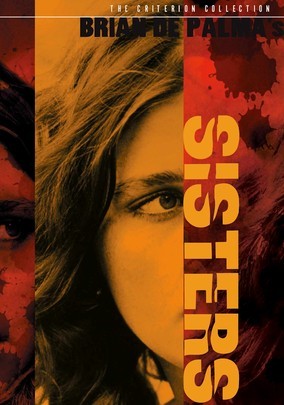
Sisters-1973

Sisters-1973

Director Brian De Palma

Starring Margot Kidder, Jennifer Salt

Top 250 Films #119

Top 40 Horror Films #22

Scott’s Review #178

60002455

Reviewed September 29, 2014

Grade: A-

Directed by stylistic film genius Brian De Palma, Sisters (1973) is an early entry in the famed director’s repertoire and a direct homage to the classic films of Alfred Hitchcock.

The film stars Margot Kidder as a French-Canadian model named Danielle Breton, who shares an apartment a Staten Island, NY, with her demented twin sister, Dominique. For many years, Danielle and Dominique were conjoined twins and only recently surgically separated.

After a romantic date with a new acquaintance, Danielle begins to feel ill and Dominique murders the new boyfriend after he surprises, who he thinks is Danielle, with a birthday cake.

But is it Dominique or is it Danielle?

Meanwhile, a neighbor, Grace Collier, played by Jennifer Salt, witnesses the murder from across the alley. In a theatrical scene where the victim attempts to scrawl “help” on the window, Grace gets the police involved.

The authorities are skeptical and unsympathetic to Grace’s claims, as she works as a newspaper reporter and frequently challenges the police department in her articles.

Finally, when the police search Danielle’s apartment, no dead body is found. This sets off the plot for the remainder of the film as Grace looks for the missing body on her own (in Nancy Drew’s style) with the help of a detective she hires, Joseph Larch, comically played by Charles Durning.

One point to mention about Sisters is that the film serves as a blueprint for De Palma’s future movies, but that does not mean it is not engaging on its own merits; it pales in comparison to other De Palma gems that followed, such as Carrie (1976) and Dressed to Kill (1980), my two faves.

It feels raw and slightly underdeveloped compared to those films mentioned above.

Danielle’s ex-husband and doctor, Eli, while creepy and sinister, is not fully explored, and his relation to the events taking place is a bit vague throughout much of the film.

Techniques such as the split-screen, which often show simultaneous action relating to each other, are introduced in this film and are a marvel to watch, as much of the plot is revealed in these sequences.

The activity in Grace’s apartment contrasts with and interchanges perfectly with the action in Danielle’s apartment, making for highly effective and suspenseful scenes.

DePalma uses many Hitchcock influences, but in no way steals them- the idea of a set of conjoined twins with mental illness was taken from a real-life story of Soviet twins.

Viewers familiar with Psycho will smile during the murder scene as influences are apparent- Rear Window is certainly referenced as countless scenes of the camera looking into Danielle’s or Grace’s apartment, or the camera looking out onto a street scene, or someone with binoculars spying out of their apartment and into someone else’s apartment across the street- very visually oriented.

The Hitchcock similarities continue with the musical score, which is composed by Bernard Hermann, a frequent collaborator of Hitchcock’s films —think Vertigo.

After all of the psychological build-up throughout the first hour of the film, the final thirty minutes or so, taking place within the confines of a mental asylum, is confusing and unrealistic, as various flashbacks and dream sequences are used, even using one character taking the place of another in a dream- edgy and unique, but tough to follow and organize properly.

Grace is assumed to be a newly admitted mental patient, which seems far-fetched. What exactly transpired between Danielle and Dominique present and/or in the past?

Even though events are explained, I found myself scratching my head a bit after the film.

For fans of Brian De Palma films, Sisters (1973) is a perfect movie experience that showcases the influence to come, and it’s not a bad film on its own, either.

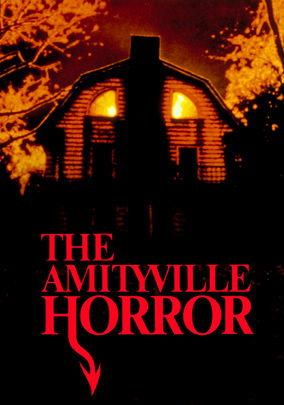
The Amityville Horror-1979

The Amityville Horror-1979

Director Stuart Rosenberg

Starring James Brolin, Margot Kidder

Scott’s Review #60

60002141

Reviewed June 23, 2014

Grade: B-

The Amityville Horror was undoubtedly more thrilling upon its original release in 1979, but sadly, the time has not been kind to this particular film, as it does not hold up well any longer.

It feels dated, but that is not to say it is at all un-enjoyable.

The atmosphere of the movie and the building tension and sense of dread are effective. The audience knows bad things will eventually occur.

The look of the film is dark and creepy and actors James Brolin and Margot Kidder are adequate in the lead roles.

The main problem with the film is all along there is a feeling that I am watching a pale version of The Exorcist (1973) or The Omen (1976), far superior films, with the religious theme that was heavily used in the horror genre throughout the 1970s.

Also, horror in 1970’s cinema was at its best, and by 1979, horror had shifted into the knife-wielding maniac vein.

Add to this the fact that the supposedly “true story” has since been proven a silly hoax, so it takes away any shred of seriousness.

To be fair, the scene involving the herd of flies is scary, but other scenes seem silly and inconsequential.

The Amityville Horror (1979) is not a bad movie, but similar films are far superior.

Oscar Nominations: Best Original Score