Tag Archives: Top 10 Horror Films

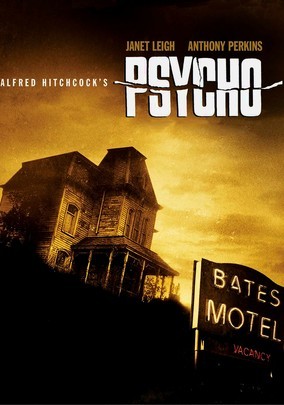
Psycho-1960

Psycho-1960

Director Alfred Hitchcock

Starring Janet Leigh, Anthony Perkins

Top 250 Films #5

Top 40 Horror Films #1

Scott’s Review #165
879522

Reviewed September 6, 2015

Grade: A

Psycho (1960) is the film to end all films, and not just within the horror genre. At the time of its release, it transcended the art of cinema to a new level and has influenced generations of films since, still holding up incredibly well today.

It is undoubtedly one of the greatest Alfred Hitchcock films and one of the greatest films ever made.

Hitchcock took considerable risks and dove from the thriller to the horror genre with Psycho.

The story revolves around a young woman named Marion Crane, superbly portrayed by Janet Leigh. Marion lives in Phoenix, Arizona, and sees her boyfriend (the dashing John Gavin) for frequent afternoon rendezvous at cheap motels when he is in town because they are both struggling financially.

She is presented with an opportunity, via her job, to steal $40,000 and flee the state to start a new life with her beau. She seizes the opportunity.

On the run, she stops at a run-down Bates motel where she meets owner Norman Bates, hauntingly played by Anthony Perkins.

Perkins and Leigh have fantastic chemistry together, and the audience picks up on it—is it romantic? Is there a mysteriousness to it? Something is odd about Norman. They bond over a quiet meal of sandwiches at the motel while discussing life and his ailing mother.

The famous shower scene and the shocking twist that follows are now almost taken for granted, as most people are already familiar with them. However, I can only imagine the shock viewers felt when they first saw these two delights.

To this day, both are still suspenseful.

Fortunately, when I saw this film for the first time, I didn’t know the ending, and I am glad I didn’t, because it took my breath away.

Killing off the leading actor at the start of the film, halfway through, was a novel idea and mind-blowing at the time of its release (1960).

This act left the audience’s mouths agape in disbelief, prompting them to ask, “What now?” “How can this be followed?” This act later influenced the original Scream (1996) film and surprised audiences again.

According to Hitchcock, no one could enter the film after it had started, and viewers were persuaded not to reveal the ending – oh, how I wish that occurred these days.

An aspect of the success and longevity of Psycho is the chemistry between Perkins and Leigh, who got along famously while shooting Psycho, and more importantly, the likability of Norman Bates. There is a rooting value for him, even though he is the villain.

When Marion’s car is only half-submerged in a lake containing her dead body, we root for it to sink entirely because of Norman. The concerned look on Norman’s face has a sense that affects the audio at this point in the story. Norman is troubled and wo, undead, and the audience does not have history.

Let’s not forget Janet Leigh. The audience sympathizes with her predicament. She is hopelessly in love with her man, steals money, is conflicted, and, at her core, is a friendly, decent, kind woman.

Halfway through the film, Marion’s sister, Lila, played by Vera Miles, is introduced as a detective, and the suspense and mystery intensify as they search for Marion and investigate the Bates Hotel and Norman Bates himself.

Miles then takes center stage as the lead in the film, which is intriguing.

The film then returns to horror at the terrific and terrifying conclusion, which will shock first-time viewers.

The musical score (especially the shrill strings) is incredibly effective and influenced other horror films to come (Friday the 13th immediately comes to mind).

Psycho is a film that can be enjoyed and studied over again.

Oscar Nominations: Best Director, Alfred Hitchcock, Best Supporting Actress-Janet Leigh, Best Art Direction, Black-and-White, Best Cinematography, Black-and-White
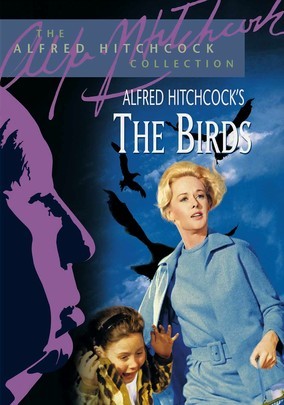
The Birds-1963

The Birds-1963

Director Alfred Hitchcock

Starring Tippi Hedren, Rod Taylor

Top 250 Films #6

Top 40 Horror Films #2    

Scott’s Review #173

308926

Reviewed September 22, 2014

Grade: A

The Birds is one of director Alfred Hitchcock’s finest works.

Made in 1963, following Psycho, it continues Hitchcock’s run of successes, both commercially and critically.

It is set in northern California (in San Francisco and Bodega Bay) and tells the story of unexplained bird attacks in a peaceful small bay town.

Tippi Hedren plays Melanie Daniels, a wealthy socialite from San Francisco who drives to Bodega Bay to pursue a love interest, Mitch Brenner.

Mitch, played by Rod Taylor, is a successful attorney who meets and shares a flirtation with Melanie the day before at a pet store in San Francisco. He regularly visits his mother (Jessica Tandy) and sister (Veronica Cartwright) in Bodega Bay.

Once Melanie arrives in town, birds begin to attack the locals living in the sleepy community periodically.

The Birds is a film that has held up incredibly well and is as exciting and horrifying today as it was in the past.

One intriguing aspect of the film is that it offers no rhyme or reason for the bird attacks, which keeps the viewer guessing when a gull swoops down and attacks innocent Melanie.

It is entirely mysterious and open to interpretation- are birds fed up with being caged?

Are the love birds that Melanie purchased the cause of the attacks? Do the birds hate humans? Why do they attack the children? Why do they peck the eyes of their victims out?

One could spend hours debating these questions.

A major creative success of the film is its decision to eliminate a musical score. The eerie silence and the loud sounds of the birds attacking create a haunting dynamic.

My favorite scene of The Birds features Melanie sitting on a wooden bench in the schoolyard, enjoying a cigarette. Behind her is a deserted jungle gym. She barely notices a tiny bird innocently flying past her and landing on the jungle gym.

She continues smoking her cigarette. The viewer sees what Melanie cannot- as slowly, hundreds of birds land on the jungle gym behind her.

Without music, the scene is deadly silent and dramatic, shifting from close-ups of Melanie to long shots of the birds gathering behind her.

Another interesting aspect of The Birds is the character relationships. Mitch’s mother, Lydia, is afraid of losing her son, so she initially despises Melanie. Mitch’s ex-girlfriend, schoolteacher Annie Hayworth, strikes up a close friendship with Melanie; one might expect them to be rivals.

A hysterical mother lashes out at Melanie, calling her evil and blaming her for the attacks.

During the long periods of calm, one wonders when the next attack will occur—and we know it will. We searched for clues to identify what triggers the attacks, but we found none.

This makes for brilliant and suspenseful filmmaking. They hardly come better than the masterpiece The Birds (1963).

Oscar Nominations: Best Special Effects

Rosemary’s Baby-1968

Rosemary’s Baby-1968

Director Roman Polanski

Starring Mia Farrow, John Cassavetes, Ruth Gordon

Top 250 Films #14

Top 40 Horror Films #4

Scott’s Review #9

60002403

Reviewed June 17, 2014

Grade: A

Rosemary’s Baby (1968) is not only a great film, it’s a masterpiece. Easily one of my favorites in the horror genre, it’s also towards the top of the list of my all-time favorite films.

The beauty of this film lies in its power of suggestion and subtleties. It lacks the blood, gore, or standard horror frights one might expect.

It doesn’t need them.

The audience senses something is amiss through clues provided throughout the film. The closed-off room in the young couple’s apartment, the sweet, but a bit odd, elderly neighbors, a strange suicide, a mysterious, horrid-smelling, good luck charm. Rosemary’s due date (June 6, 1966- “666”).

The strange, dreamlike conception scene is intense and surreal. Her husband- claiming Rosemary passed out from too much alcohol- begins to become a suspicious man following the incident, but we are confused by his involvement- what are the neighbors up to, we wonder? Are they sinister or simply innocent and meddlers?

In a sinister scene, Rosemary gnaws on bloody raw meat, catches her reflections in the glass, and is horrified by her behavior.

Mia Farrow is frightfully good as the waifish, pregnant, Rosemary, who loses, instead of gains weight.

The film also has a couple of real-life eerie occurrences: the building setting (The Dakota) is where John Lennon was shot and killed, and Director Roman Polanski’s wife, Sharon Tate, in a cameo, was murdered shortly after filming by Charles Manson.

Rosemary’s Baby is similar in theme to other devilish/demon films like The Exorcist (1973) and The Omen (1976).

This is a film that must be seen by everyone and only shines brighter with each subsequent viewing.

Oscar Nominations: 1 win-Best Supporting Actress-Ruth Gordon (won), Best Screenplay Based on Material from Another Medium

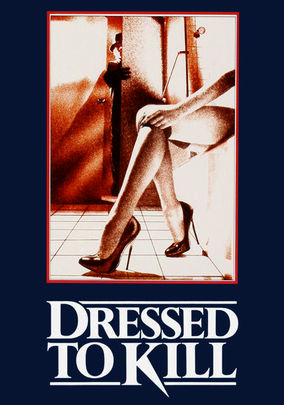
Dressed to Kill-1980

Dressed to Kill-1980

Director Brian De Palma

Starring Angie Dickinson, Nancy Allen, Michael Caine

Top 250 Films #16

Top 40 Horror Films #5

Scott’s Review #164

60020714

Reviewed September 2, 2014

Grade: A

Dressed to Kill (1980) is Brian De Palma’s most significant work throughout his storied career.

Set in New York City, the film is essentially divided into two halves.

The first half centers around Angie Dickinson, who plays a bored housewife named Kate. She is unhappy in her marriage and seeks therapy from a psychiatrist played by Michael Caine, to whom she makes sexual advances.

She is unfaithful to her husband, yet is a kind, intelligent, cultured woman. She adores her son and loves her husband but is utterly unfulfilled with life.

Do we, the audience sympathize with her? Does she get what she deserves? Is she a victim? One powerful scene involves a wide-eyed little girl who cannot stop staring at Kate. Can she sense Kate’s shenanigans? Does she sense her conflict? Does Kate feel guilt?

Kate is a complex character and brilliantly played by Dickinson, who gives the character sexiness, softness, and appeal.

After a shocking event in a high-rise elevator rivaled only by the shower scene in Psycho (1960) in its surprise and terror, the remainder of the film belongs to Nancy Allen, who plays a prostitute named Liz, determined to solve a mystery to clear her name.

De Palma sets the dreamlike tone with a sizzling opening shower scene sure to make the prudish blush in its explicitness, which I found deliciously sexy.

A ten-minute museum sequence speaks volumes without dialogue as Kate has a cat-and-mouse flirtation with a stranger.

The brilliance of Dressed to Kill is its versatility and complexity and contains one surprise after another, from the elevator scene to the final reveal to the final stage itself.

It is part horror film part thriller and always stylish.

The film was not well regarded upon its release, but over the years has been respected due to its creativity and excellent mood. Many scenes are shot in slow motion adding an effect to them.

Dressed to Kill (1980) is simply brilliant on every level.

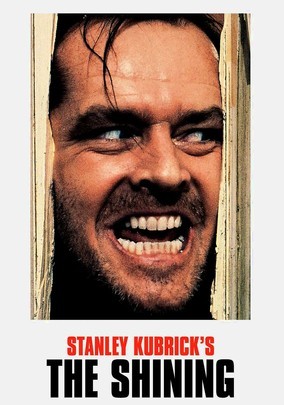
The Shining-1980

The Shining-1980

Director Stanley Kubrick

Starring Jack Nicholson, Shelley Duvall

Top 250 Films #21

Top 40 Horror Films #6

Scott’s Review #313

959008

Reviewed December 31, 2015

Grade: A

The Shining is one of the great horror masterpieces of all time.

Released in 1980, and atypical of the slasher craze that was rampant at that time, the film is a psychological ghost story with frightening elements, including a musical score, long camera shots, and a haunting, grandiose hotel set in a deserted locale.

Without the brilliant direction of Stanley Kubrick, The Shining would not be the masterpiece that it is, to say nothing of the talents of Nicholson and Duvall in the lead roles.

Based on the popular horror novel by Stephen King.

Nicholson plays Jack Torrance, an author and alcoholic, who takes his wife Wendy (Duvall) and son Danny to serve as caretakers at the vast Overlook hotel- for the winter in snowy Colorado.

The lavish hotel will be deserted for the season and Jack looks forward to months of peace that will enable him to complete his novel.

Unfortunately, the hotel is haunted by spirits of the past, and the added burden of the previous caretaker going mad and chopping his family to bits with an ax.

The real success of The Shining is that the hotel itself is a character and has nuances of its own. The hotel is deathly quiet as the Torrances take over for the season-long hallways are featured and the forbidden Room 237 takes on a life of its own.

Creepy images of two young girls and red blood gushing from the elevators take over. Young Danny can communicate with the chef without speaking to each other. Jack imagines a gorgeous nude woman in the bathtub only to discover she is a shriveled old hag.

The film’s cinematography coupled with the looming, morose, musical score perfectly go hand in hand and, in my opinion, are the reasons for the success of the film.

Throughout the film, there is a sense of dread and a forbidden presence that works beautifully.

The very first scene is an aerial shot of the Torrances driving along a mountainous road to be interviewed for the caretaker position. The vast land and mountains as we eventually see the Overlook immediately reveal to us the feeling of isolation, which is really what the film is about.

These exterior scenes are also gorgeous to marvel at.

The crisp, gloomy, winter scenes and the endless maze of animal shrubbery come into play during the film’s final act as Jack, now completely mad, chases Danny through the snowy paths that seemingly lead to nowhere.

The catchphrase, “Here’s Johnny!”, that is uttered from an ax-wielding Nicholson, is permanently ensconced in the relics of pop culture.

Nicholson and Duvall have such dynamic and palpable on-screen chemistry that makes the film work from a character perspective. There is something slightly off with each of the characters, readily apparent from the outset, but that has more to do with each actor being rather non-traditional in appearance.

I can imagine no other actors in these roles.

Author, Stephen King, who reportedly despised the film version of his novel, has since grown to respect the film and Kubrick’s direction, a great deal. The Shining is one of my favorite horror films in addition to being one of my favorite films of all time.

Frenzy-1972

Frenzy-1972

Director Alfred Hitchcock

Starring Jon Finch, Barry Foster

Top 250 Films #28

Top 40 Horror Films #7  

Scott’s Review #244

Frenzy_movieposter

Reviewed May 17, 2015

Grade: A

Frenzy (1972) is a latter-day Alfred Hitchcock film that returns the masterful director to his roots in London, England, Hitchcock’s country of origin, and where his early films were made.

As with numerous other Hitchcock stories, the protagonist is falsely accused of murder and struggles mightily to prove his innocence before time runs out and he meets his doom.

The film is distinctly British, featuring an entirely British cast, and includes a humorous side story about the primary investigator’s wife. This terrible cook prepares exotic yet unappetizing meals for her husband.

This comic relief perfectly balances the heavy drama encompassing the main murder story, as Frenzy is one of Hitchcock’s most violent and graphic.

Made in 1972, he was able to include much more explicit content. A neck-tie murderer, who also rapes his female victims, is on the loose in London.

In the opening sequence, we see a dead woman floating in the Thames River during broad daylight, nude, except for a necktie that she has been strangled with. A crowd of spectators races to see what all the fuss is.

We then meet the central character of the film, down-on-his-luck bartender Richard Blaney, who is fired from his job as a bartender by his hateful boss.

Blaney has a loyal girlfriend in Babs, a barmaid at the same local watering hole. Babs is sexy, yet plain. He also has a successful ex-wife, Brenda, who runs a dating company. Blaney regularly sponges money and dinners from Brenda. Also in the picture is successful fruit-market trader, Bob Rusk, who is a friend of Blaney’s.

All four of these central characters have much to do with the main plot.

As events begin to unfold, the film is not a whodunit as traditionally it could have been. Instead, the audience knows very quickly who the murderer is and their motivations, which is an interesting twist in itself.

Regardless of this knowledge, the film is quite compelling as a classic Hitchcock horror thriller.

It is interesting for Hitchcock fans to compare this film with many of his earlier works. Released in 1972, at a point in film history where aforementioned sensors were more lax, it is the first Hitchcock film to feature nudity.

It is also the film of Hitchcock’s that features the most brutal rape/murder scene of all, surpassing the shower scene from Psycho, in my opinion.

The victim’s ordeal is prolonged, as she begins praying, thinking she will only be raped, at first unaware that her attacker is also the neck-tie murderer and her life is running short. This leads to a sad, gruesome outcome for her.

One of the most interesting murder scenes takes place off-camera and is an ingenious idea by Hitchcock. The neck-tie murderer lures a victim to his apartment complex under the guise of being a friend of hers.

They walk upstairs to his unit and go inside, all the while the camera remains poised outside of the apartment so the viewer only imagines the horrors occurring inside.

The camera then slowly goes back down the stairs and out onto the street and looks up at the murderer’s window. The fact that the victim is one of the principal characters makes one’s imagination run wild as to what is transpiring inside the apartment and the viewer is filled with grief.

This is a brilliant choice by Hitchcock and so effective to the story.

Another great scene is the potato truck sequence.

As the neck-tie murderer has dumped his victim, like garbage, into a potato sack, he is panicked to realize that she has taken his pin from his jacket and presumably clenched it in her fist as a clue, despite her demise.

What will he do now?

The long scene features the murderer inside the potato truck attempting to unclench his pin from her hand and escape the moving truck without being caught.

It is my favorite scene in Frenzy.

Frenzy (1972) is a return to triumph for Hitchcock, after the complex Topaz (1969) and Torn Curtain (1966), underappreciated political thrillers made a few years before this film.

He returns to the horror genre like gangbusters throwing some good, sophisticated British humor into his recipe for good measure.

What a treat this film is.

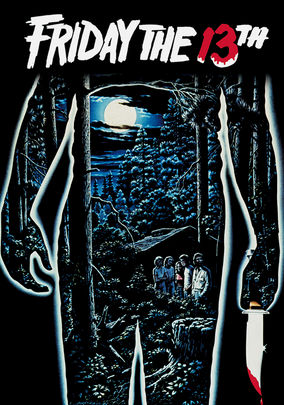
Friday the 13th-1980

Friday the 13th-1980

Director Sean S. Cunningham

Starring Betsy Palmer, Adrienne King

Top 250 Films #36

Top 40 Horror Films #8

Scott’s Review #115

525111

Reviewed July 17, 2014

Grade: A

Friday the 13th (1980) is one of my favorite films (horror and otherwise) of all time, as I have such fond and scary memories of watching it at too young an age!

My highlight was watching this film alongside the star, Betsy Palmer, herself, in a movie theater in later years.

I can watch this film countless times and never tire of it. Is it high art? Hardly. Is it brilliant filmmaking? Not a chance. However, for whatever reason, this film holds a special place in my heart, and I love it.

The premise involves seven young adults, all squeaky clean and All-American looking, who flock to Camp Crystal Lake for a summer involving counseling, partying, and frolicking around the lake.

They engage in strip poker, smoke pot, and play jokes on each other, but share a good spirit.

Through flashbacks, we learn that two brutal camp counselor killings occurred years ago and the camp has been unsuccessful at reopening since that time due to strange events like bad water.

The residents of the town are convinced that there is a curse involving the lake and warn the teenagers to stay far away, specifically, one loony townsperson named Ralph, who frequently shows up proclaiming messages from god and other rants of doom.

Inevitably, the teens begin to be systematically hacked to bits one by one in creative fashion such as a slit throat, ax to the head, a dagger through the neck, and other good, old-fashioned horror kills.

The film has many standard horror elements- a dark, ominous storm, a mysterious hidden killer lurking in the shadows, giving first-time viewers a suspenseful whodunit.

Could the killer be crazy Ralph, one of the counselors? Or Steve Christie, the man opening the camp?

As each victim is killed one begins to narrow down the remaining suspects to the crimes and at least one red herring comes into play, which leads us to try to figure out the conclusion, which, critically speaking, is an enormous surprise.

The looming killer, whose feet and arms/hands are the only parts shown throughout is successfully ominous. As the killer angrily watches the counselors swim and goof around, one of them gets a sixth sense of being watched and is sure she sees someone in the trees, but quickly shrugs it off.

Another ominous scene involves one counselor setting up an archery game for the kids as another counselor jokingly shoots an arrow nearby.

They both laugh, but the foreshadowing of what is to come is fantastic.

Betsy Palmer and Adrienne King add so much to this film, which would not be nearly as good if not for them.

The conclusion involving a knockdown drag-out, mud fight is my favorite sequence, in addition to the final thirty-minute chase scene around the camp and its vicinity.

The final character hides in closets, storerooms, and bushes, and a cat-and-mouse game climaxes. Great stuff.

The big twist at the end almost rivals, and is very similar to, the shocking ending to the 1976 horror classic Carrie.

The sound effects are spectacular- the distant loons and the creepy sound effects add a ton to making Friday the 13th a classic fright-fest.

The line “kill her mommy, she can’t hide” is undoubtedly permanently etched in horror fan’s minds.

Friday the 13th (1980) has successfully held the test of time and is now a highly regarded classic within the horror genre.

A highly entertaining, mainstream, cut above the rest, and a fun must-see for all horror fans.

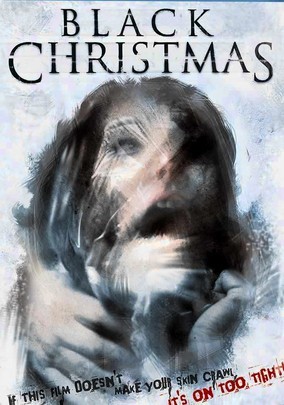
Black Christmas-1974

Black Christmas-1974

Director Bob Clark

Starring Olivia Hussey, Margot Kidder

Top 250 Films #39

Top 40 Horror Films #9

Scott’s Review #309

70057846

Reviewed December 29, 2015

Grade: A

Black Christmas (1974) is one of my all-time favorite horror films and, in my opinion, an underappreciated classic.  Somehow, it is just not the first, second, or third film mentioned when most discuss the influential horror films of years past.

My hubby and I make sure to watch it every holiday season.

It largely influenced Halloween (another of my passions), particularly from the killer’s point of view, camera shots, and the seasonal element.

It is pretty horrifying in several key scenes, in fact, and I am proud to list it as one of my favorite films.

Black Christmas is a must-see for fans of the horror genre.

The setting (a cold and snowy Christmas) is perfect, and the film is shot quite darkly. There are Christmas lights and carolers to create a significant winter holiday atmosphere. Most of the film takes place at night, and the location is primarily inside a vast, somewhat creepy, sorority house. The ambiance is well thought out.

Several sorority girls, led by boozy Barb (Margot Kidder) and sweet-natured Jess (Olivia Hussey), prepare to depart for the holiday season by having a small farewell Christmas party. Recently, the girls have been harassed by a prank caller spouting nonsensical gibberish daily.

As in true horror fashion, the girls are systematically offed one by one as events turn dire. Two subplots that ultimately merge with the central plot include Jess’s pregnancy with her suspicious boyfriend, Peter, and the search in the park for a missing young girl.

The best part of Black Christmas is that it is an honest, raw film, made on a small budget, that eschews gimmicks and contrivances.

It has authenticity.

A disturbing film for sure,  one victim being posed in a rocking chair continuously rocking back and forth next to the attic window, while said victim is bound in plastic wrap, holding a doll, mouth, and eyes wide open, is one of the most chilling in horror film history.

The nuances of the killer also scare and the brilliance of this is that his motivations are mysterious and unclear (in large part the success of Michael Meyers as well). We never fully see the killer except for his shape and eyes, and that is the brilliance of the film.

The one slight negative to the film is the decision to make the cops appear incompetent. The desk sergeant, in particular, is a complete dope- one wonders how he got his job- as a sexual joke by one of the girls goes over his head while the other detectives laugh like fools.

Why is this necessary? I suppose for comic relief, but isn’t that the purpose of Mrs. Mac, the overweight, boozy sorority mother?  Her constant treasure hunt for hidden booze (the toilet, inside a book) is comical and fun.

Her posing and posturing in front of the mirror (she is a very frumpy, average woman) are a delight and balance the heavy drama.

The conclusion of Black Christmas is vague and fantastic and works very well. Due, once again, to the police errors, the final victim’s fate is left unclear as we see her in a vulnerable state, unaware that the killer is looming nearby.

We only hear a ringing phone and wonder what happens next.

My admiration for Black Christmas (1974) only grows upon each viewing as I am once again compelled, to notice more and more ingenious nuances in the film.

Can’t wait until next Christmas to watch it again.

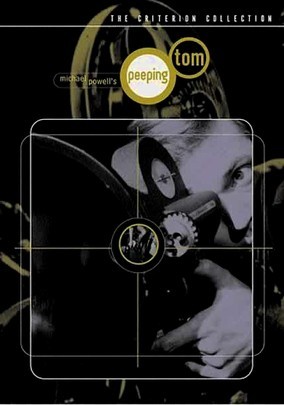
Peeping Tom-1960

Peeping Tom-1960

Director Michael Powell

Starring Nigel Davenport

Top 250 Films #47

Top 40 Horror Films #10

Scott’s Review #127

848669

Reviewed July 22, 2014

Grade: A

Peeping Tom is a brilliant 1960 horror film directed by Michael Powell.

It is a British film released the same year as Psycho. The two films share similarities in that they both feature more character-driven villains than many other contemporary horror films.

Both feature male killers with a sympathetic (to them) female.

Set in London, it tells the story of an assistant cameraman who kills his victims by using a camera with a spike on the end of it as he is videotaping the fear in their eyes, which he later plays back for his own psychological needs.

The killer has emotionally damaged himself, and the film explores this aspect in depth; his father tormented him as a child with weird, traumatic experiments used on the boy for research.

I love this aspect of the film compared with other films of the genre, where the killer typically has no sympathetic aspects and whose motivations are usually explored minimally.

The audience has sympathy for this killer, which, strangely, is absurd and shocking.

Ahead of its time, viewers were initially turned off by the film upon its release. Director Michael Powell’s (ironically playing the terrible father in videotape scenes) career was ruined.

Anna Massey (later to appear in the Hitchcock masterpiece Frenzy, 1972) plays the sweet-natured girl next door who develops a crush on the killer. Her blind and boozy mother is a fascinating character as she suspects and strangely bonds with the killer.

The film has an erotic and voyeuristic quality that has been unmatched in horror.

Peeping Tom (1960) is now widely regarded as a masterpiece, and I concur with that assessment. It is one of the most interesting and unique horror films ever made.