Tag Archives: Epic

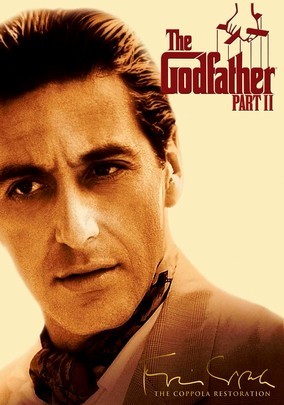
The Godfather: Part II-1974

The Godfather: Part II-1974

Director Frances Ford Coppola

Starring Al Pacino, Robert DeNiro

Top 250 Films #2

Scott’s Review #197
60011663

Reviewed: November 25, 2014

Grade: A

Frances Ford Coppola’s sequel (and technically also a prequel) to the highly regarded and successful The Godfather (1972) is one of the rare sequels to equal, if not surpass, the original in its greatness, creativity, and structure.

The Godfather Part II (1974) feels more profound, more complex, and ultimately richer than The Godfather- and that film itself is a masterpiece. Part II is much darker in tone. Francis Ford Coppola had complete freedom to write and direct as he saw fit, with no studio interference.

The results are immeasurable in creating a film masterpiece.

The film is sectioned into two parts, which is an exciting and practical decision.

The story alternates between the early twentieth century, following Don Corleone’s life, now played by Robert DeNiro, as his story is explained- left without a family and on the run from a crime lord, Don escapes to the United States as a young boy and struggles to survive in the Little Italy neighborhood of New York City.

He obtains a modest job as a grocery stockboy and finally celebrates his eventual rise to power in the mafia.

The other part of the film is set in 1958, as Michael Corleone faces a crumbling empire, with both rivals and the FBI investigating him and holding Senate committee hearings in Washington, D.C., and a failing marriage to Kay (Diane Keaton).

Betrayal is a common theme of the film, as Michael’s wife, brother, and mobster allies are revealed to be cagey enemies. Michael becomes increasingly uncertain and mistrustful of almost everyone around him. Is Kay a friend or foe? Is Fredo plotting against him? He even begins lashing out at Tom Hagen on occasion.

What makes The Godfather Part II so brilliant, and in my opinion richer than The Godfather, is that it is tougher to watch- and that is to its credit. Now, instead of being a warm, respected member of a powerful family, Michael is questioned, analyzed, and betrayed.

New, interesting characters are introduced, including Hyman Roth, played by Lee Strasberg, a former ally of Don’s, and Frankie Pentangeli, played by Michael V. Gazzo. These characters are intriguing, and their allegiances remain unknown throughout most of the film: are they loyal to the Corleones or deadly enemies?

The character of Michael evolves from conflicted to all-out revenge-minded, including seeking revenge against members of his own family. Michael is now a dark, angry character- gone is the nice, decorated war hero with his whole life ahead of him.

He is much older and has changed.

Similar to the original Godfather, the opening scene is a large celebration- this time, Anthony Corleone’s first communion celebration.

Additionally, the film’s finale involves the deaths of several significant characters one after the other.

Unique to this film are the multiple-location scenes, featuring New York, Nevada, Italy, Florida, and Cuba, which make for an enjoyable segue throughout and a more substantial budget.

The blow-up confrontation between Michael and Kay is devastating and shocking in its climax. When Michael punches Kay in a sudden rage, the audience feels punched as well.

The incredible scene at the end of the film, with the entire family gathered around for Don’s fiftieth birthday in 1942, is a special treat for viewers; familiar faces make cameo appearances.

I love these aspects of the film.

The rich history of Don is the most significant aspect of The Godfather Part II, known as “Godfather” and patriarch of the family. His life as a boy and young father is explained, so we see how he became one of the most powerful men in the crime world.

I love how he remains a decent man and helps people experiencing poverty and the victims of ruthless Don Fanucci, his predecessor. He loves his wife and children, but also loves his neighbors and helps them, believing in the principle of fairness.

Ultimately, the characters of Don and Michael are worlds apart.

The Godfather Part II (1974) is one of the most complex and well-written films in movie history- studied in film school, discussed, imitated, and championed.

It remains vital and should be viewed and analyzed repeatedly.

Oscar Nominations: 5 wins-Best Picture (won), Best Director-Francis Ford Coppola, Best Actor-Al Pacino, Best Supporting Actor-Robert De Niro (won), Michael V. Gazzo, Lee Strasberg, Best Supporting Actress-Talia Shire, Best Screenplay Adapted from Other Material (won), Best Original Dramatic Score (won), Best Costume Design, Best Art Direction (won)

The Godfather-1972

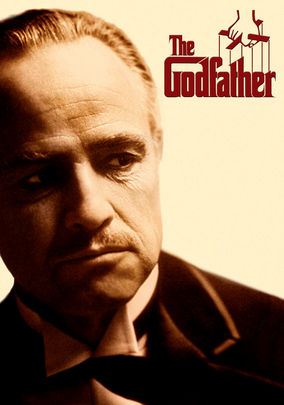
The Godfather-1972

Director Frances Ford Coppola

Starring Marlon Brando, Al Pacino, James Caan

Top 250 Films #4

Scott’s Review #196

60011152

Reviewed November 24, 2014

Grade: A

The Godfather (1972) is one of the most identifiable and brilliant film masterpieces of all time. It is so ingrained in pop culture and film history that it was a blueprint for 1970s cinema, and its legend deserves to live on.

The film has not aged poorly nor been soured by over-exposure. It is as much a marvel today as it must have been when it was initially released in theaters.

The film revolves around the Corleone family- a mob family living in New York. They are high-powered, wealthy, and influential with politicians and law enforcement alike. They are the cream of the crop of organized crime families.

The patriarch of the family is known as “The Godfather”; his real name is Don Corleone, played by Marlon Brando.

The eldest son is hot-headed Sonny, played by James Caan. Middle son Fredo, played by John Cazale, is dim-witted and immature, serving as the family’s weak link.

Finally, the youngest son is the central character in the film. Michael, played by a very youthful Al Pacino, has just returned home from World War II, a decorated and Ivy League-educated hero.

Throughout the film, Michael wrestles with steering the Corleone family business toward the straight and narrow or continuing the death, bloodshed, and corruption that currently plague the family.

Rounding out the Corleone family is Tom Hagen, an Irish surrogate son of sorts, who serves as the family attorney. Connie, the temperamental and emotional sister, and Mama Corleone, the passive wife of Don, complete the prominent family.

The various supporting characters are numerous, ranging from family friends and relatives to corrupt mob figures and those introduced when Michael lives in Italy.

The brilliance of The Godfather lies in the richness of the numerous characters on the canvas, as well as the film’s structure and pacing.

Even minor characters are vital to the film, and every scene is essential and effortlessly paced, so that they neither seem rushed nor dragged out; the film is immeasurably character-driven.

My favorite character is Michael Corleone, as he is the most troubled and complex of all. Pacino plays him to the hilt as, initially, a nice guy trying to do the right thing, going against the grain, and non-traditional- he proposes to a WASP woman who has no Italian heritage.

When events develop in a particular way, Michael suddenly becomes the leader of the family, despite being the youngest son, and the complexities of the character deepen from this point.

Specifically, the revenge killing sequence is brilliant as the viewer is kept on the edge of their seat through a car ride, a meal in a restaurant, and a men’s room scene, until finally, all hell breaks loose, all the while Michael is conflicted, unsure, and intense.

Has he veered too far from being a nice guy? Can he salvage the family business without being ruthless? Michael faces a battle of good vs. evil.

The scenes are brilliantly structured- the grand opening scene alone is beautiful as the audience is introduced to the entire family- cheerfully dancing and frolicking during a bright and sunny outdoor wedding (Connie’s) at the Corleone estate, while inside a dark interior study, a man begs Don Corleone to help avenge his raped and beaten daughter by having her attackers killed.

Several scenes in The Godfather are my personal favorites —the aforementioned restaurant scene, where Michael is faced with a dilemma involving a corrupt policeman and a high-powered figure. One can feel the tension in this extended scene.

The scene in a Hollywood mansion where poor, innocent, horse Khartoum meets his fate in the most gruesome way imaginable.

Later, Michael’s beautiful Italian wife, Apollonia, has an explosive send-off.

Towards the end of the film, there is an improvised scene featuring a tomato garden with an elderly Don Corleone playing with his young grandson.

Finally, the brutal scene involving Corleone’s son Sonny at the toll booth is mesmerizing, murderous, and flawlessly executed.

The lack of any strong female characters and how women are treated (either beaten or passively following their husbands) is bothersome.

Still, unfortunately, circa the 1940s, this was the way things were.

One could argue that Kay Adams, played by Diane Keaton, is the strongest female character, as she questions the Corleone family’s motives and attempts to keep Michael honest and trustworthy. She has little in common with the other female characters.

Lines such as “I’m gonna make him an offer he can’t refuse” and “Don’t forget the cannolis” are unforgettable and quote-worthy.

The finale of the film is breathtaking —a combination of bloody kills mixed with a peaceful scene of Michael accepting the honor of becoming his nephew’s godfather. As he pledges his devotion to God and denounces Satan, the murders he orchestrated are simultaneously being executed.

The character, while complex, suddenly becomes a hypocrite.

Some view Michael as strictly a hero whose choices should not be questioned or analyzed; others view Michael as not a hero, but rather a complex, tortured, and flawed character.

One must watch The Godfather and The Godfather Part II (1974) as companion pieces, as Part I is slightly more straightforward and easier to follow than the more complex and layered sequel.

The Godfather (1972) is storytelling and filmmaking at its absolute best and continues to influence films to this day.

Oscar Nominations: 3 wins-Best Picture (won), Best Director-Francis Ford Coppola, Best Actor-Marlon Brando (won), Best Supporting Actor-James Caan, Robert Duvall, Al Pacino, Best Screenplay Based on Material from Another Medium (won), Best Costume Design, Best Sound, Best Film Editing

Gone With The Wind-1939

Gone With The Wind-1939

Director Victor Fleming/George Cukor

Starring Clark Gable, Vivien Leigh, Olivia de Havilland

Top 250 Films #22

Scott’s Review #201

70020694

Reviewed December 4, 2014

Grade: A

Gone with the Wind (1939) is the grand masterpiece of sweeping epic drama.

The film is based on Margaret Mitchell’s best-selling novel. Set in the American South (specifically, Georgia) during the Civil War era, it centers on the life of Scarlett O’Hara, a Southern belle who works on the cotton plantation Tara. After the South loses the war, she struggles to keep her plantation alive.

Initially, Scarlett cares little about the war but enjoys her spoiled, narcissistic lifestyle and romances with many men in the town, all vying for her attention. With all eyes on her, she revels in one sunny picnic and ball after another.

As war decimates the South, Scarlett must take over the plantation and survive the ravages of war.

Mixed in with the war theme is a romance between Scarlett and Rhett, one of cinema’s most recognized and enduring couples. Having gone through three directors (Victor Fleming, George Cukor, and Sam Wood), the film is as extravagant and precise in its style, attention to detail, and set design as films come.

At close to four hours, Gone with the Wind is a lavish production that can take an entire afternoon or evening to watch. It is divided into two halves—interestingly, Cukor directs the first half, and Fleming primarily directs the second.

It is a film that can be viewed and analyzed repeatedly, and the set pieces and flawless perfection alone are worthy of marvel. The first half is superior to the second, but that is like comparing prime rib to filet mignon—it’s a matter of personal preference.

The first half is brighter, cheery, and fantastic. The excellent Tara and neighboring plantation Twin Oaks host southern balls and parties filled with romance, gossip, and beautiful costumes. War is coming, but it is a delightful time of merriment.

The Southerners eagerly embrace the prospect of war, assuming it will last only two weeks and that they will emerge victorious. They party and celebrate.

The second half has a much darker tone.

By the beginning of the second half, Atlanta has burned, thousands of men have died, Tara is decimated, Scarlett’s mother has died, and her father has gone batty.

The rebuilding of the South is explored, the troubled Rhett and Scarlett marriage commences, their daughter dies, and the world-famous line uttered by Rhett to Scarlett, “Frankly my dear…. I don’t give a damn”.

Having been now directed by a different person (Fleming), the first and second halves almost seem like two separate films.

Vivien Leigh plays a beautiful role. In 1939, women were rarely portrayed as strong characters in films, so Gone with the Wind is groundbreaking for its portrayal of female characters.

Scarlett is selfish but rises above, is strong, saves her plantation, and succeeds as a successful businesswoman—almost unheard of in cinema in 1939. Her undying love for Ashley Wilkes but her inability to obtain him (he is married to his cousin Melanie) gives her a sympathetic vulnerability.

Clark Gable, already a massive star and the people’s choice to play Rhett, is charismatic and handsome. The fact that he and Leigh did not get along makes their fights and sexual tension electric. They love but hate each other, which is transmitted on screen.

Rhett is his own man—he defines himself as not a Northerner but not a Southerner. He is a vagabond and spends many nights at the local brothel in the company of Belle Watling. Rhett’s character is independent and strong.

The supporting characters are colorful, lively, and humorous. Aunt Pittypat’s dramatic worrying and smelling salts and Prissy’s insistence on expert childbirth when, in reality, she knows nothing is moments meant to lighten the mood.

Mammie, Scarlett’s mother figure, is a moral, kind, yet tough character. Melanie (Olivia de Havilland) is an even sweeter character, characterized by her caring and selflessness.

Lesser characters, such as Dr. Meade, Suellen, Carreen, India, and Frank Kennedy, serve their purpose and are no throwaways.

It is bothersome that, over the years, Gone with the Wind has been unfairly “feminized” once it began airing as an alternative to the annual Super Bowl. The assumption was that only women would enjoy it, which is silly.

I do not find this film to be a female film, and frankly, some of the battle scenes are pretty masculine, with epic fires and guns galore. Is Gone with the Wind now considered a racist film?

Perhaps so, and time has made the political incorrectness much more glaring- this point can be debated endlessly. Ashley participates in a hooded Klan organization and is portrayed as a hero in the film.

Indeed, throughout the film, the enslaved people are portrayed as happy, kindly, and comfortable with their place in life, vastly different from what transpired. However, Hattie McDaniel (Mammie) won the first-ever Oscar for a black actress, which was monumental progress and influence.

Using seemingly thousands of extras, the war-torn Atlanta scene where the camera rises up and up and up, panning down on hundreds of wounded and dead Union soldiers as Scarlett defeatedly walks among them, is still heartbreaking to watch and is a reminder of the power and destruction that war is.

Gone with the Wind is an epic masterpiece from the past that still holds up remarkably well. The sets, the rich characters, and the costumes can be admired and still inspire today.

Oscar Nominations: 8 wins-Outstanding Production (won), Best Director-Victor Fleming (won), Best Actor-Clark Cable, Best Actress-Vivien Leigh (won), Best Supporting Actress-Hattie McDaniel (won), Olivia de Havilland, Best Screenplay (won), Best Original Score, Best Sound Recording, Best Art Direction (won), Best Cinematography, Color (won), Best Film Editing (won), Best Special Effects

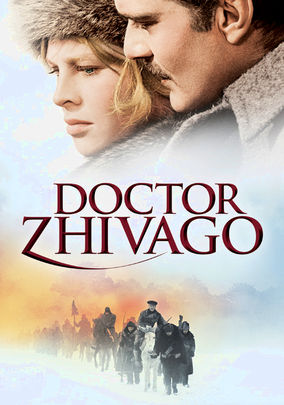
Doctor Zhivago-1965

Doctor Zhivago-1965

Director David Lean

Starring Julie Christie, Omar Sharif, Rod Steiger

Top 250 Films #31

Scott’s Review #42

449931

Reviewed June 18, 2014

Grade: A

Doctor Zhivago (1965) is a great film to watch on a cold night or throughout the crisp winter or holiday season.

The film is a classic masterpiece directed by the talented David Lean (Lawrence of Arabia, 1962, A Passage to India, 1986), whose perfectionism is evident in his epic films.

Nearly every scene could be a painting, so the cinematography alone is reason enough to become enchanted with art.

Of course, the story is also a goldmine as a sprawling decades-long love story unfolds amid the ravages of the bloody Bolshevik Revolution.

The film is set in the bitter cold of Russia (although all scenes were actually shot in Spain), and the harshness of the climate and the war combine with a doomed love story set against the backdrop of numerous battles and wartime effects.

Nearly all sequences are set in the winter, and the blustery and icy effects are nestled against numerous scenes of cozy, candlelit cabins or more extravagant, glowing surroundings.

Viewers must be surrounded by fire, flaming candles, or another form of warmth as a snowstorm or blizzard besets the outdoors for a perfect viewing experience.

A large-screen television or a cinema is simply a must to watch this film, as it is epic on the grandest scale.

Omar Sharif and Julie Christie (a gorgeous star in her day) are cast perfectly as Uri and Lara, young forbidden lovers enthralled with one another but involved with significant others.

The film dissects their initial meeting and their story over the years, experiencing marriages, births, and deaths throughout the ravages of Russia in the early twentieth century.

Despite their affairs, neither is deemed unsympathetic—quite the contrary.

Audiences will fall in love with the pair and become enchanted as they watch their love-tortured adventures unfold.

Sharif and Christie are just magnificent and utterly believable as a couple.

The set pieces are magnificent and flawless in design and detail (my favorite is the Ice Palace).

The cinematography is breathtaking, and the content is remarkably close to the superior novel by Boris Pasternak, evoking a sense of “really being there” in the viewer.

Doctor Zhivago (1965) is a brilliant film, perfect for a snowy winter evening.

Oscar Nominations: 5 wins-Best Picture, Best Director-David Lean, Best Supporting Actor-Tom Courtenay, Best Screenplay Based on Material from Another Medium (won), Best Music Score-Substantially Original (won), Best Art Direction, Color (won), Best Cinematography, Color (won), Best Costume Design, Color (won), Best Film Editing

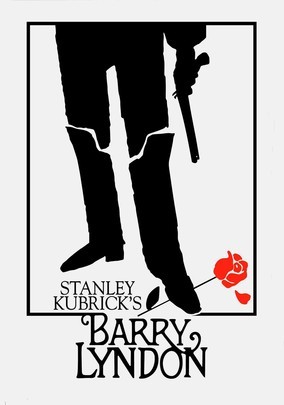
Barry Lyndon-1975

Barry Lyndon-1975

Director Stanley Kubrick

Starring Ryan O’Neal

Top 250 Films #44

Scott’s Review #211

284790

Reviewed January 4, 2015

Grade: A

Barry Lyndon (1975) is a sprawling, beautiful film by famed director Stanley Kubrick. The film is set in the 18th century.

Extremely slow-paced, yet mesmerizing, every shot looks like a portrait, and the inventive use of lighting via real candlelight in certain scenes makes this film a spectacle in its subdued beauty, to say nothing of the gorgeous sets and costumes.

The film is nothing short of a marvel to view.

The story centers around Ryan O’Neal, who plays an Irish man named Redmond Barry.

Redmond is a poor Irish man but is an opportunist. The film follows his life travels throughout Ireland, England, and Germany, as he becomes involved in duels, is robbed, impersonates an officer, is reduced to becoming a servant, gambles, marries a rich widow, and feuds with his stepson.

When he woos and marries the wealthy Countess of Lyndon, he settles in England to enjoy a life of wealth and sophistication. He changes his name to Barry Lyndon. His ten-year-old stepson, Lord Bullingdon, becomes a lifelong enemy as their hatred for each other escalates and is the focal point of Act II of the film.

The supporting cast is filled with unique characters and in particular, the three sinister characters (Lord Bullingdon, Mother Barry, and Reverend Runt) are delicious to watch especially when they square off against one another as is the case with Runt and Mother Barry.

Barry’s two love interests (Lady Lyndon and a German war widow) are entertaining to watch and Lady Lyndon’s costumes are exquisite. Furthermore, Chevalier de Balibar, a wealthy gambler who takes Barry under his wing is a delight.

As with many masterpieces, if not for the great casting, the film would not be as wonderful.

My three favorite scenes include the vicious confrontation between Mother Barry and Reverend Runt- an initially polite conversation between two selfish characters gradually spins into viciousness, the duel between Barry Lyndon and Lord Bullingdon- bitter rivals square off in an awkward yet dramatic duel, and when Barry passionately kisses his dying friend- an unexpected homoerotic scene.

Barry Lyndon delves into the issue of class and class distinction and clearly defines the haves and the have-nots and the struggles of the poor to obtain wealth by any means and for the wealthy to retain their good fortunes.

At a running time of over three hours, it may initially turn viewers off, but as time goes on the film will grip hold of the viewer and not let go.

Having now seen Barry Lyndon (1975) four times, each time I enjoy the film more and more as I become more absorbed by and immersed in the masterpiece.

It’s like a fine wine- it gets better with each taste.

Oscar Nominations: 4 wins-Best Picture, Best Director-Stanley Kubrick, Best Screenplay Adapted from Other Material, Best Scoring: Original Song Score and Adaptation or Scoring: Adaptation (won), Best Costume Design (won), Best Art Direction (won), Best Cinematography (won)

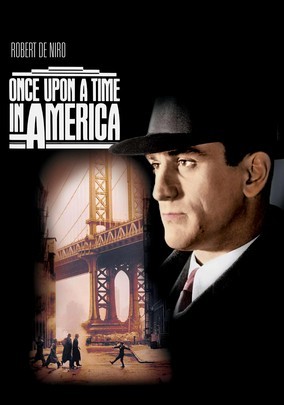
Once Upon a Time in America-1984

Once Upon a Time in America-1984

Director Sergio Leone

Starring Robert De Niro, James Woods

Top 250 Films #85

Scott’s Review #218

60028306

Reviewed January 19, 2015

Grade: A

An epic film, the extended directors cut at more than four hours in length, 1984’s Once Upon a Time in America is a film directed by Sergio Leone, who also directed the 1968 masterpiece Once Upon a Time in the West and numerous other westerns starring Clint Eastwood.

This particular film is in a different vein and not to be confused as any sort of sequel or related to the aforementioned film- this time Leone explores the crime drama genre rather than the western and does so in remarkable fashion.

The film tells the story of a group of Jewish friends who became involved in organized crime during the 1920s in New York City.

The main story is told via flashbacks as the central character, Noodles, played by Robert De Niro, returns to Brooklyn thirty years later to reunite with his former mobster friends.

In this way, the film is sectioned- the group of youngsters and kids and the same characters as adults.

Once Upon a Time in America has been met with much controversy since it was made. At the time of its release, the film was butchered as over an hour of footage was cut by the studio heads making the film largely uneven.

Fortunately, the restored version, at over three hours in length, is available for viewing. Furthermorethe director cut clocks in at well over four hours, and is the best version to watch. Due to so many cuts, other versions appear shoddy and out of order making the viewing experience difficult.

Once Upon a Time in America is largely underappreciated except for the die-hard cinema lovers most patient with the film, and deserves mention as an excellent crime epic drama.

The film contains many similarities to The Godfather and The Godfather Part II and the role De Niro plays is not too different from Vito Corleone in Part II.

However, the greatest contrast is that Once Upon a Time in America is more visually artistic than The Godfather films.

The film centers mainly on Noodle’s perspective as he enjoys youth in the Lower East Side of Manhattan where he meets his group of lifelong friends.

The focal point is his friendship with Max, the adult character played by James Woods, and his undying love for Deborah, played by Elizabeth McGovern as an adult.

As kids, they are worry-free, but gradually fall in with a group of older mobsters, first doing their dirty work, followed by venturing out on their own.

The themes of the film are loyalty, childhood friendship, betrayal, and greed as all of the characters change (or die) in the time that the film takes place.

When a mysterious letter forces Noodles to resurface in Brooklyn, we begin to understand the back story and the history between the friends as layers are slowly peeled back.

The film drags slightly in the middle section, but the first part and last parts are very well-made and absorbing.

Leone has a way of pacing the film that works- it is methodical, and nuanced, with wonderful set pieces and each period explored- 1920s, 1930s, and 1960s seem equally as authentic as the next one does.

I especially enjoyed the 1920s art direction- it revealed such a state of genuineness and felt like truly there in that period.

The relationship between Noodles and Deborah is an interesting one worth mentioning. Falling in love as youngsters (when Deborah was played by a very young Jennifer Connelly) they had an innocent, puppy-love relationship.

As adults, due to a violent, disgraceful act, their tender relationship is subsequently ruined and one might argue one of the characters turns quite unsympathetic.

Once Upon a Time in America (1984) is a sprawling epic film sure to be enjoyed by intelligent fans of the crime epic drama genre and specifically Sergio Leone fans- an underappreciated gem.

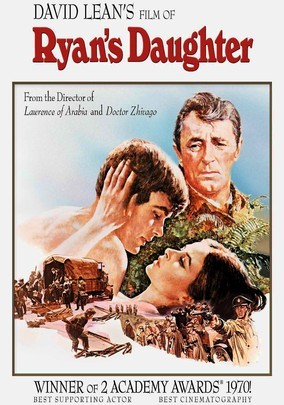
Ryan’s Daughter-1970

Ryan’s Daughter-1970

Director David Lean

Starring Sarah Miles, Robert Mitchum, Christopher Jones

Top 250 Films #87

Scott’s Review #10

60010843

Reviewed June 17, 2014

Grade: A

Ryan’s Daughter (1970) is a sweeping epic by the masterful director, David Lean (Lawrence of Arabia, A Passage to India, Doctor Zhivago).

The film is sprawling and filled with fabulous locales of oceanic Ireland. Much of the action takes place using exterior scenes and this is arguably as prominent and important to the film as the story is.

Set in WWI-era Ireland, one will immediately notice the gorgeous Irish landscapes and the brilliant photography involved. This gives the film a timeless look, and one can simply escape into the scenery itself, forgetting the story, and dream away through the roaring waves.

The intense “storm scene” is second to none as Lean had to wait over a year to film this pivotal scene- and Mother Nature had to cooperate.

The story is twofold: a love story involving a woman torn between her schoolteacher husband and a strapping, yet English (at this time there was no love lost between the Irish and English), officer. Rosy (Sarah Miles) is headstrong yet kindhearted, the daughter of a local, prominent man.

Her husband, Charles (Robert Mitchum) is dutiful and loyal to a fault. After Rosy’s affair with the British officer, she is deemed a tyrant by the townspeople, as her husband chooses to stand by her side.

The second story is political. A feeling of extreme nationalism exists among the townspeople against the British. Both stories blend nicely as small-town gossip and a subsequent witch hunt come into play.

The village idiot is played brilliantly by John Mills, who won an Academy Award for his efforts.

Character-driven is the story’s main appeal and the audience will surely feel perplexed about whom to root for or feel empathy for. I know I did. In fact, at different times one’s loyalties can fluctuate or be challenged.

The film is reminiscent of Doctor Zhivago to me as romance and politics intertwine and a dilemma involving the central female characters are similar. At over three hours in length, the film does not drag and remains interesting throughout as the conflict and drama reach a crescendo during the final act.

At no time is there any filler or unnecessary scenes, which, in itself is a positive.

Sadly, Ryan’s Daughter is not considered as worthy as other aforementioned David Lean efforts, but I disagree with this- the film ages exceptionally well- like a fine wine.

This film also focuses largely on a female character and, therefore, is female-driven, a wonderful aspect of the film, circa 1970.

Oscar Nominations: 2 wins-Best Actress-Sarah Miles, Best Supporting Actor-John Mills (won), Best Sound, Best Cinematography (won)

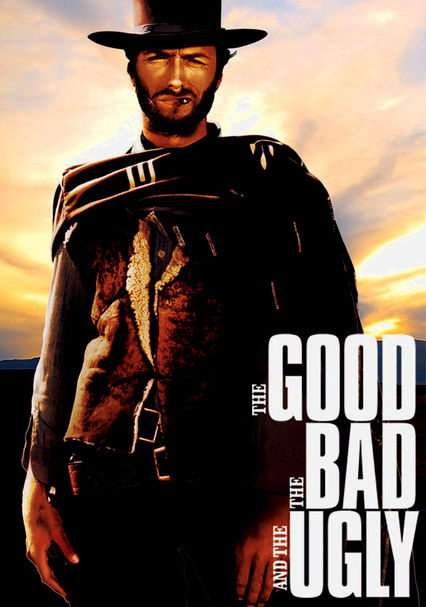
The Good, the Bad, and the Ugly-1966

The Good, the Bad, and the Ugly-1966

Director Sergio Leone

Starring Clint Eastwood, Eli Wallach, Lee Van Cleef

Top 250 Films #115

Scott’s Review #1,320

Reviewed December 9, 2022

Grade: A

Film lovers cannot view The Good, the Bad, and the Ugly (1966) without realizing its enormous influence on Quentin Tarantino, one of the greatest filmmakers of modern times.

Obsessed with the ‘spaghetti western’ a derogatory categorization for cheaply made Italian western films with lousy lip-syncing and an over-the-top stylization, he made them ‘cool’ and interspersed moments and film scores from some of these films.

Director Sergio Leone also created brilliant films like Once Upon a Time in the West (1968) and Once Upon a Time in America (1984) and was famous for his sprawling epics at great length.

The Good, the Bad, and the Ugly is top-notch in nearly every way. The instantly recognizable, hauntingly operatic score is to be revered. It brings dubious and edgy energy that defines the entire film and represents the title characters.

Unfortunately, the film received mixed reviews at best upon initial release but is now considered a masterpiece.

The sprawling landscape represents the American Western territory with lush mountains and desert dryness. The film was shot mainly in Spain, but you’d never know it. It’s a pleasing feeling to possess this knowledge since it makes for more fun and comparisons to the fake world of the frontier.

The creative, sweeping widescreen cinematography is also a significant win. Combined with violent, stylized gunfights, close-ups, and long shots, the film is unique.

Story-wise, during the bloody Civil War, a mysterious stranger, Blondie ‘the Good’ (Clint Eastwood), and a Mexican outlaw, Tuco ‘the Ugly’ (Eli Wallach), form an uneasy partnership. Blondie turns in the bandit for some reward money, then rescues him just as he is being hanged. When Blondie’s shot at the noose goes awry during one escapade, a furious Tuco tries to have him murdered.

The men re-team abruptly, however, to beat out a sadistic criminal named ‘Angel Eyes’ (Lee Van Cleef) or ‘the Ugly’ and the Union army and find $20,000 that a soldier has buried in the desert.

The hook is that each of the three principal characters is looking for loot, specifically a buried cache of Confederate gold. This plot enhances the duels and peril along the way, which is undoubtedly a selling point for the viewer.

The finale and paired ‘noose sequence’ is the highlight.

The Good, the Bad, and the Ugly is purely a ‘guy’s film,’ though this is not to say females who appreciate influential cinema will not get something from it. Even if the plot is a one-trick pony, the other aspects of the film’s quality are worthy of admiration.

In 1966, Clint Eastwood was not the big Hollywood star he would soon become and certainly hadn’t tried his hand in the director’s chair.

The Good, the Bad, and the Ugly is a very early Eastwood film that propelled him into a rebellious action hero he cemented with Dirty Harry (1971).

Studying the characters may be a superfluous approach for a film like this, but Blondie’s nickname, ‘the Good,’ is laughable. He’s a pure antihero who joins forces with ‘the Ugly, ‘ a known criminal. Sure, he spares lives, but he’s not precisely a goody two shoes. That makes the character more appealing in my book.

Spaghetti westerns were derided and scoffed at when they were initially released. Nobody could have predicted that a film like The Good, the Bad, and the Ugly (1966) would be revered and influential.

The great filmmakers who appreciated this film mirrored their own after it.

Lawrence of Arabia-1962

Lawrence of Arabia-1962

Director David Lean

Starring Peter O’Toole, Alec Guinness, Omar Sharif 

Top 250 Films #139

Scott’s Review #355

60028312

Reviewed January 9, 2016

Grade: A

Lawrence of Arabia (1962) is quite a grand film that must be seen on a large screen. This will ensure full appreciation of the enormous scale of the production.

Numerous shots of objects in the distance are featured, and the small screen dulls the experience.

An excellent film from top to bottom and groundbreaking at the time, due to the scope and vast proportions of the production, Lawrence of Arabia achieves its place in cinematic history.

It’s a treat to revisit from time to time.

The film is divided into two parts with an intermission, as with epics that last nearly four hours.

Peter O’Toole stars as T.E. Lawrence, a bored British Army Lieutenant who talks his way into a transfer to the Arabian desert.

As the film opens, it is 1935, and Lawrence has just been killed in a motorcycle accident. While this concept of revealing the ending and working backward is common in current films, it was novel in 1962 when the film was made.

While in Arabia, Lawrence successfully bonded bitter rival tribes to unite against Turkish oppression during World War I. He meets two young guides and other central characters there: Prince Faisal (Alec Guinness) and Sherif Ali (Omar Sharif).

Much of the film features the battles between the rival tribes and Lawrence’s struggle to achieve peace.

Many location sequences of Lawrence and company traveling miles and miles of hot desert are featured.

Some complain that Lawrence of Arabia is too slow-moving a film, but that is its selling point. I find the scenes of the group languishing across the desert incredibly lush and rich in meaning.

The intense heat and beating sun are fantastic in their cinematic grandeur. The film is meant to take its time—precisely what an experience in the Arabian desert would be like—and the mountainous dunes and swirling winds are brilliantly filmed.

David Lean is the king of the sprawling epic, and Lawrence of Arabia is his crowning achievement.

Lawrence is a well-written, layered, and complex character. He is not easy to describe or understand, which is also to the film’s credit.

The sheer weight loss that O’Toole underwent over the two years it took to film Lawrence of Arabia is impressive enough, but he was also a tortured soul emotionally.

The epic film Lawrence of Arabia (1962) requires a half-day of dedicated viewing, but it is worth every minute.

For a reminder of what an actual, breathtaking film looks like sans the oversaturated CGI and quick edits, one should take a deep breath and appreciate this work of art for its majestic look.

Oscar Nominations: 7 wins-Best Picture (won), Best Director-David Lean (won), Best Actor-Peter O’Toole, Best Supporting Actor-Omar Sharif, Best Screenplay Based on Material from Another Medium, Best Music Score-Substantially Original (won), Best Sound (won), Best Art Direction, Color (won), Best Cinematography, Color (won), Best Film Editing (won)

Titanic-1997

Titanic-1997

Director James Cameron

Starring Leonardo DiCaprio, Kate Winslet

Top 250 Films #160

Scott’s Review #327

1181461

Reviewed January 6, 2016

Grade: A

1997’s Titanic is a sweeping, gorgeous epic, directed by James Cameron, that is perfection at every level. This film has it all: romance, disaster, gorgeous art direction, and flawless attention to detail.

The film will make you laugh, cry, and fall in love with the characters, despite knowing the inevitable outcome. The film is based on the real-life sinking of the RMS Titanic in 1912 after the ship tragically collided with an iceberg.

I have witnessed this film be derided for being a “chick flick” or too “sappy”, but I vehemently disagree and feel it is a classic for the ages.

Titanic successfully re-invented the Hollywood epic.

Jack Dawkins (Leonardo DiCaprio) is a penniless artist who meets high-class socialite Rose DeWitt (Kate Winslet) aboard the luxurious Titanic, headed from the coast of England to the United States on its maiden voyage.

Rose is engaged to cagey Cal Hockley (Billy Zane).

Depressed, Rose contemplates diving overboard to her death, but Jack saves her and convinces her otherwise. They spend time together and he draws her portrait. As their romance blossoms, Cal catches on and plots revenge.

In the mix is Rose’s snobbish mother, Ruth, played by Frances Fisher.

The main theme of the film is social class and the difference that separates the haves from the have-nots.

James Cameron desired perfection from this film and he sure got what he wanted. Every detail of Titanic is flawless and historically accurate, from the dining room silverware to the costumes to the set pieces barely visible in the background.

Cameron even had a replica of the original Titanic built for filming purposes- with limitations, but what a vast undertaking this must have been. That, along with the smoldering romance between Jack and Rose, is what makes Titanic one of my favorite films.

Two fantastic scenes are when Jack is taken under the wing of Molly Brown, played by Kathy Bates. Molly is not the snob that many of the other upper class is, and lends Jack a tuxedo so that he will look dapper for Rose. She also tenderly teaches him the appropriate way to use silverware.

Tragically, the other scene is more melancholy- a gorgeous classical piece plays in the background as the vast ship is engulfed in water and slowly sinks, causing many deaths.

At well over three hours in length, the conclusion of the film is quite sprawling- and one has the feeling of being aboard the ship. By this time I was invested in the characters, both lead and supporting and the tragedy that ensues is both a marvel and heart-wrenching.

Titanic (1997) is a film that simply must be viewed on the big screen for full effect, and is a timeless masterpiece that has aged perfectly.

Oscar Nominations: 10 wins-Best Picture (won), Best Director-James Cameron (won), Best Actress-Kate Winslet, Best Supporting Actress-Gloria Stuart, Best Original Dramatic Score (won), Best Original Song-“My Heart Will Go On”, Best Sound Effects Editing (won), Best Sound (won), Best Art Direction (won), Best Cinematography (won), Best Makeup, Best Costume Design (won), Best Film Editing (won), Best Visual Effects (won)

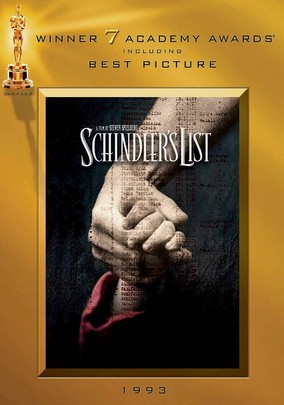
Schindler’s List-1993

Schindler’s List-1993

Director Steven Spielberg

Starring Liam Neeson, Ben Kingsley, Ralph Fiennes

Top 250 Films #179

Scott’s Review #775

Reviewed June 19, 2018

Grade: A

Schindler’s List (1993) is a film that is arguably Steven Spielberg’s finest directorial work and Liam Neeson’s finest acting performance.

The film is as disturbing as it is awe-inspiring as many emotions will undoubtedly envelop any viewer- most of them dark and dire.

Spielberg’s most personal story centers on the devastating Holocaust of World War II that will grip and tear audiences to pieces.

The work deservedly secured the Oscar award for Best Picture and Best Director as well as numerous other accolades.

Oskar Schindler (Neeson) is a powerful German businessman who arrives in Krakow, Poland during the antics of World War II, presumably to make his fortune. Handsome and respected, he is charismatic and feared by the German army, who have forced most of the Polish Jews into the overcrowded ghettos where they await their fates.

Schindler himself is a Nazi, but becomes more humanistic than most and ultimately against the Holocaust killings. He establishes a factory and hires a Jewish accountant (Ben Kingsley) to assist.

As he is tremendously affected by the inhumanity he sees throughout the city, he makes arrangements to hire and thus save the lives of over a thousand Polish refugees.

He does so by allowing them to safely work and be productive in his factory. The story is reportedly true and was a rare instance of humanity in a cold and ugly chapter in world history.

To be clear, Schindler does not start as a hero and is admittedly rather an unlikely one. The man is a businessman, greedy, and undoubtedly flawed. He plans to use the Jews because they are cheap labor and can be used to his advantage.

Because of the very long running time of the film (over three hours), Spielberg slowly depicts Schindler’s complex character growth and eventual determination to save these poor people from the Auschwitz gas chambers.

Spielberg shoots Schindler’s List entirely in black and white with tremendous results. The camera work adds such ambiance and style to the 1990s film- so much so that throughout the film I felt as if I were watching a documentary from the 1940s.

The film is epic and choreographed with precision and timeliness- some of the best camera work in cinema history as far as successfully creating the perfect solemn and dreary mood.

Supporting turns by Ben Kingsley and Ralph Fiennes must be noted. In vastly different types of roles, both shine.

As the understandably nervous, Jewish accountant for Schindler’s factory, Itzhak Stern is most notable for creating the famous “list”. This contains the names of those who would be transferred to the factory and thus have their lives spared.

Kingsley, a brilliant actor, fills the character with empathy and heart.

Conversely, Fiennes plays a dastardly character in that of Amon Goth, a commander at the concentration camp. Evil and known for taking glee from killings, he is the man instrumental in deciding to exterminate all of the people in the ghetto.

A pivotal character, Goth is important because he is the man who makes Schindler realize how sickening and inhumane the treatment is.

Fiennes carves the character with so much hate that he is believable in the part.

One of the most beautiful scenes is aptly named “the girl in red” and is highly symbolic and worthy of analysis. Oskar watches as prisoners are escorted, presumably to their executions. He notices a three-year-old girl walking by herself- she is clad in a bright red coat.

The coat is Spielberg’s only use of color throughout the entire film.

The scene is incredibly important as the girl stands out, proving that all the Nazi commanders are accepting of her death. In tragic form, Oskar later sees her dead body draped in her red coat.

The scene is sad and powerfully distressing.

Schindler’s List (1993) is an outstanding film that elicits such raw emotion from anyone who views the masterpiece. By no means an easy watch and most assuredly “a heavy”, the film depicts the true struggles and catastrophic events occurring not all too long ago.

A film for the ages that simply must be seen by all to appreciate the terror and inhumanity that occurs throughout the world.

Oscar Nominations: 7 wins-Best Picture (won), Best Director-Steven Spielberg (won), Best Actor-Liam Neeson, Best Supporting Actor-Ralph Fiennes, Best Adapted Screenplay (won), Best Original Score (won), Best Sound, Best Art Direction (won), Best Makeup, Best Costume Design, Best Cinematography (won), Best Film Editing (won)

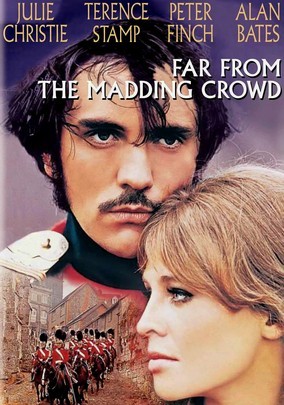
Far from the Madding Crowd-1967

Far from the Madding Crowd-1967

Director John Schlesinger

Starring Julie Christie, Terence Stamp, Alan Bates

Top 250 Films #183

Scott’s Review #315

70111488

Reviewed January 1, 2016

Grade: A-

A sweeping, gorgeous epic made in 1967, Far from the Madding Crowd is pure soap opera (this is not a negative), done very well, which features a woman with three male suitors and contains many similarities to another brilliant epic, Gone with the Wind.

The cinematography, score, and writing are excellent, and, at close to three hours, are a lengthy experience.

The film is based on the popular novel, written by Thomas Hardy.

The setting is lovely, rural England, the landscape green and lush- mostly farmland, where Bathsheba resides having recently inherited her Uncle’s enormous estate and is, frankly, overwhelmed with the heavy responsibility required to successfully run it.

Three men appear in one form or another to lend a hand and each falls madly in love with her- she had her choice of any of them. Throughout the film, each is given a chance to win her heart, and the trials and tribulations of each occur.

The wealthy neighbor, William Boldwood, is older and insecure. Frank Troy is a bad boy who is a cavalry sergeant, and Gabriel, a former farmer, has lost all of his sheep.

Having only seen this film twice (so far), I notice more and more the similarities to Gone with the Wind. Both are set around the same period (the 1860s) and both films feature very strong, independent, gorgeous female characters with multiple male suitors.

Unlike Gone with the Wind, though, Bathsheba is not self-centered, but wholesome and honest.

Julie Christie was certainly the “it” girl during the time in which the film was made, having recently starred in Darling, and Doctor Zhivago, among others, and Far from the Madding Crowd is a perfect film for her, focusing on her beauty and earnestness.

She is exceptionally cast.

What I enjoy most about the film is we do not know which of the men Bathsheba will wind up with…if any of them. Gabriel Alan Bates) is my personal favorite, but at the beginning of the film, she rebuffs his marriage proposal.

In a heartbreaking scene, one of his dogs goes mad and leads his entire flock of sheep to their death. He then is forced to work as her shepherd, a job beneath him. He is the most likable of the three men and it is fun to root for their ultimate union. But is he prone to bad luck?

Frank Troy is dashing- a clear lady’s man, yet I did not root for him. A character, which I found to have strange motivations, having impregnated, and almost married a young lady named Fanny, only to turn her away based on a misunderstanding, then ultimately change his mind about Bathsheba.

In one scene he manipulates his way into getting the townsmen drunk on brandy, which leads to a crisis. He is charismatic and used to getting his way.

Finally, Boldwood is wealthy and sophisticated and appealing to Bathsheba in a certain way (main stability), but there is also something I find “off” about the character throughout the film- unstable maybe, needy? I did not find his character likable either.

The overlap and the relationships between the men are also interesting aspects of Far from the Madding Crowd. Will they become friends? Would they kill each other for Bathsheba’s affection?

Many emotions run through all four characters, which makes the film rich in character development.

Grand, sweeping, and beautiful are words to describe Far from the Madding Crowd, a film that I enjoy exploring and evaluating upon each viewing.

Oscar Nominations: Best Original Music Score

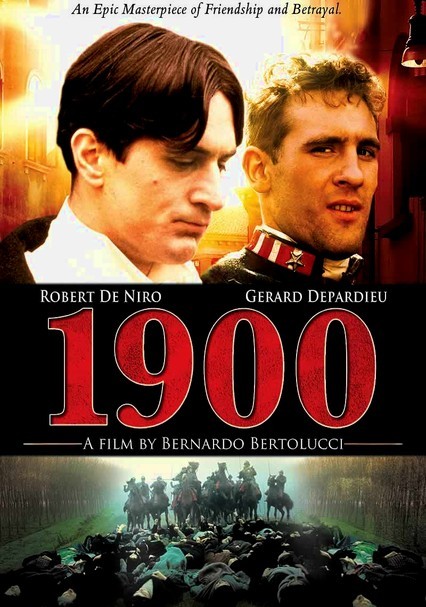
1900 (Novecento)-1977

1900 (Novecento)-1977

Director Bernardo Bertolucci

Starring Robert De Niro, Gerard Depardieu

Top 250 Films #201

Scott’s Review #984

Reviewed January 28, 2020

Grade: A

An epic to rival all epics, 1900 (Novecento) (1977) is a grandiose offering of monumental proportions featuring legendary actors and created by a brilliant director.

With a running time of a whopping three-hundred and seventeen minutes in its original version, 1900 is known for being one of the longest commercially released films ever made.

The cinematography is breathtaking, and the historical values, like friendship, class distinction, and rivalry are outlined and explored in depth.

The key is to let the experience marinate and blossom with a slow and patient build.

Brilliant director Bernardo Bertolucci’s tale follows the lives of two Italian men, a peasant named Olmo (Gerard Depardieu) and landowner Alfredo, (Robert De Niro), both ironically born on January 1, 1900.

Inseparable as children, the two become estranged as their differing social status pulls them apart. Their conflicts mirror the political events in Italy, as both fascism and socialism gained prominence in the country.

Here is a bit of background on the film.

Due to its length, the film was presented in two parts when originally released in many countries, including Italy, East, and West Germany, Denmark, Belgium, Norway, Sweden, Colombia, Pakistan, and Japan.

In other countries, such as the United States, a single edited-down version of the film was released.

The latter is not the way to watch this film. I do not like severely edited films, especially in an epic such as 1900, so the full-length version is highly recommended.

The film opens on April 25, 1945, the day Italy is liberated from the fascists, and this is key to the political message Bertolucci crafts. As peasants revolt against the owner of the land, Alfredo (De Niro), and female laborers wield deadly pitchforks, the resulting ambiance is one of chaos.

We know nothing of Alfredo yet but know enough to realize he is rich and perceived as a tyrant. The natural reaction is to sympathize with them because they are oppressed.

As the film backtracks to the turn of the century, a more elegant scene emerges with the birth of two infants, Alfredo and Olmo. The sequence is sweet, both babies are bright and filled with promise.

Sadly, this is not meant to be.

A railway track is an important addition to the film and one that culminates in the climactic finale.

The most interesting aspect of the film is the dynamic development of Alfredo and Olmo as they grow. Alfredo resents his family’s wealth and sides with Olmo, a socialist. Alfredo sees his family as false and Olmo and his family as genuine.

This aspect is timeless and can be related to by any viewer with any intelligent sense of the world today. The obvious analogy of the haves and have-nots cannot be clearer in this film. Frightening, is that some have-nots are convinced they will one day become the haves.

The messages and feelings that 1900 elicited are emotional and strong. Aren’t all men created equal? On the surface they are, but Alfredo and Olmo are not equal. As the birth scene reveals and as Bertolucci makes clear, they are born with advantages and disadvantages.

These characteristics simply are what they are, and as human beings grow and learn social norms the financial differences become more robust and the humanistic connections weaker.

If the social aspects of the film or the brilliant cinematography are not enough to please a viewer, the historical lessons presented are second to none. One can revel in the political and historical excitement that existed in Europe throughout the forty-five years in which the film is set.

I wish Hollywood made more films like this.

1900 (Novecento) (1977) can be enjoyed as both a grandiose dramatic period piece, revered for its majestic and flourishing design style, or as a thought-provoking message film, about the unresolved social class distinctions that exist in the world.

I found the film a treasure that works on all levels and showcases just how good a director Bertolucci is.

This film is not his best-known work, but for fans of cinema as an art form, this is a must-see.

East of Eden-1955

East of Eden-1955

Director Elia Kazan 

Starring James Dean, Julie Harris, Jo Van Fleet

Top 250 Films #205

Scott’s Review #1,092

Reviewed December 17, 2020

Grade: A

James Dean wasn’t with us for very long, tragically dying at the tender age of twenty-four, but he made three films: Rebel Without a Cause (1955), Giant (1956), and East of Eden (1955), all-powerful showcases and unique.

Dean gives a brilliant, humanistic, and sometimes tragic performance.

East of Eden, his first film, is the only one he got to preview. I hope he liked it because it will live forever as a gem.

Based on the John Steinbeck novel of the same name, the story is also a biblical retelling of Cain and Abel, brothers who clash and spar. Director Elia Kazan, famous for supporting and using Method actors in his films, gave a tremendous performance as Dean, which was key to the film’s empathetic nature.

The key to East of Eden is that it reflects on several characters, who are both good and bad, possessing qualities of both, detailing their struggles.

Nobody is completely good or completely bad. The story analyzes good versus evil and the multitude of layers between both extremes, making the experience juicy, truthful, and brilliant.

Set in 1917, during World War I, two sunny coastal California towns are the backdrop for the action. Cal Trask (Dean) perceives his father, farmer Adam (Raymond Massey), as favoring Cal’s brother, Aron (Richard Davalos). This leads to much resentment, jealousy, and conflict. Aron is the apple of Adam’s eye, and we wonder why.

Furthering the drama is Cal’s love for Aron’s girlfriend, Abra (Julie Harris), who doesn’t rebuff any advances. Cal and Aron’s mother, Kate (Jo Van Fleet), who they think is dead, is alive and well and running a brothel in a nearby town. Assuming a different name, she harbors secrets.

Before you get the impression this is some cheesy soap opera, East of Eden, like the novel, is heavily character-driven and nuanced with development. It ultimately draws the audience in and envelops everyone in its simmering qualities.

East of Eden is packed with powerful scenes after powerful scenes, and in more than one, the allegiances and rooting values shift from character to character.

Some of the best moments are when Cal self-destructs after his father refuses his birthday gift, or when Cal cruelly reveals the true nature of their mother’s profession to the innocent and unsuspecting Aron.

Finally, Cal and Abra’s kiss atop a Ferris wheel is filled with smoldering desire and deadly consequences.

The acting was tremendous across the board. Much of the credit must go to Kazan for pulling fabulous performances out of the players, a talent only a Method acting director can achieve.

While the cast is exceptional, the film belongs to Dean, who provides enough emotion and vulnerability to sustain his character’s topsy-turvy, tortured existence. Knowing that the actor died soon after filming gives the film an eerie and sentimental feel.

This is comparable to a more modern-day example when Heath Ledger died after giving a brilliant performance in The Dark Knight (2008).

This is hardly a war film or a guy’s film, as the ladies also get to shine with rich characters. Julie Harris and Jo Van Fleet portray flawed characters in juicy roles rife with meaty scenes filled with conflict.

As with most of Steinbeck’s works, specifically The Grapes of Wrath, the landscape is a character, and East of Eden is no exception. With dusty roads and mountainous backgrounds, events ooze with atmosphere and beauty.

The lush northern coastal California landscape portrays a grandiose magnificence that counterbalances the conflict its inhabitants are experiencing.

The central note to take away from East of Eden (1955) is that we are complex creatures with a mixture of good and evil. We sometimes want to do the right thing, but in doing so, we hurt those we love. The main characters suffer from pain, regret, good intentions, poor decisions, and loss.

The rich dialogue, adaptation, acting, and cinematography make the film near perfection.

Oscar Nominations: 1 win-Best Director-Elia Kazan, Best Actor-James Dean, Best Supporting Actress-Jo Van Fleet (won), Best Screenplay

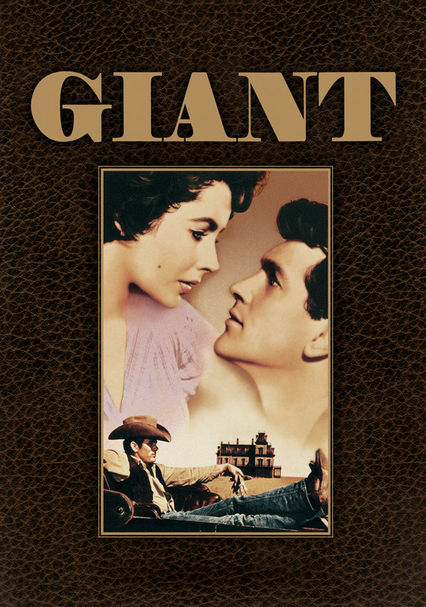
Giant-1956

Giant-1956

Director George Stevens

Starring Rock Hudson, Elizabeth Taylor, James Dean

Top 250 Films #235

Scott’s Review #898

Reviewed May 14, 2019

Grade: A

Giant (1956) is a sweeping epic firmly ensconced in both the Western genre and the dramatic field of play. The film is a flawless Hollywood production featuring three of the most recognizable stars of the time and a slew of powerful supporting actors offering rich performances and good characterizations.

The thunderous melodrama plays out over decades with the dry and dusty locale and the superb cinematography, among the finest aspects of the film experience.

Dashing and wealthy Texas rancher Jordan Bick Benedict Jr. (Rock Hudson) falls in love with and marries socialite Leslie Lynnton (Elizabeth Taylor) after a whirlwind romance in Maryland.

The pair begin their married life on Bick’s immaculate Texas ranch, but not before two central figures thwart their happiness. Jett Rink (James Dean) falls obsessively in love with Leslie while Bick’s sister, Luz Benedict (Mercedes McCambridge) despises Leslie, taking out her vengeance on Leslie’s horse.

The trials and tribulations continue as the characters age through the years.

The trifecta of talents Taylor, Hudson, and Dean make Giant the ultimate in treats as one fawn over the good looks of each (or all!) over the long three hours and eleven minutes of illustrious screen time.

Making for more powerful poignancy is that the film is Dean’s final appearance on-screen before his tragic death in a car accident, his death occurring before it was even released to the public.

Dean plays Jett to the hilt as a surly ranch hand, jealous of Bick’s riches and wanting to take Bick’s woman for himself. Jett is an unsympathetic character and the one I find the most interesting. Decades-long rivals, Jett and Bick’s lives overlap continuously as Jett finally becomes rich and dates Bick and Leslie’s daughter, much to their chagrin.

Jett is a racist, which was common in the early to mid-1900s, especially in southwestern Texas. Sadly, he never finds happiness, which is the central part of his depth.

The screenplay is peppered with meaningful and relevant social issues that provide sophistication and a humanistic approach. The film inches towards a liberal slant as the plot progresses, the most famous example occurring in the final act as Benedict’s stop at a roadside diner with a racist sign, implying the restaurant will not serve Mexicans.

Bick takes a dramatic stance and shows heart as his family, now multi-racial, needs his help. Culminating in a fight, the scene reveals the enduring love that Bick and Leslie share for one another.

Criticisms of the films’ enormous length and scope are wrong as these aspects deepen and the components I find the most appealing.

Director George Stevens never rushes through a scene or makes superfluous edits to limit running time. Instead, he allows each scene to marinate and graze like real life. Lengthy scenes play out with honest conversations and slow build-up, allowing the characters’ opinions and motivations to take shape slowly.

On the surface, a drama and western, the film can be peeled back like an onion to reveal deeper nuances. The racism, love story, and class structure ideals are mesmerizing, especially given the true-to-life humanitarian that Taylor was.

One can sit back and revel in the knowledge that she must have been enjoying the rich character.

Along with great epics like Gone with the Wind (1939), Lawrence of Arabia (1963), and The Godfather (1972) sits a film that is rarely mentioned with the other stalwarts, and that is a shame. With magnificent shot after shot of the vast Texas land and with enough gorgeous stars to rival the landscape, Giant (1956) is a must-see.

A Western soap opera with terrific writing, rife with racism, prosperity, and fortitude, the film deserves more praise than it’s given.

Oscar Nominations: 1 win-Best Motion Picture, Best Director-George Stevens (won), Best Actor-James Dean, Rock Hudson, Best Supporting Actress-Mercedes McCambridge, Best Screenplay-Adapted, Best Music Score of a Dramatic or Comedy Picture, Best Art Direction-Color, Best Costume Design-Color, Best Film Editing

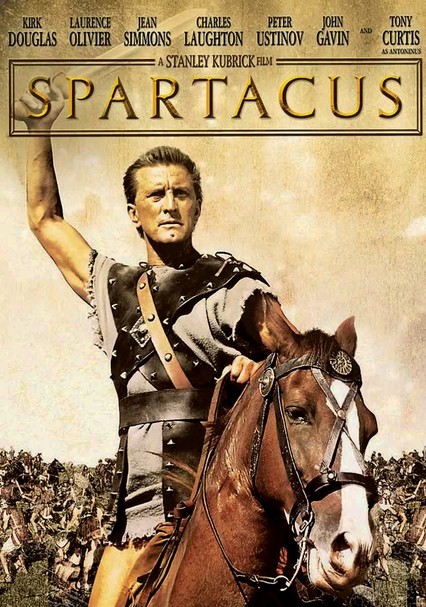
Spartacus-1960

Spartacus-1960

Director Stanley Kubrick

Starring Kirk Douglas, Laurence Olivier, Jean Simmons

Top 250 Films #247

Scott’s Review #1,250

Reviewed April 30, 2022

Grade: A

Typically, when influential director Stanley Kubrick’s name is uttered, films such as The Shining (1980), 2001: A Space Odyssey (1968), and Barry Lyndon (1975) are immediately thought of, and for obvious reasons.

The haunting, moody musical score, the long camera shots, the dark humor, and the clever camera tricks are easy to pinpoint.

1960, the director was hired to direct the gorgeous epic Spartacus after Hollywood star Kirk Russell unceremoniously fired the first director.

None of the previously mentioned elements are easy for me to notice and are more or less absent, but a grand battle scene in a luscious green field is very reminiscent of Barry Lyndon. This is likely because Spartacus was not Kubrick’s film entirely; instead, it belonged to others with more clout.

Spartacus is a brilliant film for many reasons. Some epics suffer from a hokey, cliched feel and can be overwrought, predictable, and tired.

The rebellious Thracian Spartacus (Russell), born and raised a slave, is sold to Gladiator trainer Batiatus (Ustinov). After training to kill for the arena, Spartacus turns on his owners and leads the other slaves in rebellion.

As the rebels move from town to town, their numbers increase as escaped slaves join their ranks. Under the leadership of Spartacus, they make their way to southern Italy, where they intend to cross the sea and return to their homes.

Spartacus is grand, sweeping, cinematically significant, and everything else you’d expect from a 1960s Hollywood epic with enormous stars of its day. Looking beneath the surface, the film is riddled with interesting tidbits like bisexuality, homoeroticism, and violence, more in tune with an art film or modern war film than the safety of a movie made during this time.

Particularly noteworthy is that Dalton Trumbo wrote the screenplay. One of the Hollywood Ten, he refused to testify before the House Un-American Activities Committee in 1947 during the committee’s investigation of alleged Communist influences in the motion picture industry.

After the release of Spartacus, it marked the beginning of the end of the Hollywood Blacklist for Trumbo and other affected screenwriters.

Thank goodness.

In a famous scene, recaptured slaves are asked to identify Spartacus in exchange for leniency; instead, each slave proclaims himself to be Spartacus, thus sharing his fate.

The suggestion is that this scene was meant to dramatize the solidarity of those accused of being Communist sympathizers during the McCarthy era.

Besides the political importance, Spartacus showcases a beautiful romance between Spartacus (Russell) and Varinia (Jean Simmons), a gorgeous slave girl. The tenderness and authenticity are palpable as many of their early scenes involve no dialogue but only longing and expression through both actors’ eyes.

I celebrated the connection between the actors at the forefront of much romance. Russell carries the film with calm masculinity, quickly making him heroic and likable.

He is the charismatic, good guy who has been wronged and ill-fated.

A sequence oozing with machismo and homoeroticism occurs when evil Crassus (Olivier) is bathed by his slave boy Antoninus (Tony Curtis). He seductively explains that while sometimes he prefers snails, he also likes oysters. The implication is that he is bisexual, brazenly so, and expects the youngster to become his sex slave.

The warmth of the bathtub and the luxurious atmosphere contrast with the proximity and touch of both male characters.

In 1960, this scene was way ahead of its time.

The conclusion of Spartacus is melancholy and surprising. Having bested Rome’s cruelty, one might have expected to see Spartacus and Varinia happily ride off into the sunset.

This doesn’t happen, and the film is more affluent in it. There is pain and despair as there were in real life. Wisely sparing complete doom and gloom, the ending is satisfying as one central character escapes a deadly demise and conjures ahead.

Spartacus (1960) is one of the greats. It has muscle and texture, and many below-the-surface nuances are ripe for discussion. For these reasons, it’s a must-see.

Oscar Nominations: 4 wins-Best Supporting Actor-Peter Ustinov (won), Best Art Direction-Color (won), Best Cinematography-Color (won), Best Costume Design-Color (won), Best Film Editing, Best Music Score of a Dramatic or Comedy Picture

The Brutalist-2024

The Brutalist-2024

Director Brady Corbet

Starring Adrien Brody, Guy Pearce, Felicity Jones

Scott’s Review #1,468

Reviewed March 1, 2025

Grade: A

The three-hour and thirty-five-minute film The Brutalist (2024) captivated me from the first sequence.

Adrien Brody’s character László Tóth, emerges from what is revealed as a ship. He emigrated to the United States after being sent to the Buchenwald concentration camp and forcibly separated from his wife, Erzsébet, and orphaned niece, Zsófia.

As his ship enters New York Harbor, he sees the Statue of Liberty.

The sequence follows László in the dark, and the audience is confused and unaware of what’s happening. His wife reads a Hungarian letter amid the scene explaining the events.

This is a top notch first scene.

The film is very long, so if you can’t watch it in a movie theater, we recommend watching it in miniseries style and digesting the segments slowly.

While The Brutalist initially feels like a studio blockbuster extravaganza, it’s shockingly an independent film made for relatively little money.

It’s brilliant but slow and methodic with rich moments of raw emotion, and graceful humanity. Parts are edgy and artistically creative with a quiet bombast.

Events occur between 1947 and 1958; the conclusion is set in 1980.

Having escaped post-war Europe, visionary architect László is well-respected and admired in his home country. He finds his way to Pennsylvania, where the wealthy and prominent industrialist Harrison Lee Van Buren (Guy Pearce) recognizes his talent for building.

The central theme of The Brutalist is László’s struggles to achieve the American Dream. While a wealthy client changes his life, it comes at a price. Do we trust Harrison?

An early scene showcases Harrison’s bad temper, and we know this will come into play again, but it does at the expense of László.

There are so many wonderful facets to The Brutalist; some slowly build and reach a dramatic crescendo, and others continue to bubble under the surface, ripe for discussion after the film has ended.

Though sometimes conventional with a heartwarming story of an immigrant’s struggle to succeed in 1950s USA, it is anything but a mainstream film when looked at closely.

Is there an attraction between Harrison and László? Harrison has no wife and seems uninterested in women. László visits a prostitute and cannot perform; he dances with a gorgeous woman and cannot be seduced. He cannot have sex with his wife.

A male/male rape scene is both gorgeously shot and filled with animalistic brutality. It’s the most unconventional rape scene I’ve ever seen in cinema.

László is also addicted to heroin and has bouts of rage. Is his relationship with Erzsébet more a friendship than a romance?

Brady Corbet’s direction is flawless, led by astounding cinematography of rural Pennsylvania. An early shot of a speeding bus with the opening credits shifting sideways brims with fresh style and creativity.

The sophisticated costumes and makeup perfectly fit the era, which is even more reason to give it kudos on such a small budget.

The acting by Brody, Pearce, and Jones is terrific.

We finally meet Erzsébet (Jones) halfway through the film when she makes her way to America. Crippled, due to osteoporosis, she is a brave and confident woman, finding career work as a writer for a newspaper.

Jones enfuses confidence into a role where she could be the victim. In a late scene, she tears down the house in a powerful performance, interrupting a family dinner.

Pearce electrifies in the best role of his career. His sexuality might explain his Jekyll and Hyde personality and bouts of rage. After all, this was the 1940s and 1950s. The actor plays ambiguity so well that knowing what Harrison feels is challenging.

Finally, Brody is brilliant. In a role arguably similar to his character in The Pianist (2002), he is a clever man forced as an immigrant to play the lousy cards he is dealt. With raw emotion, Brody makes every scene real and powerful.

Is he better off in Hungary or Israel?

Corbet, who also co-wrote the screenplay, delves into the experience of an immigrant. He showcases discrimination, preconceived notions, and the hopes and dreams of one man with the cards stacked against him.

The Brutalist (2024) is a beautiful film with much to say. It has soul and grit and perfectly pays tribute to an experience in the 1950s while sadly feeling relevant to the discrimination still facing immigrants in present times.

Oscar Nominations: 3 wins-Best Picture, Best Director-Brady Corbet, Best Actor-Adrien Brody (won), Best Supporting Actor-Guy Pearce, Best Supporting Actress-Felicity Jones, Best Original Screenplay, Best Original Score (won), Best Production Design, Best Cinematography (won), Best Film Editing

Independent Spirit Award Nominations: Best Director-Brady Corbet

Gladiator II-2024

Gladiator II-2024

Director Ridley Scott

Starring Paul Mescal, Pedro Pascal, Denzel Washington

Scott’s Review #1,456

Reviewed December 21, 2024

Grade: B+

Ridley Scott, who directed Gladiator (2000), returns to the fold to direct Gladiator II almost twenty-five years later. Both are epic proportions and center on the barbaric yet luscious Ancient Roman Era.

It’s the type of film best seen in the theater on a large screen with loud surround sound. It’s bloodier than the first Gladiator.

Scott wisely incorporates snippets of the original’s ending to familiarize the audience with the events and ties a significant character to characters from the first film, both dead and alive.

The great thing about Scott directing both films is that despite the long gap between them, they feel very much aligned and have a similar tone.

When the film begins, we are told that Rome is nearly ruinous and led by tyrants. The peacefulness after Maximus’s (Russell Crowe in Gladiator) death is sadly gone.

Rome is now ruled by corrupt twin emperors, Geta (Joseph Quinn) and Caracalla (Fred Hechinger). They are barbaric and evil and use scare tactics to keep the masses in line.

We meet Lucius (Paul Mescal) when the emperors of Rome steal his home and kill his wife. He has unrelenting rage in his heart, and it’s revealed that he is the rightful heir to Rome and witnessed his father’s (Maximus) death at the hands of his uncle as a young boy.

With the empire’s future at stake, he looks to the past to find the strength and honor needed to return the glory of Rome to its people.

The fact that Lucius is the rightful heir and that his mother, Lucilla (Connie Nielsen), is still alive and now remarried to General Acacius (Pedro Pascal) provides immediate rooting value.

Combined with the viciousness of the current regime, we want the good guys to beat the bad guys. The bloody battles and the machismo nature of the story make it a muscular vehicle sure to appeal to a male audience.

It’s that type of film.

However, there is much to see visually to titillate one’s loins. Mescal looks chiseled and cut in his gladiator attire, sweatily and bloodily fighting others to the death. His hunky nature and dreamy blue eyes only make the character a sure crowd-pleaser.

Mescal also looks enough like Crowe to make the heritage believable.

Pascal and Denzel Washington are terrific in supporting roles. Washington, as Macrinus, a motivated leader intent on having the throne for himself, is bisexual, though this is hardly explored other than one line of dialogue.

A rumored kiss between Macrinus and another male character was reportedly scrapped, and shame on the powers that be for that. Too much for mainstream audiences?

The central LGBTQ+ presence is saved for the more unhinged twin ruler in a more stereotypical form.

There is little unpredictability since we know from the start that Lucius will conquer the tyranny and save the Roman people from further chaos.

But, the violent matches between gladiators and vicious beasts and one another are entertaining to watch and enthralling in their violence.

The visuals of a mock Roman Colosseum and palatial dining areas are well constructed and look real enough to transport us to the Roman Era.

Politically, the twins are compared to present-day tyrannical rulers in office and a rogue’s gallery of appointed officials. Although it can be argued that the twins are somewhat played for laughs, the fact that dictators like this rule is scary.

Gladiator (2000) packs more emotional punch than Gladiator II (2024), but watching them in parallel would be fun. From a story perspective, they link well and have the same look and feel.

Oscar Nominations: Best Costume Design

Killers of the Flower Moon-2023

Killers of the Flower Moon-2023

Director Martin Scorsese

Starring Leonardo DiCaprio, Robert De Niro, Lily Gladstone

Scott’s Review #1,406

Reviewed October 22, 2023

Grade: A

One great thing about legendary director Martin Scorsese, and there are plenty I could mention, is that he continues to challenge his audience with his films well into his eighties.

Any aspiring filmmaker, or any cinephile, should study his films.

Before I knew too much about his new picture, Killers of the Flower Moon (2023) I knew I wanted to see it because I trust Scorsese as a director.

His most recent films, The Wolf of Wall Street (2013) and The Irishman (2019) are not easy watches but the payoff is tremendous.

Scorsese is not the kind of filmmaker to create feel-good fluff but leaves the audience pondering what they’ve seen long after leaving the theater.

Leonardo DiCaprio and Robert De Niro, two frequent Scorsese collaborators and great actors appear in Killers of the Flower Moon assuring something of quality.

Be forewarned that at an enormous running time of three hours and twenty-six minutes, the film is long! Like a fine wine, it took me about an hour or so to immerse myself in the texture and storytelling but this only defends the richness of the experience.

Based on David Grann’s broadly lauded best-selling book, “Killers of the Flower Moon” is set in 1920s Oklahoma and depicts the serial murder of members of the oil-wealthy Osage Nation, a string of brutal crimes that came to be known as the Reign of Terror.

In 1918, Ernest Burkhart (DiCaprio) returns from World War I to his uncle, rancher William “King” Hale (De Niro), who lives with Ernest’s brother Byron (Scott Sheperd) on the reservation. Hale pretends to be a friendly supporter of the Osage people, but he secretly schemes to murder them and steal their wealth.

Lily Gladstone who has starred mainly in independent films makes her breakthrough performance as Mollie Burkhart, a wealthy Native American woman who is the love interest of Ernest.

The cast is unwieldy and features stalwarts like Brendan Fraser and John Lithgow in small roles but the notable mentions are DiCaprio, De Niro, and Gladstone.

Each scene between the three crackles with phenomenal acting and attention to their craft. Gladstone quietly yet expressively emotes her character’s feelings and emotions. Mollie is a proud woman but not gullible as she presents a strong feminist quality.

Her scenes with DiCaprio resonate the most. His character of Ernest is complicated and possesses good and bad qualities. As Mollie professes early on he is handsome but not too smart.

Her statement comes further into play at the end of the film.

Amid the schemes and murders Killers of the Flower Moon embraces a sweet romantic story between Ernest and Mollie. They love each other and he adores her and their children but is it ultimately enough?

Any aspiring actors should hone in on scenes between DiCaprio and De Niro for inspiration. Each scene and line within the scene is delivered with naturalness. Carefully yet authentically executed their conversations are mesmerizing.

De Niro reportedly and unsurprisingly modeled his character after the callous and dastardly reality star turned-politician Donald Trump.  Pretending to be well-intentioned but instead bullying and scheming his way to fortune by bamboozling the weak, De Niro channels his inner asshole with precision.

I immediately recognized what the actor was going for concerning the hateful politician.

In what only enhances the film, Scorsese appears at the beginning and end with impassioned moments about the importance of telling this story.

Filmed in Oklahoma, many sequences of open land, fields, streams, and other natural elements appear. Scorsese often uses the same film crews which enhances the authenticity.

The cinematography is filled with early 1900s facets and real Native American people are featured. The colors and tribal outfits offer culture and a glimpse into their way of life.

Killers of the Flower Moon (2023) is an important film because it teaches and reminds the audience that oppression and tragedy have existed in the United States and still do today.

The telling of one group of people is sound and a stark reminder of how many more stories exist each needing the help of a great filmmaker to bring exposure.

Scorsese does it again.

Oscar Nominations: Best Picture, Best Director-Martin Scorsese, Best Actress-Lily Gladstone, Best Supporting Actor-Robert De Niro, Best Film Editing, Best Cinematography, Best Costume Design, Best Production Design, Best Original Score, Best Original Song-“Wahzhazhe (A Song For My People)

Oppenheimer-2023

Oppenheimer-2023

Director Christopher Nolan

Starring Cillian Murphy, Robert Downey Jr., Emily Blunt

Scott’s Review #1,384

Reviewed August 1, 2023

Grade: A

Knowing the films of Christopher Nolan who directed works like The Dark Knight Trilogy (2005-2012), Inception (2010), and Dunkirk (2017) I expected what I would be served with by his new film Oppenheimer (2023).

This would include a big booming soundtrack and an arguably more ‘guys’ genre film, but with intelligence, than other contemporary hits like Barbie (2023).

Dark and looming with complexities are usual for Nolan so I settled in for a three-hour epic journey centered on the atomic bomb and physics that has unexpectedly become a blockbuster.

Speaking of the pink phenomenon its simultaneous release with Oppenheimer led to the “Barbenheimer” phenomenon on social media, which encouraged audiences to see both films as a double feature.

This forever links the two vastly different films that were responsible for filling movie theaters once again.

I expected to enjoy Oppenheimer but was jarred (in a good way) by the sheer brilliance of its construction. Prepared for more mainstream fare that typically follows a biography or historical piece I was instead overly fascinated by the experimental elements enshrouding a more conventional film.

During World War II, Lieutenant Colonel Leslie Groves Jr. (Matt Damon) appoints physicist J. Robert Oppenheimer (Cillian Murphy) to work on the top-secret Manhattan Project.

Oppenheimer and a team of scientists spend years developing and designing the atomic bomb. Their work came to fruition on July 16, 1945, as they witnessed the world’s first nuclear explosion, forever changing the course of history.

The film is constructed marvelously in every way and is authentic to the eye. The first notice is that it feels like it’s the 1940s 1920s or 1960s or anywhere in between depending on where the film goes.

The art design, costumes, and makeup feel natural rather than stagey which helps its audience escape into the scientific world.

Speaking of, Nolan constructs the film in a series of pockets and goes back and forth between periods. We see Oppenheimer many times as an aspiring upstart with visions, a confident, established physicist, and in 1963 when President Lyndon B. Johnson presented him with the Enrico Fermi Award as a gesture of political rehabilitation.

His personal life is also explored.

Many, many scenes shift back and forth involving different characters at different ages. Most of the scenes in the 1940s take place in the desert at Los Alamos, New Mexico while the later years are set in a stuffy conference room where Oppenheimer is grilled for his left-leaning and suspected Communist politics.

The cinematography led by Hoyte van Hoytema provides some edgy moments especially when Oppenheimer descends into frightening and psychedelic hallucinations of those suffering the aftereffects of the atomic bomb. Images of peeling and melting faces are terrifying.

Cillian Murphy successfully makes Oppenheimer sympathetic especially after he creates the bomb and is left forgotten by his government.

Various moments in the film showcase Murphy at his best. After relinquishing his deadly bomb after a test the government callously tells Oppenheimer that ‘they’ll take it from here’. The look of dread, regret, and sadness in Murphy’s crystal blue eyes speaks volumes.

Another great scene occurs when President Harry S. Truman (Gary Oldman) a left-leaning democrat calls Oppenheimer ‘a crybaby’ when he expresses interest in returning land to the American Indians.

The supporting cast is a bevy of riches with several top-caliber actors appearing in cameos. My standouts in larger roles are Robert Downey Jr. shredding his Iron Man superhero persona as a slighted and venomous Lewis Strauss, intent on revoking Oppenheimer’s security clearance, and Emily Blunt as the boozy biologist and former communist wife of Oppenheimer.

My biggest takeaway from Oppenheimer (2023) though is a powerful one. The difference between the United States of America during and post World War II and in present times, 2023.

Then, a patriotic infrequently questioned nation brimming with pride and glory, where nationalism was rampant and expected and those with foreign respect were cast aside as traitorous.

Now, a divided country half of whom support an ideology based on hate, racism, and cultlike dedication to a corrupt ex-president, and the other focused on diversity inclusion, and equality for all.

This film resonated so powerfully well and in so many different ways.

Oscar Nominations: 7 wins-Best Picture (won), Best Director-Christopher Nolan (won), Best Actor-Cillian Murphy (won), Best Supporting Actor-Robert Downey Jr. (won), Best Supporting Actress-Emily Blunt, Best Adapted Screenplay, Best Film Editing (won), Best Cinematography (won), Best Costume Design, Best Production Design, Best Original Score (won), Best Sound, Best Makeup and Hairstyling

Camelot-1967

Camelot-1967

Director Joshua Logan

Starring Richard Harris, Vanessa Redgrave, Franco Nero

Scott’s Review #1,370

Reviewed June 21, 2023

Grade: A-

Camelot (1967) is an adaptation of the well-known Broadway spectacle that explores the creation of the Knights of the Roundtable. It’s medieval times, and King Arthur is the main character.

Unfortunately, original stage stars Richard Burton and Julie Andrews declined to participate. Still, their replacements, Richard Burton and Vanessa Redgrave are more than adequate in their prominent roles.

At an epic length of nearly three hours, not every moment is the edge of your seat, and some lagging exists, but the film does justice to the stage production only with a big budget to add extravagance.

The setting and experience are pure magic, not only because of the far-removed time. The Shakespearean elements are strong as royalty and entitlement mesh with scheming, jealousy, and dangerous romance.

This makes for some juicy soap opera drama.

After the arranged marriage of Arthur (Harris) and Guinevere (Redgrave), the king gathers the noble knights of the realm to his Round Table. The dashing Lancelot (Franco Nero) joins but soon falls in love with Guinevere.

When Arthur’s illegitimate and conniving son, Mordred (David Hemmings), reappears in the kingdom and exposes the secret lovers, Arthur finds himself trapped by his own rules into taking action against his wife and closest friend.

There are some dull moments to face at epic length, especially in the first half. I tuned out once or twice but then was whisked back to the dramatic events.

The great moments are genuinely outstanding, with enough punch to pack a wallop, emotionally speaking.

During a sequence when Lancelot is challenged to a game of jousting with some knights, events turn deadly, and one knight, Sir Dinadan, is critically injured. Horrified, Lancelot pleads for Sir Dinadan to live, and as he lays hands on him, Dinadan miraculously recovers.

The scene is fraught with emotion as a decisive moment occurs between the men. It’s also pivotal to the storyline because it links Lancelot with Guenevere and sets off a romantic chain of events.

Guenevere is so overwhelmed and humbled that her feelings for Lancelot begin to change. Despite his vows of celibacy, Lancelot falls in love with Guenevere.

More than one song is lovely in Camelot, and as the production went on, I yearned for more musical numbers.

My favorite is the coy  “The Lusty Month of May,” which appears when Guinevere and the women frolic and gather flowers to celebrate the coming of spring. Later, Lancelot and Guenevere sing of their forbidden love and how wrong life has all gone in ‘I Loved You Once In Silence.’

In the eyes of the law, the lovers are to be punished so they are aware they are not long for this world.

Visually, Camelot is a spectacle that is rich with style and pizazz. Whimsical colors and a ton of vibrant and fragrant flowers appear regularly amid fields of greens and forests of trees.

The castles and battlefields also support gothic structures and masculine power that perfectly balances the exquisiteness of other aspects.

This more than makes up for any drudgery the story might have. It’s nice to sit back and be fulfilled by the cinematic beauty, especially considering the romance at the heart of the picture.

So when the story drags, one can enjoy the visuals and escape momentarily.

Also impressive is the story of friendship and how a woman’s affectionswoman can tear apart two male friends.

Camelot (1967) is a behemoth epic that requires patience. Some parts flat-out drag. But the daring and compelling triangle between the three leads usually turns the experience into an above-average thrill ride.

Oscar Nominations: 4 wins-Best Art Direction (won), Best Cinematography, Best Costume Design (won), Best Costume Design (won), Best Original Song Score or Adaptation Score (won), Best Sound

Babylon-2022

Babylon-2022

Director Damien Chazelle

Starring Margot Robbie, Brad Pitt

Scott’s Review #1,365

Reviewed June 4, 2023

Grade: A-

Babylon (2022) is a film that will likely divide audiences broadly. Slightly late to the table, I viewed the film after the awards season hoopla had ended, and the film came up empty-handed.

Sure, a few nominations were received, but much more was expected from the epic Hollywood-themed venture.

I’m a fan of director Damien Chazelle, most famous for the similarly set Los Angeles film La La Land (2016), which I adore.

His direction style reminds me a great deal of Baz Luhrmann’s, with the incorporation of intense musical numbers during many scenes and a strong, chaotic, and frenetic nature.

I realize this style is not for everyone, so I’m not surprised that Babylon is both revered and reviled. This isn’t always a bad thing, as a good film debate can be fun.

I adore Babylon primarily for the potent silent-era Hollywood story and the terror stars of the 1920s faced with the realization that sound had entered their pictures and they were expected to keep up with the times.

Sadly, many careers ended devastatingly, sinking one-time big stars into depression and despair.

The acting is superb, and major props go especially to Margot Robbie as debaucherous film star Nellie LaRoy and newcomer (to me) Diego Calva as handsome Mexican immigrant Manny Torres.

Both actors elicit superb performances that should have landed them Oscar nominations.

The major themes that Chazelle incorporates into Babylon are those of ambition and outrageous excess, as well as belonging and acceptance. The rise and fall of multiple characters during an era of unbridled decadence and depravity in early Hollywood are explored.

As Hollywood transitions from silent films to talkies, ambitious up-and-coming actress Nellie and aging superstar Jack Conrad (Brad Pitt) each struggle to adapt to the new medium, as well as a rapidly changing world.

And Manny wants a seat at the table.

Another reason I love the film is the dedication and exposure given to pre-sound Hollywood movies, which are often forgotten. I struggle to recall ever having viewed a film from that era, with my earliest film being the 1930 film “All Quiet on the Western Front.”

The hit film The Artist (2011) may have paid tribute, but it’s not the same, and Babylon goes for the jugular in showcasing an entire movement that is now largely forgotten.

Cinema fans will respect Babylon.

Besides the film’s characters, there is much to appreciate in the movie itself. A Hollywood movie set, repeated takes, scripts, dialogue, lighting equipment, and rehearsals make for a feast of riches for any cinephile.

The weak point is the film’s excessive length. At three hours and nine minutes, an epic length, the erratic structure is a challenge to get through. A piecemeal approach can sometimes affect the continuity, and it did detract a bit in this case for me.

If one can sit still long enough, the final thirty minutes are superb. A tidy wrap-up and truthful storytelling give several characters a proper sendoff.

The film ends in 1952, so a fitting conclusion is in order.

Before we get to this point, though, a nailbiting sequence involving Manny and a fiendish Los Angeles gangster played by Toby Maguire is second to none. Fake money, a rat-eating entertainer, and pornographic dwarves make for an odd adventure that one can’t look away from.

A fascinating and bombastic experience, Babylon (2022) delves loudly into the silent film world and pays a proper head nod to a long-forgotten era.

The film has made me appreciate Hollywood and its history even more than I already do.

Oscar Nominations: Best Musical Score, Best Production Design, Best Costume Design

All Quiet on the Western Front-2022

All Quiet on the Western Front-2022

Director Edward Berger

Starring Felix Kammerer

Scott’s Review #1,350

Reviewed March 10, 2023

Grade: A

With the escalating situation in vulnerable Ukraine, with Russia’s dictator invading the neighboring country, the timing for the release of All Quiet on the Western Front (2022) couldn’t be more perfect.

The clear anti-war message that the film presents remains nearly as powerful as when it was first made in 1930, but the original version wins out by a sliver.

The human destruction, loss of life, and futility of battle still resonate nearly one hundred years later with a very different rendition.

In both a timely and timeless way, the film reminds its audience of the horrors of war through countless battlefield scenes that devastate and scar the main character.

As I asked in my original review, have we learned nothing at all?

The time is 1918, amid World War I. Furious patriotism prompts seventeen-year-old Paul (Felix Kammerer) to enlist in the German Army. He and his peers are duped into believing they will receive a hero welcome and fulfill their duty to the country.

Their perception is shattered as they are sent to the muddy trenches and stinking foxholes, where they receive little food, water, or training.

They quickly learn about the horrors of war.

While keeping the terrible message close to my heart during my viewing of the film, I was nonetheless constantly comparing the 2022 version to the 1930 version, directed by Lewis Milestone.

Especially intriguing is how a film can be remade so well after many decades have passed

The remake significantly alters the final scene, with mixed results. The powerful ‘butterfly scene’ in which Paul reaches for the gorgeous creature from a bloody foxhole is eliminated.

Instead, a scene nearly equivalent is presented involving Paul’s fate. It’s more drawn out but resonates nonetheless.

Both are exceptional endings, but I’ll forever remember Milestones, and neither is a happy one.

Also missed are Paul’s furlough and subsequent visit to his small hometown. Instead of being embraced, he is ridiculed and called a coward for questioning the war.

This is a precursor to the sheep-like support of Adolf Hitler by the German people several years later.

However, the remake introduces a powerful musical score featuring a loud and bombastic drumbeat. Its eeriness and unexpected appearances are foreboding and tragic, assuring that death is right around the corner.

The cinematography is more modern and slickly created, which is beautiful to witness, especially in the wintry France sequences. The snow-coated farmland and cloudy skies perfectly encompass the mood of the film.

Enough praise for Kammerer, an Austrian actor. His clean-cut appearance quickly turns waif-like as he is traumatized by one death after another. His piercing blue eyes offer a mesmerizing depth, conveying a profound pain.

He should have received an Oscar nomination for Best Actor.

The battle scenes are not softcore, and nor should they be. A heaping amount of bodies are bludgeoned, run over by tanks, self-mutilated, or otherwise torn apart. This reinforces the destruction that war has on lives, especially the young ones.

But the best scenes occur when Paul forms a bond with another soldier. His best friend, Kat, played by Albrecht Schuch, has nothing in common with him in ‘real life’. Coming from different backgrounds, they would normally not cross paths, and yet they became close.

A tender moment occurs when Paul and a French soldier engage in a physical altercation, only to see each other as human beings, and a level of kindness emerges. They wonder why they are intent on killing each other.

Just as its predecessor does, All Quiet on the Western Front (2022) successfully portrays the ravages of war while also highlighting examples of friendship and humanity.

Sadistic and brutal, the film presents the case for a world that is anti-war and wins out in spades. It’s more terrifying than any horror film because of its reality.

In the end, the staggering numbers of human casualties are listed with somber and quiet end credits.

Oscar Nominations: 4 wins-Best Picture, Best Adapted Screenplay, Best Cinematography (won), Best Production Design (won), Best Original Score (won), Best Sound, Best Makeup and Hairstyling, Best Visual Effects, Best International Feature Film (won)

Gangs of New York-2002

Gangs of New York-2002

Director Martin Scorsese

Starring Leonardo Dicaprio, Daniel Day-Lewis, Cameron Diaz

Scott’s Review #1,327

Reviewed December 26, 2022

Grade: A-

Gangs of New York (2002) is an extremely violent and bloody epic by director Martin Scorsese that is an exquisite piece of filmmaking nearly flawless in every way except maybe its length and story.

On the one hand, it’s a beautifully choreographed and filmed crime drama with perfect costumes, art direction, and cinematography. Still, on the other, it’s tedious and lengthy, especially during the final hour, with choppy storytelling and seemingly one long continuous battle.

Scorsese being Scorsese and knowing his way around crafting an excellent film or two left me ruminating over the cinema and pondering whether I’d ever need to see it again.

Usually, I’m all in when it comes to repeated viewings of his films,  especially Raging Bull (1980) or Goodfellas (1990) but with Gangs of New York, the sobering almost three hours running time and the non-stop bloodshed gives me pause.

It’s not a mafia film but it is an Irish-centered crime drama harkening back to the mid-1800s so there are historical lessons to be exposed to. Familiar with most of his films there are good guys, bad guys, and a criminal, feuding overtone, and lots of grit and grime to plow through.

I can’t say it’s one of Scorsese’s top 10 but it’s a grandiose, epic-length behemoth that features a host of top-name talent but there are nonetheless aspects that leave it slightly beneath his most famous works.

But that’s nearly akin to comparing the works of Beethoven, Rembrandt, or other geniuses of one art form or another. Anyone respecting Scorsese or appreciating good cinema should see Gangs of New York.

Amsterdam Vallon (Leonardo DiCaprio) is a young Irish immigrant released from prison. He returns to the Five Points seeking revenge against his father’s killer, William Cutting (Daniel Day-Lewis) also known as ‘The Butcher’, a brutal and powerful anti-immigrant gang leader.

He knows that revenge can only be attained by infiltrating Cutting’s inner circle. Amsterdam’s journey became a fight for personal survival and to find a place for the Irish people in 1860’s New York.

The most delicious part of the film is the rivalry between Amsterdam and ‘The Butcher’. DiCaprio and Day-Lewis make powerful sparring partners and as much as Amsterdam’s motivations are admirable it’s Day-Lewis who has the more interesting character.

To no one’s surprise, the actor channels his inner dictator as he method acts throughout the film. To no one’s additional surprise, he steals the show away from other tremendous actors like DiCaprio, Jim Broadbent, and John C. Reilly in supporting roles.

However, I need to ask why Day-Lewis was selected for the Lead Actor Oscar category when he is a supporting one.

Worthy of mention is Cameron Diaz who, for once, plays the dramatic role of a pickpocket. Typically cast in comedic roles she shows she has acting chops.

The story gets a bit wayward about halfway through and I stopped giving the story much credence about three-quarters of the way through. It’s as if Scorsese had frenetic schizophrenia moments with tons of good ideas but none of them formulating a cohesive plot.

The New York City setting is a favorite of mine especially pre-civil war and well before the NYC of modern times even existed. The prevalence of Canal Street and various others make this northeasterner heavily invested in geography.

Finally, to bring it all full circle, Gangs of New York powerfully reminds the audience of the age-old topic of immigration and how those who have citizenship too often oppose those who desire to enter a country they once also did.

‘The Butcher’s’ brutal opposition is a sad reminder of how the United States of America was never united and the senseless violence towards immigrants is never-ending.

Gangs of New York (2002) may not be Scorsese’s best work but even on his worst day, he creates a film worth watching. Mixing toxic masculinity, and revenge with a crazy story he succeeds where other directors might fail by providing compelling filmmaking with all the fixings.

Just don’t get too hung up on the story points.

Oscar Nominations: Best Picture, Best Director-Martin Scorsese, Best Actor-Daniel Day-Lewis, Best Original Screenplay, Best Art Direction, Best Cinematography, Best Costume Design, Best Film Editing, Best Original Song-“The Hands That Built America”, Best Sound

Dune-2021

Dune-2021

Director Denis Villeneuve

Starring Timothee Chalamet, Rebecca Ferguson, Oscar Isaac

Scott’s Review #1,282

Reviewed July 29, 2022

Grade: B

Dune (2021) is a film that, under normal circumstances, I would not have seen. I’m not a massive fan of blockbuster, fantasy films. If not for the slew of Oscar nominations the film received, ten to be precise, Dune probably would have flown under my radar.

I needed to see what all the fuss was about.

Paul Atreides (Timothee Chalamet), a brilliant and gifted young man born into a destiny that he doesn’t wholly understand, must travel to the most dangerous planet in the universe to ensure the future of his family and his people.

As malevolent forces explode into conflict over the planet’s exclusive supply of the most precious resource in existence, only those who can conquer their own fear will survive.

My assessment of the film before even viewing it proved correct. It’s an epic-length, science-fiction, fantasy type of adventure film all rolled into one. I liken it to the unwieldy Lord of the Rings (2001-2003) trilogy in tone and content, and it shares a peculiar reminiscence with the popular television series Game of Thrones (2011-2019).

For most of Dune, my attention was squarely glued to the story as well as the astounding cinematic grandiose trimmings. I knew if I didn’t pay close attention, I would quickly be out in a left field (I’ve made this mistake before).

Overall, I admired Dune and struggled to grade it either a B or a B+, finally deciding on the latter. The visuals are astounding and cleverly show off what can be done with enough CGI to make a film a marvelous spectacle.

But, for me, there needs to be more, and I struggled with the plot after a while.

The story is too confusing.

Why do fantasy or epic films often have overly complex plots with too many characters to keep track of? It started okay, and I was clear who Paul’s family is, and more or less who the good guys are. But then other groups like the Fremen (who I think are good) and House Harkonnen (who are all bald and I think are bad) are introduced, and a battle over valuable spice ensues.

To complicate matters, Paul suffers from strange dreams/visions mostly involving a young girl and some battle scenes involving Paul’s connection to a mysterious sword. He can also command without speaking, somehow.

I had no prior history to draw from, which in retrospect did me a disservice. Dune, a novel written by Frank Herbert in 1965, was adapted into a 1984 film directed by David Lynch, which was deemed a disaster.

I probably should have read the book.

The acting is quite good, especially by Chalamet and Isaac, utterly believable as father and son. Their connection and chemistry are pliable, but there is not enough of it; instead, the primary focus is on Paul’s relationship with his mother, played by Rebecca Ferguson.

Chalamet, already an Oscar-nominated actor for Call Me By Your Name (2017), has the chops to carry a film.

Other worthy turns are by legendary British actress Charlotte Rampling as a Reverend Mother, and Javier Bardem as Stilgar, leader of the Fremen tribe.

Despite running for over two and a half hours, Dune does not drag. The bright, sweeping desert scenes featuring a pulsating underground worm were well balanced with darker scenes in the Harkonnen’s lair.

Dune (2021) is incredibly healthy and is a clear spectacle. I found it too similar to other genre films to give it a thumbs up unless you are already a fan of the novel, but this style of cinema may not really be my cup of tea.

Villeneuve, who directed Blade Runner 2049 in 2017, knows his way around the fantasy genre and is perfectly capable. He is directing Dune: Part II to be released in 2023, so I’d expect more of the same.

Oscar Nominations: 6 wins-Best Picture, Best Adapted Screenplay, Best Original Score (won), Best Costume Design, Best Sound (won), Best Film Editing (won), Best Makeup and Hairstyling, Best Cinematography (won), Best Production Design (won), Best Visual Effects (won)