Category Archives: Philip Stone

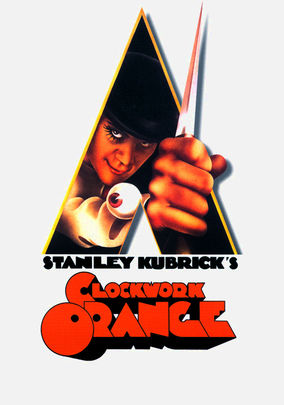
A Clockwork Orange-1971

A Clockwork Orange-1971

Director Stanley Kubrick

Starring Malcolm McDowell, Patrick Magee

Top 250 Films #11

Top 10 Most Disturbing Films #7

Scott’s Review #295
383466

Reviewed December 11, 2015

Grade: A

A Clockwork Orange (1971) is a groundbreaking Stanley Kubrick film, and my personal favorite in his collection, with his movies appearing on my Top 100 Favorite Films list.

Adapted from the 1962 Anthony Burgess novel, once thought unfilmable, it becomes a psychedelic, creative, and fascinating experience from start to finish.

Bizarre and thought-provoking, Kubrick tells the story of a London sociopath living in futuristic London, and the strange behavioral modifications performed on him after he is apprehended by the police, in an attempt to “reform” him and transition him into a valuable member of society.

The film explores profound social and psychological themes, posing thought-provoking questions about these weighty topics.

Interspersed with classical music and featuring excellent, colorful sets, A Clockwork Orange is a masterpiece in bizarre cinematic artistry.

Alex DeLarge loves classical music (specifically Beethoven), violence, and hanging out with friends. He constantly skips school, beats people up, and parties with his friends. His pet snake is his best friend, and his parents seem afraid of him.

Finally arrested after murdering an odd lady with dozens of cats, Alex is sent away to prison, where he volunteers for an experimental “Ludovico” technique, which Alex assumes is a “get out of jail free” card.

What follows is a freakish, uncomfortable experience for Alex.

The film contains startling and disturbing scenes throughout- when Alex and his team of “droogs” become inebriated from a concoction of milk laced with drugs and embark on an evening of self-proclaimed ultra-violence, they drive to the country where they break into wealthy author F. Alexander’s house and beat him, crippling him for life.

They rape his wife while forcing him to watch, all the while Alex happily sings “Singin’ in the Rain,” timing the beats of the song to acts of violence.

The brutality and creativity of this scene are mesmerizing and certainly unforgettable.

We, the audience, might despise a character like Alex; however, we feel sympathy for him as his “reformation” begins. A disturbing scene, which is forever embedded in my mind, involves the attachment of a contraption forcing Alex’s eyelids wide open.

At the same time, he watches violent scenes and is administered a drug to make him sick, thereby associating the violence with illness.

He becomes psychologically screwed up.

Alex (thanks to an excellent portrayal by Malcolm McDowell) is charismatic and humorous and, in some warped way, quite likable to the audience, despite his devious ways.

A Clockwork Orange continues to disturb me after multiple viewings – who can forget the sinister grin that Alex wears and the creepy eyelash with mascara that he sports?

The film sends an interesting message about human nature as Alex turns from predator to the hunted. We ask: “Are human beings naturally prone to violence?”

The direction of the film is breathtaking – the weird colors, the (as traditional with Stanley Kubrick) long-shot camera angles, and the intense musical crescendos.

The genre of classical music is a fantastic and ominous choice, almost adding a level of sophistication to Alex and the violence.

The weird supporting characters (Alex’s parents, the probation officer, and his parents’ roommate) and the suddenly fast-forwarded sex scenes were unheard of for their time.

Immensely creative and unconventional filmmaking, with a moral message and thought-provoking questions about humanity, A Clockwork Orange (1971) is a groundbreaking, fantastic, trippy experience.

A masterpiece from top to bottom.

Oscar Nominations: Best Picture, Best Director-Stanley Kubrick, Best Screenplay Based on Material from Another Medium, Best Film Editing
The Shining-1980

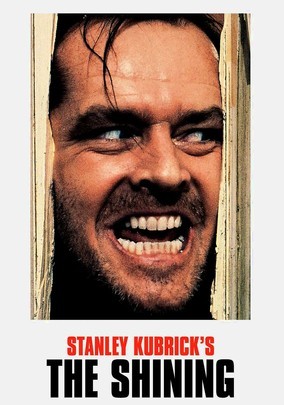
The Shining-1980

Director Stanley Kubrick

Starring Jack Nicholson, Shelley Duvall

Top 250 Films #21

Top 40 Horror Films #6

Scott’s Review #313

959008

Reviewed December 31, 2015

Grade: A

The Shining is one of the great horror masterpieces of all time.

Released in 1980, and atypical of the slasher craze that was rampant at that time, the film is a psychological ghost story with frightening elements, including a musical score, long camera shots, and a haunting, grandiose hotel set in a deserted locale.

Without the brilliant direction of Stanley Kubrick, The Shining would not be the masterpiece it is, to say nothing of Nicholson and Duvall’s talents in the lead roles.

Based on the popular horror novel by Stephen King.

Nicholson plays Jack Torrance, an author and alcoholic, who takes his wife Wendy (Duvall) and son Danny to serve as caretakers at the vast Overlook hotel, for the winter in snowy Colorado.

The lavish hotel will be deserted for the season, and Jack looks forward to months of peace that will enable him to complete his novel.

Unfortunately, the hotel is haunted by spirits of the past, and the added burden of the previous caretaker going mad and chopping his family to bits with an ax.

The real success of The Shining is that the hotel itself is a character with its own nuances. The hotel is deathly quiet as the Torrances take over for the season-long hallways are featured, and the forbidden Room 237 takes on a life of its own.

Creepy images of two young girls and red blood gushing from the elevators take over. Young Danny can communicate with the chef without speaking to each other. Jack imagines a gorgeous nude woman in the bathtub, only to discover she is a shriveled old hag.

The film’s cinematography, coupled with the looming, morose musical score, goes hand in hand and, in my opinion, is the reason for the film’s success.

Throughout the film, there is a sense of dread and a forbidden presence that works beautifully.

The first scene is an aerial shot of the Torrances driving along a mountainous road as they are interviewed for the caretaker position. The vast land and mountains, as we eventually see the Overlook, immediately convey a sense of isolation, which is really what the film is about.

These exterior scenes are also gorgeous to marvel at.

The crisp, gloomy winter scenes and the endless maze of animal shrubbery come into play in the film’s final act as Jack, now completely mad, chases Danny along snowy paths that seem to lead nowhere.

The catchphrase, “Here’s Johnny!”, that is uttered from an ax-wielding Nicholson, is permanently ensconced in the relics of pop culture.

Nicholson and Duvall have such dynamic and palpable on-screen chemistry that makes the film work from a character perspective. There is something slightly off about each character, readily apparent from the outset, but it has more to do with each actor’s rather non-traditional appearance.

I can imagine no other actors in these roles.

Author Stephen King, who reportedly despised the film version of his novel, has since grown to respect the film and Kubrick’s direction a great deal.

The Shining (1980) is one of my favorite horror films and one of my favorite films of all time.

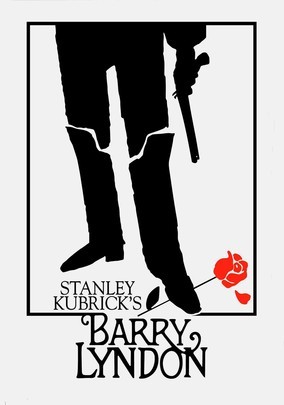
Barry Lyndon-1975

Barry Lyndon-1975

Director Stanley Kubrick

Starring Ryan O’Neal

Top 250 Films #44

Scott’s Review #211

284790

Reviewed January 4, 2015

Grade: A

Barry Lyndon (1975) is a sprawling, beautiful film by famed director Stanley Kubrick. The film is set in the 18th century.

Extremely slow-paced, yet mesmerizing, every shot looks like a portrait, and the inventive use of lighting via real candlelight in certain scenes makes this film a spectacle in its subdued beauty, to say nothing of the gorgeous sets and costumes.

The film is nothing short of a marvel to view.

The story centers around Ryan O’Neal, who plays an Irish man named Redmond Barry.

Redmond is a poor Irish man but is an opportunist. The film follows his life travels throughout Ireland, England, and Germany, as he becomes involved in duels, is robbed, impersonates an officer, is reduced to becoming a servant, gambles, marries a rich widow, and feuds with his stepson.

When he woos and marries the wealthy Countess of Lyndon, he settles in England to enjoy a life of wealth and sophistication. He changes his name to Barry Lyndon. His ten-year-old stepson, Lord Bullingdon, becomes a lifelong enemy as their hatred for each other escalates and is the focal point of Act II of the film.

The supporting cast is filled with unique characters and in particular, the three sinister characters (Lord Bullingdon, Mother Barry, and Reverend Runt) are delicious to watch especially when they square off against one another as is the case with Runt and Mother Barry.

Barry’s two love interests (Lady Lyndon and a German war widow) are entertaining to watch and Lady Lyndon’s costumes are exquisite. Furthermore, Chevalier de Balibar, a wealthy gambler who takes Barry under his wing is a delight.

As with many masterpieces, if not for the great casting, the film would not be as wonderful.

My three favorite scenes include the vicious confrontation between Mother Barry and Reverend Runt- an initially polite conversation between two selfish characters gradually spins into viciousness, the duel between Barry Lyndon and Lord Bullingdon- bitter rivals square off in an awkward yet dramatic duel, and when Barry passionately kisses his dying friend- an unexpected homoerotic scene.

Barry Lyndon delves into the issue of class and class distinction and clearly defines the haves and the have-nots and the struggles of the poor to obtain wealth by any means and for the wealthy to retain their good fortunes.

At a running time of over three hours, it may initially turn viewers off, but as time goes on the film will grip hold of the viewer and not let go.

Having now seen Barry Lyndon (1975) four times, each time I enjoy the film more and more as I become more absorbed by and immersed in the masterpiece.

It’s like a fine wine- it gets better with each taste.

Oscar Nominations: 4 wins-Best Picture, Best Director-Stanley Kubrick, Best Screenplay Adapted from Other Material, Best Scoring: Original Song Score and Adaptation or Scoring: Adaptation (won), Best Costume Design (won), Best Art Direction (won), Best Cinematography (won)

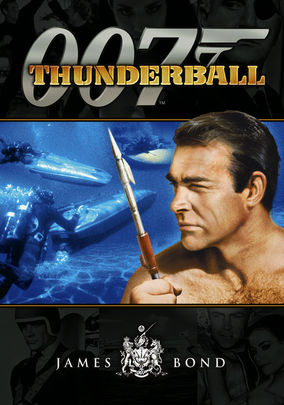
Thunderball-1965

Thunderball-1965

Director Terence Young

Starring Sean Connery, Claudine Auger

Top 250 Films #99

Scott’s Review #364

1046268

Reviewed January 9, 2016

Grade: A

By 1965, the James Bond franchise was embarking on its fourth segment, and the budget reflected the success of the preceding films.

Thunderball reaps the benefits of an enormous budget and is. As a result, it is a grand, epic film. Its sheer magnitude makes it one of my favorite Bond films simply because of its look.

The special effects are a marvel.

By this time, Sean Connery had comfortably immersed himself in the role of Bond, utilizing his charm and ability to exude charisma.

In this story, two NATO atomic bombs have been stolen by SPECTRE and held the world to ransom for millions in diamonds. They are threatening to detonate one of the bombs in a major city in either the United States or England. Mr. Bond must race against time to deter this from happening.

For starters, the opening sequence is one of my favorites. Bond attends the funeral of a deceased SPECTRE agent (number 6) at a lavish chateau in France. The agent is disguised as his widow, but Bond is not fooled.

This sets the stage as a dramatic fight scene ensues between the two “men.”

The main villain of Thunderball is Emilio Largo (Adolfo Celi), a handsome, suave SPECTRE agent (number 2). He is rich and sophisticated, a quality that is reflected throughout the film.

His grand estate is set and filmed in the Bahamas, giving most of the film a steamy, posh look, with bluish-green waters and white, crispy sand.

It’s the most gorgeous backdrop.

Largo is a great Bond villain and on par with Bond. He also has charm, good looks, and charisma.

The main Bond girl is Domino, played by Claudine Auger. Largo’s mistress is typically clad in black and/or white, hence her name.

Auger has the perfect balance of beautiful looks, sophistication, and intelligence, and is an ideal match for Bond. The chemistry between Connery and Auger is palpable and a significant factor in the film’s success.

What sets Thunderball apart from some Bond films is the central portion of the film, mainly in the second half, which takes place underwater.

In a clear example of showcasing the modern technology of the time (1965), some complained that these sequences went on too long and did not advance the plot.

These points may have some validity, but oh, are they so visually appealing! The exotic underwater world is majestic.

Thunderball has it all and is one of the most gorgeous Bond films. It is big, bombastic, and filled with bright colors.

It contains all the elements of a great Bond film, so it has held up remarkably well over the years.

Oscar Nominations: 1 win-Best Special Visual Effects (won)

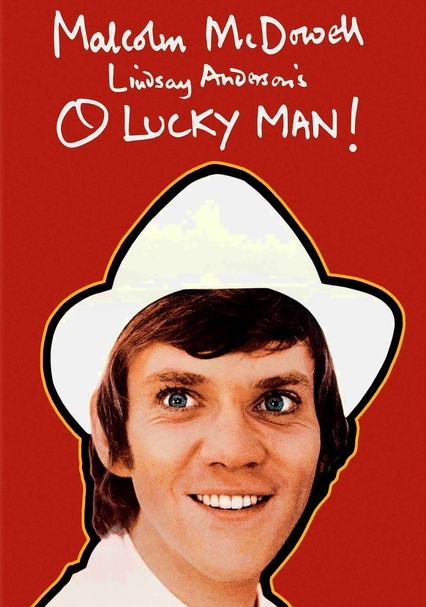
O Lucky Man!-1973

O Lucky Man! -1973

Director Lindsay Anderson

Starring Malcolm McDowell, Ralph Richardson, Helen Mirren

Scott’s Review #1,174

Reviewed September 1, 2021

Grade: A-

O Lucky Man! (1973) is a satirical black comedy that mixes musical songs with a message of capitalism by the driven protagonist. Like a great fine wine, the film has aged well and is still relevant decades later.

The film is a slow build but by the end of the lengthy running time of nearly three hours, I was enamored and hummed the title song repeatedly.

I’m still humming it as I write this review.

Suggested is to watch O Lucky Man! in two or three segments for full appreciation. One sitting would be incredibly tough since some of the events require some level of reflection and thought.

An ambitious young British man, Mick Travis (Malcolm McDowell) is determined to be successful at all costs. Debuting as a coffee salesman, Mick is quickly promoted within his company. Events take a series of bizarre turns when Mick is abducted by a military agency.

Later, he becomes smitten with the gorgeous Patricia (Helen Mirren) and winds up working for her father, sinister executive Sir James Burgess (Ralph Richardson). As Mick’s tale continues, his experiences get progressively stranger.

The clever aspect is that just when you think Mick’s life is dour and drab he rebounds more successful than ever. Hence the title of the film. So, there is an element of adventure and romance amid the capitalist plot.

Lindsay Anderson, who directed O Lucky Man! re-casts McDowell again in the same role he first played as a disaffected public schoolboy in his first film performance in Anderson’s film If… (1968).

I did not realize this at the time I watched O Lucky Man! and I think this knowledge would have made me catch on to the events and the subtexture even more.

Now, I need to rewatch If…

I did however ruminate constantly on McDowell’s other iconic role in A Clockwork Orange (1971) as Alex. The characters are quite similar save for Alex being a juvenile delinquent instead of a rising corporate guy like Mick is.

This is in large part due to McDowell’s looks and acting style. His trademark sneer and bright blue eyes make him mesmerizing in both roles.

I even spotted an actor who played one of the infamous droogs!

A plus to the film is that several actors appear in multiple roles, some difficult to distinguish. Part of the fun is trying to figure out who’s who.

There isn’t a whole lot of chemistry between McDowell and Mirren but it’s interesting the shifting characteristics of the characters. And Patricia is fascinating. When she inquires why people work so hard for things instead of just taking them we realize that she places no value in things because she’s never had to work for them. She’s a rich, daddy’s girl.

There are reasons not to like her but I still did. When she winds up in a homeless lot it’s shocking. And I also loved the character of Mick and his epic journey. He is imprisoned and then reformed in a humanistic way just like Alex was in A Clockwork Orange.

But the best part of O Lucky Man! is the music. Anderson takes periodic breaks from the drama to simply treat his audience to a musical number all performed by Alan Price.

It’s comforting to sit back and enjoy the unforgettable tunes that pepper the film. One could argue that the songs almost usurp the main action but I found them, great companions, to the other.

As if there was any doubt, the soundtrack was widely lauded and was a huge financial success.

A surreal effort, sometimes happy or tragic but always insightful and oftentimes delightful, McDowell, Price, and Anderson are at the top of their respective games.

O Lucky Man! (1973) is a terrific watch brimming with good juices if one just has the patience to let events marinate.

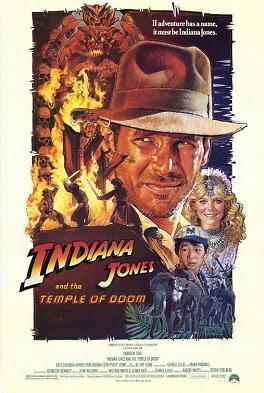
Indiana Jones and the Temple of Doom-1984

Indiana Jones and the Temple of Doom-1984

Director Steven Spielberg

Starring Harrison Ford, Kate Capshaw

Scott’s Review #759

Reviewed May 17, 2018

Grade: A

The second in the trilogy (I refused to acknowledge the middling Kingdom of the Crystal Skull in 2008), Indiana Jones and the Temple of Doom (1984) is easily my favorite of the group.

Much darker than its predecessor, Raiders of the Lost Ark, it is also better, with more flair and pizzazz.  All three (1989’s The Last Crusade added) could be watched in sequence and easily enjoyed as companion pieces for a slice of 1980’s nostalgia.

A prequel to Raiders of the Lost Ark, the action picks up a few years prior as our hero narrowly escapes the clutches of a crime boss in Shanghai, China.

Indiana Jones (Harrison Ford), along with sidekick eleven-year-old Short Round (Jonathan Ke Quan) and nightclub singer Willie Scott (Kate Capshaw), embark on an adventure to retrieve a stolen sacred stone.

The poor villagers have also lost their children to a lavish palace where they are forced to work as slaves.

Wisely in keeping with the continuity of the first story, director Steven Spielberg and writer George Lucas return to the fold. This enriches the experience as both men are in touch with the character of Indiana Jones and do not try to change him.

His familiar wittiness and charismatic nature return and the dashing hero show more skin this time around with more than one shirtless scene.

To cement the good character, Harrison Ford returns to the role he created and made famous.

Indiana Jones and the Temple of Doom is layered with positive aspects and holds special childhood memories for me. I vividly recollect going to the movie theater and excitedly watching the film on the big screen clutching a tub of buttery popcorn.

For a young boy, this is the best- an adventure story for the ages with thrills and edge-of-your-seat sequences.

The film is perfect for the entire family.

Many gorgeous exterior sequences abound throughout the film. A prime example is when the trio encounters deadly assassins on a precarious rope bridge high atop a crocodile-infested murky river.

This scene is fraught with tension and “how will he ever get out of this?” thinking when dear Indie is cornered by the killers.

With lightning-quick thinking, he severs the bridge resulting in a dangling escapade. As numerous bodies fall into the river they are chopped to bits by the hungry reptiles. The fact that the action is all shot outdoors in lush scenery only adds to the enjoyment.

The film is admittedly filled with dark and scary aspects necessitating a PG-13 rating versus a PG one. As Indie, Willie, and Short Round are held hostage in the evil palace, a dangerous sacrifice occurs.

One poor man is chosen to give his life by way of being burned alive in a roaring fire. Indie is then forced to drink potion and presumably suffer the same fate.  Other bloody moments occur as a bad guy meets his fate after being flattened like a pancake by a steamroller.

The tone of the film is much darker than Raiders of the Lost Ark.

To offset the blood, guts, and voodoo, the film occasionally parlays into humor mostly at the expense of Willie- the comic relief of the film.

Accustomed to the glamour of costumes and luxurious hotels, the singer is forced to fend for herself amid snakes, elephants, and other creatures. As she hungrily sits down for what she thinks is a scrumptious dinner, she is treated to monkey brains and bulging eyeballs in soup- deemed Indian delicacies.

Readily apparent watching the film now are glaring negative stereotypes associated with the Indian culture. As I am sure the intent was not to insult, some stereotypes do abound with the hokey cuisines and the severe poverty.

The underlying image of tribal Indians as being weird or out of touch is prevalent to say nothing of the odd religious overtones.

Kate Capshaw as Willie is the complete opposite of the central female character of Marion in Raiders of the Lost Ark. Whereas Marion is intelligent and serious, Willie is pampered, rich, and gullible.

I find the camaraderie between Indie and Willie much more palpable than between Indie and Marion and the romantic overtures appealing.

Who can forget the famous “bug scene” in the palace?

Conjuring up wonderful and exciting childhood memories, Indiana Jones and the Temple of Doom (1984) is a treasure for the eyes and the strongest entry in the bunch.

If you are in the mood for a good, fun-filled experience with a healthy dose of Indian culture and adventurous antics with a slice of darkness this one is a must-see.

Oscar Nominations: 1 win-Best Original Score, Best Visual Effects (won)