Category Archives: Darrell Zwerling

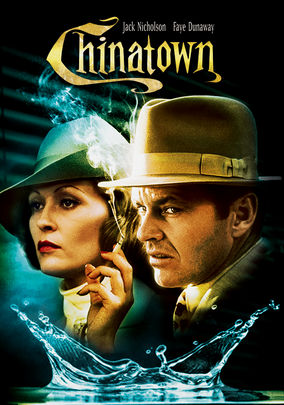
Chinatown-1974

Chinatown-1974

Director Roman Polanski

Starring Jack Nicholson, Faye Dunaway, John Huston

Top 250 Films #27

Scott’s Review #321
374030

Reviewed January 3, 2016

Grade: A

Chinatown (1974) is like a perfectly aged fine red wine- with each passing year or viewing, it becomes more and more spectacular.

A thinking man’s film, if you will, Chinatown is a complex puzzle, just waiting to unravel in a layered, complicated fashion. However, this is to its credit, as it is a fantastic, rich film noir, and as good as cinematic writing gets.

Set in the 1930s, the set pieces and art direction are flawless – as great a film in terms of look as it is in story.

Director Roman Polanski and star Jack Nicholson are primarily responsible for the film’s success.

The direction is a marvel, with cinematography, flow, and pacing that are astounding. A slow build, the film takes off at just the perfect point as the mystery deepens, building to a crescendo.

Nicholson plays Jake Gittes, a handsome Los Angeles private investigator hired by a woman claiming to be Evelyn Mulwray. Evelyn desires to have her husband followed, as she suspects him of having an affair with another woman.

Jake begins tailing the woman’s husband, only to uncover an intriguing mystery involving the Los Angeles water supply. Soon, the real Evelyn Mulwray (Faye Dunaway) turns up, and the film segues into a masterful web of complications and twists.

One will not see the ending coming.

Nicholson leads the film as only he can. With his charismatic, aww-shucks attitude, mixed with humor, he is eye candy for the camera as he takes the case and becomes more and more immersed in the action.

This film was a pivotal point for him as he began a slew of worthwhile and abundant performances in pictures.

Let us not forget Dunaway’s acting performance. Smoldering, sexy, classy, intelligent, and vulnerable, she perfectly plays almost every emotion.

Chinatown, Bonnie and Clyde (1967), and Mommie Dearest (1981) are her best works in a career that spanned decades of success.

Chinatown (1974) is an entity unto itself in film noir. It is incredibly well-written, nuanced, and flawless.

This film simply must be seen.

The final thirty minutes- in addition to the “great reveal” are also violent, shocking, and extraordinary. A blueprint of what great filmmaking truly is.

Oscar Nominations: 1 win-Best Picture, Best Director-Roman Polanski, Best Actor-Jack Nicholson, Best Actress-Faye Dunaway, Best Original Screenplay (won), Best Original Dramatic Score, Best Sound, Best Costume Design, Best Art Direction, Best Cinematography, Best Film Editing
Grease-1978

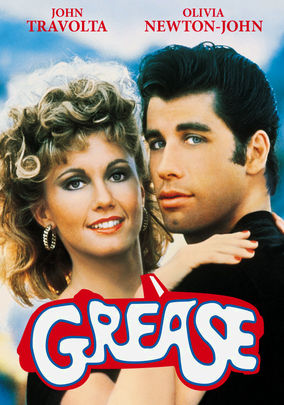
Grease-1978

Director Randal Kleiser

Starring John Travolta, Olivia Newton-John

Top 250 Films #69

Scott’s Review #354

60000577

Reviewed January 9, 2016

Grade: A

Grease (1978) is the ultimate musical fantasy that comes to life and can be appreciated by anyone looking to re-live their high school days through song, or merely escape life’s stresses with a fun, bright, musical, that is very well made.

Is it realistic? Not, but sometimes escapism is just what the doctor ordered, and Grease is one of my favorite films that meet that criteria.

It is light-hearted and sweet, and above all contains wonderful legendary musical numbers.

The time is the 1950s, and we meet Danny and Sandy on a windswept beach with cascading waves and bright sunshine. It is summer break for the two high school students, who meet in California, she vacationing from Australia, and he is a local boy.

They say their goodbyes and return to normal lives, but cannot forget about each other.

Suddenly, Sandy arrives at Rydell High in Los Angeles, coincidentally where Danny goes to school. Her parents (whom we never see) decided to stay in California.

Danny is a “tough guy” in high school, much different from who he was on the beach with Sandy. He is the leader of the infamous T-birds, a group of boys who love their black leather jackets and cars.

Torn, he continues his tough image and he and Sandy find their way back to each other through classmates, songs, and dancing, intermingling fun supporting characters who encourage each of them to find true love.

Travolta and Newton-John have magical chemistry, which allows this film to work.

Grease has appeared on stage numerous times, but these actors are fine together. I bought them as teenagers in love, although both were well beyond their teen years.

The supporting cast is excellent- specifically Stockard Channing as the lead Pink Lady, Rizzo, and Sandy’s kind-hearted friend Frenchy.

Interestingly, no parents ever appear in the film as it is not about the adults.

However, Rydell’s female principal, Mrs. McGee (played by Eve Arden), and her dotty Vice Principal, Blanche (Dody Goodman), are simply marvelous as comic relief.

Rizzo is an interesting character and can be argued is the only one who threatens to steal the thunder from Danny and Sandy. Containing a tough exterior, she is also vulnerable as she fears she has become pregnant mid-way through the film.

Unwed and pregnant in the 1950s was quite the scandal and Channing gives layers of emotion during her solo number, “There Are Worse Things I Could Do”.

The wonderful high school dance scene is choreographed amazingly well. The excitement of the student body at being filmed for a special television show is apparent as dance numbers and dance contests, some raunchy, follow.

The musical numbers are intrinsically memorable from “Grease”, “Greased Lightning”, “Hopelessly Devoted To You”, and “Beauty School Dropout”, all of which are personal favorites of mine.

Grease (1978) is a film that is not meant to be analyzed but rather enjoyed for the fantastic chemistry and energy in which it has.

Sometimes in a film, all of the elements simply come together perfectly and Grease is an excellent example of this.

Oscar Nominations: Best Song-“Hopelessly Devoted to You”

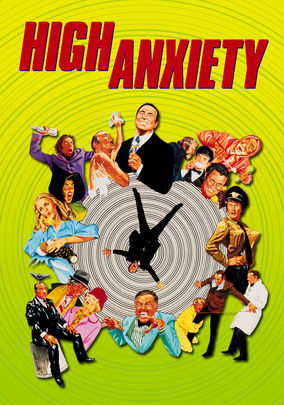
High Anxiety-1977

High Anxiety-1977

Director Mel Brooks

Starring Mel Brooks, Madeline Kahn

Top 250 Films #146

Scott’s Review #740

Reviewed April 11, 2018

Grade: A

For lovers of legendary film director Alfred Hitchcock (as this reviewer is a die-hard fan), the 1977 spoof/satirical feast High Anxiety is a must-see.

The film is simply a treat for the multitude (nearly twenty!) of fun references to Hitchcock classics that fans can easily point out. Such classics as 1964’s The Birds, 1945’s Spellbound, 1958’s Vertigo, and 1960’s fan-favorite Psycho are heavily parodied.

Producer, director, and star Mel Brooks abounds all expectations with a brilliant performance and a smattering of veteran Brooks ensemble players along for the ride.

Featured stars Madeline Kahn, Harvey Korman, and Cloris Leachman provide wonderful comic performances that are quite lively and memorable without ever being too zany or silly.

High Anxiety is a hilarious and clever production.

Brooks plays neurotic Doctor Richard Thorndyke, who has been hired by the Psycho-Neurotic Institute for the Very Very Nervous. His role is to replace Doctor Ashley, who has died mysteriously at the facility.

Transported by his nervous driver, Brophy, he meets a bevy of peculiar characters led by Doctor Charles Montague (Korman), a man with a BDSM fetish, and Nurse Charlotte Diesel (Leachman), the grizzled head nurse.

Thorndyke immediately receives death threats amid strange shenanigans seemingly following his every move.

Brilliantly, Thorndyke suffers from “high anxiety” a witty reference to Hitchcock’s character of Scotty from 1958’s Vertigo.

As he meets and falls in love with Victoria Brisbane (Kahn), a woman whose father is a patient at the facility, he becomes determined to prove the fraudulence and deceit of Montague and Diesel, while subsequently clearing himself of a murder charge orchestrated by the pair.

The murder scene- occurring in a crowded lobby- with Thorndyke caught red-handed holding the murder weapon as a camera snaps the shot for evidence, is a direct spoof of 1959’s North By Northwest.

To be clear, High Anxiety is not a high-brow film nor does it ever dare to take itself too seriously. It knows what it is and what it wants to achieve and that is to both entertain and please fans of Hitchcock.

The film is an ode and tribute to the general film-making of the director who reportedly adored the picture and the accolades that Brooks received for making it.

There is hardly a better stamp of approval than that.

I adore the casting and the odd characters Brooks writes, specifically Leachman and Korman. The duo ham it up with a script laced with great comic moments for the duo to sink their teeth into.

As Leachman, with her drill sergeant-like stiff posture and pointed bosom (Mrs. Danvers from 1940’s Rebecca), combined with the wimpy and snarky mannerisms of Korman’s character, they are the perfect combination of female dominant and male submissive as they play off of one another in a crisp style.

The sinister way that Nurse Diesel (my favorite character) utters the word “Braces”, a reference to her henchman, drizzles with dark humor and wit.

Piggybacking off of these characters, Dick Van Patten (Eight is Enough) gives a fine turn as the doomed straight man with a conscience,  Dr. Wentworth, who just knows something is up at the facility but is too timid to know exactly what it is.

His death scene is one of my favorites as derived from 1976’s Family Plot, the poor man is driven to ruptured eardrums and a subsequent stroke after his car is rigged to blast rock music, trapping him inside.

Brooks and Kahn make a lovable duo as the beleaguered romantic couple is forced into an adventure to prove innocence and rescue Victoria’s father from harm.

A favorite moment is Brooks’s wonderful rendition of the song “High Anxiety” at a hotel piano bar as he successfully woos Victoria is an entertaining romantic comedy moment.

Predictably- he gets the girl.

High Anxiety (1977) is delicious, silly, and peppered with great classic Hitchcock moments that are momentously fun to watch and pick out which movie they each reference is from.

An absolute must-see for all Hitchcock fans or those who simply want a humorous, lightweight introduction to the works of the Master.

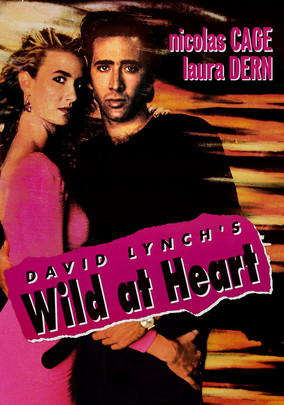
Wild at Heart-1990

Wild at Heart-1990

Director David Lynch

Starring Nicolas Cage, Laura Dern

Scott’s Review #1,230

Reviewed February 19, 2022

Grade: B+

David Lynch has created some weird films. Blue Velvet (1986) and Mulholland Drive (1992) are masterpieces that skew the odd and peculiar facets of human behavior. But Wild at Heart (1990) takes the cake as the strangest in the lot.

Fascinatingly unhinged, yet hard to understand, it’s got the Lynch handprint from start to finish, but only a warm-up act as stacked against those other films.

Somehow the film is classified as a comedy. It’s got to be one of the darkest of dark comedies. Anyone who is not a Lynch fan will not appreciate or get this film- I am a Lynch fan and I’m not sure I even got it. I do appreciate it though.

It’s also the best role of Diane Ladd’s career in which she plays a fiendish, witchy mama. The graceful actress belts a home run in her storied performance.

A situation occurs during the opening sequence that sets the tone for the rest of the film. Sailor Ripley (Nicolas Cage) serves prison time for a self-defense killing and reunites with his girlfriend Lula Fortune (Laura Dern) when he is released.

Lula’s mother, Marietta (Diane Ladd), is desperate to keep them apart and hires a hitman to kill Sailor. But those are only the start of his troubles when he and Bobby Peru, played by Willem Dafoe, an old buddy who’s also out to get Sailor, try to rob a store.

When Sailor lands in jail again, he may be destined never to reunite with Lula ever again.

Wild at Heart is a love story about Sailor and Lula and the many obstacles they must overcome to live happily ever after.

Cage and Dern are terrific though I fantasized while watching how nice it would have been to see Kyle MacLachlan in the role of Sailor. A Blue Velvet reunion would have been splendid since his chemistry with Dern in that film was top-notch. Nonetheless, I enjoyed watching Cage and Dern as the romantic leads.

The many references to The Wizard of Oz are delightful like when an image of Marietta flying through the air on a haggard broomstick appears just like the Wicked Witch of the West. When Lula desperately clicks her red heels three times to no avail we strangely wonder where the home she wants to return to is.

The film is one of those that is hard to take seriously or focus on the plot too much. This is evidenced by the inclusion of Twin Peaks (1990-1991; 2017) alumni Sheryl Lee, Sherilyn Fenn, and Grace Zabriskie. They play The Good Witch, Girl in Accident, and Juana Durango, respectively.

Each character is indescribable in their strangeness.

The nuttiness continues with bizarre turns from Crispin Glover and Harry Dean Stanton.

Interesting is how Wild at Heart was released the same year as Twin Peaks was. The inclusion of a seedy bar named One-Eyed Jacks which appears in both productions is about all that is comparable with each other. The main events in Wild at Heart are in Texas and Washington for Twin Peaks.

Forgetting the storylines, the best part about Wild at Heart is the cinematography. Enough dark and dusty highway sequences emerge using glowing and moody lighting and foreboding cracks and crevices in other visceral scenes. Cigarette smoking has never looked as sexy or dangerous as it does in this film.

Despite there being admirable and perfectly Lynch-y elements to Wild at Heart (1990) the film is just too far overboard for me to fall in love with.

I’ll pull out my copies of Blue Velvet and Mulholland Drive any day before Wild at Heart.

Oscar Nominations: Best Supporting Actress-Diane Ladd

Independent Spirit Award Nominations: 1 win-Best Supporting Male-Willem Dafoe, Best Cinematography (won)

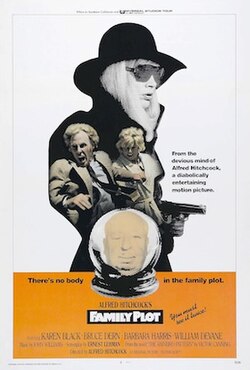
Family Plot-1976

Family Plot-1976

Director Alfred Hitchcock

Starring Bruce Dern, Karen Black

Scott’s Review #99

60020560

Reviewed July 9, 2014

Grade: B

Family Plot is sadly Alfred Hitchcock’s final film, made in 1976.

It is certainly not one of his greats, but not bad either, and a fitting way for a viewer to conclude his career.

The film is a jewel caper and has a vastly different feel from many of his other, earlier films. It has a slick quality to it and is reminiscent of a 1970s television movie, which is not a knock.

It simply feels more television-like than film, which likely could be because the film stars notable television stars, William Devane and Katherine Helman.

It also features some big film stars of the time- Karen Black, Bruce Dern, and Barbara Harris.

The film is a departure from other Hitchcock films in that it is a macabre comedy. It is a tongue-in-cheek story of a fake psychic (Harris) and her boyfriend (Dern) who become involved in a search for a missing heir, a jewel heist, and a murder.

All of the characters intersect as the film moves along and it contains some nice Hitchcock elements- the speeding car with no brakes down a hilly road is pure Hitchcock.

The film, for me, has a slightly melancholy feel as sadly, it is the great Hitchcock’s final farewell.