Category Archives: Art Hindle

Black Christmas-1974

Black Christmas-1974

Director Bob Clark

Starring Olivia Hussey, Margot Kidder, John Saxon

Top 250 Films #39

Top 40 Horror Films #9

Scott’s Review #309
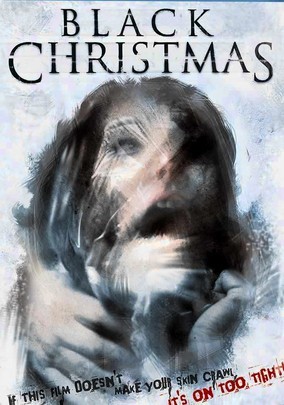
70057846

Reviewed December 29, 2015

Grade: A

Black Christmas (1974) is one of my all-time favorite horror films and, in my opinion, an underappreciated classic.  Somehow, it is just not the first, second, or third film mentioned when most discuss the influential horror films of years past.

My hubby and I make sure to watch it every holiday season.

It largely influenced Halloween (another of my passions), particularly from the killer’s point of view, camera shots, and the seasonal element.

It is pretty horrifying in several key scenes, in fact, and I am proud to list it among my favorite films.

Black Christmas is a must-see for fans of the horror genre.

The setting (a cold and snowy Christmas) is perfect, and the film is shot quite darkly. There are Christmas lights and carolers to create a significant winter holiday atmosphere. Most of the film takes place at night, and the location is primarily inside a vast, somewhat creepy sorority house. The ambiance is well thought out.

Several sorority girls, led by boozy Barb (Margot Kidder) and sweet-natured Jess (Olivia Hussey), prepare to depart for the holiday season by having a small farewell Christmas party. Recently, the girls have been harassed by a prank caller spouting nonsensical gibberish daily.

As in true horror fashion, the girls are systematically offed one by one as events turn dire. Two subplots that ultimately merge with the central plot include Jess’s pregnancy with her suspicious boyfriend, Peter, and the search in the park for a missing young girl.

The best part of Black Christmas is that it is an honest, raw film, made on a small budget, that eschews gimmicks and contrivances.

It has authenticity.

A disturbing film for sure,  one victim being posed in a rocking chair continuously rocking back and forth next to the attic window, while said victim is bound in plastic wrap, holding a doll, mouth, and eyes wide open, is one of the most chilling in horror film history.

The nuances of the killer also scare, and the brilliance of this is that his motivations are mysterious and unclear (in large part, the success of Michael Meyers as well). We never fully see the killer except for his shape and eyes, and that is the brilliance of the film.

The one slight negative of the film is the decision to portray the cops as incompetent. The desk sergeant, in particular, is a complete dope- one wonders how he got his job- as a sexual joke by one of the girls goes over his head while the other detectives laugh like fools.

Why is this necessary? I suppose for comic relief, but isn’t that the purpose of Mrs. Mac, the overweight, boozy sorority mother?  Her constant treasure hunt for hidden booze (the toilet, inside a book) is comical and fun.

Her posing and posturing in front of the mirror (she is a very frumpy, average woman) are a delight and balance the heavy drama.

The conclusion of Black Christmas is vague and fantastic and works very well. Due, once again, to the police errors, the final victim’s fate is left unclear as we see her in a vulnerable state, unaware that the killer is lurking nearby.

We only hear a ringing phone and wonder what happens next.

My admiration for Black Christmas (1974) only grows upon each viewing as I am once again compelled to notice more and more ingenious nuances in the film.

Can’t wait until next Christmas to watch it again.
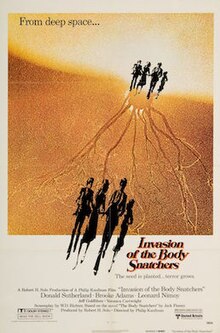
Invasion of the Body Snatchers-1978

Invasion of the Body Snatchers-1978

Director Philip Kaufman

Starring Donald Sutherland, Brooke Adams, Veronica Cartwright

Top 250 Films #217

Top 40 Horror Films #31

Scott’s Review #1,434

Reviewed July 22, 2024

Grade: A-

Even though this film is a remake and remakes are usually not as good as the original, I am partial to the 1978 version of Invasion of the Body Snatchers versus the 1956 release.

This might even be one of the best remakes ever.

The 1950s version has a campy science-fiction element popular in the decade, featuring frightening, otherworldly elements like The Day the Earth Stood Still (1951) or Invaders from Mars (1953), which were meant to promote the idea of invaders taking over Earth.

This was enough to scare the bejesus out of middle America, USA, and their white picket fence-encased neighborhoods.

The 1970s version eschews camp in favor of a straight-ahead sci-fi/horror hybrid. A glamorous, artistic approach oozes from the 1970s and from various exterior sequences in San Francisco, making it superior to the original.

It’s a more polished and mainstream-ready product that works better for this film.

By far the best scene is the final scene between a perfectly cast Donald Sutherland and Veronica Cartwright, which left chills going up and down my spine.

I won’t spoil the fun, but suffice it to say that the actor’s facial expressions make the scene exceptional, especially when paired with the creepy sound effects.

Director Philip Kaufman also toys with his audience when he teeters ambiguously between his leading ladies. Is Cartright the ‘final girl’ or is it Brooke Adams? In parallel to Hitchcock’s Psycho (1960), the lead may not be who you assume it to be.

Matthew Bennell (Donald Sutherland) is a health inspector who assumes that when his friend and colleague Elizabeth (Brooke Adams) complains of her husband’s strange mood, it’s a cheating husband or an exaggerated concern.

He begins to worry, however, as more people report similar observations about their loved one’s strange behavior.

His concern is confirmed when writer Jack Bellicec (Jeff Goldblum) and his wife (Veronica Cartwright) discover a mutated corpse that creates a citywide epidemic in which humans are replaced by alien doubles devoid of humanity or emotion.

The casting is first-rate, especially because Sutherland is front and center. The actor does wonders with his bulging blue eyes and a spacey demeanor. This works well in a film where we wonder whether his character is ‘one of them’.

He’s also a good actor and easily carries the film along with Adams and Cartright.

Kaufman peppers the film with eerie atmospheric elements like the mysterious parasitic alien race scurrying to harvest before their planet dies, and small seed pods amid hallucinogenic pink flowers.

The success is mainly due to the audience being left uncertain about whether to hate the aliens or feel sorry for them. Since they are ambiguous, this leaves confusion and, therefore, a sense of empathy.

Speaking of the exterior sequences, a great one takes place on the streets of San Francisco, where a hysterical man warns Elizabeth and Matthew of danger as a mob pursues him. He is then killed in a hit-and-run, surrounded by emotionless onlookers.

Eagle-eyed viewers will spot Kevin McCarthy, the leading man in the 1950s film, and director Don Siegel.

When this scene plays, it is eerie and underscores that the small group of friends must stick together against a mob of clones.

Wisely, Kaufman assures readers that the story does not play for laughs or appear over-the-top or silly. The gritty camera angles, superior makeup crew, and wonderfully practical sound effects confirm that he is making a film to be remembered.

Taking what the 1950s version created but only scratched the surface of the potential during a cinematically safe decade, the 1978 Invasion of the Body Snatchers has muscle and compels from start to finish.

Years later, it still holds up wonderfully well alongside similar stylistic and popular horror films such as Jaws (1975), Carrie (1976), Dawn of the Dead (1978), and Halloween (1978).

On a larger level, it also confirms the 1970s as the greatest decade for horror films.